-
 KONGDY
Slimming Patch Compliance: 11 Questions Buyers Ask Before Launch (Answered With Framework References)
Slimming Patch Compliance: 11 Questions Buyers Ask Before Launch (Answered With Framework References)
The questions below are the ones that come up in the first two conversations between a brand owner and a slimming patch supplier. Each one is answered directly in the first sentence, then supported with the framework reference and the evidence involved. Where a public dataset informs the answer, the figure is given with its source.
The sequence follows the order in which the questions usually arrive: classification first, then notification and file, then claims and evidence, then responsibility and change control. A buyer who resolves them in that order avoids the common situation of having a finished artwork that cannot be filed under any route.
Is a slimming patch a cosmetic or a drug in the European Union?
It is a cosmetic under Regulation (EC) No 1223/2009 as long as the claims stay on appearance, sensory effect and body contouring language, and it leaves the cosmetic route as soon as a claim implies a pharmacological, immunological or metabolic action.
The distinction is made by the claim rather than by the formulation. A slimming patch that claims to reduce the appearance of cellulite remains a cosmetic. The same patch claiming to break down fat, to suppress appetite or to alter metabolism is making a pharmacological claim, and the medicinal product framework applies instead. Because the formulation has not changed in that scenario, the decision is entirely a copy decision, and it should therefore be taken before artwork rather than after.
The practical test is to write each claim as a single sentence and ask what mechanism it asserts. Sensory mechanisms stay on the cosmetic route. Physiological mechanisms move the product off it. In the same way that a cooling gel patch with a therapeutic claim leaves the cosmetic route in the United States, a slimming patch with a metabolic claim leaves it in the European Union.
Do I need a CPNP notification before I can sell in the European Union?
Yes. A cosmetic product placed on the Union market has to be notified through the Cosmetic Products Notification Portal under Article 10 of Regulation (EC) No 1223/2009, and the notification is made by the Responsible Person before the product is placed on the market.
The notification is not the whole compliance position. It is the registration of the product and its Responsible Person. The substantive obligations that sit alongside it are the Product Information File under Article 11, the labelling duties under Article 19, and the substance restrictions under Article 22 read with the annexes. A notification without a maintained file satisfies the registration step and leaves the rest open.
One detail that catches buyers who ship to multiple markets: the notification is per market in the practical sense that the Responsible Person must be established in the Union, and the product name, formulation and nanomaterial flags have to match the notified record. Where the printed artwork diverges from the notified name, a re-notification follows.

What has to be in the Product Information File?
The Product Information File under Article 11 contains the product description, the Cosmetic Product Safety Report, the manufacturing method and a GMP statement, the proof of the effect claimed where the claim is made, and the data on animal testing where relevant.
The safety report is the item that most often determines whether the file is usable. It follows the SCCS Notes of Guidance structure, and it has to describe the finished formulation, including the preservative system and any botanical extracts, rather than the individual components in isolation. Where the safety assessment is signed by an assessor whose qualification cannot be evidenced, the file is present but not approvable.
For a slimming patch containing botanical extracts, the file also has to connect the extract specification to the declared concentration. That connection is the point at which stability data and substance screening meet, and it is the reason a file rebuilt at short notice tends to fail even when each document individually looks acceptable.
Can I claim that a slimming patch reduces cellulite?
Yes, if the claim is framed as an appearance claim and is substantiated, and no if the claim asserts a physiological effect on tissue.
Reducing the appearance of cellulite is an appearance claim. Reducing cellulite, without the appearance qualifier, asserts a change in tissue and moves toward the medicinal framework. The distinction is narrow enough that it should be recorded in the claim register rather than left to the copywriter, because the two versions differ by one word and have different consequences.
Substantiation applies in either case. A performance claim requires evidence the seller can produce, and that requirement is independent of the regulatory route. In the United States the substantiation duty for advertising claims sits with FTC Act Section 5, and the same principle applies under European consumer protection rules. A duration or quantified performance statement additionally requires measurement data at a defined condition, because the number on the pack has to be reproducible.
What does the 2026 EU Safety Gate data say about cosmetic risk?
It says that cosmetic alerts are a small share of the total by count and a serious share by consequence, and that documentation defects rather than formulation defects dominate the triggers.
In weeks 1 to 38 of 2026 the Safety Gate system published 2,663 alerts, of which 1,528 involved China-origin products, or 57.4 percent against 40.1 percent in the same weeks of 2025, a rise of 17.3 percentage points. Cosmetics accounted for 76 of those alerts, ranking fourth by count behind toys at 456, electrical appliances at 405 and childcare articles at 77. The consequence profile is what makes the category material: cosmetic measures in January 2026 included destruction of stock, marketing bans and recall from end users, whereas several other categories were resolved by withdrawal alone.
| Indicator | Value | Reading |
|---|---|---|
| Total alerts, weeks 1 to 38 of 2026 | 2,663 | Base volume |
| China-origin alerts | 1,528, or 57.4 percent | Rising share |
| Same share in 2025 | 40.1 percent | +17.3 points year on year |
| Cosmetics category | 76 alerts | Fourth largest, highest consequence tier |
| Dominant trigger type | Declared substances and unsupported declarations | Documentation, not formulation |
How do I know which claims need substantiation?
Every claim that states a performance, a duration or a comparison needs substantiation. The test is not whether the claim sounds scientific, it is whether the buyer could be asked to produce the evidence behind it.
A practical method is to build a claim register with four columns: the claim as written, the mechanism it asserts, the evidence file that supports it, and the date the evidence was generated. A claim whose evidence column is empty is either deleted or substantiated before artwork release. This is also the document that a supplier can be asked to contribute to, because formulating and testing sit on the supplier side while claim wording usually sits with the brand.
The register approach matters more for slimming patches than for many categories, because the claims sit close to the boundary between appearance and physiology. A register makes that boundary visible as a list rather than as a judgement call repeated on every artwork revision.
What testing does a slimming patch need before launch?
At minimum: a safety assessment covering the finished formulation, stability data supporting the declared shelf life, skin compatibility evidence appropriate to a leave-on topical product, substance screening for every raw material including botanical extracts, and performance measurement for any quantified claim.
| Evidence | Purpose | Framework reference |
|---|---|---|
| Safety assessment on the finished formulation | Supports the Cosmetic Product Safety Report | Regulation (EC) No 1223/2009, Article 11; SCCS Notes of Guidance |
| Stability data | Supports the shelf life and the extract retention claim | ICH Q1A conditions as the practical baseline |
| Skin compatibility evidence | Supports leave-on topical use | Assessor judgement within the safety report |
| Substance screening | Confirms no prohibited substance is present or declared | Regulation (EC) No 1223/2009, Article 22 and Annex II |
| Performance measurement | Supports quantified and duration claims | Consumer protection and advertising substantiation rules |
| GMP evidence | Supports the manufacturing statement in the file | ISO 22716:2007 |
Who is legally responsible if something goes wrong in the European Union?
The Responsible Person, which is a legal or natural person established in the Union, identified on the product and holding the file.
The Responsible Person is not a formality. The notification under Article 10 is made by that entity, the Product Information File under Article 11 is held by that entity, and the authorities address that entity when a question arises. Where the Responsible Person is described only as a consultant without a documented establishment, the chain that a review depends on does not exist in a usable form.
For a brand importing a slimming patch from an OEM supplier, this is the item to confirm in writing before the first shipment. A named entity, an address, and a dated file index are the three documents that make the answer concrete rather than dependent on a relationship.
How long does a CPNP notification take in practice?
The notification itself is an administrative step measured in days once the file exists, and the part that actually consumes time is assembling the file and confirming the substance position.
In practice the schedule is set by three items that sit before the notification: the safety assessment on the finished formulation, the stability data supporting the shelf-life claim, and the substance screen including every botanical extract and the preservative system. Where those three exist, the notification follows quickly. Where they do not, the notification date moves with the last of them, which is why treating the notification as the start of the timeline is a common source of schedule slippage.
The same structure appears in other frameworks, which is a useful cross-check. A mosquito repellent programme's schedule is governed by its efficacy and toxicology stage rather than by its filing step, and a slimming patch programme's schedule is governed by the file assembly rather than by the notification.
What changes require a re-notification?
Any change that affects the notified information: the product name, the formulation, the Responsible Person, the nanomaterial content, or a labelling change that moves the product away from the notified record.
| Change type | Effect on the notification |
|---|---|
| Product name change | Re-notification, because the notified name is the identity record |
| Formulation change affecting the declared ingredients | Re-notification with an updated file |
| Responsible Person change | Re-notification, because the entity carrying the file changes |
| Packaging or artwork change that alters the declared information | Review, and re-notification where the notified data is affected |
| Supplier change without a formulation change | No re-notification, but the substance screen and certificates of analysis have to be refreshed |
The final row is the one that most often goes unmanaged. A supplier change does not alter the notified formulation, so nothing appears to require action, and yet the certificates of analysis and the substance screen behind the file are now from a different source. Assigning an owner to that refresh is the difference between a file that stays valid and a file that merely stays unchanged.
What should I ask a slimming patch supplier before signing?
Six document requests, each of which has a single correct answer format.
| # | Request | Correct answer format |
|---|---|---|
| 1 | Regulatory pathway memo for the exact formulation | One page, signed, naming the route and citing the framework |
| 2 | Substance screen for every raw material | Dated, covering botanical extracts and the preservative system |
| 3 | Safety assessment covering the finished formulation | Signed by a named assessor with evidenced qualification |
| 4 | Stability data supporting the declared shelf life | Test conditions stated, endpoints defined |
| 5 | Declaration reconciled to the current formula revision | Ingredient ordering and allergen disclosure checked |
| 6 | Named file custodian and document production time | An entity, an address, and a stated turnaround |
Two of the six are usually answered with a conversation rather than a document: the pathway memo and the document production time. Those two are the items that most often decide the outcome of a review, because a review window is measured in days and a memo that exists only as an understanding cannot be submitted.
Public enforcement data supports the emphasis. In the United States, FDA issued 303 warning letters to drug and biologics firms in FY2025 against 190 in FY2024, and the October 2026 letter to Aidance Scientific, Inc. (reference 735346) was based on a review of a website and a marketplace storefront rather than on a facility inspection. In the European Union, the Safety Gate share shift described above shows the same pattern from the other direction: the review is increasingly document-led, and the documents are the ones a buyer can request before signing.
Can one claim set serve both the United States and the European Union?
Only where the routes overlap, and for a slimming patch they usually overlap on the appearance claims and diverge on anything stronger.
In the European Union a slimming patch with appearance and contouring claims sits on the cosmetic route under Regulation (EC) No 1223/2009. In the United States the same product is governed by 21 CFR Part 700 cosmetics requirements, with FTC Act Section 5 substantiation for advertising claims. The claim families that survive in both places are the appearance and sensory ones. A claim that asserts a metabolic or pharmacological mechanism leaves the cosmetic route in the European Union and can also move the product toward drug status in the United States, which is the same boundary that applies to a cooling gel patch making a therapeutic claim.
Practically, this produces one master claim set and two artwork families. The master set holds the claims that are defensible in both markets, and each artwork version is built from it with the market-specific additions and deletions recorded in the claim register. A brand that writes a single artwork for both markets either over-claims in one jurisdiction or under-claims in the other, and the correction is more expensive after printing than before.
What is the most common reason a slimming patch fails at the notification stage?
An incomplete file rather than a product problem, and specifically a substance or declaration defect that a reviewer can identify from documents alone.
The 2026 Safety Gate dataset points in that direction. Across weeks 1 to 38 of 2026 the system recorded 2,663 alerts, with 1,528 involving China-origin products, or 57.4 percent against 40.1 percent in the comparable 2025 weeks. Reading the January 2026 cosmetic notifications individually, the triggers are declared substances that are prohibited and declarations that could not be supported: two perfumes containing BMHCA and HICC, nail polishes containing TPO, a skin care oil containing delta-9-THC, and hair care products containing formaldehyde. In every instance the finding came from the declared ingredient information rather than from an analytical result on the finished product.
For a slimming patch the equivalent risks are the botanical extracts and the preservative system. An extract certificate of analysis that predates the last supplier change, or a declaration that has drifted from the current formula revision by one revision, produces the same class of finding without any change to the formulation or the manufacturing process. That is why the document requests listed above emphasise date and revision rather than existence.
The second most common reason is the claim boundary: a slimming patch whose copy asserts a physiological effect while the file documents a cosmetic route. That is not a documentation gap in the ordinary sense, it is a mismatch between two documents that were each correct when written, and it is resolved by the claim register rather than by additional testing.
A Note on Ordering These Answers
The thirteen questions above are not equally urgent for every programme. A buyer launching a single SKU in one market can work through them sequentially. A buyer launching the same slimming patch in four markets should complete questions one to four before commissioning any artwork, because those four determine the route, the notification, the file and the claim boundary, and each of them changes what the artwork has to say.
The items that are genuinely parallel are the testing and the file assembly: a safety assessment and stability data can be commissioned while the route question is being resolved, provided the formulation is frozen. The items that cannot be parallelised are the route decision and the artwork, because artwork is downstream of every answer above it. Getting that one ordering right is worth more to a launch schedule than any individual document in the set.
Readers who want the same material in checklist form can use the 21-point pre-contract checklist for capsicum plaster programmes, which groups the items by dependency rather than by question. The two formats answer different needs: the checklist is designed to be worked through in a meeting, while the questions above are designed to be answered in writing as the file is assembled. Both converge on the same conclusion, which is that a slimming patch launch is decided by documents that can be prepared before the contract rather than after it.
About KONGDY

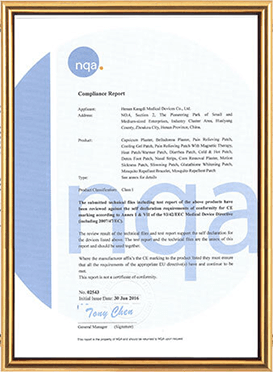
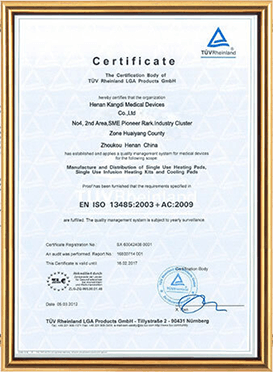
Henan Kongdy Medical Devices Co., LTD. (KONGDY) was founded in 1989 and has 37 years of production experience as of 2026 in pain relief patches, slimming patches, capsicum plasters, heat patches, cooling gel patches, detox foot patches, steam eye masks, mosquito repellent patches, and nose strips. Headquartered in Henan, China, KONGDY operates a 100,000-class GMP workshop (built 2008) and obtained ISO 13485 medical device Quality Management System European Standard Certification in 2014. The company runs OEM and ODM services for international brands across multiple regulatory pathways. For 2026 procurement evaluation, our qualification team can provide ISO 13485 certificate, GMP workshop audit reports, and reference customer case studies upon request via our contact page.
Related Guides

- Slimming Patch OEM Services at KONGDY
- Slimming Patch Product Range
- Cosmetic, Medical Device or Quasi-Drug? A 5-Market Decision Matrix
- Capsicum Plaster OEM: A 21-Point Pre-Contract Checklist for 2026 Buyers
- EU Safety Gate 2026: 1,528 China-Origin Alerts in 38 Weeks
- Why the FDA Now Reviews Your Amazon Listing: Lessons from Warning Letter 735346
- From Essential Oil to Sealed Pouch: The Documentation Gates in a Mosquito Repellent OEM Program
- 5 Slimming Patch OEM Mistakes That Trigger CPNP Rejection in 2026
- Capsicum Plaster OEM Services
- KONGDY OEM and ODM Manufacturing
- About KONGDY
- News Archive
- Contact KONGDY


