-
 KONGDY
Cosmetic, Medical Device or Quasi-Drug? A 5-Market Decision Matrix for Steam Eye Mask and Patch Buyers
Cosmetic, Medical Device or Quasi-Drug? A 5-Market Decision Matrix for Steam Eye Mask and Patch Buyers
A steam eye mask is not a legally self-classifying product. The same self-heating mask can sit on three different regulatory routes depending on the market and the claim, and the route determines what evidence you need, what the label must say, how long clearance takes, and what happens when a reviewer disagrees. This article is a decision matrix rather than an argument: it puts the three candidate routes side by side, maps common claims onto them, and shows what each route requires in five markets.
The matrix is built for a buyer or brand owner who has a formulation in hand and a claim set in draft, and who needs to decide which route to file under before the artwork is finalised. It is written the way a procurement decision actually happens: route first, then label, then artwork, then purchase order.
Why the Route Decision Comes Before Everything Else
The route decision is upstream of cost, timeline and risk. It is also the decision that is most often made implicitly, by writing marketing copy first and discovering the route afterwards. The 2026 enforcement record shows what that costs: FDA warning letters can be issued on the basis of product presentation alone, without a facility inspection, as in the October 2026 letter to Aidance Scientific, Inc. (reference 735346), where the review covered a website and an Amazon storefront.
| Decision | Depends on route? | What changes downstream |
|---|---|---|
| Label format | Yes | Drug Facts box versus cosmetic ingredient declaration versus device labelling |
| Evidence package | Yes | Monograph calculation versus safety report versus technical documentation and clinical evaluation |
| Clearance timeline | Yes | Weeks for a cosmetic notification versus months for a device filing |
| Cost | Yes | Notification fee versus assessment and QMS audit cost |
| Claim set | Yes | The claim set is what selects the route, so the two cannot be decided separately |
The last row is the reason this article leads with a matrix rather than a checklist. A claim set that includes a therapeutic statement will not stay on a cosmetic route because the operator prefers the shorter timeline. The route follows the claim.

The Three Candidate Routes, Defined
Three routes are available for a topical or self-heating patch product across the five markets considered here. They differ in the text they rest on and in the evidence they expect.
| Route | What it means | Primary text (US) | Primary text (EU) |
|---|---|---|---|
| Cosmetic | The product affects appearance, sensory experience or freshness, with no therapeutic claim | 21 CFR Part 700 | Regulation (EC) No 1223/2009 |
| OTC drug | The product makes an analgesic or therapeutic claim and fits an existing monograph | 21 CFR Part 348.10 (external analgesic), 21 CFR Part 201.66 (Drug Facts) | Medicinal product framework; no direct cosmetic analogue |
| Medical device | The product acts by physical means, or carries a device claim such as thermal therapy | 21 CFR Part 800 and Part 880 (device classification) | EU MDR 2017/745, Annex VIII Rule 1 |
A steam eye mask typically lands on one of two of these. If the claim set is limited to soothing warmth and relaxation, the cosmetic route is available in the European Union and the United States. If the claim set includes relief of a named eye condition, a thermal therapy claim, or an added active such as menthol or camphor for a therapeutic purpose, the product moves to the device or drug side, and the evidence requirement changes materially.
One technical standard cuts across the routes. ASTM F2871, the consumer product safety standard for self-heating products, sets expectations including a peak temperature ceiling of 50 degrees Celsius. It applies as a safety benchmark regardless of the regulatory route chosen, which makes it the one item that should be resolved first because it does not change with the route decision.

Market-by-Market Matrix: Five Jurisdictions
The table below is the core of this article. Read it by row for one market, or by column for one route. Each cell names the framework that governs the product in that market on that route.
| Market | Cosmetic route | OTC drug route | Medical device route |
|---|---|---|---|
| United States | 21 CFR Part 700; FTC Act Section 5 substantiation for performance claims | 21 CFR Part 348.10 monograph plus 21 CFR Part 201.66 Drug Facts label | 21 CFR Part 800 / Part 880 classification; 21 CFR Part 820 design controls; 21 CFR Part 807 if registration applies |
| European Union | Regulation (EC) No 1223/2009: Article 10 notification, Article 11 PIF, Article 19 labelling, Article 22 substance restrictions | Medicinal product framework; monograph-style relief is not available on the cosmetic route | EU MDR 2017/745: Annex VIII Rule 1 classification, Annex II technical documentation, Annex IX quality system, Annex XIV where clinical follow-up applies |
| Japan | Cosmetic classification where no therapeutic effect is claimed | Quasi-drug (iyakubugaihin) where a therapeutic or physiological effect is claimed under the Pharmaceutical and Medical Device Act | Medical device classification where the claim rests on physical means |
| Korea | Cosmetic notification under the Cosmetic Act, with functional cosmetic review for defined claim categories | Quasi-drug pathway where a therapeutic claim is made | Medical device notification or licensing under the Medical Device Act Article 6, with KGMP where applicable |
| China | Cosmetic registration or filing with a domestic responsible entity | Drug registration pathway | NMPA Class I filing or Class II registration with a domestic agent |
The row that most often surprises buyers is Japan and Korea, because those markets have a third category that has no direct English-language equivalent in the US system. A product that claims a physiological warming effect can be a quasi-drug rather than a cosmetic or a device, and the quasi-drug pathway brings its own ingredient review, which is why the Japan and Korea cycle times tend to be longer than an EU cosmetic notification.
Claim-to-Route Mapping: Which Wording Puts You Where
This table converts the abstract route definitions into a practical mapping. For each claim family it shows the likely route in the United States and the European Union, and the evidence the claim triggers.
| Claim family | Example wording | Likely route | Evidence triggered |
|---|---|---|---|
| Sensory warmth | Warms and relaxes the eye area | Cosmetic in US and EU | Substantiation for the sensory statement |
| Relaxation and comfort | Helps you unwind before sleep | Cosmetic in US and EU | Substantiation; avoid medical framing |
| Thermal therapy | Applies controlled heat therapy | Device route | Device classification plus design controls and thermal performance data |
| Condition-specific relief | Relieves dry eye symptoms | Drug or device, not cosmetic | Approved application, monograph fit, or device clearance |
| Added active for effect | With menthol for therapeutic relief | Moves toward drug or quasi-drug | Concentration limits, monograph or quasi-drug review |
| Duration | Works for 30 minutes | Follows the underlying claim | Measured time and temperature data at defined ambient conditions |
Two patterns are worth extracting from the table. First, the route is usually decided by one or two sentences in the copy, not by the whole page. Removing a single condition-specific claim can move a product from a device pathway back to a cosmetic notification. Second, the duration claim is route-neutral but universally demanding: it requires measurement data whichever route applies, and a measured runtime that differs from the printed figure is a substantiation problem independent of the framework.
Cost and Timeline Comparison
The comparison below uses the sequence of work rather than absolute prices, because fees vary by market and by product. What is comparable across routes is the number of sequential steps and the role of external assessment.
| Dimension | Cosmetic route | OTC / drug route | Device route |
|---|---|---|---|
| External assessment | Safety assessment within the PIF | Monograph fit assessment; application where no monograph applies | Conformity assessment with a notified body in the EU; clearance pathway in the US |
| Quality system deliverable | ISO 22716 cosmetics GMP where required by the buyer | 21 CFR Part 211 cGMP where the drug framework applies | ISO 13485 QMS with design controls under 21 CFR Part 820.30 or MDR Annex IX |
| Number of sequential stages | Fewer stages; notification plus file | Middle; depends on monograph fit | Most stages; classification, technical file, QMS audit, clinical evaluation where applicable |
| Label complexity | Ingredient declaration and required warnings | Drug Facts box in fixed order and format | Device labelling plus IFU requirements |
| Change control after launch | Amend notification and file | Amend label under monograph rules | Change notification to the notified body or the clearance file |
The practical implication for a buyer is that the route decision is not a cost-saving exercise in itself. A cosmetic route with a shorter timeline is only available if the claim set actually qualifies, and a product that later acquires a therapeutic claim will need the device or drug evidence retroactively, which costs more than filing correctly the first time.
Where the Routes Overlap and Where They Conflict
A buyer shipping to multiple markets usually wants one product and one claim set. The matrix below shows where that is possible and where it is not.
| Situation | Outcome | Practical handling |
|---|---|---|
| Sensory-only claim set, US and EU | Overlap: cosmetic in both | One claim set can serve both, with separate label formats |
| Sensory claim in the EU, thermal therapy claim in the US | Conflict: cosmetic in one, device in the other | Two claim sets and two artwork versions |
| Therapeutic claim in Japan or Korea | Quasi-drug pathway with ingredient review | Plan the review period into the launch schedule |
| Duration claim across all markets | No conflict, but evidence required everywhere | One measurement protocol can support all markets if the ambient conditions are defined |
| Added menthol for therapeutic purpose | Moves toward drug or quasi-drug in most markets | Concentration documentation plus the applicable review |
The conflict row is where launch schedules usually break. A brand that writes one master claim set for five markets will either over-claim in a cosmetic market or under-claim in a device market. Writing the claim set per route, and keeping a mapping table between them, is the cheaper option over a launch cycle.
The Evidence Each Route Requires
The final matrix converts the route decision into a document request list. It is written so that a buyer can send it to a supplier as-is.
| Evidence item | Cosmetic route | OTC / drug route | Device route |
|---|---|---|---|
| Concentration or monograph documentation | Not applicable | Required, citing 21 CFR Part 348.10 limits where that monograph applies | Required where an active is present |
| Safety assessment | Required in the PIF under EU 1223/2009 Article 11 | Required within the drug framework | Required within the technical documentation under MDR Annex II |
| Thermal performance data | Required if a duration or temperature claim is made | Required for the corresponding claim | Required, with ASTM F2871 as the safety benchmark |
| Design control records | Not typically required | Not typically required | Required under 21 CFR Part 820.30 or MDR Annex IX |
| Biocompatibility evidence | Skin compatibility assessment | Per the drug framework | ISO 10993 series as applicable to contact duration |
| Post-market obligations | Cosmetovigilance and file maintenance | Adverse event reporting | Post-market surveillance and vigilance reporting |
Read as a document request, the table shows why the route decision has to precede the quotation. A supplier cannot quote a device-route programme at a cosmetic-route price, and the difference is not margin. It is the number of deliverable documents and the external review steps attached to them.

How to Decide in One Meeting
The following sequence resolves the route question in a single working session, in the order that prevents rework.
- Write the claim set first, in one sentence per claim. Not the marketing copy; the underlying assertion each line makes.
- Classify each claim against the mapping table above. Mark each claim as sensory, appearance, thermal, condition-specific, or active-driven.
- Identify the strictest market. If Japan or Korea is in scope and a physiological claim exists, plan the quasi-drug review into the schedule at this point.
- Confirm the safety benchmark that does not change with the route. For a self-heating mask this is ASTM F2871, including the peak temperature ceiling. Resolve it before artwork.
- Request the evidence package for the selected route per market. Use the document request table above as the message body.
- Freeze artwork only after the route and the claim set are locked. Artwork is the most expensive item to revise, and it is downstream of both.
A buyer who completes these six steps before issuing a purchase order has, in effect, converted a regulatory question into a procurement input, which is the point of the matrix.
Two Real Cases Where the Route Decision Was Made Late
Both cases below are drawn from public enforcement records. They are included because they show the two opposite failure modes: choosing the wrong route, and choosing the right route with an incomplete file.
Case 1: enforcement triggered by product presentation. On 1 October 2026, FDA issued Warning Letter 735346 to Aidance Scientific, Inc. of Woonsocket, Rhode Island, concerning the product Terragen HG Formula, which FDA classified as an unapproved new drug under section 505(a) of the FD&C Act, 21 U.S.C. 355(a). The review that produced the finding covered the company's website and Amazon storefront in July 2026, and the letter does not describe a manufacturing inspection as the basis of the finding. The route question here is a presentation question: the product was treated as a drug because of how it was described, and no manufacturing evidence would have changed that conclusion.
Case 2: enforcement triggered by an incomplete file. The Safety Gate dataset for 2026 shows that documentation defects, not formulation defects, dominate cosmetic alerts. In weeks 1 to 38 of 2026 the system published 2,663 alerts, of which 1,528 involved China-origin products, or 57.4 percent against 40.1 percent in the same weeks of 2025. Cosmetics accounted for 76 of the China-origin alerts. When the January 2026 notifications are read individually, the triggers are undeclared prohibited substances and declarations that could not be supported, which means the product had already been routed correctly and failed on the file.
| Failure mode | What went wrong | Preventive step in this matrix |
|---|---|---|
| Wrong route selected | The claim set did not match the route filed, and the presentation itself became the violation | Claim-to-route mapping table, applied before artwork |
| Right route, incomplete file | Substance declaration and supporting documents could not be produced on request | Evidence table, treated as a document request list to the supplier |
For a steam eye mask programme, both failure modes are available. A duration claim such as thirty minutes of warmth without measurement data is the second mode. A condition-specific claim on a product filed as a cosmetic is the first. Neither requires a formulation change to fix, which is why both are avoidable at the desk rather than in the factory.
A Worked Example: Classifying a Menthol Steam Eye Mask
This section applies the matrix to a specific product: a self-heating steam eye mask with an iron powder heat element and a small amount of menthol. It is written as a sequence, because that is how the decision is actually made.
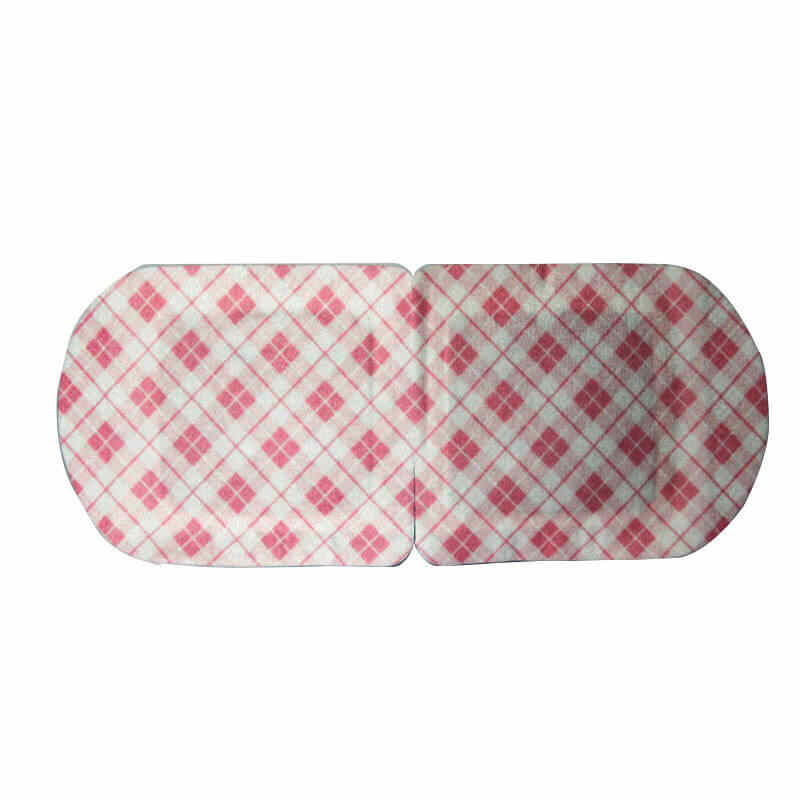
Step 1: write the claims. Four claims are drafted. The steam eye mask warms the eye area; it helps the wearer relax; it relieves eye fatigue; and it delivers about twenty minutes of warmth.
Step 2: classify each claim. Warming is sensory. Relaxation is sensory. Relief of eye fatigue is physiological and, depending on the market, may be treated as therapeutic. The duration figure is a quantified performance statement.
Step 3: select the route per market. The table below shows the result for the same steam eye mask in three markets.
| Market | Effect of dropping the fatigue claim | Effect of keeping it |
|---|---|---|
| United States | Cosmetic route under 21 CFR Part 700 | Moves toward drug or device route, with the corresponding evidence |
| European Union | Cosmetic route under Regulation (EC) No 1223/2009, with notification under Article 10 and a PIF under Article 11 | Moves toward the medical device route under EU MDR 2017/745, or the medicinal product framework |
| Japan | Cosmetic classification where no physiological effect is claimed | Quasi-drug pathway with ingredient review |
Step 4: resolve what does not change. The steam eye mask must meet the ASTM F2871 safety benchmark, including the peak temperature ceiling of 50 degrees Celsius, whatever route is chosen. The twenty-minute duration claim requires measurement data at a defined ambient condition whichever route applies. If menthol is present at a level intended to produce a therapeutic effect, the concentration has to be documented and the applicable review triggered, which typically moves a steam eye mask toward the drug or quasi-drug framework rather than the cosmetic route.
Step 5: request the file. For the cosmetic route in the European Union the request is a notification record, a product information file with a safety assessment, and a declaration that matches the current formula. For the device route in the United States the request adds design control records under 21 CFR Part 820.30 and thermal performance data. The steam eye mask programme that starts with the claim set rather than the artwork ends up requesting the right file on the first attempt.
Step 6: freeze artwork last. The worked example produces two artwork variants: one cosmetic version for the EU and one device-supporting version for the US if the fatigue claim is retained. Producing both from a single master layout, before either is printed, is the step that most often protects a launch schedule.
Treated this way, the route decision for a steam eye mask takes a working session rather than a project. The matrix exists so that the decision can be made once, in the right order, with the claim set as the input rather than the output.
About KONGDY

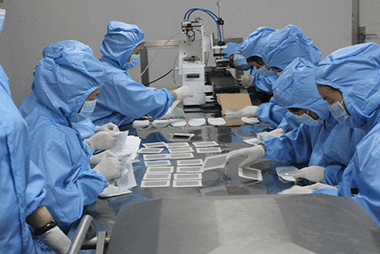
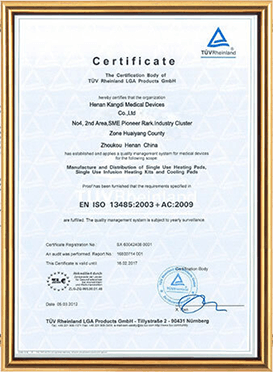
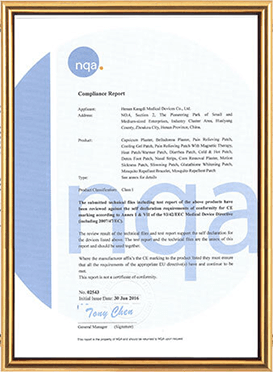
Henan Kongdy Medical Devices Co., LTD. (KONGDY) was founded in 1989 and has 37 years of production experience as of 2026 in pain relief patches, slimming patches, capsicum plasters, heat patches, cooling gel patches, detox foot patches, steam eye masks, mosquito repellent patches, and nose strips. Headquartered in Henan, China, KONGDY operates a 100,000-class GMP workshop (built 2008) and obtained ISO 13485 medical device Quality Management System European Standard Certification in 2014. The company runs OEM and ODM services for international brands across multiple regulatory pathways. For 2026 procurement evaluation, our qualification team can provide ISO 13485 certificate, GMP workshop audit reports, and reference customer case studies upon request via our contact page.
Frequently Asked Questions
Is a steam eye mask a cosmetic or a medical device?
It depends on the claim set. With sensory warmth and relaxation claims it can be a cosmetic under 21 CFR Part 700 in the United States and Regulation (EC) No 1223/2009 in the European Union. A thermal therapy claim moves it to the device route under 21 CFR Part 800 / Part 880 or EU MDR 2017/745 Annex VIII Rule 1.
What concentration limits apply if menthol is added?
Where the product is treated as an external analgesic and the OTC monograph at 21 CFR Part 348.10 applies, menthol is permitted from 3 to 16 percent, methyl salicylate from 10 to 30 percent, and camphor from 3 to 11 percent, with a Drug Facts label in the 21 CFR Part 201.66 format.
Which market has a category that has no US equivalent?
Japan and Korea. Both have a quasi-drug category for products claiming a physiological or therapeutic effect, which sits between cosmetic and drug and brings an ingredient review process. That category is the reason those markets tend to have longer clearance times than an EU cosmetic notification.
Does ASTM F2871 apply on every route?
It functions as a safety benchmark for self-heating products regardless of the regulatory route, including a peak temperature ceiling of 50 degrees Celsius. Because it does not change with the route, it is the item that can be resolved first without waiting for the route decision.
Can one claim set serve five markets?
Only where the routes overlap. A sensory-only claim set can serve the United States and the European Union on the cosmetic route with different label formats. Where one market treats the same statement as a device claim, two artwork versions are required.
What is the most expensive mistake in route selection?
Finalising artwork before the route and claim set are locked. Artwork revision touches every market, requires re-approval, and can invalidate printed stock. The October 2026 warning letter to Aidance Scientific (reference 735346) illustrates the other end of the same problem: the enforcement trigger was product presentation, not the factory.
How many sequential stages separate the cosmetic route from the device route?
The cosmetic route requires a notification and a product information file. The device route adds classification, technical documentation, a quality system audit and, where applicable, clinical evaluation. That step difference, rather than any fee schedule, is what drives the timeline difference.
Where can the underlying frameworks be checked?
The United States framework is in 21 CFR Parts 700, 800, 820, 880, 201 and 348. The European framework is in Regulation (EC) No 1223/2009 and EU MDR 2017/745. National classification rules for Japan, Korea and China are published by the respective authorities.
Related Guides
- Steam Eye Mask OEM Services at KONGDY
- Steam Eye Mask Product Range
- Why the FDA Now Reviews Your Amazon Listing: Lessons from Warning Letter 735346
- EU Safety Gate 2026: 1,528 China-Origin Alerts in 38 Weeks
- 5 Steam Eye Mask OEM Mistakes That Trigger FDA OTC-vs-Medical-Device Reclassification in 2026
- Will 2027 EU CSRD Make Your Steam Eye Mask OEM Uncompetitive in 2026
- How to Reduce Steam Eye Mask OEM Unit Cost by 18 Percent in 2026
- Can AI-Assisted Thermal Curve Modeling Cut Your Heat Patch OEM Time-to-Market in 2026
- Cooling Gel Patch OEM Services
- Mosquito Repellent OEM Services
- KONGDY OEM and ODM Manufacturing
- About KONGDY
- News Archive
- Contact KONGDY


