-
 KONGDY
EU Safety Gate 2026: 1,528 China-Origin Alerts in 38 Weeks (57.4 Percent) - What Cosmetic Patch Exporters Must Change Before 2027
EU Safety Gate 2026: 1,528 China-Origin Alerts in 38 Weeks (57.4 Percent) - What Cosmetic Patch Exporters Must Change Before 2027
The European Commission's Safety Gate, the rapid alert system for non-food dangerous consumer products, published 2,663 alerts across weeks 1 to 38 of 2026, covering the period from 9 January to 25 September. Of those, 1,528 involved products originating in China, which is 57.4 percent of the total. In the equivalent weeks of 2025 the same measure was 40.1 percent. That is a rise of 17.3 percentage points in a single year.
For an exporter of cosmetic-class products, a detox foot patch among them, two questions follow from those numbers. The first is what the jump actually measures, because the instinctive reading is usually wrong. The second is what a specific exporter should change, given that the framework behind the alerts is Regulation (EU) 2023/988, the General Product Safety Regulation, operating across 30 participating countries.
This article works through the dataset in layers: the totals, the share shift and what it does and does not mean, where cosmetics sit inside the risk map, the three substance families that drive cosmetic alerts, four specific notifications published in January 2026 with the product, the substance and the measure taken, and finally the three changes an exporter can make before 2027.
The Dataset: 2,663 Alerts Across 38 Weeks
Safety Gate publishes weekly. Each alert carries a case number, a notifying country, the product category, the risk identified, and the measure taken. The counts below use the case number as the unit, so each alert is counted once even when it appears in more than one weekly report.
| Dataset element | Value |
|---|---|
| Reporting period | Weeks 1 to 38 of 2026 (9 January to 25 September) |
| Total alerts | 2,663 |
| Alerts involving China-origin products | 1,528 |
| China-origin share | 57.4 percent |
| Same share in weeks 1 to 38 of 2025 | 40.1 percent |
| Year-on-year change | +17.3 percentage points |
| Legal framework | Regulation (EU) 2023/988 (GPSR) |
| Participating countries | 30 (27 EU member states plus Norway, Iceland, Liechtenstein) |
| Source | European Commission Safety Gate weekly reporting series |
The 2025 comparison is worth treating carefully. The Safety Gate 2025 annual report records 4,671 alerts for the full year, with 2,006 on China-origin products. An independent recount of the same 2025 weekly reports produced 4,705 total and 2,020 for China, which is within one percent of the Commission's own figures. The two counting methods agree closely enough that the 2026 share shift is a real movement rather than a reporting artefact.

The Number That Matters: China's Share Went From 40.1 to 57.4 Percent
A share figure can rise for three different reasons, and they imply different responses. The table below separates them.
| Possible cause of a rising share | What it would look like in the data | What an exporter should do |
|---|---|---|
| More products from that origin entering the market | Total alerts rise, share rises roughly in proportion | Compete on documentation quality to differentiate |
| Higher enforcement density on that origin | Share rises faster than the total | Assume review is more likely, not less |
| Documentation gaps at the point of review | Alerts concentrate on substance disclosure and declaration defects | Fix the file before the product |
The 2026 dataset is consistent with the second and third explanations acting together. A 17.3 point shift in one year is larger than a shift in market composition alone would produce. And when the individual notifications are read, the triggers are overwhelmingly documentation-related: a prohibited substance visible in a declared ingredient list, or a declaration that could not be supported. Those are defects a reviewer can identify from paperwork, without touching the product.
The practical translation: a share shift of this size is not evidence that products became less safe. It is evidence that the review process became more productive, and that incomplete files are now more likely to be caught.

Reading the Jump Correctly: What It Is and What It Is Not
Three statements are supportable from the published data, and three are not.
| Supportable | Not supportable |
|---|---|
| The absolute number of China-origin alerts rose sharply between the two periods | That product quality from that origin declined by a comparable amount |
| Enforcement output per reporting week increased | That every alert represents a safety incident that harmed a consumer |
| Documentation and substance-declaration defects are the dominant trigger type in cosmetics | That a compliant file is sufficient to avoid all future scrutiny |
The distinction matters because it changes where effort goes. If the problem were product quality, the response would be reformulation and testing. If the problem is documentation productivity, the response is file completeness, declaration accuracy, and the ability to produce evidence on request. The January 2026 notifications point to the second category.
One further caution about the share figure: it is a ratio. If enforcement output rises across all origins, a share can fall while the absolute count for the same origin rises. The 2026 comparison holds the reporting weeks constant, which is why the share movement can be read directly in this case, but the absolute count is the number to track for an individual exporter.
Where Cosmetics Sit: 76 of 2,663
China-origin alerts in weeks 1 to 38 of 2026, by product category, give the risk map its shape. Eight categories account for the large majority of the total.
| Rank | Product category | China-origin alerts | Characteristic consequence |
|---|---|---|---|
| 1 | Toys | 456 | Withdrawal, recall |
| 2 | Electrical appliances and equipment | 405 | Withdrawal, import refusal |
| 3 | Childcare articles and children's equipment | 77 | Withdrawal, recall |
| 4 | Cosmetics | 76 | Withdrawal, destruction, recall from end users |
| 5 | Lighting chains | 61 | Withdrawal |
| 6 | Machinery | 58 | Withdrawal |
| 7 | Chemical products | 45 | Withdrawal, restriction |
| 8 | Clothing, textiles and fashion items | 44 | Withdrawal |
Cosmetics rank fourth by count with 76 alerts. The count understates the consequence profile. Toy and electrical alerts are typically resolved by withdrawal from the market. Cosmetic alerts in the same period include destruction of stock, bans on marketing, and recall from end users, which means the measure can reach the consumer rather than stopping at the distribution chain.
For a detox foot patch exporter, the relevant reading is that the category is small enough in absolute count to be manageable, and serious enough in consequence that the per-alert cost is high. A single alert that reaches end-user recall does more than remove stock. It changes the relationship with every buyer that carries the product.

Three Substance Families Behind the Cosmetic Alerts
Reading the notification detail rather than the count, the cosmetics alerts cluster into three substance families. Each has a different origin and a different fix.
| Family | Representative substances | Typical origin of the defect | Framework reference |
|---|---|---|---|
| Prohibited fragrance allergens | BMHCA (Lilial), HICC | Legacy fragrance formulas that were compliant when designed | Regulation (EC) No 1223/2009, Annex II |
| Process chemicals in cured materials | TPO (a photoinitiator) | Residue from UV curing in nail and coating products | Same annex, substance-specific restrictions |
| Preservatives and restricted actives | Formaldehyde, delta-9-THC | Preservative systems and botanical extracts | Same annex, plus labelling duties under Article 19 |
Two observations follow. First, none of the three families requires a new product to be unsafe in use at the declared concentration. BMHCA and HICC were widely used fragrance components before classification changed. TPO is a processing residue rather than an intended ingredient. Formaldehyde appears through preservative chemistry. In each case the defect is that the declaration and the classification no longer match.
Second, all three families can be checked from the ingredient list and the supplier documentation. A patch exporter does not need a laboratory programme to reduce this exposure materially. It needs a current substance screen, a supplier certificate of analysis for each raw material, and a declaration that has been re-verified since the last annex amendment.
Four January 2026 Notifications, Decoded
The following four notifications were published in the January 2026 weekly reports. They are reproduced here at case level, with the notifying country, the product, the finding, and the measure required.
| Notifying country | Product | Finding | Measure |
|---|---|---|---|
| Bulgaria | Two perfumes | Ingredient list showed BMHCA (Lilial) and HICC, both prohibited in cosmetics | Withdrawn from the market |
| Czechia | Several gel nail polishes | Ingredient list showed TPO, prohibited in cosmetics | Products destroyed; marketing ban and accompanying measures |
| Lithuania | A skin care oil | Contained delta-9-THC and delta-9-THCA | Withdrawn from the market |
| Slovakia | Two hair care products; multiple shampoo, mask, conditioner and leave-in lines | Formaldehyde in two products; BMHCA across the wider group | Sales ceased; withdrawn from the market and recalled from end users |
Three patterns are visible across the four cases. The trigger is the ingredient list in each instance, which means the finding was available before any laboratory work. The measure escalates with the finding: a single undeclared prohibited substance can lead to destruction rather than simple withdrawal. And in the Slovakian case the measure reached end users, which is the most expensive outcome in the set because it requires consumer contact.
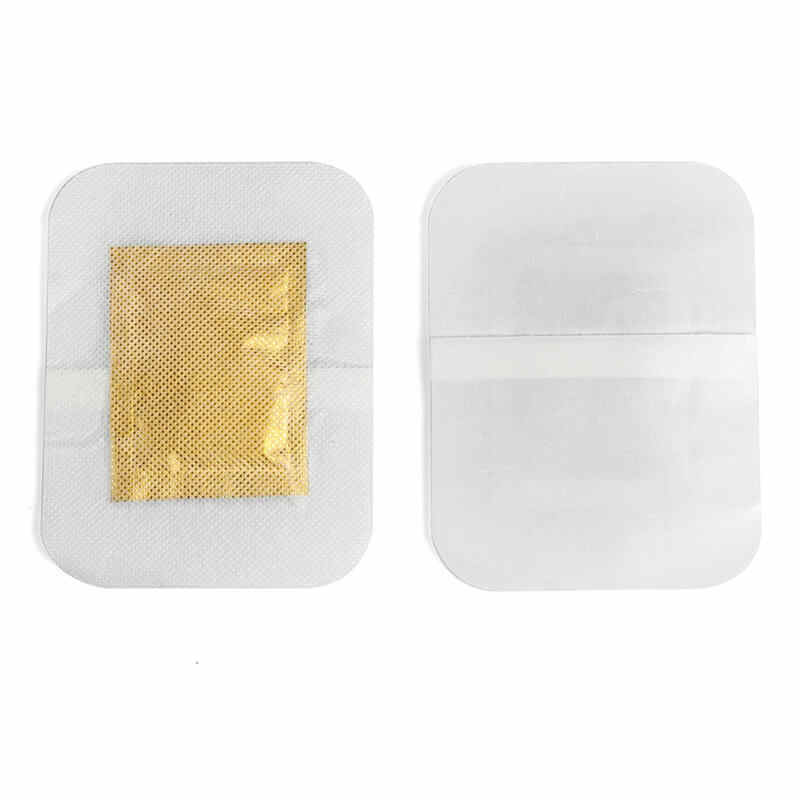
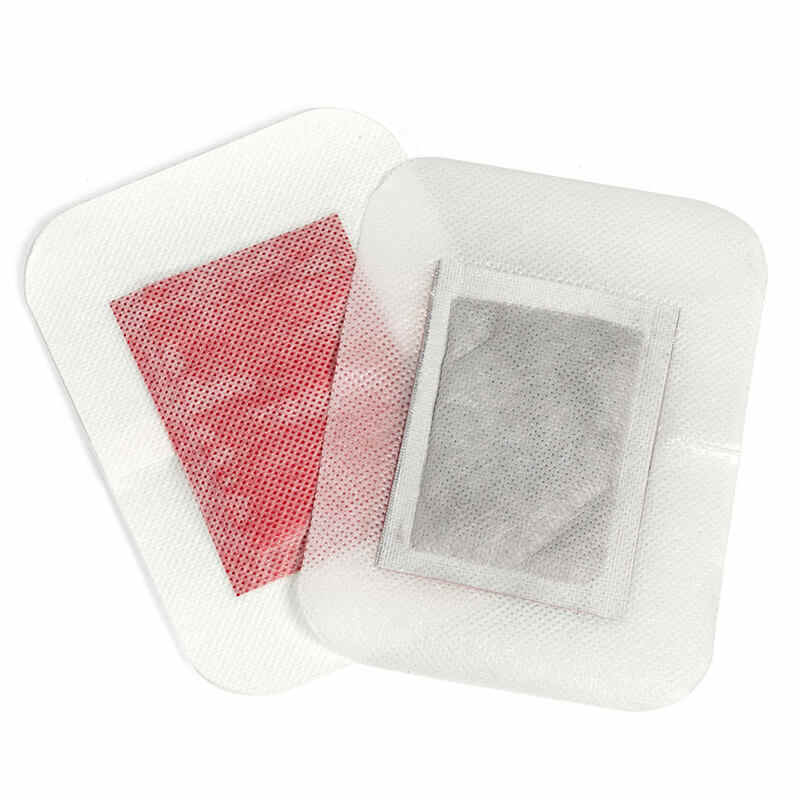
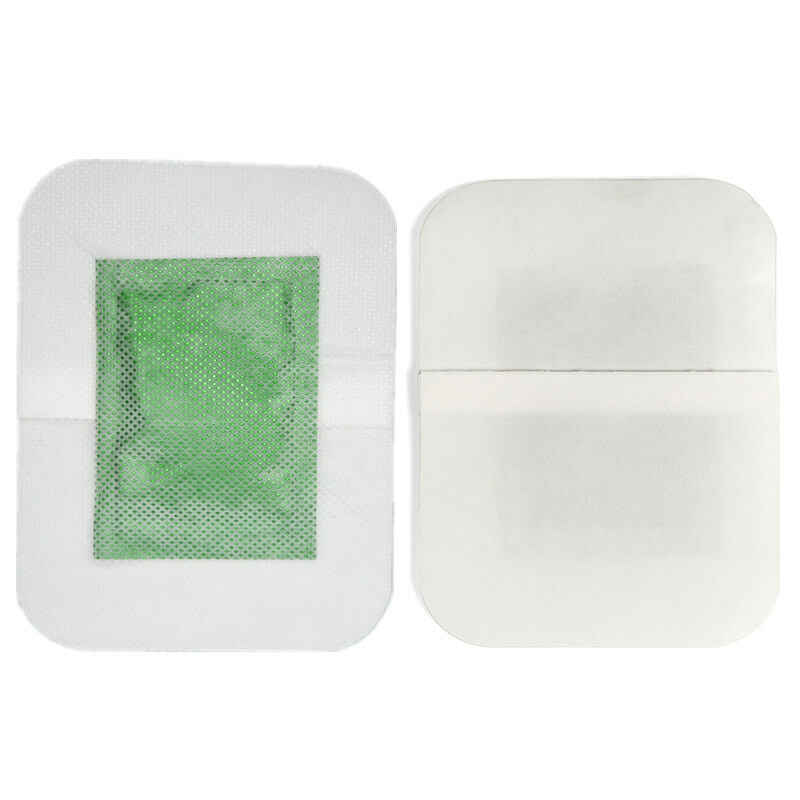
Application to patches. A detox foot patch carries botanical extracts and a preservative system. Both are inside the substance families above. A declaration that was accurate at the time the file was created can become inaccurate after an annex amendment, and the notification record does not follow the product's regulatory history. It reflects the state of the declaration at the time of review.
What This Means for Detox Foot Patch Exporters
A detox foot patch sold in the European Union as a cosmetic sits under Regulation (EC) No 1223/2009, with notification through the Cosmetic Products Notification Portal under Article 10, a Product Information File under Article 11, labelling duties under Article 19, and substance restrictions under Article 22 read together with the annexes. The Safety Gate dataset is the visible end of that framework.
Four implications follow directly from the data reviewed above.
- Review probability is higher than it was. A 17.3 point share shift in one year indicates more review activity overall, not less. An exporter should treat the current probability of review as higher than the historical rate.
- The file is the first line of defence. Every January 2026 case in the list above was triggered by documentation. A complete file does not guarantee clearance, but an incomplete file creates exposure that has nothing to do with product safety.
- Consequence scales faster than probability. Cosmetics rank fourth in count but include destruction and end-user recall among the measures. The expected cost per alert is therefore higher than the count ranking suggests.
- The Responsible Person is the anchor. Under the framework, notification and file custody sit with a legal entity established in the Union. Where that entity is weakly defined, the entire documentation chain becomes harder to defend.

Three Changes to Make Before 2027
These three changes address the failure modes visible in the dataset. None of them requires a new formulation.
| # | Change | What it fixes | Framework reference |
|---|---|---|---|
| 1 | Re-verify the substance screen against the current annex status for every raw material, including botanical extracts and preservative systems | The prohibited-substance family of defects | Regulation (EC) No 1223/2009, Article 22 and Annex II |
| 2 | Rebuild the declaration so that ingredient names, ordering and any allergen disclosure match what is actually in the product at the current formula revision | The declaration-mismatch family of defects | Article 19 labelling duties |
| 3 | Confirm the Responsible Person and the Product Information File custodian in writing, with a dated index of the file contents | The custody and traceability gap that makes every other defect harder to answer | Articles 4, 5, 10 and 11 |
The third change is the one that most often turns a minor finding into a serious one. Where the file custodian cannot be identified quickly, the response window is consumed by reconstructing documents instead of answering the substance of the finding.
A practical way to verify readiness is to request the same three items from a supplier that a notifying authority would request: a current substance screen, a declaration that matches the current formula, and a named file custodian. If any of the three cannot be produced within a week, the exporter has an identified exposure rather than an unknown one, which is a better position to be in.
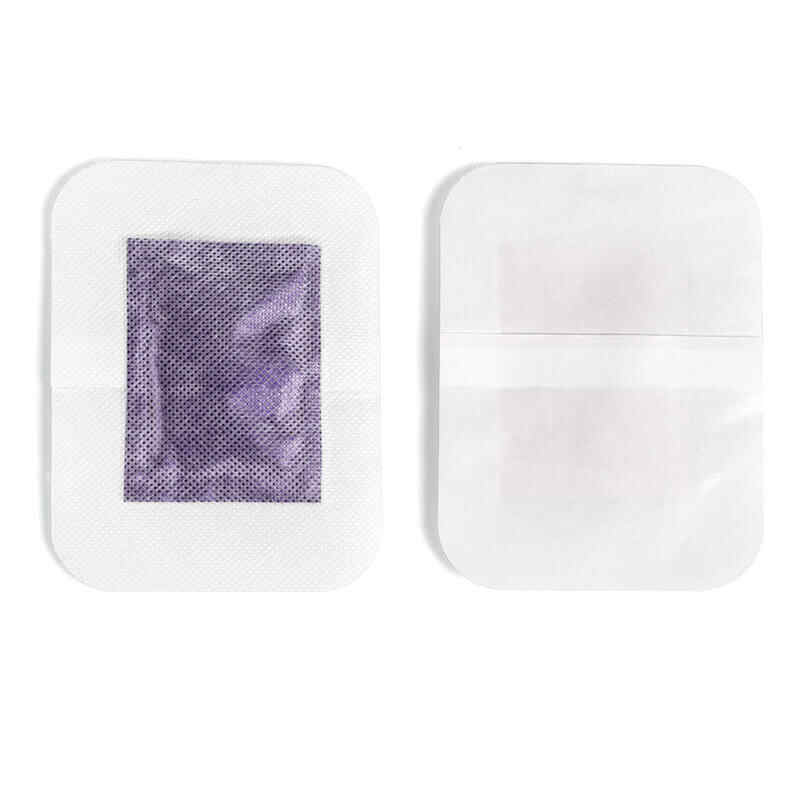
A 5-Step File Audit for a Detox Foot Patch
The dataset above describes the review environment. This section converts it into an audit that can be run on a single detox foot patch file, in the order a notifying authority would work through it.
| Step | Action on the detox foot patch file | Document produced |
|---|---|---|
| 1 | List every raw material in the detox foot patch, including botanical extracts such as bamboo vinegar, wood vinegar and tourmaline, plus the full preservative system, and verify each against the current Annex II status | Dated substance screen |
| 2 | Reconcile the printed declaration on the detox foot patch pack against the current formula revision, checking ingredient ordering and allergen disclosure | Declaration reconciliation sheet |
| 3 | Obtain written confirmation of the legal entity that carries the detox foot patch notification, with its establishment address in the Union | Responsible Person confirmation |
| 4 | Build a dated index of the Product Information File for the detox foot patch, covering the safety report, stability data and label artwork | PIF index |
| 5 | Run a response drill: simulate an incoming question about the detox foot patch and measure how long the three core documents take to produce | Response time record |
The fifth step produces the most useful single number in the whole exercise. Every notification case reviewed earlier was decided on documents that the operator either had or did not have ready. A detox foot patch whose three core documents can be produced within one working day is in a materially different position from one whose documents have to be assembled from three departments and two suppliers.
Steps one and two address the substance and declaration families of defects, which is where the January 2026 notifications concentrated. Step three addresses the custody question that determines whether a response is coherent. Step four makes the file auditable rather than merely present. Step five measures whether the whole chain works when it is under time pressure, which is the only condition that matters in practice.
Run on a quarterly cycle, the audit turns a detox foot patch file from a static document set into a maintained asset. The dataset reviewed above suggests that maintenance, rather than formulation change, is the variable that most exporters can still control before 2027.
A note on scope. This audit does not replace a laboratory programme or a formal safety assessment, and it is not a guarantee against notification. What it does is remove the defect classes that the 2026 dataset shows are recorded most frequently: an undeclared prohibited substance, a declaration that no longer matches the formula, and a file that cannot be produced when it is requested. Those three account for a substantial share of the cosmetic cases reviewed above, and they are also the cheapest to eliminate. An exporter that closes them still carries product risk, but it no longer carries administrative risk on top of it, which is the part the dataset can actually measure.
About KONGDY

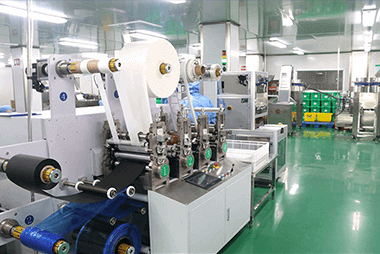
Henan Kongdy Medical Devices Co., LTD. (KONGDY) was founded in 1989 and has 37 years of production experience as of 2026 in pain relief patches, slimming patches, capsicum plasters, heat patches, cooling gel patches, detox foot patches, steam eye masks, mosquito repellent patches, and nose strips. Headquartered in Henan, China, KONGDY operates a 100,000-class GMP workshop (built 2008) and obtained ISO 13485 medical device Quality Management System European Standard Certification in 2014. The company runs OEM and ODM services for international brands across multiple regulatory pathways. For 2026 procurement evaluation, our qualification team can provide ISO 13485 certificate, GMP workshop audit reports, and reference customer case studies upon request via our contact page.
Frequently Asked Questions
How many alerts did EU Safety Gate publish in 2026 so far?
In weeks 1 to 38, covering 9 January to 25 September 2026, the system published 2,663 alerts. Of those, 1,528 involved China-origin products, which is 57.4 percent of the total.
What was the China-origin share in 2025 for comparison?
In the equivalent weeks of 2025 the share was 40.1 percent, so the 2026 figure represents a rise of 17.3 percentage points year over year. For the full year 2025 the Commission reported 4,671 alerts with 2,006 on China-origin products.
Does the rising share mean product quality declined?
No, and the dataset does not support that reading. A 17.3 point shift in one year is larger than a change in market composition would produce, and the individual notifications are triggered by documentation and declaration defects rather than safety incidents in use. The share measures enforcement productivity as much as product risk.
Which product categories produce the most China-origin alerts?
Toys lead with 456 alerts, followed by electrical appliances and equipment at 405, childcare articles at 77, and cosmetics at 76, based on weeks 1 to 38 of 2026. Cosmetics rank fourth by count.
Why are cosmetic alerts considered higher consequence than their count suggests?
Because the measures escalate further. While toy and electrical alerts are often resolved by market withdrawal, cosmetic notifications in January 2026 included destruction of stock, bans on marketing, and recall from end users, which places the measure in front of the consumer rather than stopping at distribution.
Which substances appear most often in cosmetic alerts?
Three families dominate the January 2026 notifications: prohibited fragrance allergens such as BMHCA (Lilial) and HICC, process chemicals such as TPO from UV curing, and preservatives or restricted actives including formaldehyde and delta-9-THC.
What framework governs a detox foot patch sold as a cosmetic in the EU?
Regulation (EC) No 1223/2009, with notification under Article 10 through the Cosmetic Products Notification Portal, a Product Information File under Article 11, labelling duties under Article 19, and substance restrictions under Article 22 together with the annexes. The Safety Gate system sits on top as the alert layer under Regulation (EU) 2023/988.
Where can the underlying data be checked?
The European Commission publishes Safety Gate weekly reports, and several national authorities republish the same notifications. The Commission also publishes an annual Safety Gate report that provides the full-year totals used for comparison here.
Related Guides
- Detox Foot Patch OEM Services at KONGDY
- Detox Foot Patch Product Range
- 5 Detox Foot Patch OEM Mistakes That Trigger FDA Cosmetic-vs-Drug Reclassification in 2026
- Will 2027 EU CSRD Make Your Detox Foot Patch OEM Uncompetitive in 2026
- How to Reduce Detox Foot Patch OEM Unit Cost by 18 Percent in 2026
- 5 Slimming Patch OEM Mistakes That Trigger CPNP Rejection in 2026
- Will 2027 EU CSRD Make Your Slimming Patch OEM Uncompetitive in 2026
- 5 Cooling Gel Patch OEM Mistakes That Trigger FDA OTC Monograph Reclassification in 2026
- Slimming Patch Product Range
- Capsicum Plaster OEM Services
- KONGDY OEM and ODM Manufacturing
- About KONGDY
- News Archive
- Contact KONGDY


