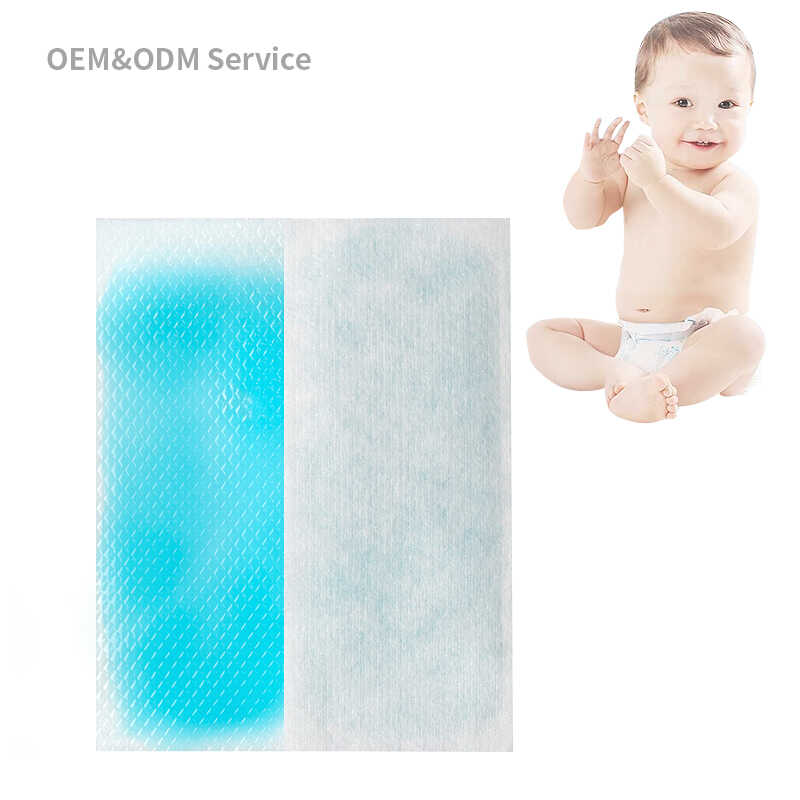
-
 KONGDY
Why the FDA Now Reviews Your Amazon Listing: Lessons from Warning Letter 735346 for Cooling Gel Patch Sellers
Why the FDA Now Reviews Your Amazon Listing: Lessons from Warning Letter 735346 for Cooling Gel Patch Sellers
On October 1, 2026, the US Food and Drug Administration issued Warning Letter 735346 to Aidance Scientific, Inc. of Woonsocket, Rhode Island. The letter concerns a single product, Terragen HG Formula, which FDA classified as an unapproved new drug under section 505(a) of the Federal Food, Drug, and Cosmetic Act. What makes this letter worth reading for anyone selling cooling gel patches is not the product. It is how FDA found the problem. According to the letter itself, violations were identified during a review of the company's website and Amazon storefront in July 2026. No manufacturing inspection is mentioned as the basis of the finding. FDA read the listing.
For a cooling gel patch seller, that changes the risk map. A cooling gel patch can be marketed as a cosmetic, or as an OTC external analgesic under 21 CFR Part 348.10, depending on the claims on the page. The difference is not in the hydrogel. It is in the words. This article walks through the warning letter layer by layer: the facts as published, the four statutory citations and how they connect, the enforcement entry point that is shifting from the factory floor to the product page, where a cooling gel patch crosses the same line, what the 2025 and 2026 enforcement volume tells us, and a seven-point audit a seller can run on its own listing before anyone else does.
The Facts: What Warning Letter 735346 Actually Says
The letter is a short document with a narrow factual scope. It identifies one product, one legal theory, and one review method.
| Item | Detail |
|---|---|
| Reference number | MARCS-CMS 735346 |
| Issue date | October 1, 2026 |
| Addressee | Aidance Scientific, Inc., 184 Burnside Ave, Woonsocket, RI 02895, United States |
| Product named | Terragen HG Formula |
| Legal classification | Unapproved new drug, section 505(a) FD&C Act, 21 U.S.C. 355(a) |
| Prohibited acts cited | Section 301(d) FD&C Act (21 U.S.C. 331(d)) |
| Basis of the review | Review of the company website and Amazon storefront, July 2026 |
| Source | FDA public warning letter database |
Two sentences in the letter carry the whole argument. The first states that no approved application under section 505 is in effect for the product. The second states that introducing or delivering the product for introduction into interstate commerce violates sections 301(d) and 505(a). There is no allegation of adulteration, no finding about the manufacturing facility, and no reference to a Form 483 inspection report. The entire case rests on how the product was presented to buyers online.
Why this matters to a patch seller: the enforcement trigger was commercial communication, not production. A cooling gel patch manufacturer can hold every certificate in the industry and still see a letter like this issued to its distributor if the product page made a drug claim the product cannot legally support.

The Legal Chain: 505(a) to 21 U.S.C. 355(a) to 301(d) to 331(d)
Four citations appear in the letter. They are not four separate problems; they are one chain, and each link does a specific job.
| Citation | What it does | Why it appears |
|---|---|---|
| FD&C Act section 505(a), 21 U.S.C. 355(a) | Requires an approved application before a new drug may be introduced into interstate commerce | Establishes that the product needed approval and does not have it |
| FD&C Act section 301(d), 21 U.S.C. 331(d) | Prohibits introducing or delivering for introduction any article that is an unapproved new drug | Converts the status (unapproved) into a prohibited act |
| 21 CFR Part 348.10 | Sets the external analgesic OTC monograph concentration limits | Provides the lawful alternative route when a product stays inside the monograph |
| 21 CFR Part 201.66 | Sets the Drug Facts label format | Defines what a compliant OTC label must look like if the monograph route is used |
Read as a chain, the logic is: the product is a drug because of how it is presented; it has no approved application; therefore its introduction into interstate commerce is a prohibited act. There is no need for a facility inspection to complete this argument. The chain can be closed entirely from the product page, the label artwork, and the absence of an approval record.
For a cooling gel patch, the practical question is which route the product is on. Two lawful routes exist, and they have different evidence requirements.
- Cosmetic route: the claims are limited to cooling, freshness, sensory effect, and appearance. The framework is 21 CFR Part 700 in the United States and Regulation (EC) No 1223/2009 in the European Union. No Drug Facts box is required, but any claim still has to be substantiated.
- OTC monograph route: the product makes an analgesic or therapeutic claim and stays inside the 21 CFR Part 348.10 concentration limits, with a Drug Facts label in the 21 CFR Part 201.66 format. Menthol is permitted from 3 to 16 percent, methyl salicylate from 10 to 30 percent, and camphor from 3 to 11 percent under that monograph.
The failure mode that produces a letter like 735346 is a third state: drug claims on a product that is not on either route. That state has no lawful path, regardless of how good the hydrogel is.

The Real Shift: FDA Read the Website and Amazon Storefront, Not the Factory
The traditional enforcement path for a manufacturing problem runs through an inspection. FDA visits a facility, issues a Form 483 listing observations, and escalates to a warning letter when the response is inadequate. That path is time-consuming and requires physical access. The path used in Warning Letter 735346 is different and much shorter.
| Path | First step | What FDA needs | Time to letter |
|---|---|---|---|
| Traditional (manufacturing) | Facility inspection | Physical access, Form 483, response review | Months |
| Online claim review | Website and marketplace review | Public product page text | Weeks |
The 2026 enforcement volume supports the reading that online review has become a standing channel, not an exception.
| Period | Volume | Source |
|---|---|---|
| FY2024 (drug and biologics firms) | 190 warning letters | FDA data, cited in industry analysis |
| FY2025 (drug and biologics firms) | 303 warning letters, a 59 percent increase | FDA data, cited in industry analysis |
| March 2026 | An additional 30 letters from CDER | Law firm mid-year enforcement review |
| June 2026 | A further 25 letters | Same review |
| 2026 (online sellers) | 12 letters issued in one tranche, including a major online marketplace | Same review |
One detail from the same enforcement review is worth repeating because it shows how broad the evidence base has become: in one case FDA cited a podcast interview in which a company's chief scientific officer described the product, and treated those statements as promotional claims. The lesson is not that podcasts are dangerous. The lesson is that any public statement about a product can become the evidentiary basis for a drug classification decision, and that the review does not require a site visit.
Where a Cooling Gel Patch Crosses the Same Line
The line for a cooling gel patch is drawn by the verbs and the outcomes in the claim, not by the ingredients list alone. The table below contrasts claims that keep a product on the cosmetic route with claims that move it into drug territory, using the framework that 21 CFR Part 348.10 and 21 CFR Part 700 define.
| Claim type | Example wording | Likely route | Evidence needed |
|---|---|---|---|
| Sensory cooling | Cools and refreshes the skin | Cosmetic | Substantiation for the sensory claim |
| Appearance | Reduces the look of puffiness | Cosmetic | Substantiation, careful wording |
| Pain relief | Relieves minor aches and pains | OTC monograph required | 21 CFR Part 348.10 limits plus 21 CFR Part 201.66 Drug Facts |
| Treatment | Treats inflammation or injury | Drug, no OTC monograph route | Approved application; otherwise unapproved new drug |
| Duration claim | Cools for 8 hours | Routes on the underlying claim | Measured time and temperature data |
Two operational consequences follow. First, a patch that is chemically identical can be sold lawfully on one route and unlawfully on the other, and the difference is decided by the copy on the page. Second, the moment a duration claim appears, a substantiation file becomes necessary regardless of the route, because the claim has to be supported by data the seller can produce.
A note on concentration. Staying inside the monograph is a necessary condition for the OTC route, not a licence to make any claim. A patch at 12 percent menthol is inside the 3 to 16 percent monograph range, but a claim that it treats a specific condition still leaves the monograph path entirely.
The 2026 Enforcement Pace: What the Numbers Imply for Patch Sellers
The volume trend matters because it changes the probability attached to any single listing. Three observations are supportable from the published figures.
- The base rate is rising. A 59 percent increase from FY2024 to FY2025 in letters to drug and biologics firms means the same listing carries higher expected exposure in 2026 than it did two years earlier.
- Letters are arriving in tranches. The 30-letter tranche in March 2026 and the 25-letter tranche in June 2026 indicate batch review processes rather than one-off complaints. A tranche is preceded by a screening exercise, which is the stage at which a listing either survives or does not.
- Marketplaces are in scope. The 2026 tranche that named 12 online sellers, including a major marketplace, shows that the platform and the seller can both be addressed in the same exercise.
For a cooling gel patch seller, the operational reading is that a listing is not a marketing asset with occasional regulatory side effects. It is a document that is reviewed on its own terms, on a schedule the seller does not control.
The European Mirror: The Same Listing Problem Under EU Rules
United States enforcement is only half of the exposure. The European Commission's Safety Gate, the system formerly known as RAPEX, publishes weekly alerts on non-food consumer products including cosmetics, and the 2026 volume shows an active channel operating on the same principle: the product's presentation and documentation are examined, and the result is published.
| Metric | 2026 (weeks 1 to 38) | 2025 (same weeks) |
|---|---|---|
| Total alerts | 2,663 | Not compared on the same basis here |
| Alerts on China-origin products | 1,528, or 57.4 percent | 40.1 percent |
| Change in China share | +17.3 percentage points year over year | |
| Cosmetics category (China-origin) | 76 alerts | Category rank: fourth largest |
| Framework | Regulation (EU) 2023/988 (GPSR), 30 participating countries | |
| Source | European Commission Safety Gate weekly reporting series | |
Four categories of notification published in January 2026 illustrate the substance-level triggers that dominate cosmetic alerts. They are worth reading in full because they are the same substance families that appear in patch formulations and adjacent products.
| Notifying country | Product | Issue | Measure |
|---|---|---|---|
| Bulgaria | Two perfumes | BMHCA (Lilial) and HICC, prohibited in cosmetics | Withdrawn from market |
| Czechia | Several nail polishes | TPO (a photoinitiator), prohibited in cosmetics | Destroyed; marketing banned |
| Lithuania | A skin care oil | Delta-9-THC and delta-9-THCA | Withdrawn from market |
| Slovakia | Two hair care products; multiple shampoo, mask and conditioner lines | Formaldehyde (prohibited) and BMHCA | Sales ceased; withdrawn and recalled from end users |
The structural parallel to the US case is the trigger mechanism. In both systems, the finding can be completed from the product's paperwork and presentation. For cosmetics the paperwork is the safety report and the notification file; for an OTC claim set it is the monograph calculation and the Drug Facts box. Neither requires a manufacturing inspection to establish the violation.
For a seller shipping a cooling gel patch to both the United States and the European Union, the practical consequence is that one claim set has to survive two frameworks at once. A claim that is acceptable as a cosmetic in the EU because it stays on sensory cooling may still trigger a US monograph question if the same wording is used on the US listing. The reverse also holds. The audit in the next section is therefore written to produce one claim set that can be defended in both places, rather than two listings that contradict each other.
Reading the 17-point jump correctly. The rise in China-origin alerts from 40.1 to 57.4 percent does not describe a change in manufacturing quality. It describes an increase in enforcement density combined with incomplete documentation at the point of review. The notifications above were triggered by prohibited substances being visible in an ingredient list and by declarations that could not be supported. Both are documentation issues before they are product issues.
A 7-Point Online Claim Audit for Cooling Gel Patch Sellers
This audit is designed to be run on a live listing in under an hour. Each point maps to a specific framework element.
| # | Check | Framework reference |
|---|---|---|
| 1 | List every claim verb on the page: cools, soothes, relieves, treats, repairs, reduces. Classify each as sensory, appearance, analgesic, or therapeutic. | 21 CFR Part 348.10, 21 CFR Part 700 |
| 2 | If any analgesic claim exists, confirm the active concentration sits inside the monograph limits. | 21 CFR Part 348.10 |
| 3 | If the analgesic route is used, verify the Drug Facts box matches the required format, order and bold text. | 21 CFR Part 201.66 |
| 4 | Delete or substantiate every duration and quantified performance claim, with the measurement method recorded. | FTC Act Section 5 substantiation |
| 5 | Check the images: a graphic showing a medical condition being treated is a claim even if the text is clean. | Same as text claims |
| 6 | Check every public statement about the product, including interviews, video, and social posts. | Enforcement practice seen in 2026 letters |
| 7 | Confirm the manufacturer can produce the documentation that supports whatever route the listing claims. | 21 CFR Part 820.30 design controls where applicable |
The seventh point is the one sellers most often skip, because it requires a conversation with the supplier rather than an edit to the page.
What to Ask Your OEM Before the First Listing Goes Live
These questions are written to be sent verbatim. They ask for documents, not assurances.
- Which regulatory route does this formulation support, and in writing? A one-page pathway memo naming the framework and the claim set is the minimum.
- If the OTC route is claimed, can you supply the monograph concentration calculation for the exact lot? The answer should reference 21 CFR Part 348.10 limits by active.
- If the cosmetic route is claimed, what substantiation exists for each performance claim? A claim register with linked evidence is the expected format.
- Who approves the final listing copy? A named reviewer with a documented checklist is stronger than a general quality statement.
- What happens if a claim is challenged? Ask for the corrective action procedure that covers the product page, not only the factory.
- Can you provide the same evidence to my distributor and my marketplace account manager? The listing is often written by someone outside the brand, and they need the same document set.
A supplier that answers these six questions in documents is doing the work that keeps a product page out of the enforcement channel. A supplier that answers them with reassurances is transferring that work to the seller.
About KONGDY

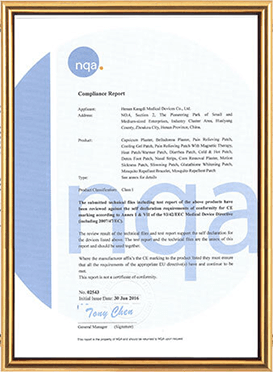
Henan Kongdy Medical Devices Co., LTD. (KONGDY) was founded in 1989 and has 37 years of production experience as of 2026 in pain relief patches, slimming patches, capsicum plasters, heat patches, cooling gel patches, detox foot patches, steam eye masks, mosquito repellent patches, and nose strips. Headquartered in Henan, China, KONGDY operates a 100,000-class GMP workshop (built 2008) and obtained ISO 13485 medical device Quality Management System European Standard Certification in 2014. The company runs OEM and ODM services for international brands across multiple regulatory pathways. For 2026 procurement evaluation, our qualification team can provide ISO 13485 certificate, GMP workshop audit reports, and reference customer case studies upon request via our contact page.
Frequently Asked Questions
What is Warning Letter 735346 about?
It is a warning letter FDA issued on October 1, 2026 to Aidance Scientific, Inc. of Woonsocket, Rhode Island, concerning the product Terragen HG Formula, which FDA classified as an unapproved new drug under section 505(a) of the FD&C Act, 21 U.S.C. 355(a). The underlying review covered the company's website and Amazon storefront.
Did FDA need to inspect the factory to issue that letter?
The letter as published does not describe a manufacturing inspection as the basis of the finding. It states that violations were identified during a review of the company's website and Amazon storefront in July 2026. The legal chain can be completed from public product presentation alone.
What concentration limits apply to a cooling gel patch on the OTC route?
Under 21 CFR Part 348.10, the external analgesic monograph permits menthol from 3 to 16 percent, methyl salicylate from 10 to 30 percent, and camphor from 3 to 11 percent. Staying inside those limits is necessary but not sufficient; the claims also have to match the monograph wording.
Can a cooling gel patch avoid the drug framework entirely?
Yes, if the claim set stays on the cosmetic route under 21 CFR Part 700 in the United States and Regulation (EC) No 1223/2009 in the European Union, covering sensory cooling, freshness and appearance rather than pain relief or treatment. Any therapeutic claim leaves that route.
How much did FDA warning letter volume grow?
For drug and biologics firms, FDA issued 190 warning letters in FY2024 and 303 in FY2025, a 59 percent increase. In 2026, an additional 30 letters were issued by CDER in March and a further 25 in June, with a 12-letter tranche aimed at online sellers.
Does a marketplace listing create risk for the brand owner?
It can. The 2026 tranche that named 12 online sellers, including a major marketplace, shows that platform and seller can be addressed in the same exercise. A brand owner is usually the party that controls the claim set, even when a third party writes the copy.
What is the single most useful document a seller can request from a supplier?
A one-page regulatory pathway memo that names the route, cites the framework, and lists the approved claim set for the exact formulation. Almost every downstream problem starts with the absence of that page.
Where can the source documents be checked?
The warning letter is published in FDA's public warning letter database under Aidance Scientific, Inc., reference 735346. The European equivalent dataset is the European Commission's Safety Gate weekly reporting series.
Related Guides

- Cooling Gel Patch OEM Services at KONGDY
- Cooling Gel Patch Product Range
- 5 Cooling Gel Patch OEM Mistakes That Trigger FDA OTC Monograph Reclassification in 2026
- How to Reduce Cooling Gel Patch OEM Unit Cost by 18 Percent in 2026
- Will 2027 EU CSRD Make Your Cooling Gel Patch OEM Uncompetitive in 2026
- Can AI-Assisted Thermal Curve Modeling Cut Your Heat Patch OEM Time-to-Market in 2026
- Will 2027 EU CSRD Make Your Detox Foot Patch OEM Uncompetitive in 2026
- Heat Patch Product Range
- KONGDY OEM and ODM Manufacturing
- About KONGDY
- News Archive
- Contact KONGDY


