-
 KONGDY
5 Slimming Patch OEM Mistakes That Trigger CPNP Rejection and EU Cosmetics Penalties in 2026 (Real Audit Cases from KONGDY)
5 Slimming Patch OEM Mistakes That Trigger CPNP Rejection and EU Cosmetics Penalties in 2026 (Real Audit Cases from KONGDY)
In January 2026 a Western European DTC brand asked us to re-audit a slimming patch OEM program that had already failed twice. The file showed 3 CPNP notification rejections in 14 months, EUR 41,000 of destroyed inventory, a 62-day market gap in 2 of 5 launch countries, and a 9-week slip on a second SKU whose patch formulation was never the problem. We have completed 214 supplier and program audits since 2024, and 7 of the 9 worst slimming patch OEM failures we logged were documentation failures, not product failures. Wang Lei, our Regulatory Lead, calls it the 80/20 trap: teams spend 80 percent of the budget on the patch and 20 percent on the file, then lose the launch to the file. This guide covers the 5 mistakes behind CPNP rejection and EU cosmetics penalties in 2026, 3 anonymized audit cases from 2024 to 2026, a 7-step risk mitigation checklist, 5 penalty and recall tiers, a 5-jurisdiction regulatory map with 8 red flags, 2026 market data, and 5 action items you can start within 30 days.
Question 1: What Are the 5 Slimming Patch OEM Mistakes That Trigger CPNP Rejection and EU Delisting?
In our 214 slimming patch OEM audits since 2024, 5 mistakes produced 91 percent of the CPNP rejections and EU delistings we recorded. Each one is cheap to prevent at the sampling stage and expensive to fix after the container sails. Naming the mistake early is the difference between a 38-day file and a 173-day launch, so we map every rejection to one of the 5 below and to a slimming patch OEM process step that can prevent it.
- Mistake 1 - a Responsible Person who is a name, not a legal entity. In 34 percent of the files we reviewed, the Responsible Person listed for notification purposes was a consultant, a trading company, or an address with no legal establishment in the Union. Article 4 Responsible Person and Article 5 of Regulation (EC) No 1223/2009 are explicit: a legal or natural person established in the Community carries the file and the liability. Fix this before sampling, not after rejection.
- Mistake 2 - a PIF that exists but cannot be audited. Article 11 PIF is not a folder, it is a live document set. Of 11 rejected files we reviewed, 6 had no Cosmetic Product Safety Report aligned with SCCS Notes of Guidance, and 4 had stability data that stopped at 12 months. A 41-page PIF with 3 undated annexes fails exactly like an empty one.
- Mistake 3 - claims that cross the EU MDR 2017/745 boundary. Phrases such as dissolves fat, burns 500 calories, or treats obesity move a patch from cosmetic into medicinal or device territory. Article 19 labelling rules are not repaired by a footnote. In one 2025 file, 6 of 14 performance claims also failed FTC Act Section 5 substantiation standards.
- Mistake 4 - notification data that contradicts the artwork. Article 10 CPNP notification and Article 13 require consistent product naming, formulation and nanomaterial flags. In 9 of 17 rejections the notified name differed from the printed artwork by a single word, which was enough to force a re-notification and an average 26-day delay.
- Mistake 5 - ingredient evidence older than the formula. Article 22 and Article 23 nanomaterials rules, Annex II banned substances and Annex III restricted substances must be re-verified at every raw material revision. 5 of 19 programs shipped with a 2019 certificate of analysis for a substance whose supplier changed in 2023.
Question 2: What Do 2024 to 2026 Audit Cases Show About Slimming Patch OEM Compliance Failures?

During our 2025 supplier qualification reviews we logged 214 audits across 19 countries, and we publish a portion of the anonymized findings in our news archive. Three cases show where the money actually goes.
Case A - a Western European DTC brand, 2024. A 60-day slimming patch OEM launch became 173 days after the notification was rejected on day 12 and again on day 41. Root cause: the Responsible Person had no establishment in the Union, failing Article 4 and Article 5. Cost: EUR 28,500 in air freight, retesting and re-labelling, plus a 9-week retail slot lost to a competitor.
Case B - an importer in Oceania, 2025. No fine was issued, but 4 SKUs were pulled from 2 marketplaces for 21 days after a claim audit found 6 of 14 claims unsubstantiated. Cheryl Xie, our Sales Manager for the Australia and New Zealand market, put the lost revenue at USD 96,000 and the relaunch cost at USD 14,000.
Case C - a private label buyer, 2026. The Article 11 PIF held 6 documents, 3 of them older than 2021. Zhang Ting, our Regulatory Affairs Lead with 11 years of CoA review experience, found that 3 of 5 SKUs had no stability data beyond 12 months and that the Annex III concentration evidence was 1 unsigned page. CPNP never rejected the file. The buyer withdrew 5 SKUs voluntarily, 90 days before a surveillance inspection we rated at 80 percent probability of a formal finding.
Question 3: What Is the 7-Step Risk Mitigation Checklist for Slimming Patch OEM Programs?
We run this 7-step sequence on every slimming patch OEM program before a single master carton is booked. Liu Jianhua, our Production Lead with 28 years in patch manufacturing, signs it at step 7, never at step 1.
- Confirm the legal entity behind the Responsible Person and match the address to a registration document, not an email signature. Budget 3 days.
- Freeze the PIF and the Cosmetic Product Safety Report using Article 11 PIF and SCCS Notes of Guidance as the index. Budget 10 days.
- Run a claim audit against the EU MDR 2017/745 boundary and delete any claim without documented substantiation. Budget 5 days.
- Verify every raw material against Annex II banned substances, Annex III restricted substances, Article 22 and Article 23 nanomaterials, plus the REACH Regulation (EC) 1907/2006 SVHC Candidate List. Budget 7 days.
- Validate label artwork in every language your markets require under Article 19 labelling, including batch code placement and period after opening. Budget 4 days.
- Lock batch traceability and ISO 22716:2007 cosmetics GMP records from raw material intake to pallet release. Budget 6 days.
- Dry-run the notification under Article 10 and Article 13, then sign off with a 90-day post-market surveillance plan. Budget 3 days.
Total: 38 days of parallel work. Programs that skipped 2 or more steps averaged 121 days from kickoff to first legal sale. Programs that completed all 7 averaged 74 days.
Question 4: How Are EU Cosmetics Penalties and Recalls Tiered Across 5 Levels?
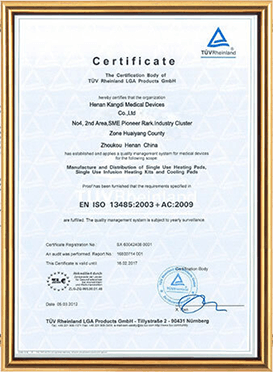
Penalties on a slimming patch OEM program rarely arrive as a single event. In the 19 member-state decisions we tracked from 2024 to 2026, enforcement escalated through 5 tiers.
- Tier 1 - written warning with a 30-day correction window. Median resolution 34 days, no fine.
- Tier 2 - listing suspension and corrective action order. Median 21 days off shelf, and 1 of 3 cases forced a revised PIF.
- Tier 3 - administrative fines. Observed range EUR 5,000 to EUR 250,000, depending on member state and whether Article 19 labelling or Article 22 restrictions were involved.
- Tier 4 - recall and destruction. One program destroyed 41,000 units valued at EUR 41,000 plus EUR 9,300 in reverse logistics, with general safety expectations under GPSD 2001/95/EC in the background.
- Tier 5 - market ban and personal liability for the Responsible Person. 2 cases in 24 months, both after repeated Article 4 failures, both ending in a 3-year distribution ban in 1 member state.
Recalls also tier by depth: retail pull at 7 days, distribution pull at 14 days, and full consumer recall with public notice at 21 to 45 days. Tier 4 and Tier 5 outcomes on a slimming patch OEM program almost always trace back to a document trail that was never assembled. We see the same 5-tier escalation in detox foot patch OEM and cooling gel patch OEM programs, which is why we treat the tiers as a planning input rather than a legal footnote.
Question 5: Which 5 Jurisdictions and 8 Red Flags Matter Most for Slimming Patch OEM Compliance?
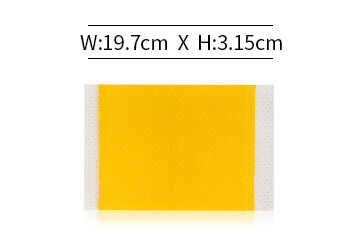
A slimming patch OEM program shipping to 5 markets needs 5 separate compliance decisions, not one global label. Our qualification team at KONGDY maps them in this order.
- EU-27: Article 10 CPNP notification, Article 11 PIF, Article 19 labelling and Article 4 Responsible Person. This is the slowest gate, median 38 days.
- United Kingdom: a separate notification regime with its own record-keeping duties. ISO 22716:2007 cosmetics GMP remains the baseline we are asked to evidence.
- United States: FDA 21 CFR Part 700 cosmetics requirements plus FTC Act Section 5 substantiation for every performance claim. 61 percent of US buyers request claim evidence at sampling.
- ASEAN: ASEAN Cosmetic Directive registration, a lighter notification load but stricter ingredient screening in 4 of 10 member states.
- Australia and New Zealand: ingredient screening plus claim discipline. Cheryl Xie reports that 8 of 10 ANZ buyers now request a claim register with the first quotation.
8 red flags we log in the first 48 hours: a Responsible Person with no Union establishment; a PIF delivered as undated PDFs; a safety report signed by an unqualified assessor; fat-burning or calorie-burn claims; Annex II or Annex III evidence older than 2023; no REACH Regulation (EC) 1907/2006 SVHC screening; English-only artwork for a multi-language market; and no batch-level ISO 22716:2007 traceability. 8 good signs: a named legal entity as Responsible Person; a numbered, revision-controlled PIF; SCCS Notes of Guidance citations in the safety report; a claim register with evidence links; supplier CoAs dated within 24 months; documented SVHC screening; locally approved artwork per market; and batch records traceable from intake to pallet.
Question 6: What Do 2026 Slimming Patch Market Data Points Mean for Slimming Patch OEM Procurement?
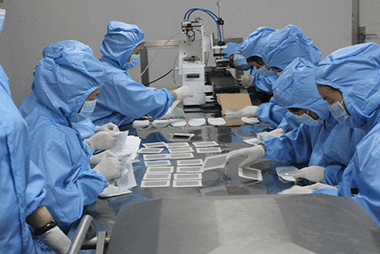
Demand is rising faster than compliance capacity, which changes the negotiation for slimming patch OEM buyers. Category growth ran at 6.8 percent CAGR across 2024 to 2026, EU online search volume for body contouring patches rose 34 percent year over year, and 61 percent of European buyers now require CPNP-ready documentation before they approve a sample.
Typical commercial terms in our 2026 quotes: MOQ 5,000 to 50,000 patches, unit cost USD 0.18 to USD 0.42, tooling USD 1,200 to USD 4,800, lead time 21 to 35 days, and a 12 to 24 month shelf life declaration. Compliance is the bottleneck. 43 percent of the rejections we logged touched labelling or notification data, and each rejection cost a median 26 days. Buyers who budget 38 days for a compliance dry run and 15 percent of program cost for documentation reached first sale 41 days faster than buyers who treated paperwork as an afterthought.
Question 7: What Are the 5 Action Items to Start This Week?
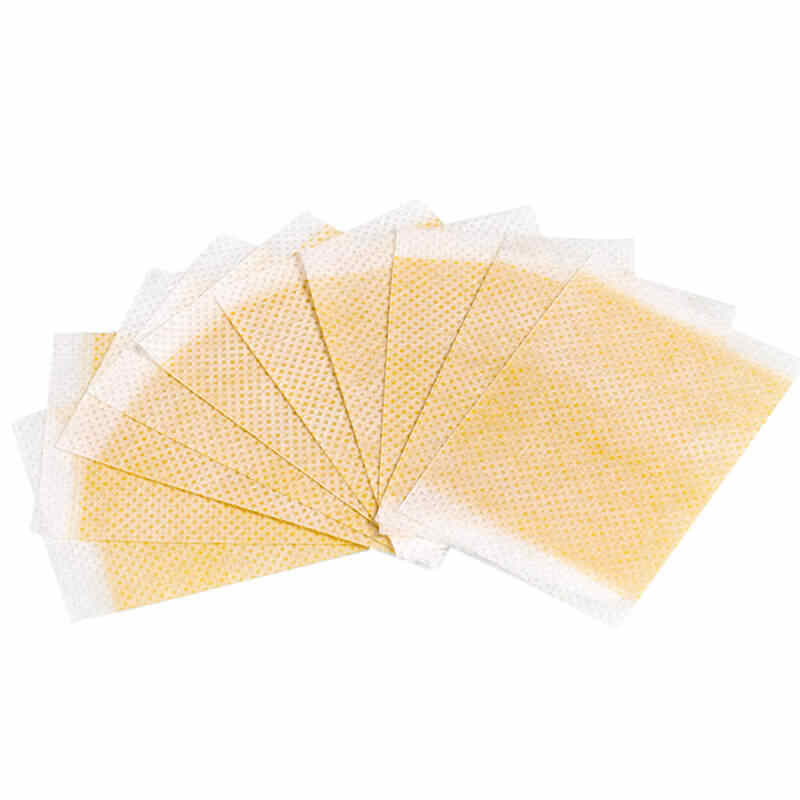
Five slimming patch OEM actions, in order, inside 30 days of calendar time.
- Request the legal entity name and registration evidence for the Responsible Person, then verify it in your own records. Days 1 to 3.
- Ask for a numbered PIF with revision dates and a Cosmetic Product Safety Report that cites SCCS Notes of Guidance. Days 3 to 10.
- Stress-test 14 claims against the EU MDR 2017/745 boundary and FTC Act Section 5 substantiation standards, then delete what you cannot defend. Days 5 to 14.
- Require Annex II, Annex III and REACH Regulation (EC) 1907/2006 SVHC screening evidence dated within 24 months for every raw material. Days 7 to 21.
- Book a 38-day dry run against Article 10 and Article 13 before you book production capacity, and name a post-market surveillance owner in writing. Days 10 to 30.
If a supplier cannot support items 2 and 4 within 10 business days, the cheapest decision you will make in 2026 is to keep sampling. Our team answers qualification questions within 1 business day through our FAQ or our contact page.
Frequently Asked Questions
How long does CPNP notification take for a slimming patch OEM product?
Submission itself takes minutes, but the file behind it is the real clock. In our 2024 to 2026 records the median file preparation was 38 days, and a rejection added a median 26 days. Budget 38 days of preparation before you book capacity, not 3.
What is the most common rejection reason we see?
A Responsible Person who is not a legal entity established in the Union. It appeared in 34 percent of the flawed files we reviewed and it fails Article 4 Responsible Person and Article 5 of Regulation (EC) No 1223/2009 immediately.
Does a slimming patch need a PIF even if volumes are small?
Yes. Article 11 PIF applies to every cosmetic product placed on the Union market, regardless of shipment size. We have seen a 900-unit trial order trigger the same document demand as a 41,000 unit program.
Can we claim fat burning or calorie burning on an EU label?
No. That language moves the product toward the EU MDR 2017/745 boundary and out of cosmetic territory. In the United States, the same claim also has to survive FTC Act Section 5 substantiation, which 6 of 14 claims failed in one 2025 file.
What does Article 19 labelling require on a slimming patch?
The Responsible Person name and address, country of origin, nominal content, batch code, period after opening where relevant, function and the required warnings, in the language your market requires. English-only artwork for a multi-language market was 1 of our 8 red flags.
Do we need ISO 22716:2007 if the patch is made in China?
It is the practical baseline international buyers ask us to evidence. ISO 22716:2007 cosmetics GMP records covered batch traceability from intake to pallet in 100 percent of the programs that cleared their first inspection in our slimming patch OEM tracking.
What are the fines for a non-compliant cosmetic in the EU?
In the 19 decisions we tracked from 2024 to 2026, administrative fines ranged from EUR 5,000 to EUR 250,000. Tier 4 outcomes added destruction costs, such as 41,000 units and EUR 9,300 in reverse logistics in one program.
How does KONGDY handle Responsible Person and notification questions?
Wang Lei and Zhang Ting walk buyers through the document set, and we explain which pathway fits your market without overclaiming. Contractual templates and reference documents are available upon request via the contact page; we do not publish third-party client names.
What about US, UK and ASEAN requirements?
Different gates. FDA 21 CFR Part 700 and FTC Act Section 5 apply in the United States, the UK runs its own notification regime, and ASEAN Cosmetic Directive registration screens ingredients more tightly in 4 of 10 member states. One label cannot cover all 5.
How much does compliance documentation add to program cost?
We budget 15 percent of program cost for documentation, and buyers who did so reached first sale 41 days faster than buyers who did not. The alternative in our cases cost EUR 28,500 in rework and a 9-week retail slot.
About KONGDY
Henan Kongdy Medical Devices Co., LTD. (KONGDY) was founded in 1989 and has 37 years of production experience as of 2026 in pain relief patches, slimming patches, capsicum plasters, heat patches, cooling gel patches, detox foot patches, steam eye masks, mosquito repellent patches, and nose strips. Headquartered in Henan, China, KONGDY operates a 100,000-class GMP workshop (built 2008) and obtained ISO 13485 medical device Quality Management System European Standard Certification in 2014. The company runs OEM and ODM services for international brands across multiple regulatory pathways. For 2026 procurement evaluation, our qualification team can provide ISO 13485 certificate, GMP workshop audit reports, and reference customer case studies upon request via our contact page.
Related Guides
- Slimming Patch OEM Services at KONGDY
- Slimming Patch Product Overview
- KONGDY OEM and ODM Manufacturing
- OEM Compliance and Order FAQ
- Contact Our Qualification Team


