-
 KONGDY
From Essential Oil to Sealed Pouch: The Documentation Gates in a Mosquito Repellent OEM Program
From Essential Oil to Sealed Pouch: The Documentation Gates in a Mosquito Repellent OEM Program
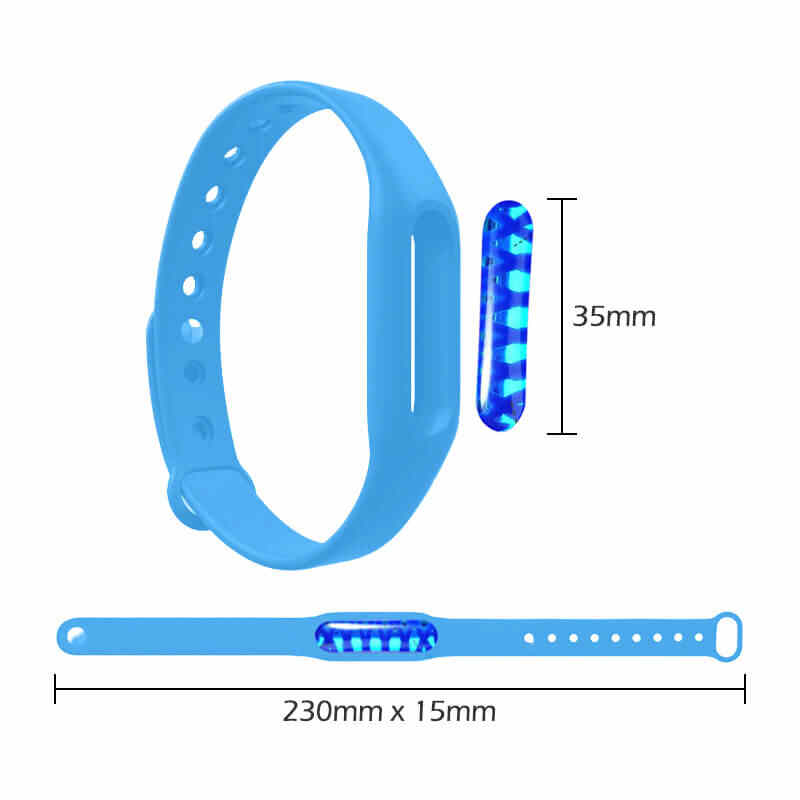
A mosquito repellent patch programme is usually described as a manufacturing project. In practice it is a documentation project with manufacturing attached. The stages below follow the order in which the documents become due, because that order is what determines whether a launch date holds. Each stage names the action, the party responsible, the document produced, the framework reference, and the failure that most often appears at that point.
The two frameworks in scope are FIFRA in the United States, including Section 3 registration and the Section 25(b) minimum-risk exemption, and Regulation (EU) 528/2012, the Biocidal Products Regulation, in the European Union, read together with Regulation (EU) 1062/2014 for active substance approval. A programme that targets both markets runs two tracks in parallel from stage two onward, and the earliest stage at which the tracks diverge is the one most commonly underestimated.
Stage Overview: Nine Gates and What Each One Closes
The table below is the whole timeline in one view. Each row is a gate. A gate is not a milestone in project language; it is the point at which a document becomes a prerequisite for the next stage, so skipping it does not save time, it moves the delay downstream.
| # | Stage | Document produced | Framework gate |
|---|---|---|---|
| 1 | Intended use and claim definition | Claim register | Determines which framework applies at all |
| 2 | Regulatory identity determination | Pathway memo | FIFRA Section 3 versus Section 25(b); EU BPR Article 17 |
| 3 | Active substance verification | Active substance status sheet | EPA registration number and PC code; Regulation (EU) 1062/2014 status |
| 4 | Formulation and loading specification | Formula revision record | Concentration and carrier documentation |
| 5 | Efficacy and toxicology dossier | Efficacy report and toxicology pack | EPA efficacy guidance; OECD test guidelines |
| 6 | Label and artwork development | Approved artwork per market | 40 CFR Part 156; BPR Article 69 and Annex III |
| 7 | Registration or authorisation filing | Filed application | FIFRA Section 3; BPR Article 17 |
| 8 | Batch manufacture and release | Batch record and release certificate | Quality system records, traceability |
| 9 | Shipment documentation and market entry | Shipping and declaration set | Customs classification and import documentation |

Stage 1: Intended Use and Claim Definition
| Element | Detail |
|---|---|
| Action | Write every claim the product will make, in one sentence per claim, before any formulation discussion |
| Responsible | Brand owner, with the supplier reviewing feasibility |
| Document produced | Claim register, version controlled |
| Framework gate | The claim set decides whether the product is a pesticide at all |
| Typical duration | 3 to 5 working days |
| Common failure | Starting with formulation and writing claims retrospectively, which produces a claim set that does not match the dossier |
A mosquito repellent patch makes a pest-control claim, which is the point at which FIFRA becomes relevant in the United States. The same claim drives the biocidal product question in the European Union. A claim register written at stage one is the document that both tracks reference later, which is why it is the first gate rather than the last.
Two claim families need to be separated at this stage. Repellency claims, meaning the product deters mosquitoes, sit inside the pesticide frameworks. Duration claims, meaning the protection lasts a stated number of hours, sit inside the same frameworks but add an efficacy evidence requirement that is often the longest single item in the timeline.
Stage 2: Regulatory Identity Determination
| Element | Detail |
|---|---|
| Action | Decide whether the programme is a registered pesticide, a minimum-risk product, or a biocidal product under the EU framework |
| Responsible | Regulatory lead, with the brand owner approving |
| Document produced | Pathway memo, one page, signed |
| Framework gate | FIFRA Section 3 and Section 25(b) with 40 CFR Part 152 Subpart B; EU BPR Article 17 |
| Typical duration | 5 to 7 working days |
| Common failure | Assuming the minimum-risk exemption applies because the active is a botanical, without checking the full exemption conditions |
The Section 25(b) minimum-risk route removes the registration requirement but not the labelling duties, and it still requires that each active ingredient and each inert ingredient appear on the exempt list. A botanical active that does not qualify leaves the programme on the Section 3 track, where a registration number and a PC code become necessary. The pathway memo written at this stage is the document that determines the length of the whole programme.

Stage 3: Active Substance Verification
| Element | Detail |
|---|---|
| Action | Confirm the regulatory status of every active substance in every target market |
| Responsible | Regulatory lead with supplier documentation |
| Document produced | Active substance status sheet per market |
| Framework gate | EPA PC code and registration number; Regulation (EU) 1062/2014 approval status |
| Typical duration | 7 to 10 working days |
| Common failure | Treating an active as approved in the European Union because it is approved elsewhere |
The European Union question is not whether a substance is effective, it is whether the substance appears on the approved list under Regulation (EU) 1062/2014. A substance still inside the review programme has a different status from an approved one, and a dossier built on an unapproved active cannot be rescued by efficacy data. This gate is where a programme either confirms its ingredient strategy or changes it, which is why it sits before formulation rather than after.
For the United States track, the equivalent question is whether the active has a PC code and whether the product will carry a registration number. The status sheet produced here becomes an input to both the artwork stage and the filing stage.
Stage 4: Formulation and Loading Specification
| Element | Detail |
|---|---|
| Action | Fix the loading of each active, the substrate, the release liner and the pouch barrier |
| Responsible | Production lead with the formulation team |
| Document produced | Formula revision record with loading tolerance |
| Framework gate | Concentration documentation feeding the label and the dossier |
| Typical duration | 10 to 14 working days |
| Common failure | Specifying a loading band wider than the dossier can support, which creates a labelling inconsistency later |
This stage is where a mosquito repellent patch specification becomes auditable. The loading tolerance matters more than the target value, because the label states a concentration and the batch record has to stay inside it. A tolerance band that is wider than the declared concentration range produces a deviation that no amount of downstream documentation resolves.
The pouch barrier belongs in this stage rather than in packaging, because volatile actives interact with the barrier layer, and a barrier change after the efficacy dossier is complete invalidates the release-rate assumption behind it.
Stage 5: Efficacy and Toxicology Dossier
| Element | Detail |
|---|---|
| Action | Run the efficacy protocol for the claimed protection duration and assemble the toxicology pack |
| Responsible | Third-party laboratory, with the regulatory lead compiling |
| Document produced | Efficacy report and toxicology pack |
| Framework gate | EPA efficacy guidance for the claim type; OECD test guidelines for the toxicology endpoints |
| Typical duration | 6 to 12 weeks, and the longest single item on the timeline |
| Common failure | Testing a duration claim at an ambient condition that does not appear on the label, which leaves the claim unsupported |
The toxicology pack for a skin-contact repellent patch typically includes skin sensitization data, and where the formulation uses a blend of essential oils, testing on the blend rather than on individual oils. Biodegradability data for the active and the carrier belongs to the same pack because the EU track expects it in the dossier. The set of endpoints is not large, but the laboratory scheduling is, which is why this gate governs the launch date in most programmes.
A useful discipline at this stage is to fix the test ambient conditions in writing before the laboratory is booked. A duration claim tested at 25 degrees Celsius and labelled without a condition statement is a claim that cannot be defended, and re-testing consumes the entire schedule buffer.
Stage 6: Label and Artwork Development
| Element | Detail |
|---|---|
| Action | Produce compliant artwork per market, including the registration statement where required |
| Responsible | Brand owner with regulatory review |
| Document produced | Approved artwork per market, version controlled |
| Framework gate | 40 CFR Part 156 in the United States; BPR Article 69 and Annex III in the European Union |
| Typical duration | 7 to 10 working days |
| Common failure | Printing artwork before the pathway memo and the concentration record are frozen |
Artwork is the most expensive document to revise, because a change touches every market, every language and any printed stock already produced. The two inputs that must be frozen first are the registration or exemption status from stage two and the concentration record from stage four. Where either is still open, the artwork stage should not start.
For a programme shipping to both the United States and the European Union, this stage produces two artwork families rather than one. The label content requirements are not identical, and the declaration wording differs, which means a single master layout with a language overlay is usually insufficient.

Stage 7: Registration or Authorisation Filing
| Element | Detail |
|---|---|
| Action | File the registration or authorisation application with the compiled dossier |
| Responsible | Regulatory lead, or the appointed representative in the market |
| Document produced | Filed application with a submission index |
| Framework gate | FIFRA Section 3; EU BPR Article 17 following active substance approval |
| Typical duration | Varies by route and by whether the active is already approved |
| Common failure | Filing while the efficacy report is still in draft, which produces a request for information that restarts part of the review clock |
The filing stage is a compilation exercise if stages one to six were completed in order, and a repair exercise if they were not. The submission index produced here is also the document that a reviewer will navigate first, so its structure determines how quickly the substance of the file is understood.
For the European track, the practical dependency is the active substance status confirmed at stage three. Where the substance is still inside the review programme, the authorisation question has a different answer from the approved case, and the filing strategy has to be set accordingly rather than discovered at submission.
Stage 8: Batch Manufacture and Release
| Element | Detail |
|---|---|
| Action | Manufacture the first commercial batches against the frozen specification and release them against the dossier |
| Responsible | Production lead with quality assurance |
| Document produced | Batch record, release certificate, traceability record |
| Framework gate | Quality system records that connect the released batch to the filed dossier |
| Typical duration | Depends on order size and line availability |
| Common failure | Releasing a batch whose loading sits inside the manufacturing tolerance but outside the declared label range |
The connection between the released batch and the filed dossier is the point of this stage. A mosquito repellent batch record that cannot be mapped to the concentration record from stage four creates a traceability gap that a market surveillance check can identify from documents alone. Documentary traceability, rather than manufacturing precision, is what this gate tests.
Stage 9: Shipment Documentation and Market Entry
| Element | Detail |
|---|---|
| Action | Assemble the shipping and declaration set, including classification and any import-specific requirement |
| Responsible | Supplier with the brand owner's customs broker |
| Document produced | Shipping document set and customs classification record |
| Framework gate | Import documentation consistent with the filed registration or exemption status |
| Typical duration | 5 to 10 working days before the first shipment |
| Common failure | A customs classification that contradicts the regulatory status claimed in the dossier, which triggers a hold at the border |
The final gate in the mosquito repellent programme is the one that most often produces a delay after everything else is complete, because the classification decision is usually taken by a party who has not seen the pathway memo. Sending the memo to the customs broker as a document, rather than describing it in a conversation, is the step that closes the loop.

Where Timelines Break: Five Failure Points
Across the nine gates, five points account for most schedule slippage. The table ranks them by the delay they typically introduce.
| Rank | Failure point | Why it is expensive | Preventive step |
|---|---|---|---|
| 1 | Efficacy testing started before the claim and ambient condition were fixed | Re-testing consumes the schedule buffer and cannot be compressed | Freeze the claim register and test conditions before booking the laboratory |
| 2 | Active substance status assumed rather than verified | A change of active resets formulation, dossier and artwork | Produce the status sheet per market at stage three |
| 3 | Artwork printed before the pathway memo was signed | Printed stock and multi-market artwork must be revised | Treat the pathway memo as a prerequisite for artwork release |
| 4 | Minimum-risk exemption assumed without checking inert ingredients | Moves the programme onto the registration track late in the schedule | Check the full exemption conditions, not only the active |
| 5 | Customs classification set without reference to the regulatory status | Border hold after manufacturing is complete | Send the pathway memo to the customs broker |
Four of the five failure points are documentary and are resolved before any material is purchased. That is the practical argument for treating this as a documentation timeline: the expensive failures in a mosquito repellent programme happen at the desk, and the manufacturing stages mostly execute a decision that was already made.
Where the Nine Stages Can Be Compressed, and Where They Cannot
Buyers frequently ask whether the timeline can be shortened. The answer depends on which stages are genuinely sequential and which are only sequential by habit. The table separates them.
| Stage | Compressible? | How | Limit |
|---|---|---|---|
| 1 Claim definition | Partly | Draft the claim register in parallel with the feasibility discussion | Cannot be omitted; every later gate references it |
| 2 Pathway determination | Partly | Run the US and EU tracks simultaneously rather than sequentially | Requires both frameworks to be assessed by the same reviewer for consistency |
| 3 Active substance verification | Partly | Request supplier documentation before the pathway memo is final | The EU status question can only be answered from the current approved list |
| 4 Formulation and loading | Yes | Overlap with stage three on the carrier and substrate items | The active loading cannot be frozen before stage three closes |
| 5 Efficacy and toxicology | No | Book the laboratory early so the queue is the only waiting time | Testing duration is set by protocol, not by schedule pressure |
| 6 Label and artwork | Partly | Draft layout while the dossier is in test, then freeze on receipt | Cannot be released before the pathway memo is signed |
| 7 Filing | No | Prepare the submission index during stage five | Filing on a draft report invites a request for information |
| 8 Batch manufacture | Partly | Pre-book line capacity against the expected filing date | Release requires the frozen specification |
| 9 Shipment documentation | Yes | Send the pathway memo to the customs broker at stage two | Classification has to match the filed status |
The pattern is that the mosquito repellent programme can overlap administration freely, and cannot overlap laboratory work at all. Stage five has a physical minimum, and it sits near the middle of the sequence, which is why it governs the launch date in most programmes rather than the manufacturing stages that buyers tend to watch.
A Realistic Timeline Assuming Parallel Execution
The schedule below assumes a mosquito repellent patch programme with a defined claim set, a single active, and both United States and European Union tracks in scope. It shows the elapsed time when administration is overlapped and laboratory work is booked early.
| Period | Activity running | Gate closing |
|---|---|---|
| Weeks 1 to 2 | Claim register, feasibility discussion, pathway memo draft | Stage 1 and stage 2 |
| Weeks 2 to 3 | Active substance status sheet, supplier documentation requests | Stage 3 |
| Weeks 3 to 5 | Formulation and loading specification, laboratory booking | Stage 4 |
| Weeks 4 to 14 | Efficacy testing and toxicology pack, artwork draft in parallel | Stage 5 |
| Weeks 13 to 15 | Artwork freeze on receipt of the efficacy report | Stage 6 |
| Weeks 15 onward | Filing, then batch manufacture against the frozen specification | Stages 7 and 8 |
| Before first shipment | Shipping document set and customs classification | Stage 9 |
The single largest lever in this schedule is the laboratory booking date. Moving the efficacy booking forward by two weeks moves the entire programme forward by two weeks, because stage five is the only stage with a fixed internal duration. Every other saving in a mosquito repellent timeline is a consequence of that one decision being made early, and of the claim set and test conditions being frozen before the booking is placed rather than after.
About KONGDY

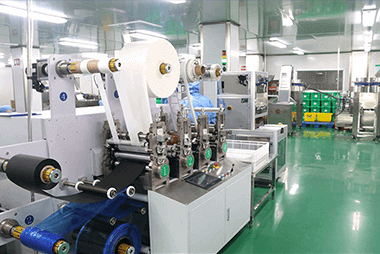
Henan Kongdy Medical Devices Co., LTD. (KONGDY) was founded in 1989 and has 37 years of production experience as of 2026 in pain relief patches, slimming patches, capsicum plasters, heat patches, cooling gel patches, detox foot patches, steam eye masks, mosquito repellent patches, and nose strips. Headquartered in Henan, China, KONGDY operates a 100,000-class GMP workshop (built 2008) and obtained ISO 13485 medical device Quality Management System European Standard Certification in 2014. The company runs OEM and ODM services for international brands across multiple regulatory pathways. For 2026 procurement evaluation, our qualification team can provide ISO 13485 certificate, GMP workshop audit reports, and reference customer case studies upon request via our contact page.
Frequently Asked Questions
Does a mosquito repellent patch need EPA registration?
If it makes a pest-control claim, it falls under FIFRA, and it either needs Section 3 registration with a registration number and a PC code for the active, or it needs to qualify for the Section 25(b) minimum-risk exemption under 40 CFR Part 152 Subpart B. The exemption removes registration, not labelling duties.
Which single stage takes the longest in the timeline?
Stage five, the efficacy and toxicology dossier. It typically runs six to twelve weeks, and it cannot be compressed by working in parallel with itself. Every other stage can overlap; laboratory testing largely cannot.
What is the most common cause of rescheduling?
Efficacy testing started before the claim and the ambient test condition were fixed. When the condition statement on the label does not match the condition the test used, the claim is unsupported and the test has to be repeated.
How does the EU track differ from the US track?
The EU track turns on active substance approval under Regulation (EU) 1062/2014 and authorisation under Article 17 of Regulation (EU) 528/2012. A substance still inside the review programme has a different status from an approved one, so the pathway memo for the EU cannot be copied from the US version.
When should artwork be produced?
After the pathway memo is signed and the concentration record is frozen. Artwork touches every market and any printed stock, which makes it the most expensive document to revise. It is the one stage where starting early costs more than starting late.
What documents should a buyer request from a mosquito repellent OEM supplier?
The claim register, the pathway memo, the active substance status sheet, the formula revision record, the efficacy report with test conditions, the toxicology pack, the approved artwork per market, the filed application index, batch release records, and the customs classification record. That set corresponds one-to-one with the nine gates above.
Why does a customs classification matter on a regulatory timeline?
Because a classification that contradicts the regulatory status claimed in the dossier can produce a hold at the border after manufacturing is complete. The classification decision is often taken by a party who has not seen the pathway memo, which is why the memo should be sent to the broker as a document.
Can the nine stages run in parallel?
Partially. Stages three and four can overlap, and the artwork draft can begin while the dossier is in test. Stage five cannot be compressed internally, and stage seven cannot start on a draft efficacy report without risking a request for information that restarts part of the review clock.
Related Guides
- Mosquito Repellent OEM Services at KONGDY
- Mosquito Repellent Product Range
- Cosmetic, Medical Device or Quasi-Drug? A 5-Market Decision Matrix
- Why the FDA Now Reviews Your Amazon Listing: Lessons from Warning Letter 735346
- EU Safety Gate 2026: 1,528 China-Origin Alerts in 38 Weeks
- 5 Mosquito Repellent OEM Mistakes That Trigger EPA FIFRA Registration Rejection in 2026
- Will 2027 EU CSRD Make Your Mosquito Repellent OEM Uncompetitive in 2026
- How to Reduce Mosquito Repellent OEM Unit Cost by 18 Percent in 2026
- Can AI-Assisted Hydrogel Load Screening Cut Your Slimming Patch OEM Time-to-Market in 2026
- Steam Eye Mask OEM Services
- KONGDY OEM and ODM Manufacturing
- About KONGDY
- News Archive
- Contact KONGDY


