-
 KONGDY
Capsicum Plaster OEM: A 21-Point Pre-Contract Checklist for 2026 Buyers
Capsicum Plaster OEM: A 21-Point Pre-Contract Checklist for 2026 Buyers
Most capsicum plaster sourcing problems are visible before the contract is signed. They appear as a missing document, an unverified concentration, an artwork detail nobody checked, or a commercial term that shifts an obligation back to the buyer. This checklist has twenty-one items in five sections. Each item states what to check, why the check exists, and the failure mode it prevents.
The list is written to be run as a working session with the supplier rather than as a scoring exercise. A buyer who can tick all twenty-one items has, in effect, converted an assumption set into a documented position. A buyer who cannot tick an item has found the question worth asking next.
How to Use This Checklist
Three rules make the list work in practice.
| Rule | Reason |
|---|---|
| Ask for documents, not assurances | An assurance cannot be attached to a product file, and it cannot be produced during a review |
| Record the answer and the date | A capsicum plaster formula revision, a label amendment or an annex change can date an earlier answer |
| Treat an incomplete section as a stop, not a note | Sections are ordered by dependency, so a gap in section A resets sections B and C |
The sections run in dependency order. Regulatory identity determines the claim set, the claim set determines the documentation, the documentation determines what the manufacturing evidence has to connect to, and the commercial terms decide who carries each obligation afterwards. Running the sections out of order is the most common reason a checklist produces a false sense of coverage.

Section A: Regulatory Identity and Claim Set (5 Items)
| # | Check | Why it exists | Failure mode prevented |
|---|---|---|---|
| A1 | Obtain a written pathway memo naming the regulatory route and the claim set for the exact formulation | The route decides the label format, the evidence package and the timeline | A capsicum plaster positioned as a cosmetic acquiring an analgesic claim after artwork is printed |
| A2 | Confirm the capsaicin concentration against the applicable framework for each target market | Concentration is a declared value that the batch record has to stay inside | A declared concentration that the manufacturing tolerance cannot hold |
| A3 | Check whether the claim set triggers a Drug Facts label under 21 CFR Part 201.66 | Where analgesic claims are made, the label format is prescribed | A label that must be reprinted because the format was not considered at design stage |
| A4 | Verify whether a thermal or analgesic claim moves the product under EU MDR 2017/745 | The device route carries technical documentation and quality system obligations | A product filed as a cosmetic that a notified body treats as a device |
| A5 | Confirm that no claim on the packaging images a medical condition being treated | Enforcement action can rest on product presentation alone, as in the October 2026 FDA warning letter to Aidance Scientific (reference 735346) | An enforcement finding triggered by imagery rather than by formulation |
Section A is the section that cannot be worked around later. A route change after artwork means new artwork, and a claim deletion after filing means an amendment. Both are cheaper at the memo stage than at any point afterwards.
Section B: Documentation and File Custody (5 Items)
| # | Check | Why it exists | Failure mode prevented |
|---|---|---|---|
| B1 | Name the legal entity that carries the notification or file, with its establishment address | File custody sits with a specific entity, and that entity answers a review | A response that consumes the whole window reconstructing who holds the file |
| B2 | Obtain a dated index of the product file, including the safety assessment and stability data | An index makes the file auditable rather than merely present | A file that exists but cannot be navigated under time pressure |
| B3 | Request the current substance screen for every raw material, including botanical extracts and the preservative system | Substance status changes with annex amendments, and the declared list follows | An undeclared prohibited substance, the trigger behind most January 2026 cosmetic notifications in the EU Safety Gate dataset |
| B4 | Confirm that the printed declaration matches the current formula revision, including ingredient ordering | The declaration is what a reviewer reads first | A declaration that has drifted from the formula by one revision |
| B5 | Ask how long the supplier needs to produce the three core documents on request | Response time, not document existence, decides the outcome of a short review window | A one-week request that takes three weeks to answer |
Section B is the section most often treated as paperwork. The 2026 Safety Gate data suggests the opposite: in weeks 1 to 38 of 2026 the system published 2,663 alerts, of which 1,528 involved China-origin products, or 57.4 percent against 40.1 percent in the same weeks of 2025. When the cosmetic notifications are read individually, the triggers are undeclared substances and unsupported declarations, which are items B3 and B4.
Section C: Manufacturing and Quality Evidence (4 Items)
| # | Check | Why it exists | Failure mode prevented |
|---|---|---|---|
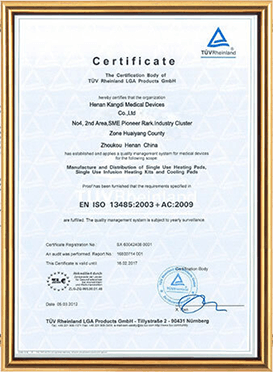
| C1 | Request ISO 13485 certificate and the current 100,000-class GMP workshop audit report where the product touches a medical device pathway | Quality system evidence is the baseline a reviewer expects on the device route | A device-route programme with no quality system evidence attached |
| C2 | Confirm skin sensitization data, for example ISO 10993-10, on the finished formulation rather than on individual ingredients | A blend behaves differently from its components | A sensitization pack that does not describe the shipped product |
| C3 | Verify peel and adhesion testing on three production lots where the product uses a skin adhesive | Adhesion performance varies by lot, and the label claim depends on it | A duration or adhesion claim supported by a single trial batch |
| C4 | Confirm batch traceability from raw material intake to released pallet | Traceability is what connects a released batch to the filed dossier | A released batch that cannot be mapped to the concentration record |
Section C is where a capsicum plaster programme becomes auditable. The items are deliberately specified on the finished formulation and on production lots, because ingredient-level or single-batch evidence is the most common reason a quality claim does not survive a review.

Section D: Commercial and Logistics Terms (4 Items)
| # | Check | Why it exists | Failure mode prevented |
|---|---|---|---|
| D1 | Fix the loading tolerance band in writing and confirm it sits inside the declared label value | The batch has to be releasable against the declared figure | A batch inside the manufacturing tolerance but outside the label range |
| D2 | Agree the customs classification with reference to the regulatory status in the pathway memo | Classification and regulatory status have to tell the same story | A border hold after manufacturing is complete |
| D3 | Confirm Incoterms, shipping documents and who prepares the declaration set | The party preparing documents may not have seen the regulatory file | A shipment delayed by a document the supplier assumed the buyer would prepare |
| D4 | Define the change notification procedure for formula, artwork and packaging changes | A change after filing has regulatory consequences attached | A silent packaging change that invalidates a filed declaration |
Section D converts the regulatory position into commercial language. The items are commercial in form and regulatory in substance, which is why they belong in the checklist rather than in a separate procurement review.
Section E: Post-Contract Obligations (3 Items)
| # | Check | Why it exists | Failure mode prevented |
|---|---|---|---|
| E1 | Confirm who monitors substance status changes for the actives and preservatives in the formula | Status changes arrive without notice and invalidate an existing declaration | A declaration that becomes non-compliant without anyone noticing |
| E2 | Agree the file refresh interval and the trigger events that force an earlier refresh | File maintenance is a schedule, not a one-time task | A file that is complete at launch and stale eighteen months later |
| E3 | Confirm the adverse event and complaint routing between supplier and brand owner | Post-market obligations sit with a defined party in most frameworks | A complaint that reaches neither party's file |
Section E is the shortest section and the one that determines whether the position established in sections A to D is still valid a year later. A capsicum plaster file that is complete on the signature date and unmanaged afterwards recreates the exposure the checklist was designed to remove.
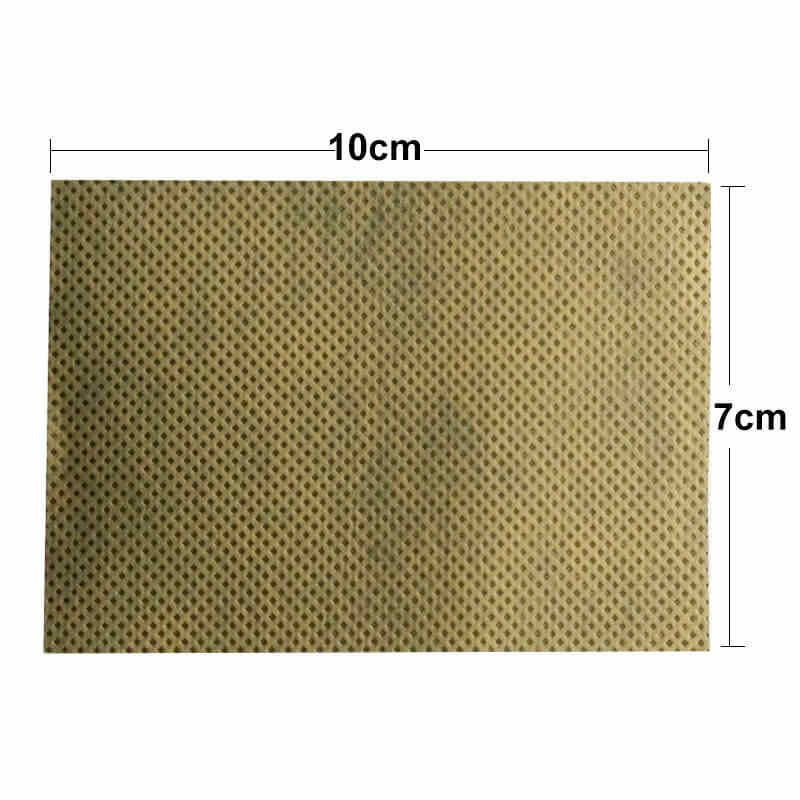
The Three Items Buyers Most Often Skip
Across the five sections, three items are skipped most frequently, and they share a characteristic: each one is invisible until a review happens.
| Rank | Item | Why it gets skipped | Cost when it matters |
|---|---|---|---|
| 1 | B5, the document production time | Existence of a file is mistaken for accessibility of a file | A short review window closes while documents are being located |
| 2 | D4, the change notification procedure | Change control feels like a manufacturing topic rather than a commercial term | A packaging or artwork change invalidates a filed declaration |
| 3 | E1, substance status monitoring | Status changes are assumed to be the supplier's problem without being assigned | A compliant declaration becomes non-compliant without a trigger being noticed |
The common thread is that these three items do not fail at the moment they are skipped. They fail at the moment a review, a change or an amendment makes them necessary, which is typically far from the date of the original conversation. Assigning an owner and a date to each of the three is sufficient.

What Happens When the Checklist Is Incomplete: Two Documented Cases
Both cases below are drawn from public records rather than from hypothetical scenarios. They are included because each one maps onto a specific checklist item, and the mapping is the argument for the item existing at all.
Case 1: a presentation problem, which is item A5. On 1 October 2026 FDA issued Warning Letter 735346 to Aidance Scientific, Inc. of Woonsocket, Rhode Island, concerning a product classified as an unapproved new drug under section 505(a) of the FD&C Act, 21 U.S.C. 355(a). The review that produced the finding covered the company's website and Amazon storefront in July 2026, and the letter does not describe a manufacturing inspection as the basis of the finding. For a capsicum plaster programme, the equivalent exposure is imagery or wording that presents the product as treating a condition, which is what A5 asks the buyer to check before artwork is released.
Case 2: a substance declaration problem, which is items B3 and B4. The EU Safety Gate dataset for weeks 1 to 38 of 2026 recorded 2,663 alerts, of which 1,528 involved China-origin products, or 57.4 percent against 40.1 percent in the same weeks of 2025. In the January 2026 weekly reports, the cosmetic notifications include two perfumes with BMHCA and HICC, multiple nail polishes with TPO, a skin care oil with delta-9-THC, and hair care products with formaldehyde, with measures ranging from market withdrawal to recall from end users. In each instance the trigger was a declared ingredient list, which is exactly what B3 and B4 ask the buyer to reconcile.
| Documented case | Checklist item it maps to | Cost of the gap |
|---|---|---|
| Web and marketplace review producing an unapproved new drug finding | A5, claim and imagery review before artwork release | Product presentation becomes the violation, independent of formulation quality |
| Cosmetic notifications triggered by declared substances | B3 and B4, substance screen and declaration reconciliation | Measures can reach destruction and end-user recall, not only market withdrawal |
Neither case required a new formulation to prevent. Both were desk-stage findings in the sense that the deciding evidence was a document or a page, which is the practical reason a capsicum plaster buyer can reduce exposure before a single unit is manufactured.
A Worked Example: Filling the Checklist for a Capsicum Plaster Programme
This section runs the twenty-one items against a specific programme: a capsicum plaster intended for the European Union and Brazil, with an analgesic claim, shipped in a multi-language pack. It shows what a completed checklist looks like and where the incomplete version would have stopped.
| Section | What the completed version contains | Where the incomplete version stops |
|---|---|---|
| A, regulatory identity (5 items) | A signed pathway memo naming the route, the capsicum plaster concentration by market, and a claim register with five entries | At A1, because no route was recorded and the analgesic claim was therefore not matched to a framework |
| B, documentation and custody (5 items) | A named legal entity, a dated file index, a current substance screen for the capsicum extract and the preservative system, and a declaration reconciled to the current revision | At B3, because the capsicum extract certificate on file predated the last supplier change |
| C, manufacturing and quality (4 items) | Sensitization data on the finished capsicum plaster, adhesion testing across three production lots, and batch traceability from intake to pallet | At C2, because sensitization evidence described the extract rather than the finished product |
| D, commercial and logistics (4 items) | A written loading tolerance inside the declared label value, a customs classification consistent with the pathway memo, and a defined change notification procedure | At D4, because the packaging supplier had no obligation to notify a change |
| E, post-contract (3 items) | An assigned owner for substance status monitoring, a file refresh interval with trigger events, and a complaint routing agreement | At E1, because substance monitoring was assumed rather than assigned |
The pattern in the right-hand column is consistent: the incomplete version does not stop at the first item, it stops at the first item that requires a document rather than a conversation. That is the property that makes the checklist useful as a pre-contract tool. A buyer can work through twenty-one questions in a meeting, but only the document-backed items survive past the signature date.
For a capsicum plaster programme shipping to more than one market, the two versions of the checklist also differ in outcome. The completed version produces one claim set with a mapping table between markets. The incomplete version produces two artworks that contradict each other, which is a problem discovered at the border rather than at the desk.
A practical cadence for keeping the checklist live is to re-run two sections quarterly and the full list annually, with event-driven runs in between. Section A is re-run whenever a claim changes or a new market is added. Section B is re-run whenever a raw material, a supplier or a preservative system changes. Sections C and D are re-run when a specification, a packaging component or a logistics route changes. Section E runs on the refresh interval agreed under item E2. A capsicum plaster programme that follows that cadence keeps its document set current without rebuilding it, which converts this checklist from a one-time pre-contract exercise into a maintained asset rather than a signature-date document.
About KONGDY

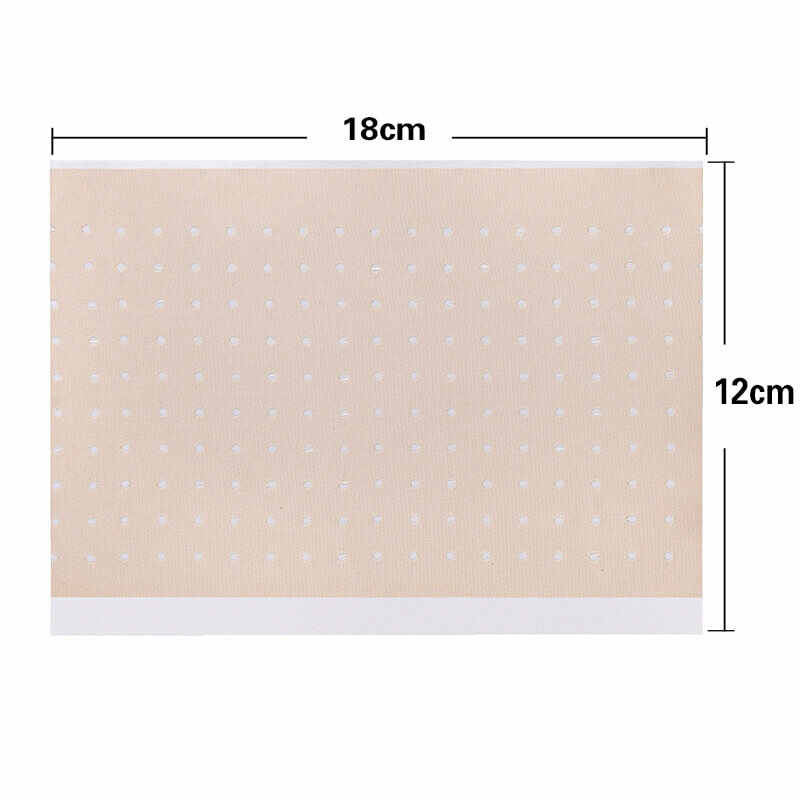
Henan Kongdy Medical Devices Co., LTD. (KONGDY) was founded in 1989 and has 37 years of production experience as of 2026 in pain relief patches, slimming patches, capsicum plasters, heat patches, cooling gel patches, detox foot patches, steam eye masks, mosquito repellent patches, and nose strips. Headquartered in Henan, China, KONGDY operates a 100,000-class GMP workshop (built 2008) and obtained ISO 13485 medical device Quality Management System European Standard Certification in 2014. The company runs OEM and ODM services for international brands across multiple regulatory pathways. For 2026 procurement evaluation, our qualification team can provide ISO 13485 certificate, GMP workshop audit reports, and reference customer case studies upon request via our contact page.
Frequently Asked Questions
How many items should a capsicum plaster buyer check before signing?
This checklist uses twenty-one items in five sections: regulatory identity and claim set, documentation and file custody, manufacturing and quality evidence, commercial and logistics terms, and post-contract obligations. The sections run in dependency order, so an incomplete early section invalidates the later ones.
Why does the regulatory identity section come first?
Because the route determines the label format, the evidence package and the timeline. A claim set that includes an analgesic statement cannot stay on a cosmetic route because the buyer prefers the shorter process, so the route follows the claim rather than the preference.
What is the single most useful document to request first?
A one-page pathway memo naming the route, citing the framework, and listing the claim set for the exact formulation. Almost every downstream item in the checklist references it, and its absence is the most common root cause of later rework.
How do I verify a substance declaration is current?
Request a dated substance screen for every raw material, including botanical extracts and the preservative system, and compare it against the printed declaration. In the EU Safety Gate dataset for weeks 1 to 38 of 2026, undeclared prohibited substances were among the most frequent triggers in cosmetic notifications.
Does a skin sensitization test on individual ingredients suffice?
No. The formulation behaves as a blend, so the sensitization evidence should describe the finished formulation, for example under ISO 10993-10, rather than its separated components. Ingredient-level evidence is a frequent reason a quality claim does not survive review.
Why does a commercial item like the change notification procedure matter?
Because a change after filing has regulatory consequences attached. A silent packaging or artwork change can invalidate a filed declaration, and the cost of that appears at the next review rather than at the moment of the change.
What is the failure mode a buyer should worry about most?
A file that is complete at launch and unmanaged afterwards. Items E1 to E3 exist for that reason: substance status changes and annex amendments arrive without notice, and a file that is not maintained recreates the exposure that this checklist was designed to remove.
Can this checklist be used for other patch products?
Yes, with the framework references adjusted. The section structure holds for pain relief patches, heat patches, cooling gel patches and slimming patches, but the specific frameworks differ: for example 21 CFR Part 348.10 for an external analgesic monograph, Regulation (EC) No 1223/2009 for a cosmetic route, and EU MDR 2017/745 for a device claim.
Related Guides

- Capsicum Plaster OEM Services at KONGDY
- Capsicum Plaster Product Range
- Cosmetic, Medical Device or Quasi-Drug? A 5-Market Decision Matrix
- From Essential Oil to Sealed Pouch: The Documentation Gates in a Mosquito Repellent OEM Program
- Why the FDA Now Reviews Your Amazon Listing: Lessons from Warning Letter 735346
- EU Safety Gate 2026: 1,528 China-Origin Alerts in 38 Weeks
- 5 Capsicum Plaster OEM Mistakes That Trigger FDA Import Detention in 2026
- Can AI-Assisted Capsaicin Load Screening Cut Your Capsicum Plaster OEM Time-to-Market in 2026
- How to Reduce Capsicum Plaster OEM Unit Cost by 18 Percent in 2026
- Slimming Patch OEM Services
- KONGDY OEM and ODM Manufacturing
- About KONGDY
- News Archive
- Contact KONGDY


