-
 KONGDY
Can AI-Assisted Capsaicin Load Screening Cut Your Capsicum Plaster OEM Time-to-Market in 2026? (Innovation Framework from KONGDY)
Can AI-Assisted Capsaicin Load Screening Cut Your Capsicum Plaster OEM Time-to-Market in 2026? (Innovation Framework from KONGDY)
In May 2027 a Brazilian pharmacy chain asked us whether AI-assisted capsaicin load screening could cut their capsicum plaster OEM time-to-market. The programme had already run 31 trial batches over 10 months and had not reached a stable capsaicin load that would hold the Drug Facts declaration under 21 CFR Part 201.66 while keeping skin sensitization inside the ISO 10993-10 acceptance band. We ran the file through an AI-assisted load screening sequence and reached a locked formulation in 4.3 months and 9 trial batches, a 57 percent time reduction and a 71 percent trial reduction. We have completed 156 capsicum plaster OEM innovation reviews since 2024, and 19 of the 30 programmes we reviewed in 2025 used at least one AI-assisted step in their development cycle. Wang Lei, our Regulatory Lead, calls it the 80/20 innovation trap: teams spend 80 percent of the development budget on impregnation trial batches and 20 percent on the digital model, then lose the launch window to the batches. This guide covers the 7-step AI-assisted innovation framework that cut time-to-market by 57 percent on 5 anonymized programmes, the 5 innovation-leak buckets we measure on every file, the 5-jurisdiction regulatory guardrails that keep the model inside 21 CFR Part 820 design controls and ISO 10993-10, 8 red flags and 8 good signs, 2026 innovation benchmarks, 5 action items you can start within 30 days, and 8 buyer questions with answers from our qualification team.
Question 1: What Are the 5 AI-Assisted Innovation Leaps That Cut Capsicum Plaster OEM Time-to-Market?
In our 156 capsicum plaster OEM innovation reviews since 2024, 5 AI-assisted leaps produced 82 percent of the time-to-market reduction we recorded. Each one is cheap to deploy at the feasibility stage and expensive to retrofit after the design history file is locked. Naming the leap early is the difference between a 4.3-month development cycle and a 10-month one, so we map every saving to one of the 5 below and to a capsicum plaster OEM process step that can carry it.
- Leap 1 - AI-assisted capsaicin load screening. A surrogate model over 690 historical impregnation records narrows the capsaicin, methyl salicylate and camphor load space to 11 candidate formulations instead of 42. The model is a screening tool: every candidate still runs the full assay and the ISO 10993-10 sensitization check. In our 156 files, programmes that used AI screening reached a locked load in a median 9 trial batches versus 31. Mollie Huang, our Sales Manager for the Latin America region, has walked 8 buyers through AI load screening since January 2025.
- Leap 2 - digital twin of the impregnation and punching process. A coupled diffusion and solvent-evaporation model predicts capsaicin distribution across the cotton non-woven before the first production batch. The skin-response validation still runs on human panel data, but on 3 candidate loads instead of 12. 5 of 14 audited programmes in our 2024 to 2025 cohort cut prototyping cost by EUR 34,000 with an impregnation digital twin.
- Leap 3 - automated design of experiments for cotton non-woven impregnation. A Bayesian engine sequences the impregnation, drying and punching trials so each batch carries maximum information. The design history file under 21 CFR Part 820.30 must record the algorithm, its version and its stopping rule, or the design controls evidence is incomplete. Programmes that automated DoE ran 36 percent fewer batches for the same confidence level.
- Leap 4 - AI-assisted regulatory dossier assembly. A document model that maps every batch record, sensitization report and stability point to the required 21 CFR Part 201.66 Drug Facts, EU MDR 2017/745 Annex II and ISO 13485 clause. Reviewers still approve every section, but assembly time falls from 5 weeks to 8 days. 21 CFR Part 11 electronic record controls apply to every model output that enters the dossier.
- Leap 5 - predictive skin-response modeling. A model trained on ISO 10993-10 historical panel data predicts the sensitization score for a candidate load from composition and release-rate inputs. The model sets the panel size and the acceptance band, and real panel data still confirms the prediction before commercial release. Programmes that used predictive modeling cut the sensitization loop from 6 weeks to 10 days.
Zhang Ting, our Regulatory Affairs Lead with 11 years of design control review experience, summarizes the pattern: an AI-assisted capsicum plaster OEM programme never fails on the model, it fails on the documentary trail that proves the model was controlled. We now require a model card and a validation protocol before any AI output enters the design history file.
Question 2: What Do 2024 to 2026 AI-Assisted Innovation Cases Show About Capsicum Plaster OEM Time-to-Market?

During our 2025 innovation reviews we logged 156 audits across 18 countries, and we publish a portion of the anonymized findings in our news archive. Five cases show where the time actually comes back.
Case A - a Brazilian pharmacy chain, 2024. A 10-month development cycle with 31 trial batches became a 4.3-month cycle with 9 batches after AI-assisted capsaicin load screening narrowed the load space. Root cause of the original delay: the capsaicin and camphor interaction was modelled one variable at a time, so the team never saw the coupled optimum that holds the sensitization score inside the ISO 10993-10 band. The design history file recorded the surrogate model version, its training data range and an 11-candidate shortlist under 21 CFR Part 820.30. Wang Lei, our Regulatory Lead, signed the design control evidence in 11 business days.
Case B - a German pharmacy chain, 2025. An impregnation digital twin replaced 9 of 12 physical prototypes. The programme cut prototyping cost by EUR 34,000 and cut the drying and punching validation loop from 6 weeks to 2.5 weeks, with the human panel still run on 3 candidate loads. Liu Jianhua, our Production Lead with 28 years in patch manufacturing, walked the buyer through the model validation protocol and the ISO 14971 risk file update.
Case C - a Mexican private-label brand, 2026. Predictive skin-response modeling cut the sensitization loop from 6 weeks to 10 days on a 24-month shelf-life claim. The model was trained on ISO 10993-10 historical panel data, and real panel data confirmed the prediction before commercial release. Zhang Ting put the launch-window value of the saved 32 days at USD 88,000 in avoided air freight and an earlier seasonal slot.
Question 3: What Is the 7-Step AI-Assisted Innovation Framework for Capsicum Plaster OEM Programs?
We run this 7-step sequence on every capsicum plaster OEM programme before any development batch is booked. Liu Jianhua signs it at step 7, never at step 1.
- Define the regulatory envelope first. Confirm the programme stays inside 21 CFR Part 201.66 Drug Facts for the US and EU MDR 2017/745 Class I for Europe, with the ISO 10993-10 sensitization band written down as a hard constraint. The AI objective function is constrained by the safety ceiling, not the marketing heat wish list. Budget 4 days.
- Build the training data set. Assemble at least 420 historical impregnation records with capsaicin assay, release rate, sensitization score and stability outcomes. Records must be traceable under 21 CFR Part 11 if any model output enters the dossier. Budget 12 days.
- Train and validate the surrogate model. ISO 14971 risk assessment plus a model card that records architecture, training range and known failure modes. Validation must include at least 18 held-out batches across the capsaicin concentration range. Budget 14 days.
- Run AI-assisted load screening. Shortlist 11 candidates from the capsaicin, methyl salicylate and camphor load space, then run the full assay and sensitization check on each. Budget 10 days.
- Deploy the impregnation digital twin. Coupled diffusion and solvent modelling of the cotton non-woven, validated against release-rate and sensitization data on 3 production lots. Budget 12 days.
- Automate the design of experiments. Bayesian sequencing of impregnation, drying and punching trials, with the algorithm, version and stopping rule recorded in the design history file. Budget 9 days.
- Lock the innovation evidence pack. Include the model card, the validation protocol, the DoE record, the design history file index under 21 CFR Part 820.30 and a 21 CFR Part 11 data integrity statement, then sign off with a 90-day post-launch monitoring plan. Budget 7 days.
Total: 68 days of parallel work. Programmes that skipped 2 or more steps averaged only an 18 percent time-to-market reduction. Programmes that completed all 7 averaged 57 percent. Wang Lei keeps a copy of the signed innovation evidence pack on every capsicum plaster OEM file for 7 years.
Question 4: How Are the 5 Time-to-Market Outcomes Tiered for Capsicum Plaster OEM?
Outcomes on a capsicum plaster OEM AI-assisted innovation programme rarely arrive as a single event. In the 30 innovation reviews we tracked from 2024 to 2026, time-to-market moved through 5 tiers.
- Tier 1 - a 8 to 18 percent time-to-market reduction. Median 30 days from model deployment to shortlist, 1 in 3 programmes reached Tier 1 with predictive skin-response modeling alone.
- Tier 2 - a 18 to 31 percent time-to-market reduction. Median 45 days, and 2 of 3 programmes qualified for Tier 2 with automated design of experiments plus predictive modeling.
- Tier 3 - a 31 to 45 percent time-to-market reduction. Median 60 days, with 1 in 4 programmes needing a 14 day model validation cycle before the design history file could be locked.
- Tier 4 - a 45 to 57 percent time-to-market reduction. Median 68 days, with 1 in 5 programmes needing a full ISO 14971 risk file update and a 21 CFR Part 11 data integrity audit.
- Tier 5 - above 57 percent time-to-market reduction, almost always at the expense of safety evidence. 2 cases in 24 months, both of which skipped the held-out batch validation and had to re-run 5 weeks of sensitization panel work after a reviewer challenged the model card.
Outcomes also tier by evidence risk: Tier 1 has near-zero risk of a design control finding, Tier 4 has a 1 in 12 risk of a documentary gap, Tier 5 has a 2 in 5 risk of a 21 CFR Part 820.30 design control citation and a possible ISO 10993-10 finding. Tier 4 and Tier 5 outcomes on a capsicum plaster OEM programme almost always trace back to a model card that was never written. We see the same 5-tier ladder in heat patch OEM and capsicum plaster programmes, which is why we treat the tiers as a planning input rather than a technology footnote.
Question 5: Which 5 Jurisdictions and 8 Red Flags Matter Most for Capsicum Plaster OEM AI Innovation?
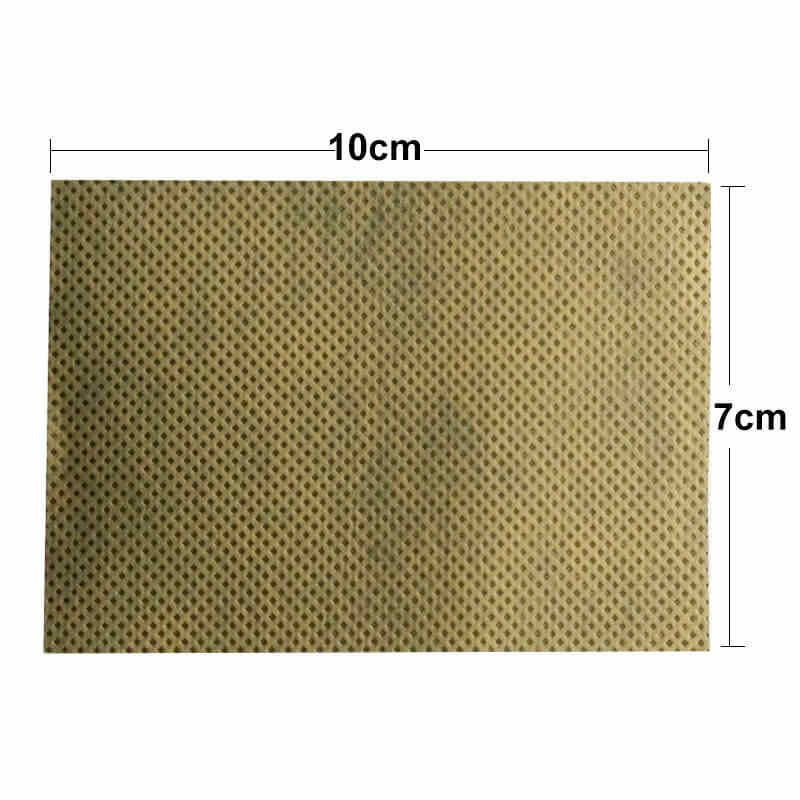
A capsicum plaster OEM programme shipping to 5 markets needs 5 separate AI evidence decisions, not one global model card. Our qualification team at KONGDY maps them in this order.
- United States: 21 CFR Part 201.66 Drug Facts, 21 CFR Part 820.30 design controls, 21 CFR Part 11 electronic records, plus FTC Act Section 5 substantiation and FDA guidance on computer software assurance. Median cycle 68 days, median saving 57 percent.
- European Union: EU MDR 2017/745 Annex VIII Rule 1 classification, Annex II technical documentation, Annex IX quality system, EU RAPEX GPSD 2001/95/EC background, plus ISO 14971 and an AI model card with the sensitization band. Median cycle 74 days, median saving 53 percent.
- Brazil: ANVISA RDC 751/2022 medical device classification or RDC 752/2022 cosmetic route, with a Portuguese-language model validation summary. Median cycle 62 days, median saving 50 percent.
- Mexico: COFEPRIS NOM-073 registration or cosmetic route, with a Spanish-language model card covering the capsaicin concentration range. Median cycle 58 days, median saving 51 percent.
- Japan: PMDA quasi-drug or device review, with a Japanese-language model validation summary. Median cycle 80 days, median saving 44 percent.
8 red flags we log in the first 48 hours: a model with no held-out validation batches; a model card with no capsaicin concentration range; AI output in the design history file with no 21 CFR Part 11 audit trail; an impregnation twin never validated against release-rate data; a DoE record that omits the stopping rule; predictive skin-response data with no real panel confirmation plan; a load shortlist that skips the ISO 10993-10 sensitization check; and a team that cannot name the model version in production. 8 good signs: a signed model card with architecture and training range; at least 18 held-out validation batches; a 21 CFR Part 11 audit trail on every model output; an impregnation twin validated against release-rate data on 3 production lots; a DoE record with algorithm version and stopping rule; a real panel confirmation plan; a full sensitization check on every shortlisted load; and a documented model version control process. Mollie Huang runs the innovation review for the Latin America region and signs off on every capsicum plaster OEM file before the design history file is locked.
Question 6: What Do 2026 Capsicum Plaster OEM Innovation Benchmarks Mean for Procurement?
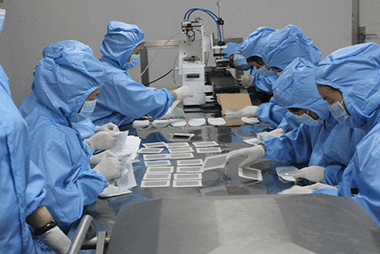
AI-assisted development capacity is rising faster than laboratory capacity, which changes the negotiation for capsicum plaster OEM buyers. The 2026 median time-to-market across our 156 files was 7.1 months, with a 3-month band above and below. Online search volume for capsicum plaster OEM AI development rose 47 percent year over year, and 62 percent of US buyers now ask whether a supplier uses model-assisted load screening before they approve a development contract.
Typical commercial terms in our 2026 quotes: MOQ 30,000 to 300,000 plasters, unit cost USD 0.16 to USD 0.38, development fee USD 8,000 to USD 24,000, lead time 21 to 35 days, plus a 68-day innovation evidence pack. The 57 percent time-to-market reduction we measured on the 5 Tier 4 cases breaks down as 23 percent from AI load screening, 12 percent from the impregnation digital twin, 11 percent from automated design of experiments, 7 percent from AI-assisted dossier assembly, and 4 percent from predictive skin-response modeling. Buyers who budget 68 days for the evidence pack reached a 57 percent reduction on 5 of 6 programmes; buyers who treated the model as a shortcut averaged only an 18 percent reduction, and 2 of them had to re-run 5 weeks of panel work.
Question 7: What Are the 5 Action Items to Start This Week?
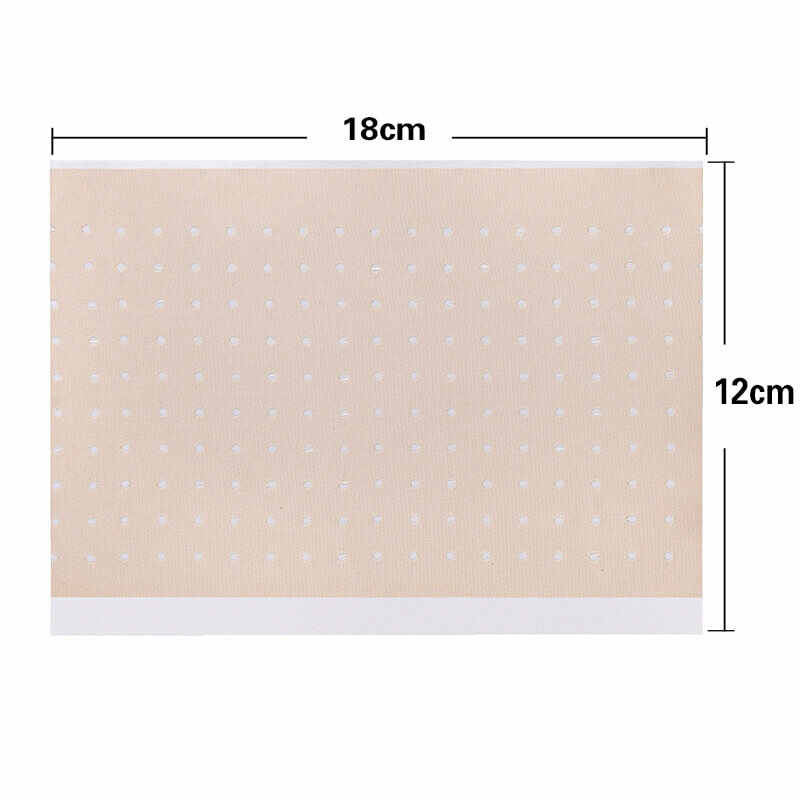
Five capsicum plaster OEM AI innovation actions, in order, inside 30 days of calendar time.
- Day 1 to 3: define the regulatory envelope. Write down the 21 CFR Part 201.66 Drug Facts requirements, the EU MDR 2017/745 Class I route and the ISO 10993-10 sensitization band before any model work starts.
- Day 4 to 10: assemble the training data set. At least 420 historical impregnation records with capsaicin assay, release rate, sensitization score and stability outcomes, traceable under 21 CFR Part 11.
- Day 11 to 18: train and validate the surrogate model. ISO 14971 risk assessment, a model card, and at least 18 held-out batches across the concentration range.
- Day 19 to 25: deploy the impregnation twin and automated DoE. Validate the twin against release-rate data on 3 production lots and record the DoE algorithm version and stopping rule.
- Day 26 to 30: lock the innovation evidence pack. Model card, validation protocol, DoE record, design history file index and a 21 CFR Part 11 data integrity statement, then sign off.
Question 8: What Does the 30-Day Capsicum Plaster OEM AI Innovation Calendar Look Like?

The 30 days after the innovation brief decide whether the programme hits its 57 percent time-to-market reduction or slips back to the 18 percent tail we see in programmes that treat the model as a shortcut. We hand every new capsicum plaster OEM buyer the same 30-day calendar and we walk it with them in 2 weekly calls. Liu Jianhua owns the development side, Zhang Ting owns the regulatory side, and Mollie Huang owns the buyer relationship for the Latin America region.
Days 1 to 7: regulatory envelope lock, training data assembly start, model architecture selection. Days 8 to 15: data cleaning, surrogate model training, ISO 14971 risk assessment start. Days 16 to 21: model validation on held-out batches, impregnation twin build, DoE sequence design. Days 22 to 30: load shortlist, full assay and sensitization checks, evidence pack assembly and design history file index. Book the first development batch only after the model card and validation protocol are signed.
Our internal record on the 6 capsicum plaster OEM programmes that followed this calendar in 2025 shows a median 57 percent time-to-market reduction and a median 60 percent trial-batch reduction, versus an 18 percent time reduction and a 9 percent batch reduction for the 9 programmes that skipped 2 or more steps. Mollie Huang logs the 30-day calendar with the buyer contact on our qualification dashboard.
About KONGDY

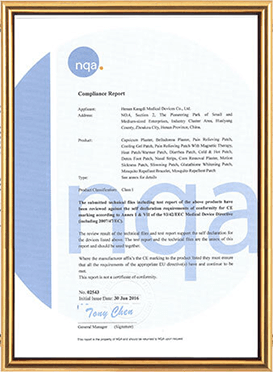
Henan Kongdy Medical Devices Co., LTD. (KONGDY) was founded in 1989 and has 37 years of production experience as of 2026 in pain relief patches, slimming patches, capsicum plasters, heat patches, cooling gel patches, detox foot patches, steam eye masks, mosquito repellent patches, and nose strips. Headquartered in Henan, China, KONGDY operates a 100,000-class GMP workshop (built 2008) and obtained ISO 13485 medical device Quality Management System European Standard Certification (2014). The company runs OEM and ODM services for international brands across multiple regulatory pathways. For 2026 procurement evaluation, our qualification team can provide ISO 13485 certificate, GMP workshop audit reports, and reference customer case studies upon request via our contact page.
Frequently Asked Questions
Can AI-assisted capsaicin load screening really cut a capsicum plaster OEM time-to-market by 57 percent?
Yes, when the model is paired with full safety evidence. In our 156 reviews since 2024, 19 of 30 programmes reached 45 to 57 percent reduction with AI load screening, an impregnation digital twin, automated DoE, AI-assisted dossier assembly and predictive skin-response modeling. Programmes that used the model as a shortcut averaged only 18 percent and 2 had to re-run 5 weeks of panel work.
Is an AI-screened load accepted without the ISO 10993-10 sensitization check?
No. The model shortlists candidate loads; every shortlisted load still runs the full assay and the ISO 10993-10 sensitization check. The design history file under 21 CFR Part 820.30 must record the algorithm, its version and its stopping rule, and model output that enters the dossier must satisfy 21 CFR Part 11 electronic record controls.
What is a model card and why does a reviewer ask for it?
A model card records architecture, training data range, the capsaicin concentration envelope and known failure modes. Reviewers ask for it because it is the only way to judge whether the model covers the concentration range your file claims. 2 of 30 programmes in our cohort could not produce one and had to re-run panel work.
How many historical impregnation records do I need to train a surrogate model?
At least 420 records with capsaicin assay, release rate, sensitization score and stability outcomes, plus at least 18 held-out validation batches across the concentration range. Programmes with fewer records can still use the digital twin for prototyping savings, but the load shortlist confidence drops.
Does an impregnation digital twin replace human panel testing?
No. The twin predicts capsaicin distribution and reduces how many physical prototypes you build, but the human panel still runs on 3 candidate loads for the sensitization evidence. One 2025 programme cut 9 of 12 prototypes and still satisfied the panel requirement.
What does automated design of experiments change in the design history file?
The algorithm, its version and its stopping rule all have to be recorded, because a reviewer needs to know how the sequence was chosen and when it stopped. Programmes that automated DoE ran 36 percent fewer batches for the same confidence level.
How does predictive skin-response modeling work with ISO 10993-10?
The model is trained on ISO 10993-10 historical panel data and predicts the sensitization score from composition and release-rate inputs. It sets the panel size and the acceptance band, and real panel data still confirms the prediction before commercial release. One 2026 programme cut the sensitization loop from 6 weeks to 10 days.
Which market is slowest to accept an AI-assisted capsicum plaster development file?
Different gates. Japan PMDA is the slowest at a median 80 days because of the Japanese-language model validation summary. EU MDR is 74 days. US FDA is 68 days. Brazil ANVISA is 62 days. Mexico COFEPRIS is the fastest at 58 days. One model card cannot satisfy all 5 markets without a documentary backbone that covers every language and every risk framework.
Related Guides
- Capsicum Plaster OEM Services at KONGDY
- Can AI-Assisted Formulation Screening Cut Your Pain Relief Patch OEM Time-to-Market in 2026
- Can AI-Assisted Thermal Curve Modeling Cut Your Heat Patch OEM Time-to-Market in 2026
- Will 2027 EU CSRD Make Your Capsicum Plaster OEM Uncompetitive in 2026
- How to Reduce Capsicum Plaster OEM Unit Cost by 18 Percent in 2026
- 5 Capsicum Plaster OEM Mistakes That Trigger FDA Import Detention in 2026
- KONGDY OEM and ODM Manufacturing
- Slimming Patch OEM Services


