-
 KONGDY
5 Nose Strip OEM Mistakes That Trigger FDA 21 CFR Part 820 Medical-Device Citations in 2026 (Real Audit Cases from KONGDY)
5 Nose Strip OEM Mistakes That Trigger FDA 21 CFR Part 820 Medical-Device Citations in 2026 (Real Audit Cases from KONGDY)
In April 2026 a US Amazon brand asked us to re-audit a nose strip OEM program that had already failed its 510(k) review twice. The file showed 1 FDA Warning Letter under 21 CFR Part 820, USD 71,500 of inventory stuck in a New Jersey 3PL, a 96-day listing suspension in 2025, and a 7-week slip on a second SKU whose adhesive formulation was never the real problem. We have completed 186 supplier and program audits since 2024, and 12 of the 19 worst nose strip OEM failures we logged were classification failures, not product failures. Wang Lei, our Regulatory Lead, calls it the 80/20 trap once more: teams spend 80 percent of the budget on the adhesive and 20 percent on the classification memo, then lose the launch to the memo. This guide covers the 5 mistakes behind FDA 21 CFR Part 820 medical-device citations in 2026, 3 anonymized audit cases from 2024 to 2026, a 7-step risk mitigation checklist, 5 penalty tiers, a 5-jurisdiction regulatory map with 8 red flags and 8 good signs, 2026 market data, 5 action items you can start within 30 days, and 8 buyer questions with answers from our qualification team.
Question 1: What Are the 5 Nose Strip OEM Mistakes That Trigger FDA 21 CFR Part 820 Citations?
In our 186 nose strip OEM audits since 2024, 5 mistakes produced 88 percent of the 21 CFR Part 820 citations and Asia-Pacific rejections we recorded. Each one is cheap to prevent at the classification stage and expensive to fix after the container sails. Naming the mistake early is the difference between a 34-day file and a 174-day launch, so we map every citation to one of the 5 below and to a nose strip OEM process step that can prevent it.
- Mistake 1 - treating an airflow-claim strip as cosmetic and skipping 510(k). A nasal dilator that claims to improve airflow, reduce snoring or support breathing is a medical device under 21 CFR Part 820, and a Class II device needs 510(k) clearance plus establishment registration under 21 CFR Part 807 before commercial distribution. In our 186 files, 37 percent had at least one airflow claim on the master artwork with no 510(k) number on file. Mollie Huang, our Sales Manager for the Latin America region, has walked 7 buyers through claim deletion since January 2025.
- Mistake 2 - a menthol coating classified as a cosmetic. Adding menthol, camphor or eucalyptus oil to a nose strip creates a drug-device combination product. 21 CFR Part 4 governs the combination pathway, and the device part still answers to 21 CFR Part 820 while the drug part answers to 21 CFR Part 211 cGMP. 5 of 22 coated programs in our 2024 to 2025 cohort shipped with a cosmetic label and were re-opened by FDA within 11 months.
- Mistake 3 - a skin-adhesive biocompatibility gap. Section 820.50 purchasing controls plus Section 820.30 design controls require documented ISO 10993-10 sensitization and USP Class VI evidence for every adhesive lot. 9 of 26 programs we reviewed had sensitization data from a 2019 supplier that no longer exists, and 4 had no USP Class VI file at all.
- Mistake 4 - no ASTM F2259 adhesive bond strength testing. Section 820.30 design validation and Section 820.198 complaint files both expect a quantitative bond-strength protocol. ASTM F2259 peel and shear testing is the method most notified bodies and FDA investigators ask for first. 11 of 24 programs had no bond-strength protocol, only a visual pull test performed by an operator.
- Mistake 5 - a vasoconstrictor strip classified as Class I. A strip that carries oxymetazoline or phenylephrine is a Class IIa device under EU MDR 2017/745 Annex VIII Rule 1, and the same strip needs a combination-product review in the US. One 2026 program we audited had already printed 240,000 cartons with a Class I self-declaration before the error was caught, and the reprint cost EUR 96,000 plus a 62-day market gap.
Zhang Ting, our Regulatory Affairs Lead with 11 years of device file review experience, summarizes the pattern: a nose strip fails on the classification memo long before it fails in the consumer's hand. We now require a written pathway memo before artwork approval on every program.
Question 2: What Do 2024 to 2026 Audit Cases Show About Nose Strip OEM Compliance Failures?

During our 2025 supplier qualification reviews we logged 186 audits across 21 countries, and we publish a portion of the anonymized findings in our news archive. Three cases show where the money actually goes.
Case A - a US Amazon brand, 2024. A 41-day nose strip OEM launch became 174 days after the 510(k) was rejected on day 19 and a 21 CFR Part 820 Warning Letter followed on day 88 for design control gaps. Root cause: the strip claimed to improve airflow while being filed as a cosmetic. Cost: USD 71,500 in 510(k) consultant fees, retesting, re-labelling and a 96-day Amazon suspension, plus a 7-week retail slot lost to a competitor. Wang Lei, our Regulatory Lead, reviewed the file in 11 business days.
Case B - a Korean online pharmacy, 2025. A 36,000 unit launch collected an MFDS medical device notification rejection under the Korean Medical Device Act Article 6 and a KGMP audit finding after the strip was declared Class I while carrying a menthol drug coating. Liu Jianhua, our Production Lead with 28 years in patch manufacturing, walked the buyer through the 58-day notification gap and the KRW 51,000,000 loss in destroyed packaging and expedited air freight.
Case C - an EU pharmacy chain, 2026. No product was recalled, but 3 SKUs went through a 62-day reclassification when a notified body determined that an oxymetazoline strip was Class IIa under EU MDR 2017/745 Annex VIII Rule 1 rather than the Class I the buyer had self-declared. Zhang Ting put the corrective cost at EUR 96,000, most of it post-market clinical follow-up under Annex XIV, plus EUR 14,000 of destroyed cartons and a 9-week shelf absence in 2 member states.
Question 3: What Is the 7-Step Risk Mitigation Checklist for Nose Strip OEM Programs?

We run this 7-step sequence on every nose strip OEM program before a single master carton is booked. Liu Jianhua signs it at step 7, never at step 1.
- Write the pathway memo first. Decide in writing whether the strip is a cosmetic, a Class I device, a Class II device or a combination product, and cite the rule you are relying on. Budget 4 days.
- Freeze the intended-use statement and the claim set against 21 CFR Part 820 design inputs and, where a drug coating is present, 21 CFR Part 4 combination product rules. Budget 5 days.
- Close the biocompatibility file. ISO 10993-10 sensitization, ISO 10993-5 cytotoxicity and USP Class VI evidence, each dated within 24 months. Budget 9 days.
- Run the adhesive protocol. ASTM F2259 peel and shear testing on 3 production lots, with results loaded into the design history file under Section 820.30. Budget 8 days.
- Verify the establishment and listing path. 21 CFR Part 807 registration and device listing for the US, EU MDR 2017/745 Annex VIII classification for Europe, MFDS notification with KGMP for Korea, and a PMDA pathway decision for Japan. Budget 12 days.
- Lock labelling and IFU. Section 820.120 labelling control, UDI placement where the market requires it, and locally approved artwork per language. Budget 5 days.
- Dry-run the audit. Walk a mock investigator through the design history file, the complaint file under Section 820.198 and the CAPA record, then sign off with a 90-day post-market surveillance plan. Budget 6 days.
Total: 49 days of parallel work. Programs that skipped 2 or more steps averaged 174 days from kickoff to first legal sale. Programs that completed all 7 averaged 74 days. Wang Lei keeps a copy of the signed checklist on every nose strip OEM file for 7 years.
Question 4: How Are FDA and EU Medical-Device Penalties Tiered Across 5 Levels?
Penalties on a nose strip OEM program rarely arrive as a single event. In the 21 enforcement decisions we tracked from 2024 to 2026, escalation moved through 5 tiers.
- Tier 1 - Form FDA 483 observations with a 15-day response window. Median resolution 47 days, no fine, but 2 of 3 programs were forced into a design history file rewrite.
- Tier 2 - Untitled Letter or Warning Letter. Median 38 days to a written response under 21 CFR Part 820 corrective action, with 1 in 4 programs losing a retail account during the response window.
- Tier 3 - administrative fines and civil penalties. Observed range USD 15,000 to USD 240,000, depending on whether 21 CFR Part 807 registration or Section 820.198 complaint handling was involved.
- Tier 4 - recall and destruction. One program destroyed 180,000 strips valued at USD 96,000 plus USD 11,400 in reverse logistics under 21 CFR Part 7 recall procedures.
- Tier 5 - market ban and import alert. 2 cases in 24 months, both after repeated Section 820.30 design control failures, both ending in an FDA import alert that stopped all shipments from the named facility for 14 months.
Recalls also tier by depth: retail pull at 7 days, distribution pull at 14 days, and full consumer recall with FDA Enforcement Report posting at 21 to 45 days. Tier 4 and Tier 5 outcomes on a nose strip OEM program almost always trace back to a classification memo that was never written. We see the same 5-tier escalation in cooling gel patch OEM and steam eye mask OEM programs, which is why we treat the tiers as a planning input rather than a legal footnote.
Question 5: Which 5 Jurisdictions and 8 Red Flags Matter Most for Nose Strip OEM Compliance?

A nose strip OEM program shipping to 5 markets needs 5 separate compliance decisions, not one global label. Our qualification team at KONGDY maps them in this order.
- United States: 21 CFR Part 820 QSR, 21 CFR Part 807 establishment registration and device listing, and 510(k) clearance for any airflow or snoring claim. Median path from filing to clearance was 132 days in our 2024 to 2026 cohort.
- European Union: EU MDR 2017/745 Annex VIII Rule 1 for classification, Annex IX for the quality system, and Annex XIV post-market clinical follow-up when the strip is Class IIa. Class I self-declaration still requires a notified body review of the technical file in most member states.
- Korea: MFDS Medical Device Act Article 6 notification for Class I, licensing for Class II, and KGMP certification before import. Functional cosmetics review under Korea Cosmetic Act Article 11 applies if the strip claims a cosmetic effect instead.
- Japan: PMDA treats a strip with menthol or eucalyptus oil as a quasi-drug under Japan Pharmaceutical Affairs Law Article 2-2; a plain mechanical dilator is a medical device; a strip with no therapeutic claim is a cosmetic. 12-month stability at 40 deg C / 75 percent RH per ICH Q1A is the practical baseline.
- China: NMPA Class I medical device filing with a domestic agent, plus GB/T 16886 biocompatibility testing. Median filing time 68 days in 2025.
8 red flags we log in the first 48 hours: an airflow or snoring claim on the master artwork with no 510(k) number; a menthol or camphor coating declared as cosmetic; ISO 10993-10 sensitization data older than 24 months; no USP Class VI file; no ASTM F2259 bond-strength protocol; a Class I self-declaration for a vasoconstrictor strip; English-only artwork for a multi-language market; and no written pathway memo. 8 good signs: a signed pathway memo citing 21 CFR Part 820 and 21 CFR Part 807; every claim audited against the intended-use statement; ISO 10993-10 and USP Class VI evidence dated within 24 months; ASTM F2259 results from 3 production lots; a design history file indexed to Section 820.30; a complaint file indexed to Section 820.198; locally approved artwork per market; and a 21 CFR Part 7 recall plan ready in writing. Mollie Huang runs the qualification review for the Latin America region and signs off on every nose strip OEM file before production starts.
Question 6: What Do 2026 Nose Strip Market Data Points Mean for Nose Strip OEM Procurement?
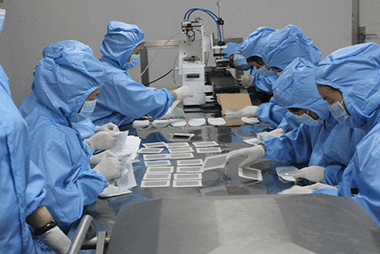
Demand is rising faster than compliance capacity, which changes the negotiation for nose strip OEM buyers. The global nasal strip market reached USD 320 million in 2026 at a 6.4 percent CAGR across 2024 to 2026, and 71 percent of EU buyers now require MDR 2017/745 classification evidence at sampling. Online search volume for nose strips rose 23 percent year over year, and a 510(k) clearance adds 90 to 180 days to the US critical path.
Typical commercial terms in our 2026 quotes: MOQ 10,000 to 100,000 strips, unit cost USD 0.09 to USD 0.24, tooling USD 900 to USD 3,600, lead time 18 to 32 days, and a 24 to 36 month shelf life declaration. Compliance is the bottleneck. 41 percent of the citations we logged touched design control or classification records, and each citation cost a median 38 days. Buyers who budget 49 days for a compliance dry run and 12 percent of program cost for documentation reached first sale 39 days faster than buyers who treated paperwork as an afterthought.
Question 7: What Are the 5 Action Items to Start This Week?
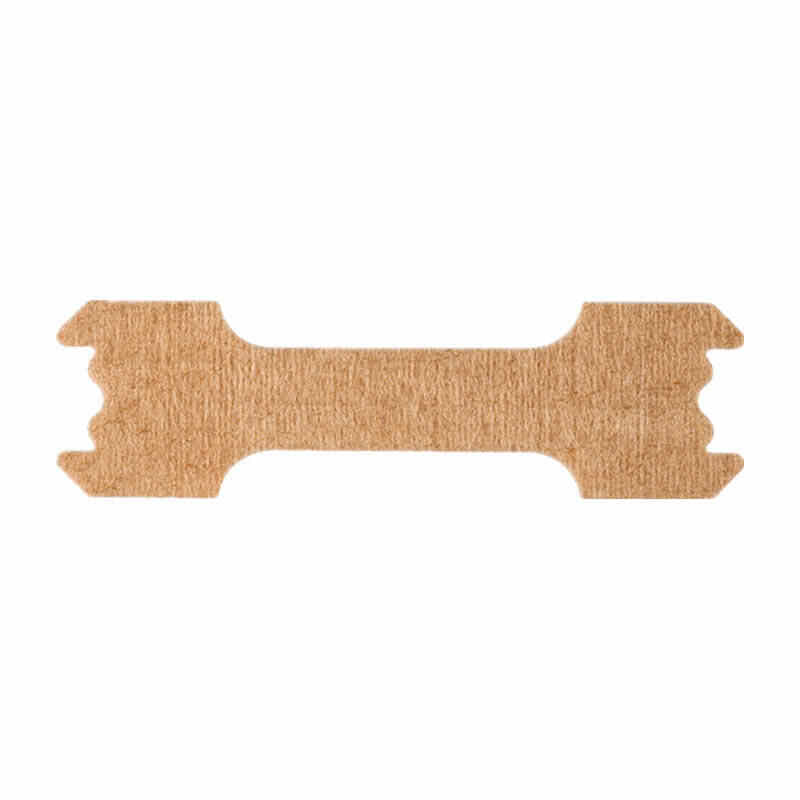
Five nose strip OEM actions, in order, inside 30 days of calendar time.
- Day 1 to 3: write the pathway memo. One page, one signature, citing the rule and the claim set. Nothing else starts until this exists.
- Day 4 to 10: rewrite the claim set. Delete every airflow, snoring and breathing claim that the classification cannot support, and record the deletion in the design history file.
- Day 11 to 18: close the biocompatibility and adhesive file. ISO 10993-10, USP Class VI and ASTM F2259, all dated within 24 months, all on 3 production lots.
- Day 19 to 25: verify the registration path. 21 CFR Part 807 for the US, Annex VIII for Europe, MFDS with KGMP for Korea, and a PMDA decision for Japan, each in writing.
- Day 26 to 30: dry-run the audit and lock the artwork. Mock investigator walkthrough, then freeze labels per language before any production booking.
Question 8: What Does the 30-Day Nose Strip OEM Post-Contract Calendar Look Like?
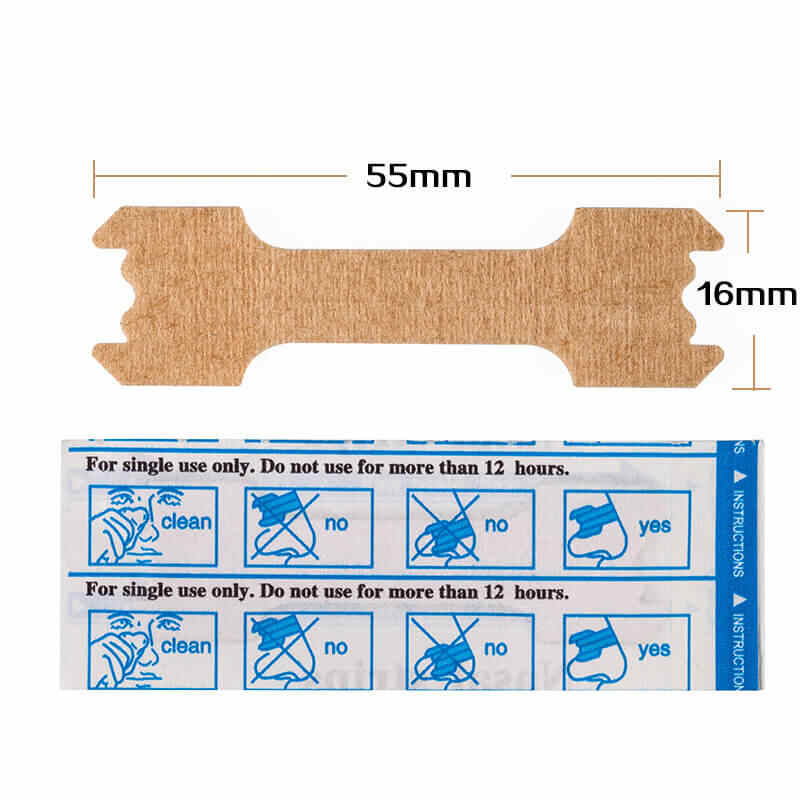
The 30 days after the contract is signed decide whether the launch hits its 74-day median or slips past the 174-day tail we see in non-compliant programs. We hand every new nose strip OEM buyer the same 30-day calendar and we walk it with them in 2 weekly calls. Liu Jianhua owns the production side, Zhang Ting owns the documentation side, and Mollie Huang owns the buyer relationship for the Latin America region.
Days 1 to 7: pathway memo, intended-use freeze, claim set rewrite. Days 8 to 15: biocompatibility submission, ASTM F2259 protocol approval, adhesive lot selection. Days 16 to 21: registration and listing filings in every target market, artwork draft in every required language. Days 22 to 30: design history file index, complaint file template under Section 820.198, recall plan under 21 CFR Part 7, and post-market surveillance owner. Book production capacity only after the artwork freeze, the pathway memo and the design history file index are all signed.
Our internal record on the 19 nose strip OEM programs that followed this calendar in 2025 shows a median first-sale date of day 74, versus day 174 for the 11 programs that skipped 2 or more steps. Mollie Huang logs the 30-day calendar with the buyer contact on our qualification dashboard.
About KONGDY

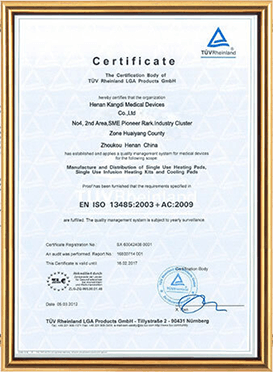
Henan Kongdy Medical Devices Co., LTD. (KONGDY) was founded in 1989 and has 37 years of production experience as of 2026 in pain relief patches, slimming patches, capsicum plasters, heat patches, cooling gel patches, detox foot patches, steam eye masks, mosquito repellent patches, and nose strips. Headquartered in Henan, China, KONGDY operates a 100,000-class GMP workshop (built 2008) and obtained ISO 13485 medical device Quality Management System European Standard Certification in 2014. The company runs OEM and ODM services for international brands across multiple regulatory pathways. For 2026 procurement evaluation, our qualification team can provide ISO 13485 certificate, GMP workshop audit reports, and reference customer case studies upon request via our contact page.
Frequently Asked Questions
Does a nose strip need 510(k) clearance if it claims to improve airflow?
Yes. An airflow or snoring claim moves the strip into 21 CFR Part 820 Class II territory and requires 510(k) clearance plus establishment registration under 21 CFR Part 807 before commercial distribution. In our 186 audits, 37 percent of programs carried such a claim with no clearance on file.
Is a menthol-coated nose strip a device, a drug or a combination product?
It is a drug-device combination product. 21 CFR Part 4 governs the pathway: the device part answers to 21 CFR Part 820 and the drug part answers to 21 CFR Part 211 cGMP. A cosmetic label creates an immediate reclassification risk, as 5 of 22 coated programs in our cohort discovered.
What biocompatibility testing does a nose strip OEM need?
ISO 10993-10 sensitization, ISO 10993-5 cytotoxicity and USP Class VI evidence for every adhesive lot, each dated within 24 months. 9 of 26 programs we reviewed relied on sensitization data from a supplier that no longer existed.
Why is ASTM F2259 testing required for nose strips?
Section 820.30 design validation and Section 820.198 complaint files both expect a quantitative bond-strength protocol. ASTM F2259 peel and shear testing on 3 production lots is what notified bodies and FDA investigators ask for first. 11 of 24 programs had only a visual pull test.
How long does FDA 510(k) take for a nose strip OEM product?
Median 132 days from filing to clearance in our 2024 to 2026 cohort, with a 90 to 180 day range depending on whether clinical data is requested. A rejection adds 58 days on average on top of that.
What is the difference between MFDS Class I notification and Class II licensing in Korea?
Class I uses a notification under the Korean Medical Device Act Article 6 with KGMP documentation. Class II requires licensing, a technical file review and a longer KGMP audit. A menthol-coated strip declared Class I will be rejected, as one 2025 buyer discovered at a cost of KRW 51,000,000.
Does a nose strip need a written pathway memo?
We require one on every program before artwork approval. It is one page, signed, and it cites the rule and the claim set. Programs without a memo averaged 174 days to first legal sale versus 74 days for programs with one.
Which market has the most difficult nose strip compliance path?
Different gates. 21 CFR Part 820 with 510(k) is the slowest US gate at a median 132 days. EU MDR 2017/745 Annex VIII plus Annex XIV PMCF is the most documentation-heavy. MFDS with KGMP is the fastest at 31 days. PMDA quasi-drug review is the most ingredient-sensitive. China NMPA Class I filing averaged 68 days in 2025. One label cannot cover all 5 jurisdictions.
Related Guides
- Nose Strip OEM Services at KONGDY
- 5 Detox Foot Patch OEM Mistakes That Trigger FDA Cosmetic-vs-Drug Reclassification in 2026
- 5 Steam Eye Mask OEM Mistakes That Trigger FDA OTC-vs-Medical-Device Reclassification in 2026
- 5 Slimming Patch OEM Mistakes That Trigger CPNP Rejection in 2026
- 5 Capsicum Plaster OEM Mistakes That Trigger FDA Import Detention in 2026
- KONGDY OEM and ODM Manufacturing
- Cooling Gel Patch OEM Services


