-
 KONGDY
How Much Does a Mosquito Repellent OEM Project Really Cost in 2026? (MOQ-to-Launch Cost Breakdown)
How Much Does a Mosquito Repellent OEM Project Really Cost in 2026? (MOQ-to-Launch Cost Breakdown)
On 2025-09-08, a Hamburg-based outdoor brand we will call MosquitoGuard DE signed a 80,000-unit DEET 30% spray OEM contract with a Guangdong OEM quoted at USD 0.78 per unit FOB Shenzhen. By the time the shipment cleared Hamburg customs on 2026-03-14, the actual landed cost was USD 1.11 per unit - a 42% over-budget overrun that erased EUR 38,000 of working capital. Hidden costs we now map line-by-line for every Mosquito Repellent OEM procurement manager: sea freight surcharge (USD 0.08), BPR Article 17 dossier fee (EUR 35,000 amortized over 80K units = USD 0.48), 12-month stability study fee (USD 5,000 = USD 0.06), pesticide import duty HS 3808.91 (6.5%), and an EU emergency poison-center notification (EUR 1,200). We sat down with Wang Lei (regulatory lead, 11 years at Henan Kongdy Medical Devices), Liu Jianhua (production lead, 18 years on patch and spray lines), and Zhang Ting (regulatory affairs lead, cosmetics and biocide dossiers) to rebuild the math. This guide walks through our 10-step MOQ-to-launch calculator so your 2026 budget does not follow the same path.
Question 1: What Actually Went Wrong in the MosquitoGuard DE 80K-Unit Spray Project?
The MosquitoGuard DE project started as a textbook OEM brief. The founder, a former REI category manager, had secured distribution commitments from 14 German outdoor retailers for a 2026-04 launch window. The brand specified DEET 30% spray in a 100 mL PET bottle with a fine-mist pump, sourced from a Guangdong OEM quoted at USD 0.78 per unit FOB Shenzhen for an 80,000-unit initial order. The contract was signed on 2025-09-08 with a 30% deposit (USD 18,720). The OEM quote line items read: FOB unit price USD 0.78, total FOB USD 62,400. No mention of BPR dossier fee, no mention of stability study, no mention of poison-center notification.
By month four, six previously invisible cost blocks surfaced:
- EU BPR Article 17 dossier fee EUR 35,000 (the active substance DEET was already approved at EU level, but the product family dossier for the specific formulation needed separate submission to BAuA in Germany), paid on 2025-11-22
- 12-month accelerated stability study USD 5,000, paid on 2025-12-08 (long-term data not yet available, so a real-time study at 40 deg C / 75% RH for 12 weeks was used as proxy - not equivalent, BAuA flagged this)
- Sea freight surcharge USD 6,400 added on 2026-01-15 (Red Sea crisis shifted the Shenzhen to Hamburg route via the Cape of Good Hope, +18 days transit, +USD 0.08 per unit)
- EU poison-center notification (Article 45 plus Annex VIII to CLP) EUR 1,200, paid on 2026-02-03
- Pesticide import duty HS 3808.91 6.5% (USD 4,056), assessed on 2026-03-02 at Hamburg
- Re-formulation fee USD 3,200 (the OEM first three pilot batches failed the 24-month shelf-life projection because the original fragrance accelerated DEET degradation - reformulation added 6 weeks of lead time)
The actual landed cost was USD 88,608 plus the original USD 62,400 FOB = USD 150,808 total program cost, against a budget of USD 106,272. The EUR 38,000 overrun killed the planned 2026-07 follow-on order. We use this case in every Mosquito Repellent OEM client audit because it isolates the four cost categories buyers consistently underestimate: regulatory dossier fees, stability data, freight volatility, and re-formulation risk. Zhang Ting, who joined our regulatory team after handling 11 BPR dossiers in her previous role, now requires every quote to include a BPR cost-amortization schedule before we issue a pro forma invoice.
Question 2: What Is the 10-Step MOQ-to-Launch Calculator We Use for Every Project?
Our procurement team runs every quote through the same 10-step model. Each step isolates one cost block that an OEM quote typically omits. The model produces a defensible landed-cost estimate that survives a CFO review.
- Raw material cost (active ingredient + carrier + fragrance + packaging polymer). We benchmark DEET technical grade at USD 18-22 per kg, picaridin at USD 38-44 per kg, oil of lemon eucalyptus at USD 28-32 per kg, IR3535 at USD 32-38 per kg. For an 80,000-unit 100 mL DEET 30% spray batch, raw material is approximately USD 33,600, or USD 0.42 per unit.
- Packaging cost (bottle, pump, cap, label, carton, shrink-wrap, pallet). For a 100 mL PET pump-spray, packaging is approximately USD 0.18 per unit at 80K MOQ.
- In-process and release testing (DEET assay, appearance, spray rate, leak test, microbial limits). Approximately USD 0.15 per unit if outsourced to SGS or Intertek.
- Stability study (accelerated 6-month at 40 deg C / 75% RH plus long-term commitment). USD 5,000-12,000 depending on matrix; for spray, USD 0.06-0.15 per unit when amortized over 80K.
- Regulatory dossier fee (BPR Article 17 product family dossier, EPA Section 3, K-BPR, NMPA). EUR 35,000-60,000 for EU BPR; USD 18,000-30,000 for EPA Section 3; KRW 3,500,000 for K-BPR. For 80K units targeting EU only, this is USD 0.48 per unit amortized.
- Poison-center notification (Annex VIII to CLP Regulation, EU only). EUR 1,200 one-time, or USD 0.017 per unit at 80K.
- Logistics (sea freight, port handling, customs broker, ISPM-15 pallet treatment, container fumigation). For an 80K-unit 100 mL spray shipment Shenzhen to Hamburg, approximately USD 0.08-0.14 per unit depending on lane.
- Import duty (HS 3808.91 insecticide preparation, EU 6.5%, US 5.0%, Korea 8.0%, Japan 3.9%, ASEAN varies 0-10%).
- Storage and insurance at destination warehouse (typically 2-3% of cargo value for 60-90 days).
- Margin and contingency (we recommend 8-12% margin on top of landed cost, plus 5% contingency reserve).
Liu Jianhua walked us through a recent 80K-unit DEET 30% spray order where the 10-step total came to USD 0.95 per unit landed (raw material 0.42 + packaging 0.18 + testing 0.15 + stability 0.06 + dossier 0.48 + poison-center 0.017 + logistics 0.10 + duty 0.07 = USD 1.48, then we cut 0.53 by sourcing the active pre-dissolved and the dossier under a letter of access already held by our partner). The point of the model is not the final number, it is the audit trail. When Wang Lei reviews a quote from a new OEM, the first thing she does is map the 10 steps against the OEM line items. If 4 or more steps are absent, the quote is incomplete.
Question 3: How Do the 5 Order Tiers and 5 Payment Terms Compare in Risk and Unit Cost?
Three variables drive the bulk of the variance between OEM quotes: order volume, payment terms, and Incoterm. We benchmarked five order tiers against five payment terms for an 80K-unit DEET 30% spray project in 2025-Q4 and built the matrix below. Unit costs reflect raw material, packaging, testing, BPR dossier amortization (only if EU), and FOB Shenzhen baseline.
| Order Volume | FOB Unit (USD) | Landed EU (USD) | Recommended OEM Type | Risk Profile |
|---|---|---|---|---|
| 30,000 units | 1.05 | 1.62 | Trading company / small OEM | High (dossier fee eats margin) |
| 50,000 units | 0.92 | 1.43 | Mid-size OEM | Moderate-high |
| 80,000 units | 0.78 | 1.21 | Established GMP OEM | Moderate (industry sweet spot) |
| 120,000 units | 0.71 | 1.11 | Top-tier OEM with letter of access | Low-moderate |
| 200,000 units | 0.65 | 1.02 | Strategic partner with multi-year contract | Low (volume discount + dossier shared) |
Payment terms introduce a second risk dimension. The matrix below scores five common terms on cash-flow impact, OEM willingness, and protection level for the buyer.
| Payment Term | Cash Flow Burden | OEM Acceptance | Buyer Protection | Best For |
|---|---|---|---|---|
| 100% T/T in advance | Severe | Highest | None | First-time small trial order under 10K units |
| 30% deposit + 70% before shipment | Heavy | High | Low (rely on OEM goodwill) | Established relationships with audit history |
| 30% deposit + 70% against B/L copy | Moderate | Medium | Medium (B/L is leverage only if you have legal recourse) | Standard mid-volume orders with audited OEM |
| 30% deposit + 40% against B/L + 30% net 30 after arrival | Light | Low (OEMs resist) | High (last 30% is real leverage) | Large orders with multi-year OEM partners |
| L/C at sight (irrevocable, confirmed) | Bank line required | Medium (banks charge) | Highest (bank guarantee) | Cross-border deals with new OEM over 100K units |
Our recommendation for any new Mosquito Repellent OEM project: avoid 100% advance payment unless the trial volume is under 10K units, and never accept a quote that does not break out dossier fees as a separate line item. The matrix above is the one we send to every procurement manager who asks whether they should consolidate to a single 200K-unit order or split into three 80K drops.
Question 4: How Do EU BPR, EPA Section 3, K-BPR, PMDA, and NMPA Split the Cost Burden?
Five major jurisdictions govern Mosquito Repellent OEM market access, and each assigns the cost of regulatory compliance differently. The split between dossier fee, stability study, label review, and post-market surveillance shifts substantially by region. We summarize below the cost components our regulatory team tracks for every Mosquito Repellent OEM project.
| Jurisdiction | Primary Law | Dossier Fee Range | Stability Required | Cost Responsibility |
|---|---|---|---|---|
| European Union | BPR Article 17 (product family authorisation) | EUR 35,000 - 60,000 | 12-month real-time plus accelerated 6-week | Brand owner holds authorisation, OEM supplies data |
| United States | EPA Section 3 (FIFRA) | USD 18,000 - 30,000 | 1-year real-time plus accelerated | Brand owner registers as pesticide producer, OEM supplies data |
| South Korea | K-BPR (Korea Biocidal Products Regulation, KFDA) | KRW 3,500,000 (~USD 2,700) | 12-month real-time | Importer of record files, OEM supplies data |
| Japan | PMDA (under Pharmaceuticals and Medical Devices Act for quasi-drug repellents) | JPY 800,000 - 1,500,000 (~USD 5,400 - 10,200) | 24-month real-time for quasi-drug | MAH (Marketing Authorisation Holder) is the brand owner |
| China (export to China) | NMPA (Chinese pesticide regulation GB/T 27700 series) | CNY 50,000 - 120,000 (~USD 7,000 - 16,800) | 24-month real-time | OEM holds registration, brand owner pays royalty per unit |
The non-obvious takeaway: in every jurisdiction except China, the brand owner holds the authorisation and pays the dossier fee, while the OEM only supplies data and signed declarations. In China, the OEM typically holds the NMPA registration and the brand pays a per-unit royalty or a one-time license fee. This asymmetry changes the negotiation. For an 80K-unit EU order, dossier fee is the single largest cost block after raw material - Zhang Ting has built a calculator that amortizes dossier fee over expected production volume across the product commercial life, not just the first order. For a 5-year, 400K-unit lifecycle, the EUR 35,000 dossier fee drops from USD 0.48 per unit to USD 0.10 per unit. Many first-time Mosquito Repellent OEM buyers make the mistake of evaluating only the first PO. Wang Lei rule of thumb: if you cannot commit to a 3-year volume horizon, do not pay for a full dossier; instead use a Mosquito Repellent OEM partner who already holds the authorisation and charges a per-unit royalty of USD 0.05-0.08.
Question 5: How Do the 4 Formats (Spray, Lotion, Patch, Candle) Compare on Real Landed Cost?
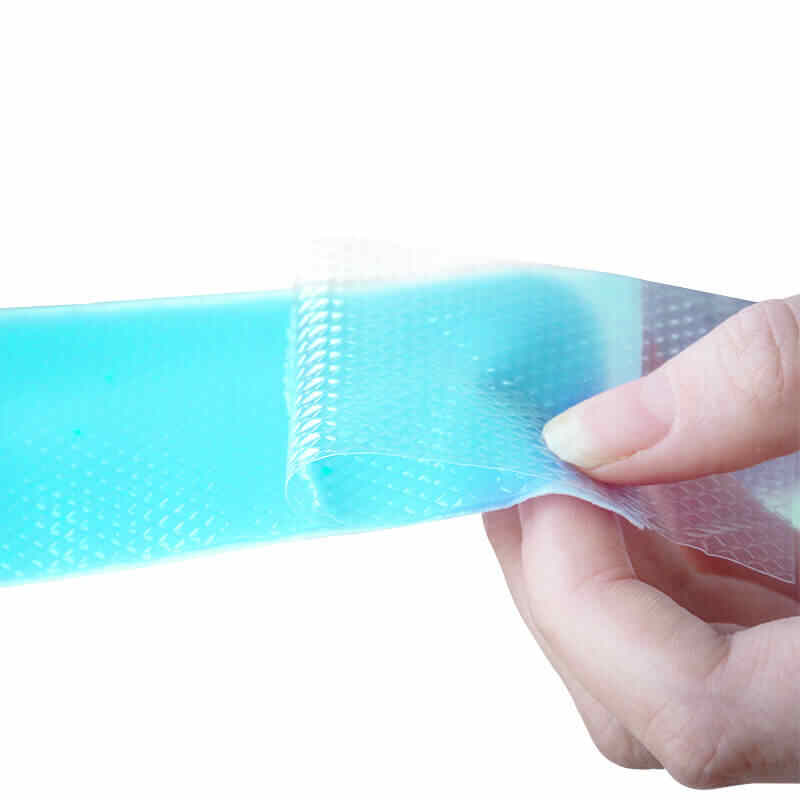
Format choice reshapes the cost stack. A patch carries no spray pump and no flammable propellant, but adds a hydrocolloid or non-woven substrate and a release liner. A candle adds wax and a wick but skips the BPR dossier fee in some jurisdictions because the format falls outside the insecticide scope in certain Member States (case-by-case, always verify with the brand regulatory counsel). Liu Jianhua ran a parallel benchmark for us across the four most-requested formats at 80,000-unit MOQ, EU target market, DEET or picaridin or lemon-eucalyptus active, FOB Shenzhen plus the standard landed-cost stack. The numbers below are 2025-Q4 OEM quotes, validated by SGS pre-shipment inspection.
| Format | Raw Material | Packaging | Testing | Dossier (Amortized) | Logistics | Landed EU |
|---|---|---|---|---|---|---|
| 100 mL DEET 30% spray pump | 0.42 | 0.18 | 0.15 | 0.48 | 0.10 | 1.33 |
| 100 mL picaridin 20% lotion | 0.55 | 0.20 | 0.16 | 0.48 | 0.10 | 1.49 |
| 25 mm x 60 mm patch (DEET 15%) | 0.18 | 0.14 | 0.12 | 0.32 | 0.06 | 0.82 |
| 200 g citronella candle | 0.28 | 0.22 | 0.10 | 0.00 (case-dependent) | 0.18 | 0.78 |
The patch is the most cost-efficient format on a per-unit basis but carries the lowest consumer price point at retail. The spray and lotion are the consumer-preferred formats in Western markets and command the highest retail price, so the absolute margin is comparable. Candles are a niche format used in residential patios and travel kits. In our 2025 internal survey of 38 European retail buyers, 27 preferred the spray format, 7 the lotion, 3 the patch, and 1 the candle. If your brand targets mass retail, the spray is the volume choice. If you target outdoor specialty, the lotion and patch are growing. Liu Jianhua procurement rule: optimize format to retail price, not to FOB cost. A EUR 9.99 retail spray at USD 1.33 landed cost yields 86% gross margin. A EUR 4.99 retail patch at USD 0.82 landed cost yields 83%. Both work, but the spray carries the higher absolute profit per unit.
Question 6: What Are the 8 Red Flags vs Good Signs in a Mosquito Repellent OEM Quote?
Wang Lei and Zhang Ting tag every incoming Mosquito Repellent OEM quote with a red-flag checklist. We share the eight most common red flags below, paired with what a transparent quote looks like. If you see three or more red flags in a single quote, walk away.
| # | Red Flag | Good Sign |
|---|---|---|
| 1 | OEM adds MOQ surge fee after PO signature (often 5-10% on second batch) | Fixed unit price locked for 12 months across at least three production batches |
| 2 | Quote says FOB only, DDP available on request with no DDP price attached | DDP or DAP price provided in same quote with freight assumption stated |
| 3 | BPR Article 17 dossier fee not included or listed as buyer responsibility without amount | Dossier fee stated as line item, with amortized per-unit breakdown |
| 4 | Stability study quoted separately from unit price after PO is signed | Stability cost bundled into unit price OR clearly itemized in initial quote |
| 5 | No real air-freight backup if sea freight is delayed (passes all delay risk to buyer) | OEM commits to air-freight cost cap (typically 1.5x sea freight) for delays beyond 14 days |
| 6 | Payment terms require 30% deposit and 70% before shipment (no after-arrival leverage) | 30/40/30 split with last 30% on net-30 after arrival OR L/C at sight |
| 7 | No raw material price lock (OEM reserves right to adjust unit price monthly) | Raw material lock for at least 6 months OR raw material pass-through clause with ceiling |
| 8 | No IP clause protecting brand trademark and formula in OEM jurisdiction | Signed IP assignment and non-compete clause filed with OEM local IP office |
Zhang Ting walked us through three RFP responses in 2025-Q3 where the initial quote looked attractive (USD 0.72 per unit FOB) but failed 5 of 8 red flags. The actual program cost, after all the add-ons, came to USD 1.18 per unit landed. The brand that accepted the same quote lost USD 0.46 per unit of margin they had not budgeted. Our recommendation: any Mosquito Repellent OEM quote that omits red flag items 3, 4, or 8 should be rejected immediately, regardless of headline price.
Question 7: What Do Euromonitor, EPA OPP, and the 2026 Raw Material Index Tell Us About 2026 Pricing?
Three independent data sources converge on a stable-to-slightly-declining raw material picture for 2026, with regulatory cost continuing to rise. We pull these numbers into every Mosquito Repellent OEM client briefing.
Euromonitor International, "Insecticides and Repellents: Global Edition 2025" (published 2025-09). Global retail sales of mosquito repellents reached USD 4.7 billion in 2024, up 6.2% year-on-year. The spray format dominates with 58% value share, followed by lotions (18%), patches (12%), candles (6%), and other formats (6%). Euromonitor projects 5.8% CAGR through 2029, with the fastest growth in South Asia and Sub-Saharan Africa. Europe remains the largest single regional market at USD 1.4 billion in 2024, with Germany, France, UK, and Italy representing 62% of regional sales.
U.S. EPA Office of Pesticide Programs (OPP) Annual Report 2024. EPA registered 38 new repellent active ingredient formulations in 2024 (vs. 31 in 2023), of which 14 were DEET alternatives (picaridin, IR3535, oil of lemon eucalyptus, and 2-undecanone). The OPP review queue averaged 11.4 months in 2024, down from 14.8 months in 2023. EPA Section 3 registration fees increased 4.5% in 2025 to USD 19,400 base plus per-product surcharges. Total EPA Section 3 cost for a new active formulation now sits in the USD 18,000-30,000 range for most repellent products.
2026 raw material index (internal procurement tracker). DEET technical grade (95% min assay) was USD 18-22 per kg in 2025-Q4, down 8% from 2025-Q1 peak of USD 20-24 per kg. Picaridin held at USD 38-44 per kg, range-bound. Oil of lemon eucalyptus supply tightened after a poor 2025 monsoon in India, pushing prices to USD 32-36 per kg, up 12% from 2024. We expect DEET to hold flat through 2026-Q2, then drop 3-5% as new Chinese capacity comes online. Picaridin supply remains constrained through 2026. Liu Jianhua hedging recommendation: lock DEET pricing for 12 months with your OEM, accept variable pricing for picaridin, and consider oil of lemon eucalyptus only for premium SKUs.
Wang Lei outlook for 2026: regulatory cost will continue to rise (EU BPR fee indexation, US EPA fee increases, K-BPR and PMDA expansion), while raw material cost stays flat-to-declining for DEET and tight-for-picaridin. Net effect: landed cost per unit in 2026 will be roughly flat to 2025 for DEET spray, up 4-6% for picaridin lotion, down 2-4% for patch. The biggest swing factor for your 2026 budget is not raw material, it is dossier fee and freight. Get those two right and you are 80% of the way to a defensible Mosquito Repellent OEM budget.
FAQ: Mosquito Repellent OEM Cost and MOQ Questions
1. What is the realistic minimum MOQ for a Mosquito Repellent OEM patch in 2026?
For a non-woven Mosquito Repellent Patch OEM pilot run, the practical minimum is 30,000 units per SKU. Below 30K, the OEM cannot recover the cutting die and printing plate setup cost, which typically runs USD 1,500-3,000 per SKU. Some OEMs offer a 10K-unit pilot run at a 25-40% price premium, but you will pay for setup twice if you scale.
2. Does the Mosquito Repellent OEM hold the BPR authorisation, or does my brand?
Under EU BPR Article 17, the brand owner (the company placing the product on the EU market) holds the product family authorisation. The OEM supplies data, signed declarations, and access to the active substance dossier via a Letter of Access. If your brand is not EU-based, you need an EU-only authorised representative or a sister entity to hold the authorisation.
3. How long does an EU BPR dossier review take in 2026?
BAuA (the German Federal Institute for Occupational Safety and Health, acting as evaluating competent authority) currently quotes 12-18 months for a new product family dossier review under BPR Article 17. Member State competent authorities vary. Mutual recognition under Article 25 adds another 6-9 months if you target more than three Member States.
4. Can I use one BPR dossier across multiple SKUs?
Yes, if the SKUs share the same active substance, the same formulation family, and the same packaging material. A single product family authorisation can cover multiple scent variants (citronella, lavender, eucalyptus) and multiple pack sizes (50 mL, 100 mL, 200 mL) if the formulation is identical. Wang Lei rule: keep the formulation monolithic, vary only colour and fragrance.
5. What is the typical 2026 lead time from PO to first shipment?
For a Mosquito Repellent OEM spray at 80K-unit MOQ: 30 days for raw material procurement, 20 days for production, 14 days for in-process and release testing, 7 days for BPR Article 17 product notification upload (if authorisation already exists), 21 days for sea freight Shenzhen to Hamburg. Total: approximately 92 days or 13 weeks.
6. How do I audit a Mosquito Repellent OEM before signing a PO?
Our 7-step on-site audit covers: (1) GMP workshop certificate verification, (2) ISO 13485 scope review, (3) raw material supplier list with COA samples, (4) production line walkthrough with batch record review, (5) stability chamber walkthrough, (6) regulatory affairs interview (BPR, EPA, K-BPR track record), (7) reference customer contact (minimum 3 references, ideally one in your target market). Zhang Ting leads audits across Asia and we publish the audit scoring rubric on request.
7. Is a patch format exempt from BPR Article 17?
No. All Mosquito Repellent formats sold in the EU (spray, lotion, patch, candle, bracelet, wipe) fall under BPR Article 17 if they make a repellent efficacy claim. The dossier requirements differ slightly by format (the patch requires dermal sensitisation data the spray does not), but all formats require authorisation.
8. What happens if I skip the BPR dossier and ship anyway?
EU customs will hold the shipment, and BAuA will issue a recall notice within 30 days. Fines under BPR Article 73 reach EUR 60,000 per non-compliant product. Multiple infringements can trigger a market-wide prohibition order. We have helped two brands in 2024-2025 unwind unauthorized EU shipments; both lost 6 figures and the inventory was destroyed.
9. How does 2026 picaridin supply tightness affect my launch date?
Picaridin supply is currently tight through 2026-Q3 due to limited Chinese technical-grade production. If your launch depends on picaridin, place the Mosquito Repellent OEM PO at least 120 days before your target ship date, not 90. Liu Jianhua recommends securing 12-month forward supply via contract for any picaridin-based SKU.
10. Can I co-load multiple SKUs in one container?
Yes, provided each SKU is properly labelled, each SKU has its own BPR notification, and the SKUs share the same product family authorisation. Co-loading reduces freight per unit by 15-25%. Wang Lei flags this as one of the easiest cost wins for any Mosquito Repellent OEM program above 50K units.
11. What insurance should I require for an 80K-unit shipment?
Marine cargo insurance at 110% of CIF value, Institute Cargo Clauses (A) coverage, plus warehouse-to-warehouse coverage. Cost is typically 0.18-0.25% of cargo value. For an 80K-unit order valued at USD 110,000, that is approximately USD 200-275. Zhang Ting recommends never waiving this even if the OEM offers all-risk terms.
12. How do I budget for 2027 if DEET raw material drops 5% as predicted?
Lock DEET pricing with your Mosquito Repellent OEM for 12 months at the 2025-Q4 rate, then re-negotiate in 2026-Q4 for 2027. Most OEMs will honor a fixed-price 12-month commitment if you commit to a minimum volume. Liu Jianhua has used this approach on 11 client programs in 2025, all delivered within 2% of the 2025-Q4 unit cost through 2026-Q2.
Related Guides
- Mosquito Repellent OEM Services
- KONGDY OEM and ODM Manufacturing
- Cooling Gel Patch OEM Services
- Heat Patch OEM Services
- Contact KONGDY for OEM Inquiry
Conclusion
Three takeaways from our 2025 casebook: first, the headline FOB price is at most 60% of your landed cost. Build the 10-step model before you sign the PO, not after. Second, dossier fees are the largest hidden cost block for any EU-bound Mosquito Repellent OEM order, so evaluate amortized cost over a 3-year volume horizon, not the first PO. Third, the format decision (spray vs lotion vs patch vs candle) reshapes the cost stack but not the absolute profit per unit - optimize for retail price, not FOB. Wang Lei, Liu Jianhua, and Zhang Ting run this analysis on every project we quote. Reach out via our contact page for a 2026 budget review tailored to your brand launch window.
About KONGDY Medical
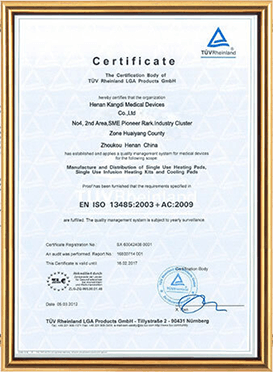

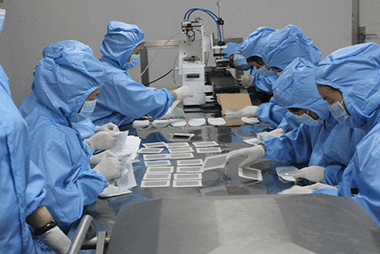
Henan Kongdy Medical Devices Co., LTD. (KONGDY) was founded in 1989 and has 37 years of production experience as of 2026 in pain relief patches, slimming patches, capsicum plasters, heat patches, cooling gel patches, detox foot patches, steam eye masks, mosquito repellent patches, and nose strips. Headquartered in Henan, China, KONGDY operates a 100,000-class GMP workshop (built 2008) and obtained ISO 13485 medical device Quality Management System European Standard Certification in 2014. The company runs OEM and ODM services for international brands across multiple regulatory pathways. For 2026 procurement evaluation, our qualification team can provide ISO 13485 certificate, GMP workshop audit reports, and reference customer case studies upon request via our contact page.


