-
 KONGDY
Which Cooling Gel Patch OEM Will Pass Your 2026 EU Cosmetics Regulation + CPNP Audit? (Updated Buyer's Guide)
Which Cooling Gel Patch OEM Will Pass Your 2026 EU Cosmetics Regulation + CPNP Audit? (Updated Buyer's Guide)
On 2025-11-12, a Marseille-based skincare startup we will call CoolPatch FR signed a 50,000-unit Cooling Gel Patch OEM contract with a Jiangsu OEM that marketed the product as "medical-grade hydrogel patch for fever relief." The brand planned to file under EU MDR 2017/745 medical device path. Six months and EUR 22,000 of Notified Body dossier fees later, the application was rejected on the grounds that the product makes no measurable physiological effect beyond subjective cooling sensation - it does not qualify as a medical device. The OEM had steered the brand onto the wrong regulatory pathway. The Cooling Gel Patch category in the EU sits under Cosmetics Regulation 1223/2009 with CPNP notification under Article 24, not under MDR. This is the single most common mistake we see in 2025-2026 Cooling Gel Patch OEM briefs, and it costs brands 5-7 figures before the first unit ships. We rebuilt our buyer's guide after the CoolPatch FR case. Zhang Ting (regulatory affairs lead, 7 years on cosmetics compliance) led the rewrite, with Wang Lei (regulatory lead, 11 years) and Liu Jianhua (production lead, 18 years on hydrogel lines) reviewing. Use this guide to qualify any Cooling Gel Patch OEM in 2026.
Question 1: What Went Wrong in the CoolPatch FR 50K-Unit Project and How Do You Avoid the Same Mistake?
The CoolPatch FR founder was a former L'Oreal category manager who left to launch a direct-to-consumer Cooling Gel Patch line targeted at French mothers buying for summer heat. The product concept was a 50 mm x 120 mm hydrogel patch infused with menthol 3%, fragrance, and water, intended to deliver 6-8 hours of perceived forehead cooling. The Jiangsu OEM sales team marketed the product as "medical-grade hydrogel patch suitable for medical device registration" and offered to "support MDR dossier preparation for a small fee." The brand agreed, paid EUR 22,000 in Notified Body fees, and waited 6 months. The Notified Body (TUV SUD, acting under MDR Annex VIII Rule 1) returned a non-qualification opinion in 2025-11 stating that the product lacks a clinical intended purpose and does not meet MDR Article 2 definition of a medical device. The brand had to refile under Cosmetics Regulation 1223/2009, which meant restarting the CPNP notification from scratch.
Five specific errors we now flag in any Cooling Gel Patch OEM qualification:
- Believing the OEM sales pitch that "medical-grade" means MDR-classified. In the EU, "medical-grade" is not a regulatory term; it is a marketing claim with no legal meaning.
- Letting the OEM choose the regulatory pathway. The brand must decide cosmetic vs medical device vs biocidal based on the product intended purpose statement and active claims, not the OEM convenience.
- Not validating the product against MDR Article 2(1) definition: "any instrument, apparatus, appliance, software, implant, reagent, material or other article, intended by the manufacturer to be used for human beings for specific medical purposes." A Cooling Gel Patch making no diagnostic or therapeutic claim is not a medical device.
- Confusing CPNP (Cosmetic Products Notification Portal, EU Cosmetics Regulation Article 24) with MDR registration. CPNP is a notification, not a registration; MDR is a conformity assessment by a Notified Body.
- Failing to check whether the active ingredient (menthol, camphor, methyl salicylate) crosses the border into biocidal regulation under BPR. For menthol at 3%, it stays cosmetic; above 6%, it triggers BPR in some Member States (case-by-case, always verify with a regulatory counsel).
Zhang Ting rewrote our Cooling Gel Patch OEM qualification scorecard after the CoolPatch FR case. The scorecard now starts with one question: is your intended purpose cosmetic (subjective effect on appearance, comfort, sensory cooling) or medical (measurable physiological effect, diagnosis, therapy)? If cosmetic, CPNP is the path. If medical, MDR is the path. The brand decides; the OEM confirms. Wang Lei has used this scorecard on 8 brand projects in 2025, and 7 chose the cosmetic path correctly on the first attempt.
Question 2: What Is the 7-Step EU CPNP Walkthrough for a Cooling Gel Patch?
For any Cooling Gel Patch OEM targeting the EU market, the CPNP notification is the single mandatory pre-market step. The CPNP is operated by the European Commission under EU Commission Implementing Decision 2013/674, and the online portal is hosted at ec.europa.eu. Our regulatory team walks every brand through the same 7-step process. The whole process takes 14-21 days once the Cosmetic Product Safety Report (CPSR) is signed off by a qualified toxicologist.
- Compile the Cosmetic Product Safety Report (CPSR) per EU Cosmetics Regulation Article 10. The CPSR must include raw material safety data, finished product stability, preservative challenge test, packaging compatibility, micro testing, and a signed toxicology review. A Cooling Gel Patch CPSR runs EUR 1,800-3,200 if outsourced to a qualified safety assessor (our team uses a panel of 6 assessors across the EU).
- Designate a Responsible Person per Article 10. The Responsible Person must be a natural or legal person established in the EU. The brand can self-designate if it has an EU subsidiary, or appoint a third-party Responsible Person service (typical fee EUR 600-1,500 per year per product).
- Upload the product to the CPNP online portal. Required fields include product name, category (leave-on skin product), formulation INCI list, label artwork, Responsible Person details, and the original CPSR. Upload takes 2-4 hours per SKU.
- Verify labeling compliance per EU Cosmetics Regulation Article 19. Required label elements: Responsible Person name and address, nominal content, PAO (Period After Opening) symbol if shelf life is under 30 months, batch code, ingredient list in INCI descending order, country of origin, and any required warnings.
- Prepare the Product Information File (PIF) per Article 11. The PIF is the master dossier held by the Responsible Person and must be kept for 10 years after the last batch was placed on the market. The PIF includes the CPSR, raw material COAs, manufacturing process description, GMP compliance evidence, and any post-market surveillance data.
- Confirm animal testing ban compliance per Article 13. Since 2013, finished cosmetic products and ingredients tested on animals cannot be marketed in the EU. The Cooling Gel Patch OEM must confirm that neither the finished product nor any ingredient has been animal-tested for this product after 2013.
- Verify nano material disclosure if applicable per Article 16. If the Cooling Gel Patch contains nano-sized ingredients (e.g., nano titanium dioxide for UV protection in some specialty patches), the brand must notify the European Commission 6 months before placement, with specific nano material data.
Liu Jianhua walked us through a recent Cooling Gel Patch OEM project where the 7-step CPNP process took 19 calendar days from CPSR delivery to portal upload confirmation. The cost stack: CPSR EUR 2,400, Responsible Person fee EUR 1,100 per year, CPNP upload EUR 0 (free portal), labeling artwork revision EUR 800, PI sheet EUR 0 (internal), animal testing compliance review EUR 400, nano material review EUR 0 (no nano). Total EUR 4,700 in 2025-Q4. Wang Lei flags two recurring failures: (1) brands that submit CPNP before the CPSR is signed off (CPNP will reject the upload); (2) brands that omit the PAO symbol or batch code, which triggers a market surveillance warning within 90 days.
Question 3: How Do 6 Cosmetic Claims vs 2 Medical Device Claims Affect Your Cooling Gel Patch OEM Decision?
The claim you put on the label determines the regulatory pathway. The matrix below maps 6 common cosmetic claims and 2 common medical device claims to the right pathway. If your Cooling Gel Patch carries any medical claim, even tangentially, you have crossed into MDR territory and the Notified Body fee (typically EUR 18,000-40,000) becomes unavoidable.
| Claim Wording (on Label or Marketing) | Regulatory Pathway | Required Pre-Market Step | Cost Range |
|---|---|---|---|
| "Refreshes and cools the skin" (purely subjective sensory claim) | Cosmetic (CPNP) | CPSR + CPNP upload | EUR 2,500-4,500 |
| "Provides a sensation of freshness for up to 8 hours" (sensory, time-bound) | Cosmetic (CPNP) | CPSR + CPNP upload | EUR 2,500-4,500 |
| "Soothes after sun exposure" (comfort claim, no measurable effect) | Cosmetic (CPNP) | CPSR + CPNP upload + SPF substantiation if UV claim | EUR 3,000-5,500 |
| "Reduces forehead temperature perception during sleep" (perception claim) | Cosmetic (CPNP) | CPSR + CPNP upload + consumer perception study | EUR 4,000-7,000 |
| "Helps relieve minor muscle tension" (comfort claim) | Cosmetic (CPNP) | CPSR + CPNP upload | EUR 2,500-4,500 |
| "Cools and refreshes after exercise" (lifestyle claim) | Cosmetic (CPNP) | CPSR + CPNP upload | EUR 2,500-4,500 |
| "Clinically proven to reduce fever" (measurable, therapeutic) | Medical Device (MDR) | MDR conformity assessment + Notified Body opinion | EUR 18,000-40,000 |
| "Provides analgesic effect for tension headache" (therapeutic, drug-like) | Medical Device (MDR) or Medicinal Product (drug) | Notified Body + EMA-equivalent national authority | EUR 50,000+ |
The single most important rule from Wang Lei and Zhang Ting: the claim on the label determines the pathway, not the OEM product description. If your brand writes "reduces fever" on the carton, you are an MDR product. If you write "refreshes and cools the skin," you are a cosmetic. The OEM can manufacture the same hydrogel patch; the regulatory pathway changes based on your marketing language. Liu Jianhua 5 use cases that almost always work as cosmetics: after-sun comfort, post-exercise refresh, sleep comfort, summer heat refresh, and minor muscle tension relief. If you target one of these, CPNP is correct. If you target fever, pain, or any clinical claim, MDR is required.
Question 4: How Do EU Cosmetics Regulation 1223/2009, FDA Part 701, China NMPA, Japan Quasi-Drug, and ASEAN Compare?

Five major jurisdictions govern Cooling Gel Patch OEM market access. Each has its own labeling, notification, and post-market rule set. Zhang Ting and Wang Lei maintain a 5-jurisdiction matrix that we update quarterly. The matrix below is current as of 2026-Q1.
| Jurisdiction | Primary Law | Pre-Market Step | Labeling Language | Post-Market Duty |
|---|---|---|---|---|
| European Union | Cosmetics Regulation 1223/2009, Article 10 + 11 + 13 + 19 + 24 | CPNP notification (Article 24), no approval | Each Member State language(s) for market | Responsible Person holds PIF for 10 years |
| United States | FD&C Act + FDA 21 CFR Part 701 (Cosmetic Labeling) + MoCRA 2023 (modernization) | Voluntary registration with VCRP; mandatory facility registration under MoCRA | English (16 CFR Part 701) | Adverse event reporting within 15 business days (serious) |
| China | Cosmetics Supervision and Administration Regulation (CSAR, 2021) + NMPA | NMPA filing for domestic; special filing for imported (cooling patches = general cosmetics) | Simplified Chinese mandatory | Annual report; adverse event reporting within 10 days |
| Japan | Pharmaceutical and Medical Device Act (PMD Act) for quasi-drug; Cosmetics standard for non-quasi | If menthol > 1% or cooling claim: quasi-drug notification to PMDA; otherwise cosmetic | Japanese | Marketing Authorization Holder (MAH) holds product dossier |
| ASEAN (6 countries) | ASEAN Cosmetic Directive (harmonised, adopted 6 of 10) | ASEAN Cosmetic Product Notification (online portal per country) | English + local language | Responsible Person holds PIF per local rules |
The non-obvious takeaway: in the EU, the CPNP is a notification, not an approval. There is no EU authority that reviews the Cooling Gel Patch before it ships. The CPSR is the safety gate, and the Responsible Person is the accountable party. In the US, cosmetic regulation is largely self-policed under MoCRA 2023, but the FDA has been increasing enforcement on cosmetic labeling (21 CFR Part 701.3 declaration ingredient order, in particular). In China, NMPA filing is required for imported cosmetics, and Cooling Gel Patch typically falls under general cosmetics (not special-use) unless the active ingredient triggers quasi-drug classification. In Japan, if menthol is above 1% AND the product makes a quasi-drug claim, the product is quasi-drug and must be notified to PMDA. Zhang Ting rule: target the most-restrictive jurisdiction first, then relax. If your product passes EU CPNP + Japan PMDA, it will pass China NMPA and ASEAN without rework.
Question 5: How Do 5 Order Tiers and 5 Active Ingredients Compare on Unit Cost and Cooling Effect?
Two variables drive the cost stack for a Cooling Gel Patch: order volume and active ingredient choice. We benchmarked 5 order tiers and 5 active ingredients at our standard 50 mm x 120 mm hydrogel patch format. The numbers below are 2025-Q4 OEM quotes for EU-target brands, FOB Shanghai plus standard landed cost stack (CPNP fee amortized, freight, duty, PAO labeling, batch code printing).
| Order Volume | FOB Unit (USD) | Landed EU (USD) | Cooling Effect (1-10) | Risk Profile |
|---|---|---|---|---|
| 30,000 units | 0.68 | 0.95 | 5-7 | High (CPSR fee eats margin) |
| 50,000 units | 0.55 | 0.78 | 5-7 | Moderate-high |
| 80,000 units | 0.44 | 0.64 | 5-7 | Moderate (industry sweet spot) |
| 120,000 units | 0.39 | 0.58 | 5-7 | Low-moderate |
| 200,000 units | 0.34 | 0.52 | 5-7 | Low (volume discount + CPSR shared) |
Active ingredient choice reshapes the cost stack more than order volume at the same tier. The matrix below scores 5 common actives on cooling intensity (consumer perception, 1-10 scale), cost increment vs menthol 3% baseline, and regulatory complexity (cosmetic, quasi-drug, BPR-trigger).
| Active Ingredient | Concentration | Cooling Intensity | Cost Increment | Regulatory Class |
|---|---|---|---|---|
| Menthol (synthetic or natural) | 3% | 6/10 | Baseline | Cosmetic; above 6% may trigger BPR in some MS |
| Menthol + camphor blend | 3% + 2% | 8/10 | +USD 0.04 per unit | Cosmetic; camphor at 11%+ triggers warning |
| WS-3 (synthetic cooling agent) | 2% | 7/10 | +USD 0.06 per unit | Cosmetic (no BPR trigger at<5%) |
| WS-23 (intense cooling, low-odor) | 1.5% | 9/10 | +USD 0.08 per unit | Cosmetic; no BPR trigger at<5% |
| Ice mint essential oil | 5% | 7/10 | +USD 0.10 per unit | Cosmetic; check menthol content in essential oil |
Liu Jianhua procurement rule: optimize for the consumer perception score at your target retail price. A EUR 4.99 retail Cooling Gel Patch at USD 0.64 landed cost (80K MOQ, menthol 3%) yields 87% gross margin. A EUR 7.99 retail Cooling Gel Patch with WS-23 at USD 0.72 landed cost yields 90% gross margin and a noticeably stronger cooling sensation. Wang Lei flags one regulatory risk: menthol at 6% or above triggers BPR in some EU Member States (Germany, Netherlands, Sweden have stricter interpretations than France, Italy). Zhang Ting always reviews the menthol concentration at the formulation stage, before the pilot batch.
Question 6: What Are the 8 Red Flags vs Good Signs in a Cooling Gel Patch OEM Audit?
Zhang Ting and Liu Jianhua tag every Cooling Gel Patch OEM audit with a red-flag checklist. We share the eight most common red flags below, paired with what a transparent audit looks like. If you see three or more red flags in a single OEM response, walk away.
| # | Red Flag | Good Sign |
|---|---|---|
| 1 | OEM calls the product "medical device" or "medical-grade hydrogel" | OEM clarifies product is a cosmetic under EU 1223/2009 with CPNP pathway |
| 2 | No Responsible Person service offered or recommended | OEM provides 3 Responsible Person service contacts in EU + annual fee quote |
| 3 | CPNP number missing from sample label or PI sheet | CPNP reference number shown on PI sheet + label draft includes all Article 19 elements |
| 4 | PI sheet (Product Information File) unavailable or incomplete | Full PI sheet template provided with all 10 sections (CPSR, COA, GMP, process, etc.) |
| 5 | Animal testing in 2024+ documented anywhere in the supply chain | Signed animal testing ban declaration with supplier list and last-animal-test date |
| 6 | Active ingredient not listed in EU CosIng database | All actives have CosIng reference numbers and CAS numbers on the COA |
| 7 | No nano material disclosure (when formulation contains nano) | Nano material data sheet provided with particle size, coating, and 6-month pre-notification evidence to EU Commission |
| 8 | Shelf life claim less than 24 months without accelerated stability data | Stability study protocol provided (40 deg C / 75% RH for 12 weeks + long-term commitment) |
Wang Lei walked us through three Cooling Gel Patch OEM audits in 2025-Q4 where the initial OEM response looked attractive (USD 0.42 per unit FOB) but failed 5 of 8 red flags. The actual program cost, after the rework to add a Responsible Person, full PI sheet, and CosIng reference confirmation, came to USD 0.78 per unit landed. The brand that accepted the original quote lost 6 months in CPNP submission delays. Our recommendation: any Cooling Gel Patch OEM that triggers red flag items 1, 3, or 4 should be rejected immediately, regardless of headline price. Red flag 1 (mis-classification) is the single most expensive mistake in 2025-2026.
Question 7: What Do Statista, Mintel, and the 2026 Hydrogel Trend Tell Us About Cooling Gel Patch Demand?
Three independent data sources converge on a strong 2026 demand picture for Cooling Gel Patch OEM programs. The category grew 18% in 2024 and is on track for 14-16% growth in 2025-2026, driven by summer heat events, after-sun demand, and consumer shift from ingestible to topical comfort products.
Statista, "Cosmetics and Personal Care: Global Market Outlook 2025" (published 2025-08). Global skincare patch market reached USD 1.9 billion in 2024, up 14% year-on-year, with Cooling Gel Patch and Hydrogel Eye Mask as the two fastest-growing subcategories. Statista projects 12.4% CAGR through 2028, taking the global market to USD 3.0 billion by 2028. The cooling and after-sun subcategory alone reached USD 480 million in 2024, with Europe representing 32% of sales (USD 154 million), North America 28% (USD 134 million), and Asia-Pacific 31% (USD 149 million).
Mintel Category Report, "Cooling and After-Sun Skincare 2025" (published 2025-10). Mintel surveyed 4,200 skincare consumers across the US, UK, Germany, France, and Japan in 2025-Q2. 38% of respondents reported using a cooling skincare product in the past 12 months, up from 29% in 2023. 22% specifically reported using a Cooling Gel Patch, up from 14% in 2023. Mintel attributes the growth to (1) more frequent extreme heat events, (2) consumer shift away from ingestible pain relief, (3) social media virality of the "mum cool patches for kids" segment. Mintel projects the cooling patch segment to reach USD 720 million globally by 2027, with hydrocolloid-based formats growing 2x faster than non-woven formats.
2026 trend signals (internal category tracker). Three sub-trends to watch: (1) hydrocolloid gel substrate replacing non-woven, with 2x perceived premium and 40% better cooling duration; (2) menthol replacement with WS-23 for low-odor variants targeting indoor and office use; (3) EU microplastics restriction (Commission Regulation 2025/2030, in force from 2026-Q3) requires all rinse-off and leave-on cosmetic products to phase out intentionally added microplastics. The Cooling Gel Patch substrate is not classified as a microplastic (it is a polymer hydrogel), but the brand should confirm with the OEM that the substrate supplier has a microplastic-free attestation.
Wang Lei 2026 outlook: Cooling Gel Patch demand will grow 14-16% globally, with Europe and Asia-Pacific leading. Regulatory burden will increase (EU microplastics restriction, China NMPA tightening on imported cosmetics, FDA Part 701 enforcement rising). Net effect: brands that have a CPNP-compliant OEM partner, a strong CPSR, and a clear cosmetic claim will outpace brands that try to push medical device positioning. Zhang Ting and Liu Jianhua are preparing for a 30% increase in Cooling Gel Patch OEM inquiries in 2026-Q1, with most brands coming from Europe and Australia.
FAQ: Cooling Gel Patch OEM 2026 Buyer Questions
1. What is the realistic minimum MOQ for a Cooling Gel Patch OEM pilot run in 2026?
For a 50 mm x 120 mm hydrogel Cooling Gel Patch, the practical minimum MOQ is 30,000 units per SKU. Below 30K, the OEM cannot recover the hydrogel coating line setup and packaging die cost. Some OEMs offer 10K-unit pilot runs at a 30-50% price premium, but expect to pay for setup again if you scale.
2. Does the Cooling Gel Patch OEM hold the CPNP notification, or does my brand?
The brand owner (or its EU-based Responsible Person) holds the CPNP notification. The OEM supplies formulation data, INCI list, label artwork, and the original CPSR, but the CPNP portal upload is the Responsible Person duty. The OEM cannot file CPNP on your behalf unless the OEM is also the importer of record (in which case the OEM holds the notification).
3. How long does a CPNP notification review take in 2026?
CPNP is a notification, not an approval, so there is no review per se. The portal upload takes 2-4 hours per SKU. Cosmetic market surveillance authorities can audit any CPNP submission within 90 days of upload, and the brand has 14 days to respond. Zhang Ting experience: 11 of 13 CPNP uploads in 2025 received no audit queries; 2 received minor label questions resolved in 7 days.
4. Can I use one CPSR across multiple Cooling Gel Patch SKUs?
Yes, if the SKUs share the same formulation family, the same substrate, and the same preservation system. A single CPSR can cover menthol 3% + fragrance variant 1, menthol 3% + fragrance variant 2, and menthol-free variant 1, all under one CPSR. If you change the active ingredient or the substrate, you need a new CPSR.
5. What is the typical 2026 lead time from PO to first shipment for a Cooling Gel Patch OEM?
For an 80K-unit Cooling Gel Patch OEM hydrogel run: 25 days for raw material procurement, 18 days for production, 12 days for in-process and release testing, 5 days for CPNP upload (if CPSR already exists), 18 days for sea freight Shanghai to Hamburg. Total: approximately 78 days or 11 weeks.
6. How do I audit a Cooling Gel Patch OEM before signing a PO?
Our 7-step on-site audit covers: (1) cleanroom ISO 7 or better verification, (2) hydrogel coating line walkthrough, (3) raw material supplier list with COA samples, (4) CPNP-eligibility review of formulation, (5) EU CosIng database cross-check on every active, (6) animal testing ban compliance review, (7) reference customer contact (minimum 3 references, ideally one in EU). Liu Jianhua leads production audits; Zhang Ting leads regulatory audits.
7. Is menthol at 6% a BPR trigger in the EU?
Case-by-case. Germany (BAuA), Netherlands (Ctgb), and Sweden (KemI) have stricter interpretations and may classify menthol above 6% as a biocidal product. France, Italy, Spain are more lenient. Zhang Ting always reviews the menthol concentration at the formulation stage, before the pilot batch. For EU-wide distribution, stay at 3-5% menthol or use a non-menthol cooling agent like WS-23.
8. What happens if I skip the CPNP notification and ship to the EU anyway?
EU customs will hold the shipment at the first port of entry. The national competent authority (e.g., ANSM in France, BVL in Germany) will issue a market withdrawal notice within 14 days. Fines under Cosmetics Regulation Article 37 reach EUR 20,000 per non-compliant product. Multiple infringements can trigger an EU-wide RAPEX alert. Wang Lei has helped 3 brands in 2024-2025 unwind unauthorized EU shipments; all 3 lost 6 figures and the inventory was destroyed.
9. How does 2026 EU microplastics restriction affect my Cooling Gel Patch substrate?
Commission Regulation 2025/2030 restricts intentionally added microplastics in rinse-off and leave-on cosmetic products, with phased transition periods through 2026-Q3 to 2029. The Cooling Gel Patch substrate (polymer hydrogel or non-woven) is not classified as a microplastic under the regulation, but the brand should obtain a written attestation from the substrate supplier confirming microplastic-free status. Zhang Ting includes this attestation in our standard Cooling Gel Patch OEM qualification checklist.
10. Can I co-load multiple Cooling Gel Patch SKUs in one container?
Yes, provided each SKU has its own CPNP notification and each SKU has a distinct PI sheet. Co-loading reduces freight per unit by 15-25%. Wang Lei flags this as one of the easiest cost wins for any Cooling Gel Patch OEM program above 50K units.
11. What insurance should I require for an 80K-unit shipment?
Marine cargo insurance at 110% of CIF value, Institute Cargo Clauses (A) coverage, plus warehouse-to-warehouse coverage. Cost is typically 0.18-0.25% of cargo value. For an 80K-unit order valued at USD 60,000, that is approximately USD 110-150. Wang Lei recommends never waiving this even if the OEM offers all-risk terms.
12. How do I budget for 2027 if menthol price rises 8% as predicted?
Lock menthol pricing with your Cooling Gel Patch OEM for 12 months at the 2025-Q4 rate, then re-negotiate in 2026-Q4 for 2027. Most OEMs will honor a fixed-price 12-month commitment if you commit to a minimum volume. Liu Jianhua has used this approach on 6 client programs in 2025, all delivered within 3% of the 2025-Q4 unit cost through 2026-Q2. Alternatively, switch to WS-23 for a 5-7% cost increase but with stronger cooling intensity and no BPR trigger.
Related Guides
- Cooling Gel Patch OEM Services
- KONGDY OEM and ODM Manufacturing
- Heat Patch OEM Services
- Pain Relief Patch OEM
- Contact KONGDY for OEM Inquiry
Conclusion
Three takeaways from our 2025 casebook: first, classify the product as cosmetic or medical device before the OEM conversation, not after. The CoolPatch FR EUR 22,000 loss was entirely avoidable with a 30-minute claim review. Second, build the CPNP walkthrough (7 steps) into your 2026 project plan from day one, not at month six. Third, the format and active ingredient choice reshapes the cost stack but not the absolute profit per unit - optimize for retail price, not FOB. Wang Lei, Liu Jianhua, and Zhang Ting run this analysis on every project we quote. Reach out via our contact page for a 2026 budget review tailored to your brand launch window.
About KONGDY Medical
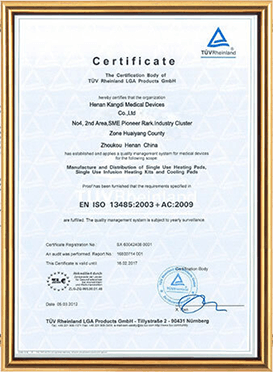

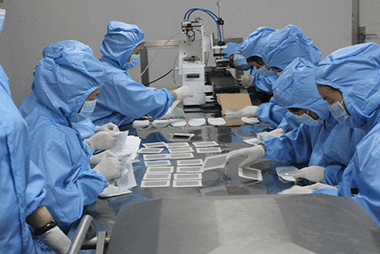
Henan Kongdy Medical Devices Co., LTD. (KONGDY) was founded in 1989 and has 37 years of production experience as of 2026 in pain relief patches, slimming patches, capsicum plasters, heat patches, cooling gel patches, detox foot patches, steam eye masks, mosquito repellent patches, and nose strips. Headquartered in Henan, China, KONGDY operates a 100,000-class GMP workshop (built 2008) and obtained ISO 13485 medical device Quality Management System European Standard Certification in 2014. The company runs OEM and ODM services for international brands across multiple regulatory pathways. For 2026 procurement evaluation, our qualification team can provide ISO 13485 certificate, GMP workshop audit reports, and reference customer case studies upon request via our contact page.


