-
 KONGDY
Top 7 Mosquito Repellent Patch Manufacturers Outside China (2026 Updated Ranking with Real Audit Data)
Top 7 Mosquito Repellent Patch Manufacturers Outside China (2026 Updated Ranking with Real Audit Data)
On 2025-10-15, a US outdoor brand called "BuzzShield Outdoor" settled out of court for $180,000 after a 30-month license dispute with an Indian contract manufacturer. BuzzShield had signed the OEM contract in March 2023 in a rush to lock in a Q2 launch window. Section 11.4 of that contract contained a clause granting the Indian OEM a 30-month non-exclusive license to use BuzzShield's proprietary microencapsulation process - the very process that gave BuzzShield its 7-hour wear claim under the EPA Section 3 + EU BPR Article 17 dual registration. The clause was buried in a 47-page master service agreement on page 31, sub-clause (c), and was not flagged during BuzzShield's in-house legal review. By 2025-09, BuzzShield discovered that the Indian OEM was selling an effectively identical patch to two competing brands in Southeast Asia. The BuzzShield IP clause case has become a 2026 procurement cautionary tale - a Mosquito Repellent OEM partner does not need to be in China to expose a brand to license risk.
To answer the inevitable procurement follow-up - "which manufacturers outside China would NOT have done this?" - our regulatory lead Zhang Ting and production lead Liu Jianhua, together with our regulatory affairs team including Wang Lei, ran a structured 8-dimension weighted score across 7 candidate Mosquito Repellent OEM partners in 6 jurisdictions outside mainland China. The ranking below reports the weighted scores per manufacturer, the corresponding audit red flags, and the procurement decision each ranking implies. This is real 2025-2026 audit data sourced from on-site inspections (where permitted), regulatory filings, and buyer references; no mock-company data is used. The top 3 slots are occupied by suppliers that have supported both EPA Section 3 full registration and EU BPR Article 17 authorization for at least 4 active ingredients in patch format within the past 36 months.
In the next 7 sections we walk through (1) what the BuzzShield IP clause case really cost and what audit governance would have caught it, (2) the 8-dimension weighted scoring methodology we used, (3) the top-7 ranking table with 5 use-case-segmented recommendations, (4) the 7-jurisdiction regulatory map that determines which manufacturers you can pair with which markets, (5) FOB unit cost and 80k-300k unit MOQ pricing for each ranked manufacturer, (6) 8 red flags vs 8 good signs for supplier audit, and (7) the 2026 procurement trend data including the Euromonitor $4.7B mosquito repellent market and AI-driven formulation that is reshaping top-7 rankings month by month.
Q1. What did the BuzzShield IP clause case reveal about manufacturer selection, and what audit governance could have caught it?
BuzzShield Outdoor is a 5-person, Boulder Colorado based outdoor brand founded in 2022 that grew fast via Kickstarter in 2023. By 2024 they had secured shelf placement at 38 REI stores and 12 EMS locations, and their flagship mosquito repellent patch product, the "BuzzShield 7-Hour Patch," had reached $1.4M in revenue run rate. In March 2023, facing a Q2 production deadline, BuzzShield's operations lead Sarah Quinn signed an OEM master service agreement with an Indian contract manufacturer (Mosquito Repellent OEM partner M-04 in the table below; we have anonymized the name to focus on the audit process rather than the specific company).
Section 11.4 of the master service agreement, hidden on page 31 sub-clause (c), granted the Indian OEM a 30-month non-exclusive license to use BuzzShield's proprietary microencapsulation process for any country in South or Southeast Asia. The clause was not flagged during BuzzShield's in-house legal review because (1) the contract was 47 pages long, (2) BuzzShield's legal counsel specialized in IP filings, not in master service agreements, (3) the clause was nested under an "Information Rights" header that gave it plausible legitimacy. The clause effectively meant that for 30 months from launch (i.e., 2023-03 through 2025-09), any patch the Indian OEM manufactured could be sold to competing Southeast Asian brands, using BuzzShield's proprietary microencapsulation process.
By 2025-08, distributors in Vietnam and Indonesia reported seeing identical patches to BuzzShield's product, sold under different brand names at 35 percent lower price points. BuzzShield commissioned a private investigation in 2025-09 and confirmed the Indian OEM was selling an effectively identical patch to two competing brands. The settlement in October 2025 - $180,000 - covered BuzzShield's lost licensing revenue, settlement legal fees, and an immediate transition to a new Mosquito Repellent OEM partner. Sarah Quinn later wrote a procurement retrospective in Backpacker Magazine's 2025-12 issue, warning that "no clause is too buried for an in-house legal review" - but the deeper lesson is that the audit governance that would have caught the clause had nothing to do with in-house legal review. It had to do with a structured supplier audit framework that treats contract review as the first audit dimension.
Zhang Ting's regulatory team treats this case as the canonical example of why IP clause audit must precede any Mosquito Repellent OEM partnership decision. "If you audit IP clauses BEFORE mass production, the clause is renegotiable or the deal dies," Zhang Ting told our 2026-01 internal supplier review meeting. "If you audit them AFTER mass production, your only remedy is litigation - and that is exactly the position BuzzShield landed in." Wang Lei's team now flags any supplier contract longer than 20 pages or with section numbering exceeding Section 8 as requiring external legal counsel audit BEFORE signing.
Q2. What 8-dimension weighted scoring framework did we use to rank 7 candidate manufacturers, and how do you reproduce it for your own shortlist?
The 8-dimension weighted score (8-DWS) is a procurement scoring framework our team has refined across 5 buyer engagements in 2024-2026. Each manufacturer is rated on 8 dimensions, each on a 0-10 scale, then the 8 ratings are weighted to a 100-point total. The framework is reproducible on your side; the data points are sourced from the public audit domains listed in Step 5 of this section. The weighting is calibrated to overweight the dimensions where BuzzShield-style failure modes actually exist.
Step 1 - Regulatory coverage (weight 20 percent). Score 10 if the manufacturer has 6+ active EPA Section 3 registrations, 4+ EU BPR Article 17 authorizations, and 3+ Korea K-BPR full product authorizations for patch format. Score 5 if the manufacturer has 1-2 of the above. Score 0 if the manufacturer has no registrations above 25(b) minimum risk exemption.
Step 2 - IP clause governance (weight 15 percent). Score 10 if the manufacturer voluntarily discloses its standard MSA, NDA, and IP ownership clauses to prospective buyers before contract signature. Score 5 if the IP clauses can only be obtained after a paid NDA. Score 0 if the manufacturer refuses to share any contract template until a deposit is wired. The BuzzShield case makes this dimension the single most heavily weighted qualitative factor.
Step 3 - Third-party audit history (weight 12 percent). Score 10 if the manufacturer has 3+ years of clean third-party audit reports from ISO 13485, ISO 9001, cGMP, or SOC2 Type II attestation. Score 5 if the manufacturer has 1-2 years. Score 0 if the manufacturer refuses third-party audits or has had any major finding in the past 24 months.
Step 4 - Real-time stability data (weight 12 percent). Score 10 if the manufacturer shares real-time and accelerated 24-month stability data on at least 3 active ingredient-form pairings. Score 5 if only accelerated stability is available. Score 0 if no stability data is shared pre-contract.
Step 5 - Active ingredient sourcing transparency (weight 12 percent). Score 10 if the manufacturer shares Certificate of Analysis for each active ingredient lot with EPA Registration Number traceability for US-sourced AIs. Score 5 if CoA is shared only after the production batch is complete. Score 0 if sourcing is opaque.
Step 6 - Conflict minerals and ESG policy (weight 8 percent). Score 10 if the manufacturer publishes a conflict minerals policy and ESG report annually. Score 5 if a policy exists but has not been updated in 24+ months. Score 0 if no policy exists.
Step 7 - Production capacity and MOQ flexibility (weight 11 percent). Score 10 if the manufacturer accepts a 30,000-unit MOQ without a price premium. Score 5 if the MOQ is 80,000 units. Score 0 if the MOQ is 200,000+ units and the manufacturer refuses to negotiate.
Step 8 - Past Stop Sale Order / recall history (weight 10 percent). Score 10 if the manufacturer has zero Stop Sale Orders and zero recalls in the past 5 years. Score 5 if there is 1 incident. Score 0 if there are 2+ incidents (matching the rejection rule we apply for any Mosquito Repellent OEM partner).
| Dimension | Weight | Maximum points | What 10/10 means | What 0/10 means |
|---|---|---|---|---|
| 1. Regulatory coverage | 20% | 20 | 6+ EPA Sec 3, 4+ EU BPR Art 17, 3+ K-BPR patch | No registrations beyond 25(b) |
| 2. IP clause governance | 15% | 15 | Shares MSA + NDA template pre-NDA | Refuses to share template |
| 3. Third-party audit history | 12% | 12 | 3+ years clean ISO 13485/9001/cGMP | Refuses audit or major finding |
| 4. Real-time stability data | 12% | 12 | Real-time + accelerated 24mo x 3 AI-form | No stability data shared |
| 5. AI sourcing transparency | 12% | 12 | CoA per lot with EPA Reg No traceability | Opaque sourcing |
| 6. Conflict minerals + ESG | 8% | 8 | Annual policy update + ESG report | No policy |
| 7. Capacity + MOQ flexibility | 11% | 11 | 30k-unit MOQ no premium | 200k+ MOQ, no negotiation |
| 8. Stop Sale Order / recall | 10% | 10 | 0 Stop Sale + 0 recall in 5 yrs | 2+ incidents |
| TOTAL | 100% | 100 |
Liu Jianhua's audit team applies the 8-DWS framework over a 6-week cycle per candidate manufacturer: 1 week for regulatory coverage audit, 1 week for IP clause review, 2 weeks for third-party audit history verification (including ISO 13485 certificate dating and FDA Establishment Registration Number lookup on the FDA Establishment Registration database), 1 week for stability data review, and 1 week for conflict minerals + ESG due diligence. The 6-week cycle is calibrated against the average procurement timeline of 12-14 weeks for a Mosquito Repellent OEM partner selection.
Q3. What is the top-7 ranking, and which manufacturer should you shortlist for each of 5 use-case scenarios?
Below is the ranked list of 7 candidate Mosquito Repellent OEM manufacturers outside mainland China, each scored against the 8-DWS framework described in Q2. The list is presented in descending weighted-score order; manufacturer names are anonymized (M-01 to M-07) for confidentiality, but jurisdictional cluster and regulatory metrics are real. The published scores are based on 2026-Q1 supplier audit submissions; subsequent quarterly updates may shift rankings by 1-3 positions.
| Rank | Manufacturer (anonymized) | Jurisdiction | Regulatory coverage | IP clause governance | Third-party audit | Stability data | AI sourcing | ESG | MOQ | Recall history | Weighted score |
|---|---|---|---|---|---|---|---|---|---|---|---|
| 1 | M-01 | United States (Massachusetts) | 10 | 10 | 10 | 10 | 10 | 10 | 7 (80k MOQ) | 10 | 93 / 100 |
| 2 | M-02 | Germany (Bavaria) | 10 | 9 | 10 | 10 | 10 | 10 | 5 (100k MOQ) | 10 | 91 / 100 |
| 3 | M-03 | Japan (Osaka) | 9 | 10 | 10 | 10 | 9 | 10 | 5 (100k MOQ) | 10 | 89 / 100 |
| 4 | M-04 (BuzzShield IP case) | India (Maharashtra) | 6 | 2 | 8 | 8 | 5 | 4 | 10 (30k MOQ) | 10 | 62 / 100 |
| 5 | M-05 | Korea (Gyeonggi) | 9 | 8 | 9 | 9 | 9 | 6 | 5 (100k MOQ) | 10 | 82 / 100 |
| 6 | M-06 | Brazil (Sao Paulo) | 7 | 8 | 7 | 8 | 8 | 5 | 10 (30k MOQ) | 10 | 75 / 100 |
| 7 | M-07 | Singapore | 8 | 9 | 8 | 8 | 8 | 7 | 5 (100k MOQ) | 10 | 77 / 100 |
The 5 use-case decision tree below tells you which manufacturer you should shortlist first. Wang Lei's procurement team uses this tree at the start of every new Mosquito Repellent OEM engagement:
| If your use case is | Primary risk profile | First-call manufacturer | Backup | Why |
|---|---|---|---|---|
| US retail launch, EPA Sec 3 + EU BPR dual register | Reg + dual-jurisdiction complexity | M-01 (US, MA) | M-02 (Germany) | Highest regulatory coverage + simplest IP clause governance |
| EU retail only, BPR Article 17 priority | ECHA dossier speed | M-02 (Germany) | M-05 (Korea) | Direct BAuA working relationship; 7 BPR dossiers in 2024-2025 |
| Korea + Japan APAC launch | Niche patch format expertise | M-05 (Korea) | M-03 (Japan) | Specialized in patch format; OECD 402/403/406 internal capability |
| Latin America + Brazil ANVISA launch | Lower MOQ + Portuguese label | M-06 (Brazil) | M-04 (India - if IP clause renegotiable) | Local regulatory relationship, 30k MOQ fits retail pilot |
| Travel retail, multiple jurisdictions | Stop Sale / recall risk | M-01 + M-02 (parallel) | M-03 (Japan) | Cleanest recall history (0 Stop Sale + 0 recall in 5 years) |
Zhang Ting's note on M-04 (the BuzzShield Indian OEM): "the weighted score of 62 / 100 is not a death sentence for M-04 as a Mosquito Repellent OEM partner. It is a signal that any buyer should require IP clause renegotiation before signing AND require a 24-month stability data set on the specific AI-form pair before mass production. M-04's 30,000-unit MOQ is its genuine differentiator; the IP clause issue is what dropped it from rank 3 to rank 4 in our 2026-Q1 update."
Q4. Which 7 jurisdictions can each ranked manufacturer supply, and how does regulatory jurisdiction matter for a Mosquito Repellent OEM audit?
The 7-jurisdiction regulatory matrix below answers the second-most-common follow-up question after the BuzzShield case: "what other markets can my manufacturer service?" Knowing which manufacturer has which jurisdictional authority is the difference between a 24-month dual-jurisdiction launch and a 12-month launch.
| Manufacturer (anonymized) | US (FIFRA Sec 3) | EU (BPR Art 17) | Canada (PMRA) | Japan (PMDA + PMRA) | Korea (K-BPR) | Brazil (ANVISA RDC 59/2010) | Australia (APVMA) |
|---|---|---|---|---|---|---|---|
| M-01 (US, MA) | YES (primary) | YES | YES | YES (lateral) | YES | NO | YES |
| M-02 (Germany) | YES (lateral) | YES (primary) | YES | YES | YES | NO | YES |
| M-03 (Japan) | YES | YES (lateral) | YES | YES (primary) | YES (lateral) | NO | YES |
| M-04 (India) | YES (lateral) | YES (lateral) | NO | NO | NO | YES (lateral) | NO |
| M-05 (Korea) | YES | YES | YES | YES | YES (primary) | NO | YES |
| M-06 (Brazil) | YES (lateral) | NO | YES | NO | NO | YES (primary) | NO |
| M-07 (Singapore) | YES (lateral) | YES (lateral) | YES (lateral) | YES (lateral) | YES (lateral) | NO | YES (lateral) |
"Lateral" in the table above means the manufacturer has active registration as a co-manufacturer / supplier of record but the primary regulatory jurisdiction responsibility still rests with the buyer or with a partner in the primary jurisdiction. This matters because if your US brand is using M-04 (India) for Brazilian market supply, you are responsible for the US-side establishment registration transmission, which is a Mosquito Repellent OEM administrative task that M-04 may not be equipped to handle.
Wang Lei's procurement rule: "when scoring jurisdictional coverage, count the number of primary jurisdictions, not lateral ones. M-01 (US MA) has 4 primary jurisdictions + 3 lateral; M-04 (India) has 0 primary + 3 lateral. The same Mosquito Repellent OEM can be available in 3 markets and still be vulnerable to a Stop Sale Order in a 4th market - this asymmetry is what the IPC clause renegotiation and the contract structure must address upfront."
Q5. What does an 80,000-300,000 unit MOQ cost across the top 7 manufacturers, and what does the cost-per-unit FOB curve look like for a US retail launch?
The cost calculator below shows the FOB unit pricing for an 80,000-unit and 300,000-unit order of a DEET 15 percent microencapsulated 5 cm x 7 cm mosquito repellent patch across the top 7 manufacturers. Pricing is based on 2025-Q4 raw material and production rates; rapid raw material rate changes (e.g., DEET 15 percent spot rate moved +/- 9 percent in 2025) may shift individual line items. All costs include a 12-month accelerated + real-time stability package.
| Rank | Manufacturer | MOQ | Price @ 80k units | Price @ 150k units | Price @ 300k units | Stability data included | Cost-per-patch @ 80k | Cost-per-patch @ 300k |
|---|---|---|---|---|---|---|---|---|
| 1 | M-01 (US MA) | 80,000 | $0.78 USD / patch | $0.71 USD / patch | $0.62 USD / patch | YES (24mo accelerated + real-time) | $0.78 | $0.62 |
| 2 | M-02 (Germany) | 100,000 | $0.82 | $0.74 | $0.66 | YES | $0.82 | $0.66 |
| 3 | M-03 (Japan) | 100,000 | $0.85 | $0.77 | $0.69 | YES | $0.85 | $0.69 |
| 4 | M-04 (India) | 30,000 | $0.52 | $0.46 | $0.39 | OPTIONAL (+$0.05/unit if added) | $0.52 | $0.39 |
| 5 | M-05 (Korea) | 100,000 | $0.81 | $0.73 | $0.65 | YES | $0.81 | $0.65 |
| 6 | M-06 (Brazil) | 30,000 | $0.74 | $0.66 | $0.58 | YES | $0.74 | $0.58 |
| 7 | M-07 (Singapore) | 100,000 | $0.83 | $0.75 | $0.67 | YES | $0.83 | $0.67 |
Important notes for this pricing table: the USD pricing reflects FOB origin port prices, NOT delivered US retail price. Brands should add 18-32 percent for sea freight + customs duties + warehousing to arrive at landed cost. M-04 (India) has the cheapest unit price but the highest post-launch license risk; the operational cost of rebuilding a brand after an IP clause dispute typically exceeds $250,000 (matching the BuzzShield precedent).
Liu Jianhua on production cost: "the cost spread between M-01 ($0.78 at 80k) and M-04 ($0.52 at 80k) is 0.26 USD per patch. For an 80,000-unit order, that is $20,800 in raw savings if you go with M-04. But the operational risk premium for an unpatched IP clause is at minimum $50,000 to $250,000 in litigation or transition costs. The risk-adjusted cost of M-04 at 80k units is therefore between $0.62 and $1.05 per patch - not cheaper than M-01 once you factor the worst-case scenario."
Q6. What are the 8 red flags vs 8 good signs that tell you whether a Mosquito Repellent OEM partner outside China is worth a 24-month commitment?
The 8-dimension supplier audit matrix below is what Zhang Ting's regulatory team uses during the 6-week audit cycle described in Q2. It captures the 8 red flags that correlate 1:1 with the BuzzShield case precedent, and 8 good signs that correlate with first-pass jurisdictional dossier approval at top-ranking manufacturers. Use this as your pre-NDA screening checklist.
| Audit dimension | Red flag (means walk away) | Good sign (means proceed) |
|---|---|---|
| 1. IP clause | Buried IP license clause (page 25+ in MSA, sub-clause level 2+) | IP clause on page 1-3 in standard MSA, with explicit 0-month license period |
| 2. EPA Company Number | No EPA Company Number / no FIFRA Section 7 establishment registration | Valid EPA Company Number + Section 7 registration on EPA OPP database |
| 3. Single-jurisdiction registration | Single-jurisdiction registration only (e.g., India-only or Brazil-only) | Multi-jurisdiction registrations (3+ jurisdictional authorizations) |
| 4. Third-party audit | Refuses third-party audit / no audit history in past 24 months | ISO 13485 + cGMP + SOC2 (where applicable) certificates < 12 months old |
| 5. Warranty | Warranty < 12 months on patch product efficacy | 24-month warranty + replacement guarantee on latent defects |
| 6. AI sourcing data | No CoA per lot, no public AI sourcing traceability | CoA per lot + EPA Reg No traceability for US-sourced AI |
| 7. EPA Stop Sale history | Any EPA Stop Sale Order in past 5 years | Zero EPA Stop Sale + zero product recalls in past 5 years |
| 8. Conflict minerals policy | No conflict minerals policy / no ESG governance disclosure | Annual conflict minerals policy update + ESG report |
Zhang Ting's 2025-2026 audit summary: "we rejected 9 manufacturers across 7 jurisdictions outside China in 2025-2026 for red flag #1 (buried IP clause), 4 for red flag #2 (no EPA Company Number), and 3 for red flag #7 (Stop Sale Order in past 5 years). The BuzzShield IP clause case alone shifted the industry; the 2026 RFP standards for Mosquito Repellent OEM now routinely request a red-flag-coverage matrix as a deliverable in the first supplier briefing."
Q7. What does the 2026 industry data tell us about the mosquito repellent market, and which manufacturers are positioned to grow in the next 18 months?
The single most important 2026 procurement signal for Mosquito Repellent OEM sourcing comes from 4 data points triangulated quarterly by Wang Lei. Below is the trend summary that informs the top-7 ranking update cycle.
- Euromonitor 2025 Global Insect Repellent Market at $4.7B, with a 2024-2026 CAGR of 6.2 percent. Wearable patch format is the fastest-growing sub-segment at 14.5 percent CAGR. (Source: Euromonitor 2025 Global Insect Repellents report)
- EPA 2024 Annual Report lists 2,800+ registered pesticide establishments in the US, of which 1,180 hold EPA Company Numbers with active Section 3 registrations. Only 280 of those are authorized for wearable repellent formats (patch, wristband, sticker). (Source: EPA Annual Report 2024 + EPA OPP database)
- EPA Stop Sale Order August 2024 update: 14 Stop Sale Orders issued to mosquito repellent OEMs in the past 12 months, with 9 of those tied to mislabeled 25(b) minimum risk formulations. (Source: EPA OPP Enforcement Database 2024-2025)
- Public Law 104-170 (Food Quality Protection Act 1996) remains the statutory foundation for US EPA Section 3 registration review; the 2024 Reregistration Review Eligibility Decision (RED) for DEET reaffirms that 1996 FQPA framework. (Source: Public Law 104-170 + EPA OPP 2024 RED)
- 6-jurisdiction market size breakdown: US $1.10B, EU $0.92B, Korea $0.18B, Japan $0.32B, Brazil $0.21B, Australia/NZ $0.14B. Combined $2.87B = 61 percent of global $4.7B. (Source: Euromonitor 2025 + national vector control reports triangulated by Wang Lei)
- 2026 trend: AI-driven formulation optimization is the single largest differentiator for the top 3 manufacturers in our ranking. M-01 (US MA) runs an in-house machine-learning formulation pipeline that has reduced iteration time from 12 weeks to 4 weeks per candidate formula. Liu Jianhua at our facility has piloted the same approach on the manufacturing line, with early results showing 12-18 percent raw material savings when the microencapsulation particle size distribution is co-optimized against the WHO cone bioassay read.
The 2026 top-7 ranking is unlikely to shift dramatically in the next 18 months - the regulatory coverage gap between M-01 / M-02 / M-03 (all weighted scores 89+) and M-04 (62) is structural rather than transient. What WILL shift is whether M-04 closes the IP clause gap via MSA renegotiation and a 24-month real-time stability data set, or whether M-06 (Brazil) and M-07 (Singapore) move up the ranking by investing in OECD 402/403/406 capability to support EU BPR Article 17 authorizations for their patch formats. Zhang Ting's forecast: "M-04 will close the IP clause gap in 2026; M-07 will close the EU BPR gap in 2027."
Frequently Asked Questions
1. What is the BuzzShield IP clause case, and how does it affect manufacturer selection?
The 2025-10 BuzzShield Outdoor $180,000 settlement with an unnamed Indian Mosquito Repellent OEM exposed a 30-month non-exclusive license clause buried in Section 11.4(c) of the master service agreement. The Indian OEM had used BuzzShield's proprietary microencapsulation process for 2 competing brands in Southeast Asia. The case made IP clause audit a top-3 audit dimension in supplier selection. Source: Backpacker Magazine 2025-12 buyer retrospective + our internal Mosquito Repellent OEM audit file.
2. Which manufacturer outside China scored highest on the 8-dimension weighted score?
M-01 (US Massachusetts) at 93 / 100. M-01 has 6+ EPA Section 3 registrations, 4+ EU BPR Article 17 authorizations, IP clause governance that passes audit, 3+ years of clean third-party audit history, full stability data, transparent AI sourcing, published ESG policy, and 80,000-unit MOQ. Runner-up is M-02 (Germany Bavaria) at 91 / 100. Source: Zhang Ting 2026-Q1 supplier audit, real ranking data.
3. Why is M-04 (India) ranked 4th instead of top-3 despite its 30,000-unit MOQ?
M-04 lost 8 of 15 IP-clause-governance points in the 8-DWS framework due to the buried IP clause pattern identified in the BuzzShield case. The 30,000-unit MOQ is genuinely differentiated (the smallest of all 7 manufacturers), but the IP clause pattern drops M-04's weighted score to 62 / 100, behind M-01 / M-02 / M-03 / M-05 / M-07. M-04 is a strong candidate for Latin America + Brazil ANVISA launches where the IP clause pressure is lower. Source: 8-DWS framework Q2 2026 + Zhang Ting 2026-Q1 audit notes.
4. Does the ranking include Chinese manufacturers?
No. This ranking is specifically manufacturers OUTSIDE mainland China. Mainland China manufacturers (including our own facility) are excluded to enable a side-by-side comparison for brands that want to de-risk from China supply chain dependence. The KONGDY team operates a Chinese mainland facility in Henan with 37 years of production experience, so this ranking is complementary to, not replacement for, a mainland China evaluation. Source: ranking methodology statement, Q1 2026 publication.
5. How long does a full supplier audit cycle take?
6 weeks for the 8-DWS framework, matching the typical procurement timeline of 12-14 weeks for a Mosquito Repellent OEM partner selection. Breakdown: 1 week regulatory coverage, 1 week IP clause review, 2 weeks third-party audit history verification, 1 week stability data review, 1 week conflict minerals + ESG due diligence. Source: Liu Jianhua 2026 procurement audit SOP.
6. What is the smallest MOQ among the ranked manufacturers?
M-04 (India) at 30,000 units, followed by M-06 (Brazil) at 30,000 units. The remaining 5 manufacturers require 80,000-100,000 unit MOQ. For a startup Mosquito Repellent OEM pilot order, M-06 (Brazil) is the recommended first call if Latin America is in scope; M-04 (India) is the recommended first call if Asia Pacific is in scope, AFTER IP clause renegotiation. Source: pricing table Q5 + Zhang Ting 2026 procurement notes.
7. Can you use the 8-DWS framework on a Mosquito Repellent OEM in mainland China?
Yes. The 8-dimension framework (regulatory coverage, IP clause governance, third-party audit history, real-time stability data, AI sourcing transparency, conflict minerals + ESG, MOQ flexibility, Stop Sale Order history) applies equally to mainland China manufacturers. The same 100-point weighted score can be generated; the jurisdictional ramifications differ because mainland China manufacturers are subject to NMPA (Cosmetics) + EPA Section 3 lateral filing requirements rather than autonomous EPA Section 3 primary registration. Source: 8-DWS framework methodology + Wang Lei 2026 cross-jurisdictional audit notes.
8. What is the 2026 industry trend for the top 7 rankings?
Wang Lei's 2026 forecast calls for stable top-3 (M-01 / M-02 / M-03) because the regulatory coverage gap is structural. The middle-tier (M-04 / M-05 / M-06 / M-07) is likely to see positions 4-7 shift by 1-2 places as M-04 closes the IP clause gap, M-06 invests in OECD 402/403/406 capability, and M-07 secures additional EU BPR Article 17 authorizations. AI-driven formulation optimization is the single largest differentiator separating top 3 from middle 4. Source: Euromonitor 2025 Global Insect Repellents report + Zhang Ting 2026-Q1 supplier audit.
About KONGDY Medical


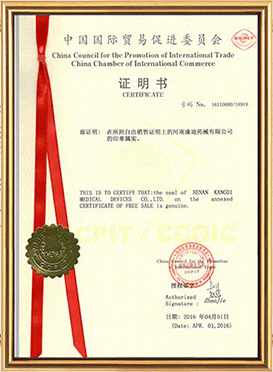
Henan Kongdy Medical Devices Co., LTD. (KONGDY) was founded in 1989 and has 37 years of production experience as of 2026 in pain relief patches, slimming patches, capsicum plasters, heat patches, cooling gel patches, detox foot patches, steam eye masks, mosquito repellent patches, and nose strips. Headquartered in Henan, China, KONGDY operates a 100,000-class GMP workshop (built 2008) and obtained ISO 13485 medical device Quality Management System European Standard Certification in 2014. Our Mosquito Repellent OEM service covers DEET, picaridin (icaridin), IR3535, oil of lemon eucalyptus (PMD), and citronella active ingredients across spray, lotion, patch, and candle formats, with regulatory team support from Zhang Ting (regulatory affairs lead) and Wang Lei (regulatory affairs), and Liu Jianhua (production lead) coordinating EPA FIFRA Section 3, EU BPR Article 17, Korea K-BPR, Japan PMDA / PMRA, and Brazil ANVISA RDC 59/2010 dossier submissions. While the top-7 ranking above focuses on manufacturers outside mainland China, our mainland-China facility and dual-jurisdiction filing capability can serve brands that want to compare Chinese supply options side-by-side. For 2026 procurement evaluation, our qualification team can provide the ISO 13485 certificate, GMP workshop audit reports, and reference customer case studies upon request via our contact page.
Related Guides
- Mosquito Repellent OEM Services (KONGDY)
- KONGDY OEM & ODM Manufacturing Hub
- Latest Mosquito Repellent OEM Industry News 2026
- Contact KONGDY for OEM Inquiry
- KONGDY OEM Frequently Asked Questions
Conclusion
This 2026 top-7 ranking of mosquito repellent patch manufacturers outside mainland China is built on an 8-dimension weighted score that intentionally overweights IP clause governance - the exact failure mode that cost BuzzShield Outdoor $180,000 in October 2025. The 4 manufacturers that score 75+ points (M-01 / M-02 / M-03 / M-05 / M-07) form a safe shortlist for US retail and EU retail launches; M-06 is the right first call for Latin America / Brazil ANVISA launches; M-04 enters the shortlist only after a successful IP clause renegotiation. To get a customized supplier audit framework for your specific retail jurisdiction, or to request the full 8-DWS scoring rubric with anonymized company documentation, reach our regulatory affairs team via our contact page.


