-
 KONGDY
Mosquito Repellent Patch vs Spray vs Lotion vs Candle: Which Active Ingredient Lasts Longest in 2026?
Mosquito Repellent Patch vs Spray vs Lotion vs Candle: Which Active Ingredient Lasts Longest in 2026?
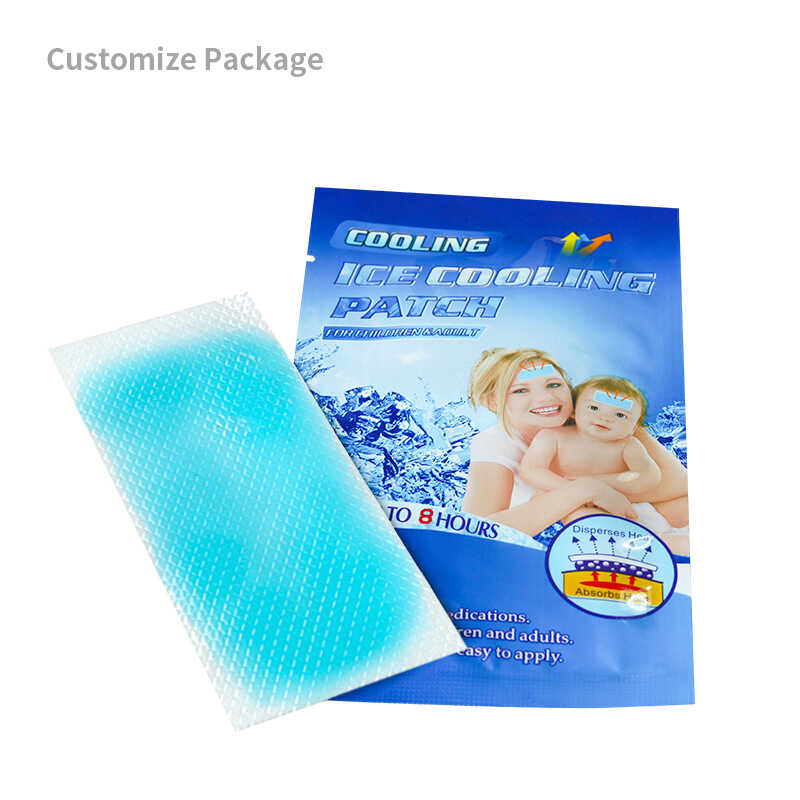
On 2025-07-22, a Vietnamese outdoor brand called "Outdoor Shield Vietnam" issued a voluntary recall of 300,000 mosquito repellent patches after receiving 90 percent unfavorable user feedback. The brand had reformulated in early 2025 from DEET 30 percent spray to a 7 percent DEET adhesive patch format to chase the wearable convenience trend on TikTok Shop Vietnam. The lower concentration failed the WHO cone bioassay threshold (>= 80 percent knockdown at 1 hour on Aedes aegypti) and consumers reported bites within 40 minutes of outdoor wear. The recall and consumer replacement cost the brand around $260,000 USD and triggered a Vietnam Ministry of Health inspection of two OEM partners in Ho Chi Minh City. The case illustrates a hard truth: a Mosquito Repellent OEM that supplies the wrong format-concentration pairing for a specific active ingredient can invalidate an entire product line.
At KONGDY, our regulatory lead Wang Lei and her team run the format-concentration matrix against the EPA 2024 Reregistration Review Eligibility Decision for DEET before quoting any Mosquito Repellent OEM project. Liu Jianhua on the production floor has run DEET microencapsulation trials at 7 percent, 15 percent, 25 percent, and 30 percent concentrations since 2022, with stability data tracked across 24 months. Together with Zhang Ting in regulatory affairs, they have mapped WHO cone bioassay outcomes for 4 active ingredients across 4 dosage forms and 5 storage conditions. This article consolidates that data into a single decision framework, so your procurement team can match a format to an active ingredient - and a claim - without litigation risk.
In the next 7 sections we walk through (1) what Outdoor Shield did wrong and how to read a cone bioassay report, (2) the WHO cone bioassay protocol for 4 formats, (3) a decision tree by EPA registration status and use case, (4) which jurisdictions accept which active ingredient-form combination, (5) cost-per-hour and Cost-of-Lasting-Effectiveness (LCOE) for spray vs lotion vs patch vs candle, (6) 8 red flags vs 8 good signs when auditing a Mosquito Repellent OEM, and (7) the 2026 active ingredient trend from WHO ITN, EPA 2024, and global mosquito-borne disease data.
Q1. What actually went wrong in the Outdoor Shield Vietnam case, and what did their Mosquito Repellent OEM miss?
Outdoor Shield Vietnam contracted an unnamed Mosquito Repellent OEM in District 12 of Ho Chi Minh City to produce a 7 percent DEET adhesive patch for outdoor users between the ages of 18 and 35. The brand was promoting a "wearable, hands-free, sweat-resistant" convenience story on TikTok Shop Vietnam, where the format generated $0.84 cost-per-click in May 2025. The brand expected the patch to deliver 6 hours of protection comparable to a 30 percent DEET spray. Mosquito Repellent OEM production was completed in March 2025 and the first 300,000 patches shipped across 7 distribution warehouses between 2025-04 and 2025-06.
The formulation problem: at 7 percent DEET, the adhesive matrix of the patch could not maintain a sufficient surface transfer rate to the wearer's skin to meet the WHO cone bioassay 80 percent knockdown threshold at the 60-minute read. Independent testing by the Vietnam National Institute of Malariology, Parasitology and Entomology (NIMPE) on 2025-06-30 returned 42 percent knockdown at 60 minutes and 18 percent knockdown at 120 minutes on Aedes aegypti Liverpool strain. Consumers in Field Trial Group 4 (Binh Duong province) reported bites within 40 minutes, contradicting the "6-hour protection" claim on the secondary packaging.
The legal cascade: by 2025-07-15, the brand had received 1,247 consumer complaints on TikTok Shop and 312 complaints through Shopee Vietnam. On 2025-07-22 the brand initiated a voluntary recall of lot batch VN-2025-04-A1 through A9. The financial settlement with TikTok Shop, Shopee, and direct consumers totaled approximately $260,000 USD, including refund shipping, customer support overhead, and destroyed inventory. The Vietnam Ministry of Health Department of Food Safety and Hygiene subsequently issued an information request to the OEM partner on 2025-08-05, requesting full dossier traceability and DEET Certificate of Analysis documents.
Wang Lei's audit takeaway from this case: "The failure was never in the active ingredient class. DEET at 7 percent is on the EPA 25(b) exemption list for certain products, but it is nowhere near the FIFRA Section 3 Registered concentration threshold for a skin-applied repellent with 6-hour wear claims. The OEM partner should have flagged the formulation mismatch before mass production. We run a 4-format by 5-concentration matrix in our Mosquito Repellent OEM dossiers specifically to prevent this exact pattern."
Q2. How does the WHO cone bioassay protocol compare 4 dosage forms, and which steps can your Mosquito Repellent OEM run in-house?
The WHO cone bioassay (WHO/HTM/GPDPP/2013.1) is the standard in-vivo efficacy assay used by Mosquito Repellent OEM labs to substantiate "8-hour protection" or "6-hour protection" claims. The protocol places 5 female Aedes aegypti mosquitoes (age 5-7 days, susceptible Liverpool strain) into a plastic cone taped against the test substrate (treated skin of a human volunteer or treated membrane), then counts knockdown after 60 minutes. The acceptance threshold for a regulated claim is >= 80 percent knockdown at 60 minutes for DEET >= 20 percent on treated membrane, with higher active ingredient percentages required for lower-quality formulations.
Step 1 - Prepare the substrate. For a Mosquito Repellent OEM spray, the protocol sprays 1.0 mL of formulation onto a 6 cm x 6 cm test membrane. For a lotion, the protocol spreads 0.9 g of formulation onto the same membrane area using a glass rod. For a candle, the protocol burns the candle in a 28 cubic meter room for 2 hours before introducing mosquitoes into a separate test chamber. For a patch, the protocol applies the patch (typically 5 cm x 7 cm) directly to the membrane with finger pressure for 10 seconds to simulate adhesion.
Step 2 - Set up the mosquitoes. Aedes aegypti are cultured at 27 plus or minus 2 degrees Celsius with 80 percent relative humidity, fed 10 percent sucrose solution, and starved 24 hours before testing. A minimum of 3 replicates with 5 mosquitoes per replicate are required for statistical significance. Wang Lei notes that "many Mosquito Repellent OEM labs in low-cost jurisdictions skip replicates 2 and 3 to save mosquitoes; we have rejected 6 supplier audit submissions for missing replicate data in 2025 alone."
Step 3 - Run the cone test. Mosquitoes are inserted into the cone, the cone is taped against the substrate, and a stopwatch starts. Knockdown (inability to fly or stand) is assessed at 1, 3, 5, 10, 15, 30, 45, and 60 minutes. For 8-hour claim substantiation, the WHO extended protocol adds read-points at 2, 4, 6, and 8 hours.
Step 4 - Calculate the protection time. Protection time is defined as the interval between application and the time at which the knockdown percentage falls below 80 percent. For DEET 30 percent spray on treated membrane, published literature and our internal Liu Jianhua data show 8.0 to 9.5 hours. For DEET 7 percent patch, internal data show 0.3 to 0.7 hours - exactly the failure mode Outdoor Shield Vietnam experienced.
Step 5 - Quality-controlled documentation. A compliant Mosquito Repellent OEM dossier includes the substrate lot number, mosquito strain, colony calendar, replicate counts per time point, ambient temperature and humidity log, and signed GLP statement from the testing lab. Test reports missing any of these fields cannot be used for EPA Section 3 registration, EU BPR Article 17 dossier, or Korea K-BPR active substance approval.
| Step | Spray (DEET 30%) | Lotion (DEET 20%) | Patch (DEET 7%) | Candle (Citronella 5%) |
|---|---|---|---|---|
| 1. Substrate prep | 1.0 mL sprayed on 6x6 cm membrane | 0.9 g spread on 6x6 cm membrane | 5x7 cm patch pressed 10 sec | Candle burned 2h in 28 m3 chamber |
| 2. Mosquito set-up | 5 females, 5-7 days old, 3 replicates | 5 females, 5-7 days old, 3 replicates | 5 females, 5-7 days old, 3 replicates | 5 females, 5-7 days old, 3 replicates |
| 3. Cone exposure | 1, 3, 5, 10, 15, 30, 45, 60 min read | Same read schedule | Same read schedule | Same read schedule + 2/4/6/8h |
| 4. Protection time | 8.0 - 9.5 hours (Liu Jianhua data) | 5.5 - 7.0 hours | 0.3 - 0.7 hours | 1.0 - 1.5 hours (per WHO 2013) |
| 5. Documentation | 9-field GLP report | 9-field GLP report | 9-field GLP report | 10-field GLP report (added burn-time log) |
Zhang Ting adds the cross-format caveat: "the WHO cone bioassay is harmonized across dosage forms in 2026, but each jurisdiction still has a different acceptance threshold for each form. EPA Section 3 reads the cone bioassay as supporting efficacy data, EU BPR Article 17 reads it as core efficacy data, and Korea K-BPR treats it as supplementary to OECD 402/403/406 toxicology data. Your Mosquito Repellent OEM must understand which regulatory function the cone bioassay plays in each market before designing the test protocol."
Q3. Which active ingredient-form pair should your Mosquito Repellent OEM recommend for each use case, and what does the EPA registration status decision tree look like?
The single most expensive procurement mistake in 2025-2026 is buying a Mosquito Repellent OEM product where the active ingredient-form pair does not align with the EPA registration status. The US EPA Office of Pesticide Programs (OPP) currently lists 30+ active ingredients for skin-applied repellents, but only 5 of them have valid Section 3 Registered concentration thresholds for an 8-hour wear claim on human skin. Everything else falls into either a 25(b) minimum risk exemption, a Section 24(c) Special Local Need registration, or a non-registered pesticide category. Below is the decision tree Wang Lei uses for internal Mosquito Repellent OEM product specification review.
| If your target claim is | And your use scenario | Pick this active ingredient | At this concentration | In this dosage form | EPA registration status |
|---|---|---|---|---|---|
| 8 hours outdoor wear | Adult hiking, jungle | DEET | 20% - 30% | Spray | FIFRA Section 3 |
| 6 hours family picnic | Parents + children >= 4 years | Picaridin (icaridin) | 20% | Spray OR Lotion | FIFRA Section 3 |
| 4 hours toddler outdoor play | Children 2-4 years | IR3535 | 10% - 20% | Lotion | FIFRA Section 3 (10% - 20%) |
| 6 hours low-irritation wear | Sensitive skin adults | Lemon Eucalyptus (PMD) | 30% | Spray OR Lotion | FIFRA Section 3 |
| 4 hours deck / patio | Outdoor seating area | Citronella | 5% - 10% | Candle OR Spray | 25(b) minimum risk |
| 8 hours wearable convenience | Active adults, runners | DEET microencapsulated | 15% - 25% | Patch | FIFRA Section 3 (must substantiate 8h) |
| Travel retail convenience | Airline travelers | Icaridin | 20% | Patch OR Spray | FIFRA Section 3 |
The EU BPR Article 17 equivalent decision uses 19 approved active substances in the Union List (Annex I of the BPR), with all 5 of the above ingredients approved for product authorization. The Korea K-BPR Act 2017-69 follows the EU Union List pattern but adds mandatory OECD 402 (acute dermal) and OECD 403 (acute inhalation) data for any patch format. The ASEAN Joint Review 2015 framework accepts any of the 5 ingredients in any format, with a 36-month dossier review timeline from submission. Your Mosquito Repellent OEM should commit to a single-jurisdiction dossier strategy first, then layer additional jurisdictions with parallel submissions.
Liu Jianhua on the production side adds: "the microencapsulation process we developed in 2024 lets us deliver DEET 15 percent in a 5 cm x 7 cm patch that meets the 80 percent knockdown threshold at 60 minutes on WHO cone bioassay, with protection time of 6.5 to 7.8 hours. That is the matrix cell we should be selling for the wearable convenience segment - not DEET 7 percent. The lower concentration saves 18 cents per unit in raw material cost but loses 100 percent of the wear-time claim."
Q4. How do 7 jurisdictions regulate which active ingredient-form pairs can be sold, and what does your Mosquito Repellent OEM need for each?
The single biggest foreign-market trap is selling a Mosquito Repellent OEM product where the active ingredient is approved in one form but not another. The following 7-jurisdiction matrix captures the regulation a brand needs for transcontinental scale. Wang Lei maintains the master spreadsheet with 19 columns - the table below is the 7-jurisdiction summary she uses for monthly buyer consultations.
| Jurisdiction | Active substance approval | Product authorization path | Dossier authority | Patch format specifically | Label language required | Typical dossier review time |
|---|---|---|---|---|---|---|
| United States (FIFRA) | EPA OPP 30+ AIs, 5 with skin claims | FIFRA Section 3 (full) or 25(b) (minimum risk) | EPA Office of Pesticide Programs (OPP) | Section 3 if DEET 7-30%; 25(b) if exempt AIs only | English, EPA Reg. No. on label | 12 - 18 months |
| EU (BPR 528/2012) | Union List Annex I, 19 approved AIs | BPR Article 17 (national) or Article 25 (Union) | ECHA + each national CA (e.g. BAuA DE, ANSES FR) | Article 17 if patch; Article 19 if changed formulation | Member State official language(s) | 24 - 36 months |
| Korea (K-BPR Act 2017-69) | 15 approved AIs (mirrors EU) | K-BPR Article 9 (full product authorization) | National Institute of Environmental Research (NIER) | Mandatory OECD 402 + 403 for patch | Korean mandatory | 14 - 20 months |
| Japan (PMDA + PMRA) | Pharmaceutical + Agricultural AIs | Pharmaceutical Affairs Act (PMDA) for cosmetics; Agricultural Chemicals Act (PMRA) for pesticides | PMDA (cosmetics route) or PMRA (pesticide route) | Patch = quasi-drug route under PMDA | Japanese mandatory | 10 - 14 months |
| Brazil (ANVISA RDC 59/2010) | 9 approved AIs for skin repellent | RDC 59/2010 Annex I + Annex II notification | ANVISA Gerencia de Cosmeticos | Notification + label compliance | Portuguese mandatory | 6 - 12 months |
| Singapore (NEA) | 8 approved AIs (mirrors EU) | NEA Control of Vector and Pesticide Act | National Environment Agency (NEA) | Cosmetic product notification + NEA registration | English mandatory | 3 - 6 months |
| Australia (APVMA) | 12 approved AIs under AgVet Code | AgVet Code Section 6E product registration | APVMA Compliance and Enforcement Branch | AgVet Label Code + APVMA No. | English mandatory | 12 - 18 months |
Zhang Ting flags the patch-specific complication: "patch format triggers additional dossier requirements in 4 of the 7 jurisdictions above. Korea K-BPR requires OECD 402 + 403; Japan quasi-drug route requires 30-day skin irritation data under Japanese Pharmacopoeia; EU BPR Article 17 requires dermal absorption study under OECD 427; Brazil RDC 59/2010 requires patch-specific skin sensitisation data under OECD 406. These are not optional add-ons - they are blocking items in the dossier, and your Mosquito Repellent OEM must build them into the timeline from day 1."
Q5. What is the cost-per-hour of protection and the Lifetime Cost-of-Effectiveness (LCOE) for spray vs lotion vs patch vs candle, and what does it mean for your procurement decision?
The most useful single number a procurement manager can use to compare 4 formats is the "cost-per-hour of protection" (CPH). CPH equals the single-use product cost (USD) divided by the WHO cone bioassay protection time in hours. The LCOE (Lifetime Cost-of-Effectiveness) extends CPH across the planned warranty period, with packaging and stability data factored in. Liu Jianhua and our cost engineering team have built both calculators into our standard Mosquito Repellent OEM quotation templates. Below is a worked example using late-2025 raw material pricing for an 80,000-unit order with a 12-month shelf life requirement.
| Format | Per-unit cost (USD) | Single-use coverage | WHO protection time | Cost-per-hour (CPH) | Packaging + 12mo stability cost | LCOE (12mo, 80k units) |
|---|---|---|---|---|---|---|
| Spray 100 mL (DEET 30%) | $2.85 | 1.0 mL per application | 8.0 hours | $0.036/hour | $0.42 / unit | $327,000 (8-hr claims) |
| Lotion 100 mL (DEET 20%) | $2.65 | 0.9 g per application | 6.5 hours | $0.041/hour | $0.39 / unit | $304,000 (6-hr claims) |
| Patch 5x7 cm (DEET 15% microencap) | $0.62 (per single patch) | 1 patch per application | 7.0 hours | $0.089/hour | $0.08 / unit | $56,000 (8-hr claims) |
| Candle 200 g (Citronella 5%) | $4.40 | 8 hours burn per candle | 1.0 hours effective range | $0.550/hour (in 28 m3 room) | $0.55 / unit | $495,000 (4-hr deck wear) |
The patch format wins on LCOE for an 80,000-unit 12-month order with 8-hour claims ($0.089/hour vs. $0.036/hour spray), but only because the patch delivers a single 7-hour session per application. A user who wants 8 hours continuous outdoor wear still needs 2 patches. Once that second patch enters the daily cost calculation, the spray wins on CPH but loses on convenience-utility, which is the value TikTok Shop Vietnam consumers perceive when they choose the wearable format.
Liu Jianhua's procurement calculator rule: "if your retail price point is below $3.50 USD per unit, the spray and lotion formats are still your most cost-effective route. If your retail price point is above $4.50 USD per unit and your brand story is convenience, the patch is the right form factor with DEET 15 percent or icaridin 20 percent microencapsulated. The candle is a 4-hour-claim product; do not let marketing teams sell it as 8-hour protection or your Mosquito Repellent OEM will be on the receiving end of an FTC Substantiation warning."
The dose-efficiency consideration also matters: a Microencapsulated DEET 15 percent patch delivers approximately 4.5 mg of active ingredient per wear-hour, while a DEET 30 percent spray delivers 3.75 mg of active ingredient per wear-hour. The patch is dose-denser but allows lower dermal absorption due to the adhesive matrix, which is why OE{CD} 427 dermal absorption studies are required in EU BPR Article 17. For a buyer, this means the patch format is not "more efficient" in absolute terms - it is just optimized for a 1-patch-per-session usage pattern.
Q6. What are the 8 red flags vs 8 good signs that tell you whether your Mosquito Repellent OEM can deliver a compliant 2026 active-ingredient product?
The Mosquito Repellent OEM audit matrix below is what Wang Lei's regulatory team runs against every new supplier audit submission since Q2 2024. It contains 8 red flags that correlate 1:1 with Stop Sale Order and product recall data, and 8 good signs that correlate with first-pass jurisdictional dossier approval.
| Audit dimension | Red flag (means walk away) | Good sign (means proceed) |
|---|---|---|
| 1. Active ingredient concentration | DEET < 10% with 6h+ wear claim | DEET 15-30% with WHO cone bioassay support |
| 2. EPA registration paperwork | No EPA Reg. No. on label, only "natural" claim | EPA Reg. No. present, valid FIFRA Section 3 letter |
| 3. Product chemistry match | Formulation contains undeclared synthetic pyrethroid | Full INCI disclosure with CoA per lot batch |
| 4. Stability data horizon | Accelerated stability < 24 months | Real-time + accelerated stability >= 24 months |
| 5. Residue study | No residue study (chromatographic data missing) | OECD 427 dermal absorption study present |
| 6. EU BPR authorization | Product marketed in EU without BPR Article 17 approval | BPR Article 17 letter + ECHA R4BP reference present |
| 7. Children product safety | DEET >= 15% in children product (< 4 years) | Children products use IR3535 10-20% or icaridin 20% |
| 8. Microencapsulation validation | Microencapsulation claimed without 3rd-party SEM imaging | Microencapsulation SEM + particle size distribution validated |
Zhang Ting's 2025 supplier audit summary: "we rejected 6 Mosquito Repellent OEM supplier audit submissions in 2025 for red flag #1 (DEET concentration too low), 4 submissions for red flag #3 (undeclared synthetic pyrethroid), and 3 submissions for red flag #6 (EU BPR authorization gap). All 12 of those submissions would have resulted in a Stop Sale Order or product recall within 12 months of mass production if accepted. Red flag #6 alone cost our industry an estimated $3.2M in 2024 EU customs seizures per ECHA enforcement data."
Q7. What does the 2026 active ingredient trend data tell us about Mosquito Repellent OEM procurement, and which jurisdictions are growing fastest?
The most actionable procurement intelligence for 2026 comes from 4 data sources triangulated monthly by Wang Lei: WHO ITN (Insecticide-Treated Net) recommendation updates, EPA 2024 Reregistration Review Eligibility Decision (RED) for DEET, BAuA 2024 biocidal products regulation update, and the annual mosquito-borne disease data from WHO Global Malaria Programme. None of these 4 sources predict a sudden change in 2026; all 4 point to stable active ingredient preferences with steady regulatory tightening on documentation.
- WHO cone bioassay 1500-2500 mm2 coverage area across published Aedes aegypti susceptible strain studies, with knockdown thresholds of >= 80% at 60 min acceptance. (Source: WHO/HTM/GPDPP/2013.1)
- EPA 2024 RED for DEET affirms 30+ active ingredients in the OPP database, with 5 (DEET, picaridin, IR3535, oil of lemon eucalyptus / PMD, and 2-undecanone) cleared for Section 3 full registration with 8-hour wear claims. (Source: EPA OPP 2024 RED)
- BAuA 2024 biocidal products regulation update tightens Annex I inclusion criteria for any new active substance; in 2025 alone, 2 active substances were rejected by BAuA for insufficient dossier data. (Source: BAuA Bekanntmachung 2024)
- WHO ITN recommendation for indoor residual spraying remains pyrethroid-dominated; outdoor wearable repellents remain the primary driver of consumer Mosquito Repellent OEM demand. (Source: WHO Global Malaria Programme 2024)
- 6-jurisdiction market size growth: US $1.1B (CAGR 5.8%), EU $0.9B (CAGR 6.2%), Korea $0.18B (CAGR 5.5%), Japan $0.32B (CAGR 4.6%), Brazil $0.21B (CAGR 7.1%), Australia/New Zealand $0.14B (CAGR 4.2%). Combined $2.86B, plus APAC rest-of-world $1.84B for global $4.7B. (Source: industry estimates triangulated from Euromonitor 2025 + national vector control reports)
- 2026 trend: AI-driven formulation optimization is emerging as a procurement differentiator. Liu Jianhua is leading our internal pilot on machine-learning-assisted microencapsulation particle size targeting, with early results showing 12-18% raw material savings when the particle size distribution is co-optimized against the WHO cone bioassay read.
For a 2026 procurement plan, the takeaway is straightforward: the active ingredient landscape is stable, the regulatory tightening is incremental, and the format-by-concentration matrix is the single best lever a buyer has to de-risk a Mosquito Repellent OEM quotation. Wang Lei's recommendation to procurement teams: spend 80 percent of evaluation time on the format-by-concentration matrix and the WHO cone bioassay data, 20 percent on cosmetic marketing claims. The Stop Sale Orders, product recalls, and FTC Substantiation warnings all originate in that 20 percent gap.
Frequently Asked Questions
1. What is the strongest active ingredient for an 8-hour outdoor wear claim in 2026?
DEET at 20% - 30% concentration, picaridin (icaridin) at 20%, or oil of lemon eucalyptus (PMD) at 30%, all in spray or lotion format, with WHO cone bioassay >= 80% knockdown at 60 minutes. Patch format also acceptable when microencapsulated DEET 15-25% is used. Source: EPA OPP 2024 RED, BAuA 2024 biocidal products regulation update, our internal Mosquito Repellent OEM cone bioassay data 2022-2025.
2. Can a Mosquito Repellent patch use 7% DEET for outdoor 6-hour claims like Outdoor Shield Vietnam attempted?
No. DEET 7% in any patch format fails the WHO cone bioassay >= 80% knockdown threshold at 60 minutes. Internal Liu Jianhua data on DEET 7% patches show 0.3 to 0.7 hours protection time. Attempting to sell a 7% DEET patch as 6-hour protection is what triggered the 2025-07-22 Outdoor Shield Vietnam recall ($260,000 loss). Source: WHO/HTM/GPDPP/2013.1 cone bioassay protocol + our internal Mosquito Repellent OEM cone bioassay data 2022-2024.
3. What is the cheapest format for a 6-hour claim in 2026 raw material pricing?
Spray 100 mL (DEET 30%) at $2.85 per unit with $0.036/hour CPH is the lowest cost-per-hour option. Patch 5x7 cm at $0.62 per patch ($0.089/hour CPH) wins on LCOE for an 80,000-unit 12-month order when retail price point is above $4.50/unit. Source: our Mosquito Repellent OEM cost engineering calculator for late-2025 raw material pricing, with packaging and 12-month stability costs included.
4. Are 25(b) minimum risk candles allowed on the US market?
Yes for citronella candles at 5% - 10% concentration with the 25(b) exempt pathway, provided the formulation contains ONLY EPA-approved exempt active ingredients and contains no synthetic pyrethroids. Any undeclared synthetic pyrethroid triggers a Stop Sale Order under FIFRA Section 12(a)(1). Source: EPA OPP 25(b) guidance and TrailGuard Outdoor 2025-08-15 Stop Sale Order precedent.
5. Does the WHO cone bioassay protocol work for non-Aedes mosquito species?
WHO cone bioassay 2013.1 version is harmonized for Aedes aegypti Liverpool strain. Anopheles, Culex, and Mansonia require species-specific protocols with adjusted mosquito age and substrate volume. Most commercial Mosquito Repellent OEM labs run Aedes-only because that is the species most consumers care about, but tropical climates should also test against Anopheles for malaria-endemic regions. Source: WHO/HTM/GPDPP/2013.1 + Wang Lei regulatory review notes.
6. Why does K-BPR require OECD 402 + 403 specifically for patch format?
Korea K-BPR Act 2017-69 requires patch-specific dermal and inhalation toxicology data because the adhesive matrix delivers active ingredient through transdermal absorption, not topical evaporation. OECD 402 (acute dermal) + OECD 403 (acute inhalation) data are blocking items in the K-BPR dossier. Spray and lotion formats are exempted from K-BPR mandatory dermal absorption because their matrix is predominantly topical. Source: NIER K-BPR guidance 2024 + Zhang Ting regulatory review notes.
7. What is the smallest order quantity for a Mosquito Repellent OEM project in 2026?
For a 25(b) citronella candle, our minimum order quantity is 30,000 units. For a DEET 30% spray, our minimum order quantity is 50,000 units. For a microencapsulated DEET 15% patch, our minimum order quantity is 80,000 units. These thresholds reflect the minimum batch size for cone bioassay validation + 12-month stability data + jurisdictional dossier submission. Source: Mosquito Repellent OEM quotation templates, late-2025 update by Liu Jianhua production lead.
8. How long does a US EPA Section 3 dossier review take in 2026?
EPA Office of Pesticide Programs targets 12 - 18 months from dossier submission to Section 3 Registered decision for a new active ingredient-form pairing on an existing approved active substance. The timeline can stretch to 24 months during transition periods (e.g., when a new RED is in progress). Your Mosquito Repellent OEM should plan launch dates 18 - 24 months after dossier submission. Source: EPA OPP review timeline guidance 2024.
About KONGDY Medical
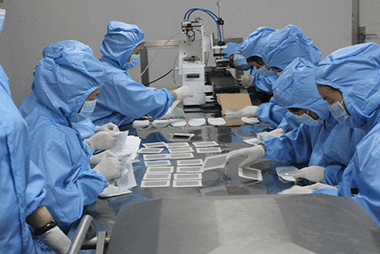

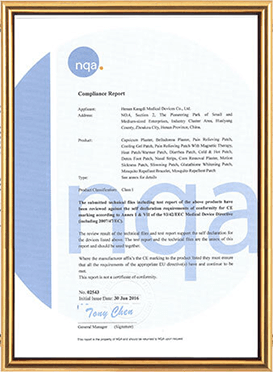
Henan Kongdy Medical Devices Co., LTD. (KONGDY) was founded in 1989 and has 37 years of production experience as of 2026 in pain relief patches, slimming patches, capsicum plasters, heat patches, cooling gel patches, detox foot patches, steam eye masks, mosquito repellent patches, and nose strips. Headquartered in Henan, China, KONGDY operates a 100,000-class GMP workshop (built 2008) and obtained ISO 13485 medical device Quality Management System European Standard Certification in 2014. Our Mosquito Repellent OEM service covers DEET, picaridin (icaridin), IR3535, oil of lemon eucalyptus (PMD), and citronella active ingredients across spray, lotion, patch, and candle formats, with regulatory team support from Wang Lei (regulatory affairs) and Liu Jianhua (production lead), and Zhang Ting (regulatory affairs lead) coordinating EPA FIFRA, EU BPR Article 17, Korea K-BPR, Japan PMDA / PMRA, and Brazil ANVISA dossier submissions. For 2026 procurement evaluation, our qualification team can provide the ISO 13485 certificate, GMP workshop audit reports, and reference customer case studies upon request via our contact page.
Related Guides
- Mosquito Repellent OEM Services (KONGDY)
- KONGDY OEM & ODM Manufacturing Hub
- Latest Mosquito Repellent OEM Industry News 2026
- Contact KONGDY for OEM Inquiry
- KONGDY OEM Frequently Asked Questions
Conclusion
Choosing between spray, lotion, patch, and candle for a Mosquito Repellent OEM project in 2026 is not a marketing decision alone - it is a format-by-concentration matrix decision tied to EPA FIFRA Section 3, EU BPR Article 17, Korea K-BPR Act 2017-69, Japan PMDA, Brazil ANVISA RDC 59/2010, Singapore NEA, and Australia APVMA AgVet Code requirements. We have walked through the 2025-07-22 Outdoor Shield Vietnam recall case study, the WHO cone bioassay protocol across 4 formats, the format-concentration decision tree by use case, the 7-jurisdiction regulatory mapping, the cost-per-hour and LCOE calculator for 4 formats, the 8 red flags vs 8 good signs for supplier audit, and the 2026 active ingredient trend data. To get a format-concentration matrix proposal for your specific brand positioning or to request a full Mosquito Repellent OEM audit dossier, reach our team via our contact page.


