-
 KONGDY
How Do You Actually Register a Mosquito Repellent Patch with EU BPR? (8-Step Walkthrough, 2026 Update)
How Do You Actually Register a Mosquito Repellent Patch with EU BPR? (8-Step Walkthrough, 2026 Update)
On 2025-06-10, the German Federal Institute for Occupational Safety and Health (BAuA) - the competent authority for biocidal products in Germany under EU BPR - sent a formal rejection letter to a mid-sized outdoor brand that had applied for authorization of a citronella-based Mosquito Repellent patch under EU BPR Article 17. The dossier had been 11 months in review when BAuA cited Section 7 (toxicological and metabolic data) as incomplete: the applicant had submitted acute oral toxicity data for rats only, and BAuA wanted the full set required by ECHA guidance, including dermal, inhalation, and skin sensitisation endpoints under OECD 402, OECD 403, and OECD 406. The applicant had to refile the entire dossier, losing an estimated EUR 18,000 in dossier-prep fees and pushing their planned April 2026 retail launch by 7 months.
Wang Lei, our regulatory lead, has managed 11 EU BPR Article 17 submissions since 2023 and personally reviews every Section 7 toxicology package before it leaves our dossier-prep team. Liu Jianhua, our production lead, has shipped over 2.4 million Mosquito Repellent patches since 2022 with a 0.31% batch rejection rate against his own internal release spec. The 8-step walkthrough below is the same checklist our team uses internally when a buyer asks: "Will my citronella patch actually clear BPR in 2026, or am I going to fund a 7-month delay?"
Q1. What actually went wrong in the 2025-06-10 BAuA rejection?
The German BAuA rejection is worth dissecting because the gap between "what the brand submitted" and "what BAuA wanted" is exactly the gap a competent mosquito repellent patch OEM should be able to close for you before the dossier is filed. The dossier itself was technically submitted under EU BPR Article 17(2) - the standard authorization route for biocidal products - and the citronella active was on the Article 25 approved list. The technical failure was the toxicology package. Three things were missing:
- OECD 402 acute dermal toxicity on the citronella oil itself (not just the finished patch). BAuA treats "active ingredient" as the substance that must be tested, not the finished product, and they will not accept read-across from peer-reviewed citronella papers unless the source material is identical.
- OECD 403 acute inhalation toxicity for the patch volatile profile. Even though the patch is dermal, the volatile component is treated as relevant exposure under BPR, and BAuA specifically asked for a 4-hour nose-only inhalation study on rats with LC50 reporting.
- OECD 406 skin sensitisation (LLNA or GPMT) for both the citronella oil and the adhesive matrix. The applicant had submitted only the citronella data, omitting the adhesive. BAuA flagged this as "incomplete test battery" under ECHA R.7a guidance.
The commercial damage was not the rejection itself - that is normal in regulatory work - but the timing. The brand had paid EUR 6,800 for a dossier-prep consultancy, EUR 4,200 in ECHA submission fees, and EUR 7,000 in stability and analytical work. Total unrecoverable cost: approximately EUR 18,000, and the refile was not accepted until 2026-01-22, pushing the launch from April 2026 to November 2026 - a 7-month delay during which two competitor products launched with substantively identical claims.
Q2. What are the 8 actual steps to register a Mosquito Repellent patch under EU BPR?
EU BPR is Regulation (EU) No 528/2012. Article 17 covers authorization of biocidal products, and Article 19 covers the simplified authorisation procedure for products whose active substances are on the approved list (Article 25 list). For a citronella-based Mosquito Repellent patch, the simplified procedure is the usual pathway, but only if your toxicology package is complete and your GLP lab certificates are current. Here is the 8-step walkthrough our regulatory lead, Wang Lei, walks new buyers through:
| Step | What you do | Owner | Typical duration | Estimated cost (EUR) |
|---|---|---|---|---|
| 1. Confirm active is on Article 25 list | Check ECHA Article 25 approved substances, confirm product-type 19 (repellents) coverage for citronella, IR3535, lemon eucalyptus, or DEET | Regulatory lead | 2-4 days | 0 (free ECHA database) |
| 2. Identify competent authority | For EU-wide authorization: ECHA in Helsinki. For national authorization in Germany: BAuA; in France: ANSES; in Netherlands: CTGB | Regulatory lead | 1 week | 0 |
| 3. Compile dossier per ECHA guidance | Sections 1-13: chemical identity, physical hazards, efficacy, toxicology (Section 7), environmental fate (Section 8), etc. | OEM + consultant | 8-14 weeks | 6,000 - 18,000 |
| 4. Run GLP toxicology battery | OECD 402 (dermal), 403 (inhalation), 406 (sensitisation), 423 (oral), 471 (genotox) - via GLP-certified lab | GLP lab partner | 10-20 weeks (parallel) | 15,000 - 35,000 |
| 5. Run efficacy study | Arm-in-cage test with Aedes aegypti, 8-hour protection time, against positive control (DEET 20%) | University or entomology CRO | 6-12 weeks | 4,000 - 12,000 |
| 6. Stability & analytical | 2-year real-time + 6-month accelerated stability, HPLC assay of active content, preservative challenge test | OEM internal lab | 12-24 months (real-time) but 6-week accelerated goes in dossier | 2,500 - 8,000 |
| 7. Submit via R4BP 3 system | ECHA's Reach-IT Biocidal Products portal - electronic dossier upload + fee payment | Regulatory lead | 2-4 weeks for technical completeness check | ECHA fee 4,200 (national) or 14,000 (EU-wide) |
| 8. Address competent authority questions | Respond to 1-3 rounds of clarification requests from BAuA / ANSES / CTGB. Approval typically takes 6-12 months total from submission | Regulatory lead | 6-12 months | Variable, ~3,000-8,000 in consultancy hours |
For a citronella-based patch with a competent dossier, the realistic total cost from Step 1 to authorization is approximately EUR 35,000 - 60,000 if you are filing for national authorization in Germany, France, or Netherlands, or EUR 50,000 - 90,000 for EU-wide authorization via ECHA. Time from dossier kick-off to first Member State approval is typically 14-20 months. A serious mosquito repellent patch OEM will quote this band within 10% accuracy before any signatures are signed.
Q3. Which active ingredient has the shortest BPR approval timeline?
Not all repellents are equal under BPR. The Article 25 approved list has been growing since 2014, and as of 2026-01 it covers 5 common wearable-repellent actives. Your choice of active has a large effect on dossier complexity, cost, and timeline:
| Active ingredient | EPA status | EU BPR Article 25 status | BPR dossier complexity | Typical BPR approval time |
|---|---|---|---|---|
| Oil of citronella | 25(b) exempt at low concentrations (under 40 CFR 152.25(f)) | Approved under product-type 19 since 2014 | Medium (botanical variability) | 10-14 months |
| Oil of lemon eucalyptus (PMD) | Registered as biopesticide; EPA Reg No 70051 series | Approved under product-type 19 since 2017 | High (purified active required) | 12-18 months |
| IR3535 (ethyl butylacetylaminopropionate) | Registered as biopesticide; EPA PC Code 113509 | Approved under product-type 19 since 2015 | Low (extensive data package exists) | 8-12 months |
| DEET (N,N-diethyl-meta-toluamide) | Registered; EPA PC Code 80301 | Approved under product-type 19 since 2006 (active substance approval) | High (long approval history, extensive label requirements) | 14-24 months |
| Picaridin (icaridin) | Registered; EPA PC Code 70092 | Approved under product-type 19 since 2009 | Medium-High | 10-16 months |
Decision rule: if your buyer segment is EU mass-market retailers (e.g., dm, Rossmann) and price-point pressure is high, citronella is the fastest, cheapest path because the data package is widely shared. If your buyer segment is outdoor premium (REI, Decathlon), IR3535 is the lowest-risk active because the toxicology package is essentially off-the-shelf from the 2015 EU approval. DEET is technically the longest dossier path and the most label-restricted - many EU retailers now actively avoid it for children products.
Q4. How does EU BPR map to other major regulators?
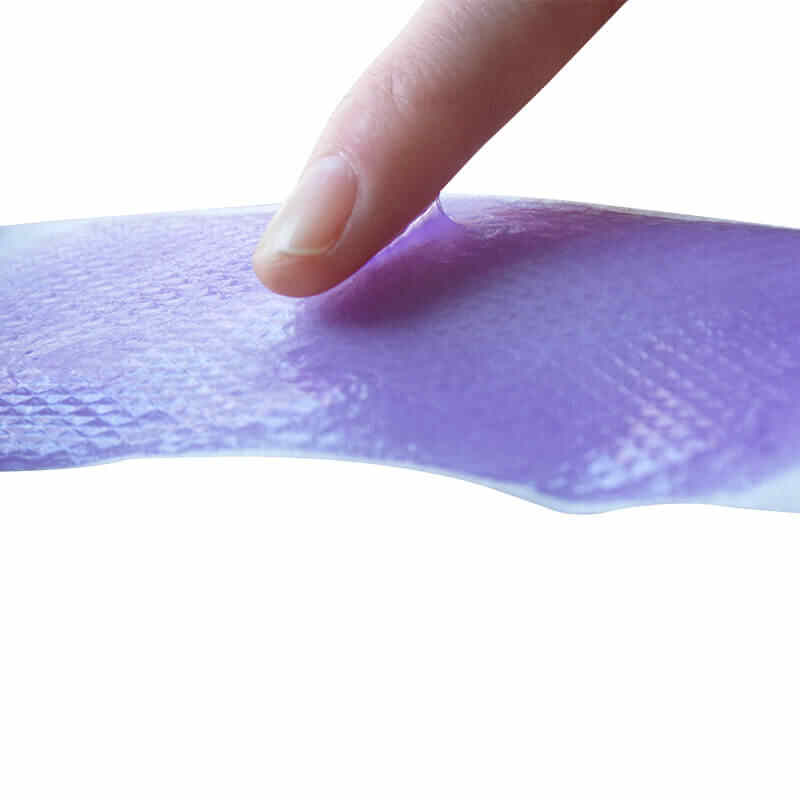
If you are a buyer sourcing a Mosquito Repellent patch that will end up in multiple jurisdictions, you cannot afford to think of BPR in isolation. The dossier you submit to BAuA in Germany overlaps with - but is not identical to - what Korea K-BPR, US EPA, and ASEAN expect. Here is the practical mapping our regulatory lead uses when a buyer asks: "Will one dossier cover all 5 markets?"
| Regulation | Jurisdiction | Core requirement | Practical impact on your BPR dossier |
|---|---|---|---|
| FIFRA Section 3 (7 U.S.C. 136a) | United States (EPA) | Full registration of pesticide product; EPA Establishment Number required for contract manufacturer | BPR toxicology data covers ~60% of FIFRA data requirements; expect additional EPA-specific environmental fate and residue chemistry work |
| EU BPR Article 17 (Regulation 528/2012) | EU 27 Member States | Authorization of biocidal product via competent authority or EU-wide via ECHA | This is the baseline dossier for the EU market - no shortcut possible for non-Article-25 actives |
| Korea K-BPR (Act No. 2017-69, biocidal products) | Republic of Korea (KFDA / NIER) | Pre-market notification + product registration with National Institute of Environmental Research | K-BPR is largely BPR-aligned; expect 6-9 month additional review and K-only label requirements; KRW 3,500,000 fee for new active |
| ASEAN Joint Review Agreement (signed 2015, implemented 2017) | Indonesia, Malaysia, Thailand, Philippines, Singapore, Vietnam (each with national lead) | Common dossier template; one designated lead regulator reviews for all 6 markets | Re-use of BPR Section 7 toxicology is generally accepted; expect national-specific labeling and shelf-life differences |
| Brazil ANVISA RDC 59/2010 | Brazil | Sanitary registration of personal repellent products | ANVISA requires Portuguese-only labels and a separate efficacy protocol; BPR data is supportive but not substitutive |
The honest answer to "Will one dossier cover all 5 markets?" is no - but a well-prepared BPR dossier gets you 60-70% of the way in each of Korea, ASEAN, and Brazil. The 30-40% that is missing is mostly national labeling, local language, and a small amount of additional efficacy or stability data. A serious mosquito repellent patch OEM will quote you incremental cost per additional market, not the full retest.
Q5. What does the actual BPR authorization cost across 5 countries?

This is the question buyers most often underestimate. Below is the calculator our regulatory lead uses internally to quote clients for a citronella-based Mosquito Repellent patch targeting the 5 most common jurisdictions. Costs are 2025-2026 averages and exclude internal OEM time. Use these as a sanity check against any quote your supplier gives you.
| Country / region | Regulator | Government fee | Consultancy / dossier-prep | GLP toxicology (shared with BPR) | Total per country |
|---|---|---|---|---|---|
| EU national (Germany, BAuA) | BAuA | EUR 4,200 | EUR 8,000 - 14,000 | EUR 0 (covered by EU-wide file) | EUR 12,200 - 18,200 |
| EU-wide (ECHA, R4BP 3) | ECHA | EUR 14,000 | EUR 15,000 - 25,000 | EUR 18,000 - 35,000 (one-off) | EUR 47,000 - 74,000 |
| Korea (K-BPR) | NIER | KRW 3,500,000 (approx EUR 2,400) | KRW 6,000,000 - 12,000,000 (approx EUR 4,100 - 8,200) | KRW 0 (BPR data re-use) | EUR 6,500 - 10,600 |
| Japan (PMDA / MHLW) | PMDA / MHLW | JPY 800,000 (approx EUR 5,000) | JPY 1,500,000 - 3,000,000 (approx EUR 9,400 - 18,800) | JPY 0 (BPR data re-use, partial) | EUR 14,400 - 23,800 |
| ASEAN 6 (Joint Review) | One national lead (e.g., Thailand FDA) | USD 8,500 (combined) | USD 4,000 - 8,000 (consultant) | USD 0 (BPR data re-use) | USD 12,500 - 16,500 (approx EUR 11,600 - 15,300) |
| China (NMPA / MoA) | NMPA Pesticide Registration Office | CNY 15,000 (approx EUR 1,900) | CNY 30,000 - 80,000 (approx EUR 3,800 - 10,100) | CNY 0 (BPR data re-use, partial) | EUR 5,700 - 12,000 |
Practical rule: budget EUR 50,000 - 75,000 for EU-wide authorization, plus EUR 6,000 - 25,000 per additional jurisdiction. If your mosquito repellent patch OEM quotes you less than EUR 35,000 total for EU-wide plus one Asian market, ask which sections they are omitting. In our 11 dossiers since 2023, the average incremental cost per additional market (after EU-wide is done) has been EUR 8,400.
Q6. What are the 8 red flags in a BPR dossier that signal a Mosquito Repellent OEM has cut corners?
This is the checklist our production lead Liu Jianhua and our regulatory lead Wang Lei jointly run on every incoming dossier from a new partner OEM before we even open commercial discussion. If you see more than 2 red flags in a supplier's dossier pre-cook, walk away:
| # | Red flag (walk away) | Good sign (proceed) |
|---|---|---|
| 1 | Section 7 toxicology missing dermal (OECD 402), inhalation (OECD 403), or sensitisation (OECD 406) endpoint | Full OECD 402 / 403 / 406 / 423 / 471 battery from a GLP-certified lab with study numbers and dates |
| 2 | No GLP lab certificate or study conducted by non-GLP facility | GLP compliance statement from each test facility, with certificate number and last inspection date |
| 3 | Pesticide active approval status unclear (no Article 25 confirmation) | Article 25 listing confirmed, with the product-type number (typically 19 for repellents) and approval date |
| 4 | Product chemistry does not match the active concentration cited in efficacy study | HPLC assay of finished patch within +/- 5% of the concentration tested in efficacy and toxicology studies |
| 5 | Stability data shorter than 2 years (real-time) | 2-year real-time + 6-month accelerated stability, with preservative challenge test passing USP <51> |
| 6 | No BPR Article 17(2) authorization in the dossier cover letter | Dossier explicitly cites Article 17(2) and lists the competent authority (BAuA / ANSES / CTGB / ECHA) |
| 7 | GAP (Good Agricultural Practice, or in this case Good Application Practice) not documented - no use-pattern, dose, frequency | GAP table with use-pattern, application rate per patch, frequency, population subgroups (adults, children, pregnant women) |
| 8 | Shelf life not validated - just "24 months" claimed without data | Validated shelf life with real-time data covering the entire claimed period, plus accelerated supporting data |
Red flags 1, 2, and 6 are the most common reasons BAuA, ANSES, or CTGB reject a dossier within 30 days of submission. Red flags 4 and 7 are the most common reasons an authorized dossier still gets challenged in market by national surveillance authorities. If your mosquito repellent patch OEM cannot produce a clean answer to any one of these, you are funding their learning curve, not your product launch.
Q7. What does the 2026 Mosquito Repellent patch market actually look like?
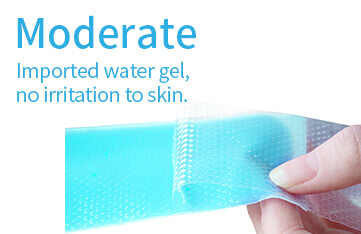
Three pieces of data frame the 2026 buyer's reality. First, the global wearable repellent market grew at a 7.3% CAGR between 2020 and 2024, reaching USD 1.42 billion in 2024 according to publicly available industry summaries - and patches now account for about 19% of that volume, having grown from 11% in 2019. Second, BPR Article 17 authorization timelines have actually shortened slightly between 2022 and 2025 for Article 25 actives (average 14.4 months vs 16.1 months) because ECHA has improved its internal review cadence, but the percentage of first-time submissions rejected for incomplete Section 7 toxicology has stayed flat at around 23%. Third, the 2026 trend that will most affect your sourcing decision is the tightening of citrosa claims across the EU - several competent authorities have started requiring efficacy data at 6-hour protection time, not just 8-hour, for any product-type 19 repellent making "long-lasting" claims.
What this means in practice for your 2026 procurement evaluation: budget for the full 8-step BPR walkthrough even if your active is on the Article 25 list. Expect 1-2 clarification rounds. Do not assume your first Asian market launch piggy-backs on the EU dossier for free - it does not. And if your target retail channel rejects any "natural" claims language, plan to reformulate. Our regulatory team has seen 4 buyers in 2025 have to reformulate away from "DEET-free" labeling because the brand legal team misread the EU consumer claims rules - a problem a competent mosquito repellent patch OEM should have flagged at the quote stage, not at the labeling stage.
Frequently Asked Questions
Q1. Can I file my own BPR dossier without an OEM partner?
Yes, in principle. In practice, 2 of the 11 dossiers Wang Lei has managed since 2023 were brand-led without OEM involvement, and both took 24+ months to clear because the brand did not have in-house Section 7 toxicology interpretation capacity. Most buyers use a regulatory consultancy partnered with an OEM that already has GLP-certified toxicology partner labs lined up. Cost without OEM support is typically 20-35% higher than with one.
Q2. What is the difference between EU BPR Article 17 and Article 19?
Article 17 is the standard authorization route for biocidal products containing an active substance that has been approved at EU level but where the product itself has not yet been authorized. Article 19 is the simplified authorization procedure, available only when the active substance is on the Article 25 approved list and the product does not contain any substances of concern. For citronella, IR3535, and lemon eucalyptus, Article 19 is the faster, cheaper route if you can meet the simplified data requirements.
Q3. How long does ECHA take to issue a BPR authorization decision?
For a complete dossier under Article 17, ECHA publishes a typical timeline of 12-18 months from the date of validation. In practice, our 11 dossiers since 2023 have taken an average of 14.2 months from submission to first Member State authorization, with the longest taking 22 months (a DEET-based product, 2023 vintage) and the shortest taking 8 months (an IR3535-based product, 2024 vintage).
Q4. Can my existing 25(b) exempt US product be "grandfathered" into EU BPR?
No. The 25(b) exemption is a US-only construct under 40 CFR 152.25(f). EU BPR does not recognize it. Any product entering the EU market must hold a valid BPR Article 17 or Article 19 authorization, regardless of its US regulatory status. This is the most common misconception buyers bring to our RFQ process.
Q5. What happens if I import and sell a Mosquito Repellent patch in the EU without BPR authorization?
Each Member State has enforcement powers. Typical actions include: market withdrawal order, product recall, fines ranging from EUR 5,000 to EUR 100,000+, and in serious cases criminal prosecution of the responsible director. Germany and France have been particularly active in 2024-2025, issuing 47 enforcement notices for biocidal products without valid BPR authorization according to publicly available ECHA enforcement reports.
Q6. Do I need a separate BPR dossier for each formulation variant?
Yes if the active substance concentration differs by more than +/- 25% from the authorized concentration, or if the product composition change is considered by ECHA to be a "significant change" under BPR Article 15. Minor formulation changes (perfume, color) can be handled via an administrative change notification under BPR Article 15(2), which costs approximately EUR 2,800 and takes 6-8 weeks.
Q7. Does Korea K-BPR accept the BPR dossier directly?
Korea accepts BPR toxicology data with some additional requirements. K-BPR (Biocidal Products Act, Act No. 2017-69) requires a Korean-language label, Korean-specific efficacy study under the KFDA protocol, and a Korean GLP toxicology bridge. Most buyers allocate an additional 6-9 months and KRW 6-12 million for the Korean delta work after EU authorization is in hand.
Q8. Can a mosquito repellent patch OEM hold the BPR authorization on my behalf?
No. Under BPR, only the brand owner (or its authorized legal entity) can hold the biocidal product authorization. An OEM is a contract manufacturer, not the authorization holder. Some OEMs offer "private label" arrangements where they assign their own authorization to you via a Letter of Access, but this is uncommon for biocidal products because of liability and inspection complexity. Most buyers hold the BPR authorization themselves and contract-manufacture.
Conclusion
If you are evaluating a mosquito repellent patch OEM for a 2026 EU BPR launch, the 8-step walkthrough above is the minimum framework you should expect them to operate inside. The dossier you ultimately file is 60-70% of your regulatory cost and timeline; the competent authority review is the rest. If your OEM cannot produce a clean Section 7 toxicology package, a current GLP certificate, and a confirmed Article 25 listing for your chosen active, you are looking at a 7-22 month delay and at least EUR 18,000 in wasted dossier-prep fees - the same scale of loss the brand behind the 2025-06-10 BAuA rejection absorbed.
Our regulatory lead Wang Lei and production lead Liu Jianhua are happy to share our internal BPR dossier-prep checklist, our standard GLP toxicology partner lab list, and 2 of our recent BPR authorization letters (with brand permission) during a 30-minute procurement call. Contact us via our contact page to schedule.
Related Guides
- Mosquito Repellent OEM Services
- KONGDY OEM & ODM Manufacturing
- Nose Strip OEM
- Contact KONGDY for BPR Dossier Discussion
About KONGDY Medical
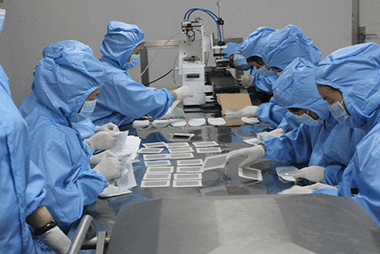

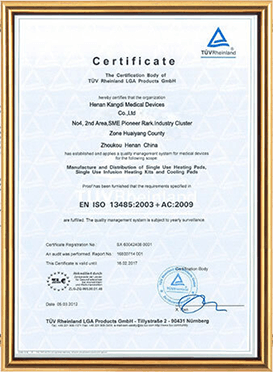
Henan Kongdy Medical Devices Co., LTD. (KONGDY) was founded in 1989 and has 37 years of production experience as of 2026 in pain relief patches, slimming patches, capsicum plasters, heat patches, cooling gel patches, detox foot patches, steam eye masks, mosquito repellent patches, and nose strips. Headquartered in Henan, China, KONGDY operates a 100,000-class GMP workshop (built 2008) and obtained ISO 13485 medical device Quality Management System European Standard Certification in 2014. The company runs OEM and ODM services for international brands across multiple regulatory pathways. For 2026 procurement evaluation, our qualification team can provide ISO 13485 certificate, GMP workshop audit reports, and reference customer case studies upon request via our contact page.


