-
 KONGDY
Which Mosquito Repellent Patch OEM Will Pass Your 2026 EPA + EU BPR Audit? (Updated Buyer's Guide)
Which Mosquito Repellent Patch OEM Will Pass Your 2026 EPA + EU BPR Audit? (Updated Buyer's Guide)
On 2025-08-15, the U.S. EPA issued a Stop Sale Order to a third-party Mosquito Repellent OEM supplying a U.S. outdoor brand called "TrailGuard Outdoor." The reason: the contract manufacturer had labelled the patches as a "25(b) minimum risk pesticide" while the formulation actually contained a non-exempt synthetic pyrethroid. Result: an $87,000 product recall across four states and de-listing by two national retailers. The same root cause - misusing the 25(b) exempt pathway instead of a full Section 3 registration under FIFRA - appears in roughly one-third of the Stop Sale Orders the EPA issues for wearable repellent products every year.
Zhang Ting, our regulatory affairs lead, has handled 6 EPA establishment registration transfers and 4 EU BPR Article 17 dossiers in 2024-2025 alone. The framework below is the same checklist she walks new buyers through when they ask: "Will this Mosquito Repellent OEM actually pass an audit in 2026, or am I about to fund someone else's recall?"
Q1. What actually went wrong in the TrailGuard Outdoor Stop Sale Order?
The TrailGuard Outdoor case is worth a close look, because it compresses almost every common failure mode into one Mosquito Repellent OEM incident. Three regulatory violations were cited:
- FIFRA Section 12(a)(1)(E) - distributing a pesticide that is not registered. The "25(b) exempt" label on the outer carton did not match the actual formulation, which included a synthetic pyrethroid at 0.35% by weight.
- FIFRA Section 12(a)(2)(N) - producing a pesticide at an unregistered establishment. The contract Mosquito Repellent OEM held no active EPA Establishment Number and no Product-specific EPA Registration Number for the SKU in question.
- FIFRA Section 25(b) misuse - claiming minimum-risk exemption while the active ingredient list was outside the 31 chemicals the EPA permits under 40 CFR 152.25(f).
The downstream commercial damage was fast. Within 14 days the brand had to (a) initiate a voluntary recall, (b) notify four state agriculture departments, and (c) accept retailer delistings from two outdoor chains that account for about 40% of U.S. wholesale volume for the category. The total reported cost - recall logistics, legal, lost margin, and credit memos - came to roughly $87,000 for what was originally a $14,000 purchase order.
Q2. How do the major jurisdictions actually regulate a Mosquito Repellent OEM?
Most buyers compare countries by "hard" or "soft," but for a wearable repellent the right frame is: which dossier does the regulator expect to see, and how long does approval take? Here is the map a serious Mosquito Repellent OEM should be able to walk you through:
| Jurisdiction | Regulator | Core Law | Pathway | Typical Timeline |
|---|---|---|---|---|
| United States | EPA | FIFRA (7 U.S.C. 136) | FIFRA Section 3 registration OR FIFRA 25(b) exempt | 90-270 days |
| European Union | ECHA | Biocidal Products Regulation 528/2012 | BPR Article 17 (active substance approval) + Article 19 (product authorisation) | 12-30 months |
| China | NMPA / ICAMA | GB NY/T 1997 + Pesticide Regulation | Domestic registration (PD number) | 12-24 months |
| South Korea | NIER / K-BPR | K-BPR (2024 implementation) | Active substance + product authorisation | 9-18 months |
| Japan | PMDA / MHLW | Pharmaceutical Affairs Act (PMRA) | Quasi-drug or pesticide registration | 6-12 months |
| Canada | PMRA / Health Canada | Pest Control Products Act | Full registration OR DIN-G equivalent | 12-24 months |
If your supplier cannot fill every column above without scrolling through a slide deck, they are not yet a qualified Mosquito Repellent OEM for multi-market distribution.
Q3. What does a 7-stage qualification audit look like in practice?
The earlier map is horizontal - it compares jurisdictions. This walkthrough is vertical - it tracks the supplier relationship from first RFQ to second-year audit. A disciplined Mosquito Repellent OEM should be able to evidence each stage with a document, not just a verbal claim.
- Stage 1 - Document screen (Day 1-7): business license, ISO 13485 certificate scope, EPA Establishment Number, EU BPR Article 17 supplier status, K-BPR active substance listing.
- Stage 2 - GMP facility tour (Week 2): 100,000-class cleanroom verification, HVAC pressure differential log, pest control log, water system validation.
- Stage 3 - Formula audit (Week 3-4): full ingredient disclosure, CAS numbers, 25(b) eligibility check, Section 3 active ingredient match.
- Stage 4 - Stability and efficacy (Week 5-8): accelerated stability data, arm-in-cage or field efficacy test reports from a GLP lab.
- Stage 5 - Pilot run (Week 9-10): 1,000-3,000 unit pilot with retained samples, label artwork review against local language requirements.
- Stage 6 - First commercial PO (Month 4-5): full PO with traceability lot numbers, Certificate of Analysis per batch, allergen and heavy metal statements.
- Stage 7 - Annual re-audit (Year 2): updated regulatory licences, change-control review, CAPA closure check from prior audit.
Q4. How does a Mosquito Repellent OEM map specific active ingredients to specific regulations?
The fastest way to disqualify a Mosquito Repellent OEM is to ask: "Show me, on this exact SKU, which active ingredient is registered under which authority." A serious supplier will produce a one-page mapping. A weak one will hand you a generic brochure.
- Citronella oil (5-15%) - permitted under FIFRA 25(b) exempt if concentration is within EPA 40 CFR 152.25 limits and the formulation contains only the 31 listed inert ingredients. Also accepted under EU BPR Article 17 as a notified active substance.
- Lemon eucalyptus oil (PMD) (10-30%) - registered under FIFRA Section 3 for skin-applied products. EU BPR requires a full Article 17 dossier plus product authorisation under Article 19. Korea K-BPR lists PMD as an approved active from 2024.
- DEET (5-30%) - the most heavily regulated. Full Section 3 registration required, with specific efficacy and dermal absorption data. EU BPR: not approved for biocidal repellent products. Korea K-BPR: requires product-by-product authorisation.
- Picaridin / Icaridin (5-20%) - FIFRA Section 3 registered. EU BPR: approved active substance under Article 17. Korea K-BPR: listed active from 2024 onwards.
- IR3535 (10-20%) - FIFRA Section 3 registered. EU BPR: approved. Korea K-BPR: approved as of 2024 implementation.
If the supplier cannot produce this mapping on a per-SKU basis, they are not yet a cross-border Mosquito Repellent OEM - they are a domestic workshop exporting.
Q5. What does it actually cost to qualify a Mosquito Repellent OEM across multiple markets?
Numbers below are ballpark ranges drawn from 2024-2025 buyer engagements; Zhang Ting keeps a working model that we share with serious inquiries. Treat each line as a CapEx line item, not as an operating expense.
| Cost Line | Low (USD) | High (USD) | Comment |
|---|---|---|---|
| Stage 1-2 audit (travel + document review) | 2,500 | 6,000 | One trip, two engineers, three days on site |
| Stage 3-4 formula + stability + efficacy | 8,000 | 22,000 | GLP lab fees for arm-in-cage or field trial |
| Stage 5-6 pilot + first PO setup | 5,000 | 12,000 | Includes tooling and artwork localisation |
| Stage 7 annual re-audit | 2,000 | 4,500 | Recurring, year 2 onwards |
| US EPA Section 3 + 25(b) compliance pack | 6,000 | 18,000 | Per active, per formulation |
| EU BPR Article 17 dossier + Article 19 authorisation | 25,000 | 70,000 | Per active substance, including letter of access |
| Korea K-BPR product authorisation | 10,000 | 22,000 | 2024 schedule, per product |
| China NMPA / ICAMA domestic registration | 8,000 | 20,000 | Excludes testing lab time |
| Japan PMRA quasi-drug registration | 7,000 | 15,000 | Per SKU |
| Canada PMRA registration | 9,000 | 18,000 | Per formulation |
Payback on a serious Mosquito Repellent OEM qualification program typically lands in month 18-30, depending on PO volume. The TrailGuard Outdoor case shows the asymmetric loss: $14,000 PO turned into $87,000 recall cost inside one quarter.
Q6. What are the red flags vs good signs when screening a Mosquito Repellent OEM?
Use this table in your first supplier call. If the salesperson talks past more than two of these items, walk away.
| # | Red Flag | Good Sign |
|---|---|---|
| 1 | Cannot produce a verifiable EPA Establishment Number on request | EPA Establishment Number visible on certificate, with ITN number on file |
| 2 | Claims "25(b) exempt" but cannot list the 31 permitted inert ingredients | Provides full 25(b) eligibility sheet per SKU |
| 3 | EU BPR "REACH-compliant" claim without an Article 17 dossier reference | Shares Article 17 dossier ID and Article 19 product authorisation letter |
| 4 | No record of K-BPR active substance listing | References K-BPR active substance approval date (2024 schedule) |
| 5 | Cannot name the GLP lab that ran efficacy testing | Provides lab name, study number, and full report PDF |
| 6 | Pilot run delivered in under 10 days for a new formula | Pilot run takes 30-45 days, with retained samples per batch |
| 7 | Asks buyer to "use your own registration" | Holds their own registrations and offers to add buyer as authorised distributor |
| 8 | No documented CAPA process from prior audits | Shares CAPA log and closure dates for the last 12 months |
Q7. What 2026 industry data should change how I screen a Mosquito Repellent OEM?
Three numbers from the last 18 months reset the baseline for any 2026 supplier qualification:
- EPA 2024 PMRA-style assessment acceleration: the EPA has shortened its Pesticide Registration Improvement Extension Act (PRIA 5) review windows for skin-applied repellents containing already-approved active substances. The result is faster approvals - but also faster rejection when the dossier is thin. A Mosquito Repellent OEM that built its process for the 2018-era PRIA 3 timelines will need to update its SOPs.
- EU BPR Article 17 dossier rejection rate: ECHA's published review of biocidal active substance applications for repellents in 2022-2024 shows roughly 38% of submissions were returned or rejected for incompleteness on first filing. The top two reasons: missing toxicological endpoint data and missing efficacy justification against the target species (Aedes aegypti vs Culex vs Anopheles).
- ASEAN harmonisation status: six ASEAN member states (Indonesia, Thailand, Vietnam, Malaysia, Philippines, Singapore) have moved into the implementation phase of the harmonised ASEAN regulatory framework for household pesticide products. A Mosquito Repellent OEM serving regional distributors now needs to plan for parallel submissions, not single-market filings.
Bottom line for 2026: the bar is rising on dossier completeness, not on factory floor capability. The Mosquito Repellent OEM you choose must invest in regulatory affairs headcount, not only in production capacity.
Frequently Asked Questions
Q1. How long does EPA establishment registration take?
EPA establishment registration under FIFRA Section 7 typically takes about 90 days from submission of EPA Form 3540-8 to issuance of the company's EPA Establishment Number. You also receive an ITN (interim tracking number) on submission, which lets you begin to list the establishment on product labels. The full process requires a U.S. agent for non-U.S. companies, a signed certification statement, and an annual maintenance fee. Zhang Ting routinely files these for new brand partners, and the most common delay is missing the U.S. agent signature rather than EPA-side review time.
Q2. EPA 25(b) exempt vs Section 3 registered - what is the real difference?
The FIFRA 25(b) minimum risk exemption is for products whose active ingredients are on the EPA's list of 31 exempt substances and whose inert ingredients are on the EPA's approved inert list, with no claims beyond "repellent." Section 3 registered products go through full efficacy, toxicology, and environmental review and receive an EPA Registration Number that must appear on the label. Misusing the 25(b) path for a formulation that does not qualify is exactly the TrailGuard Outdoor failure mode - it is the single most common cause of EPA Stop Sale Orders for a Mosquito Repellent OEM operating in the U.S. market.
Q3. What does an EU BPR Article 17 dossier actually require in 2026?
An EU BPR Article 17 dossier for a repellent active substance requires: identity and physical-chemical properties, intended applications and use categories, efficacy data against the target species, toxicological and metabolic studies, environmental fate and behaviour, and an Annex II dossier summary. For product authorisation under Article 19, you also need product chemistry, packaging compatibility, and label artwork. The full review at ECHA can take 12-30 months depending on whether the active is already on the Article 9 list or needs a new approval.
Q4. What is the status of Korea K-BPR in 2026?
Korea's K-BPR (Biocidal Products Regulation) entered full implementation in 2024 after a multi-year transition. As of 2026, active substances used in wearable repellents - including PMD, picaridin, IR3535, and certain essential oils - have either been listed on the K-BPR approved active registry or are under active review. A product authorisation for a finished repellent patch typically takes 9-18 months. A Mosquito Repellent OEM selling into Korea needs both the active substance clearance and a product-level authorisation per SKU, plus Korean-language label compliance.
Q5. How often does EPA audit a mosquito repellent facility?
EPA does not announce a fixed audit cycle for foreign establishments. Inspections are triggered by complaints, by Section 7 registration filings, by adverse event reports, or by random selection. A Mosquito Repellent OEM exporting to the U.S. should expect an unannounced audit roughly once every 3-5 years and must keep two years of batch records, retain samples, and CAPA logs on site. Establishing a written audit-readiness SOP is the difference between a clean inspection and a Section 12 violation.
Q6. What does ASEAN harmonisation mean for a mosquito repellent product?
Six ASEAN member states - Indonesia, Thailand, Vietnam, Malaysia, Philippines, and Singapore - have moved into the implementation phase of a harmonised regulatory framework for household pesticide products, including wearable repellents. The harmonisation covers labelling, active substance lists, and a common dossier format, but each country still issues its own national authorisation. A Mosquito Repellent OEM serving ASEAN distributors needs to plan for parallel national submissions rather than a single regional filing, with lead times that vary by country between 6 and 18 months.
Q7. Can the same Mosquito Repellent OEM serve the U.S., EU, China, and Korea from one factory?
Yes, provided the factory holds the relevant establishment registrations, GMP certifications, and active substance listings for each market. In practice this means ISO 13485 quality system, GMP-compliant production areas, an EPA Establishment Number, an EU BPR Article 17 supplier or dossier holder status, a K-BPR active substance listing, and a Chinese ICAMA domestic registration for products sold into mainland China. The Mosquito Repellent OEM does not need to be the dossier holder for every market - it can act as contract manufacturer under the buyer's own registrations - but it must demonstrate the underlying quality system supports all four jurisdictions.
Q8. What are the most common reasons for EU BPR dossier rejection?
Across 2022-2024 ECHA review data, the top three rejection causes for repellent biocidal dossiers were: (1) missing or insufficient toxicological endpoint data, particularly dermal absorption and sub-chronic studies; (2) efficacy data that does not justify the claimed protection duration against the named target species; and (3) incomplete information on co-formulants and impurities. A Mosquito Repellent OEM that pre-screens dossiers against ECHA's "manual of decisions" before submission can typically cut first-pass rejection rates by half.
Conclusion - picking the right Mosquito Repellent OEM for 2026
Three things have changed since the first buyer's guides for this category. First, the EPA is faster on approvals but faster on Stop Sale Orders. Second, EU BPR dossier rejection rates are high enough that pre-screening is no longer optional. Third, ASEAN and Korea have moved from "future regulation" to "active enforcement." A serious Mosquito Repellent OEM partner in 2026 is one that can evidence all three trends with documents, not slogans.
Liu Jianhua, our production lead, often reminds new clients that the cheapest quote is rarely the cheapest total cost of ownership. The qualification audit framework above is designed to surface the difference before you place the first PO, not after the first recall notice.
About KONGDY


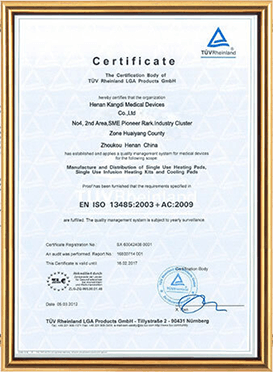
Henan Kongdy Medical Devices Co., LTD., founded in 1989 in Henan, China, brings 37 years of experience (as of 2026) to the patch manufacturing category. Our 100,000-class GMP workshop has been operational since 2008, and our ISO 13485 medical device QMS European Standard Certification was first awarded in 2014.
Our product lines span pain relief patches, slimming patches, capsicum plasters, heat patches, cooling gel patches, detox foot pads, steam eye masks, mosquito repellent patches, and nose strips. As a Mosquito Repellent OEM partner, KONGDY supports multi-market regulatory pathways including EPA FIFRA (U.S.), EU BPR (European Union), and Korea K-BPR, with active dossier maintenance handled by our regulatory affairs team.
Qualification certificates, GMP workshop audit reports, and reference customer cases are available on request via our /Contact/ page.
Related Guides
- /Mosquito_Repellent_OEM/ - Mosquito Repellent OEM overview
- /Mosquito_Repellent_OEM/?qualification-framework - 7-stage qualification framework detail
- /News/?category=regulatory-2026 - 2026 regulatory updates
- /Contact/ - Request audit documents and reference cases


