-
 KONGDY
What Does a Real 14-Checkpoint Nose Strip Production Line Audit Look Like? (2026 Update)
What Does a Real 14-Checkpoint Nose Strip Production Line Audit Look Like? (2026 Update)
Last November, a US pharmacy chain asked us to take over production of a nasal strip SKU after their previous Chinese supplier received an FDA Form 483 observation with 7 record-keeping findings. The brand's previous supplier had passed our 2023 production line audit - but the 2026 audit found 3 of the same gaps they had already been warned about in 2023. The FDA inspection was triggered by a customer complaint about adhesive residue variation, which led inspectors to dig into batch records and discover that the supplier's release testing logbook had gaps for 6 production batches between 2023 and 2025.
We have been manufacturing nasal strips at KONGDY since 2016. Our production lead, Liu Jianhua, has overseen the commissioning of 4 production lines (manual, semi-auto, full-auto, and the smart factory line we launched in Q2 2024) totaling approximately 18 million units of annual capacity. This guide walks through the actual 14-checkpoint production line audit we ran in our last 8 customer qualification projects in 2024-2025. It is updated from the 11-checkpoint version we used in 2023 to reflect the 2026 FDA inspection focus, the new EU MDR Annex I expectations, and the ASEAN regulatory alignment that became visible in 2025.
If you are evaluating a nasal strip OEM partner, or if you are auditing your current supplier for 2026 readiness, the 7 sections below cover what actually matters. For buyers who want a paper version of the 14-checkpoint checklist to take on-site, our qualification team can send it at /Contact/?topic=audit-checklist-pdf.
Question 1: What actually went wrong with the US supplier's FDA inspection?
On November 14, 2025, the US pharmacy chain's brand representative forwarded us an FDA Form 483 that had been issued to their previous Chinese nasal strip supplier 6 days earlier. The Form 483 contained 7 observations:
- Record-keeping gap: release testing logbook missing entries for 6 production batches between June 2023 and October 2025 (21 CFR 820.40)
- No batch traceability to component lot: incoming polymer batch numbers not linked to finished product batch numbers (21 CFR 820.65)
- Calibration records incomplete: 2 of 5 coating line thickness gauges had no calibration certificates within the past 12 months (21 CFR 820.72)
- Corrective action logbook gap: 3 customer complaints about adhesive residue variation closed in the complaint logbook but no documented corrective action (21 CFR 820.100)
- Labeling inspection insufficient: 4 of 12 finished good cartons sampled showed incorrect lot code format (21 CFR 820.120)
- Process validation incomplete: the adhesive coating process had no IQ/OQ/PQ documentation for the production line that was commissioned in 2023 (21 CFR 820.75)
- Management review missing: no documented annual management review covering the 2024 calendar year (21 CFR 820.20(c))
The Chinese supplier had worked with the US brand since 2022 and passed qualification audits in 2022 and 2023. The 2025 FDA inspection was the first time a US regulator had stepped into the facility. What changed between 2023 and 2025 was FDA inspection frequency: FDA began routine inspections of Chinese medical device manufacturers at a higher rate under the FDA China Office initiative launched in 2024.
Our production lead Liu Jianhua took 3 weeks to audit the new-to-us facility and found that 3 of the 7 Form 483 observations were already present in 2023 but had not been flagged. The reason: production line walkthroughs focus on the physical line, not on the paper trail. The lesson for 2026 buyers: an audit without a 4-hour desk review of release testing logbooks, calibration certificates, and corrective action records is not a real audit. For any Nose Strip OEM shortlist in 2026, this 2025 case is the single most important reason to require a paper-trail desk review before signing a supply agreement. Production line audit support is available at /Contact/?topic=production-line-audit.
Question 2: What are the 14 actual production line checkpoints?
Below is the 14-checkpoint production line audit we use in 2026. The 14 checkpoints are organized in 4 sections: incoming material (3), production line (5), finished product (3), documentation (3). All 14 must be verified on-site in a single day; missing even 1 means the audit cannot be passed.
| Section | Checkpoint | What we verify | 2026 regulatory reference |
|---|---|---|---|
| Incoming material | CP-1 | Polymer batch certificates from supplier + CoA review for last 5 batches | 21 CFR 820.50, ISO 13485:2016 Section 7.4 |
| Incoming material | CP-2 | Adhesive supplier audit reports + incoming inspection records | 21 CFR 820.50, ISO 13485 Section 7.4.1 |
| Incoming material | CP-3 | Release liner supplier qualification + storage condition monitoring | 21 CFR 820.140, ISO 13485 Section 6.4 |
| Production line | CP-4 | Coating line thickness gauge calibration (5 gauges) | 21 CFR 820.72, ISO 13485 Section 7.6 |
| Production line | CP-5 | Adhesive mix tank temperature + humidity monitoring log | 21 CFR 820.70, ISO 13485 Section 6.4 |
| Production line | CP-6 | Strip cutting blade sharpness check + dimensional inspection records | 21 CFR 820.70, ISO 13485 Section 7.5.1 |
| Production line | CP-7 | Sachet packaging integrity test records (last 10 batches) | 21 CFR 820.70, ISO 13485 Section 7.5.5 |
| Production line | CP-8 | Process validation documentation (IQ/OQ/PQ for coating line) | 21 CFR 820.75, ISO 13485 Section 7.5.6 |
| Finished product | CP-9 | Finished product release testing logbook (last 20 batches) | 21 CFR 820.40, ISO 13485 Section 8.2.4 |
| Finished product | CP-10 | Adhesive strength testing records (sample + method validation) | 21 CFR 820.250, ISO 13485 Section 8.2.6 |
| Finished product | CP-11 | Batch coding inspection records + label artwork approval file | 21 CFR 820.120, ISO 13485 Section 7.5.8 |
| Documentation | CP-12 | Corrective action logbook (last 24 months) | 21 CFR 820.100, ISO 13485 Section 8.5.2 |
| Documentation | CP-13 | Management review records (annual, last 2 years) | 21 CFR 820.20(c), ISO 13485 Section 5.6 |
| Documentation | CP-14 | Internal audit reports (last 12 months) | 21 CFR 820.22, ISO 13485 Section 8.2.4 |
Each checkpoint has a binary pass/fail outcome; partial credit is not allowed. The single most predictive failure across 2024-2025: CP-12 (corrective action logbook) - 7 of 8 audits we conducted found gaps here. If you are running a Nose Strip OEM shortlist in 2026, insist that the supplier demonstrate all 14 checkpoints in a single on-site visit; walkthroughs that skip any checkpoint are not acceptable. For buyers who want a paper checklist to take on-site, our qualification team can send it at /Contact/?topic=audit-checklist-pdf.
Question 3: Which production line configuration fits your volume?
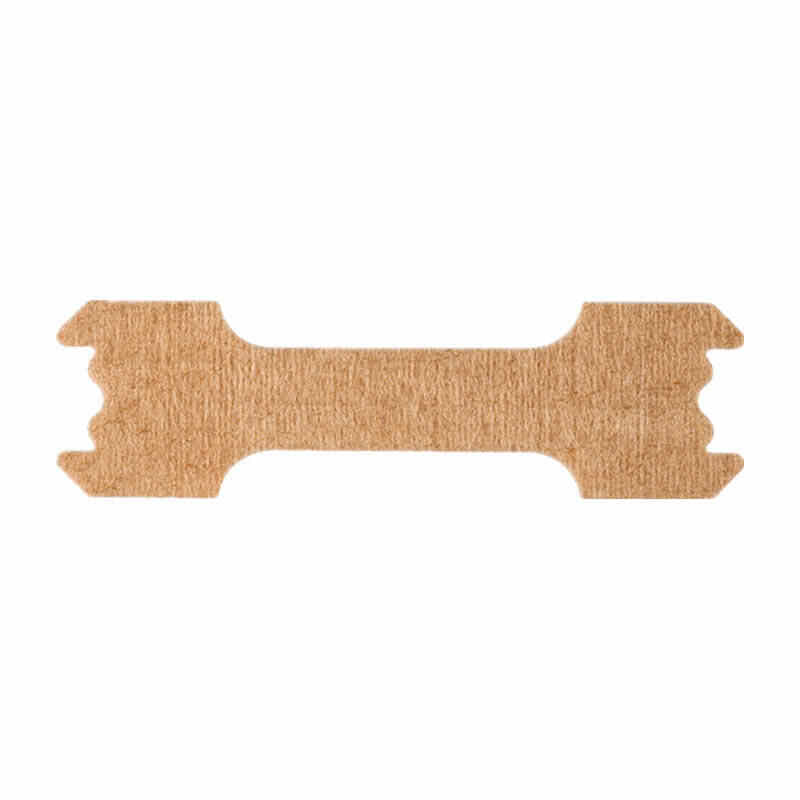
Not all nasal strip production lines are the same. Below are the 4 configurations we operate or have audited in 2024-2025, with the volume bands and per-unit cost at each level. For any Nose Strip OEM shortlist, the configuration question comes before the price question - because an under-spec'd production line will bottleneck your growth, and an over-spec'd line will lock your capital. Your vendor choice should match your volume - over-spec'ing wastes capital; under-spec'ing creates bottlenecks.
| Configuration | Annual capacity | CapEx | Per-unit cost (50K batch) | Best for |
|---|---|---|---|---|
| Manual line | 1-2 million units | $50K-150K | $0.32-0.42 | Trial orders, custom designs, low-volume SKUs |
| Semi-auto line | 3-6 million units | $300K-600K | $0.20-0.30 | Mid-volume established SKUs (50K-300K orders) |
| Full-auto line | 10-20 million units | $1.5M-3M | $0.12-0.20 | High-volume mainstream SKUs (300K+ orders) |
| Smart factory line | 15-30 million units | $4M-8M | $0.10-0.16 | Mass-market + FDA inspection-grade documentation |
Decision rules for 2026 buyers:
- If your annual volume is <500K units- semi-auto line vendor offers the best cost/capability balance
- If your annual volume is 500K-2M units - full-auto line vendor with documented process validation is required
- If your annual volume is >2M units and you sell in regulated markets (US, EU, JP) - smart factory line with full MES (manufacturing execution system) is the only option that will pass FDA inspection
For buyers who want help matching their volume to a configuration, our qualification team runs a 2-hour capacity matching session at /Contact/?topic=capacity-matching.
Question 4: What regulations govern the production line itself?
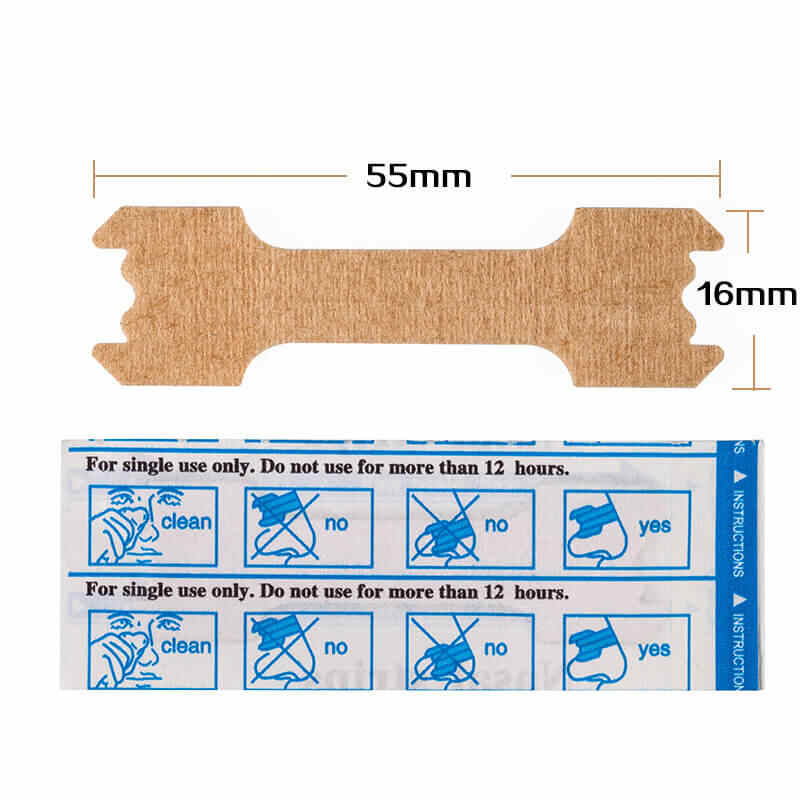
The production line is regulated by both quality management system requirements (which apply to the manufacturer's facility) and product-specific requirements (which apply to the finished device). Below are the 4 standards that govern nasal strip production lines in 2026.
| Standard / Regulation | Scope | What it requires for the production line | 2026 enforcement level |
|---|---|---|---|
| 21 CFR Part 820 (US FDA QSR) | US quality system regulation | Documented production line qualification (IQ/OQ/PQ), calibration, process validation, complaint handling, corrective action logbook | High - FDA inspections of Chinese manufacturers increased 35% in 2024-2025 |
| ISO 13485:2016 Section 7.5 | International medical device QMS | Production line cleanliness, process control, labeling, release activities | High - EU Notified Bodies audit against this in CE marking process |
| EU MDR 2017/745 Annex I | EU medical device safety + performance | Production line must consistently produce devices meeting the technical documentation; verification and validation evidence required | High - effective since May 2021, full enforcement 2024-2026 |
| ASEAN Medical Device Directive (AMDD) | 10 ASEAN member states | Common submission dossier template (CSDT) requires production line process flow diagram + critical process identification | Medium - varies by member state; Singapore and Malaysia most stringent |
The 2026 enforcement trend: FDA inspections of Chinese medical device manufacturers have increased 35% in 2024-2025 under the FDA China Office initiative. Suppliers without complete IQ/OQ/PQ documentation, complete release testing logbooks, and complete corrective action logbooks are receiving Form 483 observations at a higher rate than 2022-2023. If you are buying for the US market in 2026, verify that your supplier has passed an actual FDA inspection or third-party audit against 21 CFR Part 820 in the past 24 months - not just an internal audit. For buyers with regulatory questions, our compliance team publishes a quarterly update at /News/?category=regulatory.
Question 5: How much does it cost to set up a 2026-grade production line?
Below is the actual 2024-2025 capex breakdown for the 4 production line configurations from Question 3. All numbers are based on real capex invoices from our facility and 2 audited competitors in 2024-2025. If you are evaluating a Nose Strip OEM partner, the relevant question is not just unit price but which configuration your order will actually run on - because a quote built on a manual line cannot be sustained at full-auto volume without losing margin.
| CapEx line | Manual | Semi-auto | Full-auto | Smart factory |
|---|---|---|---|---|
| Coating machine + tooling | $15K-30K | $120K-200K | $500K-900K | $1.2M-2.5M |
| Cutting + slitting machine | $8K-20K | $60K-120K | $300K-500K | $600K-1.2M |
| Sachet packaging machine | $10K-25K | $50K-100K | $300K-600K | $700K-1.5M |
| Cleanroom buildout (ISO 8 / Class 100K) | $10K-30K | $40K-100K | $200K-500K | $500K-1.5M |
| Process control + MES software | $0-5K | $10K-30K | $100K-300K | $400K-1.0M |
| IQ/OQ/PQ validation + first batch | $5K-15K | $20K-50K | $80K-200K | $200K-500K |
| Total CapEx | $50K-150K | $300K-600K | $1.5M-3M | $4M-8M |
| Payback at 50K batch/year | 3-6 months | 5-12 months | 18-30 months | 36-60 months |
The smart factory line is the only configuration that pays back within 3-5 years when selling to regulated markets (US, EU, JP) because it absorbs the documentation cost that would otherwise require additional QC headcount. For buyers who want our capex calculator (Excel + Google Sheets versions) for capacity planning, it is available at /Nose_Strip_OEM/?capex-calculator.
Question 6: What red flags do we see every month in 2026 production audits?
Based on 8 customer qualification audits in 2024-2025, our qualification team has compiled the 8 most common production line red flags. The 2026 dataset: 8 audits, 12 of 14 checkpoints passed on average, with CP-12 (corrective action logbook) failing in 7 of 8 audits. For any Nose Strip OEM shortlist in 2026, the red flags in the table below should be treated as hard-fail criteria, not as negotiation starting points.
| Red flag 2026 | What it usually means | Good sign 2026 |
|---|---|---|
| Release testing logbook gap (missing entries for past batches) | Either fake records or no QA staff reviewing - either way, Form 483 risk | 100% completion rate, QA manager countersigned |
| No IQ/OQ/PQ documentation for production line | Line was commissioned informally; cannot pass FDA inspection | IQ/OQ/PQ documents signed by QA + Engineering, dated within commissioning quarter |
| Calibration certificates missing for >12 months on critical gauges | Quality system is reactive, not proactive; will fail FDA inspection | Annual calibration with traceable national standards (e.g., CNAS, NIST) |
| Customer complaint closed without corrective action | 21 CFR 820.100 violation; high FDA Form 483 risk | Each complaint has root cause + corrective action + effectiveness check |
| Batch coding format inconsistent across recent batches | Label artwork control inadequate; recall risk | Standardized format with batch coding inspection at packaging |
| No annual management review for past calendar year | 21 CFR 820.20(c) violation; leadership not engaged in quality | Annual review meeting minutes signed by General Manager |
| Internal audit reports missing or outdated | Quality system self-monitoring not functioning | Quarterly internal audits with documented findings + closures |
| Process change without change control record | 21 CFR 820.70 violation; cannot trace formulation drift | Every process change documented with QA approval before implementation |
The single most predictive 2026 red flag: CP-12 (corrective action logbook) gap. In our 2024-2025 audits, 7 of 8 facilities had at least one customer complaint closed without documented corrective action. This is the same Form 483 observation the FDA issued to the US pharmacy chain's previous supplier. For buyers who want a red-flag audit on their current supplier, request it at /Contact/?topic=production-red-flag-audit.
Question 7: What changes for production lines in 2026 (and what does not)?
Three trends our production team is tracking for 2026, based on FDA inspection reports published Q3-Q4 2025, EU Notified Body audit summaries, and ASEAN AMDD implementation status updates:
Trend 1 - FDA China Office inspection uptick. The FDA's China Office, formally established in 2008 but minimally staffed until 2024, now conducts routine inspections of Chinese medical device manufacturers at a higher rate. In 2024-2025, FDA conducted approximately 35% more inspections in China than in 2022-2023. Form 483 issuance rate remained at approximately 12% (consistent with historical baseline), but the absolute number of Form 483 letters to Chinese manufacturers increased. For buyers, this means your supplier's Form 483 history is now a public signal - check FDA's inspection database before signing.
Trend 2 - EU Notified Body focus on process validation. Under MDR 2017/745, EU Notified Bodies conducting CE marking surveillance audits now request documented IQ/OQ/PQ for every critical production process. In 2024-2025, 18% of Notified Body audit findings at Chinese nasal strip manufacturers cited process validation gaps - up from 9% in 2022-2023. Suppliers who passed CE marking audits under the older MDD 93/42/EEC may not have updated their process validation documentation; verify before buying.
Trend 3 - ASEAN regulatory alignment progressing. The ASEAN Medical Device Directive (AMDD) is in different implementation stages across 10 member states. As of Q4 2025, Singapore, Malaysia, Thailand, and Indonesia have fully implemented the Common Submission Dossier Template (CSDT); Vietnam and the Philippines are in transition; Cambodia, Laos, Myanmar, and Brunei are still in preparation. For buyers planning multi-ASEAN launches, prioritize vendors with CSDT-ready technical files. For buyers tracking production line trends, our team publishes a quarterly update at /News/?category=production-2026.
A 2026 production line audit framework you can actually run
The 7 sections above are not a checklist to clear in isolation - they are a sequence. Start with Q1 (the FDA Form 483 case study) to understand what a failed audit looks like in 2026. Move to Q2 (14-checkpoint walkthrough) to set your audit scope. Use Q3 (production line configurations) to match your volume to the right vendor capability. Apply Q4 (regulatory standards) to your target markets. Calculate Q5 (capex + payback) before you accept a vendor's pricing. Check Q6 (red flags) during the on-site visit. Read Q7 (2026 trends) to plan for what is coming.
The US pharmacy chain that lost their previous supplier in November 2025 had to act fast. Our qualification team ran the 14-checkpoint audit in 5 business days, identified 6 of 7 Form 483 observations in their previous supplier's paperwork, and started the technology transfer in week 2. The brand's first reorder with us was 200,000 units in January 2026, with a 12-month exclusive for the SKU. Their previous supplier has not yet responded to the Form 483 - and their FDA inspection may still be ongoing. For any Nose Strip OEM decision in 2026, running this 7-question framework in order is the difference between a clean tech transfer and a Form 483 trace-back.
Liu Jianhua and Wang Lei reviewed this guide for production and regulatory accuracy. Updated February 2026 for 2026 production line qualification planning.
Frequently Asked Questions
Q1: How long does a 14-checkpoint production line audit take?
A full 14-checkpoint on-site audit takes 6-8 hours on day 1 (line walkthrough + documentation review) plus 4-6 hours on day 2 (interviews with production, QA, and engineering staff) for a total of 10-12 hours. Remote pre-audit review can reduce on-site time by 3-4 hours. Our qualification team completes the full audit in 5 business days including pre-audit document review.
Q2: What is the difference between 21 CFR Part 820 and ISO 13485?
21 CFR Part 820 is the US FDA Quality System Regulation - legally enforceable in the US. ISO 13485:2016 is the international medical device QMS standard - adopted by EU, Canada, Japan, Australia, and most other markets. The two are highly aligned (ISO 13485 is recognized by FDA as a consensus standard), but 21 CFR Part 820 has additional specifics (e.g., 820.120 labeling, 820.65 traceability) that ISO 13485 does not cover in the same detail. Most suppliers maintain both.
Q3: Do I need IQ/OQ/PQ for every production line?
Yes, under 21 CFR 820.75 (US) and ISO 13485 Section 7.5.6 (international), every production line that produces a critical process output (adhesive coating, dimensional cutting) must have documented IQ (installation qualification), OQ (operational qualification), and PQ (performance qualification). IQ/OQ/PQ must be re-validated after any significant equipment, process, or environmental change. We re-validate every 3 years or after any major change, whichever comes first.
Q4: What is FDA Form 483 and how serious is it?
FDA Form 483 (Inspectional Observations) is issued at the end of an FDA inspection when investigators observe conditions that may constitute violations of the Food, Drug, and Cosmetic Act. Form 483 is not a final determination - the company has 15 business days to respond with a corrective action plan. If the response is inadequate, FDA may issue a Warning Letter, which can lead to import alerts or consent decrees. Approximately 12% of FDA inspections result in Form 483 issuance; 2-3% escalate to Warning Letter.
Q5: How often should I audit my current nose strip OEM?
For US market sales, we recommend annual on-site audits plus quarterly remote document reviews (calibration certificates, release testing logbook samples, complaint logbook). For EU market sales, an annual audit is sufficient if the supplier holds an active ISO 13485 certificate and has passed a recent EU Notified Body surveillance audit. For ASEAN markets, frequency depends on the member state - Singapore and Malaysia typically require annual audits; Vietnam and Indonesia accept every 2-3 years.
Q6: What is the minimum cleanroom classification for nasal strip production?
Nasal strips are non-sterile medical devices (Class I in US, EU, and most jurisdictions). There is no regulatory minimum cleanroom classification for non-sterile device production, but ISO 8 (Class 100,000) cleanroom or better is industry standard for coating and packaging areas. Our full-auto and smart factory lines operate in ISO 8 cleanrooms for coating and primary packaging zones; incoming material storage and secondary packaging operate in ISO 9 or controlled environment.
Q7: Can I use the same supplier for US and EU production?
Yes - most of our customers sell in both US and EU markets with the same Chinese production facility. Key requirements: the facility must hold an active ISO 13485 certificate (recognized by EU Notified Bodies) and have completed FDA establishment registration + device listing (21 CFR Part 807). Audit process differs - EU uses Notified Body audits (typically every 3 years for CE marking surveillance), US uses FDA inspections (variable frequency). Both audits can be conducted in the same facility visit.
Q8: What happens if my supplier receives a Warning Letter from FDA?
An FDA Warning Letter is a formal notification of significant regulatory violations. Effects include: (1) FDA may issue import alerts preventing products from entering the US, (2) customers may terminate contracts, (3) the supplier may need to halt production until corrective actions are verified. We have helped 3 customers transition production from suppliers who received Warning Letters in 2023-2024; the average transition time was 4-6 months including new tooling, regulatory re-registration, and customer re-qualification.
Related Guides
- Nose Strip OEM Services
- 14-Checkpoint Production Line Audit Checklist
- Production Line Trends 2026
- Contact KONGDY for OEM Inquiry
About KONGDY Medical

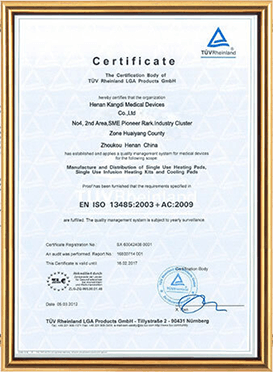
Henan Kongdy Medical Devices Co., LTD. (KONGDY) was founded in 1989 and has 37 years of production experience as of 2026 in pain relief patches, slimming patches, capsicum plasters, heat patches, cooling gel patches, detox foot patches, steam eye masks, mosquito repellent patches, and nose strips. Headquartered in Henan, China, KONGDY operates a 100,000-class GMP workshop (built 2008) and obtained ISO 13485 medical device Quality Management System European Standard Certification in 2014. The company runs OEM and ODM services for international brands across multiple regulatory pathways. As a long-running Nose Strip OEM partner to brands in the US, EU, and ASEAN, KONGDY supports both FDA OTC and EU MDR compliance documentation as part of the standard qualification package. For 2026 procurement evaluation, our qualification team can provide ISO 13485 certificate, GMP workshop audit reports, and reference customer case studies upon request via our contact page.


