-
 KONGDY
Warning Letter 320-26-99, Read Subpart by Subpart: What a Site-Level CGMP Letter Means for a Pain Relief Patch Manufacturer
Warning Letter 320-26-99, Read Subpart by Subpart: What a Site-Level CGMP Letter Means for a Pain Relief Patch Manufacturer

Warning letter 320-26-99 was issued to International Medication Systems Limited at FEI 2016148, 1886 Santa Anita Avenue, South El Monte, California 91733, on 2026-07-02, following an inspection that ran from 2025-12-09 to 2025-12-19. The letter's subject class is CGMP violations for finished pharmaceuticals under 21 CFR parts 210 and 211. Read by a pain relief patch manufacturer, that single sentence is both less dramatic and more useful than it first appears: it names a regulatory chapter rather than a finding, and a chapter can be worked through methodically.
This article takes the case apart in the only way the public record supports. It sets out what the registered record actually contains, explains why a citation of parts 210 and 211 is a category rather than a specific defect, then walks the eleven subparts of Part 211 and asks, for each one, what document a buyer can request. The individual observations behind the letter are not in the record this article works from, and none are invented here.
The distinction matters because the enforcement record is full of articles that convert a letter number into a narrative. For a pain relief patch manufacturer evaluating a facility, the useful output of reading this letter is not an opinion about that facility. It is a checklist of eleven document requests, each anchored to a published subpart, that can be run against any facility, lettered or not.
The arithmetic is included because it is checkable: the inspection closed on 2025-12-19 and the letter was dated 2026-07-02, which is about six and a half months. That interval is consistent with the other letters whose dates are public, and the consistency is the useful part.

What the Public Record Actually Contains
A pain relief patch manufacturer can use this case only if the boundary of the record is stated first.
The registered record for this letter is short, and being precise about its boundary is the first step in using it.
| Item | Public record | How a buyer uses it |
|---|---|---|
| Letter number | 320-26-99 | Checkable at any requalification |
| Recipient | International Medication Systems Limited | A named legal entity |
| Facility identifier | FEI 2016148 | The FEI identifies the site, which matters when a company has more than one |
| Address | 1886 Santa Anita Avenue, South El Monte, CA 91733 | Confirms which site the letter attaches to |
| Inspection window | 2025-12-09 to 2025-12-19 | Eleven calendar days, which is a substantial inspection |
| Letter date | 2026-07-02 | About six and a half months after the inspection closed |
| Subject class | CGMP violations for finished pharmaceuticals | The chapter cited, not the observations |
What is not in the record is equally important. The registered extract does not carry the numbered observations, so any article that quotes them is quoting something else. A pain relief patch manufacturer should treat that absence as a reason to read the primary document rather than as a reason to fill the gap with plausible detail.
There is a practical consequence. Because the record gives the chapter and not the observations, the transferable knowledge is the structure of the chapter. Anyone who needs the observations can read the letter on the FDA site; anyone who needs to know what to ask a facility can start from the subparts below.
Why Parts 210 and 211 Are a Category, Not a Finding
For a pain relief patch manufacturer the chapter is the map and the letter is the territory, and only one of them is portable.
Part 210 and Part 211 together are the current good manufacturing practice regulation for finished pharmaceuticals, and citing them describes the rulebook rather than the error.
Part 210 is short and largely definitional, establishing scope and the terms used. Part 211 is the substantive part and is organised into eleven subparts, from organisation and personnel through to returned and salvaged products. A citation of both parts therefore tells a reader that the deficiencies sit somewhere inside a structure of roughly a hundred requirements, and that the letter itself is where the narrowing happens.
For a pain relief patch manufacturer this framing is useful rather than evasive. A specific finding would be about one product or one batch. A chapter-level subject class describes the whole quality system of a site, which is why such a letter travels across every product that site makes, and why it is relevant to a patch programme even when the facility in question makes something else.
The corollary is worth stating. A site with a chapter-level letter has a systems question rather than a chemistry question, and systems questions are answered with documents and organisation rather than with test results.
The Eleven Subparts of Part 211, and the Document Each One Generates
This is the section a pain relief patch manufacturer will actually take into a supplier review.
The table below is the working part of this article. For each subpart it gives the requirement in plain terms and the one document a buyer can request that shows whether the requirement is operating.
| Subpart | Subject | Sections | The document to request |
|---|---|---|---|
| Subpart A | General provisions | 211.1, 211.3 | A written statement of which regulations apply to the facility |
| Subpart B | Organization and personnel | 211.22, 211.25, 211.28, 211.34 | The quality unit organisation chart and the delegation of authority |
| Subpart C | Buildings and facilities | 211.42 to 211.58 | Premises drawings plus the sanitation and pest-control records |
| Subpart D | Equipment | 211.63 to 211.72 | The equipment list with the cleaning procedures and their validation |
| Subpart E | Components, containers and closures | 211.80 to 211.94 | The approved supplier list and one complete incoming material record |
| Subpart F | Production and process controls | 211.100 to 211.115 | The master record for the exact product plus the deviation log |
| Subpart G | Packaging and labeling control | 211.122 to 211.137 | The label reconciliation record and the expiry assignment document |
| Subpart H | Holding and distribution | 211.142, 211.150 | The warehouse temperature and humidity record for the shipment period |
| Subpart I | Laboratory controls | 211.160 to 211.176 | The stability protocol and one complete analytical worksheet with two signatures |
| Subpart J | Records and reports | 211.180 to 211.194 | The batch record review sign-off and the investigation for the last rejected batch |
| Subpart K | Returned and salvaged products | 211.204, 211.208 | The returns log and the disposition decision for each return |
Eleven rows, eleven requests, and no need to judge the science behind any of them. A pain relief patch manufacturer can run this list against a candidate facility in a single documentation review, and the result is a comparable file for each candidate.
Two rows deserve a note. Subpart B carries 211.22, the quality control unit provision that public letters in this period have cited as a lead citation, which makes the organisation chart a regulated document rather than an HR one. And Subpart G carries 211.137, the expiration dating requirement, which is where a labelling question and a stability question meet.

Reading the Inspection Window and the Letter Interval
Two numbers a pain relief patch manufacturer can compute rather than assume are the inspection length and the letter interval.
Two numbers in the record can be computed rather than assumed, and both are informative.
The inspection ran from 2025-12-09 to 2025-12-19, which is eleven calendar days including both ends and a weekend. An inspection of that length is not a document check; it is a walk through the operation. For a buyer the inference is limited but real: the observations behind the letter are likely to be systemic rather than clerical.
The letter was dated 2026-07-02, which is about six and a half months after the inspection closed on 2025-12-19. Set that against the other public intervals in the same record: warning letter 320-26-105 closed on 2026-01-16 and was dated 2026-07-24, about six months, and warning letter 320-26-12 closed on 2025-05-09 and was dated 2025-10-31, about five and a half months.
The three intervals cluster, and the cluster is the finding. A pain relief patch manufacturer that treats the absence of a letter as evidence of good standing is reading the publication status of a process that runs in months. Section five turns that into a specific due-diligence habit.
The honest limit is that the interval says nothing about whether a particular inspection will end in a letter at all, because a facility can close observations without a public document. What the interval does establish is that silence has a shelf life measured in months rather than years.

What a Buyer Should Do When a Site Carries a Letter
For a pain relief patch manufacturer the five requests below are the whole practical output of reading a site-level letter.
A site-level letter changes the questions, not necessarily the decision. Five requests convert the letter into an assessment.
- The letter itself, in full. Read the numbered observations rather than the subject line, because the subject line is a chapter and the observations are the findings.
- The corrective action plan and its current status. A complete response with dates is a different commercial fact from a response in progress.
- The eleven subpart documents from the table above. The purpose is not to re-audit but to see whether the documents exist for the product the buyer is ordering.
- The last two batch rejections with investigations. Subpart J is where a system either produces records or does not.
- A dated statement on certification and export status. The commercial consequence of an open letter is usually administrative rather than physical, and it arrives at the port.
Those five requests are cheap and all five are ordinary outputs of a working quality system. A pain relief patch manufacturer that produces them has answered the chapter; one that answers with reassurance has answered nothing.
The decision itself is a commercial one and no article should make it. What the record supports is narrower and still valuable: it tells a buyer which eleven documents map to the chapter that was cited, and it removes the excuse that the requirement was unclear.

The Two Mistakes Buyers Make With a Site-Level Letter
A pain relief patch manufacturer reading the enforcement record sees both mistakes often enough that the middle position is worth naming.
Both mistakes are symmetrical, and both are common.
The first is over-reading. A letter about a facility is treated as a statement about a product, so a perfectly sound patch programme is abandoned because a sister site received a document about its quality system. That is expensive and it teaches nothing, because the letter did not say anything about the buyer's product.
The second is under-reading. A letter is treated as a paperwork event that the supplier will handle, so the buyer never requests the corrective action status or the eleven documents, and the first sign of a problem is a delayed certificate. That is also expensive, and it is the more common of the two.
The corrective is to hold both readings at once: the letter is a systems signal about a site, and the buyer's response is a document request about a product. Neither reading alone produces a decision, which is why the five requests above are framed as requests rather than as conclusions.
A note on tone, because it affects how fast the requests come back. A document request framed as a standing diligence step is answered faster than one framed as a challenge, and the list above works better as a permanent item in the requalification pack than as a one-off exercise triggered by reading a letter.

The Facility Identifier, the Letter Number and the Action Status
A pain relief patch manufacturer tracking establishments rather than companies is doing the harder thing and the correct one.
Three identifiers appear in a record like this one, and each answers a different question, which is why they cannot be used interchangeably in a supplier file.
| Identifier | What it identifies | What it does not identify |
|---|---|---|
| The FEI, in this case 2016148 | The specific establishment, which is the site the agency visited | The company as a whole, or any product made elsewhere |
| The letter number, in this case 320-26-99 | One compliance action attached to that site on one date | The batch, the product, or the current state of the facility |
| The inspection window | When the agency was physically on site | What happened afterwards, including any corrective action |
| An action status such as Official Action Indicated | That the agency considers action to be required at that establishment | Which product lines are affected, or whether the action has since been taken |
The distinction is practical because companies operate multiple establishments, and a record of this kind attaches to one of them. The registered record in this knowledge base shows the pattern: Eugia Pharma Specialities Limited appears as two units under two separate identifiers, FEI 3009883410 and FEI 3008461619, with inspections in November 2025 and January to February 2026 and both classified as Official Action Indicated. A buyer who records the company name and stops there has recorded the wrong unit of analysis.
For a pain relief patch manufacturer programme the correct habit is one record per establishment, keyed on the FEI, with the inspection history and the document set attached to that key. It takes a column in a spreadsheet and it prevents the most common reporting error in supplier files, which is attributing one site's history to another.
The action status deserves its own caution. It describes a facility outcome and not a product finding, so the useful next question is always narrower: which documents exist for the product being ordered, on which date, signed by whom. That question is answerable, whereas the question of what a status means for a specific shipment usually is not.
What to Write Into the Contract
For a pain relief patch manufacturer relationship these five clauses are the cheapest part of the contract to negotiate and the most useful after an incident.
Five clauses turn this reading into an obligation that survives a change of personnel on either side.
- A notification obligation covering any new warning letter, Form 483, or change in facility status, within a stated period.
- A right to receive the corrective action plan and its status on request.
- A commitment to supply the subpart documents for the specific product on request, within a stated period.
- A representation that the quality control unit holds authority to approve and reject product, consistent with 211.22.
- A certification and export status statement, refreshed at every requalification.
None of the five requires a facility investment, and all five are answerable from records a functioning quality system already keeps. A topical analgesic manufacturer relationship that carries them can absorb a site-level letter without the buyer learning about it from a port delay.
The same five clauses transfer to adjacent categories with the framework adjusted at the classification step, which is why they work for a heat patch OEM programme, a capsicum plaster OEM programme, a cooling gel patch OEM programme and a slimming patch OEM programme as well.
About KONGDY Medical

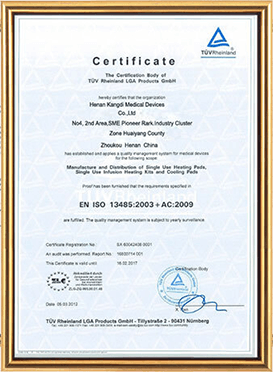
Henan Kongdy Medical Devices Co., LTD. (KONGDY) was founded in 1989 and has 37 years of production experience as of 2026 across pain relief patches, slimming patches, capsicum plasters, heat patches, cooling gel patches, detox foot patches, steam eye masks, mosquito repellent patches and nose strips. Headquartered in Henan, China, KONGDY operates a 100,000-class GMP workshop built in 2008 and obtained ISO 13485 medical device Quality Management System European Standard Certification in 2014. The company runs OEM and ODM services for international brands across multiple regulatory pathways. For 2026 procurement evaluation, the qualification team can provide the ISO 13485 certificate, GMP workshop audit reports, stability programme documentation, and reference customer case studies upon request via our contact page.
Frequently Asked Questions
Eight questions that follow from the subpart map, answered as directly as the public record allows.
What exactly does warning letter 320-26-99 cite?
A pain relief patch manufacturer should expect this answer to be short, because the subject class itself is short.
It is classified as CGMP violations for finished pharmaceuticals under 21 CFR parts 210 and 211. The registered record gives the letter number, the facility identifiers, the inspection window from 2025-12-09 to 2025-12-19 and the letter date of 2026-07-02.
Does the letter name specific observations?
A warning letter normally does, and the numbered observations sit in the letter text on the FDA site. The registered extract this article works from carries the chapter rather than the observations, so this article does not quote them.
Why does a chapter-level citation matter more than a finding?
Because a chapter describes a whole quality system rather than one product or one batch. A systems question applies to every product the site makes, which is what makes a letter about another dosage form relevant to a patch programme.
How many subparts does 21 CFR Part 211 have?
A pain relief patch manufacturer can remember the count by the two ends: general provisions at one end, returned product at the other.
Eleven, from Subpart A on general provisions to Subpart K on returned and salvaged drug products. Part 210 is short and largely establishes scope and definitions.
Which subpart carries the quality control unit requirement?
Subpart B, and the specific section is 211.22. It requires a quality control unit with the responsibility and the authority to approve or reject materials and products, which makes the organisation chart a regulated document.
How long is the interval between inspection and letter?
For a pain relief patch manufacturer the interval is the reason silence is weak evidence.
For the three letters in this record whose dates are public, the interval runs from about five and a half to about six and a half months. That is an order of magnitude rather than a rule, because review and response time varies by case.
Should a buyer avoid a site with a letter?
That is a commercial decision and the record does not make it. What the record supports is a document request: the letter, the corrective action status, and the subpart documents for the product being ordered.
What is the fastest way to use this article?
A pain relief patch manufacturer can run this in an afternoon, which is the point of writing it as eleven rows instead of eleven principles.
Take the eleven-row table into a review and ask for one document per row. The answers will tell you more about the facility than any number of audit summaries.
Related Guides
Four further references from the KONGDY knowledge base:
- Pain Relief Patch OEM: qualification and documentation overview
- Frequently asked compliance questions
- KONGDY OEM and ODM manufacturing services
- Detox Foot Patch OEM: EU Safety Gate risk mapping
- Slimming Patch OEM: cosmetic pathway documentation


