-
 KONGDY
Drug Facts and Claim Review: A 24-Point Checklist Before a Pain Relief Patch OEM Product Goes Live
Drug Facts and Claim Review: A 24-Point Checklist Before a Pain Relief Patch OEM Product Goes Live

Twenty-four checks stand between an approved claim set and a live product page, and none of them is a marketing judgement. They are document checks: does the claim set exist in writing, does the Drug Facts panel carry the sections that 21 CFR Part 201.66 requires, does every public sentence trace to something, and is the copy captured with a date. A pain relief patch OEM programme that runs all twenty-four before launch has removed the failure class that public enforcement most often records.
The organising idea is that a label is a regulated document before it is a design. The Drug Facts format is prescribed, the monograph ranges are published, and the claim wording is tested against what the product may lawfully say rather than against what a competitor says. Everything below follows from that ordering.
Two constraints shaped this checklist. Only the monograph concentration ranges registered in this knowledge base are quoted, which is why the ranges named below are menthol, methyl salicylate and camphor rather than an invented list. And every point asks for a dated artifact, because a check that cannot be dated cannot be audited.
Use the list in order. Bands A and B decide whether the product may be described at all; band C decides whether the description survives a reader; band D handles the cosmetic route where a patch is sold as a cosmetic rather than as a drug; band E decides whether the file survives the first month after launch.

Why a Label Checklist and Not a Copy Review
A pain relief patch OEM team usually starts with the copy because the copy is visible, and then discovers that the label was the regulated document all along.
A copy review asks whether the text reads well. A label checklist asks whether the text may exist. The two produce different conversations, and only the second one prevents a takedown.
The reason is structural. Under 21 CFR Part 201.66 the Drug Facts panel has required sections in a required order, so a missing warnings block is not a style choice; it is an incomplete label. Under 21 CFR Part 348.10 the permitted actives and their concentration ranges are published, so a strength outside the range is not an aggressive position; it is a different regulatory object.
A pain relief patch OEM programme that reviews copy without reviewing the label is reviewing the least regulated part of the page. The label is the part with a prescribed format, and it is also the part that a reviewer reads first.
The checklist is therefore written as a gate list rather than as a style guide. Each line has a pass condition that can be checked by looking at a document, and each line names the failure it prevents so that a buyer can weigh it.
The 24 Points in One Table
The full list in working order. Record the date on which each line closed, because the dates are the audit trail.
| Point | What to check | Pass condition | Failure it prevents |
|---|---|---|---|
| A1 | The approved claim set in writing | One page naming what the product is claimed to do, dated before copy was drafted | Copy written first and reconciled to the claim later |
| A2 | The classification memo for this formulation | One page naming the route and the framework it rests on | A route chosen by preference rather than by the claim |
| A3 | A statement of what is not claimed | One line ruling out cure, diagnosis and disease language | A claim set that is open at the top and grows under marketing pressure |
| A4 | The reference product, if equivalence is implied | Whether a comparison is made, and against what | An unstated comparison that a shopper reads as equivalence |
| A5 | The channel list | Every place copy will appear: own site, marketplace, packaging, insert, advertising | A review that covers the site and misses the marketplace listing |
| B6 | Active ingredient names and strengths | Inside the monograph range published in 21 CFR Part 348.10 | A strength chosen for marketing and outside the range |
| B7 | The purpose statement for each active | One stated purpose per active ingredient | A combined purpose that blurs which active does what |
| B8 | The uses statement | Limited to the monograph indication for the labelled use | An indication broader than the monograph supports |
| B9 | The warnings block | Complete for the monograph and the route, not abbreviated for space | Warnings shortened to fit artwork and never restored |
| B10 | The directions | Consistent with the labelled use pattern and the patch wear time | Directions copied from a different dosage form |
| B11 | The inactive ingredients | Listed in descending order of predominance | Listed alphabetically or grouped as a proprietary blend |
| B12 | Other information and storage | Matching the storage statement supported by the stability file | A storage statement with no stability support |
| C13 | No implied approval | No phrase that a reader could take as regulatory endorsement | Language such as approved or certified without a basis |
| C14 | Substantiated performance language | Every quantified or comparative statement traced to a document | A percentage or duration claim with no source document |
| C15 | No disease or cure language | The product treats symptoms as the monograph permits and stops there | A claim that the patch resolves a condition |
| C16 | No unsubstantiated named comparison | A named-brand comparison supported by a documented test | A comparison supported by opinion |
| C17 | Testimonials kept separate from evidence | Reviews presented as reviews, never as clinical proof | A review quoted where a study would have to be cited |
| C18 | Natural used as a description only | Natural describes an ingredient, never a safety conclusion | Natural used where the claim should be tolerability data |
| D19 | EU cosmetic-route labelling | The labelling obligations under Regulation (EC) No 1223/2009 Article 19, with a responsible person established under Article 10 | A product labelled for one market and shipped to another |
| D20 | No drug-like claim on the cosmetic route | Claim set stays inside the cosmetic boundary for the market of sale | A cosmetic filing carrying a therapeutic claim |
| D21 | Ingredient declaration against the current list | A dated check against the restriction list in force | A declaration checked once at launch and never again |
| E22 | A dated archive of public copy | Capture of every live sentence with its date | A live screenshot offered in place of a dated archive |
| E23 | A named approver and a copy change procedure | The name and the rule for changing approved copy | Copy edited at the marketplace level with no review |
| E24 | A re-review trigger list | Formula change, market change, framework change, new channel | A review that happens once and is never repeated |
Read the table as five bands rather than as one list. Band A produces the claim set, band B formats it, band C tests the wording, band D adapts it for a cosmetic market, and band E keeps it true after launch. A pain relief patch OEM programme that closes A to C and skips D and E has closed the launch and left the year open.
Band A: Framework and Claim Set (A1 to A5)
For a pain relief patch OEM programme these five pages cost less to write than the artwork they govern.
Band A is five pages that decide everything downstream. If A1 and A2 do not exist before copy is drafted, the rest of the list becomes a reconciliation exercise.
- A1. The approved claim set in writing. Check: One page naming what the product is claimed to do, dated before copy was drafted. It exists to prevent: Copy written first and reconciled to the claim later.
- A2. The classification memo for this formulation. Check: One page naming the route and the framework it rests on. It exists to prevent: A route chosen by preference rather than by the claim.
- A3. A statement of what is not claimed. Check: One line ruling out cure, diagnosis and disease language. It exists to prevent: A claim set that is open at the top and grows under marketing pressure.
- A4. The reference product, if equivalence is implied. Check: Whether a comparison is made, and against what. It exists to prevent: An unstated comparison that a shopper reads as equivalence.
- A5. The channel list. Check: Every place copy will appear: own site, marketplace, packaging, insert, advertising. It exists to prevent: A review that covers the site and misses the marketplace listing.
The band is complete when a reviewer can read A1, compare it with A2, and see that every sentence in band B and band C is an expression of something in A1. A pain relief patch OEM claim set that cannot be traced back to A1 in one step is a claim set that grew after approval.
A5 is the point most often left half done. The channel list usually names the website and the packaging and omits the marketplace listing, which is exactly the surface that warning letter MARCS-CMS 735346 records as reviewed.

Band B: The Drug Facts Panel (B6 to B12)
A pain relief patch OEM artwork is the object under review here, not a specification sheet, because the artwork is what ships.
Band B is the prescribed structure. Seven checks, all of them answerable by reading the artwork against the regulation.
- B6. Active ingredient names and strengths. Check: Inside the monograph range published in 21 CFR Part 348.10. It exists to prevent: A strength chosen for marketing and outside the range.
- B7. The purpose statement for each active. Check: One stated purpose per active ingredient. It exists to prevent: A combined purpose that blurs which active does what.
- B8. The uses statement. Check: Limited to the monograph indication for the labelled use. It exists to prevent: An indication broader than the monograph supports.
- B9. The warnings block. Check: Complete for the monograph and the route, not abbreviated for space. It exists to prevent: Warnings shortened to fit artwork and never restored.
- B10. The directions. Check: Consistent with the labelled use pattern and the patch wear time. It exists to prevent: Directions copied from a different dosage form.
- B11. The inactive ingredients. Check: Listed in descending order of predominance. It exists to prevent: Listed alphabetically or grouped as a proprietary blend.
- B12. Other information and storage. Check: Matching the storage statement supported by the stability file. It exists to prevent: A storage statement with no stability support.
The concentration range check at B6 is mechanical once the active is known. The published ranges for the three actives registered in this knowledge base are menthol 3 to 16 percent, methyl salicylate 10 to 30 percent and camphor 3 to 11 percent, all within 21 CFR Part 348.10. A strength outside the range is not a compliance risk to be managed; it moves the product out of the monograph.
B11 and B12 are the two that designers most often reorder, because descending order of predominance looks arbitrary in a layout and the storage statement feels like boilerplate. Both are content requirements, and a pain relief patch OEM artwork that changes them for layout has changed the label.

Band C: Claim Wording (C13 to C18)
For a pain relief patch OEM page this band is where compliance meets persuasion, and the two do not have to fight.
Band C tests sentences rather than structures, and it is where a compliant label meets a persuasive page.
- C13. No implied approval. Check: No phrase that a reader could take as regulatory endorsement. It exists to prevent: Language such as approved or certified without a basis.
- C14. Substantiated performance language. Check: Every quantified or comparative statement traced to a document. It exists to prevent: A percentage or duration claim with no source document.
- C15. No disease or cure language. Check: The product treats symptoms as the monograph permits and stops there. It exists to prevent: A claim that the patch resolves a condition.
- C16. No unsubstantiated named comparison. Check: A named-brand comparison supported by a documented test. It exists to prevent: A comparison supported by opinion.
- C17. Testimonials kept separate from evidence. Check: Reviews presented as reviews, never as clinical proof. It exists to prevent: A review quoted where a study would have to be cited.
- C18. Natural used as a description only. Check: Natural describes an ingredient, never a safety conclusion. It exists to prevent: Natural used where the claim should be tolerability data.
The six checks share one logic: every sentence must be traceable to a document that would survive a request for the basis. A pain relief patch OEM marketing page is therefore reviewed the same way as a label, because a reader does not distinguish between the two and neither does a reviewer.
C17 is the one most often argued about. A testimonial is legitimate as a testimonial and illegitimate as evidence, and the failure is a layout decision: placing a review next to a claim makes the review function as support. Moving it to a clearly separated section solves the problem without deleting anything.
Band D: Cosmetic-Route Adaptation (D19 to D21)
A pain relief patch OEM product sold across two markets can carry two lawful labels and fail on the third, which is what this band prevents.
Band D exists because a patch can be sold as a cosmetic in one market and as a drug in another, and the label obligations follow the market rather than the product.
- D19. EU cosmetic-route labelling. Check: The labelling obligations under Regulation (EC) No 1223/2009 Article 19, with a responsible person established under Article 10. It exists to prevent: A product labelled for one market and shipped to another.
- D20. No drug-like claim on the cosmetic route. Check: Claim set stays inside the cosmetic boundary for the market of sale. It exists to prevent: A cosmetic filing carrying a therapeutic claim.
- D21. Ingredient declaration against the current list. Check: A dated check against the restriction list in force. It exists to prevent: A declaration checked once at launch and never again.
D20 is the boundary check and the one with the largest consequence. A cosmetic filing that carries a therapeutic claim has changed route without changing its paperwork, and the consequence appears at the first review rather than at the border.
D19 and D21 are the two dated checks. Regulation (EC) No 1223/2009 Article 19 sets the labelling obligations and Article 10 requires a responsible person, while Article 22 and the annexes carry the substance restrictions. A pain relief patch OEM file that names the responsible person and carries a dated ingredient check has closed both.
| Element | US drug route | EU cosmetic route |
|---|---|---|
| Labelling instrument | Drug Facts panel under 21 CFR Part 201.66 | Labelling under Regulation (EC) No 1223/2009 Article 19 |
| Responsible party | The labeler of record | A responsible person established under Article 10 |
| Claim boundary | The indication in 21 CFR Part 348.10 | The cosmetic boundary for the market of sale |
| Substance check | Monograph actives and their concentration ranges | The restriction list in force, checked and dated |

Band E: Launch Control (E22 to E24)
For a pain relief patch OEM launch this band costs an hour and saves a year of dispute.
Band E is the only band that is about the period after launch, and it is the band that decides whether the first three bands stay true.
- E22. A dated archive of public copy. Check: Capture of every live sentence with its date. It exists to prevent: A live screenshot offered in place of a dated archive.
- E23. A named approver and a copy change procedure. Check: The name and the rule for changing approved copy. It exists to prevent: Copy edited at the marketplace level with no review.
- E24. A re-review trigger list. Check: Formula change, market change, framework change, new channel. It exists to prevent: A review that happens once and is never repeated.
E22 is the point to argue for hardest, because it is cheap and it changes the nature of every later conversation. A dated archive converts a dispute about what the page said into a comparison of two documents. A live screenshot converts it into a memory contest.
E23 and E24 are process checks rather than document checks, which is why they are usually absent. A named approver and a trigger list are the difference between a review that happened and a review that can happen again.
The Four Points That Cause Most Rework
A pain relief patch OEM review usually loses time on these four lines rather than on the twenty others.
Across the twenty-four, four lines account for most of the rework, and three of them are cheap to close early.
| Point | Why it causes rework | What closing it early looks like |
|---|---|---|
| A5, the channel list | A new marketplace listing appears after launch and is written by someone else | A named owner for every channel and one approval route |
| B9, the warnings block | Artwork space pressure shortens it and nothing restores it | A locked warnings block that layout cannot edit |
| C14, substantiated performance language | A duration or percentage claim arrives from a sales deck | A rule that any number needs a document reference before it is typed |
| E24, the re-review triggers | Nothing forces a second review, so there is never a second review | Four triggers written into the launch checklist with an owner each |
The common thread is that all four fail through a change made by someone who did not know the check existed. That is why the checklist names owners as well as pass conditions.
What the Public Record Shows
For a pain relief patch OEM page the public record is closer to the launch checklist than most readers expect.
One public item makes the stakes concrete without requiring any claim about a named company's conduct.
Warning letter MARCS-CMS 735346 was issued to Aidance Scientific, Inc. of 184 Burnside Ave, Woonsocket, Rhode Island 02895 on 2026-10-01. The letter records that FDA reviewed the company website and its Amazon storefront in July 2026, and it charges the named product as an unapproved new drug under 21 U.S.C. 355(a) and 21 U.S.C. 331(d). No manufacturing inspection was involved.
The narrow reading is the useful one: the reviewed surfaces were public copy, and the charge was about the claim rather than about the factory. A pain relief patch OEM programme that treats band C and point A5 as paperwork has treated the two items in this checklist that the record actually names.
How to Run the Checklist in One Sitting
A pain relief patch OEM launch meeting that follows this order finishes earlier than one that starts with the artwork.
The sequence below takes one session with the people who own the claim set, the artwork and the channels. Running it out of order produces the same list in a longer meeting.
- Start with A2. Without a classification memo the remaining twenty-three checks have no standard to test against.
- Read A1 and A5 together, because a claim set without a channel list has no defined surface area.
- Run band B against the artwork, not against a specification sheet. The artwork is what ships.
- Read band C sentence by sentence on the live page and the marketplace listing, with the rule that any number needs a document reference.
- Run band D only for the markets actually targeted, and record the responsible person where the cosmetic route applies.
- Close band E before launch rather than after, because an archive built later is not an archive.
The same checklist transfers to adjacent categories with the monograph references adjusted, which is why it is useful for a capsicum plaster OEM programme, a cooling gel patch OEM programme, a heat patch OEM programme and a slimming patch OEM programme as well.
About KONGDY Medical

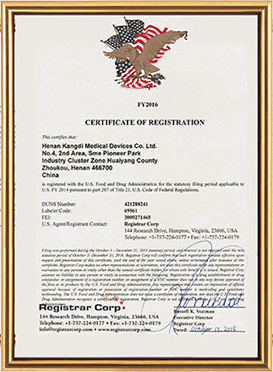
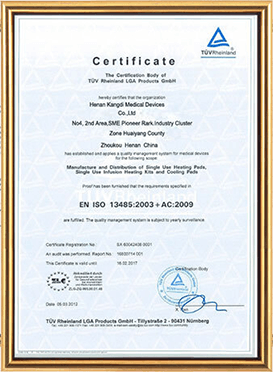
Henan Kongdy Medical Devices Co., LTD. (KONGDY) was founded in 1989 and has 37 years of production experience as of 2026 across pain relief patches, slimming patches, capsicum plasters, heat patches, cooling gel patches, detox foot patches, steam eye masks, mosquito repellent patches and nose strips. Headquartered in Henan, China, KONGDY operates a 100,000-class GMP workshop built in 2008 and obtained ISO 13485 medical device Quality Management System European Standard Certification in 2014. The company runs OEM and ODM services for international brands across multiple regulatory pathways. For 2026 procurement evaluation, the qualification team can provide the ISO 13485 certificate, GMP workshop audit reports, stability programme documentation, and reference customer case studies upon request via our contact page.
Frequently Asked Questions
Eight questions buyers ask the first time they run this checklist.
Do I need all twenty-four checks before a product page goes live?
A pain relief patch OEM launch that skips the archive spends the next year reconstructing it.
Bands A to C should be closed before any page goes live, because they decide what may be said. Band D is closed for each target market. Band E should be closed at launch, because the archive cannot be created retrospectively.
What is the single most important document?
A2, the classification memo. Every label requirement and every claim test follows from the route, so a wrong memo makes the other twenty-three checks internally consistent and externally wrong.
Which Drug Facts sections does 21 CFR Part 201.66 require?
Active ingredients, purposes, uses, warnings, directions, other information and inactive ingredients, in a prescribed order and format. The checklist treats a missing section as an incomplete label rather than a design choice.
What are the permitted monograph strengths?
For the three actives registered in this knowledge base, 21 CFR Part 348.10 publishes menthol 3 to 16 percent, methyl salicylate 10 to 30 percent and camphor 3 to 11 percent. A strength outside the range moves the product out of the monograph, which is why B6 is a range check rather than a judgement call.
Is a testimonial a problem?
Not as a testimonial. It becomes a problem when layout makes it function as evidence for a claim. Separating reviews from claims solves the issue without deleting content.
Can the same copy run in the US and the EU?
Only where the route and the claim set are the same in both markets. A patch sold as a drug in one market and as a cosmetic in the other needs different labelling, so band D exists as a separate pass rather than a translation step.
What does the dated archive actually do?
For a pain relief patch OEM file the archive is also the cheapest item on the list.
It converts a dispute about what a page said into a comparison of two dated documents. It is the cheapest item on the list and the one that changes the tone of every later conversation.
How often should the checklist be repeated?
At every formula change, every new market, every new channel and every framework change, which is what E24 records. A review that happens once is a launch activity rather than a control.
Related Guides
Four further references from the KONGDY knowledge base:
- Pain Relief Patch OEM: qualification and documentation overview
- Frequently asked compliance questions
- KONGDY OEM and ODM manufacturing services
- Slimming Patch OEM: cosmetic pathway documentation
- Detox Foot Patch OEM: EU Safety Gate risk mapping


