-
 KONGDY
From Failed Batch to Release Decision: The 8-Step Investigation Timeline a Pain Relief Patch Supplier Must Document
From Failed Batch to Release Decision: The 8-Step Investigation Timeline a Pain Relief Patch Supplier Must Document

Eight steps sit between a failed batch result and a signed release decision, and the order is fixed because four of the eight consume the output of an earlier one. A pain relief patch supplier that runs them in another order still ends up with a disposition, but the file that supports the disposition cannot be audited, and an unauditable file is the practical definition of an uninspected process.
The governing text is short and specific. 21 CFR 211.192 requires a thorough investigation of any unexplained discrepancy and any failure of a batch to meet specification, whether or not the batch was distributed, extending to other batches that may be associated with the failure. It also requires a written record stating the conclusions and the follow-up. That single sentence contains the whole timeline below in compressed form.
The authority text is equally short. 21 CFR 211.22(a) places the responsibility and the authority to approve or reject materials and products on the quality control unit. Step seven exists because of it, and step seven is the one that fails quietly when the quality unit reports through production.
What follows is the sequence, the owner of each step, the framework each step answers to, when it happens, and the failure it prevents. No duration in days is attached to any step, because none of the cited texts contains one and a schedule built on invented intervals gets signed and then missed.
Why the Sequence Is Fixed
For a pain relief patch supplier the chain is short enough that reordering any one link is visible from outside.
Four dependencies make the order non-negotiable. Scope cannot be extended before the laboratory assessment has ruled an analytical cause in or out, because the scope of a process investigation depends on whether there is a process event at all. A cause cannot be stated before the scope is known, because the same cause may explain a single batch or a population. A corrective action cannot be dated before the cause is stated. And a disposition cannot be signed before the corrective action is defined, because the decision to release with justification depends on what is being fixed.
| Dependency | Producing step | Consuming step | What breaks if reversed |
|---|---|---|---|
| Analytical or process conclusion | Step 3 | Steps 4 and 5 | The investigation chases a process cause that does not exist |
| Scope | Step 4 | Step 5 | The root cause explains one batch and is applied to a population |
| Root cause | Step 5 | Step 6 | The corrective action is a general improvement rather than a fix |
| Corrective action | Step 6 | Step 7 | Release with justification has nothing to justify it against |
A pain relief patch supplier that reorders the middle of this chain usually does so under time pressure, and the resulting file shows it: a root cause that arrives before the laboratory assessment, or a corrective action that predates the scope extension.
The Eight Steps in One Table
A pain relief patch supplier that can produce the table row by row has produced the file; one that cannot has produced a system description.
The whole path, with the owner, the framework, the timing and the failure each step prevents.
| Step | What happens | Owner | Timing | Common failure |
|---|---|---|---|---|
| Step 1: Segregate and hold | Stop the batch and every associated lot from moving, including laminate and in-process material | Production, confirmed by the quality unit | before any other action | releasing part of the batch because the failure looked minor |
| Step 2: Document the discrepancy as observed | Record the specification, the method, the sample identity and the raw result, without interpretation | Quality control laboratory | the day of the result | recording the conclusion instead of the observation |
| Step 3: Assess the laboratory first | Check method, calibration, sample preparation and the analyst worksheet for an assignable cause | Quality control laboratory | before the investigation is opened as a process event | naming analyst error without naming the record that shows it |
| Step 4: Extend the scope | Identify every other batch that could share the cause, including batches already released | Quality unit with production | as soon as a likely cause class is known | investigating only the failing batch |
| Step 5: Determine the root cause | State the cause specifically enough that a change can be designed against it | Cross-functional investigation team | before any corrective action is proposed | stopping at operator error as the cause |
| Step 6: Define and date the corrective action | Name the change, the owner and the date, and state how effectiveness will be checked | Quality unit with the process owner | with the investigation conclusion | a corrective action with no owner or no date |
| Step 7: Take the disposition decision | Reject, rework or release with a written justification, signed by the quality unit | Quality unit, under 21 CFR 211.22(a) | after steps 3 to 6 are closed | a release signed by production rather than by quality |
| Step 8: Notify and retain | Inform affected buyers where the event could reach shipped product, and keep the record | Quality unit with commercial | before the next shipment of affected material | informing the buyer after the next order has shipped |
Two features are worth noticing before the detail sections. First, the quality unit owns or co-owns five of the eight steps, which is what makes 21 CFR 211.22(a) a structural provision rather than a job description. Second, steps one, two and eight are the only ones that involve anyone outside the quality system, and they are the three most often executed late.
For a pain relief patch supplier the table doubles as a request list. Each row names a document, and a buyer can ask for the row rather than for the system.

Steps One to Three: Containment and the Analytical Question
A pain relief patch supplier loses more time at these three steps than at the other five combined, and mostly by skipping the page.
The first three steps decide whether the event is a product problem or a measurement problem, and they are the cheapest three to run properly.
Step one, segregation. The batch and every associated lot stop moving. For a coated patch this includes the laminate lot, the coating batch, the slit rolls and any finished stock already packed. The failure mode is partial segregation: the batch is held while the laminate lot that shares the excursion continues to be consumed on the next order.
Step two, documentation as observed. The record states the specification, the method, the sample identity and the raw result. It does not state a conclusion. 21 CFR 211.194(a) is the relevant standard for what a laboratory record contains, and the second signature is part of it.
Step three, laboratory assessment. The method, the instrument calibration for that day, the sample preparation and the analyst worksheet are reviewed for a specific assignable cause. Two outcomes are legitimate: an identified cause that invalidates the result, or no identified cause, in which case the failure stands. What is not legitimate is a conclusion of analyst error with no record of the error.
A pain relief patch supplier that closes step three in a single line has usually skipped it. The step produces a page: what was checked, what was found, and what was concluded.

Steps Four to Six: Scope, Cause and the Change
The middle three steps are where a pain relief patch supplier either widens the question or narrows it to the batch in hand.
The middle three steps are where an investigation becomes either a population question or a one-off story.
Step four, scope extension. This is the clause in 21 CFR 211.192 that buyers should quote in a supplier meeting, because it converts a single event into a population question. The step asks which other batches could share the cause, including batches already released and shipped. For a patch programme the usual scope axes are the same laminate lot, the same coating run, the same adhesive batch and the same operator shift.
Step five, root cause. The standard is not that the cause be elegant; it is that it be specific enough for a change to be designed against it. Operator error is the classic stopping point, and it stops the investigation without explaining why the process allowed the error to reach the product.
Step six, corrective action with a date. The corrective action names the change, the owner, the date and the method of checking effectiveness. A corrective action without a date is a statement of intent, and a statement of intent is not what the follow-up requirement in 21 CFR 211.192 contemplates.
At this point a pain relief patch supplier has produced the middle of the file: a scope, a cause and a change. Everything after this is decision and disclosure.
Steps Seven and Eight: Disposition and Disclosure
For a pain relief patch supplier the last two steps are also the two that a buyer can verify from outside the plant.
The last two steps produce the two things a buyer sees, which is why they deserve separate treatment from the investigation that precedes them.
Step seven, disposition under 21 CFR 211.22(a). The decision is reject, rework or release with a written justification, and it is taken by the quality unit. The provision requires that the unit hold both the responsibility and the authority, which means a release signed by production is not a disposition under this provision regardless of how well documented it is.
Step eight, notification and retention. Where the event could reach shipped product, the affected buyers are informed before the next shipment of affected material rather than after. The step also keeps the record, because the investigation file is the artifact that a future audit or a future buyer question will need.
A pain relief patch supplier that performs step eight badly has usually performed step four badly, because the population that needs informing is the population defined by the scope extension. The two steps are six apart in the sequence and adjacent in consequence.

Where the Timeline Breaks in Practice
A pain relief patch supplier that breaks the timeline usually breaks it at a handover between two departments, not inside one.
Three breakpoints account for most of the failures visible in this process, and none of them is a laboratory constraint.
| Breakpoint | Symptom | What it looks like in the file |
|---|---|---|
| Between steps one and two | The batch is held informally and documented later | A segregation record dated after the investigation opened |
| Between steps three and four | The analytical question is closed by assertion | A one-line laboratory conclusion with no worksheet reference |
| Between steps six and seven | The disposition precedes the corrective action | A release justification that cites a change not yet defined |
Each symptom is visible from outside the laboratory, which makes the timeline checkable by a buyer without technical training. The first is a date comparison. The second is a page count. The third is a reading of two sentences in one document.
There is a fourth breakpoint that is organisational rather than procedural. When the quality unit reports through production, step seven is signed by a function that cannot afford to fail the batch, and the whole timeline becomes a formality with good paperwork. Warning letter 320-26-12, issued to Apotex Inc. of Richmond Hill, Ontario on 2025-10-31 after an inspection from 2025-04-28 to 2025-05-09, cites 21 CFR 211.192 on the failure to investigate batch failures, which is step four and step five arriving in public as a citation.
What a Buyer Can Ask For at Each Step
For a pain relief patch supplier relationship the fourth column is the one that changes the conversation, because it describes what a weak answer sounds like.
The timeline becomes a procurement instrument when each step is mapped to one document that a buyer can request. The table below is that mapping.
| Step | The document to request | What a weak answer looks like |
|---|---|---|
| 1. Segregation | The hold record with a timestamp | A verbal assurance that the batch was stopped |
| 2. Documentation | The original result with the method and sample identity | A summary table of results |
| 3. Laboratory assessment | The assessment page with calibration and worksheet references | The word analyst error with no record |
| 4. Scope | The list of other batches considered, including released ones | The statement that no other batch was affected |
| 5. Root cause | The stated cause and the evidence for it | Operator error or human factor |
| 6. Corrective action | The change, the owner and the effectiveness check | Retraining as the only action |
| 7. Disposition | The signed decision, with the signer identified | A certificate of analysis for a later batch |
| 8. Notification | The buyer notice and its date relative to shipment | A notice that arrives after the next order |
The third column is the operational value of the table. A buyer does not need to judge the science to recognise a summary table where an original result was requested, or a retraining action where a process change was requested.
The same eight documents apply to a heat patch OEM programme, a capsicum plaster OEM programme and a cooling gel patch OEM programme, because the clause governs the process of investigation rather than the chemistry of the product.

What the Timeline Does Not Cover
A pain relief patch supplier should be able to describe these limits, because a file that claims to cover everything usually covers the narrow case.
Three limits belong with any description of this process, and each one is a place where the file looks complete and is not.
- It does not cover a failure nobody detected. The timeline starts at a failed result, and a result that was never generated starts nothing. Sampling plan design sits upstream of step one and is not part of this sequence.
- It does not cover a failure the customer detects first. Complaint handling and adverse event reporting run on a different clock, and a supplier whose only investigation route begins with a specification failure will learn about the expensive events from the buyer.
- It does not make the process safer on its own. Corrective action changes a process; the timeline only documents that the change happened. A complete file with no process change satisfies the record requirement and leaves the risk in place.
The second limit is worth dwelling on for a pain relief patch supplier relationship, because adhesion and skin response failures often surface in the market rather than in release testing. A buyer who only ever sees batch dispositions is seeing the subset of failures that the release specification was able to catch.
The public record offers one adjacent signal. Eugia Pharma Specialities Limited Units II and III, identified by FEI 3009883410 and FEI 3008461619, were classified as Official Action Indicated following inspections in November 2025 and January to February 2026. That status describes a facility outcome rather than an investigation record, and it is a reminder that the outcomes buyers can see are always a subset of what happened.
About KONGDY Medical

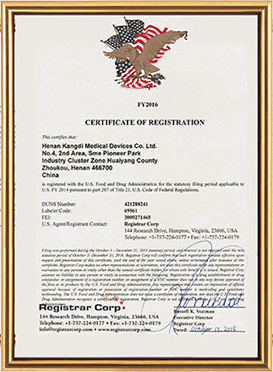
Henan Kongdy Medical Devices Co., LTD. (KONGDY) was founded in 1989 and has 37 years of production experience as of 2026 across pain relief patches, slimming patches, capsicum plasters, heat patches, cooling gel patches, detox foot patches, steam eye masks, mosquito repellent patches and nose strips. Headquartered in Henan, China, KONGDY operates a 100,000-class GMP workshop built in 2008 and obtained ISO 13485 medical device Quality Management System European Standard Certification in 2014. The company runs OEM and ODM services for international brands across multiple regulatory pathways. For 2026 procurement evaluation, the qualification team can provide the ISO 13485 certificate, GMP workshop audit reports, stability programme documentation, and reference customer case studies upon request via our contact page.
Frequently Asked Questions
Eight questions that follow from the eight-step timeline.
Why must the laboratory assessment come before the process investigation?
A pain relief patch supplier that inverts these two steps spends effort on a cause that may not exist.
Because the scope depends on it. If an assignable analytical cause is found, there is no process event to investigate and no population to extend to. Running the process investigation first spends effort on a cause that may not exist.
What exactly does 21 CFR 211.192 require the supplier to write?
A written record that states the conclusions of the investigation and the follow-up. The clause is explicit that the conclusion alone is not sufficient, which is why step six carries a date and an owner.
Who signs the disposition decision?
For a pain relief patch supplier the signature is the whole point of the step.
The quality unit, because 21 CFR 211.22(a) places both the responsibility and the authority to approve or reject on it. A release signed by production is not a disposition under that provision.
How long should the whole timeline take?
Nobody should expect a pain relief patch supplier to quote a duration that the regulation does not contain.
No cited text states a duration, so this article does not invent one. What the texts do require is that the steps happen in order and that the record carries the conclusions and follow-up.
Can a batch be released before the investigation closes?
Only with a written justification that stands on the investigation as far as it has gone, signed by the quality unit. The distinction between that and a release on a re-test is the difference between a documented decision and a second measurement.
What is the most useful single document to ask for?
For a pain relief patch supplier the scope document is also the cheapest test of whether the investigation was real.
The scope extension under step four, because it is the clause that converts one event into a population question and the document that a weak supplier finds hardest to produce.
Does a rework change the timeline?
It adds a decision rather than replacing one. A rework needs its own justification and its own evidence that the reworked material meets specification, and the original failure still requires steps four to six.
Is a deviation record the same as an investigation?
A pain relief patch supplier that offers a deviation record as the file has offered the first third of the timeline.
No. A deviation record documents that something differed. The investigation under 21 CFR 211.192 establishes why, whether other batches are affected, and what change follows. A supplier that offers the deviation record as the answer has offered step two and called it the file.
Related Guides
Four further references from the KONGDY knowledge base:
- Pain Relief Patch OEM: qualification and documentation overview
- Frequently asked compliance questions
- KONGDY OEM and ODM manufacturing services
- Slimming Patch OEM: cosmetic pathway documentation
- Nose Strip OEM: device pathway documentation


