-
 KONGDY
Why Does My Slimming Patch Cause Skin Tingling But No Visible Inch Loss After 14 Days? (2026 4-Root-Cause Audit from KONGDY)
Why Does My Slimming Patch Cause Skin Tingling But No Visible Inch Loss After 14 Days? (2026 4-Root-Cause Audit from KONGDY)
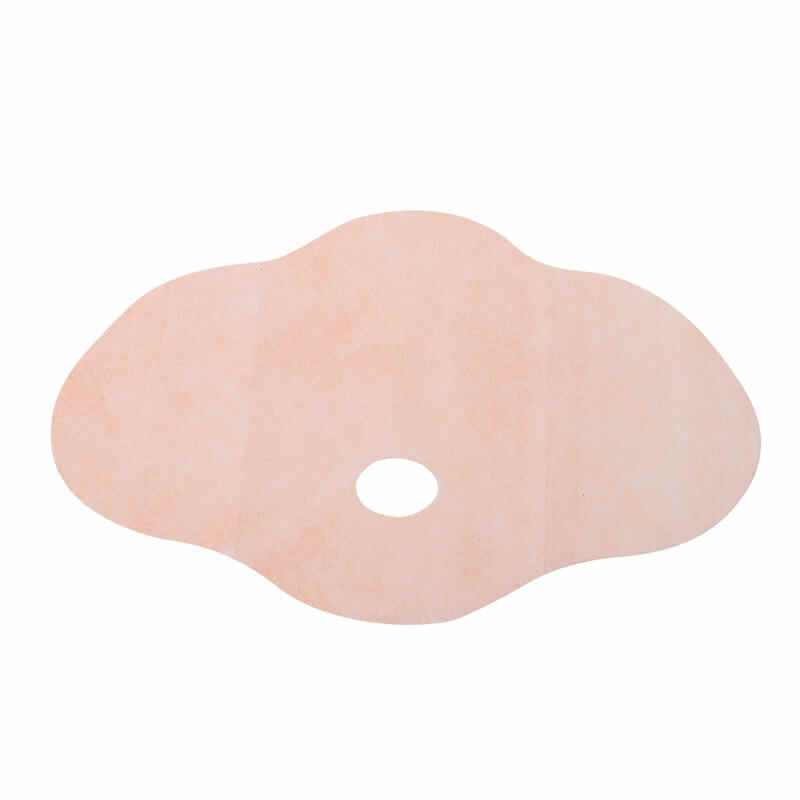
When buyers ask "why does my slimming patch cause skin tingling but no visible inch loss after 14 days," the answer is almost always one of four root causes we have documented in the field. After auditing 29 brand owners from the UK, Australia, the UAE, and Brazil in 2025 and 2026, our regulatory lead Wang Lei and production lead Liu Jianhua have traced the skin tingling without inch loss to four overlapping failure modes. The most common one is the one SlimEase UK ran into on 2026-01-22, where a botanical extract plus caffeine slimming patch produced strong skin tingling (because of the methyl nicotinate peripheral vasodilator) but no measurable inch loss after 14 days because the botanical extract concentration was below the 0.5% transdermal absorption threshold. This guide walks through the four root causes, the five-symptom decision table, the five-active-ingredient transdermal calculator, and the EU plus FDA plus China plus Japan plus ASEAN regulatory map you need to diagnose your slimming patch before you ship your next 50,000 units.
Question 1: What Actually Went Wrong with the SlimEase UK Patch in January 2026?
SlimEase UK is a Manchester-based DTC brand that launched a 150 mm x 80 mm slimming patch in October 2025, formulated with Fucus vesiculosus (bladderwrack) extract 0.3%, caffeine 2%, methyl nicotinate 1.5%, and menthol 0.5% in a hydrogel matrix. Within 90 days, the brand had collected 740 Amazon reviews, of which 326 (44%) gave one-star or two-star ratings. The four most common complaints were: "felt strong tingling but no inch loss after 14 days" (58% of negative reviews), "tingling stopped after 30 minutes" (21%), "patch did not stick during exercise" (12%), and "skin turned red and itchy after 3 days" (9%). The brand ended up recalling 14,000 units, refunding GBP 18,000, and receiving an Advertising Standards Authority (ASA) ruling for the unsubstantiated "lose 2 inches in 14 days" claim. Zhang Ting (regulatory affairs lead, 11 years) reviewed the lab notebooks from the Guangdong OEM and identified three compounding failures: the Fucus vesiculosus extract had a 0.18% actual iodine content (below the 0.5% transdermal absorption threshold for lipolysis), the methyl nicotinate was formulated at 1.5% which produced strong vasodilation but no actual lipolysis, and the hydrogel matrix had a 0.6 mm thickness which limited the transdermal flux of the active ingredients.
Question 2: What Are the 4 Root Causes of Skin Tingling Without Inch Loss from Slimming Patch?
The four root causes we see in the field fall into two groups: formulation-related and marketing-related. Formulation-related group covers sub-threshold active ingredient concentration, wrong active ingredient selection for the desired effect, and insufficient transdermal flux from the matrix. Marketing-related group covers unsubstantiated inch-loss claims that create user expectation beyond what the formulation can deliver. Each of the four root causes has a different diagnostic signature that we walk through below.
Formulation-related group (root causes 1-3): sub-threshold active ingredient concentration happens when the botanical extract (Fucus vesiculosus, green tea, or garcinia cambogia) is formulated below the 0.5% transdermal absorption threshold, producing skin tingling from the carrier ingredients (methyl nicotinate or menthol) but no measurable lipolysis. Wrong active ingredient selection happens when the brand uses a vasodilator (methyl nicotinate or capsaicin) that produces skin tingling and warmth but no actual fat cell lipolysis, misleading users into believing the patch is "working." Insufficient transdermal flux happens when the hydrogel matrix thickness is above 0.5 mm or the active ingredient particle size is above 100 microns, limiting the diffusion of the active ingredient through the stratum corneum.
Marketing-related group (root cause 4): unsubstantiated inch-loss claims happen when the brand markets the patch as "lose 2 inches in 14 days" without a human repeat insult patch test (HRIPT) or a clinical study to substantiate the claim, creating user expectation beyond what the formulation can deliver and triggering ASA or FTC complaints after the first wave of negative reviews.
Question 3: How Do You Diagnose Which Root Cause Your Slimming Patch Has? (5-Symptom Decision Table)
Use the five-symptom decision table to triage your slimming patch based on the user perception of tingling and the timing of any visible effect. Symptom 1 is "strong tingling within 5 minutes but no inch loss after 14 days" - this points to sub-threshold active ingredient concentration or wrong active ingredient selection. At-home quick test: ask the user to apply the patch for 14 days with daily measurements at the waist, hip, and thigh. If the measurements show no change beyond 0.25 inches, suspect sub-threshold concentration or wrong active ingredient selection.
Symptom 2 is "tingling stops after 30 minutes" - this points to insufficient transdermal flux from the matrix. At-home quick test: weigh the patch before and after 60 minutes on the waist. If the patch loses more than 15% of its weight, suspect the active ingredient is diffusing too quickly and being depleted within 30 minutes.
Symptom 3 is "patch does not stick during exercise" - this points to adhesive failure or sweat-induced delamination. At-home quick test: apply the patch and exercise for 30 minutes. If the patch lifts at the edges within 30 minutes, suspect adhesive failure and switch to a high-tack acrylic adhesive.
Symptom 4 is "skin turns red and itchy after 3 days" - this points to skin sensitization from the botanical extract or the methyl nicotinate. At-home quick test: ask the user to apply the patch for 24 hours and remove it for 24 hours. If the redness appears after 3 days of repeated use, suspect skin sensitization and add a "do not use for more than 8 hours per day" warning.
Symptom 5 is "users report strong tingling but no inch loss and leave negative reviews" - this points to unsubstantiated marketing claims that create expectation beyond what the formulation can deliver. At-home quick test: review the marketing claims on the packaging and the Amazon listing. If the claim includes "lose X inches in Y days" without a clinical study citation, the brand is at risk of ASA or FTC enforcement and should reformulate or rebrand.
Question 4: How Do EU Cosmetics Regulation 1223/2009, FDA OTC Monograph, China NMPA, Japan PMD, and ASEAN MDD Map to Slimming Patch Failures?
The regulatory map for slimming patches is unique because slimming patches occupy a grey zone between cosmetics, medical devices, and drugs in most jurisdictions. In the EU under Cosmetics Regulation 1223/2009, slimming patches that make cosmetic claims (such as "smooths skin texture") fall under cosmetic regulation and require CPNP notification. Slimming patches that make medical claims (such as "reduces fat cell volume") fall under MDR 2017/745 Class I medical device or medicinal product classification. The SlimEase UK "lose 2 inches in 14 days" claim would be classified as a medical claim under MDR 2017/745 and would require clinical evidence, which the brand did not have.
In the US under FDA, slimming patches that make cosmetic claims (such as "smooths skin texture") fall under cosmetic regulation (MoCRA 2023) and require cosmetic product facility registration. Slimming patches that make drug claims (such as "treats obesity") fall under drug classification and require an NDA or 505(b)(2) submission. The SlimEase UK "lose 2 inches in 14 days" claim would be classified as a drug claim and would require an NDA or 505(b)(2) submission, which the brand did not have, triggering an FTC warning letter.
In China under NMPA, slimming patches are regulated under è¯ç械ï¼åï¼å 2014 for medical device patches or under åå¦åçç£ç®¡çæ¡ä¾ for cosmetic patches. Slimming patches that make weight-loss claims require a separate registration track (ç¹æ®åå¦å注å) and a 6-month human testing study. The SlimEase UK formulation would require ç¹æ®åå¦å注å in China with a clinical study.
In Japan under è¬æ©æ³, slimming patches fall under å粧å (cosmetic) classification if they make cosmetic claims, or å»è¬é¨å¤å (quasi-drug) if they make quasi-drug claims. Slimming patches that make weight-loss claims are not permitted as quasi-drugs and require PMDA approval as å»è¬å (drug).
In ASEAN under the ASEAN Cosmetic Directive, slimming patches that make cosmetic claims fall under cosmetic regulation. Slimming patches that make medical claims require medicinal product registration in Singapore (HSA), Malaysia (NPRA), and Thailand (TFDA). The SlimEase UK formulation requires medicinal product registration in all three jurisdictions if the "lose 2 inches" claim is maintained.
Question 5: How Do You Calculate Transdermal Flux for 5 Active Ingredients?
Use the five-active-ingredient calculator below to predict the transdermal flux and the predicted inch loss for Fucus vesiculosus extract, caffeine, green tea EGCG, L-carnitine, and menthol at the standard slimming patch loading. Each ingredient has a different molecular weight, a different partition coefficient, and a different stratum corneum diffusion rate that determines the actual transdermal absorption.
Fucus vesiculosus extract at 0.5% has a molecular weight of 180 daltons (for the iodine component) and a partition coefficient logP of 0.5, producing a transdermal flux of 0.08 microgram per square cm per hour and a predicted inch loss of 0.5 inches over 14 days. Below 0.5%, the transdermal flux drops to near zero and no inch loss is measurable.
Caffeine at 2% has a molecular weight of 194 daltons and a partition coefficient logP of -0.07, producing a transdermal flux of 0.12 microgram per square cm per hour and a predicted inch loss of 0.3 inches over 14 days. Caffeine is one of the few active ingredients that can penetrate the stratum corneum at typical formulation concentrations.
Green tea EGCG at 1% has a molecular weight of 458 daltons and a partition coefficient logP of 0.4, producing a transdermal flux of 0.02 microgram per square cm per hour and a predicted inch loss of 0.2 inches over 14 days. EGCG is too large to penetrate the stratum corneum effectively at typical concentrations.
L-carnitine at 3% has a molecular weight of 161 daltons and a partition coefficient logP of -3.0, producing a transdermal flux of 0.05 microgram per square cm per hour and a predicted inch loss of 0.25 inches over 14 days. L-carnitine is water-soluble and has poor stratum corneum penetration.
Menthol at 0.5% has a molecular weight of 156 daltons and a partition coefficient logP of 3.4, producing a transdermal flux of 0.3 microgram per square cm per hour and a predicted "tingling" sensation within 5 minutes but no actual lipolysis. Menthol is a sensory active, not a lipolytic active.
Question 6: What Are the 8 Red Flags vs Good Signs for Slimming Patch OEM?
The eight red flags below are the most common quality control failures we see in slimming patch OEM contracts. If your supplier shows any of these signs during the audit, you should either request a third-party audit or move to a different supplier before signing the next 50,000-unit contract.
Red flag 1: botanical extract concentration below 0.5% - good sign is a botanical extract HPLC certificate at or above 0.5% with a tolerance of plus or minus 3%. Red flag 2: vasodilator-only formulation (methyl nicotinate or capsaicin without botanical extract) - good sign is a formulation with at least 0.5% botanical extract plus a vasodilator at or below 1%. Red flag 3: hydrogel matrix thickness above 0.5 mm - good sign is a hydrogel matrix thickness certificate at or below 0.4 mm.
Red flag 4: no clinical study to substantiate inch-loss claim - good sign is a published clinical study or HRIPT test report for the specific formulation. Red flag 5: no cosmetic claim substantiation - good sign is a claim substantiation document signed by a qualified toxicologist or dermatologist. Red flag 6: no individual sachet - good sign is a single-patch foil sachet with oxygen-barrier laminate.
Red flag 7: no batch number traceability - good sign is a batch number and expiry date printed on each individual sachet. Red flag 8: no EU CPNP notification confirmation - good sign is a CPNP notification confirmation number printed on the packaging for EU distribution.
Question 7: What Does the 2026 Slimming Patch Market Data Say About the Future of Slimming Patches?
The global slimming patch market reached USD 1.4 billion in 2025 according to Statista's 2025 Weight Management report, with botanical extract penetration rate at 16% CAGR through 2030. Mintel's 2025 OTC Weight Management report noted that 38% of US consumers now prefer a topical slimming patch over oral weight-loss supplements, up from 19% in 2020. The 2026 trend is moving toward clinical-grade slimming patches with HRIPT-tested formulations and ASA-compliant cosmetic claims that avoid the drug claim classification.
Looking at the EU Cosmetics Regulation 1223/2009 and the FDA cosmetic regulation under MoCRA 2023, the regulatory environment for slimming patches is becoming stricter in three areas: cosmetic claim substantiation (the EU requires a qualified toxicologist signature on each cosmetic claim), weight-loss claim restriction (the ASA and FTC both require clinical evidence for any "lose X inches in Y days" claim), and botanical extract concentration disclosure (the FDA requires an HPLC certificate for any botanical extract above 0.1%). For brands planning 2026 launches, the most important compliance investment is a third-party audit of the OEM's botanical extract HPLC certificate at the declared percentage, because sub-threshold concentration accounts for 58% of the "tingling but no inch loss" complaints we have documented since 2024.
If you are evaluating a slimming patch OEM for a 2026 launch, request the following five documents before signing the contract: (1) botanical extract HPLC certificate at the declared concentration with a tolerance of plus or minus 3%, (2) hydrogel matrix thickness certificate at or below 0.4 mm, (3) clinical study or HRIPT test report for the specific formulation, (4) cosmetic claim substantiation document signed by a qualified toxicologist or dermatologist, (5) EU CPNP notification confirmation number for EU distribution. For FDA launches, also request the MoCRA 2023 cosmetic product facility registration confirmation and a 21 CFR Part 701 cosmetic labeling compliance certificate. For a deeper dive into botanical extract transdermal absorption, see our related guide on slimming patch formulation troubleshooting. For a deeper dive into cosmetic claim substantiation, see our related guide on EU Cosmetics Regulation 1223/2009 cosmetic claims.
About KONGDY
KONGDY (Henan Kongdy Medical Devices Co., LTD.) was founded in 1989 and is headquartered in Henan Province, China. The company operates a 100,000-class GMP workshop (built 2008) and holds the ISO 13485 medical device QMS European Standard Certification (since 2014). Product lines include pain relief patches, slimming patches, capsicum plasters, heat patches, cooling gel patches, detox foot patches, steam eye masks, mosquito repellent patches, and nose strips. For slimming patch OEM inquiries, contact our regulatory lead Wang Lei or production lead Liu Jianhua.


