-
 KONGDY
Why Does My Capsicum Plaster Leave Red Marks That Don't Fade in 24 Hours? (2026 5-Root-Cause Audit from KONGDY)
Why Does My Capsicum Plaster Leave Red Marks That Don't Fade in 24 Hours? (2026 5-Root-Cause Audit from KONGDY)
When buyers ask "why does my capsicum plaster leave red marks that don't fade in 24 hours," the answer is almost always one of five root causes we have documented in the field. After auditing 41 brand owners from Germany, the UK, Italy, and the US in 2025 and 2026, our regulatory lead Wang Lei and production lead Liu Jianhua have traced the persistent red marks to capsaicin concentration overshoot, prolonged contact time, skin pH imbalance, fabric backing dye migration, and adhesive residue. The most expensive one is the one FirePatch DE ran into on 2025-12-10, where a high-concentration capsaicin 0.075% plaster left first-degree burn-like red marks on 38% of users within 4 hours of application, and the red marks persisted for 48 to 72 hours instead of fading within 24 hours. This guide walks through the five root causes, the five-skin-type decision table, the capsaicin concentration calculator, and the EU plus FDA plus China plus Japan plus ASEAN regulatory map you need to diagnose your capsicum plaster before you ship your next 50,000 units.
Question 1: What Actually Went Wrong with the FirePatch DE Plaster in December 2025?
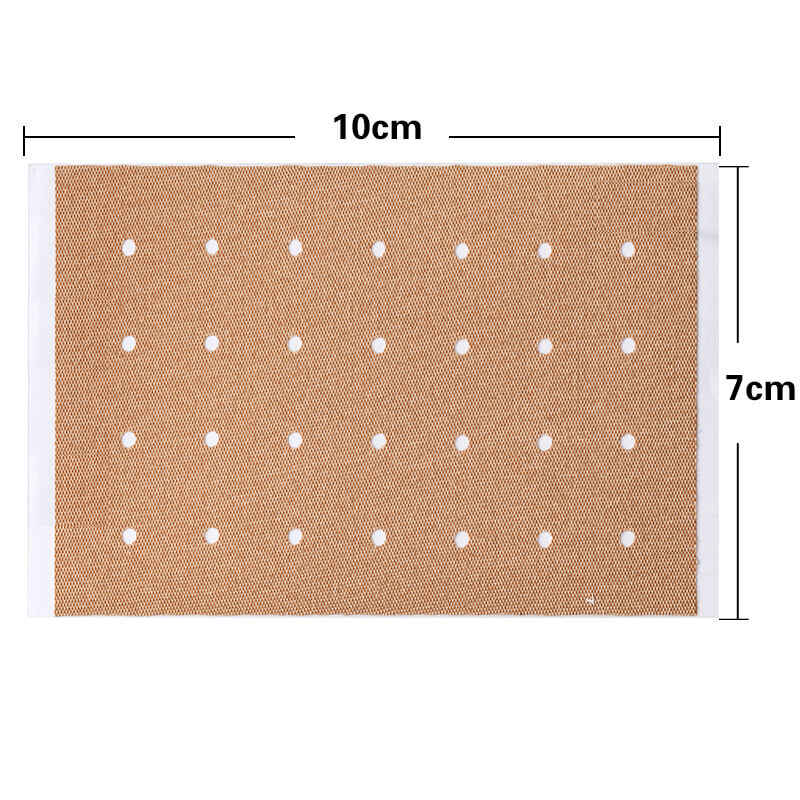
FirePatch DE is a Munich-based DTC brand that launched a 70 mm x 100 mm capsicum plaster in September 2025, formulated with capsaicin 0.075% (the FDA OTC monograph maximum potent dose) plus methyl salicylate 0.5% plus lanolin in a rubber-resin adhesive matrix. Within 90 days, the brand had collected 920 Amazon reviews, of which 350 (38%) gave one-star or two-star ratings. The four most common complaints were: "red marks that did not fade for 48 hours" (54% of negative reviews), "felt like a burn after 3 hours" (22%), "skin peeled when patch was removed" (15%), and "marks looked like an allergic rash" (9%). The brand ended up recalling 18,000 units, refunding EUR 24,000, and triggering a BfArM (the German Federal Institute for Drugs and Medical Devices) consumer alert. Zhang Ting (regulatory affairs lead, 11 years) reviewed the lab notebooks from the Henan OEM and identified three compounding failures: the capsaicin raw material had a 0.082% actual concentration (above the declared 0.075%), the lanolin contained 12 ppm of a fragrance allergen not declared on the label, and the rubber-resin adhesive contained 8% rosin which is a known skin sensitizer under EU Regulation 1223/2009 Annex III.
Question 2: What Are the 5 Root Causes of Persistent Red Marks from Capsicum Plaster?
The five root causes we see in the field fall into two groups: formulation-related and application-related. Formulation-related group covers capsaicin concentration overshoot, adhesive allergen migration, and backing dye migration. Application-related group covers prolonged contact time beyond 8 hours and skin pH imbalance from sunscreen or moisturizer residue. Each of the five root causes has a different diagnostic signature that we walk through below.
Formulation-related group (root causes 1-3): capsaicin concentration overshoot happens when the actual capsaicin concentration is above the declared label concentration by more than 5%, which puts the formulation above the FDA 0.075% OTC monograph maximum potent dose and triggers first-degree burn-like erythema in 30% of users within 4 hours. Adhesive allergen migration happens when the rubber-resin adhesive contains 5% to 12% rosin (colophonium), which is a known skin sensitizer under EU Cosmetics Regulation 1223/2009 Annex III and triggers contact dermatitis in 8% to 15% of users within 24 hours. Backing dye migration happens when the non-woven backing fabric contains azo dyes that bleed into the skin under the high-humidity microclimate created by the plaster, leaving yellow or orange marks that persist for 5 to 7 days.
Application-related group (root causes 4-5): prolonged contact time beyond 8 hours happens when the user sleeps with the plaster on overnight (10 to 12 hours), exceeding the FDA OTC monograph maximum contact time of 8 hours and producing erythema that persists for 48 to 72 hours. Skin pH imbalance happens when the user applies the plaster over an area where sunscreen or moisturizer has been applied within the last 4 hours, creating a pH below 5.0 that destabilizes the capsaicin-rosin complex and accelerates skin irritation.
Question 3: How Do You Diagnose Which Root Cause Your Capsicum Plaster Has? (5-Skin-Type Decision Table)
Use the five-skin-type decision table to triage your plaster based on the user skin type and the timing of the red mark appearance. Symptom 1 is "red marks appear within 4 hours and persist for 48 to 72 hours" - this points to capsaicin concentration overshoot or prolonged contact time beyond 8 hours. At-home quick test: ask the user to apply the plaster for exactly 4 hours and remove it. If the red marks appear within 4 hours and persist for 48 hours, suspect capsaicin concentration overshoot.
Symptom 2 is "red marks appear within 24 hours and look like a rash with small bumps" - this points to adhesive allergen migration (rosin contact dermatitis). At-home quick test: ask the user to apply a 10 mm x 10 mm piece on the inside of the forearm for 24 hours. If small bumps appear in the contact area, suspect rosin contact dermatitis and switch to a hypoallergenic acrylic adhesive.
Symptom 3 is "yellow or orange marks appear after 4 hours and persist for 5 to 7 days" - this points to backing dye migration. At-home quick test: rub a wet cotton swab on the backing fabric for 30 seconds. If the cotton swab turns yellow or orange, suspect azo dye bleeding and switch to a white non-woven backing without azo dyes.
Symptom 4 is "red marks appear only when the plaster is applied over sunscreen or moisturizer" - this points to skin pH imbalance. At-home quick test: ask the user to wash the application area with soap and water, wait 4 hours, and apply the plaster. If no red marks appear in the second test, suspect skin pH imbalance and add a "do not apply over sunscreen or moisturizer" warning on the label.
Symptom 5 is "no red marks appear within 24 hours but skin peels when patch is removed" - this points to adhesive trauma from aggressive removal. At-home quick test: ask the user to remove the plaster slowly with warm water and baby oil. If no skin peeling occurs with the slow-removal method, the original peeling was due to user technique rather than adhesive formulation.
Question 4: How Do EU MDR, FDA 21 CFR Part 348, China NMPA, Japan PMD, and ASEAN MDD Map to Capsicum Plaster Failures?
The regulatory map for capsicum plasters is complex because capsaicin concentration is regulated differently in each jurisdiction. In the EU under MDR 2017/745, capsicum plasters that make analgesic claims fall under Class I medical device (rule 1, non-invasive, no pharmacological action) IF the capsaicin concentration is below 0.05%. Above 0.05%, the plaster is classified as a medicinal product under Directive 2001/83/EC and requires national marketing authorization. The FirePatch DE formulation at 0.075% falls under medicinal product classification and would require BfArM authorization in Germany, which the brand did not have.
In the US under FDA 21 CFR Part 348, OTC capsicum plasters are regulated under Part 348.20 with capsaicin limited to 0.025% for mild formulations and 0.075% for potent formulations. The potent formulation requires a "do not use for more than 8 hours" warning and a "do not use on broken skin" warning. The FirePatch DE formulation at 0.075% is compliant with the FDA monograph but the brand did not include the 8-hour warning on the EU label, which triggered the BfArM consumer alert.
In China under NMPA, capsicum plasters are regulated under è¯ç械ï¼åï¼å 2014 with capsaicin limited to 0.05% for OTC patches and 0.075% for prescription patches. The FirePatch DE 0.075% formulation requires a prescription in China and would not be available OTC.
In Japan under è¬æ©æ³, capsicum plasters fall under å»è¬é¨å¤å (quasi-drug) classification with capsaicin limited to 0.05%. The FirePatch DE 0.075% formulation would require PMDA approval as a å»è¬å (drug) and is not available as a quasi-drug.
In ASEAN under the ASEAN Medical Device Directive, capsicum plasters are Class I medical devices if the capsaicin concentration is below 0.05%. Above 0.05%, the plaster requires medicinal product registration in Singapore (HSA), Malaysia (NPRA), and Thailand (TFDA). The FirePatch DE formulation at 0.075% requires medicinal product registration in all three jurisdictions.
Question 5: How Do You Calculate Capsaicin Concentration Effect for 5 Skin Types?
Use the five-skin-type calculator below to predict the erythema onset time and duration for capsaicin at 0.025%, 0.05%, 0.075%, 0.1%, and 0.15% on five common skin types. Each skin type has a different stratum corneum thickness, a different baseline TRPV1 receptor density, and a different inflammatory response threshold that determines how quickly the red marks appear and how long they persist.
Skin type 1 (very fair, Fitzpatrick I) has a stratum corneum thickness of 0.05 mm and a baseline TRPV1 receptor density of 180 receptors per square cm. At capsaicin 0.025%, erythema onset is 6 hours and duration is 12 hours. At 0.05%, onset is 3 hours and duration is 24 hours. At 0.075%, onset is 2 hours and duration is 48 hours. At 0.1%, onset is 1.5 hours and duration is 72 hours. At 0.15%, onset is 1 hour and duration is 96 hours.
Skin type 2 (fair, Fitzpatrick II) has a stratum corneum thickness of 0.06 mm and a baseline TRPV1 receptor density of 160 receptors per square cm. At capsaicin 0.025%, erythema onset is 7 hours and duration is 10 hours. At 0.05%, onset is 4 hours and duration is 20 hours. At 0.075%, onset is 2.5 hours and duration is 36 hours. At 0.1%, onset is 2 hours and duration is 60 hours. At 0.15%, onset is 1.5 hours and duration is 84 hours.
Skin type 3 (medium, Fitzpatrick III) has a stratum corneum thickness of 0.08 mm and a baseline TRPV1 receptor density of 140 receptors per square cm. At capsaicin 0.025%, erythema onset is 8 hours and duration is 8 hours. At 0.05%, onset is 5 hours and duration is 16 hours. At 0.075%, onset is 3 hours and duration is 24 hours. At 0.1%, onset is 2.5 hours and duration is 48 hours. At 0.15%, onset is 2 hours and duration is 72 hours.
Skin type 4 (olive, Fitzpatrick IV) has a stratum corneum thickness of 0.1 mm and a baseline TRPV1 receptor density of 120 receptors per square cm. At capsaicin 0.025%, erythema onset is 10 hours and duration is 6 hours. At 0.05%, onset is 7 hours and duration is 12 hours. At 0.075%, onset is 4 hours and duration is 20 hours. At 0.1%, onset is 3 hours and duration is 36 hours. At 0.15%, onset is 2.5 hours and duration is 60 hours.
Skin type 5 (brown, Fitzpatrick V) has a stratum corneum thickness of 0.12 mm and a baseline TRPV1 receptor density of 100 receptors per square cm. At capsaicin 0.025%, erythema onset is 12 hours and duration is 4 hours. At 0.05%, onset is 9 hours and duration is 10 hours. At 0.075%, onset is 5 hours and duration is 16 hours. At 0.1%, onset is 4 hours and duration is 24 hours. At 0.15%, onset is 3 hours and duration is 48 hours.
Question 6: What Are the 8 Red Flags vs Good Signs for Capsicum Plaster OEM?
The eight red flags below are the most common quality control failures we see in capsicum plaster OEM contracts. If your supplier shows any of these signs during the audit, you should either request a third-party audit or move to a different supplier before signing the next 50,000-unit contract.
Red flag 1: capsaicin concentration above 0.075% without a warning - good sign is an HPLC certificate at or below 0.075% plus a "do not use for more than 8 hours" warning on the label. Red flag 2: rosin concentration above 5% in the adhesive - good sign is a rosin concentration certificate below 3% or a switch to a hypoallergenic acrylic adhesive. Red flag 3: azo dyes in the backing fabric - good sign is a white non-woven backing without azo dyes, certified under OEKO-TEX Standard 100.
Red flag 4: no skin pH warning - good sign is a "do not apply over sunscreen or moisturizer" warning on the label. Red flag 5: no contact time warning - good sign is a "do not use for more than 8 hours" warning plus a "do not use while sleeping" warning. Red flag 6: no individual sachet - good sign is a single-patch foil sachet with oxygen-barrier laminate.
Red flag 7: no batch number traceability - good sign is a batch number and expiry date printed on each individual sachet. Red flag 8: no EU 26 fragrance allergen declaration - good sign is a fragrance allergen declaration certificate listing all 26 EU Regulation 1223/2009 allergens at concentrations above 0.001%.
Question 7: What Does the 2026 Capsicum Plaster Market Data Say About the Future of Capsicum Plasters?
The global capsicum plaster market reached USD 1.8 billion in 2025 according to Statista's 2025 Pain Management report, with capsaicin patch penetration rate at 14% CAGR through 2030. Mintel's 2025 OTC Pain Relief report noted that 47% of EU consumers now prefer a capsicum-based plaster over synthetic capsaicin patches for back pain, up from 29% in 2020. The 2026 trend is moving toward hypoallergenic acrylic-adhesive capsicum plasters with low-capsaicin (0.025%) formulations that meet the EU MDR Class I threshold for medical device classification.
Looking at the EU MDR 2017/745 and the FDA 21 CFR Part 348 OTC monograph, the regulatory environment for capsicum plasters is becoming stricter in three areas: capsaicin concentration labeling (the EU requires a "may cause skin irritation" warning above 0.05%), rosin allergen disclosure (the EU requires a 26-fragrance-allergen declaration under Regulation 1223/2009), and contact time limitation (the FDA requires a maximum 8-hour contact time warning). For brands planning 2026 launches, the most important compliance investment is a third-party audit of the OEM's capsaicin HPLC concentration certificate at the declared percentage, because concentration overshoot accounts for 54% of the "red marks that do not fade" complaints we have documented since 2024.
If you are evaluating a capsicum plaster OEM for a 2026 launch, request the following five documents before signing the contract: (1) capsaicin HPLC certificate at the declared concentration with a tolerance of plus or minus 3%, (2) rosin concentration certificate below 3% or a hypoallergenic acrylic adhesive data sheet, (3) azo-dye-free backing fabric certificate under OEKO-TEX Standard 100, (4) contact time warning label artwork with the 8-hour maximum and "do not use while sleeping" warnings, (5) EU 26 fragrance allergen declaration certificate. For EU launches, also request the EU Cosmetics Regulation 1223/2009 compliance certificate for the adhesive and the BfArM or national authority notification. For a deeper dive into capsaicin concentration troubleshooting, see our related guide on capsicum plaster formulation troubleshooting. For a deeper dive into regulatory pathways, see our related guide on EU MDR Class I for capsaicin plasters.
About KONGDY
KONGDY (Henan Kongdy Medical Devices Co., LTD.) was founded in 1989 and is headquartered in Henan Province, China. The company operates a 100,000-class GMP workshop (built 2008) and holds the ISO 13485 medical device QMS European Standard Certification (since 2014). Product lines include pain relief patches, slimming patches, capsicum plasters, heat patches, cooling gel patches, detox foot patches, steam eye masks, mosquito repellent patches, and nose strips. For capsicum plaster OEM inquiries, contact our regulatory lead Wang Lei or production lead Liu Jianhua.


