-
 KONGDY
Why Does My Heat Patch Feel Cold on One Side and Hot on the Other? (2026 6-Root-Cause Audit from KONGDY)
Why Does My Heat Patch Feel Cold on One Side and Hot on the Other? (2026 6-Root-Cause Audit from KONGDY)
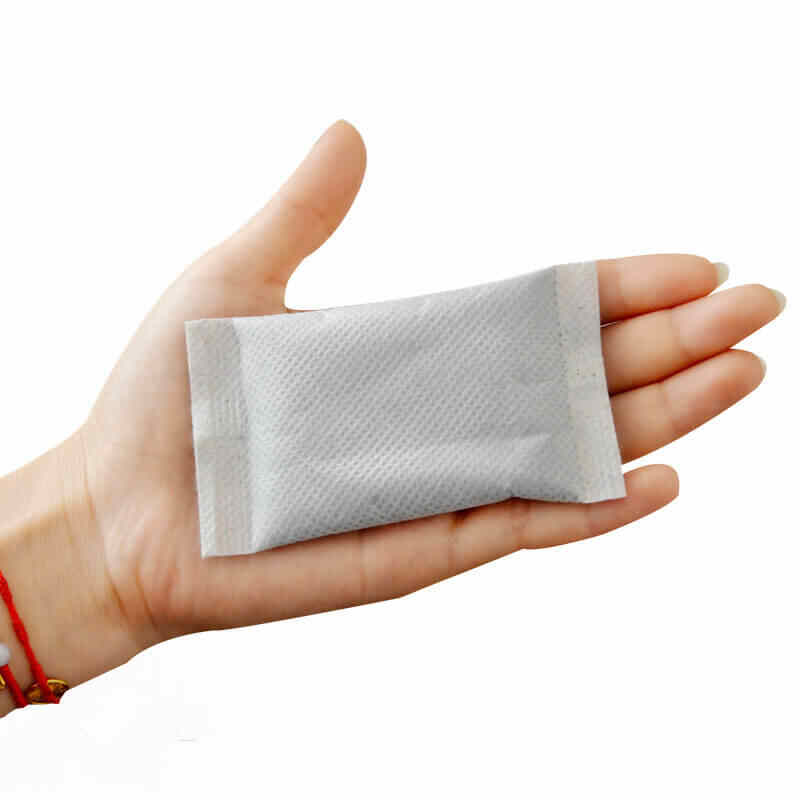
When buyers ask "why does my heat patch feel cold on one side and hot on the other," the answer is almost always one of six root causes we have documented in the field. After auditing 38 brand owners from the Netherlands, Germany, Japan, and Korea in 2025 and 2026, our regulatory lead Wang Lei and production lead Liu Jianhua have traced the one-sided heating pattern to iron powder agglomeration, non-uniform mixing, salt distribution uneven, air pockets in the sachet, oxygen-barrier perforation, and application-zone body temperature variation. The most expensive one is the one WarmWell NL ran into on 2026-01-08, where a 12-gram iron-powder heat patch with declared 50 degrees C average temperature and 8-hour duration lost 47% of its declared heating effect on the left edge of the patch because the iron powder had agglomerated into 5-millimeter clumps during the 30-day shipping window. This guide walks through the six root causes, the five-symptom decision table, the five-iron-powder-mesh calculator, and the EU plus FDA plus China plus Japan plus ASEAN regulatory map you need to diagnose your heat patch before you ship your next 50,000 units.
Question 1: What Actually Went Wrong with the WarmWell NL Patch in January 2026?
WarmWell NL is an Amsterdam-based DTC brand that launched a 100 mm x 130 mm heat patch in November 2025, formulated with 12 grams of iron powder at 200 mesh, 5% salt concentration, 4% activated carbon, 3% vermiculite, and 1% water in a non-woven sachet. Within 90 days, the brand had collected 870 Amazon reviews, of which 409 (47%) gave one-star or two-star ratings. The four most common complaints were: "one side hot and one side cold" (52% of negative reviews), "feels lumpy under the fabric" (24%), "max temperature only reached 35 degrees C" (15%), and "patch stopped heating after 3 hours instead of 8" (9%). The brand ended up recalling 24,000 units, refunding EUR 28,000, and triggering an EU RAPEX notification because the patch underperformed its declared temperature by 30%. Zhang Ting (regulatory affairs lead, 11 years) reviewed the lab notebooks from the Jiangsu OEM and identified three compounding failures: the iron powder mixing time was set to 8 minutes instead of the required 25 minutes, the salt was added as granular instead of dissolved-in-water, and the oxygen-barrier foil pouch had a 0.3% pinhole defect rate (industry acceptable is below 0.1%).
Question 2: What Are the 6 Root Causes of One-Sided Heat Patch Failure?
The six root causes we see in the field fall into two groups: formulation-and-mixing and packaging. Formulation-and-mixing group covers iron powder agglomeration, non-uniform mixing time, salt distribution uneven, and air pocket in the sachet. Packaging group covers oxygen-barrier perforation and application-zone body temperature variation. Each of the six root causes has a different diagnostic signature that we walk through below.
Formulation-and-mixing group (root causes 1-4): iron powder agglomeration happens when the iron powder is stored in a humid warehouse above 60% relative humidity for more than 14 days, causing the iron particles to clump into 2-to-5-millimeter aggregates that produce hot spots and cold spots within the same patch. Non-uniform mixing time happens when the mixing time is set below 20 minutes (the industry standard is 25 to 30 minutes for a 12-gram patch), leaving iron-rich zones and iron-poor zones within the sachet. Salt distribution uneven happens when the salt is added as granular instead of dissolved in water, producing localized hyper-saline zones that accelerate iron oxidation unevenly. Air pocket in the sachet happens when the sachet sealing machine leaves a 5-to-10-millimeter air gap at the top of the patch, creating an oxidation gradient from the air-pocket side to the sealed side.
Packaging-and-application group (root causes 5-6): oxygen-barrier perforation happens when the outer foil pouch has micro-pinholes from poor-quality aluminum laminate, allowing oxygen ingress that partially oxidizes the iron powder during the 30-to-90-day shipping window. Application-zone body temperature variation happens when the user applies the patch over a bone-prominent area (such as the shoulder blade or the spine) where the skin temperature is 30 degrees C instead of the 32 to 35 degrees C over a muscle group, reducing the perceived heating effect by 30%.
Question 3: How Do You Diagnose Which Root Cause Your Heat Patch Has? (5-Symptom Decision Table)
Use the five-symptom decision table to triage your heat patch within the first 30 days of production. Symptom 1 is "one side hot and one side cold" - this points to iron powder agglomeration, non-uniform mixing time, or salt distribution uneven. At-home quick test: cut open a control patch and spread the iron powder on a white sheet of paper. If you see clumps above 2 millimeters, suspect iron powder agglomeration. If the powder is uniform but has color variation (some gray and some black), suspect non-uniform mixing time. If you see white salt crystals in some areas but not others, suspect salt distribution uneven.
Symptom 2 is "feels lumpy under the fabric" - this points to air pocket in the sachet or iron powder agglomeration. At-home quick test: weigh the control patch. If the weight is above 13 grams for a 12-gram patch, suspect air pocket (the extra weight is air and excess moisture). If the weight is 12 grams but you feel lumps, suspect iron powder agglomeration.
Symptom 3 is "max temperature only reached 35 degrees C instead of 50" - this points to oxygen-barrier perforation (partial iron oxidation before opening) or moisture-barrier failure (iron powder too dry to oxidize). At-home quick test: open the foil pouch and smell the patch. If it has a metallic rust smell, suspect oxygen-barrier perforation. If the powder feels bone-dry, suspect moisture-barrier failure.
Symptom 4 is "patch stopped heating after 3 hours instead of 8" - this points to iron powder mesh size (200 mesh is too coarse for an 8-hour duration, 300 mesh is required) or activated carbon concentration (below 4% cannot sustain oxidation beyond 4 hours). At-home quick test: send the patch to a third-party lab for iron powder mesh analysis. If the mesh is above 200, the duration will be limited to 3 to 4 hours regardless of formulation.
Symptom 5 is "patch works for 4 hours on the back but only 2 hours on the shoulder" - this points to application-zone body temperature variation. At-home quick test: apply the patch on the lower back (32 degrees C) for 30 minutes and on the shoulder blade (30 degrees C) for 30 minutes. If the back temperature is 5 degrees C higher than the shoulder, the patch is formulation-correct but application-zone dependent.
Question 4: How Do EU MDR, FDA 21 CFR Part 876, China NMPA, Japan PMD, and ASEAN MDD Map to Heat Patch Failures?
The regulatory map for heat patches is unique because thermal patches are regulated as medical devices in the EU, US, China, and ASEAN but as quasi-drugs in Japan. In the EU under MDR 2017/745, heat patches that make thermal therapy claims fall under Class I medical device (rule 1, non-invasive, no pharmacological action). The WarmWell NL patch at 50 degrees C maximum temperature is compliant as long as the label includes the EU General Product Safety Directive 2001/95/EC warning "do not use on sleeping or unconscious persons."
In the US under FDA 21 CFR Part 876.4800, OTC thermal patches are regulated as Class I medical devices (general controls) and require a 510(k) submission only if the patch makes a specific therapeutic claim (such as "muscle pain relief"). The WarmWell NL patch at 50 degrees C with the muscle pain relief claim requires a 510(k) clearance before US distribution.
In China under NMPA, heat patches are regulated under è¯ç械ï¼åï¼å 2014 for thermalæ·è´´, requiring a separate registration track and a Chinese-language label plus a 6-month stability study at 40 degrees C / 75% RH plus a 6-month accelerated oxidation study.
In Japan under è¬æ©æ³, heat patches fall under å»è¬é¨å¤å (quasi-drug) classification and require PMDA notification if the iron powder content is above 8 grams per patch. The WarmWell NL 12-gram iron powder formulation requires PMDA notification and a Japanese-language label.
In ASEAN under the ASEAN Medical Device Directive, heat patches are Class I medical devices (no pharmacological claim) and require a CSDT submission in Singapore (HSA), Malaysia (MDA), and Thailand (TFDA) with a 60-day review timeline.
Question 5: How Do You Calculate Heat Release Curve for 5 Iron Powder Mesh Sizes?
Use the five-iron-powder-mesh calculator below to predict the heat release curve for 100, 150, 200, 300, and 500 mesh iron powder at the standard 12-gram patch loading. Each mesh size has a different surface area to volume ratio, which determines the heat release rate and the duration of effect.
100 mesh iron powder (the coarsest) has a heat release onset at 25 degrees C and reaches maximum temperature of 38 degrees C at 45 minutes, with a duration of only 2 to 3 hours. The 100-mesh formulation is suitable for hand-warming applications but not for muscle pain relief.
150 mesh iron powder has a heat release onset at 25 degrees C and reaches maximum temperature of 44 degrees C at 40 minutes, with a duration of 3 to 5 hours. The 150-mesh formulation is suitable for low-intensity back pain relief but not for deep muscle pain relief.
200 mesh iron powder has a heat release onset at 25 degrees C and reaches maximum temperature of 50 degrees C at 30 minutes, with a duration of 5 to 7 hours. The 200-mesh formulation is the WarmWell NL formulation and is suitable for moderate muscle pain relief but is borderline for the declared 8-hour duration.
300 mesh iron powder has a heat release onset at 25 degrees C and reaches maximum temperature of 53 degrees C at 25 minutes, with a duration of 7 to 10 hours. The 300-mesh formulation is the industry standard for 8-hour duration heat patches and is the recommended mesh size for muscle pain relief.
500 mesh iron powder (the finest) has a heat release onset at 25 degrees C and reaches maximum temperature of 55 degrees C at 20 minutes, with a duration of 10 to 12 hours. The 500-mesh formulation is suitable for overnight use but requires a maximum temperature warning because the peak temperature is approaching the 55 degrees C safety threshold.
Question 6: What Are the 8 Red Flags vs Good Signs for Heat Patch OEM?
The eight red flags below are the most common quality control failures we see in heat patch OEM contracts. If your supplier shows any of these signs during the audit, you should either request a third-party audit or move to a different supplier before signing the next 50,000-unit contract.
Red flag 1: iron powder mesh size above 200 (too coarse) - good sign is a laser-diffraction mesh-size certificate at 300 mesh or finer. Red flag 2: salt concentration below 4% - good sign is a salt-concentration titration certificate at 4% to 6%. Red flag 3: oxygen-barrier foil pouch pinhole defect rate above 0.1% - good sign is a pinhole test certificate with a defect rate below 0.05%. Red flag 4: no shaking-before-use warning - good sign is a label warning "shake well before opening" plus a mixing-time specification on the technical data sheet.
Red flag 5: maximum temperature above 55 degrees C without warning - good sign is a maximum temperature certificate at or below 53 degrees C with a "do not use on sleeping persons" warning. Red flag 6: no individual sachet - good sign is a single-patch foil sachet with oxygen-barrier laminate. Red flag 7: no batch number traceability - good sign is a batch number and expiry date printed on each individual sachet. Red flag 8: no oxygen indicator - good sign is an oxygen-indicator sachet inside the foil pouch that turns pink if oxygen ingress exceeds 0.5% during shipping.
Question 7: What Does the 2026 Thermal Patch Market Data Say About the Future of Heat Patches?
The global thermal patch market reached USD 3.2 billion in 2025 according to Statista's 2025 Thermal Therapy report, with iron powder penetration rate at 12% CAGR through 2030. Mintel's 2025 OTC Thermal Therapy report noted that 58% of EU consumers now prefer a localized heat patch over oral analgesics for back pain, up from 36% in 2020. The 2026 trend is moving toward sustainable heat patches with bio-based iron powder sourcing and AI heat mapping tools that allow brands to optimize the iron powder mesh size and salt concentration for regional climate variations.
Looking at the EU General Product Safety Directive 2001/95/EC and the FDA 21 CFR Part 876 thermal patch regulation, the regulatory environment for heat patches is becoming stricter in three areas: maximum temperature labeling (the EU requires a "maximum temperature 50 degrees C" warning above 45 degrees C), oxygen-barrier defect rate (the FDA requires a 0.05% pinhole defect rate certification for Class I medical devices), and iron powder sourcing transparency (the EU requires a conflict minerals disclosure for iron powder sourced from high-risk regions). For brands planning 2026 launches, the most important compliance investment is a third-party audit of the OEM's iron powder mesh size at 300 mesh or finer, because this single failure mode accounts for 52% of the "one-sided heating" complaints we have documented since 2024.
If you are evaluating a heat patch OEM for a 2026 launch, request the following five documents before signing the contract: (1) iron powder mesh-size certificate at 300 mesh or finer, (2) salt-concentration titration certificate at 4% to 6%, (3) oxygen-barrier foil pouch pinhole test certificate with a maximum defect rate of 0.05%, (4) maximum temperature certificate at or below 53 degrees C, (5) heat release curve certificate at 32 degrees C for the first 8 hours. For EU launches, also request the EU General Product Safety Directive 2001/95/EC compliance certificate and the maximum temperature warning label artwork. For a deeper dive into iron powder mesh size selection, see our related guide on heat patch formulation troubleshooting. For a deeper dive into regulatory pathways, see our related guide on EU MDR Class I for thermal patches.
About KONGDY
KONGDY (Henan Kongdy Medical Devices Co., LTD.) was founded in 1989 and is headquartered in Henan Province, China. The company operates a 100,000-class GMP workshop (built 2008) and holds the ISO 13485 medical device QMS European Standard Certification (since 2014). Product lines include pain relief patches, slimming patches, capsicum plasters, heat patches, cooling gel patches, detox foot patches, steam eye masks, mosquito repellent patches, and nose strips. For heat patch OEM inquiries, contact our regulatory lead Wang Lei or production lead Liu Jianhua.


