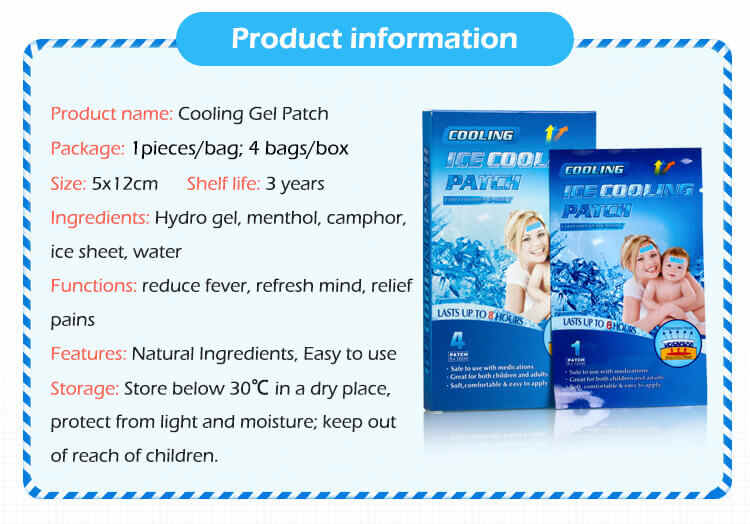
-
 KONGDY
Why Are OEM Manufacturing Standards Critical for Baby Cooling Fever Patches?
In the highly sensitive infant healthcare market, safety, consistency, and regulatory compliance are not optional—they are fundamental. For brands entering or expanding in the baby care segment, especially with products like cooling fever patches, choosing a Baby Cooling Fever Patches Manufacturer that adheres to strict OEM manufacturing standards can determine long-term success or failure.
This article explores why OEM manufacturing standards are critical for Baby Cooling Fever Patches, how they protect infants and brands alike, and why working with a certified Baby Cooling Fever Patches OEM is the smartest path for private label and custom product development.
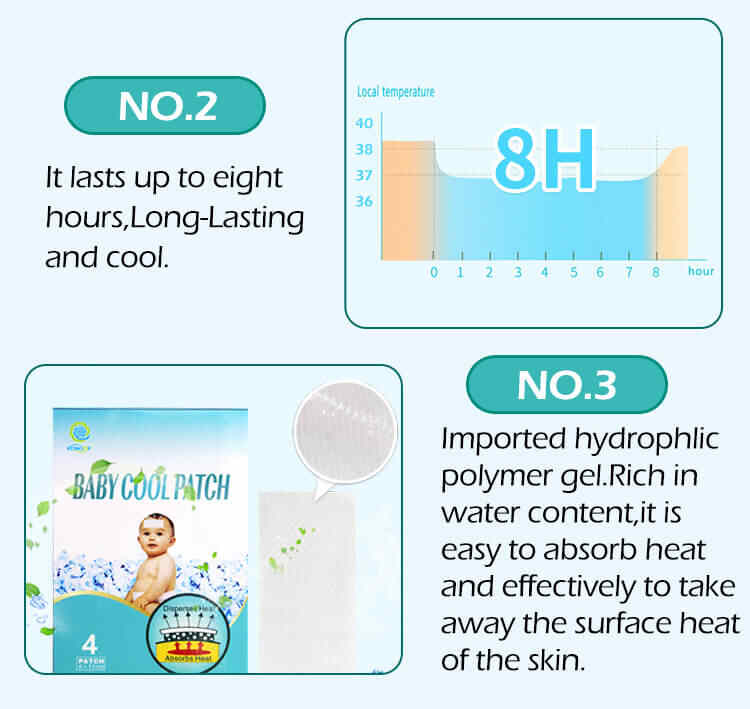
Understanding OEM Manufacturing in Baby Cooling Fever Patches
OEM (Original Equipment Manufacturer) refers to a manufacturer that produces goods according to predefined specifications, often under another company’s brand. In the baby care sector, OEM manufacturing goes far beyond simple production—it involves R&D validation, safety testing, regulatory compliance, and quality control.
A professional Baby Cooling Fever Patches OEM typically supports:
Product formulation and stability testing
Material safety assessment for infant skin
Compliance with global regulations
Customization for branding and packaging
Scalable, consistent production
For products designed for babies—whose skin is thinner, more absorbent, and more sensitive—OEM standards are especially critical.
Why Baby Cooling Fever Patches Require Higher Manufacturing Standards
1. Infant Skin Safety Is Non-Negotiable
Baby cooling fever patches come into direct, prolonged contact with delicate infant skin, often during periods of fever when skin sensitivity is increased. Poor-quality raw materials, unstable gels, or contaminated adhesives can lead to:
Skin irritation or rashes
Allergic reactions
Chemical absorption risks
Loss of consumer trust
A certified Baby Cooling Fever Patches Manufacturer follows strict material selection protocols, including:
Medical- or cosmetic-grade raw materials
Hypoallergenic, dermatologically tested adhesives
Non-toxic cooling agents
Heavy metal and preservative limits
OEM standards ensure every batch meets the same safety threshold, protecting infants and end users.
2. Regulatory Compliance Depends on OEM Standards
Different markets classify baby cooling fever patches differently—as consumer health products, medical devices, or quasi-medical products. Regardless of classification, regulatory scrutiny is high.
A qualified Baby Cooling Fever Patches OEM ensures compliance with standards such as:
ISO 13485 / ISO 9001 quality systems
GMP (Good Manufacturing Practice)
FDA registration (for US market)
CE marking (for EU market)
CPSR and baby product safety regulations
Without OEM manufacturing standards, Private Label Baby Cooling Fever Patches may face:
Customs clearance delays
Product recalls
Market bans
Legal liabilities
Strong OEM compliance simplifies global market entry and reduces regulatory risk for brand owners.
3. Consistent Cooling Performance Requires Process Control
Cooling fever patches rely on precise gel formulation and moisture balance to deliver safe, effective cooling without overcooling or dehydration.
OEM standards control:
Gel viscosity and evaporation rate
Cooling duration consistency
Patch thickness and adhesion strength
Temperature reduction parameters
A professional Baby Cooling Fever Patches Supplier with standardized OEM processes ensures:
Every patch performs the same
Cooling effect remains gentle and stable
No batch-to-batch performance deviation
This consistency is critical for building consumer confidence and positive reviews.
OEM Standards Protect Brand Reputation in Private Label Projects
4. Private Label Baby Cooling Fever Patches Depend on Manufacturer Credibility
When launching Private Label Baby Cooling Fever Patches, your brand—not the factory—takes responsibility in the market. Any quality issue becomes your brand’s crisis.
OEM manufacturing standards protect brands by providing:
Full batch traceability
Documented quality inspections
Raw material COAs (Certificates of Analysis)
Stability and shelf-life data
By working with a trusted Baby Cooling Fever Patches Manufacturer, private label brands reduce:
Complaint rates
Return ratios
Negative reviews
Legal exposure
OEM standards act as an invisible insurance policy for your brand.
5. Custom Baby Cooling Fever Patches Require R&D Discipline
Customization is a key advantage of OEM manufacturing, but it also increases risk if standards are weak.
Custom Baby Cooling Fever Patches may involve:
New gel formulations
Different cooling durations
Alternative sizes or shapes
Customized packaging or scents
Without strict OEM R&D protocols, customization can result in:
Formula instability
Adhesion failure
Reduced shelf life
Regulatory non-compliance
A professional Baby Cooling Fever Patches OEM conducts:
Compatibility testing
Pilot batch validation
Stability testing under multiple conditions
Risk assessments before mass production
This ensures customization enhances your product—not compromises safety.
Quality Control: The Core of OEM Manufacturing Standards
6. Multi-Stage Quality Control Prevents Hidden Risks
OEM manufacturing standards introduce layered quality control, not just final inspection.
A reliable Baby Cooling Fever Patches Supplier typically includes:
Incoming raw material inspection
In-process monitoring
Microbial testing
Adhesion and peel tests
Finished product inspection
Retention sample storage
This systematic approach minimizes defects and ensures early problem detection.
7. Traceability and Documentation Are Critical in Baby Products
In the event of customer feedback or regulatory inquiries, OEM documentation becomes essential.
Strong OEM standards provide:
Batch numbers and production logs
Ingredient traceability
Quality deviation reports
Recall readiness protocols
For Private Label Baby Cooling Fever Patches, traceability demonstrates professionalism and accountability—two qualities regulators and distributors value highly.
OEM Standards Support Long-Term Business Scalability
8. Scalable Production Without Quality Loss
As demand grows, many brands struggle to maintain quality at higher volumes. OEM manufacturing standards enable scalable growth without sacrificing safety.
A certified Baby Cooling Fever Patches Manufacturer uses:
Standardized operating procedures (SOPs)
Automated or semi-automated production lines
Validated equipment
Trained quality personnel
This allows brands to expand distribution channels confidently.
9. OEM Standards Improve Supply Chain Reliability
Inconsistent manufacturing leads to:
Delivery delays
Variable product quality
Unstable pricing
By contrast, a professional Baby Cooling Fever Patches OEM ensures:
Stable production planning
Reliable lead times
Consistent raw material sourcing
This reliability strengthens partnerships between brands and their Baby Cooling Fever Patches Supplier.
Why Retailers and Distributors Demand OEM Compliance
10. OEM Standards Are a Gatekeeper for Major Channels
Large retailers, pharmacies, and online platforms increasingly require:
Factory audits
Certification verification
Compliance documentation
Without strong OEM standards, Custom Baby Cooling Fever Patches may never reach premium sales channels.
OEM-compliant manufacturers help brands pass:
Retail compliance checks
Distributor audits
Cross-border trade requirements
This directly impacts your market access and revenue potential.
Competitive Advantage Through OEM Excellence
11. OEM Standards Differentiate Your Brand in a Crowded Market
In the baby care market, trust is the strongest differentiator. Brands backed by reputable Baby Cooling Fever Patches OEM partners can confidently communicate:
“Manufactured in certified facilities”
“Tested for infant skin safety”
“Produced under strict quality standards”
These claims resonate strongly with parents and caregivers, driving repeat purchases.
12. OEM Standards Support Sustainable and Ethical Manufacturing
Modern OEM manufacturing standards increasingly include:
Eco-friendly materials
Waste reduction processes
Ethical labor practices
A responsible Baby Cooling Fever Patches Manufacturer helps brands align with sustainability trends—an important factor for modern consumers.
Choosing the Right Baby Cooling Fever Patches OEM Partner
To fully benefit from OEM manufacturing standards, brands should evaluate potential partners based on:
Certifications and compliance history
Experience with baby-specific products
Customization capabilities
Quality control transparency
Regulatory support services
A trusted Baby Cooling Fever Patches Supplier is not just a factory—but a long-term strategic partner.
Conclusion: OEM Manufacturing Standards Are the Foundation of Trust
OEM manufacturing standards are not merely technical requirements—they are the foundation of safety, compliance, brand credibility, and long-term growth in the baby cooling fever patch market.
For brands developing Private Label Baby Cooling Fever Patches or Custom Baby Cooling Fever Patches, working with a certified Baby Cooling Fever Patches Manufacturer ensures:
Infant safety
Regulatory readiness
Product consistency
Market competitiveness
In a category where trust is everything, OEM standards are not optional—they are essential.
Frequently Asked Questions (FAQ)
Q1: Why are OEM standards especially important for Baby Cooling Fever Patches?
A: Because the product directly contacts infant skin, OEM standards ensure safety, consistency, and regulatory compliance.
Q2: Can Private Label Baby Cooling Fever Patches be produced safely through OEM?
A: Yes, when working with a certified Baby Cooling Fever Patches OEM with strict quality control systems.
Q3: Do Custom Baby Cooling Fever Patches require additional testing?
A: Absolutely. Custom formulations or designs must undergo stability, safety, and compatibility testing.
Q4: How do OEM standards help with global market entry?
A: OEM compliance supports FDA, CE, and ISO requirements, reducing regulatory barriers.
Q5: What should I look for in a Baby Cooling Fever Patches Supplier?
A: Certifications, baby-product experience, transparent QC processes, and strong regulatory support.


