-
 KONGDY
What Materials Should a Baby Cooling Fever Patches Manufacturer Use?
When it comes to infant healthcare products, material selection is the foundation of safety, performance, and brand trust. For baby cooling fever patches—products that come into direct contact with delicate infant skin—choosing the right materials is not simply a technical decision, but a strategic one.
A professional Baby Cooling Fever Patches Manufacturer must follow strict material standards to ensure safety, comfort, regulatory compliance, and consistent cooling performance. For brands working with a Baby Cooling Fever Patches OEM, understanding these materials is essential to developing successful Custom Baby Cooling Fever Patches or Private Label Baby Cooling Fever Patches.
This article provides an in-depth analysis of what materials a qualified Baby Cooling Fever Patches Manufacturer should use, why each material matters, and how proper material selection protects both babies and brands.
Why Material Selection Is Critical for Baby Cooling Fever Patches
Baby cooling fever patches are designed for:
Infants and young children
Sensitive, developing skin
Prolonged skin contact
Use during fever or illness
This means material safety requirements are significantly higher than for adult cooling patches or general consumer products.
A responsible Baby Cooling Fever Patches OEM must ensure that every material used:
Is non-toxic and hypoallergenic
Meets baby product safety standards
Has stable performance across shelf life
Complies with global regulations
Poor material choices can lead to skin irritation, allergic reactions, product recalls, and irreversible brand damage.
Core Material Components of Baby Cooling Fever Patches
A high-quality baby cooling fever patch typically consists of four main material layers, each serving a specific function:
Cooling gel layer
Non-woven or film backing layer
Skin-contact adhesive layer
Protective release liner
Each component must be carefully selected and validated by the Baby Cooling Fever Patches Manufacturer.
1. Cooling Gel: The Heart of Performance and Safety
What Should the Cooling Gel Be Made Of?
The cooling gel is the core functional material. A certified Baby Cooling Fever Patches OEM should use:
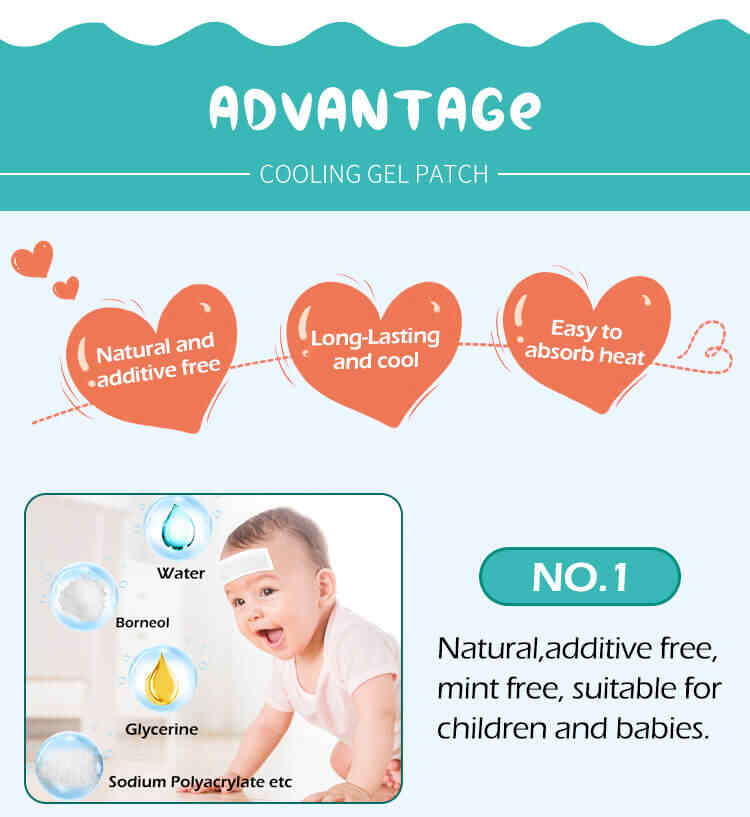
Purified water (pharmaceutical or cosmetic grade)
Safe polymer gel matrices (e.g., hydrogel polymers)
Gentle cooling agents (non-drug, physical cooling)
Skin-conditioning ingredients (optional)
The cooling mechanism should rely on physical evaporation, not medicinal or chemical cooling agents.
What Cooling Gel Ingredients Should Be Avoided?
A responsible Baby Cooling Fever Patches Manufacturer avoids:
Menthol or camphor (too strong for babies)
Alcohol (drying and irritating)
Salicylates
Artificial colorants
Unnecessary fragrances
For Custom Baby Cooling Fever Patches, any additional ingredient must be justified with safety data and infant-skin compatibility testing.
Why Gel Stability Matters
Gel instability can cause:
Uneven cooling
Water separation
Reduced shelf life
Leakage during storage
A professional Baby Cooling Fever Patches Supplier performs:
Stability testing
Viscosity control
Temperature tolerance testing
These ensure consistent performance throughout the product’s lifecycle.
2. Backing Material: Comfort, Breathability, and Structure
Ideal Backing Materials for Baby Cooling Fever Patches
The backing layer supports the gel and provides structure. High-quality Baby Cooling Fever Patches OEM manufacturers typically use:
Medical-grade non-woven fabric
Breathable polymer films
Soft composite laminates
These materials must be:
Flexible and lightweight
Skin-friendly
Tear-resistant
Free from sharp edges
Why Breathability Is Essential
Infant skin requires airflow to prevent:
Heat buildup
Moisture accumulation
Skin maceration
A reputable Baby Cooling Fever Patches Manufacturer selects backing materials with controlled breathability to maintain comfort during extended use.
Backing Materials and Customization
For Custom Baby Cooling Fever Patches, backing materials may be customized in:
Shape
Thickness
Print compatibility (logos, patterns)
OEM standards ensure customization never compromises safety or comfort.
3. Adhesive Layer: Gentle but Reliable Skin Contact
What Adhesives Should Be Used?
Adhesives are often the highest-risk material for baby skin. A responsible Baby Cooling Fever Patches OEM uses:
Hypoallergenic, medical-grade pressure-sensitive adhesives
Latex-free formulations
Low-residue adhesives
These adhesives should:
Stick securely without slipping
Remove cleanly without pain
Leave no residue on baby skin
Why Adhesive Testing Is Critical
Inferior adhesives can cause:
Skin redness
Allergic reactions
Pain during removal
Patch detachment
A professional Baby Cooling Fever Patches Manufacturer conducts:
Skin irritation testing
Peel strength testing
Residue evaluation
This protects both infants and brand reputation.
Adhesive Considerations for Private Label Projects
For Private Label Baby Cooling Fever Patches, adhesive performance consistency is critical. OEM material control ensures:
Uniform adhesion across batches
Stable performance in different climates
Reduced consumer complaints
4. Release Liner: Protecting the Patch Until Use
What Makes a Good Release Liner?
The release liner protects the adhesive and gel before application. A qualified Baby Cooling Fever Patches Supplier uses:
Silicone-coated release paper or film
Non-contaminating materials
Smooth peel-release surfaces
The liner must:
Peel off easily
Not disturb the gel
Leave adhesive intact
Why Release Liners Affect User Experience
Parents expect easy, hygienic application. Poor liner materials can lead to:
Adhesive lifting
Gel damage
Frustrating application
OEM material standards ensure a smooth, intuitive user experience.
Additional Material Considerations for Baby Cooling Fever Patches
5. Packaging Materials: Safety Beyond the Patch
While not part of the patch itself, packaging materials also matter.
A professional Baby Cooling Fever Patches Manufacturer selects:
Food-grade or medical-grade packaging films
Moisture- and oxygen-barrier materials
Non-toxic inks for printing
Proper packaging protects material integrity and extends shelf life.
6. Compliance With Baby Product Regulations
Materials must comply with:
FDA requirements (US)
EU General Product Safety Directive
CPSR for children’s products
ISO and GMP standards
A certified Baby Cooling Fever Patches OEM ensures full material documentation and traceability.
Material Transparency: A Key OEM Responsibility
Why Brands Need Material Disclosure
For Custom Baby Cooling Fever Patches and Private Label Baby Cooling Fever Patches, brands often need:
Ingredient lists
Material safety data sheets (MSDS)
Certificates of analysis (COA)
A trustworthy Baby Cooling Fever Patches Supplier provides transparent documentation to support marketing claims and regulatory submissions.
How High-Quality Materials Protect Brand Value
Reduced Risk of Recalls and Complaints
Using certified materials:
Minimizes skin reaction reports
Reduces regulatory risk
Builds consumer confidence
OEM material discipline is a long-term investment in brand equity.
Supporting Premium Market Positioning
Brands can confidently position products as:
“Gentle for baby skin”
“Dermatologically tested”
“Made with safe, medical-grade materials”
These claims are only credible when supported by a responsible Baby Cooling Fever Patches Manufacturer.
Choosing the Right Baby Cooling Fever Patches OEM Partner
When evaluating an OEM, brands should ask:
What grades of materials are used?
Are all materials baby-skin tested?
Can material documentation be provided?
How is material consistency controlled?
A reliable Baby Cooling Fever Patches Supplier treats material selection as a core competence—not a cost-cutting opportunity.
Conclusion: Materials Define Safety, Performance, and Trust
The materials used in baby cooling fever patches determine everything that matters—from infant safety and comfort to regulatory approval and brand credibility.
A professional Baby Cooling Fever Patches Manufacturer must use:
Safe, stable cooling gels
Breathable, skin-friendly backing materials
Hypoallergenic medical-grade adhesives
Reliable protective liners
For brands developing Custom Baby Cooling Fever Patches or Private Label Baby Cooling Fever Patches, partnering with a certified Baby Cooling Fever Patches OEM ensures that every material choice supports long-term success.
In the baby care market, materials are not just components—they are promises.
Frequently Asked Questions (FAQ)
Q1: What is the most important material in Baby Cooling Fever Patches?
A: The cooling gel, as it directly affects safety, comfort, and cooling performance.
Q2: Are fragrances safe in Baby Cooling Fever Patches?
A: Most Baby Cooling Fever Patches Manufacturers avoid fragrances to reduce irritation risk.
Q3: Why are medical-grade adhesives necessary?
A: Baby skin is highly sensitive, and medical-grade adhesives reduce irritation and pain during removal.
Q4: Can materials be customized for private label projects?
A: Yes, a qualified Baby Cooling Fever Patches OEM can customize materials while maintaining safety standards.
Q5: How can I verify material safety from a Baby Cooling Fever Patches Supplier?
A: Request MSDS, COA, test reports, and certification documentation.


