-
 KONGDY
Twelve Record Gates from Incoming Material to Release: A Heat Patch OEM Walkthrough with 21 CFR Part 11 in 2026
Twelve Record Gates from Incoming Material to Release: A Heat Patch OEM Walkthrough with 21 CFR Part 11 in 2026
A batch of patches becomes releasable through a sequence of records, and the sequence has a property that makes it worth writing down. It is ordered by dependency rather than by convenience, so a gate cannot be completed before the gate it depends on.
Twelve gates are set out below, from the qualification of a raw material supplier to the disposition decision on a finished batch. Each one says who owns it, which published clause requires it, and the failure that appears at that gate in the public record.
The worked example throughout is warning letter MARCS-CMS 724506, which is unusual because it documents the absence of six of these gates in a single firm rather than the failure of one. The letter records that the firm could provide finished product testing evidence for appearance and weight only, and that its analysts were relying on supplier certificates without verifying them.
One clause enters this knowledge base for the first time in this article. 21 CFR Part 11 governs electronic records and electronic signatures, and it changes the character of every gate below, because a gate recorded in a spreadsheet is a different legal object from a gate recorded on a signed paper form.
For a heat patch OEM the practical value of the twelve gates is that they can be produced as a list in a single afternoon and audited against in a single day, which is not true of a quality manual. A heat patch OEM that can produce the twelve as a list has produced the part of its system that can be checked.
Gate 1: the supplier was qualified before the material arrived
The first gate is a decision about a relationship rather than a test on a material, and it is the only gate that can be completed before anything is shipped.
| Element | What it requires |
|---|---|
| Owner | The quality function, with purchasing proposing the supplier |
| The record | An approved supplier list entry naming the material, the supplier, the approval date and the basis of approval |
| The clause | ISO 13485:2016 for the quality management system, and 21 CFR 211.84 for the material system that the gate feeds |
| The failure at this gate | A supplier that was used before being approved, which produces a batch whose origin cannot be defended |
The gate is first because every later gate assumes the material came from somewhere known. A quality system that starts at gate two has started after the point at which provenance was established. A heat patch OEM with an unapproved supplier on the list has a defect at the first gate rather than at the last.
Gate 2: incoming material is identified, not described
The second gate is the identity test, and the clause is specific enough to quote.
21 CFR 211.84(d)(1) requires that each component be tested for identity and conformity with all appropriate written specifications for purity, strength and quality. The letter in the worked example found that the firm had not tested incoming active ingredients and other components for identity, purity, strength and quality at all.
| What the clause requires | What the letter found | What a buyer should ask for |
|---|---|---|
| Identity testing on each component batch | No incoming testing of active ingredients or other components | The identity test record for one recent batch of each critical component |
| Conformity with written specifications for purity, strength and quality | No specifications applied at the incoming stage | The incoming specification for the material, dated |
| At least one specific identity test per incoming batch | Not performed | The record that shows which test was used and on which lot |
The third row is the requirement that a programme most often meets in part. A certificate from the supplier describing identity is not an identity test performed by the receiving firm, and gate four is where that distinction is recorded.
A heat patch OEM with an iron powder, a salt load and a barrier laminate has three components at this gate rather than one, and the one most often left untested is the laminate. A heat patch OEM that has tested the powder and not the film has tested the part that is easiest to test.
Gate 3: the supplier result is verified rather than accepted
The third gate is the one that turns a supplier certificate into evidence, and the clause names the mechanism.
21 CFR 211.84(d)(2) requires that the firm validate and establish the reliability of a component supplier test analyses at appropriate intervals. The letter found that the firm relied on supplier certificates of analysis without verifying the supplier results at appropriate intervals.
| The distinction | What it means in practice |
|---|---|
| Accepting a certificate | The material is taken to be what the supplier says it is |
| Verifying a supplier result | The firm has its own evidence that the supplier test is reliable, established at stated intervals |
| The combination the agency asked for | Initial validation, periodic re-validation, and at least one specific identity test on every incoming batch |
| What a certificate cannot do | Establish anything about the material that arrived, as distinct from the material the supplier tested |
The fourth row is the sentence to keep. A certificate is a statement about a material at the supplier site, and the only thing in the list that concerns the material in the warehouse is the identity test on the receiving batch. A heat patch OEM should be able to name the date of its last supplier verification rather than the existence of a procedure.
Gate 4: the batch record is written before it is filled in
The fourth gate is the production record, and the clause is about contemporaneous completion rather than about content.
21 CFR 211.100(a) requires adequate written procedures for production and process control, and requires the quality control unit to review and approve those procedures and any changes to them. The letter found that the quality control unit had not reviewed and approved the process documents.
| Element | What it requires | The failure |
|---|---|---|
| A written procedure existing before the batch | The master batch record approved by the quality unit with a version and a date | A batch made to an instruction that was never approved |
| Contemporaneous recording | Entries made at the time of the step, by the person who performed it | A record completed at the end of the shift from memory |
| Review and approval of changes | Any change to the procedure reviewed by the quality unit before it takes effect | A specification changed on the line without the quality unit seeing it |
| The electronic case | Where the record is electronic, 21 CFR Part 11 applies to it | A record that satisfies the paper rule and not the electronic one |
The fourth row is where Part 11 enters and it is the reason this article exists. A record kept in a spreadsheet is not automatically a compliant record, and the requirements it has to meet are different from the requirements of a signed form. A heat patch OEM that keeps the batch record in a spreadsheet has a record and a Part 11 question at the same time.
Gate 5: in-process controls stop the batch before the end
The fifth gate is the one that makes the release test at gate nine a confirmation rather than a discovery.
| Element | What it requires |
|---|---|
| The record | In-process measurements with acceptance criteria and the action taken when a criterion is not met |
| The clause | 21 CFR 211.100(a) for production and process control, with the quality unit approving the criteria |
| The failure at this gate | A criterion that exists on paper and has never produced a rejection |
| Why it is here | A batch that fails at gate nine has already consumed the whole process, so gate five is the last cheap exit |
The third row is the one worth testing a supplier on. An in-process criterion that has never stopped anything is either perfectly chosen or not being used, and the second explanation is more common. A heat patch OEM that cannot name a criterion that has ever stopped a batch has not yet demonstrated that gate five is in use.
Gate 6: the process was validated, not just performed
The sixth gate is the one that distinguishes a process from a set of instructions that happened to work once.
The letter in the worked example found that the firm lacked process validation studies demonstrating reproducibility and control of its manufacturing processes. The agency asks for process performance qualification and ongoing monitoring of intra-batch and inter-batch variation.
| What is required | What it produces | What it is not |
|---|---|---|
| Process performance qualification | Evidence that the process as designed achieves the specification across batches | A single successful batch |
| Intra-batch monitoring | Evidence that variation within a batch is understood | A finished product test result |
| Inter-batch monitoring | Evidence that variation between batches is understood | A trend chart with no acceptance limit |
A heat patch OEM has a specific reason to care, because the temperature curve of a self-heating patch is sensitive to powder distribution and moisture, which are exactly the parameters that drift between batches rather than within one. A heat patch OEM has the strongest reason of any patch line to monitor between batches rather than within them.
Gate 7: shared equipment was cleaned by a validated method
The seventh gate is the cleaning validation, and the clause is about effectiveness rather than about the existence of a procedure.
The line in the worked example is that cleaning procedures for shared equipment were inadequate and it had not been demonstrated that operators could clean each equipment type reproducibly and effectively. The agency listed six worst-case factors it wanted addressed.
| Worst-case factor | The question it answers |
|---|---|
| Higher toxicity products | What residue is most dangerous if it survives |
| Higher potency products | What residue matters at the smallest quantity |
| Lower solubility in the cleaning solvent | What is hardest to dissolve off |
| Characteristics that make cleaning difficult | What sticks |
| Swabbing locations for the hardest areas | Where to sample |
| Maximum hold times before cleaning | How long soil can sit before it sets |
The fifth row is the one that makes a cleaning validation checkable. A validation that does not name sampling locations has not specified where the evidence was taken, and evidence without a location is a result rather than a demonstration. A heat patch OEM should ask for the sampling map before asking for the result.
Gate 8: the finished product was determined against a specification
The eighth gate is the release test, and the clause requires a determination rather than a check.
21 CFR 211.165(a) requires a laboratory determination of satisfactory conformance to final specifications, including the identity and strength of each active ingredient, before release. The letter records that the firm could provide evidence of finished drug product testing for appearance and weight only.
| What the clause requires | What appearance and weight can establish |
|---|---|
| Identity of each active ingredient per batch | Nothing |
| Strength of each active ingredient per batch | Nothing |
| Conformance to final specifications | Whether the unit looks consistent |
| A determination before release | Whether the unit is the right size and shape |
The grid reads as a joke and it is not one. Appearance and weight are real tests with real acceptance criteria, and they answer a question about consistency rather than about composition. A batch made with the wrong material passes both.
A heat patch OEM has an additional dimension here, because the performance of a self-heating patch is not fully described by the identity and strength of its components. The temperature profile is a product attribute, and gate eight is where it has to be determined rather than assumed. A heat patch OEM with a release specification that omits the curve has omitted the product attribute that customers buy.
Gate 9: microbiological examination where the product requires it
The ninth gate is the one most often treated as optional, and the clause makes it conditional on the product rather than on the firm.
21 CFR 211.165(b) requires appropriate laboratory testing for each batch of drug product required to be free of objectionable microorganisms. The letter found that the firm had not performed adequate microbiological testing on each batch.
| Element | What it requires |
|---|---|
| When it applies | Where the product must be free of objectionable microorganisms |
| The reference methods | USP general chapters 61 and 62 for microbiological examination |
| The trap | A method described as modified without the modification being described |
| What the agency asked for | Complete results per the chapters as written, and justification with validation data for any modification |
The third row is worth more than the other three combined. A laboratory that reports a modified method without describing the modification has produced a number that cannot be compared with the reference method, and the agency asked for exactly that distinction in the worked example. A heat patch OEM should treat a modified method without a description as an incomplete result rather than a result.
Gate 10: the laboratory record carries the method and the raw data
The tenth gate is about how the evidence at gates eight and nine is recorded, and it is where a result becomes defensible.
| What the record needs | Why | The failure in the worked example |
|---|---|---|
| The specification the batch was measured against | A result without a limit cannot be judged | The analytical reports lacked specifications |
| The method, including any modification and its validation | A modified method is a different method | Reports referenced modified pharmacopeial methods without describing the modifications |
| The raw data and the calculation | It is what makes the number reproducible | Summary reports were supplied without supporting documentation |
| The conclusion drawn by a named person | A number is not a decision | No justification was given for actives found below the labelled concentration |
The fourth row connects this gate to the disposition at gate twelve. The letter rejected the response partly because a finding of sub-potency had been reported without scientific justification, which is a statement that the number was recorded and the decision was not.
Gate 11: electronic records meet Part 11, or they are not records
The eleventh gate is new to this knowledge base, and it applies to every gate above rather than sitting beside them.
21 CFR Part 11 governs electronic records and electronic signatures. Where a firm keeps batch records, laboratory data or release decisions in a system, the requirements attach to that system, and a record that satisfies the content rule in a paper world may fail the same rule in an electronic one.
| What Part 11 asks of a system | What it means for a record gate |
|---|---|
| Records are trustworthy and reliable | The system produces the same result on review as it did at the time |
| Audit trails exist for creation and modification | A change to a value is visible as a change rather than as a new value |
| Access is limited to authorised persons | The person who recorded a result is identifiable and the permission is documented |
| Electronic signatures are attributable | An approval in the system identifies who approved it and when |
| The record is retained and retrievable | The gate can be produced years later, which is what an inspection asks for |
The second row is the practical one. A spreadsheet that is overwritten produces a current state and no history, so the gate exists today and cannot be evidenced for last year batch. That is a different failure from a wrong number and a harder one to answer.
For a heat patch OEM running a smaller operation, the proportionate response is not a validated system. It is a record design in which values are appended rather than replaced, and in which the name and time travel with the value.
Gate 12: the disposition is a decision with a name on it
The twelfth gate is the release decision itself, and it is the gate that converts eleven records into a released batch.
| Element | What it requires | The clause |
|---|---|---|
| A written disposition decision per batch | Released, rejected, or held, with the reason | 21 CFR 211.165(a) for the determination, and 211.22(a) for the quality unit authority |
| An investigation when the batch fails | A thorough investigation extending to other batches and a written conclusion | 21 CFR 211.192 |
| A stability programme behind the expiry date | Data supporting the period on the label, in the marketed pack | 21 CFR 211.166 and 211.137, with ICH Q1A for the conditions |
| A record of who decided | A name, a role and a date, on the decision rather than on the analysis | The quality unit responsibility in 211.22(a) |
The third row is the one that reaches the shelf rather than the warehouse. The letter in this library addressed to Medical Products Laboratories records that without appropriate stability studies there is no adequate scientific evidence that the drug product retains its quality attributes throughout the labelled expiry period, and it notes that the agency can withhold export certificates as a consequence.
That consequence is worth stating plainly for a heat patch OEM that exports. A stability gap does not only affect the label. It can affect the certificate that lets the goods leave.
Why twelve gates rather than a quality manual
The twelve gates are not a summary of a quality system and they are not a substitute for one. They are the subset that can be produced as documents on request, and that distinction is what makes them useful.
| A quality manual says | A gate says |
|---|---|
| The firm operates a supplier qualification programme | Here is the approved supplier record for this material, with a date |
| The firm performs incoming testing | Here is the identity test for lot 4471, with the method and the result |
| The firm validates its processes | Here is the qualification report for this product, with the batch count |
| The firm has a stability programme | Here is the protocol, the pack it was run in, and the timepoints measured |
| The firm operates under Part 11 | Here is the audit trail for the batch record of the lot you asked about |
The second column is answerable in one day. The first column is answerable in one sentence and cannot be checked, which is why an inspection asks for the second column and why a buyer should.
For a heat patch OEM the twelve gates double as a procurement answer. A question about whether the firm is serious about records is not answerable, and a request for gates two, eight and twelve of a recent batch is answerable by both parties in an afternoon.
About KONGDY Medical

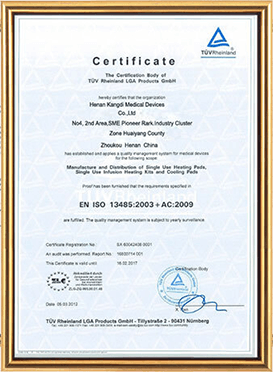
Henan Kongdy Medical Devices Co., LTD. (KONGDY) was founded in 1989 and has 37 years of production experience as of 2026 across pain relief patches, slimming patches, capsicum plasters, heat patches, cooling gel patches, detox foot patches, steam eye masks, mosquito repellent patches and nose strips. Headquartered in Henan, China, KONGDY operates a 100,000-class GMP workshop built in 2008 and obtained ISO 13485 medical device Quality Management System European Standard Certification in 2014. The company runs OEM and ODM services for international brands across multiple regulatory pathways.
For a 2026 procurement evaluation the qualification team can supply the ISO 13485 certificate, GMP workshop audit reports, stability programme documentation, and reference customer case studies upon request via our contact page.
Frequently asked questions
What are the twelve gates?
Supplier qualification, incoming identity testing, verification of supplier results, the approved batch record, in-process controls, process validation, cleaning validation for shared equipment, finished product determination, microbiological examination where required, laboratory records with method and raw data, compliance of electronic records with 21 CFR Part 11, and the disposition decision with a named person on it.
Why is 21 CFR Part 11 applied to every gate rather than being one gate?
Because it governs the form of the record rather than its content. Where a batch record, a laboratory result or a release decision lives in a system, the requirements attach to that system. A gate whose record is an overwritten spreadsheet exists today and cannot be evidenced for a batch from last year.
Which clause covers incoming material?
21 CFR 211.84(d)(1) requires testing of each component for identity and conformity with written specifications for purity, strength and quality, and 211.84(d)(2) requires validating and establishing the reliability of a component supplier test analyses at appropriate intervals.
Is a supplier certificate of analysis enough at the incoming gate?
Not on its own. In the worked example the agency asked for initial validation, periodic re-validation and at least one specific identity test on every incoming batch. A certificate describes the material at the supplier site, and the identity test is the only item in that list which concerns the batch in the warehouse.
What does the release gate require?
21 CFR 211.165(a) requires a laboratory determination of satisfactory conformance to final specifications, including identity and strength of each active ingredient, before release. The worked example records a firm that could provide evidence of finished product testing for appearance and weight only.
Does a self-heating patch need anything beyond identity and strength?
The temperature profile is a product attribute and it is not described by the identity and strength of the components. Where the product is marketed on a thermal behaviour, that behaviour belongs in the determination at the release gate rather than in a separate marketing claim.
What happens if a batch fails at the release gate?
21 CFR 211.192 requires a thorough investigation, an extension of the investigation to other batches that may be affected, and a written conclusion with follow-up. A second test is not an investigation, and the distinction is the subject of the gates that come before this one.
Why does the article refuse to give durations?
Because no published text states how long any of these gates takes. What is fixed is the order, and the order follows from dependency: a release determination cannot precede the batch record, and a batch record cannot precede the material having been identified.
Related Guides
Five further references from the KONGDY knowledge base:
- Pain Relief Patch OEM: six warning letters compared
- Cooling Gel Patch OEM: stability evidence and regulatory categories
- Frequently asked compliance questions
- KONGDY OEM and ODM manufacturing services
- Capsicum Plaster OEM: substance family screen


