
-
 KONGDY
4.6 Billion Parcels and 13 Refusals per Million: Reading the EU Customs Data for a Detox Foot Patch OEM in 2026
4.6 Billion Parcels and 13 Refusals per Million: Reading the EU Customs Data for a Detox Foot Patch OEM in 2026
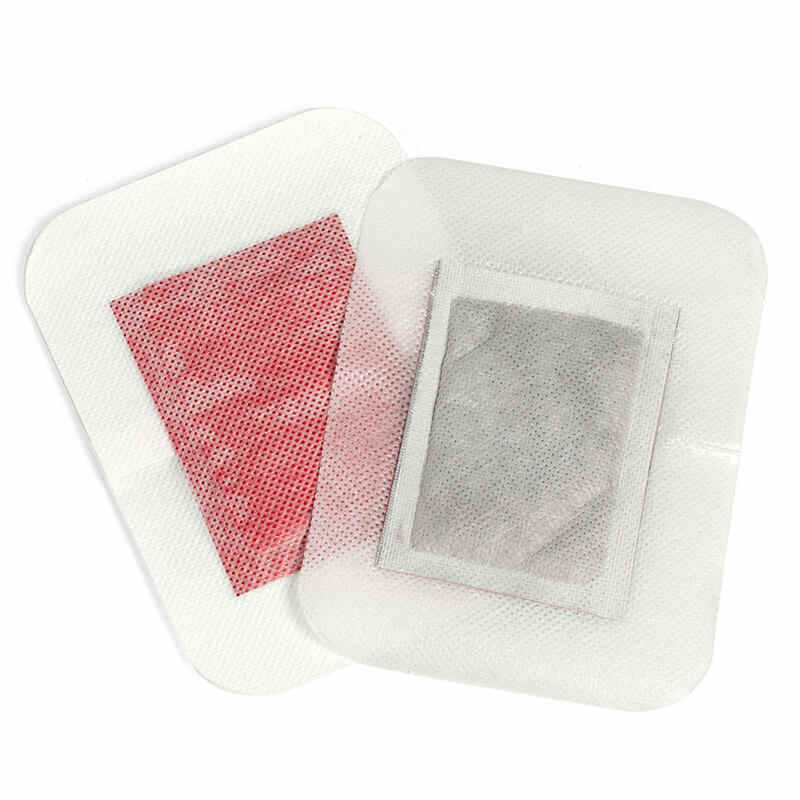
On 7 January 2026 the European Commission published the results of an EU-wide large scale customs control action on goods bought online and imported directly to consumers. Two numbers in that publication sit within a page of each other and they contradict each other, which is the point.
The first is that customs refused an average of 13 items per million products released into the EU in 2024. The second is that a check of 20,000 toys and small electronics found more than half did not follow EU product standards, and of the products that went on for laboratory testing, 84 percent were found dangerous.
Thirteen per million is about 0.0013 percent. More than half is more than 50 percent. The two figures describe the same border in the same period, and they differ by a factor of roughly thirty-eight thousand.
That gap is not an error and it is not a scandal. It is the difference between an average taken across everything that crosses the border and a rate measured inside a category somebody chose to examine. Almost every misunderstanding of EU border enforcement comes from quoting one of those numbers as though it were the other.
For a detox foot patch OEM the distinction decides what to prepare for. The average rate is a reason to do nothing. The targeted rate is a reason to have the file ready, and the file is what this article ends with. A detox foot patch OEM that quotes the first number in a customer meeting is quoting the wrong one.
1. The volume layer: what is actually arriving
The publication is unusually explicit about volume, and the volume figures explain why the enforcement method changed rather than merely intensified.
| The figure | What the Commission says | What it implies |
|---|---|---|
| Growth rate | The volume of small packages sent into the EU has doubled every year since 2022 | Compounding growth outruns any increase in inspection capacity |
| Absolute volume, 2024 | 4.6 billion packages entered the EU market | A number that cannot be physically inspected at any plausible staffing level |
| Growth still running, 2025 | A 36 percent increase was still observed in July 2025 compared with July 2024 | The curve had not flattened when the control action was planned |
| Rate per second | Close to 180 such direct shipments are imported into the EU every second | The unit of enforcement cannot be the parcel |
| Composition, 2025 | Small consignments make up 97 percent of shipments | The exception has become the overwhelming majority of the traffic |
The fourth row is the one that changes the method. At close to 180 shipments a second, the only workable control is a documentary one applied to a selected subset, which is exactly what the Commission describes and what the regulations behind it are written for.
The publication states the conclusion directly: customs cannot control these adequately with traditional methods. For a detox foot patch OEM that ships small consignments, the practical translation is that the shipment is not the unit of compliance. The file is. A detox foot patch OEM that understands the unit of enforcement has understood the rest.
2. The targeted layer: what happened when they looked
The control action examined a category rather than a sample of everything, and the result is the second of the two contradictory rates.
| What the official publication reports | The figure |
|---|---|
| Items examined in the first phase | 20,000 toys and small electronics |
| Share not following EU product standards | More than half |
| Share of those laboratory-tested that were found dangerous | 84 percent |
| Risks named in the publication | Choking, electric shock, chemical exposure and asphyxiation |
| Average refusals across all products released, 2024 | 13 items per million |
The fourth row is where a patch programme should slow down and read again. Two of the four named risks are chemical exposure and asphyxiation, and neither is a property of a toy specifically. Both are properties of a product that contains a substance or a small part.
The publication does not break the first phase down by cosmetics, so this article does not attribute a cosmetics figure to it. Third-party analyses of the same operation report a second phase covering cosmetics, personal protective equipment and food supplements, with cosmetics at 65 percent non-compliance across close to 6,000 items, but those figures are not in the official text read for this article and they are therefore labelled as third-party wherever they appear below. A detox foot patch OEM should note which figure it is quoting for exactly that reason.
3. The arithmetic layer: thirty-eight thousand times
The two rates can be converted into one sentence, and the sentence is the finding.
| Rate | Value | What it is measuring |
|---|---|---|
| Average refusal, 2024 | 13 per million, about 0.0013 percent | Everything released, divided into everything refused |
| Targeted operation, first phase | More than half, so more than 50 percent | One category deliberately chosen, examined closely |
| Ratio between them | Roughly 38,000 times | The premium on being in a category somebody is examining |
The third row is the whole article. A detox foot patch OEM reading only the average will conclude that the odds are negligible, and on a random parcel that conclusion is correct. But the category is not random, and the second phase of the same operation widened the scope rather than narrowing it, which is what an authority does when the first phase found more than half failing.
The official page records the reason for widening without stating it as such: the Commission says the expansion of e-commerce-driven imports outpaces the rate at which control measures can be implemented. That is an argument for aiming, and aiming produces the higher rate. A detox foot patch OEM is not random traffic at the border, and should not plan as though it were.

4. The legal layer: how a parcel is stopped before anyone tests it
The mechanism matters more than the rate, because the mechanism determines what a manufacturer can do about it, and it does not require a laboratory.
Regulation (EU) 2019/1020, Article 26(1) requires border authorities to suspend release for free circulation on several grounds, and the first of them is documentary: the product is not accompanied by the documentation required by Union law, or there is reasonable doubt as to the authenticity, accuracy or completeness of that documentation. The same paragraph covers products not marked or labelled as required and a missing or unidentifiable economic operator.
| The provision | What it does | What it does not require |
|---|---|---|
| Article 26(1), documentation | Suspends release where documentation is missing or doubtful | Any test, any defect, or any finding that the product is dangerous |
| Article 26(1), marking and labelling | Suspends release where the product is not marked or labelled as required | A laboratory result |
| Article 26(1), economic operator | Suspends release where the responsible operator is missing or unidentifiable | Any assessment of the product itself |
| Article 27, four working days | Requires release if the market surveillance authority has not asked to maintain the suspension within four working days | A long correspondence |
| Article 27, second sentence | States that release for free circulation is not deemed proof of conformity | A clean clearance to mean anything permanently |
| Article 28 | Requires refusal and a notice entered in the customs data system | A separate decision for future shipments, which are filtered through the same system |
The fifth row is the one worth carrying away. A cleared shipment is not a conformity finding, and a detox foot patch OEM that treats clearance as approval is treating the absence of a check as the result of one.
The fourth row is the operational one. Four working days is the window in which a file has to be produced, and a file that has to be requested from a factory in another time zone does not arrive inside it. A detox foot patch OEM that has the folder already assembled meets the four days without trying.
5. The categories layer: which regime asks for what
The regulation that enforces the operator requirement does not apply to every product, and this is the point at which a mixed product range becomes two problems rather than one.
| Product group | Where the operator requirement sits | Consequence |
|---|---|---|
| Toys, machinery, PPE, radio equipment, electromagnetic compatibility, low voltage, RoHS, gas appliances, construction products | Regulation (EU) 2019/1020, Article 4 | The name and postal address of the Union operator must appear on the product, its packaging, the parcel or an accompanying document |
| Cosmetics | Regulation (EC) No 1223/2009, the responsible person | A separate responsible person regime, not Article 4 |
| General consumer products not covered by a specific directive | Regulation (EU) 2023/988, Article 16(1) | The same task list, reached through the general product safety framework |
| The file behind the general route | Regulation (EU) 2023/988, Article 9(2) | An internal risk analysis and technical documentation, kept ten years, available on request |
The cosmetics row is the one that matters here, and it is a row that surprises people who read only the first line of the enforcement statistics. A cosmetic patch is not in the Article 4 list. It reaches the same practical requirement through the cosmetics regulation and, where no specific regime covers it, through Article 16 of the general product safety regulation.
Both routes end in the same two things: a party inside the European Union who answers, and documentation that party can hand over. A detox foot patch OEM selling a mixed range is under more than one of those regimes and the document that satisfies one does not satisfy another. A detox foot patch OEM selling both cosmetic and general goods lines is running two operator files.

6. The cost layer: what changes on 1 July 2026
The volume problem is being addressed economically as well as operationally, and the economics reach a low-value patch directly.
| Change | When | What it does to a consignment |
|---|---|---|
| End of the duty exemption for parcels below 150 euro | Agreed by member states, applicable from 1 July 2026 | Removes the reason a small parcel was cheaper to import than to declare |
| Single customs duty of 3 euro per item | From 1 July 2026 | Adds a fixed cost per item, which is proportionally larger on a low unit price |
| Union handling fee of 2 euro per item | From 1 November 2026, under Commission Delegated Regulation (EU) 2026/2152 | A second per-item charge on every parcel sold to an EU consumer |
| Platforms and sellers as official importers | Under the EU Customs Reform | Moves the responsibility from the individual consumer and the carrier to the parties in the supply chain |
The second and third rows together are the ones a manufacturer feels, because both are per item rather than ad valorem. A detox foot patch OEM whose unit price is a few euro has just had a five euro per-item load placed on the direct-to-consumer route.
The fourth row changes the answer rather than the cost. Once platforms and sellers are the importers of record, the party that answers a border question is the party with the commercial relationship, and that party will pass the requirement upstream. The file request arrives from a customer rather than from customs. A detox foot patch OEM that answers that request quickly is easier to keep as a supplier.
7. What the two datasets say together
The border data and the market alert data are usually read as separate systems, and reading them together produces a sequence rather than a choice.
| Stage | The dataset | The figures |
|---|---|---|
| Arrival | EU customs control action, 2026-01-07 | 4.6 billion packages in 2024, 97 percent small consignments, 13 refusals per million on average against more than half in a targeted category |
| Market | Safety Gate 2025 annual report | 4,671 alerts in 2025, chemical risk 53 percent of notifications, cosmetics 36 percent of categories |
| Persistence | Safety Gate 2025 annual report | The eSurveillance Webcrawler scanned over 1.6 million websites in 2025 and found more than 20,800 products already listed in Safety Gate still being offered online |
The three rows are one pipeline. A parcel is stopped on documents at the border, a product that got through is alerted on at the market, and a listing that survives the alert is found again by a crawler.
The third row is what makes the sequence worth reading. More than 20,800 products were found still on offer after already being notified, which is a statement about how long the middle stage takes to work. A detox foot patch OEM that plans for the border question and not for the listing question has prepared for the first stage only. A detox foot patch OEM that plans for all three stages has planned for one pipeline.
There is also a numeric relationship worth noticing between the first two stages. The border figure describes what is refused entry, which by definition never reaches a consumer. The market figure describes what did reach a consumer and was then alerted on. The second population is a subset of what the border let through, so the two numbers are not two measurements of the same thing and cannot be added or compared directly.

8. What to do with the dataset, in order
Five actions, and the order follows the pipeline rather than the difficulty.
- Compute your own category rate rather than quoting the average. The 13 per million figure describes a random parcel. The question is whether your category is one an operation has chosen, and the publication shows how the choice was made.
- Write the four-day answer into a procedure. Article 27 gives four working days before a suspension lapses, and the procedure that meets it names a person, a time zone and a folder rather than a factory.
- Separate the operator requirement by regime. Article 4 of Regulation (EU) 2019/1020 does not cover cosmetics, and a range that mixes categories is under more than one regime at once.
- Re-check the landed cost of the direct-to-consumer route. Three euro per item from 1 July 2026 and two euro per item from 1 November 2026 are both fixed per-item costs, and a low unit price feels them disproportionately.
- Plan for the listing stage as well as the border stage. More than 20,800 products were found still on offer after being notified, which means the market stage outlasts the shipment.
The first action is the one that determines whether the other four matter. A detox foot patch OEM in a category no operation has chosen faces the average rate, and one in a chosen category faces the targeted rate. The publication says which categories were chosen and why, and it says that more than half of what was examined failed.
That is the honest reading of two numbers that contradict each other. Neither is wrong. One is about the border and the other is about a decision to look. A detox foot patch OEM that can explain both numbers without confusing them has demonstrated the only useful form of fluency here.
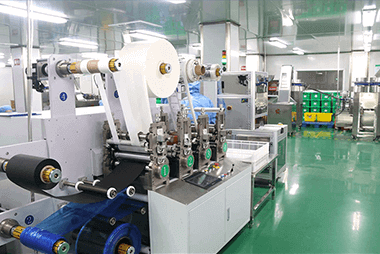
About KONGDY Medical

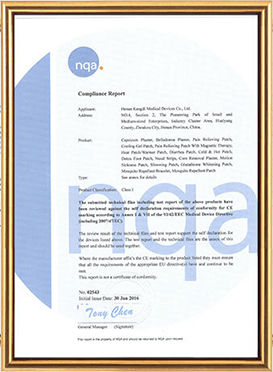
Henan Kongdy Medical Devices Co., LTD. (KONGDY) was founded in 1989 and has 37 years of production experience as of 2026 across pain relief patches, slimming patches, capsicum plasters, heat patches, cooling gel patches, detox foot patches, steam eye masks, mosquito repellent patches and nose strips. Headquartered in Henan, China, KONGDY operates a 100,000-class GMP workshop built in 2008 and obtained ISO 13485 medical device Quality Management System European Standard Certification in 2014. The company runs OEM and ODM services for international brands across multiple regulatory pathways.
For a 2026 procurement evaluation the qualification team can supply the ISO 13485 certificate, GMP workshop audit reports, stability programme documentation, and reference customer case studies upon request via our contact page.
Frequently asked questions
What did the January 2026 customs action find?
The European Commission publication of 7 January 2026 reports that a check of 20,000 toys and small electronics found more than half did not follow EU product standards, and that 84 percent of the products which went on to laboratory testing were found dangerous, with the risks named as choking, electric shock, chemical exposure and asphyxiation.
Why does the average refusal rate look so low?
Because it is an average across everything released. The same publication states that customs refused an average of 13 items per million products released in 2024, which is about 0.0013 percent. That is a rate across the whole traffic, not a rate inside a category somebody chose to examine.
How large is the difference between the two rates?
Roughly thirty-eight thousand times. Thirteen per million is about 0.0013 percent, and more than half is more than 50 percent. Both figures come from the same publication and describe the same border.
How many parcels arrive?
The publication states that 4.6 billion packages entered the EU market in 2024, that the volume of small packages has doubled every year since 2022, that a 36 percent increase was still observed in July 2025 compared with July 2024, and that close to 180 such direct shipments are imported every second. In 2025 small consignments make up 97 percent of shipments.
Can customs stop a parcel without testing the product?
Yes. Regulation (EU) 2019/1020, Article 26(1) allows suspension of release where the product is not accompanied by the required documentation, where there is reasonable doubt about that documentation, where marking or labelling is missing, or where the economic operator cannot be identified. None of those grounds requires a laboratory result or a finding that the product is dangerous.
What happens in the four working days?
Article 27 provides that a suspended product is released if, within four working days of the suspension, the market surveillance authorities have not asked the border authorities to maintain it, or have been informed of approval for release. The same article adds that release for free circulation is not deemed to be proof of conformity with Union law.
Does the operator requirement apply to a cosmetic patch?
Not through Article 4 of Regulation (EU) 2019/1020, which applies to a listed set of legislation covering toys, machinery, personal protective equipment, radio equipment and others. Cosmetics have their own responsible person under Regulation (EC) No 1223/2009, and a consumer product not covered by a specific directive reaches the same requirement through Article 16(1) of Regulation (EU) 2023/988.
What changes in cost from 2026?
The duty exemption for parcels below 150 euro ends, replaced by a single customs duty of 3 euro per item applicable from 1 July 2026, and a Union handling fee of 2 euro per item applies from 1 November 2026 under Commission Delegated Regulation (EU) 2026/2152. Both are per-item charges, so a low unit price feels them disproportionately.
Related Guides
Five further references from the KONGDY knowledge base:
- Slimming Patch OEM: reading the EU Safety Gate report as a rhythm
- Cooling Gel Patch OEM: warning letter 736006 and marketplace responsibility
- Frequently asked compliance questions
- KONGDY OEM and ODM manufacturing services
- Capsicum Plaster OEM: substance family screen


