-
 KONGDY
Twelve Questions to Ask About Your Own Contract Clauses as a Capsicum Plaster OEM in 2026
Twelve Questions to Ask About Your Own Contract Clauses as a Capsicum Plaster OEM in 2026
A clause list is only half the work. The other half is the conversation in which the supplier says no to some of it, and the buyer decides which no is acceptable.
This article is the second half. Twelve questions, each about a clause rather than about a plant, and each one built on a case in this library where the missing clause produced a finding that a regulator wrote down.
The cases are consistent in one way. Not one of them was found by a buyer, and not one of them was found by a document. They were found by an inspector on site, by a review of a label, or by a records request, and by the time the finding was written the buyer had already been buying.
For a capsicum plaster OEM the questions below are the ones to ask in the meeting where the supplier pushes back, because that is the only meeting where the answers are still cheap.
1. Which clauses are worth the fight?
Five, and they are the five that a finding would have been caught by.
| The clause | Why it is worth the fight | The case behind it |
|---|---|---|
| Release testing on every batch, with named tests | Without it there is no evidence that any batch was tested, which is the gap a finding is written into | A firm whose only finished product evidence was appearance and weight |
| The release decision before dispatch | It is the one control that sits underneath every other clause | A quality control unit found not to have reviewed control records before release and distribution |
| Audit right reaching sub-suppliers | An audit right that stops at a trading company audits an office | One enforcement action that reached a manufacturer and two platforms at once |
| Advance notice of change, with interim arrangements | Without it the buyer cannot tell a controlled change from an uncontrolled one | A reply that lacked specific timelines and details of interim plans |
| Inspection history disclosure | It is the one signal a certificate cannot carry | Two findings that were repeat violations noted in previous inspections |
The third column is what makes this a prioritisation rather than a list, and the fourth row is the one a buyer can win cheaply because it costs the supplier nothing to disclose.
A capsicum plaster OEM that fights for these five and accepts the wording on the other twenty-five is in a stronger position than one that wins an argument about clause numbering.
2. What if the supplier says the audit right is unreasonable?
Ask what they are afraid of, because the answer separates two different refusals.
| What the supplier is actually refusing | What it usually means | The fallback that keeps the clause |
|---|---|---|
| A buyer auditor on the site | They have never had a buyer walk their floor and do not know what will be asked | A third-party audit written to the buyers criteria, with the buyers right to read the report |
| Audit of the sub-supplier | The sub-supplier is a trading company they do not control | The audit right extends to it, and the supplier remains responsible for what it does |
| Unannounced audits | Fear of an unannounced visit disrupting a production week | A notice period for routine audits, with no notice for a quality escape or a regulatory event |
The third row of the first column is the trade a buyer should make freely. A notice period costs nothing and is worth giving.
A capsicum plaster OEM that insists on unannounced audits for a routine inspection has won a point that is not worth the relationship.

3. What if they will not give me the batch records?
Ask for one batch record for the first three orders, and treat that as a condition rather than a request.
This is the clause that decides whether a recall is executable. A recall works by tracing batches, and the trace lives in the batch records, and no wording in a contract creates a record that does not exist.
| What you are asking for | What it actually tests | What a refusal tells you |
|---|---|---|
| One complete release packet for one real batch | Whether the release control exists or only appears in a procedure | The control is not happening, or the records are not kept |
| The batch and serial definition | Whether the supplier can identify which lot a complaint came from | Tracing is impossible and therefore a recall is impossible |
| Retain samples and their results | Whether the stability programme produces evidence or only plans | The stability programme is not running |
| The change log for the last ten entries | Whether the site tracks what it changes | Changes are happening without assessment |
The second column of the last row is the one that a buyer can check in one email, and it is the cheapest diagnostic in this whole article.
For a capsicum plaster OEM the rule is that a refusal to produce a batch record for the first order is not a negotiation point, it is a stop.
4. What if the supplier already has a quality agreement?
Ask which of the thirty clauses it already covers, because a quality agreement usually covers about a third of them.
| The band | Usually covered by a quality agreement | Almost never covered |
|---|---|---|
| One, the product | The specification and the material list | Who owns the formula and the artwork |
| Two, the site and the chain | The right to audit the factory | Sub-suppliers, the trading entity and inspection history disclosure |
| Three, quality and release | Release testing and the specifications | Third-party laboratory disclosure and retain sample results |
| Four, change | Change control procedures | Advance notice with a date, and interim arrangements |
| Five, failure | Defect notification | Recall execution, customer notification and cost responsibility |
| Six, documents and access | Certificate and test report delivery | Records access in the buyers format, and third-party audit rights |
The third column is the list to work from, and it is longer than most buyers expect. Bands four and five are the two that carry the money and the time.
A capsicum plaster OEM that sends a quality agreement and asks which bands it covers has a much shorter conversation than one that sends a blank clause list and asks for a signature.
5. What if the supplier asks why I need this much?
Give them the case, not the clause, because a case is memorable and a clause number is not.
The most persuasive sentence in this library is not a requirement. It is the statement that a reply is inadequate because it lacks specific timelines including details of interim plans.
| How to put it | Why it works | What it produces |
|---|---|---|
| Name the gap and the consequence | A gap without a consequence is a preference, and a preference can be traded away | A clause with a purpose attached to it |
| Quote the finding rather than the rule | A requirement written by an agency reads as bureaucracy, and the same requirement written as a finding reads as a risk | A supplier that stops negotiating because the risk is now concrete |
| Give the date it would have helped | A clause justified by a missed date is worth more than a clause justified by theory | The timeline that was missing in the case that produced the finding |
The third row of the second column is the one that changes a supplier from a counterparty into a participant. A supplier that can see the date at which the clause would have paid for itself signs it faster than one that is only told the clause is best practice.
For a capsicum plaster OEM the practical version is that the letter behind each clause is more persuasive than the clause, and it takes one email to send.

6. What if they sign everything and still do not comply?
That happens, and the answer is in the enforcement mechanism rather than in the wording.
| The mechanism | How it works | What it stops |
|---|---|---|
| A right to suspend or stop shipments | The buyer withholds orders until the gap is closed | Silent non-compliance that nobody notices for two years |
| A price holdback | A stated sum is released on close-out | Findings that are cheap to carry because they cost nothing |
| A right to require a third-party audit at the supplier cost | The supplier pays for the evidence | Findings that are cheaper to accept than to close |
| Termination for cause with a short cure period | A named period, then the right to exit | The situation where the cure never comes |
The third row is the one that works best in practice, because it changes the arithmetic rather than the argument.
A capsicum plaster OEM that signs a contract with no enforcement mechanism has signed a record of intent, and a capsicum plaster OEM that signs one with a holdback has signed something that can be relied on.

7. What if the gap is in the supplier chain rather than the factory?
Write the chain into the contract, because the chain is where the findings multiply.
In one enforcement action the same month, the agency issued three letters on the same day to three different parties about three overlapping products, and two of those products also appeared in a letter to their manufacturer.
| The party in the chain | What it is answerable for | What the contract must reach it with |
|---|---|---|
| The manufacturing site | The batch, the process, the release and the recall | Everything in bands two, three and five |
| A trading company between the buyer and the site | Nothing technical, and that is the problem | The audit right and the records access in band six |
| A platform that sells the buyers product | Its own listing and its own distribution | Nothing in this contract, which is the point of the third row below |
| A sub-supplier of raw material | Its own identity, strength and purity testing | The supplier certificate verification clause in band three |
The third row of the first column is the one that a contract between a buyer and a manufacturer simply cannot reach, and pretending otherwise is the mistake that the three-letter chain exposes.
For a capsicum plaster OEM the practical answer is that the buyer should ask one question about the distribution side, which is whether the product is listed anywhere the buyer did not put it.

8. What if I cannot get the clause, what do I do instead?
Accept the risk in writing, and write down what it is, because an unrecorded risk is a risk you will meet again.
| What you cannot get | The substitute you can get | What you accept by doing so |
|---|---|---|
| Audit of the sub-supplier | The supplier certifies in writing, and the buyer audits the supplier | That the sub-supplier is unknown to you |
| Advance notice of change | A change log delivered on request, within a stated period | That a change may already have happened when you read it |
| Recall cost responsibility | A cap at a stated value per event, with the supplier covering the excess | That a large event leaves part of the cost with you |
| Retain sample results | A right to purchase retains from the supplier at cost | That the supplier decides which retains to release |
| Inspection history disclosure | A warranty that no finding is outstanding, with a remedy for breach | That you find out later rather than earlier |
The third row of the second column is the one to notice. A warranty that a finding is not outstanding transfers the discovery problem to the supplier for the period it covers.
A capsicum plaster OEM that accepts a gap should record it with a name, an owner and a review date, because a gap that nobody owns is a gap that comes back.
9. What if the supplier is a trading company rather than the factory?
Then most of the clauses have to be written twice, once for the trading company and once for the site beneath it.
This is not an edge case. In one enforcement action in this library the same month, the agency wrote to a manufacturer and to two marketplaces about three products that overlapped, and two of those products also appeared in a letter to their manufacturer.
| The clause | How it is written for a trading company | How it is written for the site |
|---|---|---|
| The audit right | An audit of the trading company, with the right to reach the site it uses | A direct audit right over the plant, the line and the records |
| Records access | Documents about products, which is what a trading company holds | Batch records and release records, which is what a site holds |
| Recall execution | The party that notifies and coordinates | The party that traces the batches and executes |
| Change notification | Any change in the chain above the site | Any change to the process, the site or the quality unit |
| Formula ownership | Assignment to the buyer in the trading company contract | A confirmation from the manufacturer that the buyer may take the work elsewhere |
The fifth row is the one to check carefully, because a formula bought from a trading company can be a formula the trading company owns, and a capsicum plaster OEM that cannot take its work to a second site has bought a dependency without knowing it.
The third row is the one that decides whether a recall is executable, and it is the row where the two contracts have to agree with each other rather than each standing alone. A capsicum plaster OEM whose trading contract and factory contract disagree on who traces a batch has a gap that neither document closed.
10. Should the clause list differ by market?
Yes, and the difference is mostly about the route and the label rather than about the factory.
| The element | The market-specific question | Why it belongs in the contract |
|---|---|---|
| The route | Cosmetic, over-the-counter drug, device or food in each destination country | The same product sold on two routes is two products with two sets of evidence |
| The label and the drug facts | Which claims are permitted in each market, and which warnings are required | A missing monograph warning is a misbranding problem in the market that requires it |
| The documentation set | What the destination requires to accompany the product | The file that supports the route is not the file that supports another route |
| The shelf life | Whether the stability data supports the expiry in each climate and pack | The evidence behind a shelf life claim is market and pack specific |
| The artwork | Which version goes to which market | A single artwork applied to two markets produces a label problem in one of them |
The second row of the first column is the one that has produced findings in this library, where a product was made correctly and the label omitted a required direction and a required warning, and the same fact produced two separate characterisations at once.
The third row of the fifth column is the practical trap. One artwork sent to several markets is the cheapest way to create a regulatory problem, and it is cheaper for the supplier than for the buyer, which is why the contract has to settle it.
For a capsicum plaster OEM the rule is that the clause list has one common core and one market annex, and the annex is where the label versions live.
11. What if the artwork was designed by a third party?
Then you need the assignment chain, not the artwork, and the chain is usually one link longer than anyone expects.
Artwork, formulation and claims are three different rights, and they can sit with three different parties.
| The right | Who usually holds it | The clause that settles it |
|---|---|---|
| The formulation | The supplier, if the supplier developed it | Assignment on payment, with the right to transfer production |
| The artwork | A design agency, which may have assigned it to the brand owner or to nobody | A written confirmation of the assignment chain, with the right to modify for a new market |
| The claims | Whoever wrote the copy, which is often neither of the first two | A requirement that the claim set is reviewed against the route before artwork is released |
| The registrations | Whoever filed them, if anyone did | A statement of who holds what, and a duty to record it |
The third row is the one that fails quietly. Claims written by a marketing agency are reviewed by nobody, and they are the version of the message that travels furthest.
A capsicum plaster OEM that holds the artwork but not the claims owns the container and not the content, and the difference is exactly the distance between a compliant pack and an unlawful one.
12. When should the clauses be renegotiated rather than enforced?
When the finding is about a gap that the supplier can close once, and the enforcement route would cost more than the gap.
| The situation | The right response | The reason |
|---|---|---|
| A documentation gap with a named owner and a date | Negotiate the date, then verify it | Enforcement costs more than the gap and buys no change |
| A systemic finding that recurs | Enforce, because a recurrence means the corrective action process does not work | Two findings in the same place is a statement about the system, not about the gap |
| A finding on a line you have stopped buying from | Narrow the scope and enforce the boundary | The risk is in the product you stopped ordering, not in the contract |
| A finding that a new supplier has already closed | Close it out in writing and keep the clause | The clause did its job and does not need to be removed |
| A commercial disagreement dressed as a quality finding | Deal with it commercially and say so in the file | Mislabeling a commercial issue as a quality issue corrupts both processes |
The second row is the one that decides the strategy, because a recurrence is not a bigger finding. It is a different kind of finding, because it is evidence that the corrective action procedure did not close a gap the firm already knew about.
The fifth row is the one that experienced buyers recognise. A finding that is really about price gets renegotiated as a finding, and then the next real finding arrives with less weight than it should.
For a capsicum plaster OEM the discipline is to write down which findings are being enforced and which are being traded, because a file that mixes the two cannot be used the next time a real one arrives. A capsicum plaster OEM that separates the two has a file that works in the negotiation as well as in the audit.
About KONGDY Medical

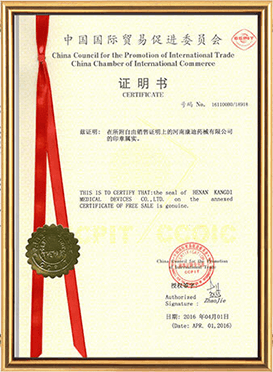
Henan Kongdy Medical Devices Co., LTD. (KONGDY) was founded in 1989 and has 37 years of production experience as of 2026 across pain relief patches, slimming patches, capsicum plasters, heat patches, cooling gel patches, detox foot patches, steam eye masks, mosquito repellent patches and nose strips. Headquartered in Henan, China, KONGDY operates a 100,000-class GMP workshop built in 2008 and obtained ISO 13485 medical device Quality Management System European Standard Certification in 2014. The company runs OEM and ODM services for international brands across multiple regulatory pathways.
For a 2026 procurement evaluation the qualification team can supply the ISO 13485 certificate, GMP workshop audit reports, stability programme documentation, and reference customer case studies upon request via our contact page.
Frequently asked questions
Which five contract clauses are worth fighting for?
Release testing on every batch with named tests, the release decision before dispatch, an audit right that reaches sub-suppliers, advance notice of change with interim arrangements, and disclosure of inspection history. Each one has a case in this library where its absence produced a finding.
How do I argue for a clause without sounding difficult?
Bring the case rather than the clause number. A finding written by an agency reads as a risk, while the same requirement delivered as a rule reads as bureaucracy, and a clause justified by the date at which it would have paid for itself is signed faster than one justified as best practice.
What if the supplier already has a quality agreement?
Ask which bands it covers. In practice a quality agreement covers the specification, the release testing and the right to audit the factory, and it rarely covers formula ownership, sub-suppliers, third-party laboratory disclosure, advance notice with a date, interim arrangements, recall execution and cost responsibility.
Is a change log a reasonable substitute for advance notice?
It is a partial substitute, and it is much better than nothing. The buyer loses the ability to react before the change and keeps the ability to see it afterwards, which is what detects a site that changes without assessing.
How do I enforce a clause if the supplier signs and still does not comply?
With a mechanism rather than with wording. A right to suspend shipments, a price holdback released on close-out, a third-party audit at the supplier cost, or termination for cause with a short cure period. The audit at the supplier cost usually works best because it changes the arithmetic of accepting a finding.
What if I cannot get the batch records clause?
Make one complete release packet for one real batch a condition of the first three orders rather than a request for the whole history. A refusal to produce one batch record is not a negotiation point, it is a stop, because a recall is executed by tracing batches and the trace lives in those records.
How much of the chain can my contract actually reach?
The manufacturing site and the trading company above it, and a sub-supplier of raw material by requiring verification of its certificates. It cannot reach a platform that sells the product, because that platform answers to a different enforcement action, which is why the buyer should ask whether the product is listed anywhere the buyer did not put it.
What if the supplier asks why I need thirty clauses?
Tell them the five you are insisting on and let the rest go. The five are the ones that a finding would have been caught by, and a supplier who signs those five properly has given more protection than one who signs thirty vaguely.
Related Guides
Five further references from the KONGDY knowledge base:
- Capsicum Plaster OEM services and manufacturing
- Pain Relief Patch OEM: how to run a factory audit as a buyer
- Detox Foot Patch OEM: twelve questions on microbiological control
- Frequently asked compliance questions
- KONGDY OEM and ODM manufacturing services


