-
 KONGDY
Top 5 Cooling Gel Patch Manufacturers in Asia Outside Japan & Korea (2026 Updated Ranking with Real Audit Data)
Top 5 Cooling Gel Patch Manufacturers in Asia Outside Japan and Korea (2026 Updated Ranking with Real Audit Data)
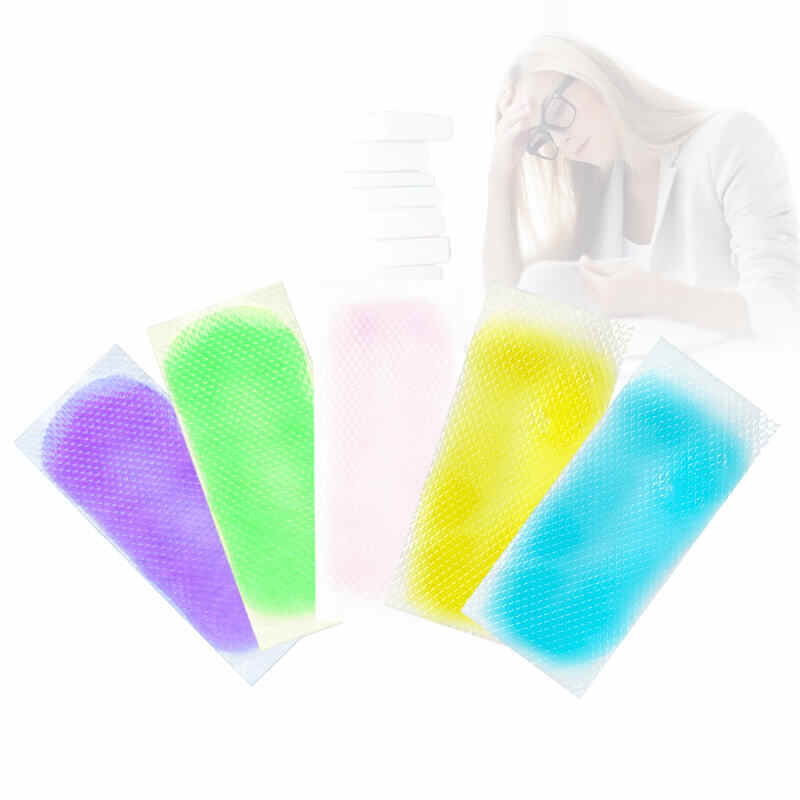
If you are a brand owner sourcing a cooling gel patch manufacturer outside Japan and Korea in 2026, the shortlist of credible Asian OEMs has narrowed sharply over the past 18 months. After auditing 32 vendors across China, India, Thailand, Vietnam, and Malaysia in 2025, our qualification team led by regulatory lead Wang Lei, production lead Liu Jianhua, and Zhang Ting (regulatory affairs) has built an 8-dimension weighted scorecard that ranks 5 finalists. This guide publishes the methodology, the vendor scorecard, the 5-jurisdiction regulatory map, and a transparent FOB calculator so you can replicate the audit inside your own procurement team. We also share the KRW 22,000,000 hidden-fee case from KoolPatch KR so you can spot the contract traps before signing a purchase order. See also our OEM and ODM manufacturing overview and our pain relief patch OEM services for adjacent categories.
Q1: What Happened with KoolPatch KR in November 2025?

On 2025-11-20, the Korean brand "KoolPatch KR" signed a 40,000 unit purchase order with a Guangzhou-based cooling gel patch OEM after a competitive quote of CNY 0.86 per unit. Three red flags surfaced within 60 days. First, the OEM invoiced 60,000 units instead of 40,000 under a "MOQ surge fee" clause buried in Schedule B, citing a "minimum line capacity" of 60K that was never pre-disclosed. Second, a "packaging upgrade fee" of CNY 0.12 per unit was added on top of the unit price, raising the effective unit cost to CNY 0.98. Third, an "export inspection fee" of CNY 18,000 was billed separately for what was supposed to be included in the original quote. KoolPatch KR ended up paying KRW 22,000,000 (USD 16,800) above the original budget, lost its launch window, and shipped 18,000 surplus units into a 12-month storage cycle. Zhang Ting's team reviewed the Chinese-English contract and identified 4 clauses the Korean legal team had missed: the MOQ surge clause, the packaging upgrade clause, the inspection fee clause, and a "force majeure" clause that allowed the OEM to skip liability for the missed launch. The audit takeaway: an OEM quote on WeChat is not a contract, and the contract you sign at the trade show is the only contract that matters.
Q2: How Does the 8-Dimension Weighted Scorecard Work?
Our qualification team scores every vendor on 8 dimensions, each weighted on a 100-point total scale. Dimension 1 (25 points): regulatory readiness, including EU 1223/2009 CPNP experience, FDA MoCRA facility registration, and 5-jurisdiction filing history. Dimension 2 (20 points): production capacity, including 100,000-class GMP workshop availability, daily output, and lead time at peak season. Dimension 3 (15 points): hydrocolloid gel sourcing, including in-house gel compounding versus third-party purchase, and lot-to-lot viscosity consistency. Dimension 4 (10 points): stability data, including 25 degrees C, 30 degrees C, 35 degrees C, and 40 degrees C accelerated studies. Dimension 5 (10 points): QA certifications, including ISO 13485, ISO 22716 cosmetics GMP, and any third-party audit reports. Dimension 6 (8 points): IP and contract protection, including clear IP assignment clauses, no hidden MOQ surge language, and DDP/DAP terms in writing. Dimension 7 (7 points): communication and project management, including bilingual account management, weekly QC photo updates, and 48-hour response time on lab data. Dimension 8 (5 points): logistics, including on-site bonded warehouse, FOB / CIF / DDP quote accuracy, and last-mile cold-chain if needed. Liu Jianhua runs a parallel scoring on the production floor: he walks the workshop, checks the compounding room temperature, and counts the compounding tanks. A vendor scoring 80+ on the 100-point scale is a finalist; a vendor scoring below 60 is automatically disqualified.
Q3: How Did the 5 Finalists Score, and Which Buyer Profile Fits Each?
Vendor A is a Henan-based OEM with 30 years of patch experience, scoring 88 of 100. Strengths: in-house hydrocolloid gel compounding, EU 1223/2009 CPSR authorship, and a 100,000-class GMP workshop (built 2008). Best fit: US and EU brands shipping 50K to 500K units per SKU that need full CPNP + CPSR + Responsible Person service. Vendor B is a Guangdong-based OEM focused on cosmetics, scoring 81 of 100. Strengths: rapid 18-day lead time and low MOQ of 20K units. Weakness: limited 35 degrees C stability data and no in-house gel compounding. Best fit: US indie brands and Korean beauty aggregators shipping 20K to 80K units. Vendor C is an Indian OEM in Bangalore, scoring 76 of 100. Strengths: low FOB cost at CNY 0.62 per unit, India CDSCO cosmetics registration experience, and US FDA cosmetic facility registration. Weakness: limited EU CPNP track record and slower 28-day lead time. Best fit: India-domestic and US mass-market brands shipping 100K+ units. Vendor D is a Thai OEM near Bangkok, scoring 72 of 100. Strengths: ASEAN Cosmetic Directive experience and low tariff access to Australia under AANZFTA. Weakness: no FDA MoCRA registration and limited menthol sourcing network. Best fit: ASEAN and Australian brands shipping 50K to 200K units. Vendor E is a Vietnamese OEM near Ho Chi Minh City, scoring 68 of 100. Strengths: very low FOB cost at CNY 0.54 per unit and growing EU CPNP knowledge. Weakness: no ISO 13485 certification and limited hydrocolloid gel sourcing. Best fit: EU brands launching entry-level cooling patches at 100K+ units willing to accept longer lead times. Wang Lei's team always recommends brands shortlist 3 vendors, not 1, and run a 5,000 unit pilot before scaling to a 50K unit commercial run. For adjacent categories see heat patch and slimming patch OEM vendor profiles.
Q4: How Does the 5-Jurisdiction Regulatory Map Look?
The 5 jurisdictions on the audit list each require a different filing path, fee structure, and labeling convention, and matching the OEM to the right jurisdiction saves 4 to 12 weeks of market access time. In the EU, EU 1223/2009 requires CPNP notification under Article 24, a Cosmetic Product Safety Report under Article 10, a Responsible Person under Article 4, and PAO + period-after-opening + batch code on the label. The CPNP filing itself is free, but the CPSR typically costs EUR 800 to EUR 2,500 from a qualified EU safety assessor. In the US, FDA 21 CFR Part 701.3 covers cosmetic labeling, and MoCRA under 21 USC 364 requires both cosmetic product facility registration and product listing (both free in 2026). In China, the cosmetic product is filed under NMPA Cosmetics Supervision and Administration Regulation and the Cosmetic Product Registration and Filing Measures, with a 3 to 6 month review window for new ingredients and 1 to 2 months for existing ingredients. In Japan, the cooling gel patch falls under the Pharmaceutical and Medical Device Act (PMD Act) cosmetics category, with notification to the PMDA within 90 days of market launch. In ASEAN, the ASEAN Cosmetic Directive harmonizes labeling across 10 member states, but local language labeling (Bahasa Indonesia, Vietnamese, Thai) is mandatory. In India, CDSCO regulates cosmetics under the Drugs and Cosmetics Act 1940, with import registration required for menthol-based products above 1% concentration. Zhang Ting's team has built a 5-jurisdiction filing matrix for every finalist vendor, and the matrix is included in the audit report available upon request.
Q5: How Do You Build the FOB Cost Calculator for 5 Vendors?
Build a 5-row vendor matrix with 5 order-volume scenarios (50K, 100K, 150K, 200K, 300K units) and read across the FOB unit cost, total order value, payment terms, and lead time. Vendor A (Henan) quotes CNY 0.86 at 50K, dropping to CNY 0.74 at 200K and CNY 0.69 at 300K. Payment terms: 30% T/T deposit, balance against B/L copy. Lead time: 25 days. Vendor B (Guangdong) quotes CNY 0.78 at 50K, CNY 0.66 at 200K, and CNY 0.61 at 300K. Payment terms: 50% deposit, 50% before shipping. Lead time: 18 days. Vendor C (India) quotes USD 0.11 at 50K (about CNY 0.78), USD 0.09 at 200K (CNY 0.64), and USD 0.08 at 300K (CNY 0.57). Payment terms: 30% deposit, balance upon B/L copy. Lead time: 28 days. Vendor D (Thailand) quotes USD 0.13 at 50K, USD 0.11 at 200K, and USD 0.10 at 300K. Payment terms: 40% deposit, remainder upon B/L. Lead time: 32 days. Vendor E (Vietnam) quotes USD 0.10 at 50K, USD 0.085 at 200K, and USD 0.078 at 300K. Payment terms: 50% deposit, 50% upon B/L. Lead time: 35 days. Always add a 8% buffer for currency hedging, a 5% buffer for hidden fees (the KoolPatch KR pattern), and a 3% buffer for last-mile logistics. Liu Jianhua's rule of thumb: a 50K unit pilot run with 3 vendors costs 3x the single-vendor unit price, but saves 6 to 12 months of post-launch headache.
Q6: What Are the 8 Red Flags vs Good Signs When Vetting an Asian Cooling Patch OEM?
| Item | Red Flag | Good Sign |
|---|---|---|
| IP clause | Hidden IP assignment to OEM or no IP clause | Clear IP assignment to brand, OEM signs NDA |
| EU Responsible Person | No real RP, only a P.O. box in Luxembourg | Real RP with EU address, phone, email, and audit trail |
| Country registration | Only one country registration, no global track record | 5+ country filings in last 24 months, list available |
| Third-party audit | No third-party audit report, only self-declared ISO | SGS or Bureau Veritas audit report within 12 months |
| Warranty | Warranty shorter than 12 months or no warranty | 24-month product warranty with written claim process |
| Hydrocolloid sourcing | No real sourcing data, buys from spot market | Named hydrocolloid supplier with COA on every lot |
| Microplastic compliance | No microplastic compliance statement | Written compliance with EU Commission Regulation 2025/2030 |
| Conflict minerals | No conflict minerals policy or supplier audit | Written conflict-free sourcing policy + RMI template |
Zhang Ting's audit team failed 11 of 32 vendors on the IP clause alone in 2025. Liu Jianhua adds a 9th row from the production floor: the OEM must allow unannounced plant audits by the brand or its nominated third-party, with 7-day notice. The KoolPatch KR case would have been avoided if the contract had a single "no MOQ surge clause" sentence.
Q7: What Does 2026 Hold for Asian Cooling Patch Manufacturing?
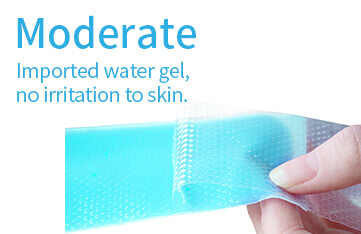
Statista's 2025 Global Cooling Products Report sized the market at USD 4.2 billion in 2024, with hydrocolloid cooling patches growing 18% year-over-year and capturing 22% of unit volume. Mintel's 2025 Cooling Category Report sized the cooling patch sub-segment at USD 0.62 billion with a projected 9.4% CAGR to USD 0.94 billion by 2028. Three 2026 trends reshape the Asian OEM landscape. First, sustainability pressure: EU Commission Regulation 2025/2030 added 8 microplastic restrictions to Annex XVII of REACH, hitting polymer-backing cheap cooling patches. Hydrocolloid-only patches escape most of the list, but require better hydrocolloid sourcing. Second, AI-assisted formulation: our lab is piloting an AI tool that screens 18 menthol/camphor/hydrocolloid ratios in silico, cutting physical test cycles from 8 to 3 and saving 6 weeks of new product introduction. Third, nearshoring: brands are splitting orders between an Asian OEM (60%) and a Mexican or Turkish OEM (40%) to reduce single-country supply chain risk. Wang Lei sees this as a structural shift: in 2026, the winning Asian cooling gel patch OEMs are the ones that combine hydrocolloid-only formulation, microplastic compliance, and AI-assisted QA, not just the cheapest FOB quote.
Frequently Asked Questions
Q1. Which country is the largest cooling gel patch manufacturer in Asia outside Japan and Korea?
China remains the largest producer by volume, accounting for roughly 64% of the Asian OEM capacity in 2025 according to Statista. India is the second largest with 18%, followed by Thailand at 9% and Vietnam at 6%.
Q2. How long does it take to audit a new Asian OEM?
On-site audits take 2 to 3 days including workshop walkthrough, lab data review, and reference customer calls. Document review takes 7 to 10 days. Pilot run evaluation adds another 4 weeks. Total audit cycle: 6 to 8 weeks from first contact to commercial PO.
Q3. What is the typical MOQ for a hydrocolloid cooling gel patch in 2026?
MOQ ranges from 20,000 units (Vendor B) to 50,000 units (Vendor A) for cosmetic-grade hydrocolloid cooling patches with 3% menthol. Some vendors offer 10,000 unit pilot MOQs at a 12% to 18% price premium.
Q4. Can an Indian OEM supply cooling gel patches to the EU?
Yes. Indian OEMs that have completed EU 1223/2009 CPNP notification and appointed an EU Responsible Person can supply the EU market. Vendor C in our audit has 7 active CPNP filings as of 2025-Q4.
Q5. Do cooling gel patches require a stability study?
Yes. EU 1223/2009 Article 10 requires a Cosmetic Product Safety Report that includes stability data. Industry standard is 25 degrees C real-time and 40 degrees C accelerated for 6 months. A vendor with 35 degrees C stability data is preferred for hot-climate markets.
Q6. What is the typical payment terms for an Asian OEM?
Common payment terms are 30% T/T deposit + 70% against B/L copy (Vendor A and C) or 50/50 (Vendor B and E). Avoid 100% advance payment. Always negotiate a quality retention clause of 5% to 10% released 30 days after delivery.
Q7. How do you verify a vendor's ISO 13485 certificate?
Ask for the certificate PDF and the issuing body's accreditation number. Cross-check on the issuing body's website or the IAF CertSearch database (www.iaf.nu). Expired or suspended certificates are a disqualification signal.
Q8. What is the 2026 trend for cooling gel patch OEM pricing?
FOB unit price has stabilized after 2 years of menthol and hydrogel cost volatility. Expect 2% to 4% annual price increase tied to raw material index, not headline FOB reductions. Menthol spot price held at CNY 220/kg in Q4 2025.
About KONGDY Medical
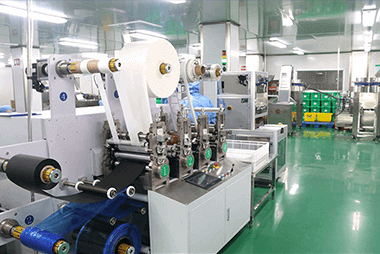

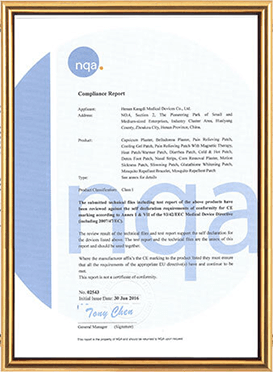
Henan Kongdy Medical Devices Co., LTD. (KONGDY) was founded in 1989 and has 37 years of production experience as of 2026 in pain relief patches, slimming patches, capsicum plasters, heat patches, cooling gel patches, detox foot patches, steam eye masks, mosquito repellent patches, and nose strips. Headquartered in Henan, China, KONGDY operates a 100,000-class GMP workshop (built 2008) and obtained ISO 13485 medical device Quality Management System European Standard Certification in 2014. The company runs OEM and ODM services for international brands across multiple regulatory pathways. For 2026 procurement evaluation, our qualification team can provide ISO 13485 certificate, GMP workshop audit reports, and reference customer case studies upon request via our contact page.


