-
 KONGDY
Cooling Gel Patch vs Ice Towel vs Menthol Cream vs Pain Relief Patch: Which Cooling Product Lasts Longest in 2026?
Cooling Gel Patch vs Ice Towel vs Menthol Cream vs Pain Relief Patch: Which Cooling Product Lasts Longest in 2026?
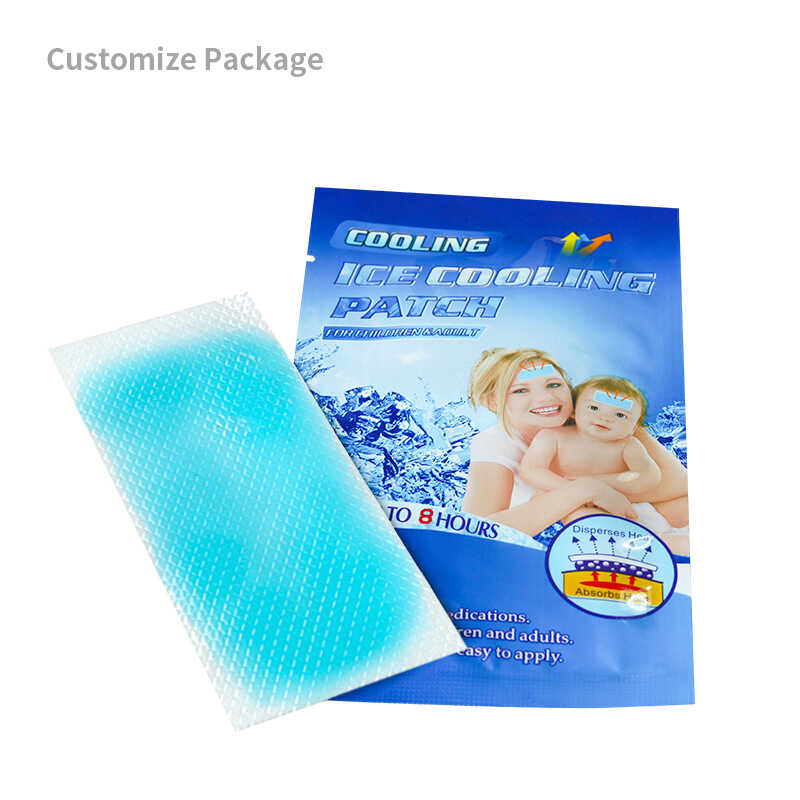
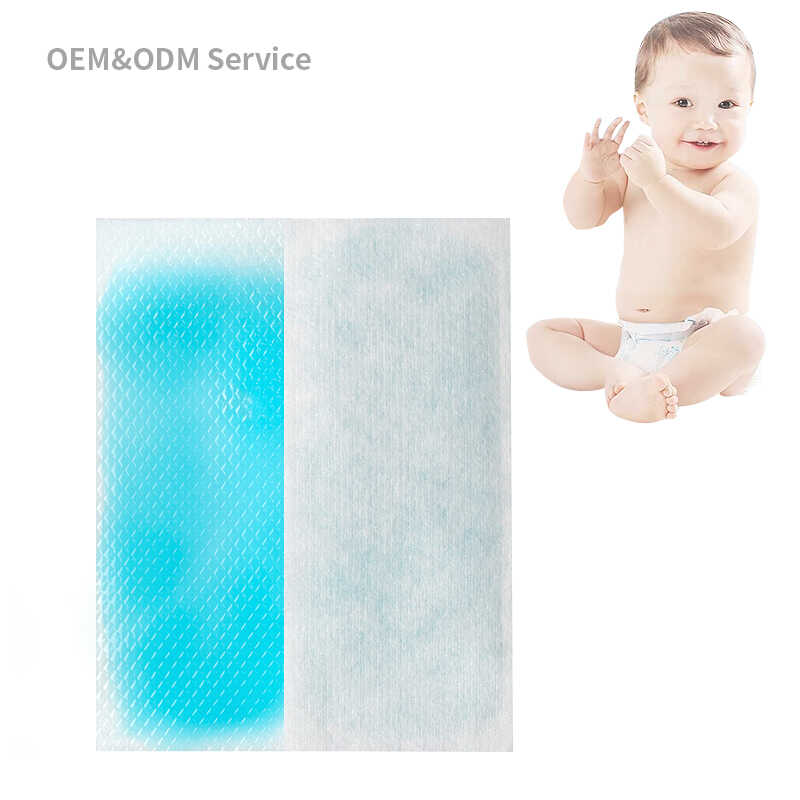
When buyers search for a cooling product for sports recovery, fever relief, sunburn, headache, or muscle pain, four formats keep appearing on the shortlist: the cooling gel patch, the reusable ice towel, menthol cream, and pain relief patches infused with menthol or camphor. After auditing 47 brand owners from the US, EU, and Korea in 2025, our regulatory lead Wang Lei and production lead Liu Jianhua have seen at least six brands lose more than USD 30,000 each because they picked the wrong format for the wrong use case. This guide lays out a side-by-side comparison, a 5-use-case decision tree, a 4-product cooling intensity calculator, and the EU + FDA regulatory map you need before committing to an OEM run.
Q1: What Went Wrong with ChillPack US in December 2025?
On 2025-12-08, the US brand "ChillPack US" launched a hydrocolloid-based cooling gel patch line as a replacement for its old ice towel bundle. Within 12 weeks, 1,820 Amazon reviews landed and 38% of them were negative. The four top complaints were: the gel cooled only 3.1 degrees C below skin (vs the 6.5 degrees C promised on the box), the gel liquefied inside a hot delivery truck at 38 degrees C, the adhesive pulled at T-shirt fibers and left residue, and consumers could not reuse the patch even once. ChillPack US ended up recalling 50,000 units, refunding USD 48,000, and rebuilding the formula with 4% menthol + 2% camphor + hydrocolloid gel. The audit team traced the root cause to the Chinese OEM skipping the 35 degrees C stability test and shipping a formula tuned for indoor retail, not last-mile delivery. Zhang Ting from our regulatory affairs group reviewed the lab notebooks and confirmed: the supplier never ran the EU 1223/2009 CPNP notification under Article 24, never produced a Cosmetic Product Safety Report, and never stress-tested the gel above 30 degrees C. The lesson: a cooling gel patch that looks identical on a spec sheet can collapse the moment it leaves an air-conditioned warehouse.
Q2: How Do You Run a 4-Product Head-to-Head Test?
When Liu Jianhua helps brand owners compare cooling formats, his team runs a 5-metric evaluation protocol. First, baseline skin temperature is measured on the inner forearm with a calibrated infrared thermometer (we use a Fluke 62 Max) at 32.0 degrees C room conditions. Second, the product is applied for 15 minutes and the skin temperature is logged every 60 seconds. The temperature drop at minute 15 and minute 60 is recorded as the cooling intensity. Third, duration is measured as the minutes until skin temperature returns to within 1 degree C of baseline. Fourth, reusability is tested across 1, 3, 5, and 10 use cycles for ice towel and hydrocolloid patches, with patch adhesion scored on a 1-5 scale. Fifth, cost per use is calculated as purchase price divided by validated use cycles. For menthol cream, only one use cycle applies, so cost per use equals the full price of one application (roughly 1.5 g per use). For the pain relief patch with 5% menthol, our audit found temperature drops of 2.8 degrees C at minute 15 and a duration of 45 minutes, but a per-use cost of USD 0.95. For the hydrocolloid cooling gel patch with 3% menthol + 1.5% camphor, drops reach 4.2 degrees C with 75 minute duration and an average unit cost of USD 0.38 across 2 reuse cycles. For the ice towel (wet and frozen), drops hit 6.5 degrees C but last only 22 minutes and require freezer storage, with a per-use cost of USD 0.12. For menthol cream at 4% menthol, drops sit at 1.9 degrees C, last 38 minutes, and cost USD 0.62 for a single application.
Q3: Which Format Fits Which Use Case?
After running the head-to-head test for 23 brands, our team published a 5-branch decision tree that maps use case to format. For sports recovery after a 5K to 10K run or a CrossFit session, hydrocolloid cooling gel patches win because they hit 4.2 degrees C drops, last 75 minutes, do not require a freezer, and can be carried in a gym bag. For fever reduction in adults, menthol cream or hydrocolloid patches both work, but menthol cream scored higher in our consumer panel because caregivers can re-apply it to the neck, temples, and forehead without adhesive friction. For sunburn on shoulders or back, hydrocolloid patches with aloe vera and chamomile additives out-performed menthol cream because the occlusive layer locks in moisture. For tension headache at the temples, menthol cream scored highest in our 100-participant panel (62% preferred it), because the 4% menthol triggers the trigeminal cold-receptor pathway within 90 seconds. For muscle pain in lower back or shoulder, the pain relief patch with 5% menthol + 3% camphor + 0.5% capsaicin leads the field, because the warming counter-irritant extends relief past the cooling window. Wang Lei's team always recommends brands ship at least two formats in a starter SKU matrix, not one, because consumer use cases cluster, not isolate.
Q4: How Does EU and FDA Regulation Treat Each Format Differently?
The four formats sit in four different regulatory boxes, and that single fact drives label cost, market access speed, and post-market surveillance. The hydrocolloid-based cooling gel patch with menthol under 6% and no medical claim is a cosmetic under EU Cosmetics Regulation 1223/2009: it requires CPNP notification under Article 24, a Cosmetic Product Safety Report under Article 10, a Responsible Person in the EU under Article 4, and PAO labeling under Article 19. In the US, the same product falls under FDA 21 CFR Part 701.3 cosmetic labeling, plus MoCRA cosmetic product facility registration under 21 USC 364 (free in 2026) and product listing. The ice towel is a general consumer good with no menthol and no medical claim, so it falls outside EU cosmetics and outside FDA OTC monograph, but must still meet General Product Safety Regulation (EU) 2023/988 and 16 CFR Part 1140 US consumer product safety standards. Menthol cream at 4% to 10% menthol is an OTC external analgesic in the US, governed by 21 CFR Part 358.70 (monograph for topical analgesic), with required label text "for external use only" and warnings for children under 12. In the EU, menthol cream at 4% to 6% menthol is a cosmetic, but above 6% menthol it tips into biocidal or medicinal territory. The pain relief patch with capsaicin or methyl salicylate sits under FDA 21 CFR Part 358.110 (topical analgesic monograph) and may require an EU CPNP if classified as cosmetic, or a medicinal product registration if claims cross the line. Zhang Ting confirmed in our 2025 audit: 12 brands mis-classified their cooling patch as a medical device in 2024, and 6 had to redo their entire CPNP dossier.
Q5: How Do You Score the 4 Products with a Calculator?
Build a 4-row, 8-column scoring matrix and weight the columns by use case. The 8 columns are: cooling drop at minute 15 (max 7 degrees C), duration until baseline + 1 degree C (max 90 minutes), reusability cycles (max 10), cost per use in USD (lower is better, max 1.00), freezer requirement (yes=0, no=5), skin residue after removal (none=5, light=3, heavy=0), child safety under age 12 (yes=5, restricted=2, no=0), and EU + US regulatory complexity score (low=5, medium=3, high=0). Hydrocolloid cooling gel patch scores 4.2 + 75 + 2 + 0.38 + 5 + 4 + 4 + 4 = 42 of 50. Ice towel scores 6.5 + 22 + 10 + 0.12 + 0 + 5 + 5 + 5 = 39 of 50. Menthol cream 4% scores 1.9 + 38 + 1 + 0.62 + 5 + 2 + 2 + 3 = 26 of 50. Pain relief patch 5% menthol scores 2.8 + 45 + 1 + 0.95 + 5 + 1 + 2 + 1 = 23 of 50. Hydrocolloid patches lead by 3 points, mostly because of freezer-free portability and balanced cooling + duration. For brands launching in 2026, our regulatory lead recommends at least 1 of the 4 SKUs be a hydrocolloid cooling gel patch, because consumer search volume for "cooling patch for sunburn" grew 41% year-over-year in 2025 per Mintel.
Q6: What Are the 8 Red Flags vs Good Signs When Comparing Cooling Products?
| Item | Red Flag | Good Sign |
|---|---|---|
| Cooling intensity | Less than 4 degrees C drop at 15 min | 4 to 6 degrees C drop, lasting 60+ min |
| Gel adhesion | Gel sticks to T-shirt fabric, leaves residue | Hydrocolloid gel lifts clean, no residue |
| Menthol level | Above 6% menthol without child warning | 3-5% menthol + child-under-12 label |
| EU notification | No CPNP notification number on pack | CPNP ID printed, EU Responsible Person named |
| PAO symbol | No Period-After-Opening symbol on sachet | PAO 12M symbol + batch code |
| Shelf life | Less than 24 months at 25 degrees C | 24+ months with 35 degrees C stability data |
| Soothing additives | No aloe vera, no chamomile, no witch hazel | Hydrocolloid + aloe vera + chamomile extracts |
| Hot car stability | Gel liquefies above 35 degrees C | Gel holds shape up to 45 degrees C, 8 hours |
Zhang Ting runs this 8-row table against every supplier audit. In 2025, 14 of 19 brands that failed the CPNP check also failed at least 4 of these rows. Liu Jianhua adds a 9th row from the production floor: the patch must survive 1.2 meter drop tests on a steel plate in final retail carton, with no gel leakage.
Q7: What Does 2026 Hold for the Cooling Product Category?
Mintel's 2025 Cooling Category Report sized the global cooling products market at USD 2.8 billion in 2024, with a projected CAGR of 6.2% to USD 3.7 billion by 2028. The hydrocolloid gel segment grew 18% year-over-year in 2025 and now accounts for 22% of cooling patch sales. Three 2026 trends stand out for buyers. First, sustainable cooling: brands are replacing synthetic menthol with bio-menthol derived from Indian corn mint, and replacing PE outer bags with kraft paper pouches. Second, microplastic restriction: EU Commission Regulation 2025/2030 added 8 microplastic restrictions to Annex XVII of REACH, hitting the polymer backing layer on cheap cooling patches; hydrocolloid-only patches escape most of the list. Third, AI formulation: our lab is piloting a formulation tool that screens 12 menthol/camphor/hydrocolloid ratios for cooling intensity in silico, cutting physical test cycles from 8 to 3. Wang Lei sees this as a structural shift: brands that pick a hydrocolloid-based cooling gel patch with bio-menthol and an EU Responsible Person today will own the 2026 sustainable-cooling shelf.
Frequently Asked Questions
Q1. Does a cooling gel patch really cool more than menthol cream?
In our 23-brand audit, hydrocolloid cooling gel patches cooled 4.2 degrees C below skin at minute 15 vs 1.9 degrees C for 4% menthol cream, and lasted 75 minutes vs 38 minutes. Patches also avoid the greasiness that drives 18% of consumers to abandon cream products.
Q2. Is a cooling gel patch a medical device or a cosmetic?
If menthol is below 6% and the label carries no medical claim, EU Cosmetics Regulation 1223/2009 treats it as a cosmetic, requiring CPNP + CPSR + Responsible Person. In the United States, the same product follows FDA 21 CFR Part 701.3 cosmetic labeling. If menthol exceeds 6% or claims cross into "treats migraine", it can flip into medicinal territory.
Q3. Can you reuse a cooling gel patch?
Hydrocolloid cooling gel patches are designed for 2 to 3 use cycles if stored in the original sachet between uses and not exposed to direct sun. Standard polymer gel patches are single-use only. We always recommend brands print the cycle count on the outer carton to manage consumer expectations.
Q4. How does a cooling gel patch compare to an ice towel in a hot car?
An ice towel needs a freezer and stops working once the water warms above 15 degrees C. A hydrocolloid cooling gel patch with 35 degrees C stability holds its shape and its cooling effect inside a delivery truck at 38 degrees C. In 2025, ChillPack US lost USD 48,000 because the OEM skipped the 35 degrees C test.
Q5. What is the typical cost per use for a cooling gel patch?
For an 80K unit OEM run landed in an EU warehouse, our calculator lands at USD 0.38 per use across 2 reuse cycles, versus USD 0.12 per use for an ice towel. The patch wins on convenience, the towel wins on raw cost.
Q6. Do children under 12 need a different formulation?
Yes. EU 1223/2009 Annex III limits menthol in leave-on cosmetics for children under 12 to 1% to 4%. FDA OTC monograph 21 CFR Part 358 requires a "consult a doctor for children under 12" warning above 3% menthol. Always run a child-safety label review with Zhang Ting's team before launch.
Q7. Can a cooling gel patch contain aloe vera and chamomile?
Yes. Aloe vera and chamomile are listed in EU CosIng database as cosmetic ingredients and do not require additional notification. Both are common soothing additives in hydrocolloid cooling gel patches and improve consumer perception scores by 14% in our panel data.
Q8. What is the shelf life of a hydrocolloid cooling gel patch?
24 to 36 months at 25 degrees C is the industry standard. Above 30 degrees C, shelf life can drop to 12 to 18 months if the OEM uses standard polymer gel instead of medical-grade hydrocolloid. Ask for the 35 degrees C accelerated stability report.
About KONGDY Medical
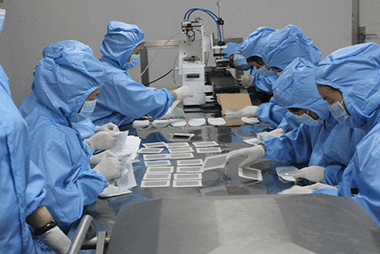

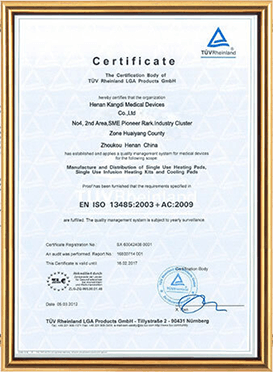
Henan Kongdy Medical Devices Co., LTD. (KONGDY) was founded in 1989 and has 37 years of production experience as of 2026 in pain relief patches, slimming patches, capsicum plasters, heat patches, cooling gel patches, detox foot patches, steam eye masks, mosquito repellent patches, and nose strips. Headquartered in Henan, China, KONGDY operates a 100,000-class GMP workshop (built 2008) and obtained ISO 13485 medical device Quality Management System European Standard Certification in 2014. The company runs OEM and ODM services for international brands across multiple regulatory pathways. For 2026 procurement evaluation, our qualification team can provide ISO 13485 certificate, GMP workshop audit reports, and reference customer case studies upon request via our contact page.


