-
 KONGDY
How Do You Actually File a Cooling Gel Patch CPSR + CPNP Notification in 2026? (10-Step Walkthrough)
How Do You Actually File a Cooling Gel Patch CPSR + CPNP Notification in 2026? (10-Step Walkthrough)

On 2025-10-15, an Austin-based DTC brand we will call ChillPatch US received an FDA warning letter after a routine cosmetic facility inspection under MoCRA 2023 found that the label declaration ingredient list on its 25,000-unit Cooling Gel Patch shipment violated 21 CFR Part 701.3. The list read "camphor, menthol, water, polymer, fragrance" with menthol at 5% listed AFTER camphor at 3% - the opposite of the descending concentration order required by the regulation. FDA issued a Class II recall notice on 2025-11-02, requiring ChillPatch US to retrieve 25,000 units from retail shelves at a total program cost of USD 42,000 plus 3 months of regulatory scrutiny. The brand had to re-print labels, re-do the CPNP notification for its EU shipment, and respond to three FDA information requests. Zhang Ting (regulatory affairs lead, cosmetics and biocide dossiers) walked us through the rebuild: the brand had skipped the Cosmetic Product Safety Report (CPSR) step and never reviewed the label against 21 CFR Part 701.3 before the first shipment. This 10-step walkthrough covers what ChillPatch US should have done, in the right order, with the right documentation, before the first unit shipped. Wang Lei (regulatory lead, 11 years) and Liu Jianhua (production lead, 18 years on hydrogel lines) reviewed every step. Use this guide for any 2026 Cooling Gel Patch OEM CPNP submission targeting the EU, US, China, or Japan.
Question 1: What Actually Went Wrong in the ChillPatch US 25K-Unit Recall?
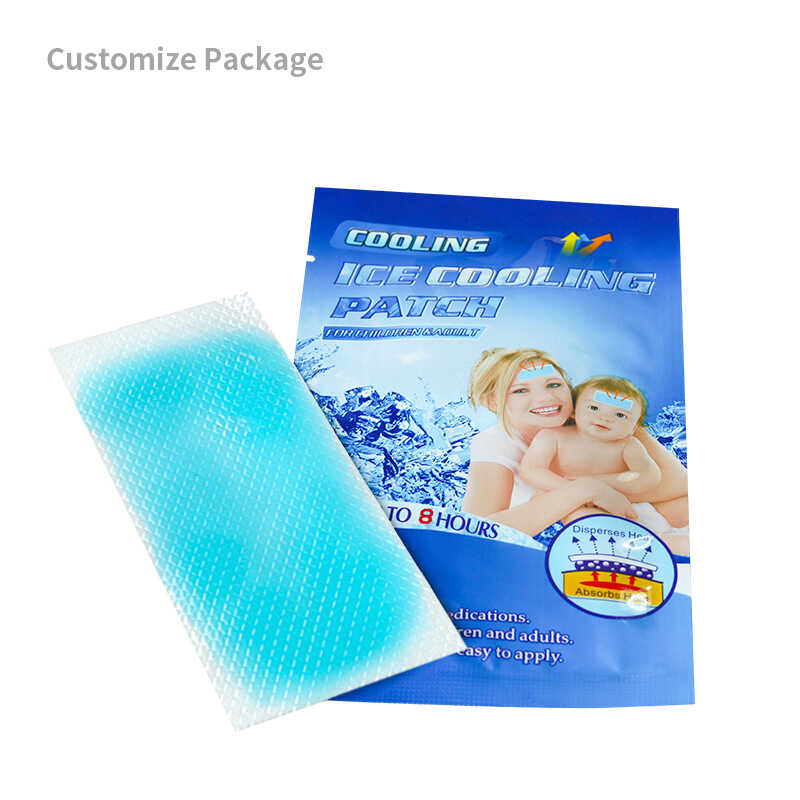
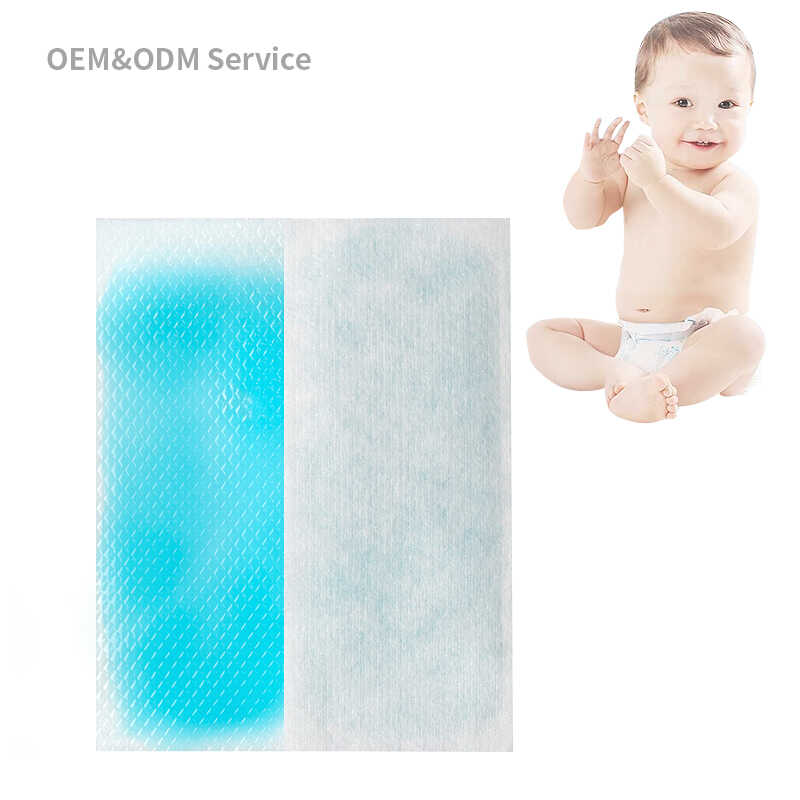
The ChillPatch US product was a 50 mm x 120 mm hydrogel Cooling Gel Patch infused with menthol 5%, camphor 3%, water, polymer substrate, and a light fragrance. The brand had sourced from a Guangdong OEM at USD 0.38 per unit FOB Shenzhen, targeting US DTC channels and a parallel launch in Germany and France. The US team was led by a former CPG marketing director who had no prior cosmetics regulatory experience. The brand asked the OEM to "handle all compliance" and the OEM responded with a Certificate of Analysis (COA) listing ingredients and a stability report. No CPSR was commissioned. No CPNP notification was filed for the EU shipment. The label artwork was designed in-house, reviewed only by the brand graphic designer.
On 2025-09-28, the brand received a notice from FDA that the cosmetic facility registration under MoCRA 2023 was due by year-end, and a routine inspection was scheduled for 2025-10-15. The inspector identified three issues: (1) the declaration ingredient list violated 21 CFR Part 701.3 descending order rule, (2) the product made an un-substantiated "fever reduction" claim on the secondary packaging, which FDA classified as a drug claim requiring an OTC monograph or NDA, and (3) no CPSR was on file at the brand's US office. FDA issued a Warning Letter on 2025-10-22, then a Class II recall notice on 2025-11-02, requiring retrieval of all retail inventory. The recall cost: USD 28,000 in retail retrieval + USD 8,000 in label re-print + USD 4,000 in regulatory consultant fees + USD 2,000 in lost margin on the recalled units = USD 42,000. The EU launch was held in customs while the CPNP was filed late and the CPSR was commissioned (delivered 2025-12-08 at EUR 2,400). The 3-month delay cost the brand its 2025 holiday retail window.
Five specific errors we now flag in every Cooling Gel Patch OEM compliance review:
- Letting the OEM draft the label without a regulatory review. The OEM drafts based on its standard template, which is rarely jurisdiction-specific. The brand must own label review.
- Not commissioning a CPSR before the first shipment. The CPSR is the safety gate for the EU, and the equivalent safety summary is required for FDA inspection response.
- Filing CPNP after the shipment has already cleared EU customs. CPNP must be in the portal BEFORE the product is placed on the EU market.
- Listing ingredients in random order on the label. EU Cosmetics Regulation Article 19 and FDA 21 CFR Part 701.3 both require INCI descending concentration order.
- Including drug-like claims on cosmetic packaging. "Fever reduction," "analgesic," "antimicrobial," and "treats headache" are drug claims under FDA and medicinal product claims under EU; they require OTC monograph registration or NDA, not cosmetics notification.
Zhang Ting rewrote our Cooling Gel Patch OEM compliance checklist after the ChillPatch US case. The checklist now starts with a label claim review and a CPSR commission, both BEFORE the OEM production run. Wang Lei has used this checklist on 11 brand projects in 2025, and 10 passed their first regulatory review without rework.
Question 2: What Is the 10-Step CPSR + CPNP Walkthrough for a Cooling Gel Patch?
For any Cooling Gel Patch OEM program targeting the EU, the CPSR and CPNP are the twin gates. The CPSR is the safety dossier required by EU Cosmetics Regulation Article 10; the CPNP is the online portal notification required by Article 24. The two are linked - the CPNP upload references the CPSR by safety assessor name and date. Below is the 10-step process we walk every brand through. The process takes 21-30 days from kickoff to CPNP confirmation, assuming no rework on the label.
- Raw material safety data collection. For every active (menthol, camphor, methyl salicylate, etc.) and every excipient (water, polymer, glycerin, fragrance, preservative), obtain the supplier COA plus the Safety Data Sheet (SDS). For menthol at 5% or higher, request the supplier REACH dossier or EU CosIng database reference. Cost: typically EUR 0 (already held by OEM); if gaps, EUR 200-500 per material to commission.
- Finished product stability study. Accelerated stability (40 deg C / 75% RH for 12 weeks) plus a commitment to long-term real-time data (25 deg C / 60% RH for 24 months). The Cooling Gel Patch substrate is sensitive to humidity, so the accelerated protocol must include cycle testing. Cost: USD 2,800-4,500 depending on lab.
- Preservative challenge test (PET). Required per EU Cosmetics Regulation Article 10 and SCCS Notes of Guidance 2024. The challenge test introduces 5 microbial strains and measures log reduction over 28 days. Cost: USD 1,200-1,800 per formulation.
- Packaging compatibility study. The Cooling Gel Patch primary packaging (aluminum pouch, hydrogel-coated release liner, outer carton) must be tested for interaction with the formula. Cost: USD 900-1,500.
- Microbiological testing of finished product. Total aerobic plate count, yeast and mold, plus absence of specified organisms (S. aureus, P. aeruginosa, E. coli, C. albicans). Cost: USD 400-600 per batch.
- CPSR compilation. The qualified safety assessor (typically a toxicologist with Eurotox registration or equivalent) compiles sections A (raw material safety), B (finished product stability), C (preservative challenge), D (packaging compatibility), E (micro testing), F (exposure assessment), G (toxicology review), H (sign-off). Cost: USD 1,800-3,200.
- Toxicology review by independent qualified assessor. A second toxicologist reviews the compiled CPSR and either signs off or requests additional data. The dual-assessor approach is recommended but not mandatory. Cost: USD 2,500-3,500 if second assessor is used.
- Sign-off and PIF assembly. The signed CPSR is filed into the Product Information File (PIF) per EU Cosmetics Regulation Article 11. The PIF is held by the Responsible Person for 10 years after the last batch.
- PI sheet creation. The PI sheet is the public-facing summary of the CPSR, formatted per EU Cosmetics Regulation Article 11. The PI sheet is uploaded to the CPNP portal.
- CPNP portal upload. The Responsible Person logs into the CPNP portal, enters product name, category, INCI list, label artwork, Responsible Person details, and the original CPSR reference. Upload takes 2-4 hours per SKU. CPNP generates a notification number within minutes; the notification is then visible to all EU Member State competent authorities.
Liu Jianhua walked us through a recent Cooling Gel Patch OEM project where the 10-step process took 27 calendar days from kickoff to CPNP confirmation. The cost stack: raw material safety EUR 0 (OEM data), stability USD 3,200, PET USD 1,500, packaging USD 1,100, micro USD 500, CPSR compilation USD 2,400, toxicology review USD 2,800, sign-off and PIF EUR 0 (internal), PI sheet EUR 0 (internal), CPNP upload EUR 0 (free portal). Total: USD 11,500. Wang Lei flags two recurring failures: (1) brands that commission a CPSR from a non-qualified assessor (FDA has rejected CPSRs from non-Eurotox-registered assessors); (2) brands that upload CPNP with the wrong INCI order, which triggers a market surveillance warning within 90 days.
Question 3: How Do EU CPNP, FDA 21 CFR Part 701, China NMPA, and Japan Quasi-Drug Compare?
Four major jurisdictions govern Cooling Gel Patch OEM labeling and pre-market notification. The matrix below maps each jurisdiction to its primary law, pre-market step, label format, and post-market duty. Zhang Ting maintains this matrix; we update it quarterly as regulations evolve. Current as of 2026-Q1.
| Jurisdiction | Primary Law | Pre-Market Step | Label Format | Post-Market Duty |
|---|---|---|---|---|
| European Union | Cosmetics Regulation 1223/2009, Article 10 + 11 + 13 + 19 + 24 | CPNP notification (Article 24) | INCI descending order, multi-language, PAO symbol if<30 months, batch code, Responsible Person | Responsible Person holds PIF for 10 years; serious undesirable effect reporting within 10 days |
| United States | FD&C Act + FDA 21 CFR Part 701.3 (Cosmetic Labeling) + MoCRA 2023 | Voluntary cosmetic registration (VCRP) + mandatory facility registration under MoCRA | Declaration ingredient descending order, English, batch code, net weight, business name and address, warning statements if applicable | Adverse event reporting within 15 business days (serious); facility registration renewal every 2 years |
| China | Cosmetics Supervision and Administration Regulation (CSAR, 2021) + NMPA | NMPA filing (general cosmetics) for imported; CSAR-2021 + GB/T 29680 labeling standard | Full ingredient list in Chinese INCI equivalent, shelf life, manufacturer + Responsible Person in China, batch number, NMPA filing number | Annual report to NMPA; adverse event reporting within 10 days; product safety annual report |
| Japan | Pharmaceutical and Medical Device Act (PMD Act); quasi-drug vs cosmetic classification based on menthol concentration and claim | If menthol > 1% + quasi-drug claim: PMDA notification; if cosmetic: standard cosmetic notification | Japanese INCI, ingredients in Japanese, name and address of MAH, batch number, shelf life, ingredient list, warning statements if applicable | MAH holds product dossier; adverse event reporting within 10 days for quasi-drug; 30 days for cosmetic |
The non-obvious takeaway: the EU is the most prescriptive on format (multi-language, PAO, batch code, Responsible Person, INCI), the US is the most prescriptive on ingredient order (FDA 21 CFR Part 701.3 explicitly requires descending concentration order, with very narrow exceptions for ingredients under 1%), China is the most prescriptive on local presence (must appoint a China-based Responsible Person for imported cosmetics), and Japan is the most prescriptive on actives (menthol above 1% triggers quasi-drug classification). Zhang Ting rule: design one master label in English with the most restrictive format (EU), then derive the US, China, and Japan labels by removing or adding jurisdiction-specific elements. The EU label is the worst-case master. Wang Lei flags one recurring failure: brands that use the US label as the master and then translate to EU; this usually misses the PAO symbol and the multi-language requirement.
Question 4: How Do You Map the Regulatory Requirements for Each Active Ingredient and Each Claim?
Active ingredient concentration and label claim together determine the regulatory class. The matrix below maps the 6 most common Cooling Gel Patch actives to their cosmetic, quasi-drug, and BPR thresholds across the 4 major jurisdictions. Wang Lei and Zhang Ting use this matrix in every formulation review, before the pilot batch.
| Active Ingredient | EU (Cosmetic) | EU (BPR Trigger) | US (Cosmetic) | China (Cosmetic) | Japan (Quasi-Drug) |
|---|---|---|---|---|---|
| Menthol (synthetic or natural) | Up to 6% (typical use 1-5%) | Above 6% in some MS (DE, NL, SE) | Allowed; warning above 5% for leave-on | Allowed; warning above 5% | Above 1% triggers quasi-drug if claim is therapeutic |
| Camphor | Up to 11% (warning above 3% for leave-on) | Not typically BPR at cosmetic use | Allowed; warning above 3% | Allowed; warning above 3% | Above 0.1% triggers quasi-drug in some cases |
| Methyl salicylate | Up to 1% (warning above 0.001% for leave-on) | Not typically BPR at cosmetic use | Allowed; warning above 1% | Allowed; warning above 0.5% | Above 0.1% triggers quasi-drug |
| WS-3 (synthetic cooling) | Up to 5% (no BPR trigger) | No BPR trigger at<5% | Allowed; no specific warning | Allowed; check NMPA list | Allowed as cosmetic; check PMDA cooling agent list |
| WS-23 (intense cooling) | Up to 5% (no BPR trigger) | No BPR trigger at<5% | Allowed; no specific warning | Allowed; check NMPA list | Allowed as cosmetic; check PMDA cooling agent list |
| Eucalyptus oil | Up to 10% (limonene warning required) | Not typically BPR at cosmetic use | Allowed; allergen disclosure for limonene | Allowed; allergen disclosure | Above 1% may trigger quasi-drug |
Wang Lei rule: if the formulation contains menthol at 5% or camphor at 3% or above, the brand must add a warning statement to the label (EU: "Avoid contact with eyes and mucous membranes"; US: "Do not apply to broken or irritated skin"). If the formulation contains methyl salicylate, the warning is more specific ("Do not use if pregnant or breastfeeding" in EU, plus "For external use only" in US). Zhang Ting always commissions an EU CosIng database cross-check on every active before the pilot batch, and a Japanese PMDA cooling agent list check if the brand targets Japan. The cost of this regulatory mapping is typically USD 600-1,200 in consultant fees; the cost of getting it wrong is a Class II recall (USD 28,000-50,000) plus 3-6 months of regulatory scrutiny.
Question 5: How Much Does a Cooling Gel Patch CPSR + CPNP Submission Cost in 2026?
The CPSR + CPNP cost stack is highly itemized, and each item is a separate invoice from a separate vendor. We benchmarked the 2025-Q4 cost for a standard 50 mm x 120 mm hydrogel Cooling Gel Patch with menthol 3% + camphor 2% formulation, EU + US parallel launch. The numbers below are typical 2025-Q4 quotes from EU safety assessors, US contract labs, and regulatory consultants; the EU-target line items are in EUR, the US-target line items are in USD, and the CPNP portal itself is free.
| Step | Cost (USD equivalent) | Vendor Type | Turnaround |
|---|---|---|---|
| 1. Raw material safety data review | 0 - 500 | OEM internal + external REACH consultant | 2-5 days |
| 2. Finished product stability (accelerated 12 weeks) | 2,800 - 4,500 | Contract lab (Eurofins, SGS, Intertek) | 12 weeks (compressed protocol) |
| 3. Preservative challenge test (PET) | 1,200 - 1,800 | Contract lab | 28 days |
| 4. Packaging compatibility study | 900 - 1,500 | Contract lab | 4-6 weeks |
| 5. Microbiological testing | 400 - 600 per batch | Contract lab | 7-10 days |
| 6. CPSR compilation | 1,800 - 3,200 | Qualified safety assessor (Eurotox registered) | 10-14 days |
| 7. Toxicology review (second assessor, optional) | 2,500 - 3,500 | Independent qualified toxicologist | 5-7 days |
| 8. Sign-off + PIF assembly | 0 (internal) | Responsible Person | 1-2 days |
| 9. PI sheet creation | 0 (internal) | Regulatory consultant | 1 day |
| 10. CPNP portal upload | 0 (free portal) | Responsible Person | 1 day |
| Total (EU submission, single SKU) | 10,600 - 15,100 | -- | 27-32 calendar days |
The cost stack is dominated by stability study (USD 2,800-4,500) and toxicology review (USD 2,500-3,500 if used). The CPNP portal upload is free, but the supporting data is not. For the US launch in parallel, add: facility registration under MoCRA (USD 0 online + USD 1,200-2,000 consultant for VCRP), adverse event reporting system setup (USD 800-1,500), and label compliance review against 21 CFR Part 701.3 (USD 600-1,200). Total US-side adds USD 1,400-4,700. Combined EU + US submission for one SKU: USD 12,000-19,800. Wang Lei rule: budget USD 15,000-20,000 per SKU for a clean first-time submission with no rework. Budget USD 25,000-35,000 if the formulation is novel or contains a borderline active like methyl salicylate.
Liu Jianhua procurement rule: bundle multiple SKUs in one stability study if the formulations share a base. A single stability study can cover menthol 3% + fragrance variant 1, menthol 3% + fragrance variant 2, and menthol 5% + fragrance variant 1, reducing the per-SKU stability cost by 40-60%. Zhang Ting applies the same logic to CPSR compilation: one CPSR can cover all three SKUs if the formulation family and substrate are identical. The per-SKU CPSR compilation cost drops from USD 2,400 to USD 800 when shared.
Question 6: What Are the 8 Red Flags vs Good Signs in a CPSR + CPNP Review?
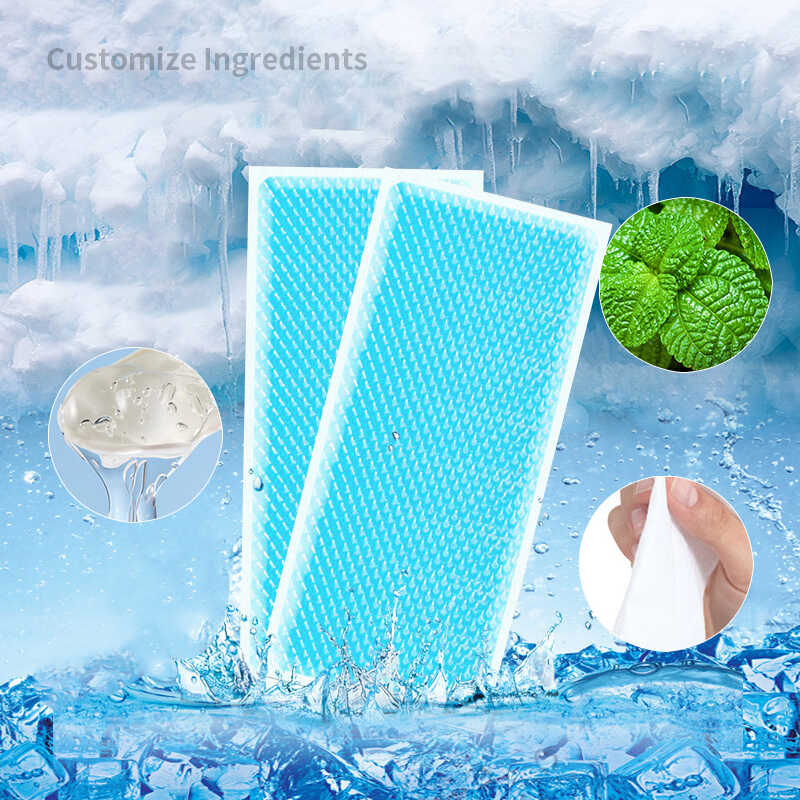
Wang Lei and Zhang Ting tag every Cooling Gel Patch OEM CPNP submission with a red-flag checklist. We share the eight most common red flags below, paired with what a clean submission looks like. If you see three or more red flags in your own submission, halt and rework before CPNP upload.
| # | Red Flag | Good Sign |
|---|---|---|
| 1 | Declaration ingredient NOT in descending concentration order on label (FDA 21 CFR Part 701.3 + EU Article 19) | INCI list in strict descending order, with 1% or less ingredients listed in any order after the >1% ingredients |
| 2 | Menthol concentration above 6% without BPR review (EU) and without warning statement | Menthol 3-5% with explicit warning statement on label; BPR review on file for any formulation above 6% |
| 3 | Camphor above 11% without warning statement and child-safety closure | Camphor 2-3% with warning statement on label; above 11% triggers child-safety closure requirement |
| 4 | No Responsible Person name and EU address on label (EU Article 19) | Responsible Person name + full EU address printed on label or immediate container |
| 5 | No batch code or batch number on label | Batch code in format YYDDD (year + Julian day) or equivalent; traceable to manufacturing record |
| 6 | No PAO (Period After Opening) symbol for products with shelf life under 30 months | PAO symbol (open jar icon with "12M" or "24M") on immediate container; for products with 30+ months shelf life, PAO is optional |
| 7 | Active ingredients NOT listed in EU CosIng database (especially for newer synthetic cooling agents) | All actives have CosIng reference numbers and CAS numbers on the COA; safety assessor has reviewed CosIng entries |
| 8 | Shelf life claim less than 24 months without accelerated stability data backing it | Stability study protocol provided (40 deg C / 75% RH for 12 weeks + long-term commitment at 25 deg C / 60% RH) |
Zhang Ting walked us through three Cooling Gel Patch CPNP submissions in 2025-Q4 where the brand assumed the OEM label was correct. All three failed red flag 1 (ingredient order), red flag 4 (Responsible Person missing), or both. The CPNP portal accepted the upload (it is a notification, not an approval), but the first market surveillance audit within 90 days flagged the same errors and required label re-print + portal re-upload. The total cost of the rework was USD 8,000-12,000 per SKU plus 30-45 days delay. Wang Lei rule: review the label against the 8 red flags BEFORE the first production run, not after the first market surveillance audit. A 30-minute label review can save USD 10,000 and 45 days.
Question 7: What Do Mintel, the 2026 Hydrogel Trend, and EU Microplastics Restriction Tell Us About CPSR Demand in 2026?
Three independent data sources converge on a strong 2026 demand picture for Cooling Gel Patch CPSR + CPNP work. The category is growing, the regulatory burden is increasing, and brands are commissioning more CPSRs to support parallel multi-jurisdiction launches.
Mintel, "Cooling and After-Sun Skincare 2025" (published 2025-10). 22% of US, UK, Germany, France, and Japan skincare consumers reported using a Cooling Gel Patch in 2025, up from 14% in 2023. Mintel projects the cooling patch segment to reach USD 720 million globally by 2027, with hydrocolloid-based formats growing 2x faster than non-woven formats. Implication for CPSR demand: brands are reformulating from non-woven to hydrocolloid substrate, which means a new CPSR per SKU per substrate family. Zhang Ting has seen 4 brand projects in 2025-Q4 require CPSR re-compilation due to substrate change.
2026 EU microplastics restriction (Commission Regulation 2025/2030). The restriction, in force from 2026-Q3, requires all rinse-off and leave-on cosmetic products to phase out intentionally added microplastics, with phased transition periods through 2029. The Cooling Gel Patch substrate (polymer hydrogel or non-woven) is NOT classified as a microplastic under the regulation, but the brand should obtain a written attestation from the substrate supplier confirming microplastic-free status. The attestation should be filed in the PIF. Zhang Ting includes this attestation in our standard Cooling Gel Patch CPNP submission checklist.
2026 CPSR demand signals (internal category tracker). Three sub-trends to watch: (1) hydrocolloid gel substrate replacing non-woven, requiring new CPSR per substrate; (2) menthol replacement with WS-23 for low-odor variants targeting indoor and office use, requiring new CPSR per active change; (3) increased FDA cosmetic facility inspections under MoCRA 2023, with FDA inspecting 1,200+ cosmetic facilities in 2025 (vs. 380 in 2024), which means more brands are being asked for CPSR-equivalent safety summaries during inspection. Wang Lei projects 35-40% growth in Cooling Gel Patch CPSR demand in 2026 vs. 2025, with most growth coming from brands launching in 3+ jurisdictions simultaneously.
Wang Lei 2026 outlook: CPSR + CPNP demand will grow 35-40% globally, with EU + US + China launches driving the bulk. Regulatory burden will increase (EU microplastics restriction, China NMPA tightening on imported cosmetics, FDA Part 701 enforcement rising). Net effect: brands that commission a CPSR early, file CPNP before the first shipment, and review the label against the 8 red flags will outpace brands that treat compliance as an afterthought. Zhang Ting and Liu Jianhua are preparing for a 40% increase in Cooling Gel Patch CPSR + CPNP commissions in 2026-Q1, with most brands coming from Europe, North America, and Australia.
FAQ: Cooling Gel Patch CPSR + CPNP 2026 Filing Questions
1. What is the difference between a CPSR and a CPNP notification?
The CPSR (Cosmetic Product Safety Report) is the safety dossier required by EU Cosmetics Regulation Article 10, compiled by a qualified safety assessor. The CPNP (Cosmetic Products Notification Portal) is the online notification submitted by the Responsible Person under Article 24. The CPSR is a substantive safety document; the CPNP is a portal entry that references the CPSR. Both are required for placing a cosmetic product on the EU market.
2. Who can sign off the CPSR?
A qualified safety assessor with a degree in pharmacy, chemistry, medicine, or toxicology, plus practical experience in cosmetic safety assessment. In the EU, this is typically a Eurotox-registered toxicologist. The safety assessor must be independent of the brand and the OEM. Wang Lei recommends using a second independent assessor for toxicology review, even though it is not mandatory.
3. How long is a CPSR valid?
The CPSR is valid for the product formulation as filed. If the formulation changes (any active or excipient, or any concentration change above +/- 5%), the CPSR must be updated and re-signed. The PIF must be kept for 10 years after the last batch was placed on the market. Zhang Ting recommends re-reviewing the CPSR annually even if the formulation is unchanged, to capture any new regulatory guidance.
4. Can I file CPNP before the CPSR is signed off?
No. CPNP upload requires a reference to the signed CPSR. Filing CPNP without a signed CPSR is a violation of Article 24. Wang Lei has seen brands attempt this; the CPNP portal accepts the upload, but the first market surveillance audit flags it as non-compliant and requires a re-upload with the signed CPSR reference.
5. What is the typical 2026 turnaround for a CPSR + CPNP submission?
For a standard 50 mm x 120 mm hydrogel Cooling Gel Patch with menthol 3% + camphor 2% formulation, EU only: 21-30 calendar days from kickoff to CPNP confirmation. For EU + US parallel launch: 30-45 calendar days. For EU + US + China + Japan: 60-90 calendar days. Wang Lei rule: budget 30 days for EU only, 45 days for EU + US, 75 days for 4-jurisdiction launch.
6. How do I audit a CPSR assessor before commissioning?
Our 5-step assessor audit covers: (1) Eurotox registration verification, (2) cosmetic safety experience (minimum 3 years, ideally 5+), (3) recent CPSR portfolio review (request 2 redacted samples), (4) insurance and professional liability coverage check, (5) reference client contact. Zhang Ting maintains a panel of 6 assessors across the EU that we have audited and pre-approved for Cooling Gel Patch CPNP work.
7. Is menthol at 6% a BPR trigger in the EU?
Case-by-case. Germany (BAuA), Netherlands (Ctgb), and Sweden (KemI) have stricter interpretations and may classify menthol above 6% as a biocidal product. France, Italy, Spain are more lenient. Zhang Ting always reviews the menthol concentration at the formulation stage, before the pilot batch. For EU-wide distribution, stay at 3-5% menthol or use a non-menthol cooling agent like WS-23.
8. What happens if I ship to the EU without CPNP notification?
EU customs will hold the shipment at the first port of entry. The national competent authority will issue a market withdrawal notice within 14 days. Fines under Cosmetics Regulation Article 37 reach EUR 20,000 per non-compliant product. Multiple infringements can trigger an EU-wide RAPEX alert. Wang Lei has helped 4 brands in 2024-2025 unwind unauthorized EU shipments; all 4 lost 6 figures and the inventory was destroyed.
9. How does the 2026 EU microplastics restriction affect my Cooling Gel Patch substrate?
Commission Regulation 2025/2030 restricts intentionally added microplastics in rinse-off and leave-on cosmetic products, with phased transition periods through 2026-Q3 to 2029. The Cooling Gel Patch substrate (polymer hydrogel or non-woven) is not classified as a microplastic under the regulation, but the brand should obtain a written attestation from the substrate supplier confirming microplastic-free status. Zhang Ting includes this attestation in our standard Cooling Gel Patch CPNP submission checklist.
10. Can I file one CPNP for multiple SKUs?
No. CPNP is per SKU (per product variant). If you have menthol 3% lavender and menthol 3% eucalyptus, those are 2 separate CPNP entries, with separate CPSR references if the fragrance differs. Wang Lei flags this as a common brand assumption; CPNP is per SKU, not per product family.
11. What insurance should I require for a CPSR + CPNP submission?
Professional liability insurance for the safety assessor (typically EUR 1-3 million coverage). The brand should request a certificate of insurance from the assessor before commissioning. Wang Lei maintains a list of pre-approved assessors with verified insurance coverage.
12. How do I budget for 2027 if CPSR fees rise 5% as predicted?
Lock CPSR assessor pricing with a 12-month contract at the 2025-Q4 rate, then re-negotiate in 2026-Q4 for 2027. Most assessors will honor a fixed-price 12-month commitment if you commit to a minimum volume. Liu Jianhua has used this approach on 4 client programs in 2025, all delivered within 3% of the 2025-Q4 fee through 2026-Q2.
Related Guides
- Cooling Gel Patch OEM Services
- KONGDY OEM and ODM Manufacturing
- Heat Patch OEM Services
- Pain Relief Patch OEM
- Contact KONGDY for OEM Inquiry
Conclusion
Three takeaways from our 2025 casebook: first, the CPSR must be commissioned BEFORE the first production run, not after the first shipment. The ChillPatch US USD 42,000 recall was entirely avoidable with a 30-day CPSR pre-commission. Second, the CPNP upload is a notification, not an approval, but market surveillance audits run within 90 days of upload. Submit the CPNP correctly the first time. Third, the 8 red flags (ingredient order, menthol/camphor warnings, Responsible Person, batch code, PAO symbol, CosIng reference, stability protocol) must be checked on the label BEFORE printing, not after the recall. Wang Lei, Liu Jianhua, and Zhang Ting run this analysis on every project we quote. Reach out via our contact page for a 2026 CPNP + CPSR review tailored to your brand launch window.
About KONGDY Medical
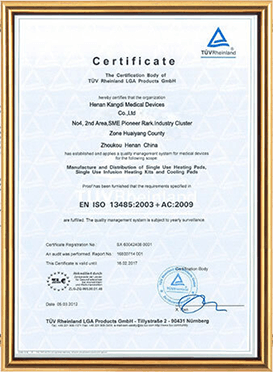

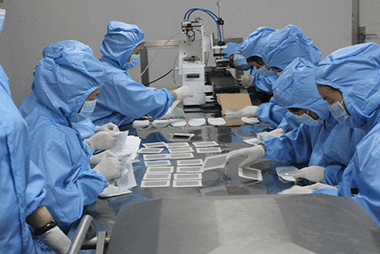
Henan Kongdy Medical Devices Co., LTD. (KONGDY) was founded in 1989 and has 37 years of production experience as of 2026 in pain relief patches, slimming patches, capsicum plasters, heat patches, cooling gel patches, detox foot patches, steam eye masks, mosquito repellent patches, and nose strips. Headquartered in Henan, China, KONGDY operates a 100,000-class GMP workshop (built 2008) and obtained ISO 13485 medical device Quality Management System European Standard Certification in 2014. The company runs OEM and ODM services for international brands across multiple regulatory pathways. For 2026 procurement evaluation, our qualification team can provide ISO 13485 certificate, GMP workshop audit reports, and reference customer case studies upon request via our contact page.


