-
 KONGDY
The Firm That Said It Did Not Test: What FDA Warning Letter 722589 Shows a Slimming Patch OEM in 2026
The Firm That Said It Did Not Test: What FDA Warning Letter 722589 Shows a Slimming Patch OEM in 2026
On 14 April 2026 the Center for Drug Evaluation and Research issued warning letter MARCS-CMS 722589 to Pro Numb Tattoo Numbing Spray, LLC, of Palm Bay. The firm had been inspected on 5 and 6 November 2025 and had answered the Form FDA 483 on 13 November 2025.
The case is worth reading for a sentence in it. The letter records that the firm stated it does not perform finished product testing. That is an unusual thing for a licensed manufacturer to have said in writing, and it makes the rest of the letter read differently.
What the firm offered instead was that it had contracted a third-party laboratory to perform full release testing, and that it had implemented finished product specifications, certificates of analysis and a standard operating procedure for identity, strength, purity and microbial testing.
The agency did not reject that. It set out five things it wanted instead, and the fifth of them asks for the name, the address and the supplier qualification report of the laboratory doing the work.
For a slimming patch OEM the case is the clearest published example of a contract manufacturer putting its release testing in outside hands and finding out what that arrangement has to contain.
1. The facts, exactly as the letter states them
The identification facts come first, and three of them are unusual in this library.
| Item | What the letter states |
|---|---|
| Letter | MARCS-CMS 722589, dated 14 April 2026 |
| Firm | Pro Numb Tattoo Numbing Spray, LLC |
| Facility identifier | FEI 3027228716 |
| Address | 3778 Dixie Highway NE, Suite C, Palm Bay |
| Recipient | Mr. Zahnter |
| Inspection | 5 and 6 November 2025, two days |
| Form FDA 483 response | 13 November 2025, seven days after the inspection |
| Letter date | 14 April 2026 |
| Products | PRO NUMB TATTOO NUMBING SPRAY, PRO NUMB TATTOO NUMBING SPRAY FOR SENSITIVE SKIN, TKTX Deep Numbs |
| Findings | Unapproved new drugs under 355(a) and 331(d); misbranded under 352(ee); introduction prohibited under 331(a) |
| Response period | Fifteen working days |
The sixth and seventh rows are the remarkable ones. A two-day inspection and a seven-day response are the shortest of both in this library, and the seven-day response still produced a finding of inadequacy.
The third row is worth a note as well. One of the three products carries a recognisable brand name, which is the point of the case: the products are sold under names that consumers search for, and the agency bought them the way a consumer would.
2. Finding one, stated more bluntly than usual
The first finding is 21 CFR 211.165(a), and the letter sets out the failure in a sequence that is worth reading in full.
| The step in the sequence | What it says |
|---|---|
| The finding | The firm failed to have, for each batch of drug product, appropriate laboratory determination of satisfactory conformance to final specifications, including the identity and strength of each active ingredient, prior to release |
| What the firm said | The firm failed to adequately test batches of its drug products before release and distribution, and stated that the firm does not perform finished product testing |
| What the firm offered in its response | It contracted a third-party laboratory to perform full release testing, and implemented finished product specifications, certificates of analysis and a standard operating procedure for identity, strength, purity and microbial testing |
| Why that was not enough | The response did not provide sufficient details about the test methods and specifications implemented, and did not commit to retrospective testing of retains for batches already distributed in the United States market |
The fourth row is the hinge of the case. The agency accepted the arrangement, rejected the description of it, and then said what the description had to contain.
For a slimming patch OEM the sequence is the most useful part of the letter, because it is a template for answering the question before it is asked. The firm had an arrangement and a specification and a procedure. It did not have the methods, and it did not have a commitment about the past.
3. Finding two: the components, which did not move with the outsourcing
The second finding is 21 CFR 211.84(d)(1) and 211.84(d)(2), and it is the finding that tells a reader whether the outsourcing was complete.
The firm failed to test samples of each component for identity and conformity with all appropriate written specifications for purity, strength and quality, and failed to validate and establish the reliability of a component supplier test analyses at appropriate intervals. The letter records that the firm manufactures over-the-counter topical analgesic drug products without adequate assurance of the quality of raw materials, and that incoming components such as active pharmaceutical ingredients were not tested for identity before use.
| The layer | Who was testing it | What the finding says |
|---|---|---|
| Incoming components and active ingredients | Nobody, on the evidence in the letter | No identity test on the material before it was used |
| Component supplier results | The supplier, unverified | The reliability of those results was never established at appropriate intervals |
| Finished product | A third-party laboratory, engaged after the inspection | This layer was addressed; the layer below it was not |
The third row is the one to carry into a supplier conversation. The firm had moved one layer of testing outside and had left the layer below it unstated, and the finding followed the layer that was left, not the one that was moved.
A slimming patch OEM that outsources release testing should check its own component identity testing on the same afternoon it signs the service agreement, because that is the obligation that does not travel with the contract.
4. Findings three and four: the two that are always present
The remaining two findings are the most routine in this library and they are worth recording because their absence in a letter is itself information.
| Finding | Clause | What is missing |
|---|---|---|
| No adequate written stability testing programme, established and followed | The stability provisions of the finished pharmaceutical framework | A programme with methods, timepoints and the container closure system, and batches added to it over time |
| No adequate written production and process control procedures | The production and process control provisions | Written procedures for production and process control, approved by the quality unit before use |
The first row is the one that reaches furthest, because a stability programme supports the expiry date on the pack and therefore supports the product already in the market. A second letter in this library records the same consequence directly: without the appropriate stability studies there is no adequate scientific evidence that the product retains its quality attributes throughout the labelled expiry period, and export certificates and new applications can be withheld as a result.
For a slimming patch OEM these two findings are worth reading as the baseline rather than as the exception. They appear in letter after letter in this library, which is a different kind of information from a finding that appears once.
5. What the agency asked for, and the fifth item
The requirements are the substance of the letter, and the fifth one changes what the arrangement means.
| What is required | What it is about |
|---|---|
| A comprehensive independent assessment of the laboratory | Practices, procedures, methods, equipment, documentation and analyst competencies, with a remediation plan and an evaluation of its effectiveness |
| Procedures for maintaining retains | For each batch manufactured at the facility |
| A list of chemical and microbial specifications with test methods | Used to analyse each batch before a batch disposition decision |
| Retrospective retain testing with an action plan, timelines and results | All batches distributed to the United States within expiry, with rapid corrective action including notification and recall where substandard quality is found |
| The name, the address and the supplier qualification report of the third-party laboratory | The laboratories conducting the drug product release testing |
The last row is the item that makes the arrangement auditable rather than merely announced. A firm that cannot name the laboratory that released its batches has described an arrangement it cannot inspect, and the agency asks for the name and the qualification report together for exactly that reason.
It is worth noting what is not in the list. The letter does not prohibit the use of a third-party laboratory, and it does not say that a certificate of analysis from that laboratory is insufficient. It says that the qualification has to be produced. For a slimming patch OEM that is a manageable requirement, and it is a different one from a prohibition.

6. Two failures that look alike and are not
This library now holds two letters in which the release testing did not happen, and the difference between them is instructive.
| Case | What the firm said | What the agency concluded |
|---|---|---|
| 707956, Everlaan Organics | That it tested each batch of finished product before release | That when the test data was requested the firm could provide no records, and that it did not appear to be performing release testing on finished products |
| 722589, Pro Numb | That the firm does not perform finished product testing | The same finding on 21 CFR 211.165(a), reached from a statement rather than from a silence |
The first is a claim that the evidence does not support. The second is a statement of a fact. Both produce the same conclusion, and the second is the more serious because there was never a system to question.
The wording of the general inadequacy finding is also identical in both letters, which makes it usable as a checklist. A response is inadequate where it failed to provide supportive documentation for evaluation or adequate evidence of corrective actions taken. That is the test, and it applies to a response of any kind.
For a slimming patch OEM the practical reading is that the two failures are opposites and a supplier can be in either. A slimming patch OEM that has a system and no records is in the first position, and a slimming patch OEM with no system and a clear statement of that fact is in the second, and the second is easier to fix.
7. What this letter does to the interval figures
It adds a case, and the case is the shortest inspection in this library.
| The figure | Before this letter | With this letter |
|---|---|---|
| Site inspection cases | 6 | 7 |
| Shortest inspection to letter | 139 days | 139 days |
| Median inspection to letter | 182 days | 175 days |
| Longest inspection to letter | 197 days | 197 days |
| Spread | 58 days | 58 days |
| Shortest inspection itself | 3 days | **2 days** |
| Fastest Form FDA 483 response | 22 days | **7 days** |
The last two rows are the ones that are new, and they are a different kind of finding from the interval changes above. A two-day inspection followed by a seven-day response followed by a letter five months later describes a firm that answered quickly and was still found to be short of records.
The interval conclusion itself survives. The inspection route remains the most predictable of the three, with a spread of 58 days against 119 days for the review route, and the median moves from 182 to 175 days. A slimming patch OEM that has quoted the earlier figures should quote these.

8. Six questions a buyer can ask
Each question corresponds to a finding or to a requirement in this letter.
- Who performs your release testing, and can I see their qualification report? That is the question the letter asks for, and it is now the easiest one to ask a supplier.
- Show me the specifications with the test methods, not only the specifications. A specification without a method cannot be judged against, and that was the specific defect in this response.
- Show me a batch disposition for a lot that has shipped. It should name the specification version, the method, the laboratory and the person who signed.
- How do you test the identity of each incoming component lot? This obligation does not move with the release testing.
- Show me your retains procedure for every batch. And show me that a retain can be traced to its batch and to the material used in it.
- What would you do if a retain showed an out-of-specification result for a batch you had already shipped? The answer should name the notification and the recall, not a review.
The third question is the one that separates a supplier with an arrangement from a supplier with a document, and it is the question that a buyer who has read this letter can now ask in a single meeting.
A slimming patch OEM that can answer all six has an arrangement that survives an inspection, and a slimming patch OEM that cannot has an announcement rather than a control, and this letter is what that difference looks like when it is found.
9. What the case means for a contract manufacturer
This letter was written to a firm whose name is a product name, and it reads exactly as it would have read if it had been written to a contract manufacturer. That is worth taking seriously.
| What the case shows | What it means for a contract manufacturer |
|---|---|
| A firm can operate for years without a finished product determination | The absence of a determination is invisible until somebody asks for it, and nobody asks until there is a finding |
| Outsourcing the testing does not outsource the obligation | The 21 CFR 211.84(d) component identity requirement sits with the firm, whatever it has signed with a laboratory |
| A specification without a method is the specific defect | The response described a specification and a procedure and omitted the methods, which is the part that makes the result meaningful |
| The retrospective commitment is the part most firms do not make | Once a batch has shipped, the retain is the only evidence, and a firm that has not kept it cannot answer at all |
| A fast response is not a good response | Seven days produced an inadequate answer, and the inadequacy was about evidence rather than about speed |
The fifth row is the one a slimming patch OEM should take as the headline. The inspection in this case lasted two days and the response took seven, and the letter still found the response inadequate. Speed of response is not evidence of responsiveness to the agency; it is evidence of how quickly somebody can write, and what they write has to contain the documents.
A slimming patch OEM that reads this case and concludes that a short inspection means a short inspection finds little would have it backwards. Two days found four CGMP findings, including the admission that no finished product testing was performed at all.
The same case also tells a supplier what to have ready, because every one of the five requirements was already a document that a firm could have kept. The laboratory qualification report, the retains procedure, the specifications with methods, the retrospective plan and the evidence of corrective action are not things an agency invented for this letter. They are the ordinary outputs of a programme, and a slimming patch OEM that assembles them once has closed every question the letter asks.
A slimming patch OEM that has the five documents, the laboratory qualification report among them, has answered this letter before it was written. A slimming patch OEM that has the documents and has not produced them has the arrangement and not the answer, and a slimming patch OEM that has neither will discover which one it has on the morning the letter arrives.
About KONGDY Medical

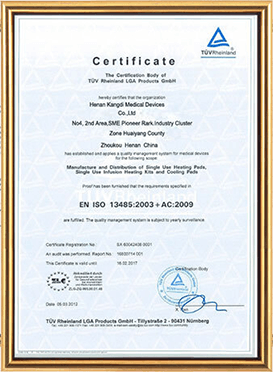
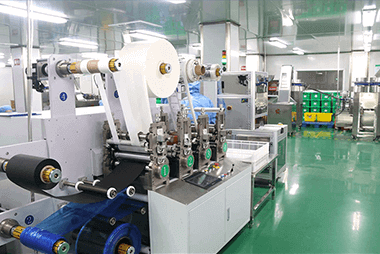
Henan Kongdy Medical Devices Co., LTD. (KONGDY) was founded in 1989 and has 37 years of production experience as of 2026 across pain relief patches, slimming patches, capsicum plasters, heat patches, cooling gel patches, detox foot patches, steam eye masks, mosquito repellent patches and nose strips. Headquartered in Henan, China, KONGDY operates a 100,000-class GMP workshop built in 2008 and obtained ISO 13485 medical device Quality Management System European Standard Certification in 2014. The company runs OEM and ODM services for international brands across multiple regulatory pathways.
For a 2026 procurement evaluation the qualification team can supply the ISO 13485 certificate, GMP workshop audit reports, stability programme documentation, and reference customer case studies upon request via our contact page.
Frequently asked questions
What is warning letter MARCS-CMS 722589?
A warning letter dated 14 April 2026 from the Center for Drug Evaluation and Research to Pro Numb Tattoo Numbing Spray, LLC, facility identifier FEI 3027228716 at 3778 Dixie Highway NE, Suite C, Palm Bay, following an inspection on 5 and 6 November 2025 and a Form FDA 483 response dated 13 November 2025. It concerns three products and four CGMP findings.
Did the firm perform release testing?
No. The letter records the statement directly: the firm stated that it does not perform finished product testing. In its response it said it had contracted a third-party laboratory to perform full release testing and had implemented finished product specifications, certificates of analysis and a standard operating procedure.
Did FDA object to using a third-party laboratory?
No. What it asked for was a comprehensive independent assessment of the laboratory practices, procedures, methods, equipment, documentation and analyst competencies, a remediation plan and an effectiveness evaluation, the retains procedures, the specifications with test methods, the retrospective testing commitment, and the name, address and supplier qualification report for the laboratory.
What was wrong with the response?
It did not provide sufficient details about the test methods and specifications implemented for the over-the-counter drug products, and it did not commit to retrospective testing of retains for batches already distributed in the United States market. More generally it failed to provide supportive documentation for evaluation or adequate evidence of corrective actions taken.
Which two products were most affected and why?
The letter names PRO NUMB TATTOO NUMBING SPRAY, PRO NUMB TATTOO NUMBING SPRAY FOR SENSITIVE SKIN and TKTX Deep Numbs, and the label claims observed are what establish the intended use. A reader can see from the product names alone which category of consumer decision the labelling is aimed at, and that is the category where a wrong claim does the most harm.
What is the difference between this case and the Everlaan case?
Everlaan said it tested every batch and could produce no records when asked. Pro Numb stated that it does not perform finished product testing at all. Both produced the same finding under 21 CFR 211.165(a), and the second is the more serious because there was never a system to question.
What does this case tell a contract manufacturer?
That the absence of a finished product determination is invisible until somebody asks for it, that outsourcing the testing does not outsource the obligation, and that a specification without a method is the specific defect. It also shows that a two-day inspection can find four CGMP findings, and that the seven-day response produced here was still inadequate.
What does this letter change about the interval figures?
It adds a seventh site inspection case at 159 days from the end of the inspection, which moves the median from 182 to 175 days while the spread stays at 58 days. It also records the shortest inspection in this library at two days and the fastest Form FDA 483 response at seven days.
Related Guides
Five further references from the KONGDY knowledge base:
- Heat Patch OEM: twelve questions on third-party release testing
- Cooling Gel Patch OEM: the glycerin and DEG questions
- Frequently asked compliance questions
- KONGWY OEM and ODM manufacturing services
- Detox Foot Patch OEM: the 20-point change control checklist


