
-
 KONGDY
Pain Relief Patch Supplier Documentation: 12 Questions Buyers Ask Before Signing a 2026 OEM Contract
Pain Relief Patch Supplier Documentation: 12 Questions Buyers Ask Before Signing a 2026 OEM Contract
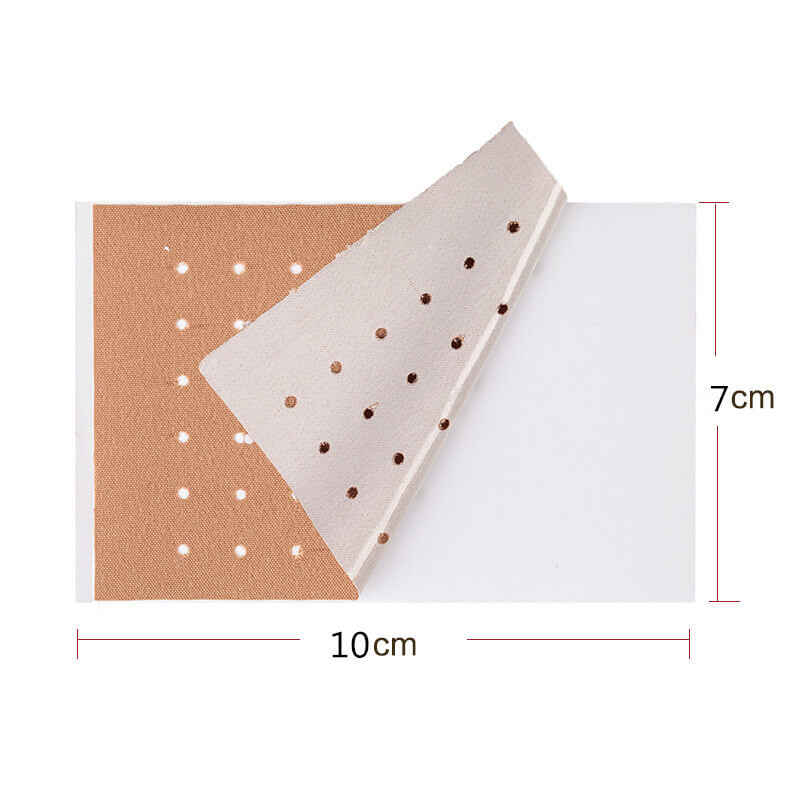
Twelve questions decide whether a documentation package is worth signing against, and none of them requires a laboratory. They ask what a pain relief patch supplier holds, when it was written, who signed it, and whether the numbers on the pack can be traced back to a dated record. Every answer below opens with the shortest defensible answer, then explains the reasoning and the framework.
The questions are ordered the way a buyer actually asks them: first about what the product claims, then about the evidence, then about the contract, then about what happens after launch. A supplier that can answer the first six is usually able to answer the last six. A supplier that struggles with question five will struggle everywhere, because question five is the cheapest question to test.
The framework references are published texts, not house rules: 21 CFR 211.166 for the stability programme, 21 CFR 211.137 for the expiry date, 21 CFR Part 348.10 for the external analgesic monograph, 21 CFR Part 201.66 for the Drug Facts panel, ICH Q1A for study design, ISO 13485:2016 for the quality system, ISO 14971 for risk management, and EU MDR 2017/745 Annex II and Annex IX where the product runs on the device side.
Every answer below is written from the buyer side of a pain relief patch supplier conversation, which is where these questions actually get asked.
Where a question touches public enforcement, the answer cites the letter rather than describing a hypothetical. Three letters do most of that work here: MARCS-CMS 721916 (2026-04-09) on stability evidence, MARCS-CMS 735346 (2026-10-01) on claim and listing review, and 320-26-105 (2026-07-24) on quality unit responsibility under 21 CFR 211.22(a).
1. What does a pain relief patch supplier have to prove about shelf life before I sign?
A pain relief patch supplier is asked for three separate proofs here, and one document that appears to cover all three is usually the weakest answer.
It has to prove three things, and a different document proves each one: that a written stability programme exists, that the programme has produced data on the commercial formula in the commercial pack, and that the printed expiry date is tied to that data.
| What must be proved | The document that proves it | The framework |
|---|---|---|
| A programme exists | A stability protocol signed and dated by the quality unit | 21 CFR 211.166 |
| The programme produced data | A long-term report covering the commercial formula in the commercial pack | ICH Q1A |
| The date is tied to the data | An expiry assignment record | 21 CFR 211.137 |
A supplier that answers with one document for all three has answered a different question. The most common version of that answer is a certificate of analysis, which proves the batch met specification on the day it was released and does not claim anything about the labelled period.
The reason this matters in 2026 rather than in principle is that the third item is the one the agency writes about. Warning letter MARCS-CMS 721916 states that without appropriate stability studies there is no adequate scientific evidence that a drug product retains its quality attributes throughout the labeled expiry period. The sentence is not a new requirement; it is an enforcement of the three items above.
2. Which stability studies are mandatory and which are optional?
A pain relief patch supplier will usually describe every design as available, so the useful question is which ones the programme actually runs.
Only long-term real-time testing is mandatory for the shelf-life claim itself. Accelerated testing is mandatory in practice because every regulator expects the degradation picture, and the remaining designs are conditional or optional depending on the product family.
| Design | Status | Why |
|---|---|---|
| Long-term, 25 deg C / 60 percent RH | Mandatory | The only design that observes the labelled condition |
| Accelerated, 40 deg C / 75 percent RH for 6 months | Mandatory in practice | Supplies the degradation view and triggers the intermediate condition |
| Intermediate, 30 deg C / 65 percent RH | Conditional | Required when the accelerated data shows significant change |
| Bracketing | Optional | Carries a strength or pack range from its extreme pair |
| Matrixing | Optional | Reduces the time points sampled across a family |
| Extrapolation | Not a study | A conclusion drawn from data that already exists |
The distinction that matters commercially is between conditional and optional. A supplier that offers bracketing without a justification for the extreme pair has offered an option that will not survive review. A supplier that offers extrapolation as a study design has mislabelled a conclusion.
ICH Q1A sets the conditions and the interval structure; it does not grant approval. So the practical answer to "is this enough" is always: enough for what, in which market, at which review stage.

3. Is a certificate of analysis enough for the first shipment?
No. A certificate of analysis is a release document for one batch and says nothing about whether the product holds specification across the labelled period, which is the question a shelf-life claim raises.
The confusion is understandable because both documents contain numbers and both carry a signature. They answer opposite questions. The certificate answers "did this batch meet specification today". The stability report answers "will a batch like this still meet specification at month eighteen". A pain relief patch supplier that provides only the certificate has answered the first question completely and the second not at all.
This is the most common misunderstanding encountered in a pain relief patch supplier review.
A useful way to test the distinction in one sentence: ask what would change if the labelled shelf life moved from 24 months to 12 months. If the answer is "the label artwork", the stability package is not doing any work. If the answer is "the study set and the assignment record", it is.
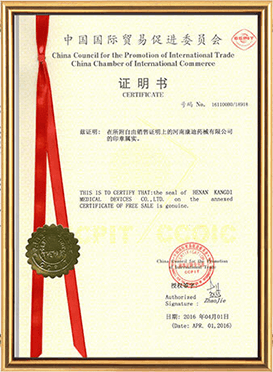
4. What exactly should the stability clause in my OEM contract say?
A pain relief patch supplier can accept a well-drafted stability clause without changing how it works, which is why the wording must name artifacts rather than intentions.
It should name seven things, and each one converts a conversation into an obligation that survives a change of personnel on either side.
- The labelled storage condition, in the same words that will be printed on the pack.
- The study set by name, with the condition and the interval for each study.
- The analytical methods, referenced to the release methods rather than described separately.
- The bracketed parameters, with the justification for the chosen extreme pair.
- The matrix pattern, stated so that it can be checked later against the data.
- The delivery date for each interim report, expressed as a date rather than a duration from an event.
- The notification window for an out-of-specification result, and the named person who receives it.
The seventh element is the one that gets omitted and the one that gets tested. An out-of-specification result that reaches the buyer after the container has sailed is a commercial event disguised as a technical one, and the contract is the only instrument that moves it earlier.
A clause written this way also settles the ownership question that appears at question eight, because each deliverable has a named holder and a date.
5. How do I tell whether a stability programme is real or paper?
The fastest read on a pain relief patch supplier is not the results table but whether the laboratory schedule and the report agree.
Ask for the interval calendar: planned pull dates against actual pull dates, with initials against each row. A supplier running a real programme produces that table in minutes, because the table is how the laboratory schedules its work.
| What you ask for | What a real programme does | What a paper programme does |
|---|---|---|
| Planned against actual pull dates | Produces the table, including the missed rows | Offers to compile it and later sends a summary of results |
| The method version at each time point | Names the method identifier per interval | Describes the current method and calls it standard practice |
| The change log for the formula | Shows the change and the protocol revision it triggered | Says nothing has changed since the study began |
| One raw data set | Sends the chromatograms or equivalent output | Sends a table of results |
All four answers can be given in one meeting, and none of them requires the buyer to understand chromatography. The point is not technical depth; it is whether the supplier can produce primary records on demand.
The failure column in practice looks like silence followed by an email three days later. That pattern is not proof of a problem, but across four questions it separates the two cases reliably enough to be worth the meeting.

6. What happens if the supplier changes the formulation after the study starts?
The stability clock effectively resets for the changed attribute, because data generated on the old formula does not describe the new one. The correct sequence is a protocol revision that names the change and states which earlier data remains valid and why.
Every formulation change asks the same question of a pain relief patch supplier: which earlier data still describes the product.
In practice three outcomes are possible and only one is clean. The change is cosmetic to the stability profile and is justified by data already in hand; the change requires a new study from the date of change; or the change is small enough that bracketing covers it, in which case the bracketed extremes must include the new variant.
What is never acceptable is a silent change. A pain relief patch supplier that updates the formula and leaves the study running produces a file whose earliest time points describe a product that no longer exists, and the defect is invisible until someone compares the batch record to the protocol.
This is also why the change log is worth asking for early. It is the only document that makes the rest of the file internally consistent over time.
7. Do I need separate data for each pack size?
Pack coverage is the quietest cost saver in a pain relief patch supplier programme and also the quietest way to inherit a gap.
Not necessarily. A pack-size range can be covered by bracketing the smallest and largest consumer pack, provided the justification explains why those two are the extremes for the attribute that governs stability, which for most patches is moisture and light ingress.
The reasoning has to be about the barrier, not about the count. A ten-count carton and a twenty-count carton of the same sachet are usually not the interesting pair; the interesting pair is the thinnest and thickest sachet foil, because that is the barrier. A supplier that brackets two pack counts but not the foil has bracketed the wrong parameter.
The practical test is one question: which pack is the hardest case, and why. If the answer cites foil thickness, seal geometry or storage volume per unit, the bracketing has a scientific basis. If the answer cites the packing list, it does not.
8. Who owns the stability data, me or the manufacturer?
Ownership decides whether a pain relief patch supplier can be replaced without starting the evidence over.
The manufacturer owns the record, because the data is generated under its quality system, and the buyer owns a contractual right to receive it. That distinction is why the access has to be written down rather than assumed.
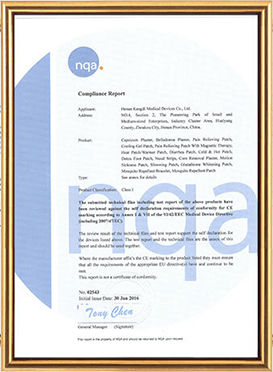
Under ISO 13485:2016 the record belongs to the quality system of the organisation that produced it, and its retention is that organisation's obligation. Nothing in that arrangement gives the buyer a file to hold. What gives the buyer a file is the contract, which is why the clause in question four names deliverables rather than rights of access.
The commercial consequence appears at a supplier change. A buyer who holds dated copies of the package can re-qualify a new supplier against the old evidence and compare like with like. A buyer who holds a right of access holds nothing once the relationship ends.
For device-side programmes the same logic runs through EU MDR 2017/745 Annex II and Annex IX, where the technical documentation and the quality system records are separate obligations held by different parties.

9. What should I do if the supplier reports an out-of-specification result?
An out-of-specification result tests the working relationship with a pain relief patch supplier more thoroughly than any audit does.
Treat it as a batch and claim-set question at the same time, and require a written investigation before any product in the affected interval is shipped.
The first question is which batches and which time interval the result covers, because an out-of-specification result at month eighteen may affect product already released. The second question is whether the failure is an attribute failure or a method artefact, because the two have different remedies and both are legitimate conclusions.
The third question is what happens to the claim. If the data no longer supports the labelled period, the label is the thing that changes, and the change has to happen before the next shipment rather than after the next review.
The fourth question is the one buyers skip: who decided. Warning letter 320-26-105, issued to Dabur India Limited on 2026-07-24, leads with 21 CFR 211.22(a), which places responsibility for approving or rejecting materials and products on the quality control unit. The buyer's equivalent question is simpler: who signed.
The practical follow-up is to ask for the last two rejection decisions and the signed investigation behind each one. A quality unit that exists on paper produces a signature without a record; a quality unit that works produces both. That single exchange tells a buyer more about the organisation than a plant tour, because it shows how the company behaves when the answer is unwelcome.
10. Does one programme satisfy both US and EU requirements?
No. The technical core is common and the frameworks are separate, so one laboratory programme can serve both markets while the documentation obligations stay distinct.
| Dimension | United States | European Union |
|---|---|---|
| Governing framework for a drug-claim patch | 21 CFR Part 348.10 monograph, 21 CFR Part 201.66 labelling | Member state and EU frameworks; the route depends on the claim |
| Stability requirement | 21 CFR 211.166 programme, 21 CFR 211.137 expiry dating | The stability section of the technical documentation |
| Device-side documentation | 21 CFR Part 807 registration and listing | EU MDR 2017/745 Annex II and Annex IX |
| Cosmetic-side documentation | Cosmetics requirements under 21 CFR Part 700 | EU 1223/2009 Article 11 product information file |
A pain relief patch supplier that markets one programme across markets is describing the laboratory work and skipping the documentation split.
The useful consequence is that a supplier with a genuine laboratory programme can serve both, while a supplier with a documentation habit built for one market often cannot. The laboratory work transfers; the paperwork has to be rebuilt.
A pain relief patch supplier that describes the programme as "compliant" without naming the market is describing an intention, not a position.
11. How often should I re-request the stability package?
The re-request cadence is where a pain relief patch supplier relationship either stays current or quietly goes stale.
At every supplier re-qualification, and whenever a change is notified, which in practice means at least annually for an active programme.
The reason is that the package is a moving object rather than a fixed one. New time points arrive, methods get revised, the change log grows, and an expiry assignment that was correct last year may rest on data that has since been superseded. Re-requesting the index is cheap; re-requesting the whole package is not, which is why the index matters.
A workable routine keeps three artifacts current: the handover index with dates, the interval calendar, and a dated statement that no export or certification hold is in place. Everything else follows from those three.
The same routine covers the claim side, which is what warning letter MARCS-CMS 735346 illustrates. The letter, issued on 2026-10-01, followed a review of a company website and marketplace storefront in July 2026. A dated archive of public claims turns that kind of review into a comparison rather than an excavation.
The same routine also covers the second thing that changes without notice: the framework itself. Monograph ranges, labelling expectations and quality system requirements all move, and a package dated two years ago may be perfectly preserved and completely out of date. Re-requesting the index annually is what catches that, because the index exposes which documents were written before the last framework change.
12. What is the fastest way to fail a supplier review on stability?
Ask for the interval calendar, the method version used at each time point, and the change log. If all three answers are summaries rather than records, the programme is not reviewable and no further questions are needed.
The purpose of the three-question test is to reach a defensible view of a pain relief patch supplier in one meeting rather than one quarter.
This test is fast because it does not require expertise to run. Each of the three is either a table with dates or a description of practice. A supplier with a functioning quality system produces the tables; a supplier without one explains how things are usually done.
The test is also fair, which matters if the relationship is worth keeping. It does not punish a programme for having gaps; it distinguishes a programme that records its gaps from one that has never looked. The first can be repaired on a schedule. The second cannot be assessed at all.
A pain relief patch supplier that answers all three in documents has almost certainly been reviewed by another buyer before.
And it scales. The same three questions work on a heat patch OEM file, a capsicum plaster OEM file, a cooling gel patch OEM file and a detox foot patch OEM file, because the questions are about record keeping rather than about chemistry.
About KONGDY Medical

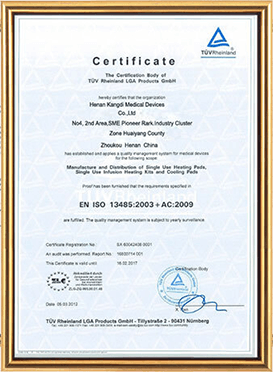
Henan Kongdy Medical Devices Co., LTD. (KONGDY) was founded in 1989 and has 37 years of production experience as of 2026 across pain relief patches, slimming patches, capsicum plasters, heat patches, cooling gel patches, detox foot patches, steam eye masks, mosquito repellent patches and nose strips. Headquartered in Henan, China, KONGDY operates a 100,000-class GMP workshop built in 2008 and obtained ISO 13485 medical device Quality Management System European Standard Certification in 2014. The company runs OEM and ODM services for international brands across multiple regulatory pathways. For 2026 procurement evaluation, the qualification team can provide the ISO 13485 certificate, GMP workshop audit reports, stability programme documentation, and reference customer case studies upon request via our contact page.
Related Guides
Four further references from the KONGDY knowledge base:
- Pain Relief Patch OEM: qualification and documentation overview
- Frequently asked compliance questions
- KONGDY OEM and ODM manufacturing services
- Slimming Patch OEM: cosmetic pathway documentation
- Cooling Gel Patch OEM: regulatory categories and stability evidence


