
-
 KONGDY
Pain Relief Patch OEM Stability Document Handover: A 24-Point Checklist for 2026 Buyers
Pain Relief Patch OEM Stability Document Handover: A 24-Point Checklist for 2026 Buyers

Twenty-four documents form the stability handover for a pain relief patch OEM programme, grouped into five bands: the programme and protocol, the data and reports, the methods and their validation, the pack and its conditions, and the contract with its ongoing obligations. The checklist below is written to be worked through in one supplier meeting, with a binary outcome per line: either a dated document is produced, or the line stays open.
The organising idea is that a handover is a dated-document problem, not a document-count problem. Twenty-three perfect files with no dates and no named signers are worth less than fifteen files that each carry a date, a signer and a version. Every point below therefore asks for the document and its date, because the date is what turns an assertion into evidence.
The failure column is the part buyers use most. Each point exists because a specific failure has been observed or is visible in public enforcement. FDA warning letter MARCS-CMS 721916, issued on 2026-04-09, states that without appropriate stability studies there is no adequate scientific evidence that a drug product retains its quality attributes throughout the labeled expiry period. That sentence is the common ancestor of points B6, B8, B9 and E22.
Use the checklist in the order it is written. Bands A and B decide whether the evidence exists; band C decides whether the evidence was measured properly; band D decides whether it applies to the pack that will actually ship; band E decides whether it stays true after the launch.
Why a Handover Checklist and Not a Document List
A document list tells a buyer what exists. A checklist tells a buyer what to do when a line is empty, which is the situation that actually occurs. The difference matters for a pain relief patch OEM programme because the gaps are rarely total: most suppliers hold most of the papers and cannot produce them in a usable form.
Three design choices make this list usable rather than decorative. Each line asks for one artifact, so a partial answer is visible. Each line names the failure it prevents, so the buyer can weigh it. Each line sits in a band, so a cluster of empty lines identifies which gate in the programme failed rather than producing a vague sense of unease.
The scoring is deliberately blunt. A line is closed when a dated document is in hand. It is open when the answer is a description of practice, a promise, or a reference to a file held elsewhere. There is no partial credit, because a reviewer will not give partial credit either.

The 24 Points at a Glance
A pain relief patch OEM package closes faster when the request order matches the dependency order, because each closed line makes the next one checkable.
The full package in one table, in the order it should be requested. Print it, carry it into the meeting, and record the date on which each line closed.
| Point | What to ask for | Detail requested | Failure it prevents |
|---|---|---|---|
| A1 | The stability protocol | A copy signed and dated by the supplier quality unit | A claim that a programme exists with no document behind it |
| A2 | The protocol version history | Every revision, with the date and the reason | A protocol rewritten after the batch to match what was done |
| A3 | The storage condition wording | The condition in the same words printed on the pack | Chamber data that does not support the printed storage statement |
| A4 | The study design rationale | Which designs were used and which were rejected, with reasons | A design assembled around chamber capacity |
| A5 | The change log | Formulation and process changes mapped to protocol revisions | A protocol describing a formula the plant no longer makes |
| B6 | One completed long-term report | The commercial formula in the commercial primary pack | A shelf-life claim resting on a development formula |
| B7 | The interval calendar | Planned pull dates against actual pull dates | Back-dated time points |
| B8 | Every time point to date | Including points that failed a specification | Selective reporting of the passing intervals only |
| B9 | Raw data | Chromatograms or equivalent instrument output, not only summary tables | A conclusion with no primary record behind it |
| B10 | Out-of-specification records | The report and the investigation for each event | An unexplained gap between two intervals |
| B11 | The accelerated report | With the significance criteria stated before the data | An accelerated study that drew no conclusion |
| C12 | The analytical method document | With the method version used at each time point | Early points measured by a method that no longer exists |
| C13 | The method validation report | Linearity, accuracy, precision and specificity | A method that cannot resolve a degradation product |
| C14 | Release to stability linkage | A statement that both use the same attributes and limits | Stability monitored on a different specification than release |
| C15 | The microbial limits method | The method and its validation | A microbial result quoted without a validated method |
| D16 | The primary pack specification | Material and thickness, identified to the study pack | A study run in a pack that is not the commercial pack |
| D17 | The pack equivalence statement | The reasoning if the commercial pack differs at all | A silent pack change after the study started |
| D18 | The shipping condition envelope | The temperature and humidity range the pack tolerates | A labelled condition that assumes a shipping condition nobody verified |
| D19 | Photostability and freeze-thaw data | The data, or a documented justification for absence | An unstated assumption about light and thermal cycling |
| E20 | The commercial batch commitment | The first three commercial batches placed on long-term study | A one-off pilot study presented as an ongoing programme |
| E21 | The OOS notification clause | The notification window and the named recipient | A failed result that reaches the buyer after the shipment |
| E22 | The expiry assignment record | The document that ties the printed date to the data | A printed shelf life the data does not reach |
| E23 | The re-notification triggers | Formula, pack, supplier and process changes that restart the evidence | A changed product carrying an unchanged label claim |
| E24 | The handover index | A two-page list naming every document above with its date and signer | A package nobody can audit because nothing is indexed |
Read the table as a dependency chain rather than as a shopping list. A2 and A5 make the rest of band A auditable. B9 is the reason B6 to B8 can be believed. C12 and C13 are what let band B survive a technical review. D16 and D17 are what make the data apply to the shipment. E20 to E23 are what make the package survive the second order.
Band A: Programme and Protocol (A1 to A5)
Band A is the smallest band and the one that decides everything downstream. For a pain relief patch OEM package, a supplier that cannot close A1 to A5 usually cannot close the rest either, because the later documents are generated by the same function.
- A1. The stability protocol. Ask for: A copy signed and dated by the supplier quality unit. It exists to prevent: A claim that a programme exists with no document behind it.
- A2. The protocol version history. Ask for: Every revision, with the date and the reason. It exists to prevent: A protocol rewritten after the batch to match what was done.
- A3. The storage condition wording. Ask for: The condition in the same words printed on the pack. It exists to prevent: Chamber data that does not support the printed storage statement.
- A4. The study design rationale. Ask for: Which designs were used and which were rejected, with reasons. It exists to prevent: A design assembled around chamber capacity.
- A5. The change log. Ask for: Formulation and process changes mapped to protocol revisions. It exists to prevent: A protocol describing a formula the plant no longer makes.
Band A is where a pain relief patch OEM either holds a protocol or holds a story, and the difference is a dated signature.
The band is complete when a reviewer could pick up A1, compare it against A2, follow A5, and arrive at the protocol that governs the data in band B. If that walk cannot be made, the package is a set of files rather than a programme. 21 CFR 211.166 requires a written programme, and a programme that cannot be walked is written in name only.

Band B: Data and Reports (B6 to B11)
Band B is the evidence itself, and it is where the single most common gap sits: the calendar. A pain relief patch OEM supplier that reports results but not pull dates has produced a conclusion without a provenance.
- B6. One completed long-term report. Ask for: The commercial formula in the commercial primary pack. It exists to prevent: A shelf-life claim resting on a development formula.
- B7. The interval calendar. Ask for: Planned pull dates against actual pull dates. It exists to prevent: Back-dated time points.
- B8. Every time point to date. Ask for: Including points that failed a specification. It exists to prevent: Selective reporting of the passing intervals only.
- B9. Raw data. Ask for: Chromatograms or equivalent instrument output, not only summary tables. It exists to prevent: A conclusion with no primary record behind it.
- B10. Out-of-specification records. Ask for: The report and the investigation for each event. It exists to prevent: An unexplained gap between two intervals.
- B11. The accelerated report. Ask for: With the significance criteria stated before the data. It exists to prevent: An accelerated study that drew no conclusion.
For a pain relief patch OEM package, band B is the part a reviewer will spend the most time in, because it is the part that can be checked against itself.
The distinction between B8 and B9 is worth stating separately. B8 asks for every time point including the failures; B9 asks for the primary record behind them. A supplier that produces B8 and cannot produce B9 has produced a summary, and a summary is the document a reviewer will ask past. ICH Q1A sets the interval structure, and the record of which interval was actually pulled is part of the study, not an administrative detail.

Band C: Methods and Validation (C12 to C15)
Band C is the band buyers are least equipped to review and the band that most often decides whether the rest survives. For a pain relief patch OEM file the question is narrow: was each time point measured by a method that could see what was happening.
- C12. The analytical method document. Ask for: With the method version used at each time point. It exists to prevent: Early points measured by a method that no longer exists.
- C13. The method validation report. Ask for: Linearity, accuracy, precision and specificity. It exists to prevent: A method that cannot resolve a degradation product.
- C14. Release to stability linkage. Ask for: A statement that both use the same attributes and limits. It exists to prevent: Stability monitored on a different specification than release.
- C15. The microbial limits method. Ask for: The method and its validation. It exists to prevent: A microbial result quoted without a validated method.
Method review is the band a pain relief patch OEM buyer usually delegates, and the band that decides whether the other four hold.
C14 is the point that links this band to the plant. A supplier can hold a validated method and still fail C14, if the release specification tests a different set of attributes or uses different limits than the stability specification. When that happens, the stability data is real and does not describe the released product.

Band D: Pack, Storage and Transport (D16 to D19)
Band D exists because a study run in one pack says nothing certain about another. For a pain relief patch OEM package the pack is not packaging, it is part of the dosage form, and the moisture and light environment it creates is what the stability study is measuring.
- D16. The primary pack specification. Ask for: Material and thickness, identified to the study pack. It exists to prevent: A study run in a pack that is not the commercial pack.
- D17. The pack equivalence statement. Ask for: The reasoning if the commercial pack differs at all. It exists to prevent: A silent pack change after the study started.
- D18. The shipping condition envelope. Ask for: The temperature and humidity range the pack tolerates. It exists to prevent: A labelled condition that assumes a shipping condition nobody verified.
- D19. Photostability and freeze-thaw data. Ask for: The data, or a documented justification for absence. It exists to prevent: An unstated assumption about light and thermal cycling.
Pack equivalence is the quietest failure in a pain relief patch OEM handover, because the data stays true and the product changes.
D19 is the point most often left blank, and the honest answer is often that no photostability or freeze-thaw work exists. A documented justification for absence closes the line; a silence does not. The difference between the two is one page and it is the page a reviewer will ask for.
Band E: Contract, Commitment and Ongoing Obligations (E20 to E24)
Band E is the only band that is about the future. A pain relief patch OEM handover that stops at the pilot batch has handed over a moment rather than a system, and the second order is where the difference shows.
- E20. The commercial batch commitment. Ask for: The first three commercial batches placed on long-term study. It exists to prevent: A one-off pilot study presented as an ongoing programme.
- E21. The OOS notification clause. Ask for: The notification window and the named recipient. It exists to prevent: A failed result that reaches the buyer after the shipment.
- E22. The expiry assignment record. Ask for: The document that ties the printed date to the data. It exists to prevent: A printed shelf life the data does not reach.
- E23. The re-notification triggers. Ask for: Formula, pack, supplier and process changes that restart the evidence. It exists to prevent: A changed product carrying an unchanged label claim.
- E24. The handover index. Ask for: A two-page list naming every document above with its date and signer. It exists to prevent: A package nobody can audit because nothing is indexed.
A commitment from a pain relief patch OEM that carries no date is a courtesy rather than a commitment.
E24 deserves the last word of the checklist. It is not a document in its own right; it is the index that makes the other twenty-three auditable. Two pages, listing each closed line with the document name, its version, its date and its signer. A package with an index can be reviewed in an afternoon. A package without one can be reviewed only by reading everything, which in practice means it is never reviewed at all.

The Three Points Buyers Skip Most Often
Three lines in a pain relief patch OEM checklist carry disproportionate weight because they are the ones that cannot be reconstructed later.
Across the twenty-four, three lines are consistently left open because closing them requires the supplier to admit something. They are also the three that convert a file into a defensible file.
| Point | Why it gets skipped | What closing it looks like |
|---|---|---|
| B7, the interval calendar | It exposes a late start or a missed pull | A one-page table: planned date, actual date, initials, for every interval |
| C12, the method version per time point | It exposes a method change that makes early points incomparable | The method identifier recorded against each interval in the same table |
| A5, the change log | It exposes a formulation or process change that was never re-studied | A dated list of changes with the protocol revision each one triggered |
All three are cheap to close when the programme is healthy and impossible to close retrospectively when it is not. That asymmetry is why they belong in the first meeting rather than in the audit.
Mapping the Checklist to Public Enforcement
The bands are not abstract: for a pain relief patch OEM package each one already has a documented failure case.
Four public FDA warning letters map onto specific bands, which makes the failure column concrete rather than hypothetical.
| Public letter | Date | Deficiency class | Checklist points it implicates |
|---|---|---|---|
| MARCS-CMS 721916, Medical Products Laboratories, Inc. | 2026-04-09 | No adequate stability studies supporting the labeled expiry period | B6, B8, B9, E22 |
| 320-26-99, International Medication Systems Limited (FEI 2016148) | 2026-07-02 | CGMP violations for finished pharmaceuticals under 21 CFR parts 210 and 211 | B9, B10, C13 |
| 320-26-105, Dabur India Limited | 2026-07-24 | Quality control unit responsibilities under 21 CFR 211.22(a), with 21 CFR 211.194(a) | A1, A2, B10 |
| MARCS-CMS 735346, Aidance Scientific, Inc. | 2026-10-01 | Unapproved new drug under 21 U.S.C. 355(a) and 21 U.S.C. 331(d) after a website and marketplace review | E24, as the index that also carries the claim set |
The mapping is not a claim that these companies failed these checklist points. It is a demonstration that each band corresponds to a deficiency class the agency has already documented publicly. A pain relief patch OEM package that closes all five bands has, at minimum, an answer ready for each of those classes.
How to Run the Checklist in One Meeting
Running the checklist on a pain relief patch OEM file is a meeting rather than a project.
The practical sequence takes one session if the supplier is prepared and reveals the gap immediately if it is not.
- Start with E24. If there is no index, ask for it before proceeding; the absence tells you how the rest was assembled.
- Walk band A in order and stop at the first empty line. A missing A1 or A2 makes band B unreviewable.
- Ask for B7 and C12 first inside their bands. These two expose the most in the least time.
- Ask for one raw data set from band B and compare it against the method version in C12. The comparison is the whole audit in miniature.
- Close band D by asking for the pack specification and then asking whether the commercial pack is identical. The second question is the one that matters.
- Record band E answers as commitments with dates, not as assurances.
The same checklist transfers to adjacent categories with the framework references adjusted, which is why it is useful for a heat patch OEM, a capsicum plaster OEM, a cooling gel patch OEM and a slimming patch OEM programme as well.
About KONGDY Medical

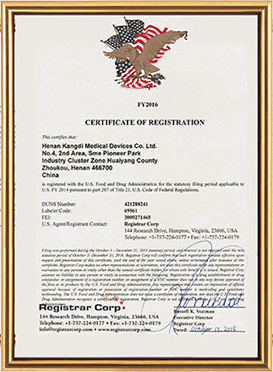
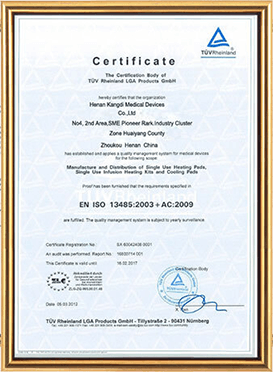
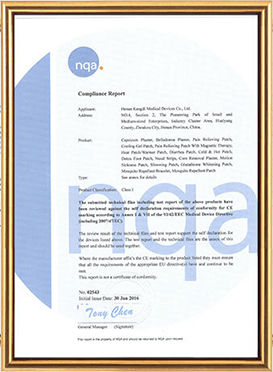
Henan Kongdy Medical Devices Co., LTD. (KONGDY) was founded in 1989 and has 37 years of production experience as of 2026 across pain relief patches, slimming patches, capsicum plasters, heat patches, cooling gel patches, detox foot patches, steam eye masks, mosquito repellent patches and nose strips. Headquartered in Henan, China, KONGDY operates a 100,000-class GMP workshop built in 2008 and obtained ISO 13485 medical device Quality Management System European Standard Certification in 2014. The company runs OEM and ODM services for international brands across multiple regulatory pathways. For 2026 procurement evaluation, the qualification team can provide the ISO 13485 certificate, GMP workshop audit reports, stability programme documentation, and reference customer case studies upon request via our contact page.
Frequently Asked Questions
Eight questions buyers ask after running the checklist for the first time.
Do I need all twenty-four documents before signing?
No. For a pain relief patch OEM package, bands A to C should be closed before signing, because they decide whether the evidence exists and was measured properly. Band D should be closed before the first shipment. Band E is contractual, so it is closed by the signature itself, provided the commitments carry dates.
What if the supplier says the documents exist but are held elsewhere?
That is an open line, not a closed one. For a pain relief patch OEM package the test is whether a dated document can be produced now; a reference to a file held by another department is the most common way a checklist quietly stops meaning anything.
Which single point is the best early indicator of a weak package?
B7, the interval calendar. A supplier that keeps planned against actual pull dates usually runs a real programme. A supplier that cannot produce that table is reporting results rather than running a study.
Is a certificate of analysis acceptable in place of band B?
No. A certificate of analysis is a release document for one batch. Band B is the evidence that the product holds specification across time, which a release certificate cannot show and does not claim to show.
How does 21 CFR 211.166 relate to the checklist?
It requires a written stability testing programme with defined sample sizes, intervals, storage conditions and methods. Points A1, A2, A4, B6 and B7 are the checklist translation of that requirement.
How does 21 CFR 211.137 relate to the checklist?
It governs expiration dating and ties the date to supporting stability data. Point E22 is the document that demonstrates the tie, and points B6 and B8 are what the document depends on.
Do the same points apply to a patch sold as a cosmetic?
The five bands apply and the framework references change. The labelled period still has to be supported, and the method, pack and change-log questions are identical because they are technical rather than jurisdictional.
How long does the handover take to review?
For a pain relief patch OEM file the index is the difference between a review and a reading exercise.
With E24 in place, a reviewer can close the session in one meeting. Without an index, the same review requires reading every document to establish what exists, which is why the index is the first point rather than the last.
Related Guides
Four further references from the KONGDY knowledge base:
- Pain Relief Patch OEM: qualification and documentation overview
- Frequently asked compliance questions
- KONGDY OEM and ODM manufacturing services
- Nose Strip OEM: device pathway documentation
- Slimming Patch OEM: cosmetic pathway documentation


