
-
 KONGDY
From Formula Lock to First Container: The 12 Document Gates a Pain Relief Patch Manufacturer Must Pass in 2026
From Formula Lock to First Container: The 12 Document Gates a Pain Relief Patch Manufacturer Must Pass in 2026

There are twelve document gates between a locked formula and a released first container, and the order matters more than the speed. Gates 1 and 2 decide which framework the product lives under. Gates 3 to 7 build the evidence. Gates 8 to 11 decide what may be printed on the pack. Gate 12 decides whether the container leaves the port. A pain relief patch manufacturer programme that runs them in that order can be audited gate by gate; a programme that runs them in a different order ends up reconstructing documents afterwards.
The sequence below is not a theory. Each gate maps to a requirement in a published text: 21 CFR Part 348.10 for the active and its range, 21 CFR 211.166 for the stability programme, 21 CFR 211.137 for the expiry date, 21 CFR Part 201.66 for the Drug Facts panel, 21 CFR Part 807 where the product is a device, ICH Q1A for the study intervals, and ISO 13485:2016 for the quality system that holds the records together.
The failure modes come from public documents as well. FDA warning letter MARCS-CMS 721916, issued on 2026-04-09, is gate 11 failing: a labelled expiry period that the stability evidence did not reach. Warning letter MARCS-CMS 735346, issued on 2026-10-01, is gate 10 failing: a company website and its marketplace storefront reviewed as the finding rather than as the context. Warning letter 320-26-99, issued on 2026-07-02 after an inspection from 2025-12-09 to 2025-12-19, is the cluster around gates 6 and 7 failing on the factory floor.
What this article does not do is attach a week count to each gate. None of the cited documents contains a lead time, and a pain relief patch manufacturer timeline built on invented durations is worse than no timeline, because it gets signed.
Why Twelve Gates and Not a Checklist
A checklist can be completed in any order. A pain relief patch manufacturer programme cannot, because five of the twelve gates produce the input that another gate consumes. The classification memo fixes the claim set. The claim set fixes the artwork. The protocol fixes what the lab tests. The release specification fixes what the stability study watches. The expiry assignment consumes the stability data.
| Dependency | Producing gate | Consuming gate | What breaks if reversed |
|---|---|---|---|
| Claim set | Gate 2 classification memo | Gate 5 artwork, gate 10 listing review | Artwork is reprinted twice and the listing copy is rewritten after publication |
| Test method | Gate 4 method validation | Gate 7 release, gate 8 stability | Stability data is generated by a method that release does not use |
| Specification | Gate 7 release specification | Gate 8 stability pull points | Stability is monitored against a different set of limits than release |
| Label text | Gate 11 expiry assignment | Gate 12 certificate documents | Export paperwork quotes a shelf life the pack does not state |
| Site status | Gate 9 registration | Gate 12 export certificate | The certificate cannot issue against an unregistered site |
A pain relief patch manufacturer programme that treats the twelve gates as a flat list will invert at least one of these five dependencies.
Read that table as the reason the sequence is fixed. Every row is a case where reversing the order does not save time, it doubles the work.
The Twelve Gates in One Table
Here is the whole path. Each row is a gate: what happens, who owns it, the framework that governs it, when it has to happen, and the failure it prevents.
| Gate | Owner | Framework | Timing | Common failure |
|---|---|---|---|---|
| Gate 1: Formula lock | Brand and regulatory affairs | 21 CFR Part 348.10 concentration range for the chosen active | before any other gate | locking a formula that sits outside the monograph range for its active |
| Gate 2: Classification memo | Regulatory affairs | 21 CFR Part 348.10 for a drug claim; the cosmetic framework where no drug claim is made | immediately after gate 1 | choosing the route by preference rather than by the claim actually made |
| Gate 3: Stability protocol | Quality unit, countersigned by the supplier | 21 CFR 211.166 and ICH Q1A | before the first pilot batch is packed | a protocol drafted after the batch, describing what was already done |
| Gate 4: Analytical method validation | Quality control laboratory | ICH Q1A method requirements referenced in 21 CFR 211.166 | in parallel with gate 3 | a release method that cannot resolve related substances |
| Gate 5: Label and Drug Facts artwork | Regulatory affairs and brand | 21 CFR Part 201.66 for the Drug Facts panel | before artwork is released to print | artwork approved before the claim set is fixed at gate 2 |
| Gate 6: Master batch record | Production and quality unit | documented process under the quality system | before the pilot batch runs | a record written from the pilot batch instead of before it |
| Gate 7: Pilot batch and release testing | Production with quality unit release | release specification and the validated method from gate 4 | after gates 3, 4 and 6 | releasing on a specification that the stability protocol does not follow |
| Gate 8: Long-term stability start | Quality unit | ICH Q1A intervals of 0, 3, 6, 9, 12, 18 and 24 months at 25 deg C and 60 percent RH | the day the pilot batch is packed | starting the clock late and back-dating the first time point |
| Gate 9: Site registration and product listing | Regulatory affairs | 21 CFR Part 807 where the product is regulated as a device | before commercial shipment | registering the site without listing the product, or the reverse |
| Gate 10: Claim and listing review | Regulatory affairs and marketing | the same claim rules as gate 2, applied to every public sentence | before any page goes live | treating the website as marketing copy rather than as a regulated claim |
| Gate 11: Expiry assignment | Quality unit | 21 CFR 211.137, which ties the date to supporting stability data | when the release data and the stability data are both available | printing a shelf life the data does not yet reach |
| Gate 12: Export certificate and first container release | Regulatory affairs and logistics | the certificate regime of the destination market | after gates 7 and 11 | loading the container before checking whether the certificate can issue |
For a pain relief patch manufacturer the useful test of the table is whether each row can produce a dated artifact on request.
Two features of that table are worth noticing before the detail sections. First, no single party owns a majority of the gates; a pain relief patch manufacturer that offers to own all twelve is describing a service, not a responsibility. Second, four gates are document-only, which means they can fail without a laboratory, a plant, or a shipment ever being involved.

Gates 1 to 3: Formula Lock, Classification Memo, Stability Protocol
The first three gates decide what the product is. A pain relief patch manufacturer programme that reaches gate 7 with a live classification question has already lost the ability to choose cheaply.
Gate 1 fixes the formula and checks it against the monograph range for the active. 21 CFR Part 348.10 publishes the permitted actives and their concentration ranges for external analgesic drug products, so the check is mechanical once the active and the strength are known. The failure at this gate is not arithmetic; it is choosing a strength for marketing reasons and discovering afterwards that it sits outside the range.
Gate 2 writes the classification memo: one page, naming the route, citing the framework, and listing the claim set for this exact formulation. The memo is the single most useful document in the whole path, because gates 5, 10 and 11 all quote it. When it is missing, every later gate is decided twice.
Gate 3 produces the stability protocol. 21 CFR 211.166 requires a written programme with defined sample sizes, test intervals, storage conditions and methods, and ICH Q1A supplies the design. The failure mode is timing: a protocol written after the first batch is not a protocol, it is a description, and the distinction is visible to any reviewer.
Gates 4 to 6: Method Validation, Artwork, Master Batch Record
These three gates are preparation, and all three are cheap until they are not. A pain relief patch manufacturer programme that skips method validation at gate 4 can still pass gate 7 and still fail gate 8, because the stability study will be read against a method that was never characterised.
No pain relief patch manufacturer programme can recover from a method validated after the first stability pull point.
Gate 4 validates the analytical method for assay and related substances. The point of the gate is not regulatory tidiness; it is that a method which cannot resolve a degradation product will report a clean result all the way to the labelled expiry date, and the clean result is the problem.
Gate 5 releases the label and the Drug Facts panel prepared under 21 CFR Part 201.66. The gate exists because artwork is expensive to reprint and the claim set is easy to change after a marketing review. Locking artwork before the claim set is final is the most common way a programme pays for the same decision twice.
Gate 6 writes the master batch record before the pilot batch runs. A record written from the pilot batch describes what happened rather than prescribing what must happen, and a prescription is what the quality system needs.

Gates 7 to 9: Pilot Batch, Long-Term Start, Site Registration
This is the first block that consumes real material. For a pain relief patch manufacturer programme it is also the block where the clock starts, which makes the sequencing inside it permanent.
The order inside this block is fixed for any pain relief patch manufacturer, because the clock that starts at gate 8 never restarts favourably.
Gate 7 runs the pilot batch and releases it against the specification established at gate 4. The failure is a release specification that the stability protocol does not follow; when that happens, gate 8 monitors attributes that nothing else measures.
Gate 8 is the long-term stability start, and it is the gate with the clearest published timing in the entire path. ICH Q1A sets the long-term condition at 25 deg C and 60 percent relative humidity with testing at 0, 3, 6, 9, 12, 18 and 24 months, the accelerated condition at 40 deg C and 75 percent relative humidity for 6 months, and the intermediate condition at 30 deg C and 65 percent relative humidity where the accelerated data shows significant change. The clock starts when the pilot batch is packed, and it does not restart favourably.
Gate 9 registers the site and lists the product where the product is regulated as a device, under 21 CFR Part 807. The pairing matters: registration and listing are two acts, and a programme that completes one without the other discovers it at gate 12.

Gates 10 to 12: Claim Review, Expiry Assignment, Export Certificate
The last three gates decide what the outside world sees. A pain relief patch manufacturer programme can hold perfect records through gate 9 and still fail here, because these gates reach beyond the plant.
Gate 10 reviews the claim set against every public sentence: the product page, the marketplace listing, the packaging copy and the artwork. FDA warning letter MARCS-CMS 735346, issued to Aidance Scientific, Inc. on 2026-10-01, records that the agency reviewed the company website and its Amazon storefront in July 2026 and charged the product as an unapproved new drug under 21 U.S.C. 355(a) and 21 U.S.C. 331(d). No inspection of a manufacturing site was required. The gate is a review gate, and its output is a dated copy of every sentence making a therapeutic claim.
Gate 11 assigns the expiry date under 21 CFR 211.137, which requires the date to be supported by stability data. Warning letter 721916 is this gate failing in public: the letter states that without the appropriate stability studies there is no adequate scientific evidence that the product retains its quality attributes throughout the labeled expiry period.
Gate 12 confirms that the export certificate can issue before the container is loaded, not after. The order is the whole point of the gate, and the cost of getting it wrong is measured in demurrage and detention rather than in a regulatory finding.
The Four Gates That Can Fail Without a Laboratory
Four of the twelve gates are document-only: gate 2, gate 5, gate 10 and gate 12. They need no chamber, no batch and no shipment, which is exactly why they are the gates most often left open. A pain relief patch manufacturer audit that only visits the plant will never see them.
| Document-only gate | The artifact it produces | How a buyer verifies it |
|---|---|---|
| Gate 2 | One-page classification memo citing the framework and the claim set | Ask for the memo dated before the artwork was released |
| Gate 5 | Released label and Drug Facts artwork | Compare the approved artwork date against the memo date |
| Gate 10 | A dated copy of every public sentence making a therapeutic claim | Request the archive with capture dates, not a live screenshot |
| Gate 12 | A statement on export certificate status dated within 30 days | Request it at every re-qualification, not once at onboarding |
The four document-only gates are where a pain relief patch manufacturer audit that stops at the plant always comes back clean and incomplete.
The verification column is the practical part. Each row asks for a document with a date on it, which converts a claim into evidence without requiring a site visit.

Where the Timeline Actually Breaks
Three breakpoints account for most of the delay in a pain relief patch manufacturer programme, and none of them is a laboratory constraint.
For a pain relief patch manufacturer the practical effect is that the claim set has to be frozen earlier than commercial teams expect.
The first breakpoint sits between gate 2 and gate 5. Claim sets change after commercial review, artwork follows, and the stability protocol at gate 3 is suddenly watching a formulation whose label describes something else. The published record shows how visible that gap becomes: the FY2025 total of 303 FDA warning letters to drug and biologic firms, against 190 in FY2024, was accompanied by shorter letter-issuance intervals, so the gap between a claim problem and a public document is measured in months rather than years.
The second breakpoint sits between gate 4 and gate 8. A method that is validated after the long-term study begins leaves the early time points measured by an unvalidated method, and those time points cannot be recovered.
The third breakpoint sits between gate 9 and gate 12, and it is administrative rather than technical. Registration, listing and export certificate issuance are three separate acts with three separate queues, and a programme that treats them as one step discovers the distinction at the port.
- A European comparison is instructive without being equivalent. The EU Safety Gate system recorded 2,663 alerts in weeks 1 to 38 of 2026, of which 1,528, or 57.4 percent, concerned China-origin products, against a 40.1 percent share in 2025. Those are consumer product alerts under Regulation (EU) 2023/988, not drug enforcement letters, and the two datasets measure different things. What they share is that both are downstream of a document that should have been produced earlier.
- A programme that closes gates 2, 5 and 10 before production begins removes the largest single category of late rework, because those three gates are the ones that other gates quote.
Who Owns Each Gate: The Responsibility Split
The ownership question decides whether the timeline survives a change of supplier. For a pain relief patch manufacturer relationship the workable split assigns the plant-side gates to the manufacturer and the claim-side gates to the brand, with countersignature where a gate produces a regulated document.
| Gate group | Primary owner | Countersignature | Why the split |
|---|---|---|---|
| Gates 1 and 2 | Brand with regulatory affairs | Manufacturer | The formula and the claim are commercial decisions with regulatory consequences |
| Gates 3, 4, 6, 7, 8, 11 | Manufacturer quality unit | Brand | These gates produce the evidence a buyer will have to show |
| Gate 5 | Brand | Manufacturer regulatory affairs | Artwork follows the claim but must fit the label format |
| Gates 9 and 12 | Manufacturer regulatory affairs | Brand | Registration and certificates are filed by the entity of record |
| Gate 10 | Brand | Manufacturer regulatory affairs | Public sentences are published by the seller, reviewed against the memo |
The split is only useful if the countersignature means something. A pain relief patch manufacturer signature on gate 2 is a statement that the framework cited applies to the formulation in the memo, not an acknowledgement of receipt.
What to Write Into the Contract, Gate by Gate
The twelve gates become an obligation only when the contract names them. Seven clauses carry the whole path.
- The classification memo as a deliverable, with its date fixed before artwork release.
- The stability protocol as a deliverable, signed by the quality unit, naming conditions, intervals and methods.
- The analytical method validation report, referenced to the release specification.
- The pilot batch release record and the first three commercial batch records.
- A stability commitment covering the first three commercial batches, with a reporting window for any out-of-specification result.
- A dated archive of every public sentence making a therapeutic claim.
- A statement on registration, listing and export certificate status, refreshed at every re-qualification.
A pain relief patch manufacturer will recognise the same twelve gates in every category it produces.
The same twelve gates apply to adjacent categories with the framework swapped at gates 1, 2 and 9, which is why the method transfers to a heat patch OEM programme, a capsicum plaster OEM programme, a cooling gel patch OEM programme and a slimming patch OEM programme.
About KONGDY Medical

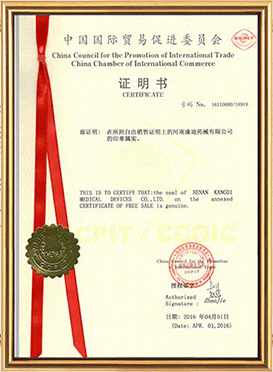
Henan Kongdy Medical Devices Co., LTD. (KONGDY) was founded in 1989 and has 37 years of production experience as of 2026 across pain relief patches, slimming patches, capsicum plasters, heat patches, cooling gel patches, detox foot patches, steam eye masks, mosquito repellent patches and nose strips. Headquartered in Henan, China, KONGDY operates a 100,000-class GMP workshop built in 2008 and obtained ISO 13485 medical device Quality Management System European Standard Certification in 2014. The company runs OEM and ODM services for international brands across multiple regulatory pathways. For 2026 procurement evaluation, the qualification team can provide the ISO 13485 certificate, GMP workshop audit reports, stability programme documentation, and reference customer case studies upon request via our contact page.
Frequently Asked Questions
Eight questions that follow from the twelve-gate path, answered as directly as the published documents allow.
Why does the classification memo come before the artwork?
Because the memo fixes the claim set and the artwork carries it. For a pain relief patch manufacturer the sequence is claim first, format second; reversing it means reprinting artwork every time the claim set moves.
Can any of the twelve gates run in parallel?
Yes, within a block. For a pain relief patch manufacturer programme, gates 3 and 4 can overlap, and gates 9 and 10 can overlap once the claim set is fixed. Gates 1 to 2 cannot overlap with 5, and gate 11 cannot precede gate 8.
What does ICH Q1A actually specify?
Long-term testing at 25 deg C and 60 percent relative humidity with intervals at 0, 3, 6, 9, 12, 18 and 24 months, accelerated testing at 40 deg C and 75 percent relative humidity for 6 months, and an intermediate condition at 30 deg C and 65 percent relative humidity where the accelerated data shows significant change.
Which gate does FDA warning letter 721916 map to?
Gate 11, the expiry assignment under 21 CFR 211.137. The letter states that without appropriate stability studies there is no adequate scientific evidence that the product retains its quality attributes throughout the labeled expiry period.
Which gate does FDA warning letter 735346 map to?
Gate 10, the claim and listing review. The letter was issued on 2026-10-01 after the agency reviewed the company website and its Amazon storefront in July 2026, and it cites 21 U.S.C. 355(a) and 21 U.S.C. 331(d). No site inspection was involved.
When does the stability clock start?
When the pilot batch is packed, at gate 8. Back-dating the first time point to an earlier date is the failure this gate prevents, and it is visible in the record because the sample identity and the packing date are both documented.
Do all twelve gates apply if the patch is sold as a cosmetic?
The count changes rather than the logic. Gates 1, 2 and 9 follow the cosmetic framework for the market of sale, and the evidence gates still apply, because the labelled period has to be supported whichever framework governs the claim.
What is the shortest honest answer to how long the path takes?
It is as long as the longest evidence gate, which is the long-term study at 24 months for a 24-month label. Every other gate can be scheduled inside that window, and a programme that claims otherwise is either shortening the label or shortening the evidence.
Related Guides
Four further references from the KONGDY knowledge base:
- Pain Relief Patch OEM: qualification and documentation overview
- Frequently asked compliance questions
- KONGDY OEM and ODM manufacturing services
- Nose Strip OEM: device pathway documentation
- Slimming Patch OEM: cosmetic pathway documentation


