
-
 KONGDY
Five Ways to Build Shelf-Life Evidence for a Pain Relief Patch OEM Programme: A 2026 Comparison Matrix
Five Ways to Build Shelf-Life Evidence for a Pain Relief Patch OEM Programme: A 2026 Comparison Matrix
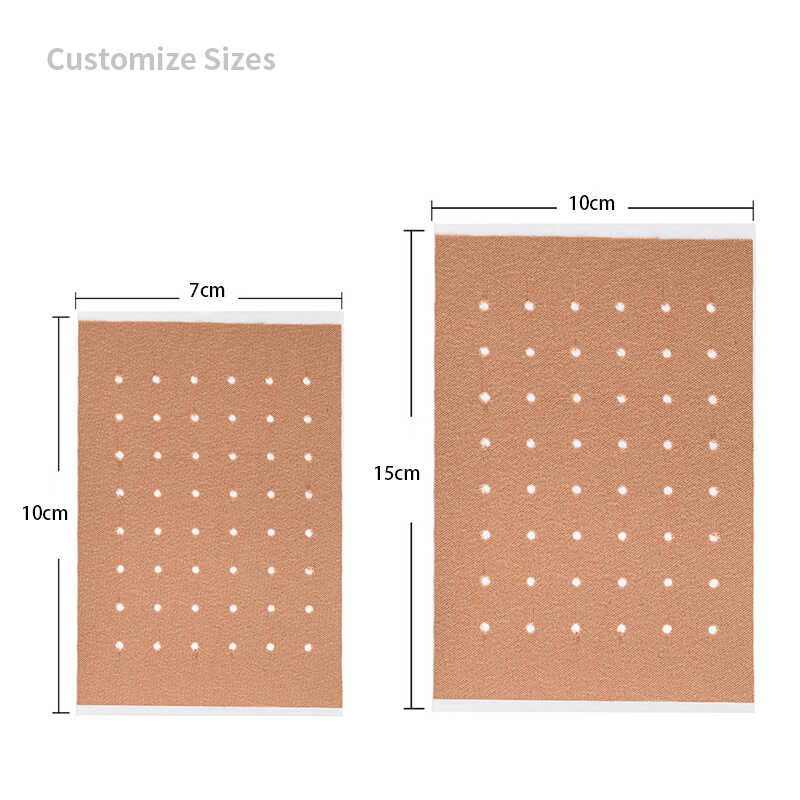
There are five defensible ways to build the shelf-life evidence behind a pain relief patch OEM programme, and they are not interchangeable. Real-time long-term studies, accelerated studies at 40 deg C and 75 percent relative humidity, bracketing, matrixing, and extrapolation answer different questions, carry different durations, and are accepted by different regulators for different purposes. The comparison matrix in the next section puts them side by side; the rest of the article explains where each one is the right instrument and where it becomes a liability.
The reason this comparison matters in 2026 is a specific public document. FDA warning letter MARCS-CMS 721916, issued on 2026-04-09, states that without adequate stability studies there is no scientific evidence that a drug product retains its quality attributes throughout the labeled expiry period. The letter did not tell the industry which study design to use. It told the industry that the absence of a defensible design is itself the finding.
For a pain relief patch OEM programme the practical question is narrower than it sounds. Not every labelled shelf life needs every study. What every labelled shelf life needs is a documented reason for the study set that was chosen, and a documented reason for the studies that were left out. That is what the five strategies below differ on.
Every regulatory reference in this article is a published text: 21 CFR 211.166 on stability testing programmes, 21 CFR 211.137 on expiration dating, ICH Q1A on study design, 21 CFR Part 348.10 on external analgesic actives, 21 CFR Part 201.66 on the Drug Facts panel, ISO 13485:2016 on quality management, and EU MDR 2017/745 for programmes that run on the device side. No supplier cost figure is quoted, because none of those documents contains one.
The Five Strategies Compared at a Glance
The five strategies below are the full set a pain relief patch OEM can choose from, because ICH Q1A does not define a sixth.
Here is the whole comparison in one table. Read it as a map rather than as a recommendation: no single row is sufficient on its own, and the columns that separate them are what a programme actually has to justify.
| Strategy | What it proves | Typical duration | Main burden | Accepted for |
|---|---|---|---|---|
| Real-time long-term | The product holds specification at the labelled condition for the full labelled period | as long as the labelled shelf life | Chamber capacity held for years; one time point per interval | the shelf life itself |
| Accelerated | How fast the product degrades under stress, and what the failure mode is | 6 months at 40 deg C / 75 percent RH | needs a validated method that can resolve degradation products | supporting data and change control |
| Intermediate | Behaviour between long-term and accelerated when accelerated shows significant change | 12 months at 30 deg C / 65 percent RH | a third condition on top of the first two | bridging when accelerated data is inconclusive |
| Bracketing | The extremes of a range behave acceptably, so intermediate strengths or pack sizes follow | same as the parent study | requires a justified definition of the extremes | strength and pack-size families |
| Matrixing | A subset of samples at a given time point is representative of the whole family | same as the parent study | requires a statistical or scientific justification for the subset | reduced time points across a family |
| Extrapolation | A shelf life longer than the data, based on the data plus a model | adds no testing time | requires a stated model and a stated risk | a provisional extension, not a final claim |
Two rows in that table are conditions rather than strategies. Intermediate testing is triggered by what the accelerated data shows, and extrapolation is a conclusion drawn from data that already exists. Treating either one as a standalone study design is the most common structural mistake in OEM stability documentation.
Strategy One: Real-Time Long-Term Studies
Long-term real-time testing is the strategy a pain relief patch OEM cannot substitute away, because it observes the labelled condition rather than a proxy for it.
Real-time long-term testing is the only evidence that can carry a labelled shelf life by itself. For a pain relief patch stored at 25 deg C and 60 percent relative humidity, ICH Q1A calls for testing at intervals across the full proposed period, with a minimum data package at the time the shelf life is claimed.
The burden is structural rather than technical. A chamber slot committed for the lifetime of the study cannot be reused, and each interval consumes analytical capacity that competes with commercial batch release. This is why programmes that only run long-term studies tend to have the longest time to first launch and the cleanest file.
The acceptance argument is also the simplest. When the long-term data reaches the labelled period, the question of whether the claim is supported stops being a judgement call. 21 CFR 211.137 requires the expiration date to be supported by stability data, and real-time data is the least ambiguous form of support.
Strategy Two: Accelerated Studies at 40 deg C and 75 Percent RH
Accelerated testing is where a pain relief patch OEM programme buys information rather than time, and the purchase is only worth making with a method that can read it.
Accelerated testing compresses the observation of degradation into a short window. For a pain relief patch OEM programme its real value is diagnostic rather than declarative: it tells you which quality attribute fails first, and it either supports the long-term study or forces an intermediate condition into the plan.
The design detail that decides usefulness is the analytical method. An accelerated study run with a release method that cannot resolve related substances produces a clean-looking table and no information about degradation. 21 CFR 211.166 expects the stability programme to specify the methods, not only the conditions.
There is a second, less discussed benefit. Because the conditions are aggressive, the accelerated study is where a formulation weakness shows up while the formula can still be changed. Once a formula is locked and a long-term study has started, a formulation change resets the clock.

Strategy Three: Bracketing
Bracketing lets a pain relief patch OEM carry a product family instead of a single article number, and it is also the strategy most often documented badly.
Bracketing tests the extremes of a defined range and applies the result to everything between them. For patches the usual candidates are strength, active loading, pack count, and film thickness. If the hardest-to-stabilise extreme holds, the reasoning goes, the easier members of the family hold too.
The whole strategy rests on the justification for what counts as an extreme. A programme that brackets two pack counts but not the two adhesive coat weights has not bracketed the parameter that governs moisture ingress. A pain relief patch supplier that cannot show the reasoning for the bracketed parameters has produced a shortcut rather than a study design.
| Bracketed parameter | Valid extreme pair | Invalid pairing |
|---|---|---|
| Strengths in a monograph range | lowest and highest strength actually manufactured | two strengths in the middle of the range |
| Pack size | smallest and largest consumer pack | two adjacent sizes |
| Adhesive coat weight | thinnest and thickest coating | same coating, two backing lots |
| Backing film thickness | thinnest and thickest film | one film, two suppliers |

Strategy Four: Matrixing
Matrixing reduces the analytical load on a pain relief patch OEM programme without moving any condition or interval.
Matrixing runs fewer samples at the intermediate time points than a full design would require, on the argument that the omitted points are predictable from the retained ones. It reduces analytical load across a family without moving any condition or interval.
Matrixing fails when the justification is arithmetic rather than scientific. Omitting a time point is defensible when the degradation pathway is linear and previously characterised. It is not defensible when the omitted point sits in the region where the product is expected to change, which for many hydrogel and adhesive systems is the first third of the labelled period.
The practical rule that survives audit is to keep the design symmetric. A matrix in which every member of the family is tested at the start, the end, and one intermediate point is easy to explain. A matrix in which each member has a different pattern is difficult to explain and therefore difficult to defend, even when the underlying statistics are sound.
The documentation test is one a buyer can run without a laboratory. Ask for the matrix pattern as a single table, one column per article number and one row per time point, and ask which cells were sampled. A pattern that fits on one page is defensible. A pattern that needs a separate explanation of why each member differs usually means the design was assembled around chamber availability rather than around the product family.
Strategy Five: Extrapolation
Extrapolation is the only strategy a pain relief patch OEM can adopt without running further laboratory work, which is exactly why it requires the most discipline.
Extrapolation proposes a shelf life longer than the period covered by data. It adds no laboratory time, which makes it the cheapest row in the matrix and the one with the narrowest legitimate use.
Extrapolation is a claim about a model, so the model has to be stated. A proposal to move from 12 months of long-term data to a 24-month label is a statement that the degradation kinetics observed in the first 12 months continue at the same rate. If the accelerated data showed a change in the degradation pathway, that statement is not supportable and the extension is not available.
The way to use extrapolation without exposing the programme is to pair it with a commitment. The interim label is issued on the strength of the model, and the full label is issued only when the real-time data reaches it. A pain relief patch OEM that will not put that commitment in writing is asking the buyer to carry the model risk.
The Combination Matrix: What Actually Goes Into a File
No pain relief patch OEM programme runs one strategy in isolation, so the practical question is which combination the file can defend.
Real programmes combine the strategies rather than choosing one. The table below shows the four combinations that account for most defensible files, and what each combination commits the supplier to.
| Combination | How it is built | What it commits the supplier to | Where it fits |
|---|---|---|---|
| Baseline | long-term plus accelerated | continuing long-term to the labelled period | a single strength and a single pack |
| Baseline plus family | long-term and accelerated on bracketed extremes | justifying the extremes, not just naming them | a strength or pack range |
| Baseline plus matrix | full family at key points, subset at intermediate points | a stated matrix pattern held across the whole family | a wide range with tight chamber capacity |
| Baseline plus commitment | short long-term data plus a model, with a written commitment | releasing the final label only when data arrives | a launch that cannot wait for the full period |
Each combination commits the supplier to something specific. The value of the matrix is that the commitment is visible before the contract is signed, rather than after the first container has been loaded.
Five Combinations That Regulators Have Already Rejected
The recurring failures below share one property: each would have been visible to a pain relief patch OEM buyer who asked for the protocol rather than for the certificate.
The patterns below are the recurring ways the five strategies get misused. Each one has a public analogue in the enforcement record, which is why they are worth listing before the technical description of the study design.
| Failure pattern | Why it fails | Public analogue |
|---|---|---|
| A labelled expiry date with no long-term study behind it | the claim exists without the evidence the claim requires | MARCS-CMS 721916, 2026-04-09 |
| An accelerated study used as the shelf-life claim | stress conditions are not the labelled storage condition | same letter, same deficiency class |
| Bracketed extremes named but not justified | the family claim rests on a parameter that was never analysed | recurring CGMP finding in the 2026 record |
| A matrix with no stated pattern | the subset cannot be defended as representative | recurring data integrity finding |
| Extrapolation without a commitment to confirm | the model risk is transferred to the buyer | not a letter, but a commercial exposure |
The first two rows are the ones that produce public documents. The last three rarely appear as standalone citations, which makes them harder to see and easier to inherit when a programme changes supplier.
A buyer can screen for all five before the contract is signed. Ask for the study set in writing, ask which parameters were bracketed and why, ask for the matrix pattern as a single table, and ask what the supplier will do if the accelerated data shows significant change. A supplier with a working programme answers in documents. A supplier without one answers in reassurance, and the difference is visible in a single meeting.
How to Write the Study Set Into the OEM Contract
A comparison matrix changes nothing about a pain relief patch OEM relationship until it becomes contract language.
The comparison only becomes useful when it is written into the agreement. Seven clauses convert the matrix above from a discussion into an obligation.
- The labelled storage condition, stated in the same words that will be printed on the pack.
- The study set by name, using the five strategy labels, with the condition and the interval for each.
- The bracketed parameters, with the justification for the extreme pair.
- The matrix pattern, stated so that it can be checked against later data.
- The analytical methods to be used, referenced to the release methods.
- The date on which the supplier must deliver each interim report.
- The notice period for an out-of-specification result, and the person who must receive it.
A buyer who signs those seven clauses gets a comparison matrix that works. A buyer who signs a shelf life without them gets a number, and the number is the part that was never in doubt.
The same logic carries into adjacent categories. For a pain relief patch OEM programme the table above is the starting point, and a heat patch OEM programme, a capsicum plaster OEM programme and a cooling gel patch OEM programme all run stability files built from the same five strategies, with the conditions adjusted for the delivery system rather than for the claim.
What This Comparison Does Not Tell You
Two limits apply to any comparison of this kind, and a pain relief patch OEM buyer should read them before treating the matrix as a checklist.
Two limits are worth stating plainly, because a comparison matrix invites over-reading.
First, the matrix says nothing about cost. Stability cost is driven by the number of chamber slots occupied and the number of analytical time points, and those two figures vary with the facility, the panel, and the method. Any article that attaches a currency figure to a study design without a quotation has invented it.
Second, the matrix says nothing about which strategy a specific regulator will accept for a specific market on a specific day. ICH Q1A describes a design framework, and 21 CFR 211.166 requires a written programme; neither document issues an approval in advance. The only reliable way to know whether a file is sufficient is to read the file, which is a task the buyer can do and a task the matrix cannot do for them.
About KONGDY Medical

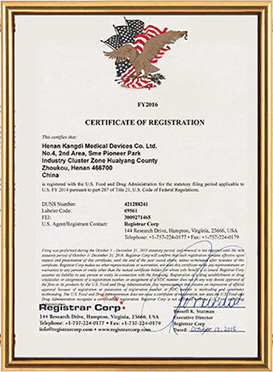
Henan Kongdy Medical Devices Co., LTD. (KONGDY) was founded in 1989 and has 37 years of production experience as of 2026 across pain relief patches, slimming patches, capsicum plasters, heat patches, cooling gel patches, detox foot patches, steam eye masks, mosquito repellent patches and nose strips. Headquartered in Henan, China, KONGDY operates a 100,000-class GMP workshop built in 2008 and obtained ISO 13485 medical device Quality Management System European Standard Certification in 2014. The company runs OEM and ODM services for international brands across multiple regulatory pathways. For 2026 procurement evaluation, the qualification team can provide the ISO 13485 certificate, GMP workshop audit reports, stability programme documentation, and reference customer case studies upon request via our contact page.
Frequently Asked Questions
Eight questions that follow from the comparison, answered as directly as the public documents allow.
Do I need all five strategies in one file?
No. Where a pain relief patch OEM runs one strength and one pack, long-term and accelerated studies alone. Bracketing, matrixing and extrapolation exist for programmes with a family of products or a launch date that cannot wait for the full real-time period.
Which strategy does 21 CFR 211.166 actually require?
The regulation does not select a strategy on behalf of a pain relief patch OEM. It requires a written stability testing programme with defined sample sizes, test intervals, storage conditions and methods. It does not name the five strategies; it requires that the programme be written down and followed, which is what makes the choice of strategies auditable.
Is an accelerated study enough to print a 24-month expiry date?
No. For a pain relief patch OEM the labelled expiry date is the period for which the product is held to specification at the labelled condition. Accelerated data supports the claim; it does not replace the real-time study, and 21 CFR 211.137 ties the date to supporting stability data.
What condition does ICH Q1A use for long-term testing?
25 deg C and 60 percent relative humidity is the long-term condition, 40 deg C and 75 percent relative humidity is the accelerated condition, and 30 deg C and 65 percent relative humidity is the intermediate condition used when the accelerated data shows significant change.
When is bracketing legitimate?
When the extremes are defined scientifically and the extreme pair is the hardest case for the parameter at issue. Naming two strengths as extremes without analysing which parameter governs stability is the failure mode.
What makes a matrix design defensible?
Symmetry and a stated pattern. In a pain relief patch OEM matrix, a design in which every member of the family is tested at the same key points and a documented subset at intermediate points can be explained in one sentence, and that is the practical test.
How long can extrapolation carry a label?
Only as far as the degradation model supports, and only with a written commitment to confirm the full period with real-time data. Where the accelerated study shows a change in degradation pathway, the model assumption fails and the extension is not available.
Does the same comparison apply to a patch sold as a cosmetic?
The strategy set is the same and the framework differs. A cosmetic programme is governed by the cosmetic framework for the market it is sold into, while a drug-claim patch sold in the United States is governed by the OTC monograph in 21 CFR Part 348.10 and by the labelling format in 21 CFR Part 201.66. The labelled period still has to be supported either way.
Related Guides
Four further references from the KONGDY knowledge base:
- Pain Relief Patch OEM: qualification and documentation overview
- Frequently asked compliance questions
- KONGDY OEM and ODM manufacturing services
- Slimming Patch OEM: cosmetic pathway documentation
- Detox Foot Patch OEM: EU Safety Gate risk mapping


