-
 KONGDY
Reading the FY2025 FDA Warning Letter Data: What 303 Letters Mean for Pain Relief Patch Sellers in 2026
Reading the FY2025 FDA Warning Letter Data: What 303 Letters Mean for Pain Relief Patch Sellers in 2026
The short answer is that FDA issued 303 warning letters to drug and biologic firms in FY2025, against 190 in FY2024, an increase of 59 percent, and the agency has shortened its own letter-issuance cycle by roughly one third. For a pain relief patch seller the headline number is the least useful part of the dataset. Three structural facts are worth more: how the letters are classified, when they were posted, and which entry point the agency used to find the problem.
This article reads the public record the way a procurement team should read it. It states plainly what the published series can show, states plainly what it cannot show, and refuses to manufacture the number that most articles on this topic invent, which is a count of warning letters that apply specifically to patches. That count does not exist in any public series.
The source material is narrow and checkable: the FDA warning letter database at our news index and the FDA public database, the FY2025 aggregate reported by Elexes from FDA data, and four named 2026 letters whose full text is public. Every figure below can be traced to one of those. Where the record is silent, this article says so instead of filling the gap.
If your role is supplier qualification, the useful output of a dataset reading is not a score. It is a list of document requests that follow from the pattern the dataset reveals. That list is in the final section, and it is short enough to run in a single supplier meeting.
The Headline Number: 303 Warning Letters in FY2025
FDA issued 303 warning letters to drug and biologic firms in FY2025, compared with 190 in FY2024. That is a 59 percent increase in one year, and it is the single most quoted figure in 2026 commentary on enforcement.
| Period | Warning letters to drug and biologic firms | Change |
|---|---|---|
| FY2024 | 190 | baseline |
| FY2025 | 303 | up 59 percent |
| 2026 March (CDER, additional) | 30 | monthly wave |
| 2026 June (CDER, additional) | 25 | monthly wave |
| 2026 October (single posting batch) | 5 unapproved new drug letters plus sector letters | batch posting |
For a pain relief patch programme the composition of the 303 letters matters more than the total, because the class a product falls into decides which documents a buyer may ask a supplier to produce.
The second figure matters as much as the first. FDA has shortened the interval between an inspection or review and the issuance of a letter by roughly one third. In practical terms a deficiency found in one quarter can be public in the next, which compresses the window in which a supplier can fix a problem quietly.
Both figures come from published analysis of FDA data rather than from a single FDA press release, so treat them as an informed reading of the public series rather than as an official annual total. The individual letters, by contrast, are primary documents, and the rest of this article relies on those.

What Is Actually Inside the 303: Reading the Classification, Not the Count
A pain relief patch is not a category in the public series, and that absence is the first thing a careful reader notices.
The public series is organised by subject matter and by issuing centre, not by dosage form. Search the FDA warning letter database and you will find categories such as unapproved new drugs, current good manufacturing practice, and adulterated product. You will not find a category called patches, and no public series reports a patch-specific subtotal.
| Subject class in the public record | Issuing centre | Why it reaches a patch programme |
|---|---|---|
| Unapproved new drugs | CDER | A patch carrying a drug claim outside the 21 CFR Part 348.10 monograph sits in this class |
| CGMP for finished pharmaceuticals | CDER | Applies to any facility making a drug product, including a topical analgesic line |
| CGMP, QSR, adulterated devices | CDRH | Applies to patch lines registered as devices rather than as drugs |
| Compounding and promotional claims | CDER | Covers claims that imply approval, clinical proof, or equivalence to a reference product |
This is the point at which most articles go wrong. A number such as eight of 303 cannot be sourced, because the denominator is not reserved for patches and the numerator is not published. What can be sourced is that the unapproved new drug class, which is where a drug-claim patch lives, is one of the largest classes in the 2026 record, and that the four named letters below show how a case reaches that class.
A second useful reading is that the classification is not the same as the severity. A CGMP letter and an unapproved new drug letter can arise from the same facility and the same product, as the 2026 record shows. Buyers who treat the subject label as a proxy for materiality end up mispricing supplier risk.
The Three Posting Waves That Matter: March, June, October
Timing is the second variable worth reading, because the posting calendar says more about a pain relief patch supplier risk than the annual total does.
The 2026 postings are not evenly distributed. March and June each carried an additional block of CDER letters, and the batch posted on 2026-10-06 contained at least five unapproved new drug letters plus further sector letters.
| Posting window | What was posted | Reading |
|---|---|---|
| 2026 March | 30 additional CDER warning letters | A themed wave rather than uniform monthly sampling |
| 2026 June | 25 additional CDER warning letters, many concerning compounded products and claims | Continuation of the same wave pattern |
| 2026 July | 320-26-99 and 320-26-105 issued two days and three weeks apart | Site-level CGMP output running in parallel with the claim-level wave |
| 2026 October | At least five unapproved new drug letters in one posting batch, plus device and CGMP letters | Batch posting, which is consistent with a coordinated action |
A wave pattern changes what a supplier can infer from silence. If letters were issued at a steady rate, a supplier with no letter would have modest evidence of good standing. With waves, the absence of a letter in a quiet month carries almost no information, because the agency may simply not have run the wave yet.
Two of the July letters are worth naming here because they are pure site-level documents. Warning letter 320-26-99 went to International Medication Systems Limited at FEI 2016148, 1886 Santa Anita Avenue, South El Monte, California 91733, following an inspection from 2025-12-09 to 2025-12-19, and cites CGMP violations for finished pharmaceuticals under 21 CFR parts 210 and 211. Warning letter 320-26-105 went to Dabur India Limited on 2026-07-24 following a January 2026 inspection, and leads with 21 CFR 211.22(a), the quality control unit provision, alongside 21 CFR 211.194(a), 21 CFR 211.67(b) and 21 CFR 211.100(a).

Four 2026 Letters That Define the Risk Pattern
Four letters issued in 2026 cover the four ways a pain relief patch programme can be reached. Read together they show that the entry point, not the product, determines what the supplier must be able to produce.
| Letter | Issued | Entry point | Core deficiency |
|---|---|---|---|
| MARCS-CMS 735346, Aidance Scientific, Inc. | 2026-10-01 | Website and Amazon storefront review in July 2026 | Unapproved new drug under 21 U.S.C. 355(a) and 21 U.S.C. 331(d) |
| MARCS-CMS 721916, Medical Products Laboratories, Inc. | 2026-04-09 | Product and file review | No adequate stability studies supporting the labeled expiry period |
| 320-26-99, International Medication Systems Limited | 2026-07-02 | On-site inspection, 2025-12-09 to 2025-12-19 | CGMP violations for finished pharmaceuticals, 21 CFR parts 210 and 211 |
| 320-26-105, Dabur India Limited | 2026-07-24 | On-site inspection, 2026-01-12 to 2026-01-16 | Quality control unit and related CGMP provisions, led by 21 CFR 211.22(a) |
The pattern is not that FDA became stricter in 2026. The pattern is that the agency now reaches a product through more than one door, and that two of those doors do not require a visit to the plant.

Door One: The Online Listing as the Inspection Target
For a pain relief patch seller the first door is the one that is controlled most directly and audited least often.
Warning letter 735346 shows that a marketing page can be the finding, not the context. FDA issued the letter to Aidance Scientific, Inc. of 184 Burnside Ave, Woonsocket, Rhode Island 02895 on 2026-10-01, and the letter states that the agency reviewed the company website and its Amazon storefront in July 2026.
The product named is Terragen HG Formula. The charge is that the product is an unapproved new drug under section 505(a) of the Federal Food, Drug and Cosmetic Act, 21 U.S.C. 355(a), and that introducing it into interstate commerce violates 21 U.S.C. 331(d). No inspection of a manufacturing site was necessary to produce the letter.
For a pain relief patch seller the operational consequence is that every public sentence about the product is a document a regulator can act on. That includes the seller page, the marketplace listing, the packaging copy, and the Drug Facts panel required by 21 CFR 201.66. It also includes the claim set chosen for the product, because a claim that positions the patch as a drug removes it from the cosmetic or device conversation entirely.

Door Two: The Stability File as the Inspection Target
Warning letter 721916 shows the second door, which is the file rather than the page. It was issued to Medical Products Laboratories, Inc. on 2026-04-09 and concerns five topical products. The sentence the industry quotes is the one that states that without the appropriate stability studies there is no adequate scientific evidence that the drug product retains its quality attributes throughout the labeled expiry period.
For a pain relief patch sourced under a private label, this door opens on a file rather than on a production line.
The regulatory basis sits in 21 CFR 211.166, which requires a written stability testing program, and 21 CFR 211.137, which governs expiration dating and prohibits a date that the data does not support. ICH Q1A supplies the study design that a competent program follows: a long-term condition, an accelerated condition, and intermediate or stress work where the accelerated data show significant change.
The companion analysis of 721916, including the five studies and the nine-point pre-contract checklist that follows from it, is published separately at our pain relief patch OEM resources. This article treats it as one entry in the dataset rather than as a case study, which is why the letter appears here in a single paragraph.
Door Three: The Factory Floor, Read Through the Quality Unit
The third door is the traditional one, an on-site CGMP inspection of the pain relief patch facility, and the 2026 record shows it is still the most productive door for the agency. Two of the four named letters came from inspections rather than from file or listing review.
Dabur India Limited at Silvassa received warning letter 320-26-105 on 2026-07-24 after an inspection from 2026-01-12 to 2026-01-16. The letter leads with 21 CFR 211.22(a), which places responsibility for approving or rejecting materials and products on the quality control unit. That choice of lead citation is instructive for a pain relief patch buyer: the agency does not begin with the defect, it begins with the function whose job was to catch the defect.
The same logic appears elsewhere in the record. Warning letter 320-26-12, issued to Apotex Inc. of Richmond Hill, Ontario on 2025-10-31 after an inspection from 2025-04-28 to 2025-05-09, cites 21 CFR 211.192 on the failure to investigate batch failures, alongside 21 CFR 211.113(b) and 21 CFR 211.42(c)(10) on microbiological control. Two further facility outcomes in the public record, for Eugia Pharma Specialities Limited Units II and III, were classified as Official Action Indicated after inspections in late 2025 and early 2026.
The procurement translation is short. When a supplier cannot name the person who signs batch rejection decisions, and cannot show the investigation record for the last rejected batch, the third door is the one that will eventually open.
What the Dataset Cannot Tell You (and Why That Matters)
Any figure claiming that a specific number of the 303 letters concerned pain relief patch products is unsourced, and readers should treat it as a signal about the source rather than about the market.
The dataset cannot tell you the probability that a given supplier will be inspected, because FDA does not publish its selection model. It cannot tell you the patch-specific share of letters, because that slice is not published. And it cannot tell you the share of letters that were closed within a year, which is the number that would actually matter for an export certificate decision.
| Question a buyer asks | Can the public record answer it? | What to use instead |
|---|---|---|
| How many patch firms got a letter? | No, the slice is not published | Search the database by firm name during supplier qualification |
| Is my supplier likely to be inspected? | No, selection criteria are not published | The supplier risk model in 21 CFR 211.192 and facility inspection history |
| Is an existing letter still open? | Yes, status is published per letter | A dated database search, repeated at every re-qualification |
| Does a letter block exports? | Partly, the remedy is stated in the letter | The letter text plus a supplier statement on certificate status |
| What defect class is rising? | Partly, the class labels are published | The subject classes in the tables above, read by trend not by count |
The honest conclusion is that the public record is a map of entry points. It is not a risk score, and any article that converts it into one is adding precision that the data does not contain.
Why 303 Should Not Become a Procurement Score
A pain relief patch sourcing decision cannot be driven by one aggregate number, because the aggregate is not conditioned on product, pathway or supplier.
A single aggregate is a poor procurement instrument because it is not conditioned on your product, your pathway, or your supplier. Two suppliers in the same country with the same product can sit on opposite sides of the risk line, and the public record will not distinguish them until one of them is named.
The aggregate also invites a false comparison with other jurisdictions. In the European Union, the Safety Gate alert system covered 2,663 alerts in weeks 1 to 38 of 2026, of which 1,528, or 57.4 percent, concerned products originating in China, against a 40.1 percent share in 2025. Those are consumer product alerts under Regulation (EU) 2023/988, not drug enforcement letters, and the two series measure different things. Setting them side by side is useful only as a reminder that a compliance programme serves more than one regulator.
The practical use of the FDA figure is directional. A rising count means the agency is producing more public documents, which means a buyer has more material to read. It does not mean your supplier has become riskier, and it does not mean your supplier has become safer. Only the document set does that.
What a Pain Relief Patch Buyer Should Do With This Data
The practical output for a pain relief patch buyer is a short list of document requests rather than a score.
Convert the reading into five document requests and run them at the next supplier meeting. Each request maps to one of the doors above, and each has a dated deliverable, so the outcome is either a document or an admission.
| Action | Maps to | Deliverable to request |
|---|---|---|
| Audit the public claim set | Door one, 735346 | A dated copy of every listing and product page sentence making a therapeutic claim |
| Request the stability protocol and report | Door two, 721916 | Signed protocol under 21 CFR 211.166 plus a report with at least 12 months of long-term data |
| Request the batch rejection record | Door three, 320-26-105 | The investigation record and the quality unit sign-off for the most recent rejected batch |
| Search the database by firm name | All three doors | A dated search result covering the manufacturer and its affiliated entities |
| Confirm export certificate status | Door one and two consequences | A supplier statement dated within 30 days that no hold is in place |
Run the same five requests against every candidate supplier and the dataset becomes useful in the only way that matters to a pain relief patch programme: it produces a comparable file for each candidate, and the comparison is on documents rather than on impressions.
The wider programme context sits with our pain relief patch OEM reference pages, and the same method applies to adjacent categories through heat patch OEM, capsicum plaster OEM and cooling gel patch OEM programmes, because the entry points are set by the regulator rather than by the product.
About KONGDY Medical

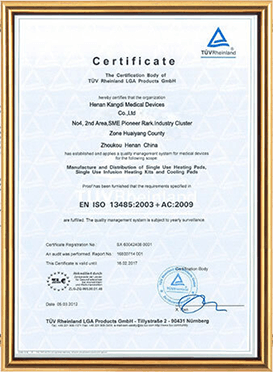
Henan Kongdy Medical Devices Co., LTD. (KONGDY) was founded in 1989 and has 37 years of production experience as of 2026 across pain relief patches, slimming patches, capsicum plasters, heat patches, cooling gel patches, detox foot patches, steam eye masks, mosquito repellent patches and nose strips. Headquartered in Henan, China, KONGDY operates a 100,000-class GMP workshop built in 2008 and obtained ISO 13485 medical device Quality Management System European Standard Certification in 2014. The company runs OEM and ODM services for international brands across multiple regulatory pathways. For 2026 procurement evaluation, the qualification team can provide the ISO 13485 certificate, GMP workshop audit reports, stability programme documentation, and reference customer case studies upon request via our contact page.
Frequently Asked Questions
Eight questions that follow from the numbers above, each answered as briefly as the record allows.
How many FDA warning letters were issued in FY2025?
Published analysis of FDA data reports 303 warning letters to drug and biologic firms in FY2025, against 190 in FY2024, an increase of 59 percent. FDA also shortened its letter-issuance cycle by roughly one third.
How many of those letters concerned patches?
No pain relief patch subtotal is published. The public series is classified by subject and by issuing centre, not by dosage form, so any article quoting a patch-specific subtotal is supplying a number the record does not contain.
What does MARCS-CMS 735346 establish?
It establishes that a website and marketplace review can produce a warning letter without a plant inspection. FDA issued it to Aidance Scientific, Inc. on 2026-10-01 after reviewing the company website and Amazon storefront in July 2026, and cites 21 U.S.C. 355(a) and 21 U.S.C. 331(d).
Which regulation governs the labeled expiry date on a patch?
21 CFR 211.137 governs expiration dating and 21 CFR 211.166 requires a written stability testing program. ICH Q1A provides the study design. Warning letter 721916 is an enforcement of that chain rather than a new requirement.
Why does 21 CFR 211.22(a) appear so often in the 2026 letters?
Because it assigns responsibility for approving or rejecting materials and products to the quality control unit. Warning letter 320-26-105 leads with it, which places the finding on the function rather than on the specific defect.
Can the Safety Gate figure be compared with the FDA figure?
Not directly. Safety Gate reported 2,663 consumer product alerts in weeks 1 to 38 of 2026 under Regulation (EU) 2023/988, with 1,528 China-origin alerts at 57.4 percent. FDA warning letters are enforcement documents to named firms. The denominators, the addressees and the legal bases all differ.
Should a buyer weight the aggregate when scoring suppliers?
No. The aggregate is not conditioned on product, pathway or supplier. Use it to decide which documents to request, then score the suppliers on the documents they produce.
Where can a buyer check whether a letter is still open?
The FDA warning letter database publishes the letter and its status. Run a dated search covering the manufacturer and any affiliated entity at every requalification, and keep the search result in the supplier file.
Related Guides
Four further references from the KONGDY knowledge base and the public record:
- Pain Relief Patch OEM: qualification and documentation overview
- Frequently asked compliance questions
- KONGDY OEM and ODM manufacturing services
- Nose Strip OEM: device pathway documentation
- Slimming Patch OEM: cosmetic pathway documentation


