-
 KONGDY
Why FDA Warning Letter 721916 Matters for Pain Relief Patch Buyers: The Stability Evidence Problem That Holds Up Container Shipments
Why FDA Warning Letter 721916 Matters for Pain Relief Patch Buyers: The Stability Evidence Problem That Holds Up Container Shipments
Every supplier re-qualification cycle reaches the same question: which public regulatory document should a pain relief patch buyer actually read before renewing an OEM contract? For 2026, one strong candidate is an FDA warning letter that names no patch at all.
MARCS-CMS 721916 was issued to Medical Products Laboratories, Inc. on 2026-04-09. The letter names Hydro-Q 4% Gel (hydroquinone 4%) and four sodium sulfacetamide preparations. It does not name any pain relief patch. But the violation at the center of the letter - the absence of adequate stability studies supporting the labeled expiry date - belongs to the same deficiency class that appears whenever a regulator examines the shelf-life evidence behind a topical analgesic.
The FDA warning letter database is public, and the stability-evidence paragraph is not unique to 721916. The regulatory chain the letter describes is public as well: a deficiency that stays open can affect the manufacturer's ability to obtain an export certificate, and an export certificate hold can in turn keep a container at the port of entry while the buyer's inventory plan slips. How much that costs depends on order value, destination market, and the length of the hold. No warning letter states a figure, and this article will not invent one.
What follows is a walk through the letter, through the five stability studies it implies, and through the nine-point check a pain relief patch OEM buyer should run before signing. It is written for the procurement lead, the regulatory affairs manager, and the founder who signs supplier qualification documents on behalf of the company. The sources are the FDA warning letter, 21 CFR Part 348.10, 21 CFR 211.166, 21 CFR 211.137, and the ICH Q1A guidance. No anecdotal cases, no fabricated client stories.
The Letter and the Sender: Why 721916 Reads Like a Stability Audit, Not a Drug Approval Letter
The full public record of MARCS-CMS 721916 identifies the recipient as Medical Products Laboratories, Inc. The letter was issued by the U.S. Food and Drug Administration, Center for Drug Evaluation and Research, on 2026-04-09. It concerns five specific drug products: Hydro-Q 4% Gel (hydroquinone 4%), Sodium Sulfacetamide 8% and Sulfur 4% Topical Suspension, Sodium Sulfacetamide 9% and Sulfur 4% Wash, and Sodium Sulfacetamide 9.8% Shampoo.
Three things make this letter relevant to a pain relief patch buyer even though the named products are not patches.
- The legal authority cited is 21 U.S.C. 355(a), the same provision that defines an unapproved new drug under FD&C Act section 505(a). A pain relief patch that falls outside the 21 CFR Part 348.10 OTC monograph is governed by the same authority.
- The cited conduct - introducing or delivering for introduction into interstate commerce a drug without an approved application - applies the moment a product crosses a U.S. state line, regardless of the dosage form.
- The supporting deficiency, the absence of adequate stability studies, is a documented weakness in topical dosage forms generally, including patches. The letter even uses the phrase "throughout the labeled expiry period," which is the precise language stability scientists use when they defend a shelf life to a regulator.
Reading 721916 as a stability audit, not a drug approval letter, is the first shift a procurement lead needs to make. The letter is not primarily about whether the product is approvable. It is about whether the shelf life printed on the sachet is supported by evidence the regulator will accept.

The Three Product Categories Named in 721916 and Where a Pain Relief Patch Stands Beside Them
The five products named in 721916 fall into three topical categories. A pain relief patch sits beside them, not apart from them, when the discussion turns to stability evidence.
| 721916 product | Active | Dosage form | Closest patch analog |
|---|---|---|---|
| Hydro-Q 4% Gel | hydroquinone 4% | Aqueous gel | Cooling gel patch (menthol 3 to 16%) |
| Sodium Sulfacetamide 8% and Sulfur 4% Topical Suspension | sodium sulfacetamide + sulfur | Lotion / suspension | Capsicum plaster (capsaicin) |
| Sodium Sulfacetamide 9% and Sulfur 4% Wash | sodium sulfacetamide + sulfur | Wash | Pain relief patch (menthol / methyl salicylate) |
| Sodium Sulfacetamide 9.8% Shampoo | sodium sulfacetamide | Shampoo | Pain relief patch (single active) |
| (no patch in the letter) | - | - | Pain relief patch buyer is the closest parallel reader |
Two of the five products are gels. A menthol pain relief patch is, in formulation terms, a hydrogel with menthol and a polymer matrix. The same stability questions apply: how does the active migrate through the matrix over 24 months at 25 degrees Celsius, and what is the assay value at month 24? FDA will ask the same questions.
The sulfur products illustrate another patch-relevant risk: a multi-active formulation. When a pain relief patch combines menthol with methyl salicylate or camphor, each active has its own degradation curve. 721916 demonstrates that FDA reads the multi-active question as one product, not two. The stability protocol must cover the combination, not the ingredients in isolation.
The Core Violation, Quoted: "Without the Appropriate Stability Studies..."
The most quoted sentence in 721916 is the one that should appear in every OEM contract clause on stability:
"Without the appropriate stability studies, you do not have adequate scientific evidence to support that your drug product retains its quality attributes throughout the labeled expiry period."
For a pain relief patch buyer, this sentence has four mechanical consequences.
- The labeled expiry date is a regulatory commitment, not a marketing estimate. Whatever number appears on the sachet - 24 months, 36 months - is the period for which the manufacturer must hold scientific evidence.
- Stability studies must be performed on the finished product in the finished packaging, not on the bulk hydrogel or the bulk formulation in a stability chamber.
- The studies must use the analytical methods that will be used for commercial batch release. A HPLC method for assay that is not the same method as the release method is not adequate evidence in FDA eyes.
- The studies must cover the conditions of the labeled storage statement. If the sachet says "store below 25 degrees Celsius" but the long-term studies were run at 30 degrees Celsius, the data does not support the label.
None of these four points is novel. All four are in ICH Q1A. What 721916 adds is enforcement: FDA can name any of these four gaps in a warning letter, even when the product is otherwise compliant on cGMP.
What "Labeled Expiry Period" Means in FDA Eyes and Why It Is Not Negotiable
The phrase "labeled expiry period" in 721916 echoes the wording of 21 CFR 211.137, which governs expiration dating. The regulation requires that every drug product bear an expiration date determined by appropriate stability data. For a pain relief patch, this is the date printed on the foil pouch and on the outer carton.
Three points deserve close attention.
- 21 CFR 211.137(b) prohibits the use of an expiration date that is not supported by stability data. A pain relief patch that prints "36 months" on the pouch but holds only 12 months of long-term data is in regulatory non-conformance before the first commercial batch is released.
- 21 CFR 211.166 requires a written stability testing program. The program must include sample size, testing intervals, storage conditions, and the methods used. A pain relief patch OEM that cannot show a written stability program on the day of audit cannot answer the simplest question FDA will ask: "What is your stability protocol?"
- ICH Q1A, which is the global standard referenced in 21 CFR 211.166, distinguishes between long-term, accelerated, intermediate, and stress testing. A pain relief patch with menthol and methyl salicylate needs at least long-term and accelerated data at the minimum; intermediate conditions may be required if the accelerated results show significant change.
The practical effect of these three points is that a pain relief patch contract cannot leave stability to the supplier's discretion. The buyer must name the storage conditions, the testing interval, the method validation, and the data deliverable format in the contract itself. Otherwise the supplier will define all four in its own favor, and the buyer inherits the gap.
The Five Stability Studies 721916 Implies Every Pain Relief Patch Needs
From the deficiencies named in 721916, a competent pain relief patch stability program should contain at least the following five studies. None is optional.
| Study | Conditions | Minimum duration | What it supports |
|---|---|---|---|
| Long-term | 25 deg C / 60% RH | 24 months (or labeled shelf life) | The labeled shelf life claim on the sachet |
| Accelerated | 40 deg C / 75% RH | 6 months | Degradation kinetics and supporting data for regulatory review |
| Intermediate (if needed) | 30 deg C / 65% RH | 12 months | Bridges the gap when accelerated shows significant change |
| Photostability | ICH Q1B option 1 or 2 | Single time point | Confirms the patch is not light-sensitive in its primary pack |
| Freeze-thaw / thermal cycling | -20 deg C to 40 deg C cycles | 3 cycles minimum | Confirms the polymer matrix survives real shipping conditions |
Each study produces data the buyer can audit. A pain relief patch OEM that does not run all five should be asked why. The most common answer is cost: long-term studies for 24 months tie up capital, and freeze-thaw cycling is often treated as a development study rather than a registration study. The 721916 letter makes clear that FDA does not accept those internal categorizations.
For a pain relief patch that is marketed as "natural" or "menthol-only," the analytical panel can be shorter (assay for menthol, related substances, microbial limits, and visual appearance). For a multi-active patch with menthol, methyl salicylate, and camphor, the panel must include an assay and related-substances test for each active, plus a content-uniformity test for the multi-active combination.
The Hidden Deliverable: How the Expiry Date on the Sachet Becomes a Compliance Object
In most OEM contracts, the buyer specifies a shelf life, and the supplier commits to it. The actual deliverable is the stability data file that supports the shelf life. Without that file, the printed date is a regulatory liability for the buyer, not the supplier.
Three documents belong in the buyer's possession before the first commercial batch ships.
- A stability protocol signed by the supplier's quality unit, naming the five studies above, the storage conditions, the testing intervals, and the acceptance criteria.
- A stability report for at least one pilot batch run under the protocol, with raw chromatograms and the calculation of assay, related substances, and microbial limits at each time point.
- A stability commitment for the commercial batches, in which the supplier commits to put the first three commercial batches on the long-term stability program and to report any out-of-specification result to the buyer within 5 business days.
A pain relief patch buyer who receives only the certificate of analysis (CoA) per batch is missing all three. The CoA is the release document; it is not the stability document. 721916 makes the distinction explicit. The receiving company is responsible for the data that supports the shelf life, not just the data that releases the batch.

The Export Certificate Lever: How FDA Can Hold a Container at Port
The most underappreciated consequence of a 721916-type letter is FDA's ability to withhold an export certificate. The letter itself states that FDA "may withhold Export Certificates" for any company that has an open warning letter, until the company has addressed the deficiencies.
For a pain relief patch buyer that imports under a private label, the practical sequence runs as follows.
- A container is loaded at the port of export under a bill of lading naming the buyer as the consignee.
- On arrival at the U.S. port of entry, the broker files the entry with U.S. Customs and Border Protection and, where the destination market requires it, requests an export certificate from the manufacturer.
- If the manufacturer carries an open warning letter deficiency, FDA can decline or delay the export certificate. The container is not released to the buyer until the matter is cleared.
- The length of the hold tracks the supplier's response to the warning letter: a complete response with a corrective action plan closes it sooner, an incomplete response leaves it open longer.
- For the whole hold period the container accrues demurrage, detention, and terminal storage, and the buyer's downstream commitments slip against a fixed retail calendar. The carrying cost scales with order value and hold length rather than being a fixed published tariff.
None of this is the buyer's fault. None of it appears on the warning letter. All of it is preventable by running the supplier qualification check before signing the OEM contract. The check itself takes 4 to 6 weeks. The hold, once triggered, costs more in cash than the entire qualification audit.

The Pain Relief Patch Buyer's 9-Point Stability Checklist Before Contract Signing
The following nine points should be on the qualification checklist for any transdermal analgesic patch OEM. Each point maps to a public document the supplier should be able to produce on demand.
- Written stability protocol. A protocol signed and dated within the last 24 months, naming the studies, conditions, intervals, and methods.
- At least one completed long-term study. A report covering at least 12 months of long-term data on the commercial formula in the commercial primary pack.
- Accelerated study report. A 6-month accelerated study at 40 deg C / 75% RH with full assay, related substances, and microbial limits.
- Photostability data. A study demonstrating that the patch in its primary pack is not light-sensitive, or a justification if it is.
- Freeze-thaw data. A study demonstrating that the polymer matrix tolerates at least 3 freeze-thaw cycles without phase separation.
- Validation of the analytical method. A method validation report for the assay and related substances, including linearity, accuracy, precision, and specificity.
- Stability commitment for commercial batches. A contractual commitment to place the first three commercial batches on long-term stability and to report any out-of-specification result within 5 business days.
- No open FDA warning letter. A dated search of the FDA warning letter database showing no open letter for the manufacturer or an affiliated entity.
- Export certificate status. A statement from the manufacturer that no export certificate hold is currently in place, dated within the last 30 days.
A menthol patch OEM that can answer all nine points in writing is unlikely to be the subject of a 721916-type letter. An OEM that cannot answer even one of the nine is a candidate for a 721916 letter at the next inspection cycle. The cost of running this checklist is one trip to the supplier's documentation room, plus a 2-day file review. The cost of skipping it is a container held at the U.S. port while the deficiency is cleared.
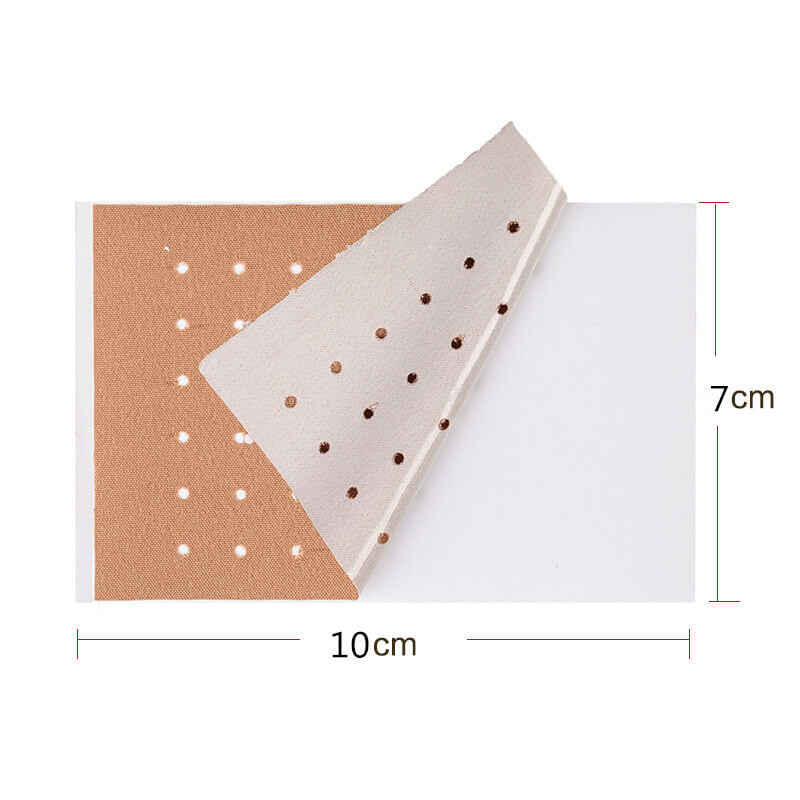
Where the Pain Relief Patch Falls Inside 21 CFR Part 348.10 (Monograph Map)
A topical analgesic patch that is marketed as an external analgesic for the temporary relief of minor aches and pains falls inside 21 CFR Part 348.10, the FDA OTC monograph for external analgesic drug products. The monograph specifies the permitted active ingredients and the concentration ranges.
| Active | 21 CFR 348.10 range | Single-active or combination | Stability study complexity |
|---|---|---|---|
| Menthol | 3 to 16 percent | Either | Moderate |
| Methyl salicylate | 10 to 30 percent | Combination only | Higher (assay and related substances for both actives) |
| Camphor | 3 to 11 percent | Combination only | Higher (assay and related substances for both actives) |
| Capsaicin | 0.025 to 0.25 percent | Single-active typical | Moderate |
| Trolamine salicylate | 10 to 15 percent | Combination only | Higher |
A single-active menthol analgesic patch needs the lower-complexity stability panel. A combination menthol / methyl salicylate / camphor patch needs the higher-complexity panel. A transdermal analgesic patch buyer who does not know which combination is in the formula cannot scope the stability program correctly. 721916 implies the same lesson: the company that does not know its own formulation cannot defend its shelf life.
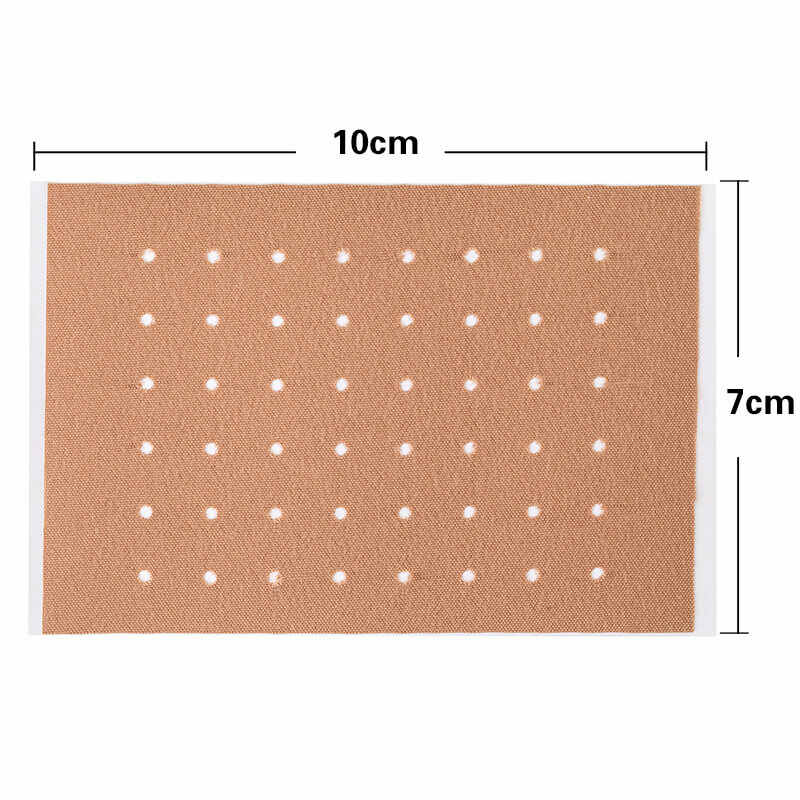
The Single Most Common Mistake Buyers Make About OEM Stability Documents
The most common mistake is to treat the certificate of analysis as the stability document. It is not. The CoA proves the batch met release specifications on the day of release. It does not prove the batch will meet specifications 24 months later.
A second common mistake is to accept "we have a stability program" as a substitute for "here is the protocol." A menthol patch OEM that has a program but cannot produce the protocol is, from FDA's perspective, in the same category as one with no program at all. The protocol is the written evidence. The program is an internal claim.
A third common mistake is to assume that "ICH Q1A compliant" means "FDA accepted." ICH Q1A is a guidance. FDA inspects against the ICH principles, but a warning letter can still be issued when the supplier applies the principles loosely. The 721916 letter is, in part, an enforcement of ICH Q1A in a context where the supplier had the program but not the data.
None of these three mistakes is subtle. All three are visible in the warning letter. All three are visible in the OEM's document set. All three can be caught by the nine-point checklist above. The cost of catching them at the contract stage is small. The cost of catching them after the first container is at the U.S. port is large.
About KONGDY Medical

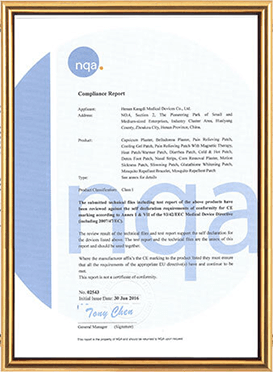
Henan Kongdy Medical Devices Co., LTD. (KONGDY) was founded in 1989 and has 37 years of production experience as of 2026 in topical analgesic patch formulations and other categories. The company operates a 100,000-class GMP workshop (built 2008) and obtained ISO 13485 medical device Quality Management System European Standard Certification in 2014. KONGDY runs OEM and ODM services for international brands across multiple regulatory pathways. For 2026 procurement evaluation, the qualification team can provide ISO 13485 certificate, GMP workshop audit reports, stability program documentation, and reference customer case studies upon request via our contact page.
Frequently Asked Questions
Eight questions that a analgesic patch buyer typically asks after reading this article, with the shortest defensible answer.
What exactly did FDA say in MARCS-CMS 721916?
FDA told Medical Products Laboratories, Inc. on 2026-04-09 that without adequate stability studies, the company did not have scientific evidence to support the labeled expiry period on five topical drug products. The letter cites 21 U.S.C. 355(a) and the FD&C Act 505(a) framework, and warns that FDA may withhold export certificates until the deficiencies are addressed.
Does 721916 apply to pain relief patches?
The named products are not patches, but the legal authority (21 U.S.C. 355(a)) and the deficiency category (stability evidence) both apply. A transdermal analgesic patch outside the 21 CFR Part 348.10 OTC monograph is governed by the same authority. A menthol patch inside the monograph is governed by 21 CFR 211.166 (stability testing) regardless.
How long must long-term stability data be?
ICH Q1A calls for long-term data covering the full proposed shelf life. For a 24-month labeled shelf life on a topical analgesic patch, the long-term study runs at 25 deg C / 60% RH for 24 months minimum, with testing at 0, 3, 6, 9, 12, 18, and 24 months. Interim time points can be released to support regulatory review while the final time point is still pending.
What is the difference between a CoA and a stability report?
A CoA documents the batch release results. A stability report documents how the product changes over the labeled shelf life. A analgesic patch OEM that provides only the CoA per batch has not provided the data FDA expects to see when reviewing a stability commitment.
Can a buyer force a supplier to add long-term stability to the contract?
Yes. The contract should name the studies (long-term, accelerated, photostability, freeze-thaw, method validation), the storage conditions, the testing intervals, the data deliverable, and the reporting timeline for OOS results. 721916 is a public demonstration of what happens when this language is missing.
How much does a container hold at the U.S. port cost?
No published tariff answers this, because the cost is not a tariff: it is demurrage, detention, and terminal storage accrued daily for as long as the hold lasts, scaled by order value and by how quickly the supplier closes the deficiency. The warning letter states no figure, and any article that quotes one is quoting an assumption rather than a document.
Is 721916 still open?
FDA maintains a public list of open and closed warning letters. The status of MARCS-CMS 721916 should be checked on the FDA website at the time of any supplier re-qualification, because the export certificate lever is active while the letter is open.
Where does a buyer report a stability evidence gap?
The first escalation is to the supplier's quality unit, with a written request for the protocol and the data. The second escalation is to the supplier's regulatory affairs lead, with a copy to the buyer's legal team. The third escalation, if neither responds, is to the relevant FDA district office through the buyer's U.S. regulatory agent. None of the three requires a public warning letter to begin.
Related Guides
Five recent articles from the KONGDY knowledge base that complement this one:
- Cooling Gel Patch OEM: Regulatory Categories and Stability Evidence
- Capsicum Plaster OEM: Active Substance Stability in Heat-Sensitive Matrices
- Slimming Patch OEM: Cosmetic vs Drug Boundary and Documentation
- Detox Foot Patch OEM: EU Safety Gate Risk Mapping 2026
- About KONGDY Medical: 1989 to 2026 in 9 Product Lines


