-
 KONGDY
The Days of the Inspection: Nine Stages from Arrival to a Form FDA 483, Read by a Slimming Patch OEM in 2026
The Days of the Inspection: Nine Stages from Arrival to a Form FDA 483, Read by a Slimming Patch OEM in 2026
A warning letter is read far more often than the inspection that produced it, and the inspection is where the file is actually tested. This article walks the days themselves.
Five inspection windows are recorded in this library, and their lengths vary enough to be instructive: twelve days for the case dated 2025-10-31, eleven days for the one dated 2026-07-02, five days for 2026-07-24, four days for 2026-07-31, and three days for the letter dated 2026-05-29.
The variation is not about severity. A three-day inspection and a twelve-day inspection produce the same instrument, which is a Form FDA 483, and the difference between them is scope rather than judgement.
For a slimming patch OEM the practical use of the walk is to know which stage produces which record, because that is the only part a manufacturer can prepare for before anybody arrives.
One distinction runs through the whole article and it is the one most often confused. The Form FDA 483 is issued at the end of the inspection and has no stated deadline for its response in the published text. The warning letter that may follow states a period, and in the two letters in this library that state one it is fifteen business or working days. Two different documents, two different clocks.
1. Stages one and two: arrival and the opening meeting
The inspection begins as an administrative event rather than a technical one, and the record it produces is the scope.
| Stage | What happens | The record it produces |
|---|---|---|
| Arrival and credentials | The investigator presents credentials and states the authority for the inspection | The inspection start date, which is the date that appears in the letter |
| Opening meeting | The scope is stated: which products, which systems, which period | The scope as understood by the firm, which is the first thing to write down |
The second row is the stage a manufacturer most often fails to record properly, and the failure has consequences later. The scope stated at the opening meeting is what a firm can hold an investigator to, and a firm that did not write it down has no basis to say afterwards that a particular area was outside the agreed scope.
The dates in this library are the evidence that scope differs. Three days and twelve days are different scopes, and a slimming patch OEM preparing for a first inspection can infer the likely scope from its own product count rather than from a general expectation.
3. Stage three: the facility walkthrough
The walkthrough is where most of the physical findings are produced, and the observations are specific enough to be predictable.
Two letters in this library show what a walkthrough produces. The first records components and raw materials stored on floors, along walls and in hallways between packaging lines, lacking identification, designated status and production run association. The second describes concrete floors, metal sheeting over cinderblock walls, exposed ceiling vents, exposed piping, exposed joists and ceiling fans, and states that the absence of adequate ventilation can create risks for microbial and particulate contamination.
| What the walkthrough looks at | The kind of observation it produces |
|---|---|
| Material placement and flow | Where things are stored relative to where they are used, and whether the two are separated |
| Defined areas | Whether quarantine, approved and rejected material have places rather than rules |
| Surfaces and construction | Whether floors, walls and ceilings can be cleaned, and whether they shed |
| Air handling | Where the air comes from, where it goes, and what it passes over on the way |
| Equipment condition and cleaning | Whether the equipment can be cleaned, and whether there is evidence that it was |
The fifth row is the one that connects the walkthrough to the documents. A walkthrough can observe that equipment is present and clean, and it cannot observe that cleaning was recorded. That is why the cleaning finding in this library rests on the absence of logs rather than on the appearance of the equipment.
4. Stages four and five: records and interviews
These two stages are where a firm discovers whether its documentation is a record or a set of documents, and the distinction is made in a single request.
The worked example in this library is the release determination. The regulation requires a laboratory determination of satisfactory conformance to final specifications, including the identity and strength of each active ingredient, before release. During the inspection the firm confirmed that it lacked procedures for testing finished drug products and could provide evidence of finished product testing for appearance and weight only.
| What is asked for | What a record looks like | What a document looks like |
|---|---|---|
| The release specification for a batch | A specification with limits, dated, tied to the batch | A description of the testing regime |
| The analytical result | A number with the method, the raw data and the calculation | A summary table without the underlying data |
| The component identity test | A test performed by the firm on the received lot | A certificate supplied by the vendor |
| The cleaning record | An entry per cleaning, with who and when and what was cleaned | A procedure stating that cleaning should be recorded |
The interview stage is where the second and third rows separate. A person asked how a result was obtained will describe the process, and a person asked to show the raw data will either produce it or explain why not. The published findings in this library come from the second kind of question.
A slimming patch OEM preparing for this stage should assume the request will be for the underlying data of one recent batch rather than for a description of the system.
5. Stage six: sampling and the boundaries of the visit
Sampling is the stage that determines whether the matter stays administrative, and it is worth understanding what it does and does not mean.
| What sampling does | What it does not do |
|---|---|
| Produces a physical specimen with a chain of custody | Establish that a finding exists in the batch sampled |
| Takes time, and therefore extends the inspection window | Guarantee a result before the letter is written |
| Creates a record the firm may later be asked about | Mean the inspection was routine |
The second row is a small operational point with a large consequence. A sampling stage is one of the reasons a window runs to eleven or twelve days rather than three, and a manufacturer watching the calendar can read something from it.
The third row matters for a slimming patch OEM that manufactures on shared equipment, because a specimen taken from one product is a specimen that may be compared with a residue from another.
6. Stages seven and eight: the observations and the closing meeting
The observations are compiled before the closing meeting, and the closing meeting is the first and often only chance to discuss them with the people who wrote them.
| Stage | What happens | What the firm can do |
|---|---|---|
| Observation compilation | The investigator assembles the findings into a draft list against specific clauses | Nothing yet, and this is where the clause references are decided |
| Closing meeting | The findings are discussed with management, and the firm may provide context on the spot | Correct factual errors, supply immediate clarifications, and take a full note of what was said |
| Issuance of the Form FDA 483 | The observations are issued in writing at the end of the inspection | Accept receipt, and start the response clock that the firm sets for itself |
The second row is underused and it is not a negotiation. A factual error corrected at the closing meeting is a finding that does not appear in the letter, and a factual error left unchallenged becomes part of the public record years later.
The third row carries the distinction this article opened with. The 483 is issued at the end of the visit, and the published letters in this library do not impose a response period on it.
7. The response clock, measured from the two cases that record it
Two cases in this library record both an inspection end date and a Form FDA 483 response date, and the two intervals are far apart.
| Case | Inspection ended | 483 response dated | Interval |
|---|---|---|---|
| 724506 | 2025-12-17 | 2026-02-02 | 47 days |
| 726976 | 2026-01-15 | 2026-01-28 | 13 days |
Neither interval is a legal requirement visible in the published text. Each is a period the firm chose, and the choice is worth examining because the two outcomes were the same: both responses were found inadequate.
The shorter response was found inadequate for the same reason as the longer one. In the thirteen-day case the letter states the firm failed to provide supportive documentation for evaluation or adequate evidence of corrective actions. In the forty-seven-day case the letter states the response lacked supporting documentation and a scientific justification for one of its own findings.
That is the useful conclusion for a slimming patch OEM. A long response does not produce evidence that a short one lacks, and the two failures here are failures of documentation rather than failures of time. What the interval measures is how long the firm took to decide what to write, not how long it took to gather records.

8. The other clock, and the one that follows
Two intervals matter after the inspection and they are often merged into one. They are separate and both are measurable.
| Interval | What it measures | The figures in this library |
|---|---|---|
| Inspection end to warning letter | The agency deciding whether the response was adequate | About 5.4 to 6.4 months across the four inspection cases |
| Letter date to posting date | Administrative publication | About 8 days, observed on 2026-11-06 for letters issued 2026-10-26 |
| Response period stated in the letter | The firm answering the warning letter itself | Fifteen business days in 736006, fifteen working days in 726976 |
The first row is the one a buyer feels and cannot see. A firm can be five months past an inspection with a 483 response filed and nothing public, and a register check will show nothing.
The second row is small and it corrects a common assumption. The register is not months stale; it is about a week stale, and the staleness that matters is in the first row rather than the second.

9. What a buyer can ask about an inspection that has already happened
Six requests, and each corresponds to one of the stages above rather than to the letter.
- The Form FDA 483, if one was issued. It is not in the public database, so this is the only route to the findings before a letter exists.
- The scope recorded at the opening meeting. It tells the buyer what was examined and, by omission, what was not.
- The 483 response, with its date. The date allows the interval in section seven to be computed independently.
- The release specification for the batch the buyer is purchasing. The regulation requires a determination against final specifications, and appearance and weight are not a determination of identity or strength.
- The cleaning log and the completed batch record step. A procedure and a log both exist in principle in one case in this library, and the third evidence is the entry.
- Any observation corrected at the closing meeting. This is the most unusual request in the list and it is the one that shows whether a firm attended the meeting or simply received the paper at the end of it.
The sixth request is included because it is diagnostic in a way the others are not. A firm that can describe a correction made at a closing meeting was present, engaged and taking notes. A slimming patch OEM that can answer it has demonstrated something that no certificate demonstrates.
10. What the walkthrough cannot see, and why that matters most
The nine stages are designed to test a system, and there is a category of finding that none of them reliably produces. Naming it is the most useful thing this article can do.
| The finding | Which stage should catch it | Why it often does not |
|---|---|---|
| A record that was never made | Stage four, records | An inspector can ask for a record and be told it does not exist, which is a finding. The harder case is a record that exists for some lots and not others |
| A step designed and left blank | Stage four, records | It appears in a batch record as an empty cell rather than as a missing document, and one case in this library was found exactly this way |
| A recurring out-of-limit result | Stage four or six | It is visible in a trend rather than in a single result, so it requires the inspector to look at a series |
| A quality unit without written authority | Stage five, interviews | It emerges from a question about who can refuse a batch rather than from any document |
| A change made without review | None of them reliably | It is only visible by comparing the current state with a previous one, which requires a change log that is actually used |
The fifth row is the one a buyer should take away. Four of the five findings above can be produced by an inspector with a document request. The fifth requires a log, and a log only works if the firm was keeping one before anybody asked.
For a slimming patch OEM that means the change log is the single highest-value record in the file, and it is the one least often reviewed internally. A slimming patch OEM should treat an empty change log as a finding rather than as a clean sheet.
The reason an empty log is a finding rather than a virtue is arithmetic. A manufacturing operation produces changes: a supplier substitution, a laminate revision, a specification correction, a claim rewording. A year without any of those recorded is a year without records rather than a year without changes.
A slimming patch OEM can test this in ten minutes by asking two people the same question: what changed in this product in the last twelve months. If the answers differ, the log is not the record of change and the file is relying on somebody memory.
That is also the reason this article ends on the log rather than on the Form FDA 483. The 483 is the document that says what an inspector saw, and the log is the document that determines what an inspector could have seen. A slimming patch OEM controls the second and responds to the first.
Three further consequences follow for a slimming patch OEM preparing for a first inspection. The first is that the records earn their value at stage four, which is two thirds of the way through the visit, so a file assembled on the morning of the inspection will be tested before it is finished. The second is that the closing meeting is the only stage at which a factual correction can still change the outcome, which makes it the one stage worth rehearsing. The third is that a slimming patch OEM which has never had an inspection is in the same position as one that has, because the nine stages do not begin when somebody arrives; they begin when the first record is written.
A slimming patch OEM that understands that has moved the work to where it belongs. The visit is an examination and the file is the subject, and a slimming patch OEM that has prepared the subject has prepared everything the examination can reach.
About KONGDY Medical

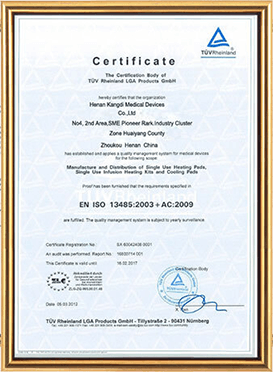
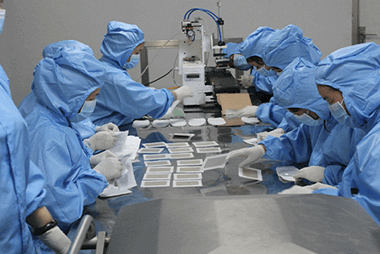
Henan Kongdy Medical Devices Co., LTD. (KONGDY) was founded in 1989 and has 37 years of production experience as of 2026 across pain relief patches, slimming patches, capsicum plasters, heat patches, cooling gel patches, detox foot patches, steam eye masks, mosquito repellent patches and nose strips. Headquartered in Henan, China, KONGDY operates a 100,000-class GMP workshop built in 2008 and obtained ISO 13485 medical device Quality Management System European Standard Certification in 2014. The company runs OEM and ODM services for international brands across multiple regulatory pathways.
For a 2026 procurement evaluation the qualification team can supply the ISO 13485 certificate, GMP workshop audit reports, stability programme documentation, and reference customer case studies upon request via our contact page.
Frequently asked questions
How long does an FDA inspection last?
The five windows recorded in this library run from three days to twelve days: twelve days for the case dated 2025-10-31, eleven for 2026-07-02, five for 2026-07-24, four for 2026-07-31 and three for 2026-05-29. The length reflects scope rather than severity, and all of them produce the same instrument. A slimming patch OEM should treat that as the working rule.
What is issued at the end of an inspection?
A Form FDA 483 listing the observations. It is given to the firm and is not published in the warning letters database, which is why the earliest signal about a supplier cannot be found by searching.
How long does the firm have to answer a Form FDA 483?
The published letters in this library do not impose a period on the 483 response. The fifteen business or working day period appears in the letters that follow, and it applies to the response to the warning letter itself. The two cases that record both dates show responses thirteen days and forty-seven days after the inspection ended, and both were periods the firms chose. A slimming patch OEM should treat that as the working rule.
Did the longer response help?
Not in the case recorded here. Both responses were found inadequate, and both for want of documentation rather than for want of time. The forty-seven day response lacked supporting documentation and a scientific justification for one of its own findings.
How long from the inspection to a public warning letter?
About five and a half to six and a half months across the four inspection cases in this library. That interval covers the agency assessing the 483 response and deciding whether to issue a letter, and it is the reason a clean register is not evidence that nothing happened.
How quickly is a warning letter published?
About eight days after its issue date, observed on 6 November 2026 for letters dated 26 October 2026. The register is current relative to the letters, and the letters are months behind the inspections.
What can be corrected at the closing meeting?
Factual errors and context. The closing meeting is where the draft observations are discussed with management before they are issued, and a factual correction made there is a finding that does not appear in the letter. What cannot be corrected there is the absence of a record that was never made.
What should a buyer ask for instead of the letter?
The Form FDA 483 if one exists, the scope recorded at the opening meeting, the 483 response with its date, and the release specification for the batch being purchased. A slimming patch OEM should treat that as the working rule. Those four answer questions the letter cannot, because the letter is written months later and only about what survived the response.
Related Guides
Five further references from the KONGDY knowledge base:
- Pain Relief Patch OEM: six warning letters compared
- Heat Patch OEM: twelve record gates from material to release
- Frequently asked compliance questions
- KONGDY OEM and ODM manufacturing services
- Detox Foot Patch OEM: the EU Safety Gate enforcement matrix


