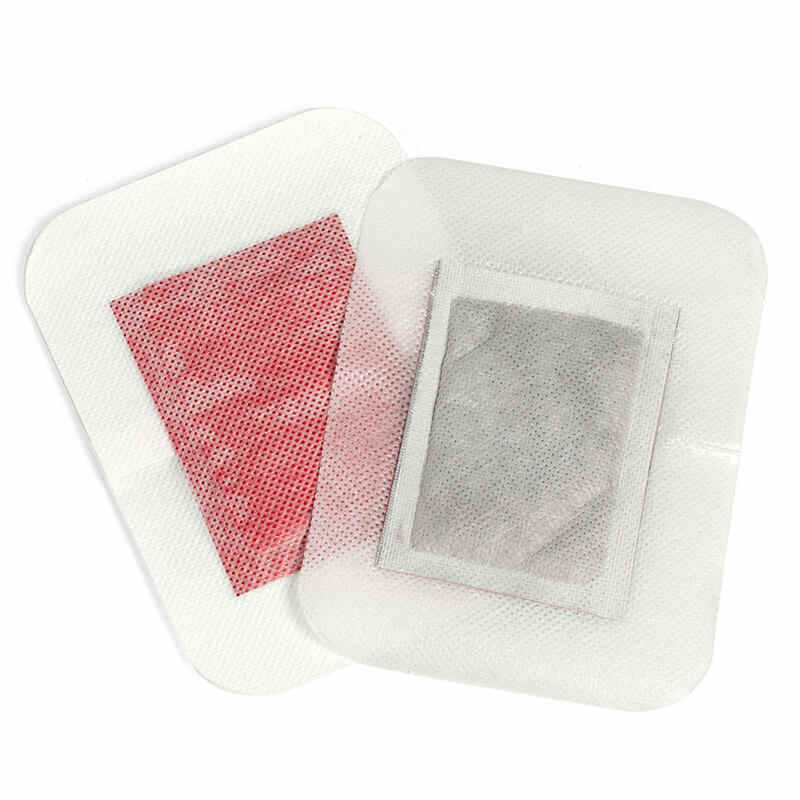
-
 KONGDY
Nine Document Gates to a Legal European Shelf: A Post-Launch Compliance Timeline for a Detox Foot Patch Manufacturer
Nine Document Gates to a Legal European Shelf: A Post-Launch Compliance Timeline for a Detox Foot Patch Manufacturer

A detox foot patch manufacturer should read the ownership column before the framework column, because ownership is what actually decides whether a gate closes.
A detox foot patch programme that wants a defensible answer to the question a European buyer eventually asks needs all nine gates closed, and it needs to be able to show which nine.
Nine document gates stand between a finished cosmetic patch and a product that is lawfully on a European shelf, and the order is fixed because five of them consume the output of an earlier one. A detox foot patch programme that runs them in sequence can be audited gate by gate. A programme that runs them in a different order still reaches a shelf, and the file that supports it cannot.
The framework is compact. Regulation (EC) No 1223/2009 supplies the substance rules, the product information file under Article 11, the labelling obligations under Article 19 and the responsible person under Article 10. Regulation (EU) 2023/988 supplies the general product safety frame in which market surveillance and the complaint loop operate. Everything in the path below sits inside those two instruments.
The article is written for a manufacturer rather than for a buyer, because the gates that fail in practice are the ones that belong to a different department. Gate 7 belongs to commercial, gate 8 belongs to customer service, and gate 9 belongs to nobody until somebody is given it. A detox foot patch programme that assigns all nine to the regulatory function will still fail at three of them.
No gate below carries a duration in days. None of the cited instruments states one, and a schedule built on invented intervals is a schedule that gets signed and then missed. What each gate does carry is the framework it answers to and the failure it prevents, because those are checkable.
Why the Sequence Is Fixed
Five dependencies make the order non-negotiable, and they are all downstream of a single decision: what the product is allowed to say.
| Dependency | Producing gate | Consuming gate | What breaks if reversed |
|---|---|---|---|
| The claim set | Gate 1 | Gates 3, 5 and 6 | The file and the label describe a product that is not the one being sold |
| The responsible person | Gate 2 | Gates 5 and 7 | A label that names a party who is not answerable for it |
| The substance list | Gate 4 | Gates 3 and 5 | The safety file rests on an ingredient list that has already changed |
| The product information file | Gate 3 | Gates 5, 8 and 9 | The label is released with nothing behind it |
| The distribution surface | Gate 7 | Gates 8 and 9 | The complaint loop and the re-review triggers cover the wrong channels |
The steps are also the natural order for a detox foot patch launch review, because a review that starts at the file and works backwards will find the claim set last and the substance screen never.
The dependency that surprises most people is the third, and it is the one a detox foot patch programme discovers late.
It is common to run the substance screening at the same time as the safety file, on the assumption that they are parallel activities. They are not, because the screening produces the list and the file consumes it, and a file written before the list is final is a file that has to be reopened.

The Nine Gates in One Table
A detox foot patch manufacturer should recognise the ownership split in this table before planning the launch meeting.
The whole path, with the owner, the framework and the failure each gate prevents.
| Gate | What happens | Owner | Framework | Failure it prevents |
|---|---|---|---|---|
| Gate 1: Fix the claim set and the route | Write the claims the product will make and the market it will be sold into, in one page | Brand with regulatory affairs | Regulation (EC) No 1223/2009 for the cosmetic route | a claim set that changes after the product information file is written |
| Gate 2: Name the responsible person | Identify the person or company answerable for the product in each market, and put it on the file | Regulatory affairs | Article 10 of Regulation (EC) No 1223/2009 | an entity named on the label that nobody answers for |
| Gate 3: Build the product information file | Compile the safety data, the substance list and the reasoning, and keep it current | Regulatory affairs with the quality unit | Article 11 of Regulation (EC) No 1223/2009, guided by the SCCS Notes of Guidance | a file written once and never revisited after a formulation change |
| Gate 4: Screen every input against the restriction list | Check each ingredient, fragrance, preservative and processing aid against the list in force | Quality unit with regulatory affairs | Article 22 and the annexes of Regulation (EC) No 1223/2009 | a declaration checked once at launch and never again |
| Gate 5: Release the label and the artwork | Match the label content to the file, the responsible person and the claim set | Regulatory affairs and brand | Article 19 of Regulation (EC) No 1223/2009 | artwork released before the file supports it |
| Gate 6: Publish the public copy and check every channel | Apply the approved sentences on the site, the marketplace listing and the distributor material | Brand and regulatory affairs | the claim set from gate 1 | a marketplace listing written by someone else |
| Gate 7: Map the distribution surface | Record the markets, channels and quantities the product reaches, and re-record them when they change | Commercial with regulatory affairs | Regulation (EU) 2023/988, which sets the general product safety frame | a distribution surface that grows without being re-examined |
| Gate 8: Operate the market surveillance and complaint loop | Capture, investigate and answer every complaint and every authority contact, and feed the result back into the file | Quality unit with customer service | Regulation (EU) 2023/988 and the Article 11 file | complaints handled as customer service issues rather than as safety data |
| Gate 9: Set the re-review triggers and hold them | Reopen the file when the formula, the market, the channel or the framework changes | Regulatory affairs | the list in gate 1, extended by what actually changes | a file that is complete at launch and unmanaged afterwards |
Two features of that table are worth noticing before the detail sections. First, only three of the nine gates belong to the regulatory function, which is the structural reason the path fails when it is owned by one department. Second, the last two gates are the only ones that are about the period after launch, and they are the two most often left unowned.
For a detox foot patch programme the table doubles as a request list. Each row names a document, and a buyer can ask for the row rather than for the system.

Gates 1 to 3: Claim, Responsible Person and the Safety File
A detox foot patch line reaches this block with one page and one name, and leaves it with a file.
The first three gates fix what the product is and who answers for it, and they are the gates that everything later quotes.
Gate 1, the claim set. One page naming the claims and the market. For a cosmetic route the claims have to stay inside the cosmetic boundary, because a therapeutic claim moves the product to a drug route with a different framework and a different label. This gate is one page and it is quoted by gates 3, 5 and 6.
Gate 2, the responsible person. Article 10 of Regulation (EC) No 1223/2009 requires a party established in the Union and answerable for the product. The gate fails in a specific way: an entity appears on the label, on the paperwork and on the marketplace listing, and nobody is employed to answer a question from a regulator or a consumer. A name is not a responsible person.
Gate 3, the product information file. Article 11 requires the safety information to be assembled and kept, and the SCCS Notes of Guidance set out what a competent assessment contains. For a detox foot patch line the file assembles the ingredient list, the safety reasoning and the claim substance. The failure mode is age: a file written once at launch describes the product that existed at launch and nothing after it.
Gates 4 to 6: Screening, Label and Public Copy
This block is where a detox foot patch manufacturer converts a file into product, and where two owners are needed rather than one.
These three gates turn the file into product, and each one quotes the one before it.
Gate 4, the substance screen. Every input is checked against the restriction list in force, and the check is dated. The 2026 record names four families that have produced notifications in the cosmetics category: fragrance allergens including BMHCA, processing residues from cure systems including TPO, the preservative strategy including formaldehyde, and botanical inputs including cannabinoids. All four are decided at formulation, which is what makes this gate cheap rather than expensive.
Gate 5, the label. Article 19 sets the labelling obligations, and the artwork has to match the file, the responsible person and the claim set simultaneously. The failure is release order: artwork goes to print while the file is still open.
Gate 6, the public copy. The approved sentences go out on the site, the marketplace listing and the distributor material, and they are checked rather than assumed. This is the gate that the public enforcement record reaches most easily, because a public page can be reviewed without a factory visit.
Gates 5 and 6 are the pair most often confused. They have different owners and different failure modes, and a programme that treats them as one usually has a compliant label and an uncompliant listing.

Gates 7 to 9: Distribution, Complaints and Re-Review
For a detox foot patch programme this is the block that most often has no named owner at all.
The last three gates govern the period after launch, and they are the ones that decide whether a compliant launch stays compliant.
Gate 7, the distribution surface. The markets, channels and quantities the product reaches are recorded and re-recorded when they change. The reason this gate exists in the regulatory frame is that the remedy for a finding depends on how far the product has travelled. The 2026 record shows the same substance producing a withdrawal, a sales stop, a destruction and a consumer recall, and the difference between those four is distribution rather than chemistry.
Gate 8, the complaint and surveillance loop. Complaints and authority contacts are captured, investigated and answered, and the result is fed back into the file. A complaint handled as a customer service issue produces a satisfied customer and no safety data, which is the worst of both outcomes.
Gate 9, the re-review triggers. A written list of the changes that reopen the file: the formula, the market, the channel, the framework and anything else the programme has learned to watch. For a detox foot patch line the last category is not theoretical, because the substance list is exactly the kind of document that changes quietly.
A programme that closes gates 1 to 6 and leaves 7 to 9 unassigned has built a launch rather than a system, and the difference appears in the first year rather than at the first review.

The Substance Screen in Detail
A detox foot patch manufacturer that keeps one dated sheet for gate 4 has closed the gate that the 2026 record shows failing most often.
Gate 4 carries more weight than its position in the sequence suggests, because it is the only gate where the work is entirely internal and entirely preventable.
| Input group | What the screen checks | The failure it prevents |
|---|---|---|
| Fragrance compounds | A dated allergen declaration for each compound against the list in force | A fragrance notification, which is what the 2026 record shows for perfumes |
| Processing and cure chemistry | What the adhesive and backing are cured with, and what carries over | A process aid arriving in the product and becoming a finding |
| Preservative system | The named system and its justification, with no prohibited releasing agent | A preservation decision made for shelf life and prohibited in the market |
| Botanical inputs | Botanical name, plant part and a dated status check | A botanical treated as natural rather than as a regulated substance |
The common property of the four groups is that each is an input decision made before the product exists, which is why the screen is cheap at formulation and expensive after a notification. A foot patch line programme that keeps one dated sheet with the status of every input has closed gate 4 for the current formula, and the sheet is the thing that makes gate 9 triggerable rather than theoretical.
Where the Path Breaks in Practice
For a detox foot patch programme the breakpoints below are the ones that show up in a requalification rather than in a launch review.
Four breakpoints account for most of the failures, and each one is visible from outside the regulatory function.
| Breakpoint | Symptom | What it looks like in the file |
|---|---|---|
| Between gates 1 and 3 | The claim set moves after the safety file is written | A file whose ingredient list and claim substance disagree |
| Between gates 4 and 3 | Screening happens after the file is assembled | An ingredient list in the file with no dated status beside it |
| Between gates 5 and 6 | The label is compliant and the listing is not | Two different descriptions of the same product, both live |
| Between gates 6 and 7 | A new channel is opened without re-recording the surface | A distribution record that lists two markets and three live listings |
The fourth breakpoint is the one that appears most often in practice and is the least visible, because nobody opens a new channel in order to update a compliance file. The fix is procedural rather than substantive: the channel list is part of the launch checklist, so opening a channel is an event that touches the file.
There is a fifth issue that is not a breakpoint but a gap. Nothing in the nine gates replaces the general product safety frame, and a product that is lawfully on a shelf can still be withdrawn. The 2026 record is a reminder of that: a notified cosmetic was withdrawn from the market, and the withdrawal followed the finding rather than any defect being demonstrated.

The Same Path for Adjacent Categories
The nine gates apply to any cosmetic product sold into the European Union, so the path transfers to adjacent lines with the claim set and the substance list swapped.
| Gate | What changes for an adjacent line | What does not change |
|---|---|---|
| Gate 1, claim set | The permitted claims differ by category | The rule that the claim set is written before anything else |
| Gate 4, substance screen | The input groups differ by formulation | The four input groups and the need for a dated status |
| Gate 5, label | The label content differs by category | Article 19 and the requirement to match the file |
| Gate 7, distribution | The channels differ by category | The recording of markets, channels and quantities |
| Gate 9, re-review | The trigger list differs by category | The principle that the list is written and owned |
The same structure also applies to a slimming patch OEM programme, a cooling gel patch OEM programme and a nose strip OEM programme, all of which sit on the cosmetic route for the same reason a foot patch does.
The reason the transfer works is that the gates describe regulatory artefacts rather than physical ones. A claim set, a responsible person, a safety file, a dated substance screen, a label, an approved copy block, a distribution record, a complaint log and a trigger list are the same nine artefacts whatever is inside the sachet, and a manufacturer that has built them for one line has built them for the next.
One line does not transfer, and it is worth naming because the failure is costly. A patch sold as a drug in the United States follows a different instrument entirely, with a prescribed Drug Facts label under 21 CFR Part 201.66 and a monograph that fixes the permitted actives and their concentrations. A programme that runs the European path and then reuses the result for the United States has changed route without changing paperwork.
About KONGDY Medical

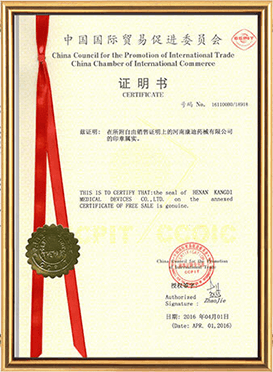
Henan Kongdy Medical Devices Co., LTD. (KONGDY) was founded in 1989 and has 37 years of production experience as of 2026 across pain relief patches, slimming patches, capsicum plasters, heat patches, cooling gel patches, detox foot patches, steam eye masks, mosquito repellent patches and nose strips. Headquartered in Henan, China, KONGDY operates a 100,000-class GMP workshop built in 2008 and obtained ISO 13485 medical device Quality Management System European Standard Certification in 2014. The company runs OEM and ODM services for international brands across multiple regulatory pathways. For 2026 procurement evaluation, the qualification team can provide the ISO 13485 certificate, GMP workshop audit reports, stability programme documentation, and reference customer case studies upon request via our contact page.
Frequently Asked Questions
Eight questions that follow from the nine gates.
Which regulation governs a cosmetic patch sold in the European Union?
Regulation (EC) No 1223/2009, with the responsible person under Article 10, the product information file under Article 11, labelling under Article 19 and substance restrictions under Article 22 and the annexes. Regulation (EU) 2023/988 supplies the general product safety frame for surveillance and complaints.
What is the first gate?
The claim set and the market. Everything downstream quotes it, so a decision taken later about what the product says has to be re-decided in four places.
Who should own the nine gates?
Not one function. The regulatory function owns the gates that produce regulated documents; commercial owns the distribution surface, customer service owns the complaint intake, and somebody has to own the re-review list.
What does the Article 11 file actually contain?
The safety information for the product, with the ingredient list, the reasoning behind the safety assessment and the claim substance, guided by the SCCS Notes of Guidance. Its defining property is that it has to be kept current.
How often should the substance screen be repeated?
At every formulation change, and the record should be dated each time. A declaration checked once at launch cannot answer a question about the current formula.
Why does the distribution surface belong in a compliance file?
Because the remedy for a finding depends on how far the product has travelled. The 2026 record shows the same substance producing a withdrawal, a sales stop, a destruction and a consumer recall, and distribution is the variable that differs.
Can the same file serve the United States?
No. A drug-claim product in the United States follows the OTC monograph and a Drug Facts label under 21 CFR Part 201.66, which is a different instrument with a different format requirement.
What happens if a complaint arrives?
It enters gate 8. It is captured, investigated and answered, and the result is fed back into the file. A complaint handled only as a customer service issue produces a satisfied customer and no safety data.
Related Guides
Four further references from the KONGDY knowledge base:
- Detox Foot Patch OEM: EU Safety Gate risk mapping
- Frequently asked compliance questions
- KONGDY OEM and ODM manufacturing services
- Slimming Patch OEM: cosmetic pathway documentation
- Pain Relief Patch OEM: qualification and documentation overview


