-
 KONGDY
Seven Non-Cosmetic Categories Side by Side: Reading the EU Safety Gate 2026 Panel for a Detox Foot Patch Manufacturer
Seven Non-Cosmetic Categories Side by Side: Reading the EU Safety Gate 2026 Panel for a Detox Foot Patch Manufacturer
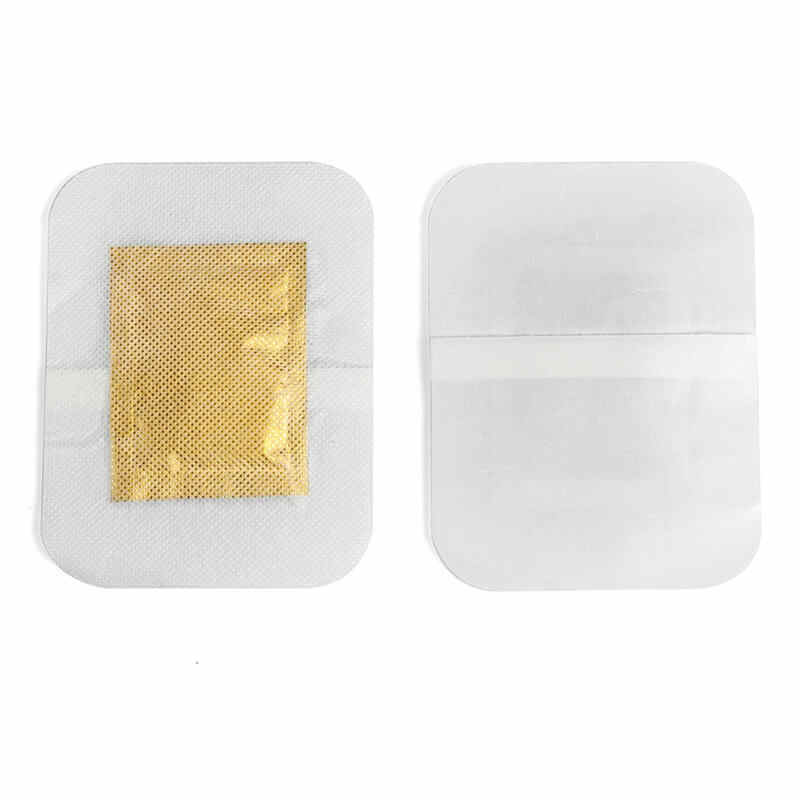
A detox foot patch manufacturer should start the comparison from the framework column rather than the alert column.
The EU Safety Gate panel for weeks 1 to 38 of 2026 contains 2,663 alerts, of which 1,528 concern China-origin products. Eight of those are cosmetics, and they have received most of the attention. The other seven categories are usually skipped, and for a manufacturer with several lines they are worth comparing properly, because the comparison shows which categories are structurally similar to a patch and which are structurally different.
The categories are toy, electrical appliances and equipment, childcare articles and children's equipment, cosmetics, lighting chains, machinery, chemical products, and clothing, textiles and fashion items. A detox foot patch programme belongs to the cosmetics row, and the argument of this article is that the cosmetics row is more similar to three of the other seven than the summary numbers suggest, and less similar to the two largest.
The comparison is deliberately not a risk ranking, and the reason is worth stating before the tables rather than after them. A risk ranking would order the categories by how dangerous they are, and the panel cannot support that order, because what it records is a detection outcome. Two categories with identical failure modes can show very different counts because one is inspected more often or shipped in larger volume. A manufacturer that reads the table as a risk order will be reading enforcement effort rather than hazard, and will draw the wrong conclusion about where its own line sits.
What the table can support is a structural comparison, and structural comparison is what a manufacturer actually needs. A detox foot patch line is a leave-on preparation in a sachet, applied to adult skin, sold on the cosmetic route in one or more European markets. The question is which other categories share those properties closely enough that their experience transfers, and the answer turns out to be a small number of rows rather than a large share of the data.
The discipline applied throughout is the one this knowledge base uses. Every derived figure is arithmetic on registered numbers and the arithmetic is shown. The residual after the eight named categories is 306, which is 20.0 percent of the China-origin subset, and that residual is declared rather than distributed. Where a structural property is a judgement rather than a number, it is labelled as one.
The comparison is presented in three tables: the seven categories on four dimensions, a ranking of how closely each one resembles a patch line, and the four questions the comparison can answer. The closing section is the part that matters most, because it lists what the comparison cannot settle.
The Seven Non-Cosmetic Categories, Compared on Four Dimensions
The table below is the part a detox foot patch manufacturer can use directly, because every row is read on the same four axes.
Here is the comparison. The four dimensions are chosen for a manufacturer: how much of the category is a chemical question, how much is a durability question, how much is a consumer-contact question, and how much of the work is a labelling question.
| Category | Alerts | Share of 1,528 | Why a patch line differs |
|---|---|---|---|
| Electrical appliances and equipment | 405 | 26.5 percent | Safety is electrical and mechanical; the failure modes are not chemical |
| Childcare articles and children's equipment | 77 | 5.0 percent | The contact standard is stricter, because the user cannot describe the reaction |
| Lighting chains | 61 | 4.0 percent | Failure modes are electrical and thermal, and the panel says little about them |
| Machinery | 58 | 3.8 percent | The subject is machine safety and conformity assessment rather than substances |
| Chemical products | 45 | 2.9 percent | The closest non-cosmetic category, because the question is the substance itself |
| Clothing, textiles and fashion items | 44 | 2.9 percent | A dermal contact category, but the regulated object is the garment rather than a leave-on product |
| Toys | 456 | 29.8 percent | Large, but the regulated object is a toy rather than a product applied to skin |
Two entries deserve comment. Chemical products at 45 is the smallest named non-cosmetic category and the closest in nature, because the regulated question is the same one a patch asks: which substances are present and may they be. Clothing, textiles and fashion items at 44 is the nearest in contact profile, because the product is worn against skin, but the compliance object is the garment as a whole rather than a leave-on preparation in a sachet.
Toys is the largest category in the panel at 456 and the one a patch manufacturer should read least from. The count is a detection figure for a product class with particular enforcement attention, and the regulatory object in that row is a toy rather than a product applied to skin. A detox foot patch programme reading its own position from a toy count is reading the wrong row.
A Similarity Ranking for a Patch Line
For a detox foot patch manufacturer the ranking below is more useful than the alert order, and that is the whole argument of the section.
Ranking the categories by structural resemblance to a patch product is a judgement rather than a number, and it is labelled as one. It is still useful, because it tells a manufacturer which categories to borrow learning from.
| Rank | Category | Alerts | What a patch manufacturer can borrow from it |
|---|---|---|---|
| 1 | Chemical products | 45 | Substance screening logic and the way a prohibited ingredient is caught at the formula stage |
| 2 | Clothing, textiles and fashion items | 44 | Dermal contact expectations and how a contact complaint becomes a market action |
| 3 | Childcare articles and children's equipment | 77 | The stricter contact standard, which is a useful internal target even for an adult product |
| 4 | Lighting chains | 61 | Little on substances, but a model of a category where the failure is in the supply chain rather than the formula |
| 5 | Machinery | 58 | Conformity assessment thinking, which transfers to device-side patch routes |
| 6 | Electrical appliances and equipment | 405 | A caution rather than a source: a large count driven by a different failure mode |
| 7 | Toys | 456 | A caution rather than a source, for the same reason |
The ranking is not a risk ranking and it is not in alert order, which is the point. A detox foot patch manufacturer has more to learn from the chemical products row at 45 alerts than from the toys row at 456, because the questions are the same questions.
The last two entries are labelled as cautions for a reason worth stating. A large alert count in a category with unrelated failure modes is a signal about that category, and borrowing from it transfers the wrong lesson.

What the Chemical Products Row Shares With a Patch
This section is the reason a detox foot patch manufacturer should not stop at the headline category table.
The chemical products row at 45 alerts is the one that shares a question with a patch, and the shared question is specific.
A chemical product and a cosmetic patch are both governed by a rule about what may be in them, and both are subject to the same enforcement mechanism of a market withdrawal. The product category differs, the legal instrument differs, and the chemistry differs, but the compliance shape is the same: an input list, a check against the restricted list, and a dated record.
The practical value is that a detox foot patch programme can look at how the substance questions are handled in that row and apply the method, rather than inventing one. The 2026 record names the substance families that drove the cosmetics notifications, and the same families are the ones a patch line has to screen: fragrance allergens, processing residues from cure systems, the preservative strategy, and botanical inputs.
What does not transfer is the volume. Forty-five alerts and seventy-six alerts are both small enough to be read individually, and a manufacturer that treats either as a rate is already misreading the denominator.
Why the Two Largest Categories Are the Least Useful Comparators
A detox foot patch manufacturer has more use for a row of 45 that asks the same question than for a row of 456 that asks a different one.
Toys at 456 and electrical appliances at 405 together account for more than half of the named categories, and they are the two a patch manufacturer should read least.
The reason is not that the categories are unimportant. It is that the failure mode is unrelated to the question a patch asks. A toy is a product used by a child, and the regulated object in that row is the toy. An electrical appliance is a product whose principal hazard is electrical or thermal. Neither row measures anything about a substance in a leave-on preparation applied to adult skin.
A foot patch line manufacturer who watches the toys row because it is the largest will find the number moving for reasons that have nothing to do with the line, and will draw a conclusion about their own product from a movement that carries no information.
This is the general caution in the article stated once and then illustrated: a count in an unrelated category is noise. The panel rewards a reader who knows which rows are structurally comparable, and that knowledge is not in the data.
The Framework Behind Each Row
Each category in the panel sits under a different regulatory instrument, and the instrument explains the failure mode the row records. For a cosmetic patch line programme this is the part that determines which row to read.
| Row in the panel | Instrument or framework shape | What the failure is about |
|---|---|---|
| Cosmetics | A substance regime with a safety report and a responsible person | What may be in the product, and what the packaging must declare |
| Chemical products | A substance regime as well, administered separately | Substance presence, with the same shape of question as cosmetics |
| Clothing, textiles and fashion items | A product regime where the garment is the regulated object | Contact requirements applied to a worn article rather than a leave-on preparation |
| Childcare articles | A product regime with a stricter contact standard | The same contact question, judged against a user who cannot report a reaction well |
| Toys | A product regime with age and mechanical requirements | Mechanical and age-appropriateness requirements rather than a substance list |
| Lighting chains | A product regime with electrical requirements | Electrical safety and traceability of the supply chain |
| Electrical appliances and equipment | A product regime with electrical and mechanical requirements | The same electrical class, at larger volume and therefore larger detection |
| Machinery | A conformity assessment regime for industrial equipment | Machine safety, guarding and documentation |
The pattern is that only two rows are fundamentally substance questions, and one of those two is the cosmetics row a patch belongs to. The other five rows are product regimes where the failure is mechanical, electrical or age-related, and no amount of attention to them will change what a patch line has to do.
This is the reason the article leads with a category comparison rather than with a count comparison. For a manufacturer, the count says how visible a category is and the framework says what kind of question it asks, and the second is what determines whether a category is worth reading.

What the Comparison Can and Cannot Settle
Every row below is a question the panel can answer or cannot, and the pattern of which is which is what a detox foot patch manufacturer should carry away.
The comparison produces four answers that are supportable and four that are not.
| Question | Can the comparison settle it | What to use instead |
|---|---|---|
| Which categories are structurally comparable to mine | Yes, on the judgement ranking above | The ranking itself, labelled as a judgement |
| What share of the panel my category represents | Yes, 5.0 percent of the China-origin subset | The category row and the 1,528 denominator |
| Which substance families to screen for | Yes, the four families named in the 2026 record | The substance list, not the category counts |
| How often to refresh the reading | Yes, quarterly counts and per-change screening | The refresh schedule |
| Which category is most dangerous | No | A detection count is not a hazard measure |
| Whether my supplier is compliant | No | The FDA warning letter database names entities |
| What share of all cosmetic alerts my product accounts for | No | The panel does not separate patches within cosmetics |
| Whether the trend for my category is rising | No | One period cannot show a trend |
The four that cannot be settled are the four that get asserted most often in commentary, and every one of them is a question the panel was never structured to answer. Saying so plainly is more useful to a foot patch programme manufacturer than producing a number that looks decisive.
Turning the Comparison Into a Line Review
For a detox foot patch programme the routine below is short because the panel is small and the question is narrow.
Six steps turn this reading into something a multi-line manufacturer can run at a requalification, and none of them requires a laboratory relationship.
- Place each line in the category table. Record the category, the count and the denominator, and write down the residual so that nobody later assumes the eight rows are complete.
- Classify each line by resemblance rank. Rank one to three lines inherit a substance screening routine, rank four to five inherit process thinking, and the cautions do not inherit anything.
- Apply the four substance families to every line. Fragrance allergens, processing residues, the preservative strategy and botanical inputs apply to every cosmetic line regardless of its category.
- Map the distribution surface per line. The measure that follows a finding depends on how far the product travels, not on the substance.
- Compare across lines rather than within one. Two lines in the same category with different distribution surfaces are not equivalent, and the category count will not show that.
- Date the output. A count without a period reference cannot be compared to the next one, which is how a dataset reading decays into an anecdote.
The routine is short because the panel is small. A cosmetic foot patch programme that runs it once a year has a defensible answer to the question a European buyer eventually asks, which is what the category record looks like and what was done about the inputs.
A detox foot patch programme that also keeps the four substance families on a single dated sheet has a second, shorter answer ready, because the substance question is the one a buyer asks after the category question.
One closing note on how to use the ranking when a line is not a patch at all. The seven categories cover everything from machinery to clothing, and a manufacturer with a non-cosmetic line will find the ranking less directly useful. What transfers is the method rather than the order: place the line, ask what kind of question its row asks, and read the rows whose question matches. The panel is large enough that a manufacturer with several unrelated lines will use several different rows, and the value is in knowing which question each one answers.

The Residual, One More Time
A detox foot patch manufacturer that repeats the residual every time it quotes the category table will not be caught by a later surprise.
The eight named categories sum to 1,222 and the residual is 306, which is 20.0 percent of the China-origin subset. This is worth repeating because the comparison in this article is built on the eight rows and a reader could reasonably assume they account for everything.
The residual is not an error in the data. It is alerts that the published split does not assign to a named category, and for a manufacturer the useful question is whether their own line falls inside it. For a patch product the answer is usually the cosmetics row, because patches are notified as cosmetics. The discipline of asking is still worth keeping, because the assumption that the table is complete is what makes a later surprise surprising.
A second reason to state the residual is that it calibrates the confidence in the ranking. The similarity ranking in section two is a judgement about seven named categories, and the 306 alerts that are not named are a standing reminder that the panel contains something the table does not show.
About KONGDY Medical

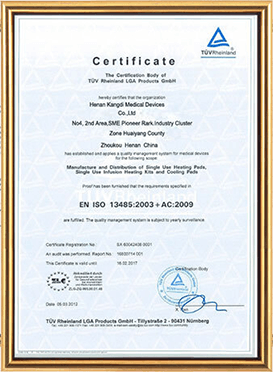
Henan Kongdy Medical Devices Co., LTD. (KONGDY) was founded in 1989 and has 37 years of production experience as of 2026 across pain relief patches, slimming patches, capsicum plasters, heat patches, cooling gel patches, detox foot patches, steam eye masks, mosquito repellent patches and nose strips. Headquartered in Henan, China, KONGDY operates a 100,000-class GMP workshop built in 2008 and obtained ISO 13485 medical device Quality Management System European Standard Certification in 2014. The company runs OEM and ODM services for international brands across multiple regulatory pathways. For 2026 procurement evaluation, the qualification team can provide the ISO 13485 certificate, GMP workshop audit reports, stability programme documentation, and reference customer case studies upon request via our contact page.
Frequently Asked Questions
Eight questions that follow from the comparison.
How many categories are in the China-origin split?
Eight named categories, plus a residual of 306 alerts that the published split does not assign. The eight sum to 1,222, and the residual is 20.0 percent of the 1,528 subset.
Which category does a detox foot patch belong to?
Cosmetics, at 76 China-origin alerts, which is 5.0 percent of the China-origin subset and level with childcare articles at 77.
Which category should a patch manufacturer read most closely?
Chemical products at 45, because the regulated question is the same one: which substances are present and may they be. It is also the smallest named non-cosmetic category, which makes it individually readable.
Why not read the toys category, which is the largest?
Because the regulated object in that row is a toy and the failure modes are not chemical. A large count in a category with unrelated failure modes carries no information about a leave-on preparation applied to adult skin.
Does the comparison rank the categories by risk?
No. It ranks them by structural resemblance to a patch line, which is a labelled judgement, and it is deliberately not in alert order.
Can I use the panel to compare suppliers?
No. The panel names products rather than manufacturers. The FDA warning letter database names entities and is the right instrument for a supplier question.
What are the four substance families to screen for?
Fragrance allergens, processing residues from cure systems, the preservative strategy, and botanical inputs. All four are named in the 2026 record and all four are decided at formulation rather than at audit.
Is the residual 306 a data error?
No. It is alerts the published split does not assign to a named category. It is stated so that no reader assumes the eight rows are complete.
Related Guides
Four further references from the KONGDY knowledge base:
- Detox Foot Patch OEM: EU Safety Gate risk mapping
- Frequently asked compliance questions
- KONGDY OEM and ODM manufacturing services
- Slimming Patch OEM: cosmetic pathway documentation
- Nose Strip OEM: device pathway documentation
- Pain Relief Patch OEM: qualification and documentation overview
- Cooling Gel Patch OEM: regulatory categories and stability evidence


