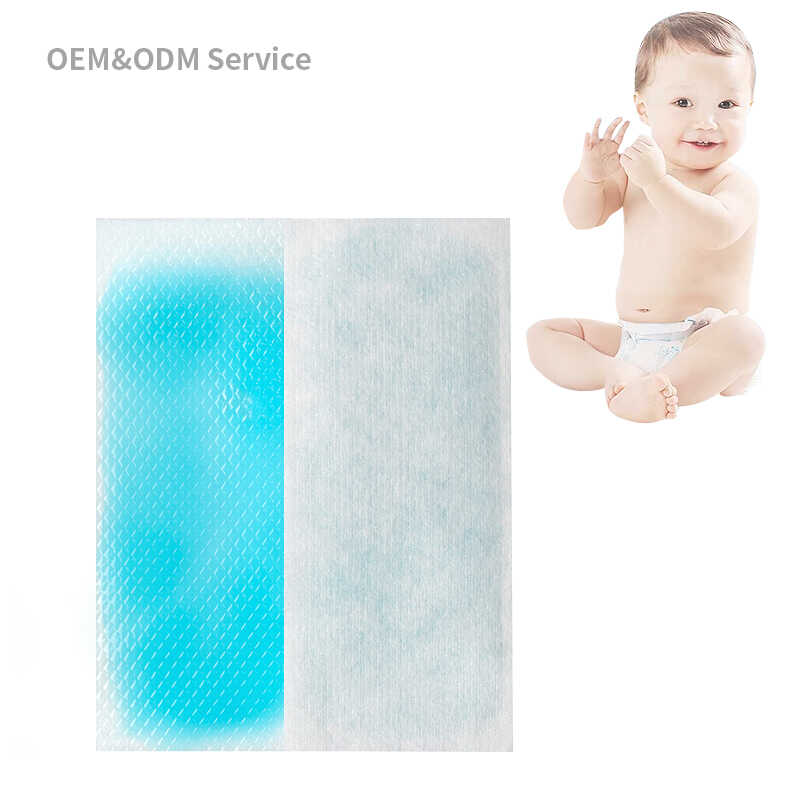
-
 KONGDY
How to Tell a Factory from a Trader: Four Supplier Types Compared for a Cooling Gel Patch OEM in 2026
How to Tell a Factory from a Trader: Four Supplier Types Compared for a Cooling Gel Patch OEM in 2026
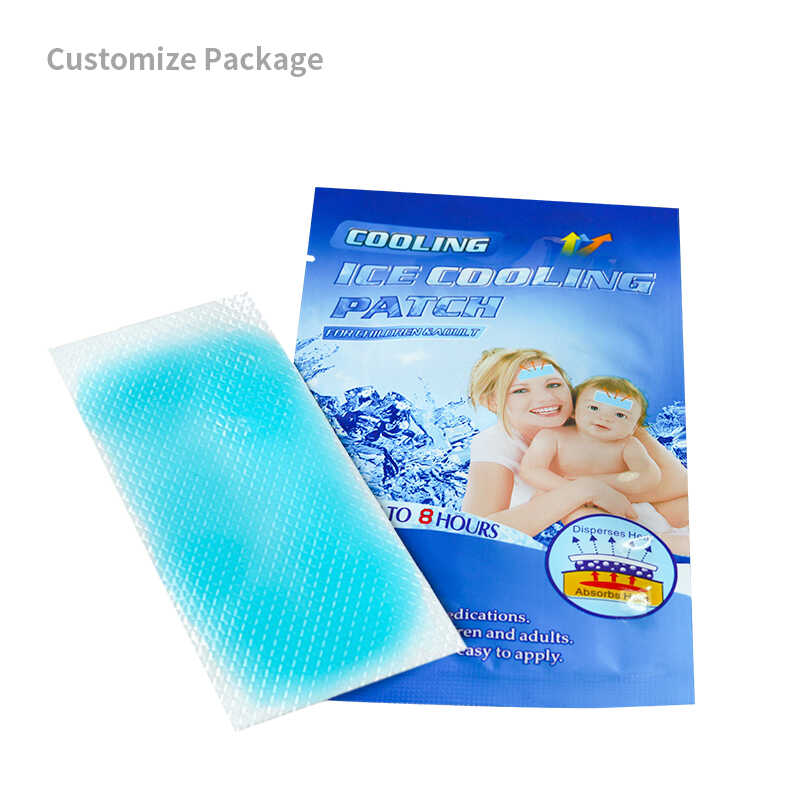
The same product can reach you through four different businesses, and the four of them can all send you a certificate, all of them can send you a sample that works, and all of them can quote a price that is lower than the factory.
They are not the same thing, and the difference is not a matter of quality. It is a matter of what each one can actually give you when something goes wrong.
The evidence for this is in two warning letters issued on the same day. On 1 October 2026 the agency wrote to Amazon.com, Inc. and to Walmart, Inc. about products that both companies had sold. The agency had found them by buying the products from the two websites in July 2026 and reviewing the labelling.
The nine products in the Amazon letter include Herstat GST and Terragen HG Formula, and the three products in the Walmart letter are HClear for him, Herstat GST and Terragen HG Formula. Both manufacturers of those two products were separately sent letters. That is a complete responsibility chain, assembled from five letters, and it is the first one this library has been able to build.
For a cooling gel patch OEM buyer the four types below are four different businesses with four different answers to the question that matters, which is who is responsible when the product is wrong.
1. The four types, and the one question that separates them
The separating question is not about quality and it is not about price. It is about who signs the batch release.
| The type | What it is | Who signs the batch release |
|---|---|---|
| A factory or contract manufacturer | The business that owns the equipment, makes the product and runs the quality unit that releases each batch | Its own quality unit, before dispatch |
| A trading company or agent | The business that buys from a factory and resells, and that may or may not have visited the plant | The factory quality unit, for the trading company to pass on |
| A marketplace seller | The business that lists the product on a platform and ships the customer, which may be the brand, the factory or a third party | Wherever the release happens, which is often several thousand kilometres from the customer |
| A private label brand owner | The business that owns the label and the formulation and buys the manufacturing | The factory quality unit, on the brand owner specification |
The third column is the one that matters, and the third row is the one that surprises people. A marketplace listing tells a buyer who owns the brand and who ships the parcel, and it does not tell the buyer who released the batch. For a cooling gel patch OEM the practical version is that the type of supplier decides what the buyer can ask, and a cooling gel patch OEM that bought from a listing has bought a listing.
A cooling gel patch OEM that buys from a marketplace listing rather than from a named supplier has not bought a supplier at all, and the rest of this comparison is the difference that makes.
2. The matrix: ten questions across four supplier types
This is the whole comparison in one table, and it is designed to be printed and used with a supplier questionnaire rather than read as an essay.
| The question | Factory | Trading company | Marketplace seller | Private label owner |
|---|---|---|---|---|
| Who is the legal counterparty | The manufacturer, with its own facility identifier and address | The trading entity, which is not the manufacturer | Often several entities, and the listing may be operated by a third party | Your own company or a brand entity you own |
| Who released the batch | Its own quality unit | The factory, one step removed from you | Unknown in most cases, and not on the listing | The factory, on your specification |
| Batch records available | Yes, in the normal course | Usually forwarded if the relationship is close | Not normally available | Yes, if the contract requires them |
| Process validation evidence | Yes, for each line | Only what the factory chooses to send | No | Yes, if the contract requires them |
| Stability data for the marketed pack | Yes | Only what is forwarded | No | Yes, if the contract requires them |
| Site audit access | Straightforward, and expected | Depends entirely on the relationship | Effectively none | Depends on who holds the contract |
| Who carries a recall | The manufacturer, in its own name | Unclear until the contract says so | The platform, the seller or the manufacturer, split in ways the customer cannot see | Split, and usually not written down |
| Formula and artwork ownership | Usually yours, if the contract says so | Ambiguous, and often the trader claims it | Whatever the listing says, which is not a contract | Yours, because you own it |
| Notice of process or site change | Possible to contract for | Possible if the factory agrees to pass it on | Not possible | Possible, and the reason to hold the contract |
| Cost when something fails | Usually a negotiation, and often the cheapest path | Usually a negotiation | Usually a refund, which is not a remedy | Usually a negotiation |
The seventh row is the one that has no good answer in two of the four columns, and it is the row a buyer should read twice.
The eighth row is the one that quietly decides ownership. A formulation that a trading company developed and claims to own is a formulation you may not be able to take to a second supplier, and that is a commercial trap rather than a legal one.

3. The legal counterparty, and the identifier that pins it down
A named legal entity is not enough. You need the entity and the facility.
The warning letters in this library identify the inspected party by a facility identifier in addition to a name and an address. In the case of Dixon Investments Inc. dba ARI the letter names the facility identifier 1037559 at 2523 South McDonough Road, Orchard Hill, and addresses it to Mr. Dixon.
| What to ask | What you are trying to establish | Why it matters |
|---|---|---|
| The legal name of the manufacturing entity | Which company actually makes the product | A trading name is not a company and cannot be sued |
| The facility identifier and the site address | Which physical plant runs the line | A company with three sites has three quality systems |
| Whether the entity is the one in the inspection records | Whether the site you are auditing is the site that was inspected | The same company name can sit over several unrelated sites |
| The relationship between the entity and the brand | Who owns the formula and who owns the label | It determines who can be made to change something |
The third row is the one that connects the four supplier types. A factory group that has been inspected at one site has told you about one site, and a buyer who has read the letter and assumed it covers the site they are buying from has made an assumption the letter does not support. A cooling gel patch OEM that is given a letter about one plant has been given one plant.
A cooling gel patch OEM that gives you the entity, the facility identifier and the address of the line you are buying from has made it possible to check anything at all, and the three are a single question that is usually answered in a single email.

4. The evidence each type can produce
The difference in this row is not about willingness. It is about possession.
The factory letter shows what a factory produces when it is asked. The same case required a detailed summary of the validation program, a timeline for process performance qualification for each marketed product, process performance protocols and written procedures for qualification of equipment and facilities, stability-indicating methods, studies in the marketed container-closure system before distribution is permitted, an ongoing program adding representative batches each year, and a complete and final review of each batch before the quality unit disposition decision.
| The type | What it can produce on request | What it usually produces |
|---|---|---|
| Factory | Batch records, validation summaries, stability studies, quality unit procedures, inspection history | All of it, once the buyer asks properly |
| Trading company | Whatever the factory has agreed to pass on | Certificates and test summaries, rarely the underlying records |
| Marketplace seller | Almost nothing, because the listing is not a relationship | A storefront, a shipping record and a refund |
| Private label owner | Everything, because the contract is theirs | Everything, provided they asked the factory for it first |
The third row of the second column is the one that has caught buyers. A test summary is a document about a product, and a batch record is a document about a batch, and only one of them tells you what happened to the batch you received. A cooling gel patch OEM that accepts the first has no way of finding out about the second.
The fourth row is the quiet advantage of being the brand owner, and it is the reason the private label route is not the same risk as the marketplace route even though both of them buy from a factory.
A cooling gel patch OEM that receives test summaries instead of batch records is being given the weaker of the two documents and usually does not know it.

5. How deep the audit can go
Four different depths, and they are not comparable.
| The type | The deepest audit available | What the audit cannot reach |
|---|---|---|
| Factory | The floor, the records, the quality unit and the release decision | Nothing inside the site, if the site is the right one |
| Trading company | The office, the file and the factory if the factory agrees | The line, the plant and the release record, unless the trader has already been inside |
| Marketplace seller | The seller, if the seller answers | Everything, because there is no contractual relationship to enforce |
| Private label owner | Whatever the contract with the factory permits | The same limit, plus whatever the factory is willing to show |
The second row is the one to look at closely. A trading company can host an audit of itself and satisfy it completely, and the plant can still be somewhere the buyer has never been.
The answer in that row, and the reason it is written the way it is, is visible in the factory case in this library. That firm had not performed process validation for its over-the-counter aerosol products, and had not tested an adequate number of batches under its own written stability procedure. Both were repeat violations noted in previous inspections, and the quality control unit had failed to exercise its responsibility for change controls, batch record release and corrective and preventive action, for review of control records before release and distribution, and for cleaning and maintenance of drug manufacturing equipment.
A cooling gel patch OEM buyer who audits a trading company and stops there has audited the party with the least exposure to any of those findings.

6. Who carries the consequence
This is where the three-letter chain from October 2026 becomes a tool rather than an anecdote.
| The product | A manufacturer letter | A platform letter | What the chain shows |
|---|---|---|---|
| Herstat GST | Yes, one letter to the manufacturer | Appears in both platform letters | The manufacturer and both platforms were each told about the same product |
| Terragen HG Formula | Yes, one letter to the manufacturer | Appears in both platform letters | The same three-party chain, for a different product |
| HClear for him | No manufacturer letter in this library | Appears in both platform letters | Two parties were told, and the manufacturer is not the one who was missing |
The third row is the interesting one. The absence of a manufacturer letter for that product is a fact about this library and not a fact about the world, and a buyer reading a chain like this needs to know the difference between a letter that does not exist and a letter that has not been issued yet.
The first row is the practical one. Three parties were each informed about one product, and each of them will answer for their own part of it, and none of them will answer for the other two.
A cooling gel patch OEM buyer who has only one of those three relationships has only one third of the answer, and the two thirds that are missing are the two thirds that carry the recall.

7. Change, formula ownership, and the contract that survives
Three clauses, and they are the three that decide whether a supplier type is manageable.
| The clause | What it must cover | Why the type changes the difficulty |
|---|---|---|
| Right to audit, including sub-suppliers | The factory site and every site above it, with notice period and frequency | Only the factory can be audited directly, so a trader or a seller has to pass the right through |
| Change notification | Advance notice of a change to the process, the site, the formulation or the quality unit | The more intermediaries, the more steps a notice has to travel through |
| Defect, notification and recall | Who notifies, who executes, who pays, and the decision route | The party that holds the batch record is the only one who can execute a targeted recall |
The third row of the third column is the one that decides everything. A recall is executed by tracing batches, and a party that does not hold the batch records cannot trace them, whatever the contract says. Every cooling gel patch OEM that has ever been asked to recall a lot has had that conversation with the party that held the records.
The second row explains why the clause is hardest for the longest chain. A change notice that has to pass from factory to trader to platform to customer has four opportunities to be lost and none of them are visible to the buyer at the other end.
A cooling gel patch OEM that holds the contract with the factory directly has the shortest chain and the fewest places for a notice to disappear, and that is worth more than a price difference between the supplier types.
8. Where a cooling gel patch actually sits
The four types are not equally common in this product category, and the reason is the gel itself.
A cooling gel patch is a non-sterile product with a water-based matrix, and it is sold on claims that sit close to the boundary between a cosmetic and a drug. That combination has two consequences for supplier selection.
| The feature of the product | What it means for the supplier type |
|---|---|
| A water-based gel matrix | The plant has a water system, a cleaning regime and a microbial control programme, and all three are site-specific and inspectable |
| Claims that sit on the cosmetic and drug boundary | The label and the marketing material have to be reviewed against the regulatory route, and that review belongs to whoever owns the claim |
| A retail channel that rewards price and speed | This is where marketplace sellers and trading companies enter, and it is where the audit becomes optional |
| A product that can be reordered from another plant in weeks | The brand owner has a substitution option, and that option is the reason to own the formula and the artwork rather than buy them |
The third row is the one that explains the commercial reality. Suppliers of the second kind are cheaper because they carry less of the risk, and the buyer who wants the price should understand that the difference has not disappeared, it has been moved onto the buyer.
The fourth row is the practical defence. A brand owner who owns the formula and the artwork can move production, and a brand owner who bought the formula from a trading company may not be able to. A cooling gel patch OEM that has the artwork under its own name has a substitution option that a cooling gel patch OEM without it does not.
For a cooling gel patch OEM the conclusion is that the supplier type is decided by the claim and by who owns the artwork, and the inspection route is decided by the product.

9. What this comparison settles and what it does not
An honest boundary statement, because a comparison this tidy invites the reader to over-read it.
| It settles | It does not settle |
|---|---|
| Which type can produce which evidence, and where | Whether any particular factory is good, which is a question about a site rather than about a business type |
| Where the batch release decision sits in each chain | What the release decision actually was on any particular batch |
| Which party can execute a targeted recall | How long a recall would take in any given case |
| Which type gives the buyer the shortest notice path | Whether the notice will arrive |
| Why a certificate from a trader is not the same as a record from a factory | The contents of any particular document |
The second row of the first column is the one that matters most for a buyer, because the type tells you where to look and not what you will find. Two manufacturers of the same type can differ more than two suppliers of different types. A cooling gel patch OEM that skips the site inspection on the strength of a matrix has skipped the only part that produces an answer.
A cooling gel patch OEM that treats this comparison as a screening tool rather than a decision will use it correctly, and a cooling gel patch OEM that treats it as a decision will skip the site inspection that the comparison exists to make worthwhile.
About KONGDY Medical

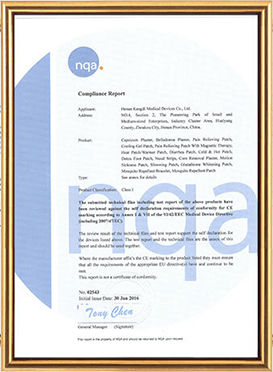
Henan Kongdy Medical Devices Co., LTD. (KONGDY) was founded in 1989 and has 37 years of production experience as of 2026 across pain relief patches, slimming patches, capsicum plasters, heat patches, cooling gel patches, detox foot patches, steam eye masks, mosquito repellent patches and nose strips. Headquartered in Henan, China, KONGDY operates a 100,000-class GMP workshop built in 2008 and obtained ISO 13485 medical device Quality Management System European Standard Certification in 2014. The company runs OEM and ODM services for international brands across multiple regulatory pathways.
For a 2026 procurement evaluation the qualification team can supply the ISO 13485 certificate, GMP workshop audit reports, stability programme documentation, and reference customer case studies upon request via our contact page.
Frequently asked questions
What are the four supplier types?
A factory or contract manufacturer that owns the equipment and the quality unit that releases each batch, a trading company that buys and resells, a marketplace seller that lists and ships, and a private label brand owner that owns the label and buys the manufacturing.
What is the single question that separates them?
Who signs the batch release. In a factory and a private label arrangement that is the quality unit of the manufacturing site, in a trading company it is the factory one step removed, and in a marketplace listing it is usually not disclosed at all.
Why is a certificate from a trading company not enough?
Because it is a document about a product rather than a document about a batch, and because it reaches you through a party that did not examine the underlying records. Batch records, validation summaries and stability studies are the documents that answer the questions a buyer actually has.
Can I audit a trading company?
Yes, and it will usually satisfy the audit, and it will still leave the plant unaudited. The useful question is not whether the trader can be audited but whether the audit right reaches the manufacturing site and every site above it.
Who carries a recall in each type?
In a factory arrangement, the manufacturer in its own name. In a private label arrangement, a split that is usually not written down. In a trading company arrangement, unclear until the contract says so. In a marketplace arrangement, split across the platform, the seller and the manufacturer in ways the customer cannot see, and the party that holds the batch records is the only one that can execute a targeted recall.
What does the three-party chain in the October 2026 letters show?
That Herstat GST and Terragen HG Formula each appear in a manufacturer letter and in both the Amazon and the Walmart letters, while HClear for him appears in both platform letters with no manufacturer letter in this library. It shows that one product can sit in three regulatory relationships at once and that each party answers only for its own part.
How did the agency find the products in those two letters?
By purchasing them. The agency bought the products from www.amazon.com and from www.walmart.com in July 2026 and reviewed their labelling, and both letters required a written response within fifteen working days. That is a method available to any buyer with a credit card.
What is the most useful single question to ask a new supplier?
Ask for the legal name of the manufacturing entity, its facility identifier and the site address of the line that will make the product. One email answers it, and without it nothing else about the supplier can be checked.
Is the type more important than the factory?
No. The type tells a buyer where to look and not what will be found, and two manufacturers of the same type can differ more than two suppliers of different types. The comparison is a screening tool that decides whether a site inspection is worth the trip.
What should go into the contract first?
The right to audit including sub-suppliers, advance notification of changes to the process, the site, the formulation or the quality unit, and the defect, notification and recall route with named responsibility. Those four decide whether a supplier type is manageable.
Related Guides
Five further references from the KONGDY knowledge base:
- Cooling Gel Patch OEM: the glycerin and DEG questions
- Capsicum Plaster OEM: twelve questions to ask before you sign
- Pain Relief Patch OEM: what an FDA site inspection looks like
- Frequently asked compliance questions
- KONGDY OEM and ODM manufacturing services


