-
 KONGDY
How Does Custom Medical Cooling Gel Patch Development Benefit from Qualified OEMs?
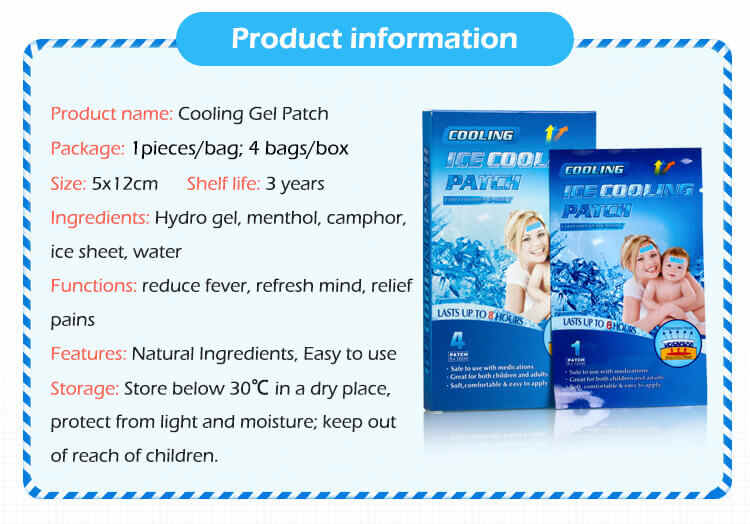
In the competitive healthcare and personal care markets, brands are increasingly turning to Custom Medical Cooling Gel Patch solutions to stand out. These patches are used worldwide for fever relief, headache management, sports injury cooling, postoperative discomfort, migraines, and general skin-soothing needs. To meet the rising demand, many companies rely on a qualified Medical Cooling Gel Patch OEM to develop, manufacture, and private-label their products with high precision and safety.
Whether you are building a new healthcare line or expanding your existing product portfolio, partnering with an experienced Medical Cooling Gel Patch Manufacturer or Medical Cooling Gel Patch Supplier offers enormous advantages. This article explores how qualified OEMs improve R&D, enhance brand competitiveness, accelerate market entry, and ensure regulatory compliance for high-performing Private Label Medical Cooling Gel Patch products.
1. Introduction: Why Qualified OEM Support Is Critical
A Custom Medical Cooling Gel Patch is not simply a cosmetic product—it is often used by sensitive users including children, elderly individuals, and patients recovering from surgery. This makes product safety, formulation stability, and production reliability crucial.
Qualified Medical Cooling Gel Patch OEM partners bring:
Advanced manufacturing technologies
Cleanroom production environments
Strong R&D capabilities
Regulatory knowledge
Quality systems such as ISO, GMP, FDA, and CE
These qualifications directly influence the safety, performance, and market competitiveness of any Private Label Medical Cooling Gel Patch.
In essence, working with a professional OEM ensures your custom product does not just meet expectations—it surpasses them.
2. Benefit 1: Professional R&D Support for Custom Medical Cooling Gel Patch Formulas
When developing a Custom Medical Cooling Gel Patch, brands often require specialized formulas tailored to specific market needs. Qualified OEMs offer scientific R&D support that drastically improves product performance.
2.1 Access to experienced chemists and formulation experts
A reliable Medical Cooling Gel Patch Manufacturer employs R&D professionals who understand:
Hydrogel technology
Cooling agent combinations
Adhesive behavior
Skin sensitivity requirements
Shelf-life stability
This ensures the final product is safe, gentle, and effective.
2.2 Customizable functional ingredients
OEMs can modify formulas to achieve unique effects such as:
Enhanced cooling duration
Extra-strong cooling sensation
Herbal ingredients (lavender, chamomile, peppermint)
Soothing anti-inflammatory extracts
Skin-friendly formulas for babies
This allows brands to target niche markets and differentiate from competitors.
2.3 Improved product stability
Qualified OEMs conduct rigorous testing for:
Microbial resistance
Temperature and humidity tolerance
Gel consistency
Adhesion reliability
The result is a stable product that performs consistently from the first patch to the last.
3. Benefit 2: High-Standard Cleanroom Production Ensures Safety and Quality
A major advantage of working with a qualified Medical Cooling Gel Patch Supplier is cleanroom manufacturing. Since hydrogel patches contain significant moisture content, they can easily harbor microbes if produced in unhygienic environments.
3.1 Cleanroom environments reduce contamination risks
Qualified OEMs use ISO 7 or ISO 8 cleanrooms to ensure:
Low microbial levels
Controlled air quality
Contamination-free gel mixing
Hygienic patch coating and packaging
This is essential for premium Private Label Medical Cooling Gel Patches.
3.2 Enhanced consumer safety
High hygiene standards prevent:
Bacterial contamination
Mold growth
Skin irritation
Allergic reactions
Safety enhances customer satisfaction and reduces brand liability.
3.3 Compliance with global regulations
Cleanroom production is often required for:
CE certification
FDA registration
GMP audits
Asia-Pacific cosmetic and quasi-drug regulations
Without a certified OEM, international market access becomes difficult or impossible.
4. Benefit 3: Consistent Manufacturing Quality Through Advanced Equipment
A reliable Medical Cooling Gel Patch Manufacturer uses advanced equipment that ensures every patch meets strict specifications.
4.1 Precision coating machines
Qualified OEMs operate high-precision coating lines to maintain:
Even gel thickness
Smooth texture
Strong adhesion
Uniform cooling agent distribution
This directly influences the user experience.
4.2 Automated cutting and packaging systems
Automation minimizes:
Human error
Particle contamination
Product deformation
Variance in patch size
Consumers expect consistency—and high-end OEMs deliver it.
4.3 Improved batch traceability
Using digital monitoring systems, OEMs track every batch through:
Raw material sourcing
Production time
Quality inspections
Packaging records
This improves accountability and supports export documentation.
5. Benefit 4: Faster Development Cycle and Shorter Lead Times
Product speed-to-market is a key advantage in competitive sectors such as cooling patches. Qualified OEMs help brands reduce development time significantly.
5.1 Ready-made formulas and templates
Many OEMs offer pre-tested formulas that brands can customize quickly—ideal for fast launches.
5.2 Efficient prototype testing
OEMs provide samples within days or weeks, accelerating decision-making.
5.3 Streamlined production workflows
Optimized supply chains reduce:
Material delays
Manufacturing bottlenecks
Logistics complications
This allows brands to launch Private Label Medical Cooling Gel Patches in a fraction of the time compared to starting from scratch.
6. Benefit 5: Cost Efficiency Through Scaled Production and Material Sourcing
Qualified OEMs handle everything from raw materials to packaging, often achieving better pricing and efficiency than individual brands could.
6.1 Bulk material sourcing
OEMs work with established suppliers for:
Hydrogel polymers
Cooling agents
Backing materials
Packaging films
Adhesives
Their purchasing scale reduces costs substantially.
6.2 Reduced R&D and production risks
Brands save money by not investing in:
Factory equipment
Cleanroom construction
Quality testing labs
Skilled production teams
This makes OEM partnerships especially valuable for small to mid-size businesses.
7. Benefit 6: Full-Service Private Label Support for Branding and Packaging
A strong Medical Cooling Gel Patch OEM also supports branding and visual identity development.
7.1 Custom packaging design
OEMs offer:
Box design
Sachet artwork
Label printing
Barcode and compliance labeling
This helps brand owners establish a professional market presence.
7.2 Compliance-friendly packaging
Packaging must meet rules for:
Material safety
Label language
Regulatory markings
Shelf life information
Qualified suppliers ensure full compliance.
7.3 Diversified product customizations
Brands can customize:
Patch shape
Size (small, standard, XL)
Material type
Scent
Formula strength
This gives the Custom Medical Cooling Gel Patch high market adaptability.
8. Benefit 7: Better Global Market Competitiveness
Working with a top Medical Cooling Gel Patch Manufacturer or OEM unlocks global opportunities.
8.1 Meets international import requirements
Countries such as the U.S., Japan, EU members, Korea, and Australia require strict quality documentation. A qualified OEM prepares:
MSDS
Ingredient lists
ISO certificates
GMP audits
Stability test reports
This smooths the export process.
8.2 Enhances brand reputation
Consumers favor brands that:
Demonstrate safety
Use certified production
Offer consistent quality
OEM partnerships help brands position themselves as reliable and premium.
8.3 Enables expansion into retail and pharmacy channels
Qualified OEM products meet the high standards required by major distributors, opening doors to:
Supermarkets
Drugstores
Hospital supply chains
E-commerce platforms
9. Benefit 8: Scalability for Future Product Line Expansion
OEM partners provide long-term support as brands grow.
9.1 Easy replication across product categories
Once a relationship is built, brands can expand into:
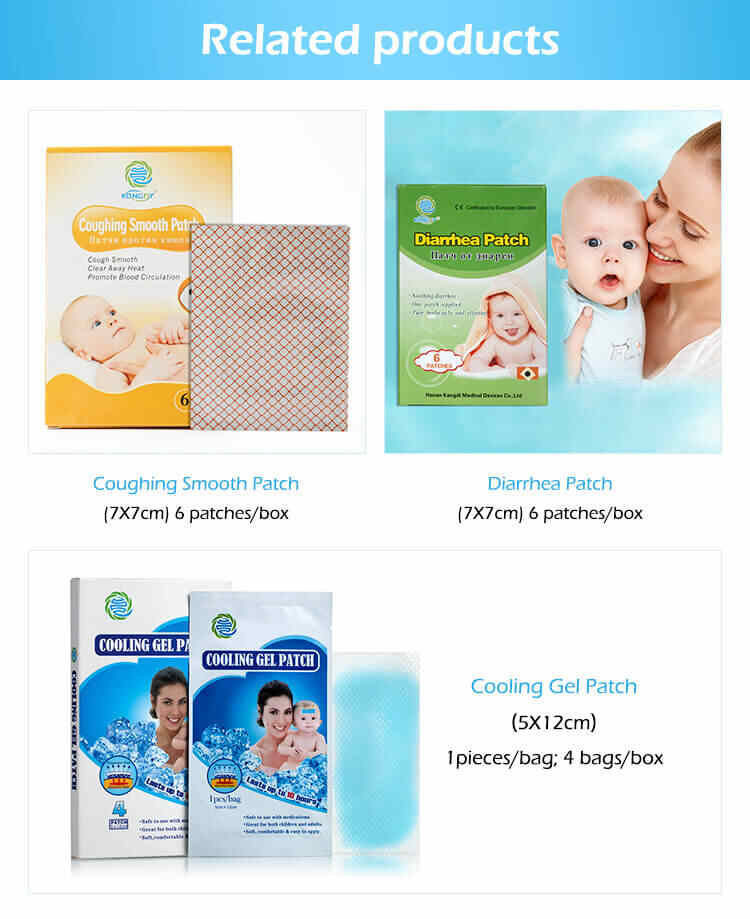
Cooling gel sheets
Heat patches
Fever patches for babies
Facial cooling masks
Sports injury patches
9.2 Flexible production capacity
OEMs can scale output to meet seasonal peaks—such as summer demand for cooling patches—without compromising quality.
9.3 Long-term technical support
Brands continue receiving:
Updated formulas
Improved adhesive technology
Better cooling performance
Enhanced skin comfort
This ensures they stay competitive in fast-changing markets.
10. Conclusion: Why Qualified OEMs Are Essential for Successful Cooling Patch Development
Developing a high-quality Custom Medical Cooling Gel Patch requires advanced technology, cleanroom environments, professional R&D, and strong regulatory knowledge. A qualified Medical Cooling Gel Patch OEM delivers all of these advantages and more.
By partnering with an experienced Medical Cooling Gel Patch Manufacturer or Medical Cooling Gel Patch Supplier, brands can:
Ensure product safety
Maintain world-class quality
Reduce production risks
Speed up time-to-market
Lower development costs
Build strong private label products
Compete globally
In today’s market, choosing a qualified OEM is not simply beneficial—it is essential for long-term growth and brand credibility.
Related Questions & Short Answers
1. Why should brands choose a qualified Medical Cooling Gel Patch OEM?
Because qualified OEMs provide reliable R&D, consistent quality, cleanroom production, and full compliance documentation.
2. Can I customize formulas for a Private Label Medical Cooling Gel Patch?
Yes. OEMs can adjust cooling strength, ingredients, scent, adhesion, and patch size.
3. Do OEMs help with packaging and label design?
Most experienced OEMs offer complete private label and packaging services.
4. How do OEMs ensure product safety?
Through ISO/GMP cleanrooms, microbial testing, raw-material screening, and strict QC processes.
5. Is it cost-effective to use an OEM for Custom Medical Cooling Gel Patches?
Absolutely—OEMs reduce R&D expenses, eliminate factory setup costs, and optimize material sourcing.


