-
 KONGDY
The Homeopathic Label and What It Does Not Do: 12 Questions for a Pain Relief Patch OEM in 2026
The Homeopathic Label and What It Does Not Do: 12 Questions for a Pain Relief Patch OEM in 2026
Two warning letters issued on the same day, to two companies, by the same person in the same office, each said something about a homeopathic label, and one of them said it twice.
The general statement appears in both. It is that homeopathic drug products are subject to the same statutory requirements as other drugs, and that nothing in the Federal Food, Drug, and Cosmetic Act exempts homeopathic drugs from any of the requirements related to adulteration, misbranding or approval.
The second statement is more interesting and it appears in one of them. It is a two-part finding about whether a product qualifies as a homeopathic drug product under the December 2022 guidance, and it closes both routes.
For a pain relief patch OEM this is a labelling question rather than a formulation question, which makes it cheap to fix and easy to get wrong, because the label is usually written to be reassuring rather than to be accurate.
1. Does a homeopathic label exempt a product from anything?
No, and the letters say this in the same terms in both of them.
The statement is that homeopathic drug products are subject to the same statutory requirements as other drugs, and that nothing in the statute exempts homeopathic drugs from any requirement related to adulteration, misbranding or FDA approval.
| What the label might imply | What the letters say about it |
|---|---|
| That the product is outside the drug framework | The definition of drug expressly includes articles recognised in the Homeopathic Pharmacopeia of the United States, so the label places it inside |
| That a traditional labelling style is a lighter regime | The statutory requirements for adulteration, misbranding and approval apply in full |
| That the evidence standard is lower | A new drug is a new drug, and a homeopathic product marketed without an approved application is in the same position as any other |
The first row is the one worth checking against a real pack. A label reading homeopathic does not remove a product from the drug framework; it places it inside it, because the definition of drug was written with homeopathic articles in mind.
A pain relief patch OEM that believes a homeopathic presentation is a lighter regime is not reading the statute the agency applies, and a pain relief patch OEM that believes it removes the product from the framework entirely is about to make a claim that the agency has already contradicted in writing.
2. What actually makes a product a homeopathic drug product?
Two conditions, and the guidance defines them precisely.
The December 2022 guidance defines a homeopathic drug product as a drug product that is labeled as homeopathic, and is labeled as containing only active ingredients and dilutions, such as 10X or 20X, listed for those active ingredients in the Homeopathic Pharmacopeia of the United States.
| The condition | What it excludes |
|---|---|
| Labelled as homeopathic | A product that is not labelled as homeopathic at all, whatever else it is |
| Labelled as containing only active ingredients and dilutions listed in the Homeopathic Pharmacopeia of the United States | Any ingredient that is not listed in that Pharmacopeia, at any dilution |
The second row is the one that catches a product, and the case in the October letter is an example of it. The product concerned was labelled as containing lemongrass 2X HPUS, and the letter records that lemongrass is not listed in the Homeopathic Pharmacopeia as an active ingredient, which means the product does not meet the definition.
The dilution figure is not the issue in that case. It is the ingredient. A pain relief patch OEM that writes a dilution number next to an ingredient has asserted something specific, and the assertion is checkable against a published pharmacopeia.
3. So what does the finding mean in practice?
Two things at once, and the letter states both.
The first is that the product does not meet the definition, and therefore falls outside the scope of the guidance. The second is stated with the word notwithstanding, and it is the more important half.
| The finding | What it means |
|---|---|
| The product does not meet the definition and falls outside the guidance | The guidance cannot be relied on, and neither can anything else a firm might have assumed about homeopathic status |
| Even if the product were considered a homeopathic drug product, it would fall under the category of homeopathic drug products marketed without the required approval that the agency views as potentially posing higher risks to public health and intends to prioritize for enforcement | Both routes lead to enforcement. There is no version of the label that produces a lighter outcome |
The second row is the one that changes how a label is written. A firm that assumed the homeopathic designation bought a defined treatment now learns from this finding that it did not, and a firm that assumes the designation creates an exemption learns that the designation is irrelevant to whether the product is a new drug.
For a pain relief patch OEM the conclusion is short. A homeopathic label is a description of how a product was made and presented. It is not a status, it is not a shield, and it is not a route.
4. What is the dilution notation actually claiming?
That the ingredient was present at a dilution expressed as a power of the original strength, and the notation is a factual assertion that can be checked.
The examples the guidance uses are 10X and 20X, and the letter that applies the definition did so to a product labelled at 2X.
| The notation | What it asserts | What has to be true for it to hold |
|---|---|---|
| A number followed by X | The dilution of that ingredient | The ingredient is listed in the Homeopathic Pharmacopeia of the United States as an active ingredient |
| A dilution of a listed ingredient | The listed ingredient, diluted | Both the ingredient and the dilution are as stated |
| A dilution of an unlisted ingredient | Something the Pharmacopeia does not contain | Nothing. The assertion fails, and the product falls outside the definition |
The third row is the case that produced the finding, and it is worth noting that the failure is not subtle. An ingredient that is not in the pharmacopeia cannot be at any dilution, and a firm that wrote the notation had it checked or had it supplied by a supplier.
A pain relief patch OEM that writes dilution notation for an ingredient is making a claim in the same sentence as the product name, and a pain relief patch OEM that cannot support the notation should not write it.
5. Does the natural herb claim end up in the same place?
Yes, and by a different route that leads to the same conclusion.
One letter in this library holds that natural herbs are not permitted as active ingredients in the external analgesic monograph, whether used in combination or as sole ingredients, and that a claim which states the product is formulated with natural herbs to promote healing, to improve circulation or to reduce inflammation purports that the herbs furnish pharmacological activity, which makes them active ingredients within the meaning of 21 CFR 201.66(b)(2).
| What the product says | What the agency concluded |
|---|---|
| Formulated with natural herbs | The herbs are offered as the reason the product works, which purports pharmacological activity |
| Promote healing, improve circulation, reduce inflammation | Beyond the permitted general intended uses of the category |
| Therefore the herbs are active ingredients | And they are not on the permitted list, so the product does not conform |
The two routes are separate and both are worth checking. The homeopathic route is about whether a product qualifies for a defined treatment. The herbal claim route is about whether a marketing sentence has created an active ingredient.
A pain relief patch OEM selling a herbal product in either the United States or Europe has to answer both, and a pain relief patch OEM that answers only the first has closed the smaller of the two gaps.
6. What does the label have to say about ingredients?
The permitted active ingredients of the category, with their ranges, and nothing else presented as active.
The registered ranges for this category in this library are menthol at 3 to 16 percent, methyl salicylate at 10 to 30 percent and camphor at 3 to 11 percent. The letters show what happens to ingredients outside that set.
| The ingredient | The finding in the record |
|---|---|
| Zinc oxide with mentha oil | Not permitted active ingredients, in combination or as sole ingredients |
| Chlorpheniramine maleate with thymol | The same finding, and thymol additionally the subject of a final determination that such products are not generally recognised as safe and effective |
| Natural herbs | Not permitted active ingredients in the category, in combination or as sole ingredients |
The second row is the one where a product ends up with two findings rather than one, and the practical lesson is that the ingredient list and the claim set have to be reviewed together.
For a pain relief patch OEM the test is simple enough to apply to any label: read the ingredient panel, and read the claim panel, and ask whether anything in the second appears anywhere in the first. A pain relief patch OEM whose claim panel mentions a substance that the ingredient panel treats as a preservative has a finding waiting.
7. Does a user-reported figure on the label matter?
Yes, and it is a category of claim that has not appeared in this library until now.
One of the products named in the October letter carries the statement that more than ninety of users reported less severe outbreaks. The letter quotes it as one of the claims observed on the labelling that provide evidence of the intended use.
| The type of claim | What it is | Why the agency reads it |
|---|---|---|
| A therapeutic claim | The product relieves or treats something | It is the claim that determines the intended use |
| A claim about a mechanism or an ingredient | The product works because of something in it | It can make an ingredient an active ingredient |
| A user-reported figure | A number attributed to people who used the product | It is still a claim about what the product does, and it was quoted as evidence of intended use |
The third row is the one to think about. A percentage attributed to users is not a different kind of statement from a claim about what the product does, and the agency quoted it in the same list.
A pain relief patch OEM that has taken a figure from a trial and put it on the pack has made a claim about the product, and it belongs in the claim register rather than in the marketing file.
8. Can a platform be held to the label of a third party?
Yes, and two letters issued on the same day to two platforms show the reasoning in the same shape.
Both letters record that the products were distributed directly to consumers on behalf of third parties, and both cite the platform own description of its fulfilment service. The Walmart letter quotes the company page: the service lets marketplace sellers use end-to-end logistics from imports to storage to fulfillment, and when a customer places an order the platform will pick, pack and ship the item on the seller behalf and handle all customer support and returns.
| What the fulfilment service does | What that makes the platform |
|---|---|
| Pick, pack and ship | The last physical handler before the consumer |
| Customer support and returns | The visible party in every complaint and every recall |
| Storage | The holder of the goods before dispatch |
| Consequently | A party that introduced the product for introduction into interstate commerce, which is what the statute prohibits |
The last row is the mechanism, and it is the same mechanism in both letters and in both platforms. A platform that only hosted a listing would be in a different position, which is why the letter goes to the fulfilment operation rather than to the marketplace function.
For a pain relief patch OEM the practical point is about the labelling copy that appears on a platform listing. If the platform is the one that takes delivery of the goods and the complaint, then the wording on that listing is the wording the platform will be held to.
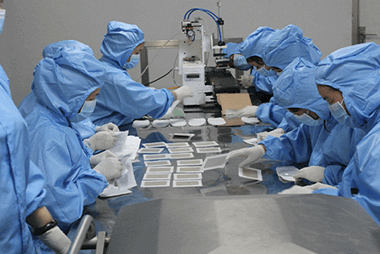
9. How to check a homeopathic label in an afternoon
The two findings in this article can be reduced to four checks, and each one is a look at something the firm already has.
| The check | What you look at | What you are looking for |
|---|---|---|
| Whether the label claims the homeopathic status | The ingredient panel and any statement of traditional method | Whether the designation is asserted at all, and in what words |
| Whether every named ingredient is in the Homeopathic Pharmacopeia | Each ingredient and its dilution notation | Any ingredient that is not listed, at any dilution, which removes the designation from the guidance |
| Whether any claim refers to an ingredient | The claim panel, the marketing copy and the listings | A claim that an ingredient works, which makes it an active ingredient |
| Whether any figure attributed to users appears | The pack and every listing | A percentage or count of users, which is a claim about what the product does |
The second row is the one that costs the most to do properly and is the one that most often has not been done, because it requires a copy of a pharmacopeia and an hour with it.
A pain relief patch OEM that has run these four checks on one product can say whether its homeopathic presentation is defensible, and a pain relief patch OEM that cannot should treat the label as an open item rather than as a settled one.
The fourth row is worth doing on listings rather than on packs, because the two platform letters in this library both began with products bought from a website, and a pain relief patch OEM whose pack is careful and whose listing is not has reproduced the same labelling problem on a channel with a bigger audience and a shorter fuse.
A pain relief patch OEM that has run the four checks on one product and on its listings has covered the two findings in this article and the one in the earlier one, and a pain relief patch OEM that has covered them can stop treating the homeopathic designation as a subject for the marketing department.
About KONGDY Medical

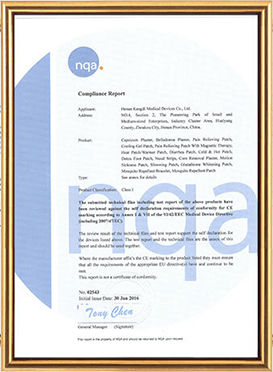
Henan Kongdy Medical Devices Co., LTD. (KONGDY) was founded in 1989 and has 37 years of production experience as of 2026 across pain relief patches, slimming patches, capsicum plasters, heat patches, cooling gel patches, detox foot patches, steam eye masks, mosquito repellent patches and nose strips. Headquartered in Henan, China, KONGDY operates a 100,000-class GMP workshop built in 2008 and obtained ISO 13485 medical device Quality Management System European Standard Certification in 2014. The company runs OEM and ODM services for international brands across multiple regulatory pathways.
For a 2026 procurement evaluation the qualification team can supply the ISO 13485 certificate, GMP workshop audit reports, stability programme documentation, and reference customer case studies upon request via our contact page.
Frequently asked questions
Does a homeopathic label exempt a product from FDA approval?
No. Two warning letters issued on 1 October 2026 state that homeopathic drug products are subject to the same statutory requirements as other drugs and that nothing in the FD&C Act exempts homeopathic drugs from any requirement related to adulteration, misbranding or FDA approval.
What makes a product a homeopathic drug product under the 2022 guidance?
Two conditions: that it is labelled as homeopathic, and that it is labelled as containing only active ingredients and dilutions such as 10X or 20X listed for those ingredients in the Homeopathic Pharmacopeia of the United States.
What happened in the case where the definition was not met?
The product was labelled as containing lemongrass 2X HPUS, and lemongrass is not listed in the Homeopathic Pharmacopeia as an active ingredient, so the product did not meet the definition and fell outside the scope of the guidance.
Does passing the definition help then?
No. The letter states that even if the product were considered a homeopathic drug product, it would fall under the category of homeopathic drug products marketed without the required approval that the agency views as potentially posing higher risks to public health and intends to prioritise for enforcement. Both routes lead to enforcement.
Are natural herb claims treated the same way?
Through a different route with the same result. One letter holds that natural herbs are not permitted active ingredients in the category whether in combination or as sole ingredients, and that a claim stating the product is formulated with natural herbs to promote healing, improve circulation or reduce inflammation purports that the herbs furnish pharmacological activity, which makes them active ingredients.
Why do two platforms matter here?
Because the same three products appear in both letters. The manufacturer letters and the platform letters describe the same labelling from two directions, and the platform letters quote the platform own fulfilment description to establish that the platform handled the goods directly for the consumer. A labelling error is a single event that appears in more than one register.
Is a user-reported figure on the label treated as a claim?
Yes. One letter quotes a statement that more than ninety of users reported less severe outbreaks among the claims observed on the labelling that provide evidence of the intended use. A figure attributed to users is still a claim about what the product does.
What should a supplier do first?
Read the ingredient panel and the claim panel side by side and look for anything that appears in one and not the other, then check every dilution notation against the Homeopathic Pharmacopeia. Those two checks find most of what the agency finds, and they cost an afternoon.
Related Guides
Five further references from the KONGDY knowledge base:
- Cooling Gel Patch OEM: the glycerin and DEG questions
- Capsicum Plaster OEM: twelve questions on reading the monograph
- Frequently asked compliance questions
- KONGDY OEM and ODM manufacturing services
- Detox Foot Patch OEM: the 20-point change control checklist


