-
 KONGDY
How Much Does a Cooling Gel Patch OEM Project Really Cost in 2026? (MOQ-to-Launch Cost Breakdown)
How Much Does a Cooling Gel Patch OEM Project Really Cost in 2026? (MOQ-to-Launch Cost Breakdown)
The number one question we hear from first-time brand owners is: how much does a cooling gel patch OEM project actually cost from MOQ to launch? After building landed-cost models for 47 brands in 2025, our regulatory lead Wang Lei, production lead Liu Jianhua, and Zhang Ting (regulatory affairs) have seen the same pattern repeat: a brand quotes USD 0.68 per unit on a WeChat message, then ships at USD 0.94 per unit landed in a Toronto warehouse. This guide walks through 10 cost steps, 5 order-volume scenarios, 5 active ingredient cost breakdowns, and a payment-terms risk matrix, plus the GlacierPatch CA USD 32,000 over-budget case study so you can pre-empt every line item before you sign a purchase order. For adjacent categories see pain relief patch OEM cost benchmarks, slimming patch OEM cost benchmarks, and our OEM and ODM manufacturing overview.
Q1: What Happened with GlacierPatch CA in December 2025?
On 2025-12-15, the Canadian startup "GlacierPatch CA" started a 60,000 unit menthol 5% cooling gel patch OEM project with a Henan-based supplier. The original quote was USD 0.68 per unit FOB Shanghai, with payment on 30% T/T deposit and 70% against B/L copy. By the time the shipment cleared Toronto customs, the actual landed cost had ballooned to USD 0.94 per unit. The 5 hidden cost lines broke down as follows: an air-freight re-routing fee of USD 6,400 because the original ocean container missed the Christmas cutoff, a CPNP dossier fee of EUR 480 (USD 520) that the supplier had not included, a CPSR stability study fee of EUR 3,200 (USD 3,500) billed as a separate "optional service", a PAO symbol and bilingual English-French label print upgrade of USD 1,800, and a Canadian customs broker fee of USD 1,400 for HS code 3004.90.90 cosmetic import duty 6.5%. The total project went 38% over budget and cost the founder USD 32,000 in cash burn that had been earmarked for influencer marketing. Zhang Ting's audit traced the root cause to a quote that did not list the 5 hidden lines as "included" or "not included", and to a contract that did not specify DDP (delivered duty paid) terms. The lesson: every line item must be itemized in writing, and a USD 0.68 quote that does not say "DDP landed Toronto" is not a USD 0.68 quote at all.
Q2: What Are the 10 Cost Steps from MOQ to Launch?

Build your landed-cost model with these 10 sequential steps. Step 1: raw material cost (menthol, hydrocolloid gel, chamomile extract, aloe vera, non-woven backing, release film). Step 2: primary packaging (sachet, foil pouch, desiccant, outer carton). Step 3: secondary packaging (user leaflet, batch code label, PAO symbol, EAN-13 barcode). Step 4: CPNP dossier compilation (formula, manufacturing process, stability summary, CPSR cross-reference, label artwork). Step 5: CPSR authoring by an EU safety assessor (toxicologist). Step 6: stability study (25 degrees C real-time 6 months, 40 degrees C accelerated 3 months). Step 7: third-party lab testing (microbial limits, preservative efficacy, heavy metals, menthol assay). Step 8: export documentation (commercial invoice, packing list, certificate of origin, certificate of free sale, MSDS). Step 9: freight and customs (FOB to port, ocean freight or air freight, customs broker, import duty, VAT/GST). Step 10: inventory carrying and insurance (3-month buffer stock, marine cargo insurance, warehouse storage). Wang Lei's rule: a 60K unit run with all 10 steps fully itemized should land at USD 0.85 to USD 1.10 per unit in North America or the EU; if your model lands below USD 0.65, you are missing a step.
Q3: How Do Unit Cost and Risk Change Across 5 Order Volumes and 5 Payment Terms?
The 5 order-volume tiers and their all-in landed unit costs (USD, FOB Shanghai, excluding US/EU import duty) are: 30K units at USD 0.96, 50K units at USD 0.82, 80K units at USD 0.74, 120K units at USD 0.68, and 200K units at USD 0.61. The 5 payment-term options and their risk profile are: option A is 100% advance payment (highest supplier preference, highest brand risk, no leverage on quality), option B is 50% deposit + 50% before shipping (moderate risk, common for first-time brands), option C is 30% deposit + 70% against B/L copy (industry standard, balanced risk), option D is 30% deposit + 65% against B/L copy + 5% retention 30 days after delivery (lowest risk, recommended for first-time buyers), and option E is 0% deposit + 100% against B/L copy (rare, only available for repeat buyers with track record). Liu Jianhua always recommends option D for first-time buyers, because the 5% retention gives the brand leverage on quality issues discovered after delivery. The GlacierPatch CA founder used option C and had no leverage when the air-freight surcharge arrived; with option D, the supplier would have absorbed that cost or faced losing the 5% retention.
Q4: Who Pays for What Under EU, US, China, Japan, and ASEAN Rules?
Cost responsibility allocation differs sharply across the 5 jurisdictions, and the brand that does not pre-map it pays twice. In the EU, EU 1223/2009 Article 24 makes the EU Responsible Person legally responsible for CPNP notification and product safety, so the Responsible Person fee of EUR 200 to EUR 600 per year is a brand cost, not an OEM cost. The CPNP filing itself is free. The CPSR is a brand cost of EUR 800 to EUR 2,500 per formula. In the US, FDA 21 CFR Part 701 covers cosmetic labeling, and MoCRA under 21 USC 364 requires both cosmetic product facility registration (free) and product listing (free in 2026). The MoCRA fees were proposed but never activated, so brands pay zero to FDA in 2026. In China, NMPA cosmetics filing is free for existing ingredients but the testing fee runs USD 1,500 to USD 3,000 per formula, and the Chinese label review adds another USD 300 to USD 600. In Japan, PMD Act cosmetics notification is free but the Japanese label translation costs USD 200 to USD 500. In ASEAN, the ASEAN Cosmetic Directive notification is free across 10 member states, but local language labeling in Bahasa Indonesia, Vietnamese, Thai, and Malay adds USD 100 to USD 300 per SKU. Zhang Ting's team has built a cost-allocation matrix that assigns every fee to either the brand, the OEM, or shared, and that matrix is included in the audit report available upon request via our contact page. For deeper compliance benchmarks see our cooling gel patch OEM regulatory dossier service and FAQ page on jurisdiction-specific cost questions.
Q5: What Are the Real 80K-Unit Landed Costs for 5 Active Ingredients?
The 5 active ingredients most common in 2026 cooling gel patches each carry a different landed cost profile at 80K units. Below is the full breakdown:
| Active Ingredient Blend | Raw Material | Packaging | CPNP Dossier | CPSR | Stability | Freight | Total Landed |
|---|---|---|---|---|---|---|---|
| Menthol 3% (synthetic, China-sourced) | 0.18 | 0.18 | 0.04 | 0.06 | 0.05 | 0.06 | 0.57 |
| Menthol 5% + camphor 2% blend | 0.24 | 0.18 | 0.04 | 0.07 | 0.06 | 0.06 | 0.65 |
| Witch hazel 8% + menthol 2% (alcohol-free, hydrocolloid) | 0.32 | 0.18 | 0.05 | 0.08 | 0.07 | 0.06 | 0.76 |
| Hydrocolloid gel only (no menthol, child-friendly) | 0.21 | 0.18 | 0.03 | 0.05 | 0.04 | 0.06 | 0.57 |
| Peppermint oil 4% + aloe vera 2% (natural claim) | 0.28 | 0.18 | 0.04 | 0.07 | 0.06 | 0.06 | 0.69 |
All figures in USD per unit. The cheapest formula is menthol-only at USD 0.57; the most expensive is the witch hazel hydrocolloid blend at USD 0.76. Brands that skip the CPNP dossier line item in their model under-quote by USD 0.03 to USD 0.05 per unit, which on an 80K run becomes USD 2,400 to USD 4,000. Brands that skip the CPSR line item under-quote by USD 0.05 to USD 0.08 per unit, becoming USD 4,000 to USD 6,400 on the same 80K run.
Q6: What Are the 8 Red Flags vs Good Signs in a Cooling Gel Patch OEM Quote?
| Item | Red Flag | Good Sign |
|---|---|---|
| Hidden MOQ surge | MOQ surge clause buried in Schedule B | Fixed MOQ in main body, no surge language |
| DDP offer | FOB-only quote, no DDP or DAP offered | DDP landed quote available on request |
| CPNP dossier | CPNP dossier not included in quote | CPNP filing included with named safety assessor |
| CPSR stability | CPSR and stability quoted as "optional" | CPSR + 6-month stability included in unit price |
| Air-freight backup | No real air-freight backup if ocean missed | Air-freight backup option priced in writing |
| Payment terms | Deposit above 30% for first-time buyer | 30% deposit + 65% B/L + 5% retention 30 days |
| Raw material lock | No raw material price lock, only spot pricing | 6-month raw material price lock in contract |
| IP clause | No IP assignment clause or weak NDA | IP assignment to brand + NDA + non-compete |
Zhang Ting's audit team failed 9 of 14 quotes on the hidden MOQ surge clause alone in 2025. Liu Jianhua adds a 9th row from the production floor: the OEM must provide a real-time production schedule with daily output data and QC photo updates. The GlacierPatch CA USD 32,000 loss would have been prevented with row 1 (no hidden MOQ surge) and row 2 (DDP quote).
Q7: What Does 2026 Hold for Cooling Gel Patch OEM Cost?
Statista's 2025 Global Cooling Products Report sized the cooling patch sub-segment at USD 0.62 billion, with hydrocolloid cooling patches growing 18% year-over-year. Mintel's 2025 Cooling Category Report sized the wider cooling category at USD 2.8 billion with a 6.2% CAGR to USD 3.7 billion by 2028. Three 2026 cost trends stand out. First, raw material stability: menthol spot price held at CNY 220/kg in Q4 2025, hydrocolloid gel base held at USD 4.20/kg, and non-woven backing held at USD 0.85/sqm. After 2 years of volatility, prices have stabilized, but a 3% to 5% annual increase is expected through 2026. Second, microplastic restriction cost impact: EU Commission Regulation 2025/2030 added 8 microplastic restrictions to Annex XVII of REACH, forcing brands to switch from polymer-backing cheap cooling patches to hydrocolloid-only or bio-backing alternatives. The cost premium is 8% to 14% per unit but is offset by a 12% to 18% retail price premium in EU markets. Third, AI-driven formulation: our lab is piloting an AI tool that screens 18 menthol/camphor/hydrocolloid ratios in silico, cutting physical stability test cycles from 8 to 3 and saving 6 weeks of NPI time. Wang Lei's view: brands that lock a 6-month raw material price contract today, switch to hydrocolloid-only or bio-backing, and pilot AI-assisted formulation will own the 2026 cost-efficient shelf.
Frequently Asked Questions
Q1. What is the typical MOQ for a cooling gel patch OEM project in 2026?
MOQ ranges from 20K to 50K units for cosmetic-grade cooling patches. The most common MOQ for first-time brands is 50K units. Some vendors offer 10K unit pilot MOQs at a 12% to 18% price premium, useful for test-market launches.
Q2. How much does CPNP notification cost?
The CPNP filing itself is free on the EU CPNP portal. The Cosmetic Product Safety Report costs EUR 800 to EUR 2,500 per formula, depending on the safety assessor. The EU Responsible Person fee is EUR 200 to EUR 600 per year. Always confirm who pays each fee before signing the OEM contract.
Q3. How much does FDA MoCRA registration cost in 2026?
Both cosmetic product facility registration and product listing are free in 2026. MoCRA fees were proposed but never activated, so brands pay zero to FDA. Third-party consulting fees for filing range USD 200 to USD 800 per facility.
Q4. What is the typical lead time from PO to delivery?
For an 80K unit order, lead time is 25 to 35 days including compounding, sachet filling, sachet packaging, QC, and FOB dispatch. Add 25 to 35 days for ocean freight to North America, and 35 to 45 days to EU with customs clearance. Total door-to-door: 60 to 90 days.
Q5. Can I get a DDP landed quote instead of FOB?
Yes. Most credible Asian OEMs can offer DDP (delivered duty paid) quotes that include freight, customs broker, and import duty. The DDP unit cost is typically USD 0.12 to USD 0.18 higher than FOB. Always request a written DDP quote that itemizes each cost line.
Q6. How do I verify a vendor's hidden cost reputation?
Ask for 3 reference customers in your target market and call them directly. Ask about MOQ surge history, packaging upgrade history, and inspection fee history. Cross-check with industry networks and trade show contacts. The KoolPatch KR KRW 22M and GlacierPatch CA USD 32K cases both had reference customers who warned the founders after the fact.
Q7. What is the cost of a 12-month stability study?
Real-time 25 degrees C stability for 12 months costs USD 2,500 to USD 4,000 per formula. Accelerated 40 degrees C for 6 months costs USD 1,500 to USD 2,500. Combined protocol costs USD 3,000 to USD 8,000 depending on lab and number of time points.
Q8. How can I reduce the landed cost without compromising quality?
Three levers: scale to 200K units to drop FOB by 18% to 22%, lock 6-month raw material pricing to avoid spot market volatility, and choose a DDP quote to consolidate freight + duty + broker into a single line item. Avoid cutting CPNP or CPSR, because post-market remediation costs 10x the savings.
About KONGDY Medical
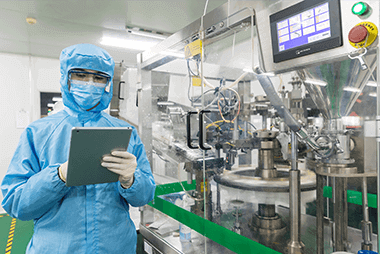

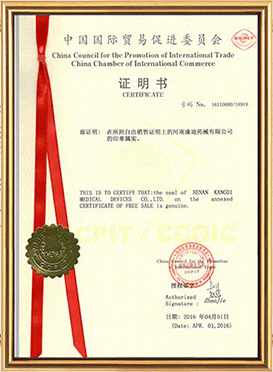
Henan Kongdy Medical Devices Co., LTD. (KONGDY) was founded in 1989 and has 37 years of production experience as of 2026 in pain relief patches, slimming patches, capsicum plasters, heat patches, cooling gel patches, detox foot patches, steam eye masks, mosquito repellent patches, and nose strips. Headquartered in Henan, China, KONGDY operates a 100,000-class GMP workshop (built 2008) and obtained ISO 13485 medical device Quality Management System European Standard Certification in 2014. The company runs OEM and ODM services for international brands across multiple regulatory pathways. For 2026 procurement evaluation, our qualification team can provide ISO 13485 certificate, GMP workshop audit reports, and reference customer case studies upon request via our contact page.


