
-
 KONGDY
The 20-Point Claim Approval Register: One Page That Maps Every Published Claim for a Detox Foot Patch OEM in 2026
The 20-Point Claim Approval Register: One Page That Maps Every Published Claim for a Detox Foot Patch OEM in 2026
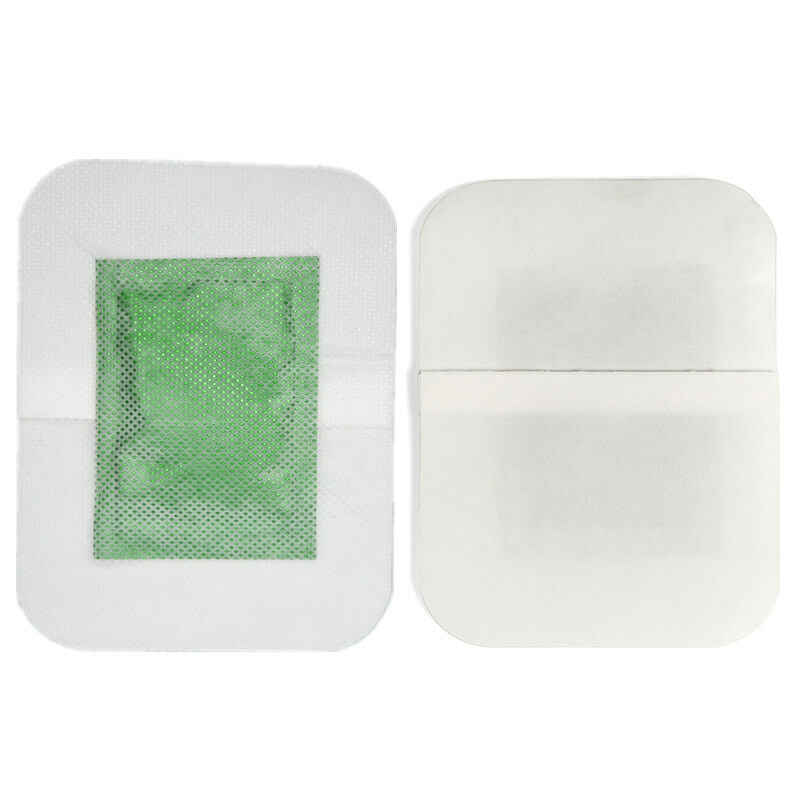
Every published claim is a decision, and most companies cannot say where the decision is recorded. This article is a register that fixes that, in twenty points.
The reason a register is needed rather than a policy is that the case law in this library keeps turning on individual sentences. One letter found that a claim that a product is formulated with natural herbs to promote healing, improve circulation and reduce inflammation purports that the herbs furnish pharmacological activity, and therefore makes them active ingredients. The finding was about a sentence, not about a formula.
Another found that a website and two social media accounts all directed consumers to the same storefront, which means the claims being assessed were the ones a consumer reads rather than the ones a label contains.
For a detox foot patch OEM the register below is short enough to maintain in a spreadsheet and specific enough that each row can be checked against a document.
One warning before the points. A register that lists the claims on the pack and not the claims on the listings has registered the smaller half. In the cases in this library the findings came from the larger half.
Band one: which claims exist, points 1 to 5
The first band is an inventory, and its purpose is to establish the population before any judgement is made about it.
| # | Check | What it has to show | What its absence looks like |
|---|---|---|---|
| 1 | Every surface that carries a claim is listed | The pack, the carton, the leaflet, the website, each social account, each marketplace listing, each distributor catalogue | A register that covers the pack and stops there |
| 2 | Each surface has an owner | A named person or function responsible for the wording on that surface | A listing written by a distributor and owned by nobody |
| 3 | Every claim sentence is extracted verbatim | The actual words, not a paraphrase of the intent | A summary of the claim set rather than its text |
| 4 | The language of each surface is recorded | Which market and which language each claim appears in | One approved English block applied to six markets |
| 5 | The date each surface was last checked is recorded | A date per surface | A single review date for a set of surfaces that change independently |
The second row is the one that fails first in practice. A marketplace listing written by a distributor is a published claim, and the finding in one case in this library arises from exactly that arrangement, because the storefront is where the labelling was found.
A detox foot patch OEM should treat the fifth point as the maintenance cost of the register. Five surfaces with one review date will drift within a quarter, and five surfaces with five dates will not.
Band two: which framework each claim sits in, points 6 to 10
The second band is the mapping, and it is the part that answers the question a reviewer asks first.
| # | Check | What it has to show | What its absence looks like |
|---|---|---|---|
| 6 | The framework is named for each claim | The instrument and the paragraph, for example the monograph paragraph on permitted intended uses | A statement that the claim is compliant |
| 7 | The claim is matched to a permitted indication | The specific permitted use the wording maps to | A claim that sits near a permitted use rather than inside one |
| 8 | Any ingredient the claim refers to is identified | The ingredient named, and its status as an active ingredient where the claim implies activity | A claim about an ingredient that nobody has mapped to the panel |
| 9 | The market-specific framework is recorded where it differs | The European labelling instrument where the claim runs in Europe, and the general product safety framework where that applies | One framework assumed to cover every market |
| 10 | The determination is dated and names the version screened against | A date and a version on the same line | A determination that cannot be related to a later restriction |
The eighth row is the one that carries the widest reach. One letter in this library holds that a claim that an ingredient furnishes pharmacological activity makes it an active ingredient, and another holds that natural herbs are not permitted as active ingredients in the monograph whether in combination or as sole ingredients. Together they mean a botanical claim can create a formulation problem.
For a detox foot patch OEM selling a botanical product, point eight is not a labelling point. It is the point at which the claim register and the formulation register have to be read together.
Band three: who approved it, points 11 to 15
The third band is the approval, and the case for it is that a claim without an owner is a claim that will change without a decision.
| # | Check | What it has to show | What its absence looks like |
|---|---|---|---|
| 11 | A named approver with a role | The person, the function and the date | An approval by a committee, or by a person who has since left |
| 12 | The approval precedes publication | A date earlier than the date the claim went live | An approval that records a decision already made by marketing |
| 13 | The authority to approve is written down | The document that confers the approval power | Marketing approving its own copy because nobody said otherwise |
| 14 | Where the surface is electronic, the change is audited | A history of changes to the listing or page, with who changed what | A page edited in place with no record of the previous version |
| 15 | Any distributor wording is approved through the same route | The distributor copy, approved and dated, on file | A distributor left to describe the product in its own words |
The thirteenth row is structural and it is the same point this series has made about quality authority. A function whose responsibilities are not written down has no documented basis to refuse, which means the approval in the eleventh row may be a formality.
The fifteenth row is the one a detox foot patch OEM selling through distribution will meet first, and the answer that works is an approved copy block that the distributor is contractually bound to use rather than an instruction to be careful.
Band four: how it is kept true, points 16 to 20
The fourth band is maintenance, and it is where a register either survives a year or becomes a document that describes last year.
| # | Check | What it has to show | What its absence looks like |
|---|---|---|---|
| 16 | Every claim change goes through the change log | The change, its reason, and the review that approved it | A wording change made and published without a record |
| 17 | A claim is withdrawn when its basis is withdrawn | A withdrawal record when a restriction, an ingredient status or a market rule changes | A claim still live because nobody noticed the instrument changed |
| 18 | The register is checked on a stated cycle | The last two check records | A register created once and referred to since |
| 19 | The register is reconciled against the live surfaces | A list showing each live surface was checked against the register | A register that is correct and a listing that is not |
| 20 | Every open item is visible as open | A status field per row, with a date | A register where every row is complete, which means rows are closed before the work is done |
The seventeenth row has a specific example in this library. A substance restriction introduced during 2025 turned a formula written earlier into a non-conforming one, and a claim referring to that substance would have to be withdrawn for the same reason.
The twentieth row is the one that makes the register a management instrument rather than a record. A detox foot patch OEM whose register shows three open rows knows what to do this week, and one whose register shows none either has nothing in progress or has a habit.

How to build it in one sitting
The register is one page and it is built by walking the surfaces rather than by designing a form.
| Step | What to do | What it produces |
|---|---|---|
| Open every surface and copy the text | Pack, carton, leaflet, website, each social account, each marketplace listing | The real claim population, which is usually larger than expected |
| Cut the text into claim sentences | One row per sentence that makes a statement about the product | A countable list rather than a paragraph |
| Assign a framework to each row | The instrument and the paragraph, or a note that it needs one | The mapping, and the first sight of rows that have nowhere to sit |
| Name an approver and a date for each row | The person who can defend the sentence | An approval trail that a buyer can read |
| Mark the open rows and put a date on each | Status and target date | A work list rather than an archive |
The third step is where the value appears. A claim that cannot be assigned to a framework is a claim that has not been decided, and it is better to find that in a spreadsheet than in a letter.
A detox foot patch OEM that has done this once can reconcile the register against the live surfaces in an afternoon a quarter, and that reconciliation is the only part that has to be repeated.
The twenty points then become a single question with a single answer. Which claims do we make, where, under what framework, approved by whom, and on what date. A detox foot patch OEM that can answer it in one page has answered the question that produced most of the letters in this library.

Why a register and not a policy
A policy states an intention and a register states a fact, and only one of the two can be checked by somebody who was not present.
| A policy says | A register says |
|---|---|
| All claims are reviewed before publication | This sentence, on this surface, was approved by this person on this date against this paragraph |
| Marketing coordinates with regulatory | The distributor listing was rewritten, and here is the approved block it had to use |
| Ingredients are assessed for claim support | The claim about this botanical maps to a permitted indication, or it does not |
| The label is checked before printing | These five surfaces were reconciled against the register on this date |
The second column is answerable in a minute per row. The first column is answerable in one sentence and cannot be tested, which is why a reviewer asks for the second.
For a detox foot patch OEM the practical difference is what happens when a distributor changes a listing. A policy requires the distributor to behave; a register shows whether the listing matches the approved block, which is a comparison rather than an instruction.
A detox foot patch OEM that has the register can also answer the question a buyer asks first, which is which claims are being made and where, without assembling anything.

The four findings in this library that came from a claim
Four letters turn on wording rather than on manufacturing, and each one maps to a different row in the register.
| The finding | The row it would have caught |
|---|---|
| A claim that a product is formulated with natural herbs to promote healing, improve circulation and reduce inflammation made the herbs active ingredients | Band two, point eight, mapping the ingredient a claim refers to |
| Natural herbs are not permitted as active ingredients in the monograph, in combination or as sole ingredients | Band two, point seven, matching the claim to a permitted indication |
| Claims to promote healing, improve circulation and reduce inflammation go beyond the allowed general intended uses | Band two, point six, naming the framework and the paragraph |
| A website and two social accounts all directed consumers to one storefront, and the claims assessed were the ones a consumer reads | Band one, point one, listing every surface that carries a claim |
The first two rows are the pair worth understanding together. The first says a claim makes an ingredient an active ingredient; the second says that ingredient is not permitted. A company that checks only the second will pass a formula on the basis of a panel that does not list the ingredient, and the first will find it.
For a detox foot patch OEM selling a botanical product, those two rows are the reason the register and the formulation file have to be read on the same day. A detox foot patch OEM that maintains them separately will reconcile them only when a reviewer asks.
What a buyer asks, and the four rows that answer it
A procurement conversation about claims reduces to four questions, and each one is a row in the register rather than a topic.
| The question | The row that answers it | What a weak answer sounds like |
|---|---|---|
| Which claims do you make, and where | Band one, points one to three, listing the surfaces and the verbatim sentences | A description of the claim strategy |
| Under what framework does each claim sit | Band two, points six and seven, naming the instrument and the paragraph | A statement that the claims are compliant |
| Does any claim refer to an ingredient, and what is that ingredient status | Band two, point eight | An assurance that the panel lists every active |
| Who approved it, and on what date | Band three, points eleven and twelve | A name without a role, or a role without a document |
The second question is the one that separates a supplier with a register from one with a memory. Naming an instrument and a paragraph requires having read it, and it is checkable in the same conversation.
A detox foot patch OEM that answers all four from the register has demonstrated something a certificate cannot, which is that the claim set was decided rather than inherited.
There is one further question a buyer asks that is not in the table, and it is the one this register answers best. The question is what changed, and the answer comes from the maintenance band rather than from the mapping.
A detox foot patch OEM that can show a register with three open rows and a withdrawal record is showing a system that is being used. One that shows a complete register with no withdrawals has either a very stable claim set or a register that was completed once and closed.
A detox foot patch OEM should prefer the first answer, because a claim set that has never changed in a year of regulatory movement is unlikely, and a reviewer will read it that way.
The same reasoning applies to the mapping band. A detox foot patch OEM whose every claim maps cleanly to a permitted indication on the first attempt has either a narrow claim set or a mapping that was written to satisfy itself. A detox foot patch OEM that has narrowed a claim after failing to map it has done the work the register exists for.
That is the whole argument for twenty points rather than one policy. A detox foot patch OEM can write the policy in an hour and will spend the year discovering what it did not cover.
About KONGDY Medical

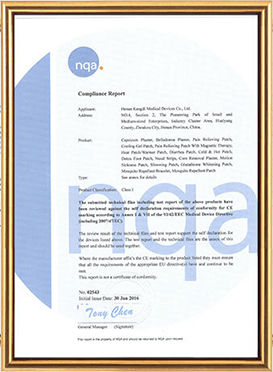
Henan Kongdy Medical Devices Co., LTD. (KONGDY) was founded in 1989 and has 37 years of production experience as of 2026 across pain relief patches, slimming patches, capsicum plasters, heat patches, cooling gel patches, detox foot patches, steam eye masks, mosquito repellent patches and nose strips. Headquartered in Henan, China, KONGDY operates a 100,000-class GMP workshop built in 2008 and obtained ISO 13485 medical device Quality Management System European Standard Certification in 2014. The company runs OEM and ODM services for international brands across multiple regulatory pathways.
For a 2026 procurement evaluation the qualification team can supply the ISO 13485 certificate, GMP workshop audit reports, stability programme documentation, and reference customer case studies upon request via our contact page.

Frequently asked questions
Why is a claim register needed rather than a labelling procedure?
Because the findings in this library turn on individual sentences. One letter held that a claim that a product is formulated with natural herbs to promote healing, improve circulation and reduce inflammation made the herbs active ingredients. A procedure describes how wording is approved and a register shows which wording was approved, and only the second can be checked.
Which surfaces count as published claims?
Every surface a consumer reads before purchase. In one case in this library the agency reviewed a website and two social media accounts that all directed consumers to the same storefront, which means a claim on a social account is as published as a claim on a carton.
What framework has to be named for each claim?
The instrument and the paragraph. For an external analgesic in the United States that means the monograph paragraph on permitted intended uses, and for a European cosmetic product it means the labelling provision of Regulation (EC) No 1223/2009 together with the general product safety framework where that applies.
Why does a claim about an ingredient matter to the formulation record?
Because a claim that an ingredient furnishes pharmacological activity makes it an active ingredient for labelling purposes, and one letter in this library holds that natural herbs are not permitted as active ingredients in the monograph whether used in combination or as sole ingredients. A botanical claim can therefore create a formulation problem.
What should an approval record contain?
A named person, a role, a date, the framework matched, and the version screened against. The date has to precede publication, and the document that confers the approval authority should exist separately.
How should distributor wording be handled?
Through the same route as any other published surface, which in practice means an approved copy block that the distributor is contractually bound to use. One case in this library arises from wording on a storefront rather than on a label.
What is the most common failure in maintaining a register?
A register that lists the pack and not the listings. The larger half of the claim population is usually the electronic half, and it is the half that changes without a decision.
How does this connect to change control?
Every claim change should pass through the change log, and every change to a restriction should trigger a review of the rows that refer to the affected substance. A restriction introduced during 2025 turned a formula written earlier into a non-conforming one, and any claim referring to that substance would have had to be withdrawn for the same reason.
Related Guides
Five further references from the KONGDY knowledge base:
- Capsicum Plaster OEM: twelve questions on reading the monograph
- Cooling Gel Patch OEM: four working days at the border
- Frequently asked compliance questions
- KONGDY OEM and ODM manufacturing services
- Pain Relief Patch OEM: six warning letters compared


