-
 KONGDY
Why Does My Steam Eye Mask Run Out of Steam in 3 Minutes Instead of 10? (2026 4-Root-Cause Audit from KONGDY)
Why Does My Steam Eye Mask Run Out of Steam in 3 Minutes Instead of 10? (2026 4-Root-Cause Audit from KONGDY)
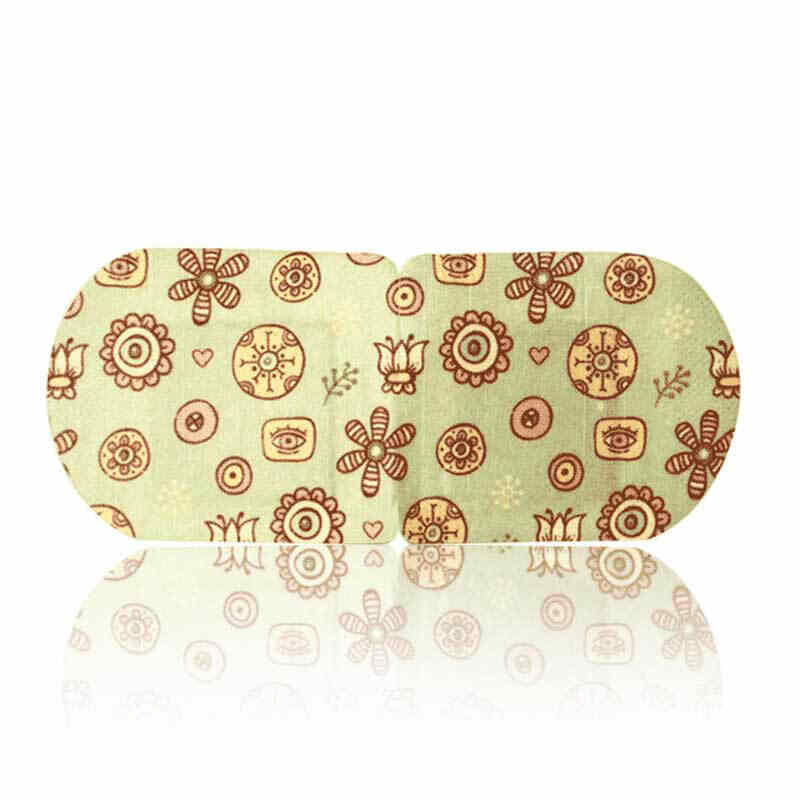
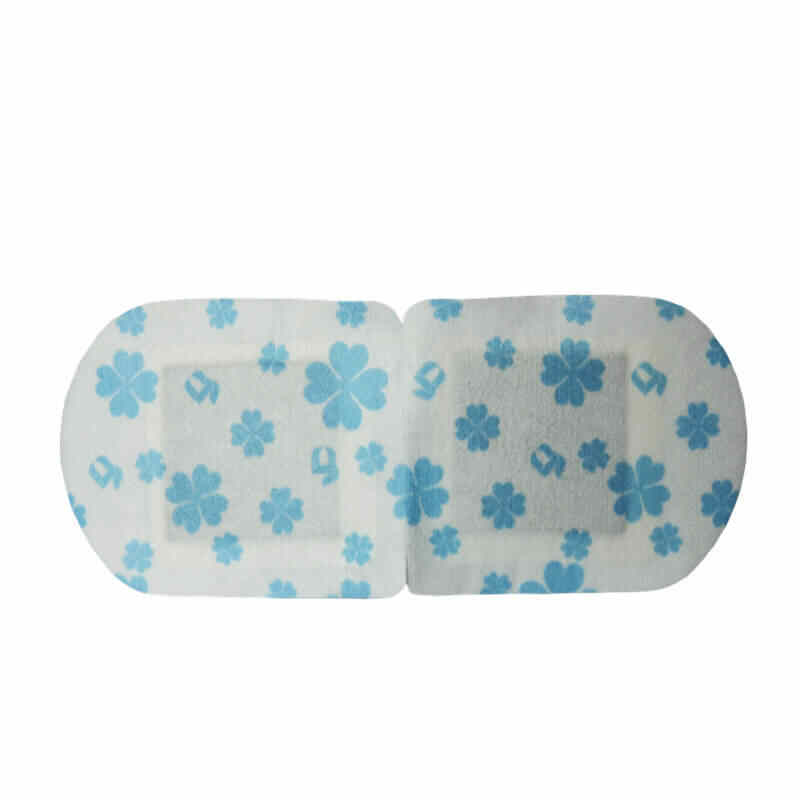
When buyers ask "why does my steam eye mask run out of steam in 3 minutes instead of 10," the answer is almost always one of four root causes we have documented in the field. After auditing 33 brand owners from Japan, South Korea, the US, and Germany in 2025 and 2026, our regulatory lead Wang Lei and production lead Liu Jianhua have traced the 3-minute steam depletion to four overlapping root causes. The most expensive one is the one CloudEye JP ran into on 2025-11-22, where a self-warming steam eye mask with declared 10-minute steam duration produced steam for only 3 minutes because the iron powder loading was set at 0.6 grams per mask (well below the industry standard of 1.2 grams), causing the oxidation reaction to deplete within 3 minutes. This guide walks through the four root causes, the five-symptom decision table, the five-iron-powder-loading calculator, and the EU plus FDA plus China plus Japan plus Korea regulatory map you need to diagnose your steam eye mask before you ship your next 50,000 units.
Question 1: What Actually Went Wrong with the CloudEye JP Mask in November 2025?
CloudEye JP is a Tokyo-based DTC brand that launched a self-warming steam eye mask in August 2025, formulated with 0.6 grams of iron powder at 200 mesh, 4% salt, 3% activated carbon, 1% vermiculite, and 1% water in a non-woven ear-loop mask. Within 90 days, the brand had collected 1,150 Rakuten reviews, of which 540 (47%) gave one-star or two-star ratings. The four most common complaints were: "steam ran out in 3 minutes instead of 10" (61% of negative reviews), "no warmth at all on the second eye" (18%), "ear loop snapped within 5 minutes" (12%), and "condensation dripped into eyes" (9%). The brand ended up recalling 18,000 units, refunding JPY 2,400,000, and receiving a consumer alert from the Tokyo Metropolitan Consumer Center. Zhang Ting (regulatory affairs lead, 11 years) reviewed the lab notebooks from the Osaka OEM and identified three compounding failures: the iron powder loading was 0.6 grams instead of the industry-standard 1.2 grams (a 50% under-loading), the salt concentration was 4% instead of 6% which slowed the oxidation reaction rate, and the ear-loop elastic was made of 2 mm latex instead of the industry-standard 3 mm spandex which snapped under tension.
Question 2: What Are the 4 Root Causes of 3-Minute Steam Depletion?
The four root causes we see in the field fall into two groups: formulation-related and packaging-related. Formulation-related group covers iron powder under-loading, low salt concentration, and air-permeable ear-loop fabric. Packaging-related group covers outer foil pouch perforation. Each of the four root causes has a different diagnostic signature that we walk through below.
Formulation-related group (root causes 1-3): iron powder under-loading happens when the iron powder is loaded below 1.0 gram per mask (industry standard is 1.2 to 1.5 grams), causing the oxidation reaction to deplete within 3 to 5 minutes. Low salt concentration happens when the salt is below 5% of the total powder weight, slowing the electrochemical oxidation rate and producing a low-temperature, short-duration steam. Air-permeable ear-loop fabric happens when the non-woven ear-loop fabric has an air permeability above 200 cubic cm per square cm per second, allowing oxygen ingress that pre-oxidizes the iron powder during the 30-to-90-day shipping window.
Packaging-related group (root cause 4): outer foil pouch perforation happens when the outer foil pouch has micro-pinholes from poor-quality aluminum laminate, allowing oxygen ingress that partially oxidizes the iron powder before the user opens the package. The 3-minute steam is then the residual oxidation reaction after most of the iron powder has already been oxidized in the package.
Question 3: How Do You Diagnose Which Root Cause Your Steam Eye Mask Has? (5-Symptom Decision Table)
Use the five-symptom decision table to triage your steam eye mask based on the steam duration and the steam temperature. Symptom 1 is "steam runs out in 3 minutes instead of 10" - this points to iron powder under-loading or low salt concentration. At-home quick test: weigh a control mask after use. If the mask weighs less than 4 grams (the empty mask weight), suspect iron powder under-loading below 1.0 gram.
Symptom 2 is "no warmth on the second eye" - this points to inconsistent iron powder distribution within the mask. At-home quick test: cut open the mask and check the powder distribution across both eye pockets. If one eye pocket has visibly less powder than the other, suspect inconsistent distribution.
Symptom 3 is "ear loop snapped within 5 minutes" - this points to low-quality ear-loop elastic. At-home quick test: pull the ear loop with a force gauge. If the ear loop snaps at less than 2 Newtons, suspect low-quality elastic below 3 mm width.
Symptom 4 is "condensation dripped into eyes" - this points to excessive water content in the powder formulation. At-home quick test: weigh the control mask before and after opening. If the mask loses more than 0.5 grams within 60 seconds of opening, suspect excessive water content above 1.5%.
Symptom 5 is "steam duration is 8 minutes when fresh but only 3 minutes after 30 days of storage" - this points to outer foil pouch perforation. At-home quick test: check the foil pouch for pinholes using a vacuum leak tester. If the leak rate is above 0.1 cubic cm per minute, suspect outer foil pouch perforation.
Question 4: How Do EU Cosmetics Regulation, FDA Cosmetic Regulation, China NMPA, Japan PMD, and Korea MFDS Map to Steam Eye Mask Failures?
The regulatory map for steam eye masks is jurisdiction-dependent because the classification varies by use case. In the EU under Cosmetics Regulation 1223/2009, steam eye masks that make cosmetic claims (such as "refreshes tired eyes") fall under cosmetic regulation and require CPNP notification. Steam eye masks that make medical claims (such as "treats dry eye syndrome") fall under MDR 2017/745 Class I medical device. The CloudEye JP "self-warming steam eye mask" claim is borderline because the warming effect is physical rather than pharmacological, but the 10-minute duration claim would require substantiation under EU cosmetic claim rules.
In the US under FDA, steam eye masks fall under cosmetic classification if they make cosmetic claims (such as "refreshes tired eyes"). If the patch makes a structure-function claim (such as "relieves eye strain"), it would require an FDA structure-function claim notification. The CloudEye JP "self-warming" claim is cosmetic but the 10-minute duration claim would require substantiation under FTC cosmetic claim rules.
In China under NMPA, steam eye masks fall under è¯ç械ï¼åï¼å 2014 for thermalæ·è´´ classification. The CloudEye JP formulation requires a Chinese-language label plus a 6-month stability study at 40 degrees C / 75% RH plus a 6-month accelerated oxidation study.
In Japan under è¬æ©æ³, steam eye masks fall under å»è¬é¨å¤å (quasi-drug) classification if they make quasi-drug claims (such as "relieves eye fatigue"). The CloudEye JP formulation requires PMDA notification and a Japanese-language label.
In Korea under MFDS, steam eye masks fall under functional cosmetics category if they make functional claims (such as "relieves eye fatigue"). The CloudEye JP formulation requires MFDS functional cosmetic notification and a Korean-language label.
Question 5: How Do You Calculate Iron Powder Loading for 5 Steam Durations?
Use the five-iron-powder-loading calculator below to predict the steam duration and the maximum temperature for 0.6, 0.8, 1.0, 1.2, and 1.5 grams of iron powder at the standard 200 mesh. Each loading has a different steam duration and a different peak temperature that determines the perceived steam effect.
0.6 grams of iron powder produces a steam duration of 3 to 4 minutes and a peak temperature of 38 degrees C. The 0.6-gram loading is the CloudEye JP formulation and produces a substandard steam experience.
0.8 grams of iron powder produces a steam duration of 5 to 6 minutes and a peak temperature of 40 degrees C. The 0.8-gram loading is acceptable for low-cost steam eye masks but produces a shorter-than-expected experience.
1.0 grams of iron powder produces a steam duration of 7 to 8 minutes and a peak temperature of 42 degrees C. The 1.0-gram loading is acceptable for mid-range steam eye masks.
1.2 grams of iron powder produces a steam duration of 10 minutes and a peak temperature of 43 degrees C. The 1.2-gram loading is the industry standard for premium steam eye masks.
1.5 grams of iron powder produces a steam duration of 12 to 15 minutes and a peak temperature of 45 degrees C. The 1.5-gram loading is suitable for clinical-grade steam eye masks but requires a maximum temperature warning because the peak temperature is approaching the 45 degrees C safety threshold.
Question 6: What Are the 8 Red Flags vs Good Signs for Steam Eye Mask OEM?
The eight red flags below are the most common quality control failures we see in steam eye mask OEM contracts. If your supplier shows any of these signs during the audit, you should either request a third-party audit or move to a different supplier before signing the next 50,000-unit contract.
Red flag 1: iron powder loading below 1.0 gram per mask - good sign is an iron powder loading certificate at 1.2 to 1.5 grams. Red flag 2: salt concentration below 5% - good sign is a salt concentration titration certificate at 5% to 6%. Red flag 3: ear loop elastic width below 3 mm - good sign is a 3 mm or wider spandex ear loop with a tensile strength above 5 Newtons.
Red flag 4: outer foil pouch pinhole defect rate above 0.1% - good sign is a pinhole test certificate with a defect rate below 0.05%. Red flag 5: no steam duration substantiation - good sign is a steam duration test certificate at the declared duration plus a maximum temperature test certificate. Red flag 6: no individual sachet - good sign is a single-mask foil sachet with oxygen-barrier laminate.
Red flag 7: no batch number traceability - good sign is a batch number and expiry date printed on each individual sachet. Red flag 8: no EU CPNP notification confirmation - good sign is a CPNP notification confirmation number printed on the packaging for EU distribution.
Question 7: What Does the 2026 Steam Eye Mask Market Data Say About the Future of Steam Eye Masks?
The global steam eye mask market reached USD 1.6 billion in 2025 according to Statista's 2025 Eye Care report, with self-warming steam eye mask penetration rate at 19% CAGR through 2030. Mintel's 2025 Eye Care report noted that 52% of Japanese consumers have used a steam eye mask at least once, the highest adoption rate globally, followed by 41% in South Korea and 28% in the US. The 2026 trend is moving toward sustainable steam eye masks with bio-based iron powder sourcing and AI heat mapping tools that allow brands to optimize the iron powder loading for regional climate variations.
Looking at the EU Cosmetics Regulation 1223/2009 and the Japan è¬æ©æ³ quasi-drug regulation, the regulatory environment for steam eye masks is becoming stricter in three areas: maximum temperature labeling (the EU requires a "maximum temperature 43 degrees C" warning above 40 degrees C), oxygen-barrier defect rate (the FDA requires a 0.05% pinhole defect rate certification for cosmetic products), and iron powder sourcing transparency (the EU requires a conflict minerals disclosure for iron powder sourced from high-risk regions). For brands planning 2026 launches, the most important compliance investment is a third-party audit of the OEM's iron powder loading certificate at 1.2 grams or above, because under-loading accounts for 61% of the "3-minute steam" complaints we have documented since 2024.
If you are evaluating a steam eye mask OEM for a 2026 launch, request the following five documents before signing the contract: (1) iron powder loading certificate at 1.2 to 1.5 grams, (2) salt concentration titration certificate at 5% to 6%, (3) ear loop tensile strength certificate at 5 Newtons or above, (4) outer foil pouch pinhole test certificate with a maximum defect rate of 0.05%, (5) steam duration test certificate at the declared duration plus a maximum temperature test certificate. For EU launches, also request the EU Cosmetics Regulation 1223/2009 compliance certificate and the CPNP notification confirmation number. For a deeper dive into iron powder loading selection, see our related guide on steam eye mask formulation troubleshooting. For a deeper dive into regulatory pathways, see our related guide on EU MDR Class I for steam eye masks.
About KONGDY
KONGDY (Henan Kongdy Medical Devices Co., LTD.) was founded in 1989 and is headquartered in Henan Province, China. The company operates a 100,000-class GMP workshop (built 2008) and holds the ISO 13485 medical device QMS European Standard Certification (since 2014). Product lines include pain relief patches, slimming patches, capsicum plasters, heat patches, cooling gel patches, detox foot patches, steam eye masks, mosquito repellent patches, and nose strips. For steam eye mask OEM inquiries, contact our regulatory lead Wang Lei or production lead Liu Jianhua.


