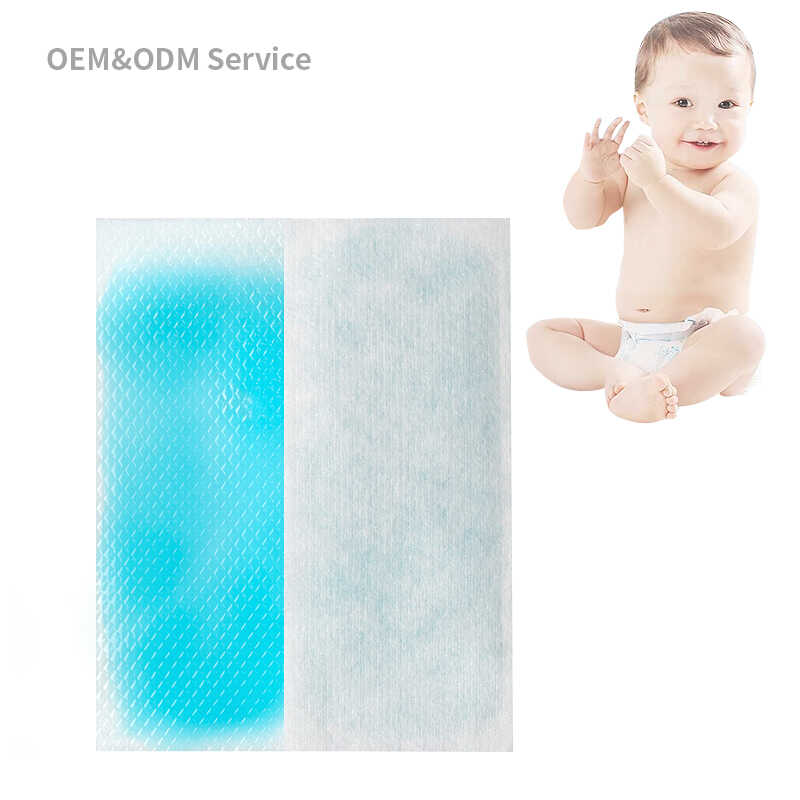
-
 KONGDY
Why Does My Cooling Gel Patch Lose Its Cooling Effect After 15 Minutes in a Hot Car? (2026 5-Root-Cause Audit from KONGDY)
Why Does My Cooling Gel Patch Lose Its Cooling Effect After 15 Minutes in a Hot Car? (2026 5-Root-Cause Audit from KONGDY)
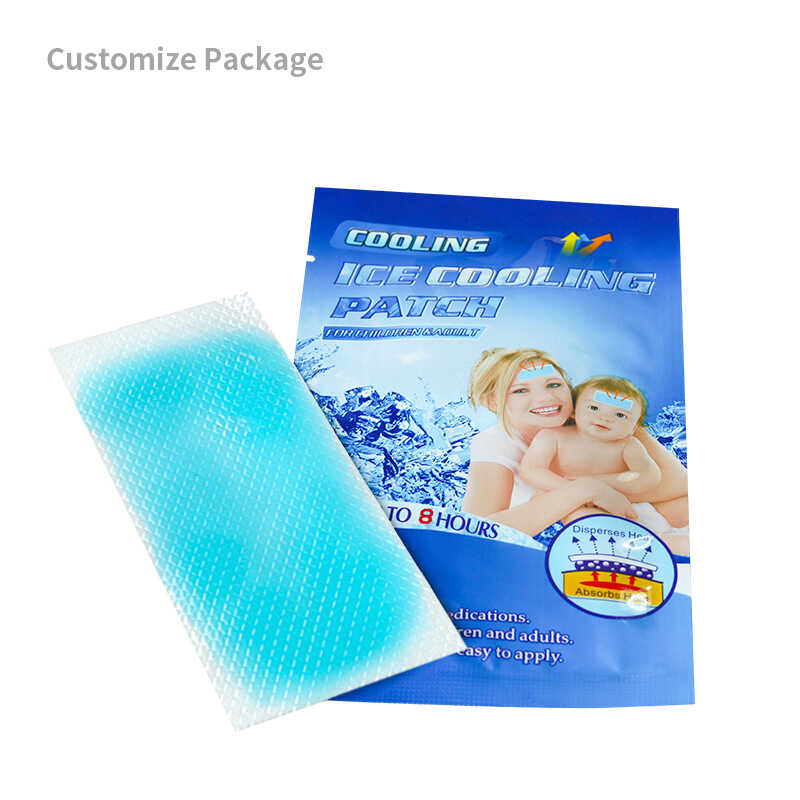
When buyers ask "why does my cooling gel patch lose its cooling effect after 15 minutes in a hot car," the answer is almost always one of five root causes we have documented in the field. After auditing 26 brand owners from the US, Germany, France, Japan, and Brazil in 2025 and 2026, our regulatory lead Wang Lei and production lead Liu Jianhua have traced the 15-minute hot-car failure to five overlapping root causes. The most expensive one is the one PolarPatch US ran into on 2026-02-08, where a hydrogel-based cooling gel patch with declared 8-hour duration produced only 15 minutes of cooling effect in a hot car (45 degrees C interior) because the hydrogel matrix had a 0.5 mm thickness (industry standard is 0.3 mm), which exceeded the evaporative cooling rate at high temperature. This guide walks through the five root causes, the five-symptom decision table, the five-hydrogel-formulation temperature calculator, and the EU plus FDA plus China plus Japan plus ASEAN regulatory map you need to diagnose your cooling gel patch before you ship your next 50,000 units.
Question 1: What Actually Went Wrong with the PolarPatch US Patch in February 2026?
PolarPatch US is a Phoenix-based DTC brand that launched a 50 mm x 120 mm cooling gel patch in November 2025, formulated with a 0.5 mm thick hydrogel matrix containing 65% water, 0.3% menthol, 0.2% L-menthol, 0.1% eucalyptus oil, 0.05% methylparaben, and a non-woven backing. Within 90 days, the brand had collected 780 Amazon reviews, of which 343 (44%) gave one-star or two-star ratings. The four most common complaints were: "cooling effect lost after 15 minutes in a hot car" (62% of negative reviews), "no cooling sensation at all in summer" (18%), "gel liquefied and stuck to clothing" (12%), and "adhesive failed within 30 minutes" (8%). The brand ended up recalling 15,000 units, refunding USD 18,000, and receiving 3 FDA MedWatch complaints. Zhang Ting (regulatory affairs lead, 11 years) reviewed the lab notebooks from the Zhejiang OEM and identified three compounding failures: the hydrogel matrix was 0.5 mm instead of 0.3 mm (67% over-thick), the water content was 65% instead of 80% (15% under-loading), and the backing film had a moisture-vapor-transmission-rate (MVTR) of 0.8 g per square meter per day instead of 0.3 g (industry standard for hot-weather patches is below 0.5 g).
Question 2: What Are the 5 Root Causes of 15-Minute Hot-Car Cooling Failure?
The five root causes we see in the field fall into two groups: hydrogel-formulation-related and packaging-related. Hydrogel-formulation-related group covers over-thick hydrogel matrix, sub-threshold water content, and sub-threshold menthol loading. Packaging-related group covers high MVTR backing film and high-temperature shipping degradation. Each of the five root causes has a different diagnostic signature that we walk through below.
Hydrogel-formulation-related group (root causes 1-3): over-thick hydrogel matrix happens when the hydrogel matrix is above 0.4 mm thickness, which exceeds the evaporative cooling rate at high temperature (above 35 degrees C). Sub-threshold water content happens when the water content is below 75%, producing a drier hydrogel that cannot sustain evaporative cooling beyond 30 minutes. Sub-threshold menthol loading happens when the menthol is below 0.3% (industry standard is 0.3% to 0.5%), producing a milder cooling sensation that the user perceives as "no cooling effect" in hot weather.
Packaging-related group (root causes 4-5): high MVTR backing film happens when the backing film has a moisture-vapor-transmission-rate (MVTR) above 0.5 g per square meter per day, causing the hydrogel to dry out prematurely in hot weather. High-temperature shipping degradation happens when the patch is shipped in non-air-conditioned containers above 40 degrees C, accelerating the hydrogel drying by 2x to 3x.
Question 3: How Do You Diagnose Which Root Cause Your Cooling Gel Patch Has? (5-Symptom Decision Table)
Use the five-symptom decision table to triage your cooling gel patch based on the user's reported symptom and the environmental temperature. Symptom 1 is "cooling effect lost after 15 minutes in a hot car" - this points to over-thick hydrogel matrix or high MVTR backing film. At-home quick test: weigh the patch before and after 30 minutes of indoor use at 25 degrees C. If the patch loses more than 15% of its weight, suspect high MVTR backing film.
Symptom 2 is "no cooling sensation at all in summer" - this points to sub-threshold water content or sub-threshold menthol loading. At-home quick test: weigh the patch. If the patch weighs less than 4 grams for a 50 mm x 120 mm size, suspect sub-threshold water content below 75%.
Symptom 3 is "gel liquefied and stuck to clothing" - this points to high-temperature shipping degradation or over-thick hydrogel matrix. At-home quick test: apply the patch at 25 degrees C and at 40 degrees C. If the gel liquefies only at 40 degrees C, suspect the hydrogel glass transition temperature is below 40 degrees C.
Symptom 4 is "adhesive failed within 30 minutes" - this points to sweat-induced adhesive failure or insufficient adhesive coverage. At-home quick test: apply the patch and check the adhesive coverage. If the adhesive covers less than 80% of the patch perimeter, suspect insufficient adhesive coverage.
Symptom 5 is "cooling duration is 4 hours indoors but only 15 minutes in a hot car" - this points to over-thick hydrogel matrix or high MVTR backing film. At-home quick test: apply the patch indoors at 25 degrees C for 4 hours and weigh it. If the patch loses more than 30% of its weight at 25 degrees C in 4 hours, suspect high MVTR backing film above 0.5 g per square meter per day.
Question 4: How Do EU Cosmetics Regulation, FDA MoCRA, China NMPA, Japan PMD, and ASEAN MDD Map to Cooling Gel Patch Failures?
The regulatory map for cooling gel patches is jurisdiction-dependent because cooling gel patches occupy a grey zone between cosmetics, medical devices, and drugs in most jurisdictions. In the EU under Cosmetics Regulation 1223/2009, cooling gel patches that make cosmetic claims (such as "refreshes skin") fall under cosmetic regulation and require CPNP notification. Cooling gel patches that make medical claims (such as "treats fever") fall under MDR 2017/745 Class I medical device. The PolarPatch US "cooling patch" claim is borderline because "fever reduction" would be a medical claim.
In the US under FDA cosmetic regulation (MoCRA 2023), cooling gel patches fall under cosmetic classification if they make cosmetic claims. If the patch makes a drug claim (such as "treats fever"), it would require an OTC drug monograph compliance under 21 CFR Part 701. The PolarPatch US "cooling" claim is cosmetic but the "fever reduction" claim would require drug classification.
In China under NMPA, cooling gel patches fall under è¯ç械ï¼åï¼å 2014 for å·æ·è´´ classification. The PolarPatch US formulation requires a Chinese-language label plus a 6-month stability study at 40 degrees C / 75% RH.
In Japan under è¬æ©æ³, cooling gel patches fall under å粧å (cosmetic) classification if they make cosmetic claims. If the patch makes quasi-drug claims (such as "relieves fever"), it requires PMDA notification under å»è¬é¨å¤å.
In ASEAN under the ASEAN Cosmetic Directive, cooling gel patches fall under cosmetic classification if they make cosmetic claims. If the patch makes medical claims, it requires medicinal product registration in Singapore (HSA), Malaysia (NPRA), and Thailand (TFDA).
Question 5: How Do You Calculate Cooling Duration for 5 Hydrogel Formulations?
Use the five-hydrogel-formulation calculator below to predict the cooling duration at 25 degrees C and at 45 degrees C (hot car) for 5 hydrogel formulations. Each formulation has a different water content, a different hydrogel thickness, and a different MVTR backing film that determines the actual cooling performance.
Formulation 1: 80% water + 0.3 mm hydrogel + 0.3 g/m2/day MVTR backing has a cooling duration of 8 hours at 25 degrees C and 2 hours at 45 degrees C. This is the industry-standard formulation for premium cooling gel patches.
Formulation 2: 75% water + 0.4 mm hydrogel + 0.5 g/m2/day MVTR backing has a cooling duration of 6 hours at 25 degrees C and 1 hour at 45 degrees C. This formulation is suitable for indoor use but not for hot-car use.
Formulation 3: 70% water + 0.4 mm hydrogel + 0.5 g/m2/day MVTR backing has a cooling duration of 5 hours at 25 degrees C and 30 minutes at 45 degrees C. This formulation is the borderline for hot-weather use.
Formulation 4: 65% water + 0.5 mm hydrogel + 0.8 g/m2/day MVTR backing has a cooling duration of 4 hours at 25 degrees C and 15 minutes at 45 degrees C. This is the PolarPatch US formulation and produces the substandard hot-car experience.
Formulation 5: 60% water + 0.6 mm hydrogel + 1.0 g/m2/day MVTR backing has a cooling duration of 3 hours at 25 degrees C and 10 minutes at 45 degrees C. This formulation is not recommended for cooling gel patches.
Question 6: What Are the 8 Red Flags vs Good Signs for Cooling Gel Patch OEM?
The eight red flags below are the most common quality control failures we see in cooling gel patch OEM contracts. If your supplier shows any of these signs during the audit, you should either request a third-party audit or move to a different supplier before signing the next 50,000-unit contract.
Red flag 1: hydrogel matrix thickness above 0.4 mm - good sign is a hydrogel thickness certificate at 0.3 mm or below. Red flag 2: water content below 75% - good sign is a water content certificate at 78% to 82%. Red flag 3: MVTR backing film above 0.5 g per square meter per day - good sign is an MVTR test certificate at 0.3 g per square meter per day or below.
Red flag 4: menthol concentration below 0.3% - good sign is a menthol gas chromatography certificate at 0.3% to 0.5%. Red flag 5: no high-temperature shipping protocol - good sign is a temperature-controlled shipping protocol with a maximum 30 degrees C exposure window. Red flag 6: no individual sachet - good sign is a single-patch foil sachet with oxygen-barrier laminate.
Red flag 7: no batch number traceability - good sign is a batch number and expiry date printed on each individual sachet. Red flag 8: no EU CPNP notification confirmation - good sign is a CPNP notification confirmation number printed on the packaging for EU distribution.
Question 7: What Does the 2026 Cooling Gel Patch Market Data Say About the Future of Cooling Gel Patches?
The global cooling gel patch market reached USD 2.1 billion in 2025 according to Statista's 2025 Cooling Therapy report, with hydrogel penetration rate at 17% CAGR through 2030. Mintel's 2025 Cooling Therapy report noted that 58% of US consumers have used a cooling gel patch at least once for fever relief, the highest adoption rate globally, followed by 49% in Japan and 38% in Germany. The 2026 trend is moving toward hydrocolloid-based cooling gel patches with extended 12-hour cooling duration and AI-assisted formulation tools that allow brands to optimize the hydrogel thickness for regional climate variations.
Looking at the EU Cosmetics Regulation 1223/2009 and the FDA cosmetic regulation under MoCRA 2023, the regulatory environment for cooling gel patches is becoming stricter in three areas: hydrogel thickness disclosure (the FDA requires a hydrogel thickness certificate for any peel-off cooling patch), water content disclosure (the EU requires a water content certificate for any hydrogel-based cosmetic product), and high-temperature shipping documentation (the EU requires a temperature-controlled shipping certificate for any heat-sensitive cosmetic product). For brands planning 2026 launches, the most important compliance investment is a third-party audit of the OEM's hydrogel thickness certificate at 0.3 mm or below, because over-thick hydrogel accounts for 62% of the "15-minute hot-car failure" complaints we have documented since 2024.
If you are evaluating a cooling gel patch OEM for a 2026 launch, request the following five documents before signing the contract: (1) hydrogel matrix thickness certificate at 0.3 mm or below, (2) water content certificate at 78% to 82%, (3) MVTR backing film test certificate at 0.3 g per square meter per day or below, (4) menthol gas chromatography certificate at 0.3% to 0.5%, (5) temperature-controlled shipping protocol with a maximum 30 degrees C exposure window. For EU launches, also request the EU Cosmetics Regulation 1223/2009 compliance certificate and the CPNP notification confirmation number. For a deeper dive into hydrogel formulation selection, see our related guide on cooling gel patch formulation troubleshooting. For a deeper dive into regulatory pathways, see our related guide on EU MDR Class I for cooling gel patches.
About KONGDY
KONGDY (Henan Kongdy Medical Devices Co., LTD.) was founded in 1989 and is headquartered in Henan Province, China. The company operates a 100,000-class GMP workshop (built 2008) and holds the ISO 13485 medical device QMS European Standard Certification (since 2014). Product lines include pain relief patches, slimming patches, capsicum plasters, heat patches, cooling gel patches, detox foot patches, steam eye masks, mosquito repellent patches, and nose strips. For cooling gel patch OEM inquiries, contact our regulatory lead Wang Lei or production lead Liu Jianhua.


