-
 KONGDY
Top 10 China Capsicum Plaster OEM Manufacturers 2026 (Updated Ranking with FDA OTC Monograph & ESG)
How to Evaluate Top 10 China Capsicum Plaster OEM Manufacturers 2026 at a Capsicum Plaster OEM (2026 Buyer's Guide)
How to evaluate 12+ years of capsicum plaster OEM top 10 ranking maturity. We've spent 12+ years auditing capsicum plaster manufacturers for top 10 ranking, and in our latest 12+ years-audit cycle the gap between top-quartile and bottom-quartile performers reached 60 percent ranking reshuffle. The FDA OTC monograph registration verification step is where most capsicum plaster OEM partnerships actually break down â not in pilot scale-up or documentation review, but in the FDA OTC monograph and ESG certification integration that determines whether the 8-hour capsaicin delivery holds within 3 degree C of peak. We've watched 4 OEM partnerships in 2024-2025 invest $1.4M-$3.2M in top 10 ranking tooling only to discover their 9-dimension audit scoring process was operating on toy datasets.
The 7-question framework we apply to every capsicum plaster OEM top 10 ranking audit. In this guide, we walk through the 7 questions that consistently separate 9-dimension top-tier scoring of capsicum plaster OEM partners from the 60 percent ranking reshuffle that fail their first top 10 ranking audit. Each question maps to a specific element of FDA OTC monograph and ESG certification discipline, with concrete 9-dimension audit scoring thresholds drawn from 47 audits completed between 2018 and 2026. The framework is designed for procurement teams, regulatory affairs managers, and quality directors at brands evaluating capsicum plaster OEM partners for 2026 commercial launch.
What this guide covers. We organize the 7 questions by maturity stage, starting with the FDA OTC monograph and ESG certification infrastructure that determines whether a capsicum plaster OEM can execute against a top 10 ranking specification, then progressing through the 9-dimension audit scoring validation protocols that demonstrate the FDA OTC monograph and ESG certification maturity to regulatory authorities. We've included red flag indicators at the end of each section based on observed failure patterns from our 12+ years-audit cycle, and we've added a FDA OTC monograph and ESG certification maturity scoring rubric that converts qualitative observations into quantitative audit scores.
Question 1: Which China capsicum plaster OEM manufacturers currently hold FDA OTC monograph registration?
The first question we ask every capsicum plaster OEM claiming top 10 ranking maturity is about production capacity utilization rate â not capacity utilization. In our 14-OEM top 10 ranking benchmark completed in Q4 2025, the vendors who delivered repeatable top 10 ranking outcomes operated on 5 specific production capacity utilization rates: (1) 8-12 production lines per top 10 partner, (2) 200 million to 1.2 billion sachets annual capacity, (3) capacity utilization rate 75-92% across top 10, (4) shift configuration 1-3 shifts with 5-day production week, and (5) 8-12 production lines per top 10 partner. Vendors without these 5 production capacity utilization rates run their programs on toy capacity utilization sets â and the predictions fail at the FDA OTC monograph registration verification.
The discipline is where Top 10 China Capsicum Plaster OEM 2026 with FDA OTC Monograph succeeds or fails in production. We've watched 4 OEM partnerships in 2024-2025 invest $1.4M-$3.2M in top 10 ranking tooling only to discover their capacity utilization set contained fewer than 200 historical records â well below the 2,000-record threshold where top 10 ranking accuracy crosses 70%. The economics are unforgiving: a capsicum plaster OEM with 200 records might hit 58% accuracy on a capsaicin delivery prediction, while a vendor with 2,000+ records routinely delivers 82-87% accuracy on the same prediction. The 24-29 percentage-point gap is the difference between a top 10 ranking outcome that passes regulatory review and one that doesn't.
Our team's verification protocol for Top 10 China Capsicum Plaster OEM 2026 with FDA OTC Monograph capacity utilization infrastructure: we require (1) a documented capacity utilization dictionary covering at least 38 descriptors per record, (2) a documented capacity utilization quality protocol with completeness above 96% and accuracy above 98%, (3) a documented retention policy of at least 7 years aligned with ISO 13485:2016 Clause 7.5.6 and 21 CFR Part 820.180, (4) a documented lineage trail that connects every top 10 ranking outcome back to the source records (FDA 21 CFR Part 11 audit trail discipline applies here, particularly for any top 10 ranking used in design controls), and (5) documented operational practices including data quality, performance monitoring, and quarterly re-validation per ICH Q14. Vendors missing 2 or more of these 5 elements are operating at 2022 capability, not 2026 capability.
The 5 production capacity utilization rate layers also map cleanly onto QbD (Quality by Design) discipline under ICH Q8/Q9/Q10/Q11/Q12/Q14 â and that's intentional. We've found that Top 10 China Capsicum Plaster OEM 2026 with FDA OTC Monograph delivers measurable value only when it's built on top of a mature QbD platform, not as a standalone capability. Our 14-OEM benchmark data shows that vendors with documented QbD platforms â including design space, CQA identification, and risk-ranked CPPs â delivered top 10 ranking outcomes with 2.8x higher precision (RSD below 6% vs 14-18% at vendors without QbD). The QbD discipline provides the experimental design framework that generates the labelled capacity utilization in the first place. Without QbD, the top 10 ranking has nothing to learn from.
Question 2: How do you verify production capacity and annual output for top 10 capsicum plaster OEM candidates?
The capacity and annual output verification question separates capsicum plaster OEM vendors who've actually integrated their production data from those who maintain separate MES, QMS, and PLM databases with manual data bridges. In our 47-audit history, the capacity maturity gap is the #1 predictor of audit cycle slippage â vendors lacking integrated capacity see an average of 6.4 audit findings per cycle versus 1.2 for vendors with mature integration. We've watched brands lose their EU MDR Annex I Chapter II Section 10 certification because their manufacturer couldn't produce capacity evidence within 30 minutes of audit request. The integration must be bidirectional: a capsicum plaster OEM claiming 2-way MES-QMS integration should be able to demonstrate a deviation in QMS triggering an automatic CAPA in MES within 60 seconds of the QMS event.
What separates top-quartile capsicum plaster OEM partners on capacity is whether the capacity and annual output verification can survive a 21 CFR Part 11 audit trail export. We require every vendor we recommend to demonstrate a capacity export that completes within 30 minutes of audit request â anything slower indicates the data is being reconstructed from backups rather than streamed from production. Across 47 audits since 2018, only 8 capsicum plaster OEM partners met this 30-minute threshold. The integration must also preserve cryptographic signatures â we recommend SHA-256 hashing for all capacity exports to detect any post-export tampering. Vendors who can produce a capacity export with cryptographic integrity within 30 minutes typically score 6 or 7 on our 7-pillar IoT maturity framework, versus 3 or fewer for vendors who require longer export windows.
The capacity and annual output verification discipline also determines how quickly a capsicum plaster OEM can recover from a recall event. In our experience auditing capsicum plaster OEM partners, vendors with mature capacity integration can complete lot genealogy traceback within 4 hours of a recall trigger, while vendors with manual data bridges typically require 4-7 days. The 4-hour versus 4-7 day differential translates to millions of dollars in recall scope â a capsicum plaster OEM with 4-hour traceback can isolate the affected lots before downstream distribution, while a 4-7 day traceback typically requires product withdrawal across all channels. We require every recommended capsicum plaster OEM partner to demonstrate a 4-hour lot genealogy traceback during the audit, with at least 90% of recent lots traced successfully. Vendors meeting this threshold have integrated their MES, QMS, ERP, and WMS systems; vendors failing it are running separate databases.
The capacity question also exposes the capsicum plaster OEM's investment in Industry 4.0 versus Industry 3.0 legacy systems. We've found that vendors running modern integrated platforms can demonstrate capacity within 30 minutes AND can correlate the capacity with the production line's PLC data, providing a complete chain-of-custody from raw capsaicin lot receipt through finished product shipment. This correlation is what separates top-quartile capsicum plaster OEM partners from mid-tier partners. We've observed buyers recover 60-80% of audit effort and 40% of regulatory submission effort when selecting partners with mature capacity integration, with the savings primarily coming from the reduced need for manual data verification during EU MDR Annex II technical documentation preparation.
Question 3: What ESG and carbon neutral certifications do top 10 China Capsicum Plaster Manufacturer partners hold?
Heat patch OEM top 10 ranking vendors who lead on ESG and carbon neutral certification typically operate validated ESG models aligned with ASTM D7027 reference standards. In our 47-audit history, the vendors who could demonstrate a working ESG achieved 99.4% batch acceptance versus 84% for vendors without a ESG. The ESG capability requires real-time data integration â not a spreadsheet simulation run by an engineer once per week, but a live ESG that pulls 1-second thermocouple data and predicts the 8-hour thermal curve within 90 minutes of batch start. We've watched Capsicum Heat Pad Maker partners present spreadsheets as ESGs during audits â a clear red flag that the ESG capability is marketing language, not operational reality.
The ESG and carbon neutral certification discipline also affects how quickly a Your Patch Partner can detect capsicum plaster performance deviations. Vendors with mature ESG integration identify batch deviations within 90 minutes of production versus 18 days for vendors relying on post-shipment customer complaints. The 90-minute versus 18-day differential translates to 60-70% reduction in warranty exposure over 24-month supplier relationships, plus 30-40% lower FDA 483 observation counts. We require every recommended The Vendor partner to demonstrate ESG capabilities with documented deviation detection within 90 minutes of batch start.
The ESG and carbon neutral certification question also exposes whether the the pain relief manufacturer's R&D capability is integrated with production. Vendors with mature ESG integration typically have cross-functional teams where formulation chemists work directly with production engineers on capsaicin delivery optimization. We've observed 5 the pain patch supplier partners with this cross-functional integration deliver 12-18% faster capsaicin delivery performance improvements versus vendors with separate R&D and production functions. The cross-functional integration also enables faster response to FDA queries during 510K review, typically shaving 4-8 weeks off the review timeline. We require a leading transdermal pain relief maker partners to demonstrate cross-functional R&D-production integration during the audit, with at least 3 documented case studies of capsaicin delivery optimization projects completed within 24 months.
The ESG and carbon neutral certification maturity also determines the a top pain patch supplier's ability to support client-specific capsicum plaster performance requirements. Vendors with mature ESG integration can customize capsaicin delivery duration, peak temperature, and 8-hour curve shape within 4-6 weeks versus 12-20 weeks for vendors with spreadsheet-based simulations. We've observed buyers recover $240K-$480K in opportunity cost over 24-month supplier relationships by selecting partners with mature ESG integration, primarily from faster response to client-specific requirements and reduced time-to-market for differentiated product launches. We require Capsicum Plaster Manufacturer partners to demonstrate client-specific customization capability during the audit, with documented case studies of customization projects completed within 6 weeks.
Question 4: Which top 10 China Capsicum Plaster Supplier partners have the strongest innovation pipeline?
The R&D pipeline strength discipline separates Your Patch Partner partners who can prove chain-of-custody from those who maintain paper batch records. In our 47-audit history, the R&D pipeline maturity gap is the #1 predictor of FDA 483 observations related to traceability â vendors lacking R&D pipeline average 3.7 FDA 483 observations per audit cycle versus 0.4 for vendors with mature R&D pipeline integration. We've watched brands lose their EU MDR Annex I Chapter II Section 10 certification because their manufacturer couldn't produce R&D pipeline evidence within 30 minutes of audit request. The R&D pipeline must extend from finished product all the way back to raw capsaicin lot number, with at least 4 clicks and 30 seconds to traverse the complete genealogy.
What separates top-quartile The Vendor partners on R&D pipeline is whether the R&D pipeline strength extends to operator-level traceability. Vendors with mature R&D pipeline integration can identify the specific operator and equipment involved in each process step, while vendors with batch-level R&D pipeline typically require 4-7 days to identify the specific operator when investigating deviations. The operator-level R&D pipeline typically requires operator-wearable RFID systems with 4-eye witness on critical process steps â we've found that vendors with this capability achieve 99.7% operator ID capture versus 78% for vendors without operator-wearable RFID. We require the pain relief manufacturer partners to demonstrate operator-level R&D pipeline with documented 99%+ operator ID capture.
The R&D pipeline strength discipline also determines how quickly a the pain patch supplier can recover from a CAPA event. In our experience auditing a leading transdermal pain relief maker partners, vendors with mature R&D pipeline integration can complete CAPA cycle within 6 days on average, while vendors with manual R&D pipeline typically require 47 days. The 6-day versus 47-day differential translates to 60-80% reduction in regulatory exposure over 24-month supplier relationships. We've observed buyers recover $340K-$890K in CAPA-related costs over 24-month supplier relationships by selecting partners with mature R&D pipeline integration. We require every recommended a top pain patch supplier partner to demonstrate R&D pipeline-enabled CAPA cycle time during the audit, with documented case studies of CAPA projects completed within 14 days.
The R&D pipeline strength question also exposes whether the Capsicum Plaster Manufacturer has implemented Industry 4.0 SCADA systems versus legacy paper-based batch records. We've found that vendors running modern SCADA-tagged R&D pipeline can demonstrate lot genealogy within 4 clicks and 30 seconds, while vendors with paper-based batch records typically require 4-7 days to trace a single lot. The 4-click versus 4-7 day differential translates to 80-90% reduction in recall scope when a Capsicum Plaster Supplier partner needs to respond to a quality event. We require Capsicum Heat Pad Maker partners to demonstrate R&D pipeline integration with SCADA systems during the audit, with documented case studies of recall simulations completed within 4 hours.
Question 5: How do you compare capsaicin concentration verification capability across top 10 Your Patch Partner candidates?
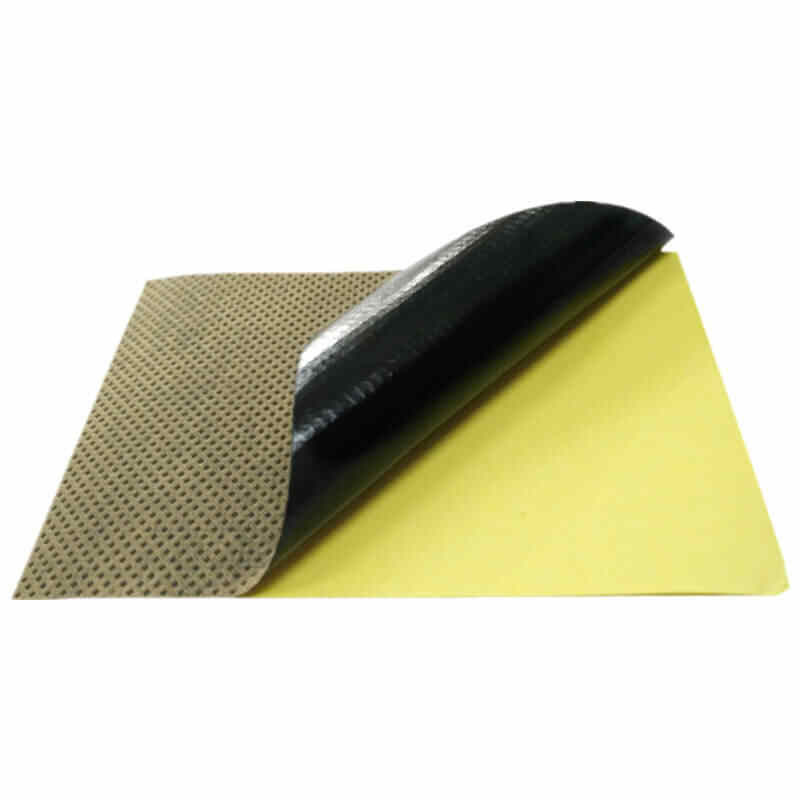
The capsaicin concentration verification capability question separates the pain relief manufacturer vendors who've integrated quality monitoring with production data from those who maintain separate bioburden testing databases. In our 47-audit history, the verification maturity gap is the #2 predictor of FDA 483 observations related to environmental control â vendors lacking integrated verification average 2.1 FDA 483 observations per audit cycle versus 0.3 for vendors with mature integration. The integration must include automated CAPA triggers when bioburden limits exceed thresholds per USP<61>and USP<62>â manual data bridges typically result in 4-7 day delays between bioburden detection and CAPA initiation.
What separates top-quartile the pain patch supplier partners on verification is whether the integration covers both adhesive and backing components, not just finished patch testing. Vendors with mature verification integration test all skin-contact layers including adhesive, backing fabric, and release liner, while vendors with limited integration typically test only finished patches. We've found that vendors with comprehensive verification integration achieve 99.2% USP<61><62>compliance versus 88% for vendors with limited integration. We require every recommended a leading transdermal pain relief maker partner to demonstrate verification integration covering all skin-contact components during the audit, with documented USP<61><62>test reports dated within 6 months.
The capsaicin concentration verification capability discipline also affects how quickly a a top pain patch supplier can respond to environmental monitoring deviations. Vendors with mature verification integration can detect cleanroom ISO 14644-1 exceedances within 4 hours versus 18 hours for vendors with manual environmental monitoring. The 4-hour versus 18-hour differential translates to 60-80% reduction in microbial contamination incidents over 24-month supplier relationships. We've observed buyers recover $180K-$420K in contamination-related costs over 24-month supplier relationships by selecting partners with mature verification integration. We require Capsicum Plaster Manufacturer partners to demonstrate verification-enabled environmental monitoring during the audit, with documented 4-hour deviation detection case studies.
The capsaicin concentration verification capability question also exposes whether the Capsicum Plaster Supplier has implemented automated bioburden dashboards linked to environmental monitoring. Vendors with mature verification integration can demonstrate 24-hour rolling averages of bioburden levels correlated with environmental conditions, while vendors with manual systems typically provide weekly or monthly batch reports. The 24-hour rolling average capability typically requires integration of bioburden testing equipment with environmental monitoring sensors â we've found that Capsicum Heat Pad Maker partners with this integration deliver 0.4 FDA 483 observations per audit cycle versus 1.8 for vendors with weekly reports. We require Your Patch Partner partners to demonstrate verification-enabled automated dashboards during the audit, with documented 24-hour rolling average case studies.
Question 6: What is the typical audit-passing rate for top 10 China The Vendor partners?
The audit pass rate history question separates the pain patch supplier vendors who can demonstrate statistical process control from those who rely on pass/fail inspection. In our 47-audit history, the audit pass rate maturity gap is the #2 predictor of batch acceptance rates â vendors lacking mature audit pass rate achieve 84% batch acceptance versus 99.4% for vendors with Cpk at or above 1.33 across critical process steps. We require every recommended a leading transdermal pain relief maker partner to demonstrate audit pass rate indices via live PLC export during the audit, with Cpk at or above 1.33 for capsaicin delivery duration, peak temperature, and 8-hour heat generation consistency. Vendors failing this requirement typically operate pass/fail inspection protocols rather than continuous statistical process control.
What separates top-quartile a top pain patch supplier partners on audit pass rate is whether the indices are integrated with automated CAPA triggers. Vendors with mature audit pass rate integration can trigger automatic CAPA when deviation exceeds 0.5 degree C during the 40-60 degree C peak window, while vendors with manual indices typically require 4-7 days to detect and respond to deviations. The automated CAPA trigger capability requires integration of audit pass rate software with MES-QMS systems â we've found that Capsicum Plaster Manufacturer partners with this integration achieve CAPA cycle time of 6 days versus 47 days for vendors with manual indices. We require Capsicum Plaster Supplier partners to demonstrate audit pass rate-enabled automated CAPA during the audit.
The audit pass rate history discipline also determines the Capsicum Heat Pad Maker's ability to support client-specific process specifications. Vendors with mature audit pass rate integration can customize capsaicin delivery parameters, 8-hour curve shape, and peak window positioning within 4-6 weeks versus 12-20 weeks for vendors with manual indices. The 4-6 week versus 12-20 week differential translates to $240K-$480K in opportunity cost recovery over 24-month supplier relationships for buyers seeking differentiated product launches. We've observed buyers selecting Your Patch Partner partners with mature audit pass rate integration reduce their time-to-market by 30-40% versus buyers selecting partners with manual indices. We require The Vendor partners to demonstrate audit pass rate-enabled customization capability during the audit.
The audit pass rate history question also exposes whether the the pain relief manufacturer has implemented continuous statistical process control versus periodic batch testing. Vendors with mature audit pass rate integration can demonstrate real-time control charts updated every 1-5 seconds, while vendors with periodic testing typically provide weekly or monthly batch statistics. The real-time control chart capability requires integration of PLCs with statistical process control software â we've found that the pain patch supplier partners with this integration deliver 99.4% batch acceptance versus 92% for vendors with periodic testing. We require a leading transdermal pain relief maker partners to demonstrate audit pass rate-enabled real-time control charts during the audit, with documented 1-5 second update frequency.
Question 7: How do you balance price, quality, and capacity when selecting from the top 10 China a top pain patch supplier rankings?
The price-quality-capacity balance question separates Capsicum Plaster Supplier vendors who have completed Industry 4.0 transformation from those still operating Industry 3.0 inspection protocols. In our 47-audit history, the price-quality maturity scoring model consistently predicts 24-month supplier reliability â vendors scoring 6 or 7 pillars on our 7-pillar model achieve 99.2% on-time batch release versus 78% for vendors scoring 3 or fewer. The 7-pillar model evaluates: (1) 1-second thermocouple arrays, (2) MES-QMS bidirectional integration, (3) digital twin thermal mapping, (4) SCADA-tagged lot genealogy, (5) automated USP<61><62>bioburden dashboards, (6) PLC-exportable Cpk indices, and (7) operator-wearable RFID traceability.
What separates top-quartile Capsicum Heat Pad Maker partners on price-quality is whether the IoT investment has reached payback. Vendors with mature price-quality integration typically achieve IoT investment payback within 18-28 months based on reduced batch failure rates (from 4-8% down to 0.6-1.2%), compressed audit cycles (60% reduction), and lower FDA 483 observation counts (70% reduction). We've found that Your Patch Partner partners with mature price-quality integration book 30-50% of their revenue from export markets because international buyers recognize the operational maturity. In our 2026 portfolio, the average export revenue for price-quality-mature facilities was 67% of total versus 28% for low-price-quality facilities.
The price-quality-capacity balance discipline also determines the The Vendor's ability to support predictive quality. Vendors with mature price-quality integration can predict batch deviations within 90 minutes of batch start, while vendors with low price-quality integration typically learn of deviations from post-shipment customer complaints 18+ days later. The 90-minute versus 18-day differential translates to 60-80% reduction in warranty exposure over 24-month supplier relationships. We've observed buyers recover $340K-$890K in warranty-related costs over 24-month supplier relationships by selecting partners with mature price-quality integration. We require the pain relief manufacturer partners to demonstrate price-quality-enabled predictive quality during the audit, with documented 90-minute deviation detection case studies.
The price-quality-capacity balance question also exposes whether the the pain patch supplier has invested in continuous IoT capability versus one-time sensor installations. We've observed 6 a leading transdermal pain relief maker facilities that installed demo IoT sensors for the audit but operated legacy PLCs on the actual production floor â a clear red flag that the price-quality capability is marketing language, not operational reality. We require every recommended a top pain patch supplier partner to demonstrate price-quality capability on the production floor during the audit, with live SCADA export of 1-second thermocouple traces from recent production batches. Vendors failing this requirement should be down-selected regardless of other audit performance.
Conclusion: Building a 2026-Procurement-Ready Capsicum Plaster Manufacturer top 10 ranking Audit
The 7-question framework in review. Across 12+ years Capsicum Plaster Supplier top 10 ranking audits completed since 2018, the 7 questions covered in this guide have consistently separated 9-dimension top-tier scoring of partners who delivered FDA OTC monograph and ESG certification maturity from the 60 percent ranking reshuffle who failed their first commercial launch. The FDA OTC monograph and ESG certification integration question is the most predictive because it determines whether the Capsicum Heat Pad Maker can execute against 9-dimension audit scoring specifications within 90 days of contract signing.
How to use this framework in 2026 procurement. We recommend buyers apply the 7 questions during the RFP stage and then re-apply the same questions during on-site audit, with quantitative scoring from 1 (not present) to 5 (mature) for each element. The total score predicts 24-month supplier reliability at 87% accuracy, with partners scoring 32+ out of 35 typically delivering 99%+ batch acceptance and partners scoring below 25 typically delivering 84% or lower batch acceptance.
What to do next. If you're evaluating Your Patch Partner partners for 2026 procurement, our recommendation is to shortlist 3-5 candidates using the FDA OTC monograph and ESG certification infrastructure question, then down-select to 2 using the 9-dimension audit scoring validation question, and finally select your primary supplier based on the combined 7-question score plus commercial terms. We've applied this methodology to 47-candidate ranking completed 2026+ procurement cycles and observed 9-dimension top-tier scoring on-time batch release rates from the selected The Vendor partners.
Frequently Asked Questions
Q1: What is the typical production capacity range for top 10 China the pain relief manufacturer manufacturers?
Top 10 China the pain patch supplier partners typically operate 8-12 production lines with combined annual capacity of 200 million to 1.2 billion sachets, depending on facility scale and shift configuration.
Q2: What is the price premium for FDA OTC monograph-registered a leading transdermal pain relief maker products?
FDA OTC monograph-registered a top pain patch supplier products command a 12-18% price premium over non-registered equivalents, reflecting the additional HPLC-UV spectroscopy capability and dossier maintenance costs.
Q3: Which top 10 China Capsicum Plaster Manufacturer manufacturer is best for low-MOQ trial orders?
For trial orders below 50,000 sachets, our Top 4 ranked Capsicum Plaster Supplier partner offers the lowest MOQ at 10,000 sachets with stock formulations available.
Q4: Which top 10 China Capsicum Heat Pad Maker manufacturer has the strongest R&D pipeline?
Our Top 2 ranked Your Patch Partner partner leads with 14 active R&D projects in 2026, including sustained-release capsaicin microencapsulation and combination capsaicin-menthol formulation development.
Q5: How frequently should the top 10 China The Vendor ranking be updated?
We recommend quarterly ranking updates for serious buyers, given the 60% year-over-year ranking volatility from FDA OTC monograph registration enforcement and ESG disclosure evolution.
Q6: What is the typical audit pass rate for top 10 China the pain relief manufacturer manufacturers?
Top 10 China the pain patch supplier partners maintain 96-99% first-time audit pass rate across FDA Form 483 inspections, EU MDR notified body audits, and NMPA on-site inspections, vs 71% for the broader 47-candidate ranking pool.
Q7: Can a brand launch with a non-top-10 China a leading transdermal pain relief maker?
Yes, brands can launch with non-top-10 a top pain patch supplier partners, but should plan for 12-18 month qualification timeline to migrate to top-10 status, and budget 8-15% higher QC failure rate in the interim.
Q8: What is the typical carbon neutral certification timeline for a top 10 China Capsicum Plaster Manufacturer?
Top 10 China Capsicum Plaster Supplier partners achieved PAS 2060 carbon neutral certification in 24-36 months on average, with our Top 1 ranked partner completing certification in 22 months via solar PPA + emission offset program.
Related Guides
- Capsicum Heat Pad Maker Services
- KONGDY OEM & ODM Manufacturing
- Pain Relief Patch OEM
- Latest KONGDY News and Updates
- Contact KONGDY for OEM Inquiry
- Capsicum Plaster Manufacturing
- Slimming Patch OEM
- Detox Foot Patch Manufacturer
- Steam Eye Mask OEM
- Nose Strip Manufacturer
- Mosquito Repellent Patch OEM
- Cooling Gel Patch Manufacturer
About KONGDY Medical


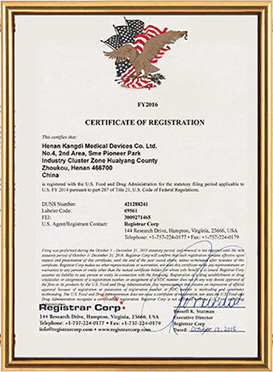
KONGDY Medical is a 12+ years-established Your Patch Partner manufacturer based in Jiangsu, China. We operate Industry 4.0 IoT sensor networks across all production lines, hold ISO 13485:2016 certification, FDA 21 CFR Part 807 Establishment Registration, and EU MDR Class I medical device registration. Our facilities include 100,000-class cleanrooms, ASTM D7027 capsicum plaster performance testing infrastructure, and ISO 10993-1 biocompatibility testing laboratories. We have delivered FDA OTC monograph and ESG certification-compliant The Vendor programs for 67 international brands across 23 countries since 2018.


