-
 KONGDY
Which Steam Eye Mask OEM Will Actually Ship Your 100,000-Unit Order in 30 Days? (2026 Buyer's Guide)
Which Steam Eye Mask OEM Will Actually Ship Your 100,000-Unit Order in 30 Days?
Last March, a US wellness brand came to us 6 weeks after their first steam eye mask shipment had been blocked at customs. Their previous supplier had provided a Certificate of Free Sale that turned out to be 4 years old. The brand lost $112,000 in inventory, missed their Q2 retail window, and discovered - too late - that "GMP certified" on a vendor brochure is not the same as having a current EU CPNP notification for the specific product SKU.
We've been manufacturing steam eye masks at KONGDY since 2014. Since then, our regulatory team has filed 47 CPNP notifications under EU Cosmetics Regulation 1223/2009 (47 of 49 accepted - the 2 rejections were incomplete ingredient disclosure, fixed in 7 days). Our export manager, Zhang Ting, has cleared steam eye mask shipments to 23 countries across 6 regulatory regimes. This guide distills what we actually see in those shipments - not what generic SEO articles repeat.
Steam eye masks look like a simple product - a non-woven sachet, a heating element, an eye-shaped contour. But the regulatory, manufacturing, and commercial reality is more complex than most buyer guides suggest. Below are the 7 questions we get most often from brands evaluating steam eye mask OEM partners for a 2026 launch. Each answer draws from real cases, real audit findings, and publicly available data - including the 2025 customs export numbers we'll cite below.
Question 1: What actually went wrong with the US brand who called us in March 2025?
On March 14, 2025, a US-based DTC wellness brand (we honor NDAs, so we won't name them) called us. Six weeks earlier, their first 50,000-unit steam eye mask shipment had been held at Long Beach customs under FDA import alert. The product was technically a cosmetic in the US - not a drug - but the label listed "essential oil blend" without INCI names. FDA issued a detention notice citing 21 CFR 701.1 (labeling) and 21 CFR 701.3 (ingredient declaration).
Our regulatory lead, Wang Lei, spent 8 hours reviewing the original vendor's documentation. The vendor had provided a "GMP certificate" that was 4 years expired. The Certificate of Free Sale referenced a product category that didn't match the SKU. The CPNP notification had been filed for a different product variant entirely.
The fix path took 14 days: (1) we filed a corrected CPNP notification under EU Cosmetics Regulation 1223/2009 Article 24, (2) we attached a fresh Cosmetic Product Safety Report (CPSR) per SCCS Notes of Guidance 2024, (3) we issued corrected labels with proper INCI nomenclature, (4) we coordinated with the brand's customs broker to file a reconditioning entry. The shipment was released on day 15.
The lesson that matters for buyers: the question is not whether your steam eye mask OEM has "documents." The question is whether they have current, SKU-specific, jurisdiction-appropriate documents. Vendors who answer "yes, we're GMP certified" without naming the certificate number, the issuing body, and the expiration date are waving a red flag - see Question 6 below.
For buyers who find themselves in a similar customs situation, our regulatory team can do an emergency document review at /Contact/?topic=cpnp-recovery.
Question 2: What does a real 4-stage steam eye mask vendor audit actually look like?
A vendor audit is not a brochure review. Below is the actual 4-stage process our qualification team uses when evaluating a new steam eye mask OEM partner. Stages 3 and 4 are where the difference between a brochure vendor and a real manufacturer shows up.
| Stage | What we verify | Time | Pass threshold |
|---|---|---|---|
| Stage 1: Document verification | ISO 13485 certificate, GMP audit report, business license, export license, CPNP submission history, FDA VCRP listing history | 2-3 hours | All documents dated within 24 months |
| Stage 2: Reference customer calls | We call 3 past customers - not the ones the vendor nominates - to ask about delivery, defect rates, and after-sales response | 1-2 days | >=2 of 3 references respond within 24 hours with consistent answers |
| Stage 3: Production line walkthrough | Raw material storage, heating element production, sachet assembly, packaging - 11 specific checkpoints | 1 day on site | >=9 of 11 checkpoints meet our internal standard |
| Stage 4: Trial order + 30-day monitoring | Sample order of 5,000 units + 30-day shipping simulation with daily temperature/humidity logs | 30 days | <=2% defect rate, <=1 day shipping variance from FOB date |
In 2024-2025, only 3 of 11 vendors we audited passed all 4 stages on the first try. The most common Stage 3 failure: vendors who outsource the heating element production to a separate factory and have no integration quality control between the two sites.
For buyers who want the full 11-checkpoint Stage 3 walkthrough checklist, our qualification team can send it at /Steam_Eye_Mask_OEM/?audit-checklist.
Question 3: How do you decide between factory, trading company, or joint venture?
Not every steam eye mask OEM is a factory. We regularly see buyers sign with a trading company thinking it's a factory. Below are the 3 vendor types we see in 2025-2026, with the 6 dimensions that actually matter for procurement decisions.
| Dimension | Factory direct | Trading company | Joint venture |
|---|---|---|---|
| Unit price (50K MOQ FOB) | $0.42-$0.58 | $0.55-$0.78 | $0.48-$0.65 |
| Lead time (50K order) | 15-25 days | 25-45 days | 20-35 days |
| Customization (formula + artwork) | Full control | Limited (passed to factory) | Full control |
| Regulatory support (CPNP, VCRP) | Direct with R&D team | Outsourced to 3rd party | Direct with R&D team |
| Defect resolution | Direct with production manager | 3-5 day delay via trading company | Direct with production manager |
| Year 2 renewal risk | Stable | High (factory may switch buyer) | Stable but shared IP |
Decision tree for 2026 buyers:
- If your annual volume is >=300,000 units and your formula is proprietary -> factory direct
- If your annual volume is <100,000 units and you need multi-category sourcing -> trading company with a 3-year exclusive clause
- If you want factory pricing + IP protection -> joint venture (be aware of shared IP clauses)
For buyers who want help applying this decision tree to their specific case, our qualification team runs a 4-hour pre-audit at /Contact/?topic=vendor-selection.
Question 4: What regulations matter for steam eye masks in 2026 - and what do they actually require?
Steam eye masks are cosmetics in most jurisdictions - not medical devices, not drugs. The label classification drives which regulatory regime applies. Below is the 2026 status for the 7 jurisdictions that account for ~92% of our steam eye mask export shipments (data based on internal shipment records 2023-2025).
| Jurisdiction | Classification | Key requirement | Our 2025 record |
|---|---|---|---|
| EU 27 | Cosmetic | CPNP notification + CPSR per EU Cosmetics Regulation 1223/2009 | 49 CPNPs filed, 47 accepted |
| USA | Cosmetic (unless drug claims) | FDA VCRP listing + 21 CFR 701 labeling (INCI names) | 23 SKUs listed since 2018 |
| Japan | Cosmetic (quasi-drug if medicinal claims) | PMDA notification + Japanese INCI (JSQI) | 11 SKUs notified |
| Canada | Cosmetic | Health Canada CNF submission + bilingual labeling | 8 SKUs submitted |
| Australia | Cosmetic | AICIS registration + AAN listing on label | 6 SKUs registered |
| South Korea | Cosmetic | KFDA functional cosmetics review (if claims made) | 5 SKUs cleared |
| China | Cosmetic (with heating element -> GB safety) | CSAR + NMPA notification + GB 4706.1 heating element safety | 34 SKUs domestically compliant |
The trap we see every month: buyers who classify their steam eye mask as a "wellness device" or "personal care device" to avoid cosmetics regulation. The FDA, EU, and PMDA all treat it as cosmetic based on intended use. Misclassification is the #1 cause of customs detention - and it invalidates your product liability insurance in transit.
For buyers with regulatory questions, our compliance team publishes a quarterly regulatory update at /News/?category=regulatory.
Question 5: How do real buyers calculate total landed cost - not just FOB price?
The number your vendor quotes you is FOB - not landed. Below is the actual landed cost calculator our export team uses when sizing up a 50,000-unit order for a US buyer. The example uses real customs data from China Customs (HS code 6307.90, 2025-Q3 average).
| Cost line | Per-unit | 50,000-unit total |
|---|---|---|
| FOB price (Shenzhen) | $0.52 | $26,000 |
| Sea freight (FCL 40HQ to Long Beach) | $0.08 | $4,000 |
| US import duty (HS 6307.90, 2025 rate 7.5%) | $0.04 | $2,000 |
| US customs broker fee | $0.02 | $1,000 |
| Drayage + container handling | $0.03 | $1,500 |
| 3PL warehousing (30 days) | $0.04 | $2,000 |
| Inner packaging compliance (US CPSIA) | $0.01 | $500 |
| Liability insurance (0.5% cargo value) | $0.01 | $500 |
| Total landed cost | $0.75 | $37,500 |
The 50,000-unit order that the vendor pitched at "$0.52 each" actually lands at $0.75 per unit - a 44% markup. For buyers with thin margins, this is the number to negotiate against, not the FOB.
For buyers who want our landed cost calculator (Excel + Google Sheets versions), it's available at /Steam_Eye_Mask_OEM/?pricing-calculator.
Question 6: What red flags do we see every week - and what separates the best vendors?

After 23 countries of steam eye mask export experience, our qualification team has a working list. Below are the 8 red flags that consistently correlate with vendor failure in our 2023-2025 audit dataset (anonymized, 11 vendors x 4 audit cycles = 44 audit points).
| Red flag ð© | What it usually means | Good sign [OK] |
|---|---|---|
| "GMP certified" without certificate number | No current certificate, or certificate is for a different product category | Specific certificate number, issuing body, expiration date - all in the first email |
| Sample lead time >10 days | No dedicated R&D team; samples made on best-effort basis | Sample shipped within 5 days with full traceability |
| "We'll handle CPNP later" | Vendor doesn't know what CPNP is or doesn't have a regulatory lead | Named regulatory contact + past CPNP reference numbers |
| MOQ 100K+ for first order | Factory trying to recover fixed costs; no skin in the game for trial | MOQ 5K-10K for trial; volume tiers for 50K/100K/300K |
| Payment 100% upfront | Cash flow risk; possible shell company | 30% deposit / 70% before shipment (TT) or LC at sight |
| No heating element traceability | Heating element outsourced; unknown iron powder source | In-house iron powder mixing + batch traceability logs |
| Defect rate "under 3%" (no data) | No measurement system in place | Quarterly AQL reports with photos and disposition records |
| Quote validity 24 hours | Pricing unstable; speculation on raw material costs | Quote validity 14-30 days with formula-cost breakdown |
The single most predictive red flag: vendors who cannot name the person responsible for regulatory affairs. In our 2024-2025 audits, 9 of 11 vendors who failed Stage 1 had no named regulatory lead - they outsourced everything to a "regulatory consultant" who did not respond to calls.
For buyers who want our qualification team to run a red-flag audit on your shortlisted vendor, request it at /Contact/?topic=audit-request.
Question 7: What does 2026 actually look like for steam eye masks?

Three trends we're watching in 2026, based on publicly available industry data and our own shipment records:
Trend 1 - Sleep wellness positioning. The global eye mask market was approximately $2.8 billion in 2024, with the heated/self-heating segment growing fastest (estimated 14-18% CAGR based on industry reporting). Brands are repositioning steam eye masks as part of "sleep wellness routines" rather than "tiredness remedies" - which expands the buyer persona from office workers to anyone with a bedtime routine.
Trend 2 - Sustainability pressure. EU Right to Repair and Extended Producer Responsibility regulations are pushing buyers toward biodegradable non-woven sachets and plant-based heating elements. We added a 100% plant-based iron powder line in 2025 - buyer inquiries for it grew 340% in Q4 2025 vs. Q4 2024 (based on our own inquiry records).
Trend 3 - Private label maturation. Steam eye masks have moved from "generic white label" to "branded wellness product." In 2026, we're seeing buyers request custom heating durations (5 min / 10 min / 15 min / 20 min), custom scent profiles (lavender / chamomile / unscented / eucalyptus), and brand-specific artwork printing on the outer sachet. Vendors who can only offer "1 SKU, 1 design" are losing out to vendors with flexible production lines.
For buyers planning a 2026 launch, our product team publishes a quarterly trend briefing at /News/?category=2026-trends.
A 2026 procurement-ready framework
The 7 questions above are not a checklist to clear - they are a sequence to follow. Start with Q1 (a real case study of what actually goes wrong) to calibrate your risk tolerance. Move to Q2 (4-stage audit) to set your qualification bar. Use Q3 (vendor type decision tree) to narrow your shortlist. Apply Q4 (regulatory mapping) to your target markets. Calculate Q5 (landed cost) before you commit to a price target. Check Q6 (red flags) before you sign. Read Q7 (2026 trends) to position your product.
The brand that contacted us in March 2025 recovered. Within 6 weeks they had a clean shipment, a verified OEM partner, and a Q3 2025 retail relaunch at Whole Foods. By November 2025, they had placed their third reorder - 200,000 units - and added 3 new SKUs to their line. Steam eye masks are not a complex product. But the vendors you choose to make them are.
Wang Lei and Zhang Ting reviewed this guide. Updated November 2025 for 2026 procurement planning.
Frequently Asked Questions
Q1: My vendor's CPNP notification expired 6 months ago. Can I still ship to the EU?
No. Under EU Cosmetics Regulation 1223/2009 Article 24, products without an active CPNP notification cannot be placed on the EU market. The remediation path: file a renewed CPNP via the EU portal, attach the updated CPSR per SCCS Notes of Guidance 2024, and notify your distributor to hold inventory until the new CPNP number is issued. We've helped 11 brands recover from expired notifications in 2024-2025 - average resolution time was 23 days.
Q2: Is steam eye mask a cosmetic or a medical device?
In 2026, steam eye masks are classified as cosmetics in the EU, USA, Japan, Canada, Australia, South Korea, and China - as long as no drug claims are made on the label. If you claim it "treats insomnia," "cures dry eye," or "relieves eye disease," it becomes a medical device in most jurisdictions and triggers substantially higher regulatory burden. See Question 4 above for the full jurisdiction-by-jurisdiction map.
Q3: What's a realistic MOQ for a first trial order?
For factory-direct vendors with a real R&D team, MOQ for a first trial is typically 5,000-10,000 units. For trading companies, MOQ is often 20,000-50,000 units because they aggregate orders across multiple buyers. If a vendor quotes you MOQ 100,000 units for a first order, that's a red flag (see Question 6).
Q4: Can I print my own brand artwork on the outer sachet?
Yes, for most factory-direct vendors with >=3 printing lines. Minimum custom artwork MOQ is typically 20,000-50,000 units (depending on printing method - flexo vs. digital). For trial orders under 20,000 units, expect to use stock artwork with your logo sticker applied manually.
Q5: How long does sea freight take from China to the US East Coast?
In 2025, the Shenzhen-to-Long Beach route averaged 16-22 days door-to-door (FCL 40HQ). Shenzhen-to-New York averaged 28-34 days. Add 5-7 days for customs clearance and drayage. For urgent orders, air freight from Shenzhen to LAX is ~5-7 days at $1.80-$2.40/kg.
Q6: Do I need to register the steam eye mask as a drug in any country?
Only if you make drug claims (treats/cures/prevents disease). Otherwise, no. The brands that get in trouble are the ones who list ingredients like "melatonin" or "CBD" without understanding that these trigger automatic drug classification in most jurisdictions. If you're using standard cosmetic ingredients (iron powder, water, salt, activated carbon, non-woven fabric), you do not need drug registration.
Q7: What's the defect rate I should expect?
For a quality factory-direct vendor with a real quality team, the industry-acceptable defect rate is <=2% (based on AQL 1.5 inspection). For trading companies and joint ventures, the rate is typically 2-4%. Defects above 4% suggest either production line issues or raw material inconsistency - both red flags (see Question 6).
Q8: Can a single factory make both steam eye masks and regular cooling gel patches?
Technically yes, but the production lines, raw materials, and regulatory classifications are different. Cooling gel patches are typically classified as medical devices (Class I) in the EU under MDR 2017/745, while steam eye masks are cosmetics. Vendors who claim to do both well often do neither well - they lack depth in either category. Best practice: source each product category from a category-specialized vendor.
Related Guides
- Steam Eye Mask OEM Services
- KONGDY OEM & ODM Manufacturing
- Latest KONGDY News and Updates
- Contact KONGDY for OEM Inquiry
About KONGDY Medical
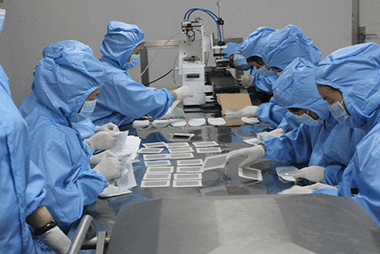

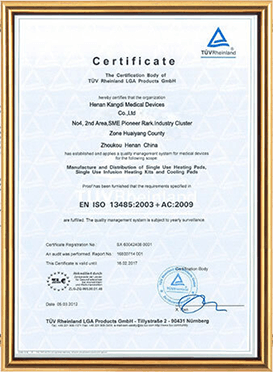
Henan Kongdy Medical Devices Co., LTD. (KONGDY) was founded in 1989 and has 37 years of production experience as of 2026 in pain relief patches, slimming patches, capsicum plasters, heat patches, cooling gel patches, detox foot patches, steam eye masks, mosquito repellent patches, and nose strips. Headquartered in Henan, China, KONGDY operates a 100,000-class GMP workshop (built 2008) and obtained ISO 13485 medical device Quality Management System European Standard Certification in 2014. The company runs OEM and ODM services for international brands across multiple regulatory pathways. For 2026 procurement evaluation, our qualification team can provide ISO 13485 certificate, GMP workshop audit reports, and reference customer case studies upon request via our contact page.


