-
 KONGDY
Is Private Label Medical Cooling Gel Patch Safer for Long-Term Cooperation Than Custom OEM?
In today’s competitive healthcare and wellness market, brands entering the cooling therapy segment often face an important strategic decision: Should they choose a Private Label Medical Cooling Gel Patch or invest in a Custom Medical Cooling Gel Patch solution from an OEM provider?
This choice directly affects product safety, compliance, long-term supply stability, and market success. With more global buyers relying on a certified Medical Cooling Gel Patch Manufacturer or Medical Cooling Gel Patch Supplier, understanding the difference between Private Label and OEM is crucial for sustainable cooperation.
This article provides an in-depth, SEO-structured, and evidence-based comparison to determine whether Private Label Medical Cooling Gel Patch is safer for long-term cooperation than Custom Medical Cooling Gel Patch OEM—and how brands can make the right decision.
1. Understanding the Two Models: Private Label vs Custom OEM
Before discussing long-term stability, let’s clarify the fundamental distinction:
1.1 What is a Private Label Medical Cooling Gel Patch?
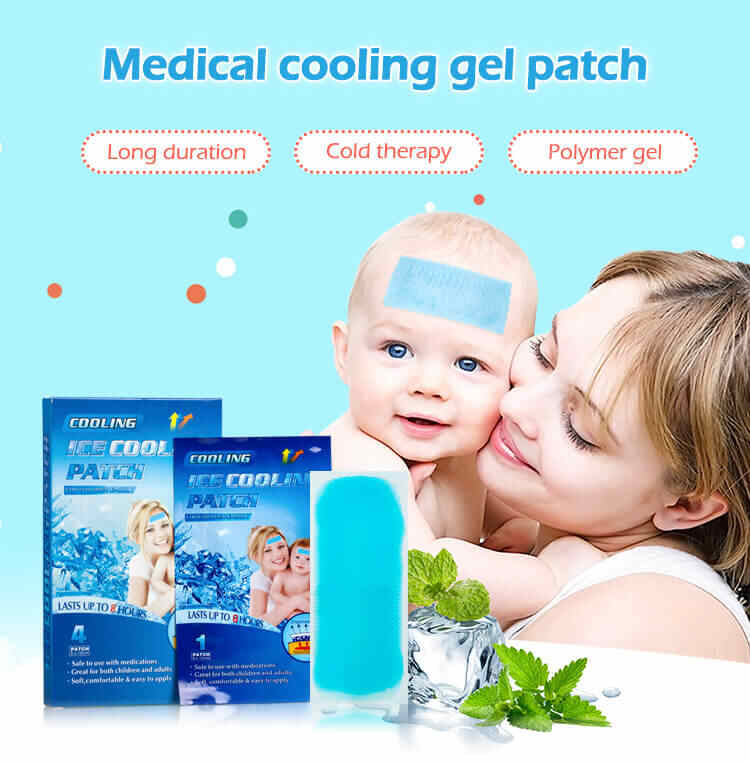
A Private Label Medical Cooling Gel Patch is a ready-formulated, ready-tested, and ready-for-market product produced by a Medical Cooling Gel Patch Manufacturer.
You simply brand it, choose packaging, and launch it.
Key characteristics:
Fixed formula
Pre-tested stability and safety
Lower MOQ
Faster lead time
Minimal R&D investment
1.2 What is a Custom Medical Cooling Gel Patch OEM?
A Custom Medical Cooling Gel Patch manufactured through Medical Cooling Gel Patch OEM means the formula, adhesives, gel structure, size, fragrance, and active ingredients can be customized.
Key characteristics:
Tailor-made formulation
Additional testing and stability validation needed
Higher MOQ
Longer development timeline
Greater investment in R&D
Both models are popular, but the long-term cooperation risks differ significantly.
2. Why Long-Term Cooperation Matters in Cooling Gel Patch Manufacturing
Medical cooling patches are classified as functional wellness or medical-grade consumer products, which means:
strict regulatory compliance
stable raw material sourcing
consistent performance requirements
repeat purchase customer expectations
Therefore, choosing the right Medical Cooling Gel Patch Supplier impacts:
product quality stability
brand reputation
global market accessibility
long-term supply continuity
The key question becomes:
Which model creates fewer long-term risks—Private Label or Custom OEM?
To answer this, we need to examine safety, supply chain stability, cost management, and regulatory compliance.
3. Is Private Label Safer Than Custom OEM for Long-Term Cooperation?
3.1 Stability of Formula and Production
Private Label: High Stability
Private Label patches use a pre-validated formulation that the manufacturer already produces at scale.
This ensures:
no R&D failure risk
pre-tested skin compatibility
validated cooling duration and adhesion performance
zero formula instability issues
This significantly reduces long-term cooperation risk.
Custom OEM: Variable Stability
Custom development involves altering:
cooling agents
polymer gel viscosity
humectant ratios
herbal ingredients
adhesive strength
Any change may lead to:
instability
reduced shelf life
inconsistent cooling time
possible irritation risks
This increases the need for additional testing and long-term monitoring.
Conclusion:
Private Label Medical Cooling Gel Patch is safer in terms of formula stability and predictability.
3.2 Regulatory Compliance & Certification Requirements
Private Label: Already Certified
A reputable Medical Cooling Gel Patch Manufacturer usually has Private Label products:
ISO 13485 ready
CE registered
FDA listed
Dermatologically tested
Heavy-metal and microbial safety validated
This makes international distribution faster with fewer compliance risks.
Custom OEM: Requires New Validation
Custom formulas require:
new safety testing
new MSDS creation
updated clinical/outcome testing
new regulatory submissions
This adds:
time
cost
compliance risk
Any failed test delays product launch and disrupts long-term cooperation.
Conclusion:
Private Label offers significantly lower regulatory risk than OEM.
3.3 Supply Chain Continuity and Raw Material Availability
Private Label: Secured Raw Material Supply
Manufacturers producing large-scale Private Label lines typically maintain:
long-term agreements with raw material suppliers
bulk purchasing power
validated alternative material sources
This ensures long-term supply stability.
Custom OEM: Formula Dependent on Custom Materials
Custom formulations sometimes rely on:
special cooling agents
unique herbal extracts
non-standard adhesives
customized gel matrices
If any raw material becomes unavailable, the manufacturer must modify the formula—creating long-term instability risk.
Conclusion:
Private Label reduces supply chain disruption risk.
3.4 MOQ Requirements and Inventory Pressure
Private Label: Lowest MOQ
Because the product is mass-produced, Private Label Medical Cooling Gel Patch usually offers:
low MOQ
low inventory cost
flexible reordering
Brands maintain stable cooperation because they do not face cash-flow pressure.
Custom OEM: Higher MOQ
OEM requires:
minimum production batch sizes
material pre-purchasing
packaging minimums
formula trial costs
These increase financial risk and reduce long-term flexibility.
Conclusion:
Private Label is safer for sustained cooperation due to lower MOQs.
3.5 Brand Control and Product Differentiation
Private Label: Limited but Stable
Private Label offers consistent quality but limited customization.
However, this means:
no unexpected formulation issues
no redesign risk
fewer regulatory updates
Custom OEM: High Differentiation but Higher Risk
Custom OEM gives more control but requires continuous:
formula improvement
stability updates
compliance testing
This means long-term partnerships require more resources and higher involvement.
Conclusion:
Private Label is safer, but Custom OEM is better for differentiated, premium brand positioning—with higher management complexity.
4. When Is Custom Medical Cooling Gel Patch OEM Still a Better Option?
Even though Private Label is safer for long-term cooperation, Custom OEM is essential in certain situations, such as:
Brands targeting niche functions
Companies requiring patented cooling technology
Premium brands competing based on unique effects
Clinical-grade cooling patches for hospital channels
Regions requiring unique regulatory formulations
In these cases, working with an experienced Medical Cooling Gel Patch Manufacturer who provides full Medical Cooling Gel Patch OEM service is vital.
5. Choosing the Right Medical Cooling Gel Patch Manufacturer Is the Real Key
Whether Private Label or Custom OEM is safer ultimately depends on the capability of the Medical Cooling Gel Patch Supplier.
A reliable manufacturer must provide:
5.1 Strong R&D Support
To handle issues such as:
gel matrix optimization
long-lasting cooling mechanisms
hypoallergenic formulation
stability improvement
5.2 Full Certification
Including:
ISO 13485
GMP
FDA registration
CE compliance
MSDS & COA
5.3 Transparent Quality Control
Such as:
raw material traceability
in-house microbiological testing
heavy metal tests
adhesive performance testing
5.4 Consistent Production Capacity
To ensure:
stable supply
reliable lead time
controlled cost
5.5 Strong After-Sales Support
Including:
formula updates
packaging redesign
regulatory guidance
Whether you choose Private Label or Custom OEM, the trustworthiness of the manufacturer determines long-term safety.
6. Final Verdict: Which Model Is Safer for Long-Term Cooperation?
| Factor | Private Label Medical Cooling Gel Patch | Custom Medical Cooling Gel Patch OEM |
|---|---|---|
| Formula Stability | ★★★★★ Very high | ★★★ Requires ongoing validation |
| Regulatory Risk | ★★★★★ Lowest | ★★★ Higher |
| MOQ Pressure | ★★★★★ Low | ★★ Higher MOQ |
| Supply Chain Stability | ★★★★★ Strong | ★★★ Formula-dependent |
| Customization Flexibility | ★★ Limited | ★★★★★ High |
| Long-Term Safety | ★★★★★ Highest | ★★★ Moderate-to-high |
Conclusion
Yes — Private Label Medical Cooling Gel Patch is generally safer for long-term cooperation than Custom OEM.
It offers the lowest risk, fastest market entry, stable formula performance, and minimal regulatory burden.
However, Custom Medical Cooling Gel Patch OEM is better for brands seeking differentiation, unique formulations, or clinical functions—provided they work with a strong, certified Medical Cooling Gel Patch Manufacturer.
7. Related Questions & Short Answers
Q1: Is a Private Label Medical Cooling Gel Patch better for startups?
Yes. Private Label offers lower MOQ, faster launch, and fewer regulatory risks.
Q2: Does Custom Medical Cooling Gel Patch OEM require longer development time?
Yes. Custom formulations need new testing, stability studies, and regulatory preparation.
Q3: Are Private Label Medical Cooling Gel Patch products already certified?
Typically yes, as manufacturers pre-test them for global markets like EU and US.
Q4: Is Custom OEM more expensive than Private Label?
Yes. OEM requires R&D fees, larger MOQs, and additional testing costs.
Q5: Does the choice depend on the Medical Cooling Gel Patch Manufacturer?
Absolutely. A reliable, certified manufacturer minimizes risks regardless of model.


